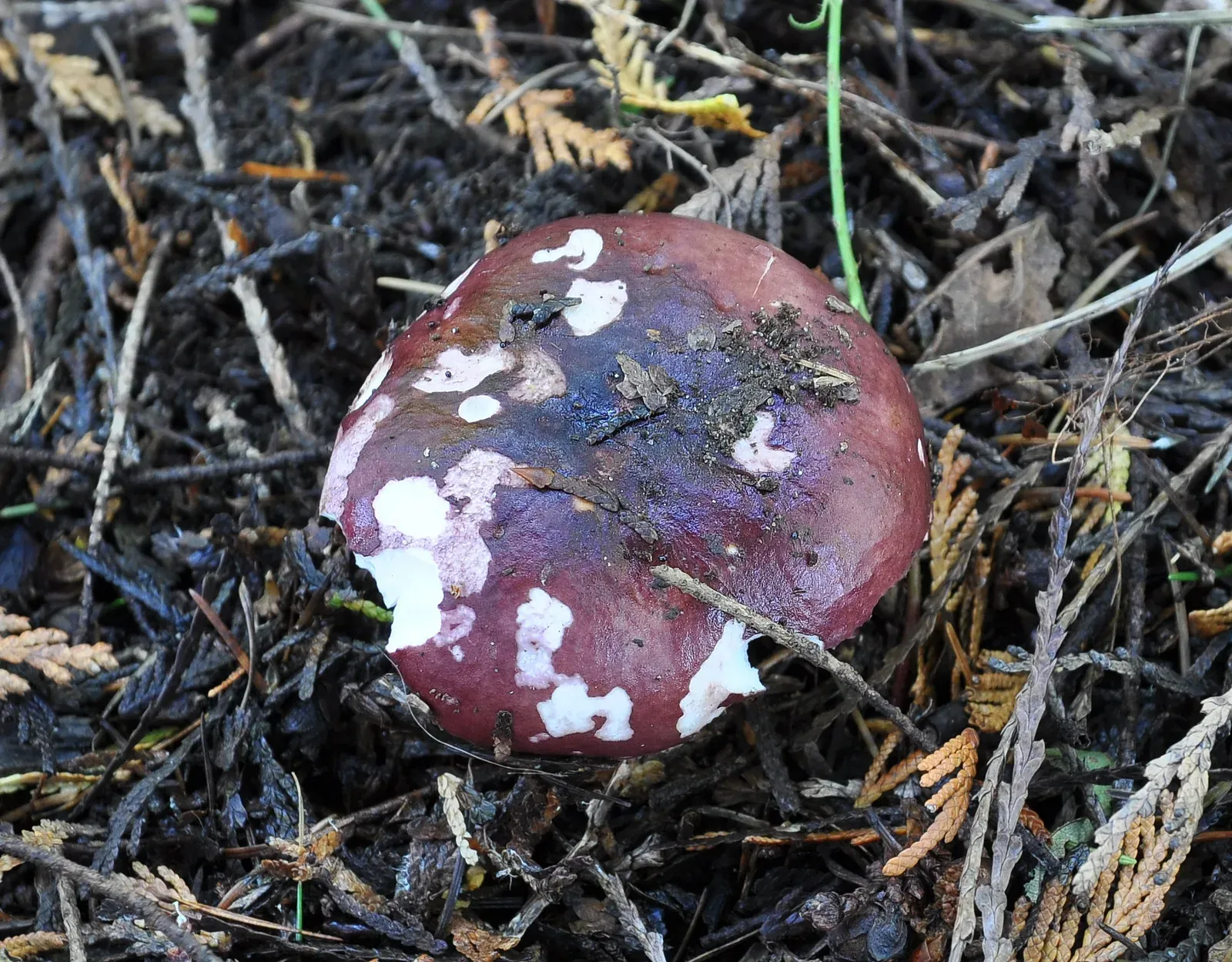
Brittlegills are often underrated: they're just too familiar and too colorful. That's a shame, because a brittlegill is often the first find on a June trip and saves the basket when the prized mushrooms haven't come up yet. They're among the most common summer mushrooms in our forests.
Let's look at when brittlegills appear in June, where to find them and, most importantly, how to tell the pleasant-tasting species from the hot, acrid ones.
When and where brittlegills grow in June
Brittlegills appear early and grow in almost every type of forest. After the first warm June rains, their multicolored caps turn up literally at every step.
Their big advantage is that they're not fussy. You can find brittlegills in deciduous, mixed, coniferous forests, on forest edges, in grass, among moss. That's exactly why they're so often a beginner's first find.
Brittlegill cap color is extremely variable: green, red, brown, yellow, purple. You can't rely on it alone, because different species are colored differently, and on top of that rain often washes the color out.
How to recognize a brittlegill
Despite all the colors, a brittlegill is easy to recognize by features the whole genus shares.
- Gills. White or cream, brittle, they break when touched.
- Stem. White, straight, cylindrical, with no ring and no bulb-like swelling at the base.
- Flesh. Very brittle, crumbles easily; firmer in young mushrooms.
- Cap. Often with a thin skin that peels off in strips at the margin.
A very important detail is the absence of a bulb with a sac at the base of the stem. That kind of bulb is the main sign of deadly poisonous amanitas, so always take each brittlegill out of the ground whole and check the bottom of the stem.
Which brittlegills are edible and which are acrid
There are no deadly poisonous brittlegills, but some species are inedible because of their sharp, burning taste. Such mushrooms ruin a dish with bitterness, so foragers pass them by.
A simple, safe test will help you tell them apart: break off a tiny piece of flesh or gill edge and touch it to your tongue without swallowing, then spit it out.
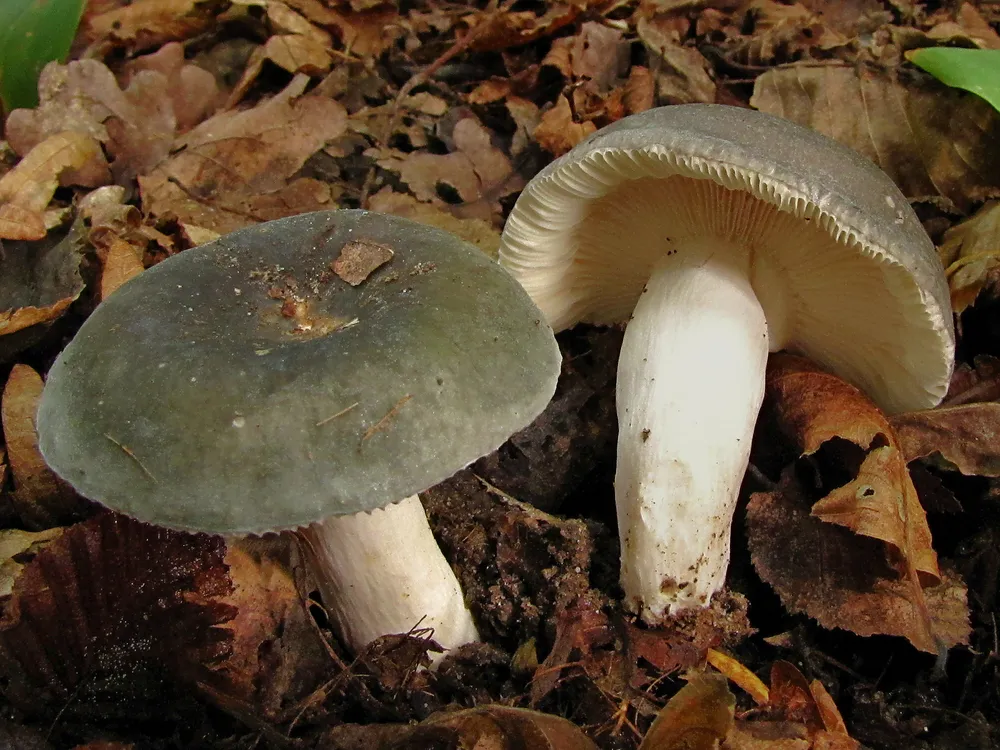
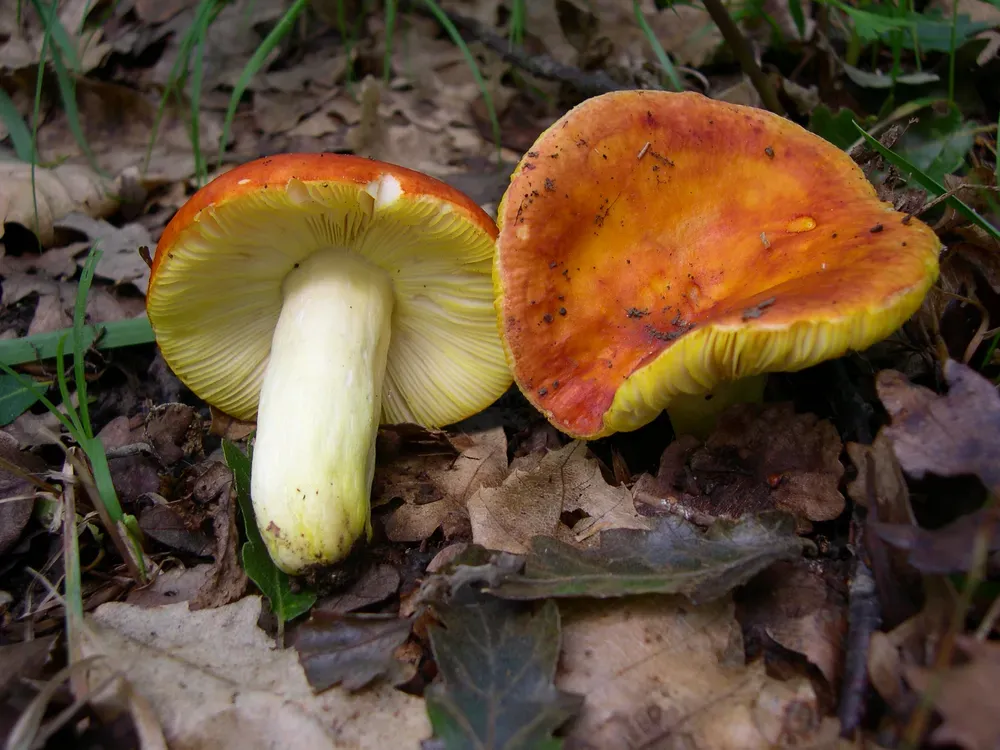
- A mild, nutty or neutral taste means an edible species. These include, for example, the charcoal burner and the gilded brittlegill.
- A sharply burning, peppery taste on the tongue gives away an inedible species. Don't take that mushroom.
Color is also a clue: bright red brittlegills with a shiny cap are more often acrid, while greenish, bluish and yellow ones are mostly mild. Still, the taste test is more reliable.
Tips for picking and carrying
Brittlegills have one drawback: they're extremely fragile. They break easily in the basket, so getting them home in one piece can be tricky.
- Pick young mushrooms. Their flesh is firmer and crumbles less than in old ones.
- Put brittlegills on top. Don't bury them under heavier boletes, or you'll get home with a crushed mess.
- Don't delay processing. Brittlegills spoil quickly, so it's best to process them the same day.
June brittlegills are great fried and salted. And when exactly to go for them will be shown by our mushroom radar: ideally a few days after a warm rain.
Sources
- “Key to the Fungi of Ukraine” (Kyiv, Naukova Dumka publishing house).
- Russula cyanoxantha in GBIF, the global biodiversity database.
- Russula in MycoBank, the international fungal nomenclature database.
- Russula on Wikipedia.
Frequently asked questions
Do brittlegills grow in June?
Yes, are among the earliest and most common summer mushrooms. After warm June rains they appear in almost every type of forest.
Where should you look for brittlegills?
Almost everywhere: in , and , on forest edges, in grass and among moss. They're very easygoing mushrooms.
Are all brittlegills edible?
None of them are deadly poisonous, but some species are inedible because of their sharp, burning taste. Mild-tasting brittlegills are edible; sharply burning ones are not worth taking.
How do you tell an edible brittlegill from an acrid one?
Break off a crumb of flesh and touch it to your tongue without swallowing. A mild or nutty taste means an edible species; a sharply burning, peppery one means inedible. Spit it out after the test.
How do you recognize a brittlegill?
By its white, brittle gills, straight white stem with no ring and no bulb, very brittle flesh, and cap skin that peels off in strips at the margin.
Can a brittlegill be confused with a poisonous mushroom?
To stay safe, always take the mushroom out whole and check the base of the stem. A bulb with a sac is the sign of deadly amanitas, while a brittlegill's stem is straight, without that kind of swelling.
Why are brittlegills so fragile?
That's just how their flesh is built. Because they're so fragile, brittlegills break easily in the basket, so put them on top and pick young, firmer mushrooms.
When is the best time to pick brittlegills?
A few days after a warm rain, when the forest is soaked with moisture. The best moment for your region will be shown by our .
Mushrooms in this article
Related articles
 Recipes & cooking
How to store fresh mushrooms, and for how long
Fresh mushrooms spoil faster than you might think. Here's how long they keep in the fridge, how to store them…
August 21, 2026·4 min How to identify
Truffles in Ukraine: do they grow here, and where to look
Truffles aren't just a French delicacy. Several species grow in Ukraine too. Here's which ones, where they occ…
August 24, 2026·2 min Recipes & cooking
How long to boil mushrooms
Boiling time depends on the type of mushroom and on what you're cooking next. Here's a clear cheat sheet: how…
August 22, 2026·4 min