THIS DATA HAS NOT BEEN VERIFIED BY AN EXPERT. Use at your own risk.
Gilded brittlegillRussula aurea
Under reviewUpdated October 3, 2026
Passport
- Edibility
- Edible
- Season
- Jun — Sep
- Hymenophore
- Gilled
- Cap color
- Red
- Size
- Medium (5–15 cm)
- Smell
- Pleasant
- Reviewed
- Under review
Quick answers
Where to look?
Deciduous forest, Mixed forest
When does it appear?
Jun — Sep
Active months: June, July, August, September.
How to recognize it? Three signs
- Cap color: Red, Orange, Yellow
- Cap shape: Convex, Flat
- Smell: Pleasant
Fruiting season
June – September
Description
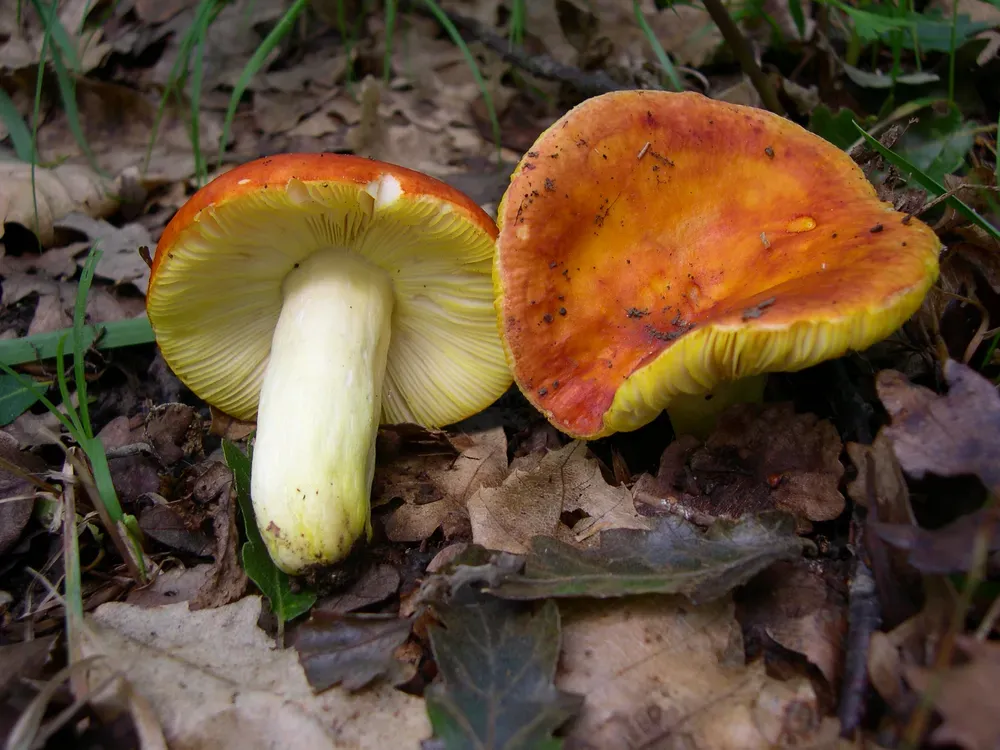
The gilded brittlegill, known to science as Russula aurea (formerly Russula aurata), is one of the most beautiful and tasty brittlegills of our forests, standing out among its many relatives with a warm golden coloring: its red or orange cap looks as if lit from within by yellow, and its gills and stem have a lemon-gold tint. It is a mycorrhizal mushroom that partners with broadleaf trees, most often oak and beech, so you'll find it in such forests.
In Ukraine, the gilded brittlegill grows in broadleaf and mixed forests across the country, preferring oak and beech woods on rich soils. Its fruiting season falls in summer and autumn — June through September; the mushroom appears singly or in small groups among grass and leaf litter.
In terms of edibility, the gilded brittlegill is a good edible mushroom — indeed, one of the best edible brittlegills. Unlike many of its acrid relatives, its flesh has a mild, non-peppery taste, so it does not need lengthy boiling. It is fried, boiled, pickled and salted. Like all brittlegills, it is rather fragile, so pick and carry it with care. Young, firm specimens taste best.
Cap
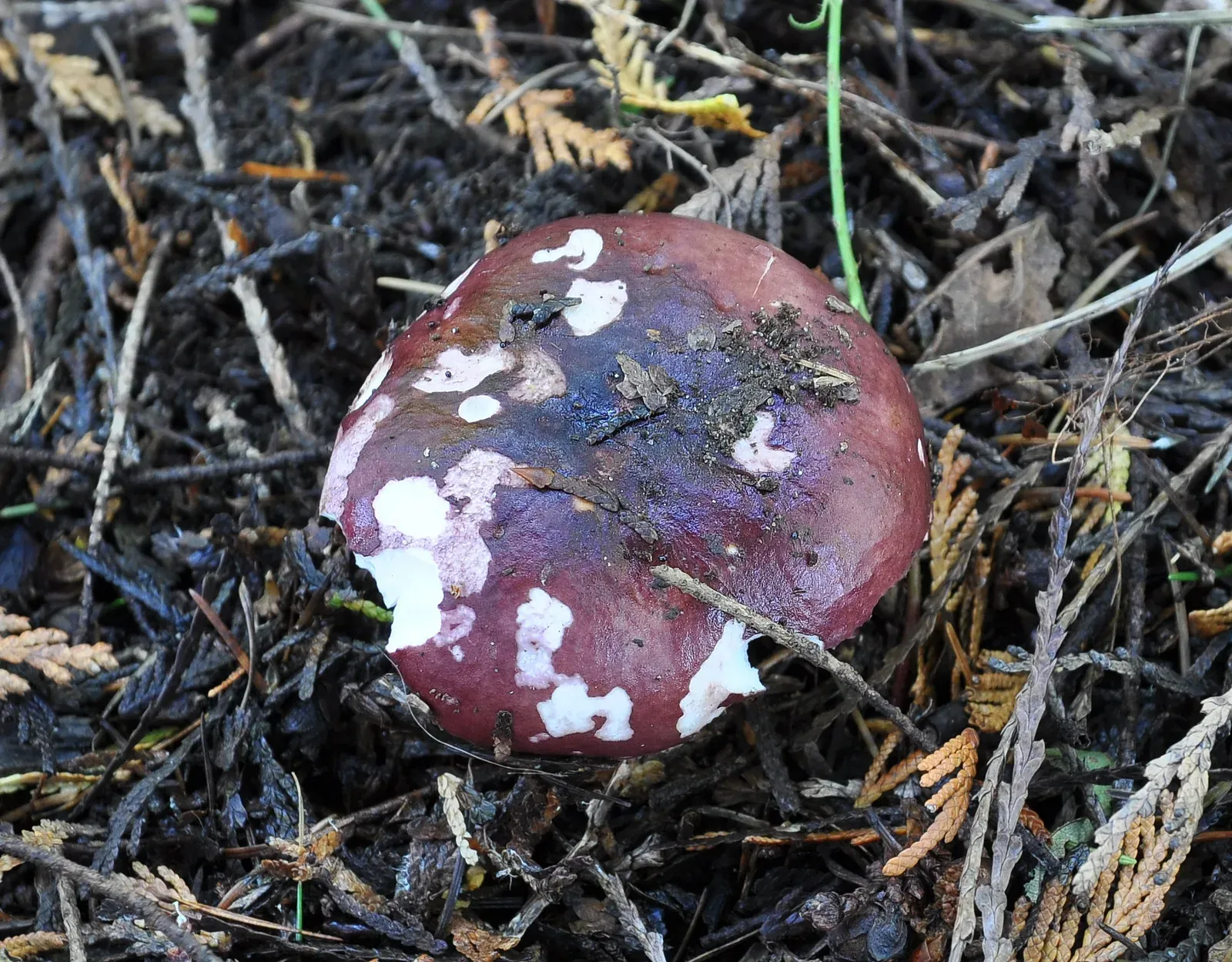
The cap of the gilded brittlegill is 4 to 9 centimeters across. When young it is hemispherical, opening with age to convex and flat, sometimes with a slightly depressed center. The surface is smooth, slightly sticky in wet weather, matte or shiny. The coloring is warm — red, orange-red or crimson, often with yellow patches and always with a yellow tint that seems to shine through the red. The skin peels slightly at the margin.
Hymenophore
The hymenophore is gilled. The gills are fairly crowded and brittle, whitish or cream at first, taking on a characteristic golden-yellow tint as they mature, especially at the edge. The spore print is yellow or ochre-yellow. The yellowish gill edge is one of the telltale features of the species, setting it apart from the white-gilled brittlegills.
Stem
The stem is cylindrical, white or yellowish-tinged, 4 to 8 centimeters tall, rather fragile, like that of all brittlegills. Golden-yellow tones are often visible on it, especially toward the base. The surface is smooth. There is no ring and no volva. The yellowish tones of the stem together with the red-and-yellow cap set this species apart.
Flesh
The flesh is white, often yellowish under the cap skin, brittle, and does not change color when cut. The taste is mild and pleasant, without any peppery heat or bitterness, which nicely sets this brittlegill apart from its acrid relatives. Thanks to its mild taste, the mushroom needs no lengthy boiling and suits any cooking method.
Smell
The smell is faint, pleasant and mushroomy, with no sharp notes. The aroma is not a defining feature, so for identification you rely on the warm red-and-yellow cap color, the golden-yellow gill edge, the yellowish tones of the stem and the mild taste of the flesh.
›Scientific synonyms (2)
Russula aurata Fr. (1838), Agaricus aureus (Pers.) Pers. (1801)
Lookalikes
.webp)
Related species
Mushrooms of the same genus and habitat — to study side by side and never mix up.
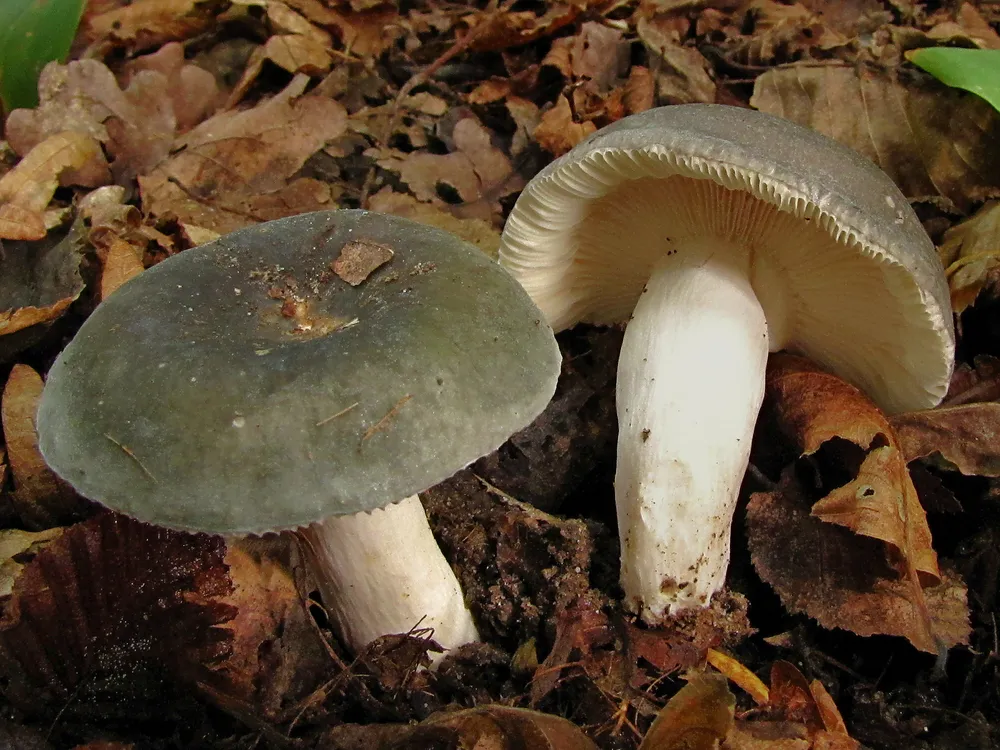
Charcoal burner
Russula cyanoxantha
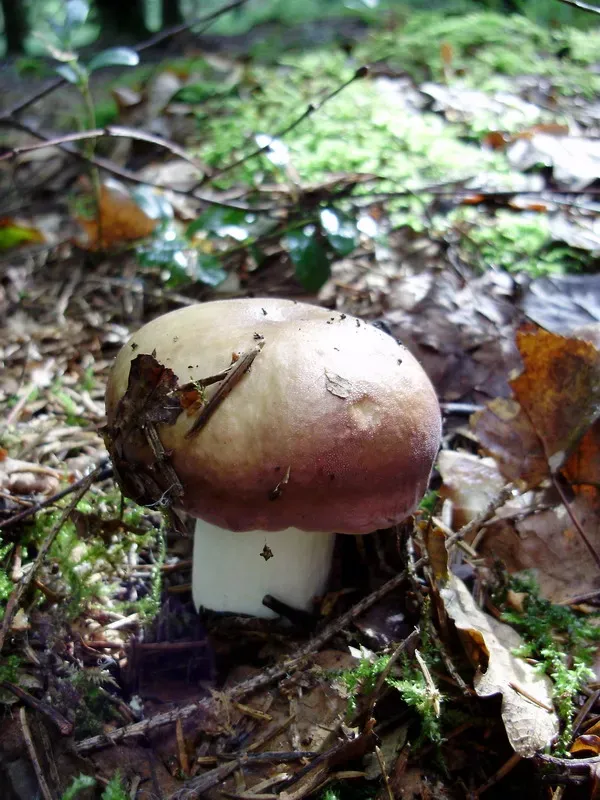
Copper brittlegill
Russula decolorans
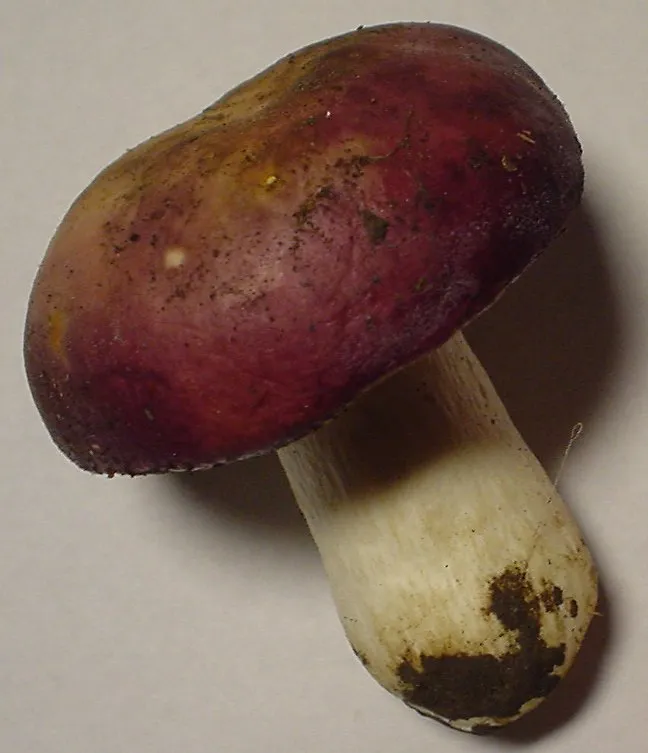
Crab brittlegill
Russula xerampelina
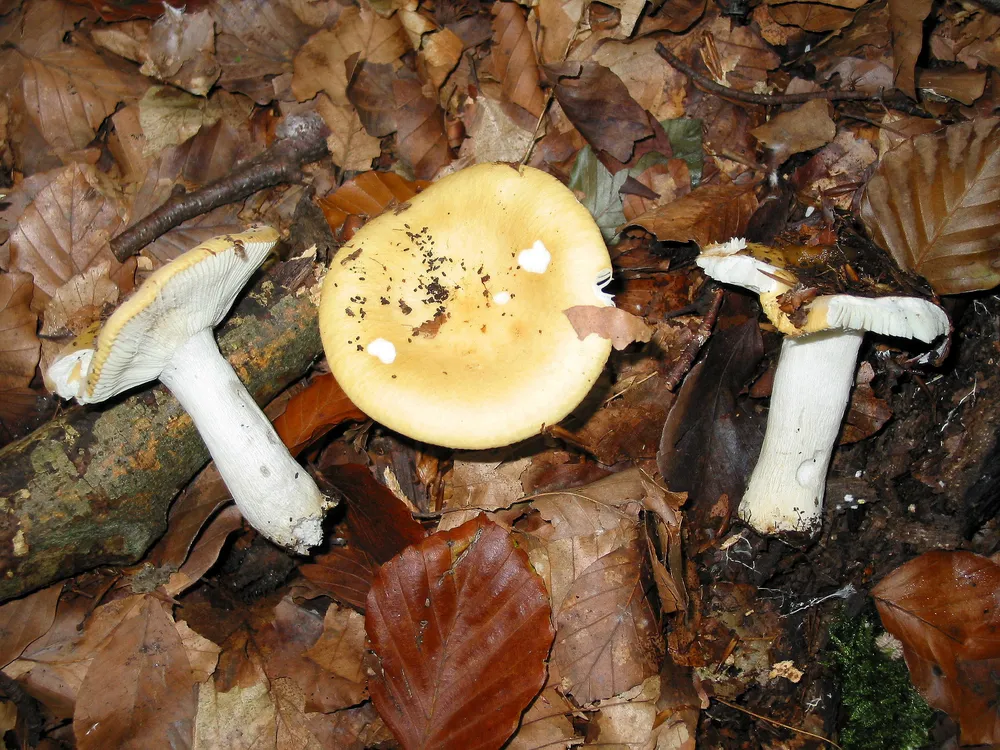
Golden brittlegill
Russula lutea
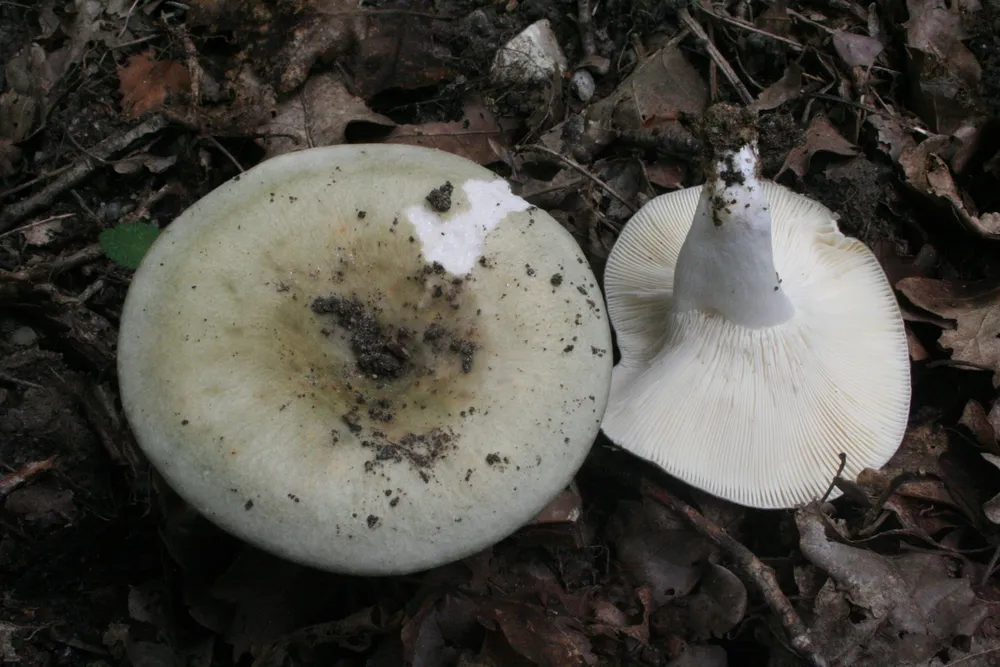
Greasy green brittlegill
Russula heterophylla
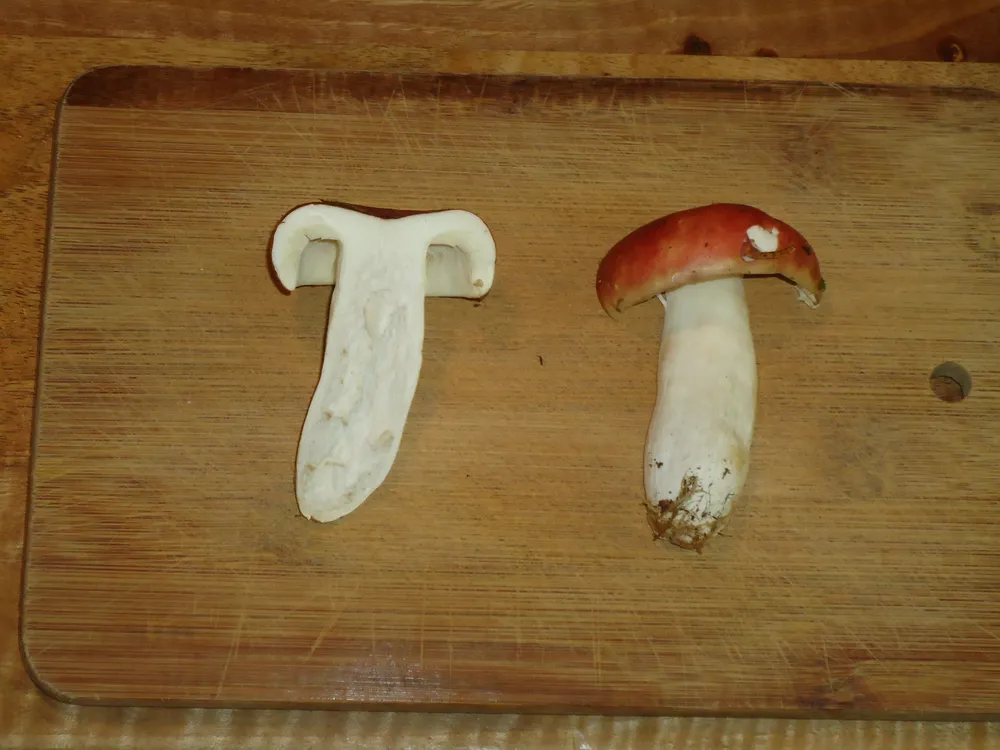
Hintapink
Russula paludosa
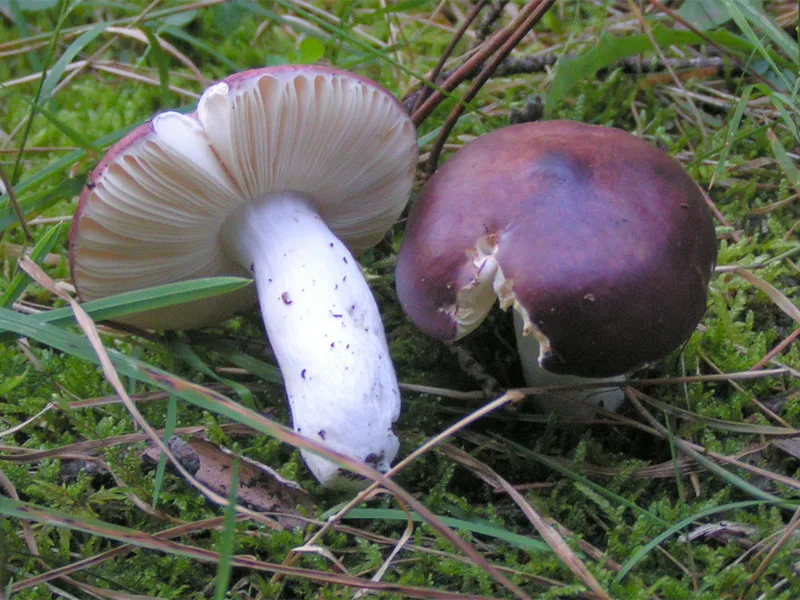
Humpback brittlegill
Russula caerulea
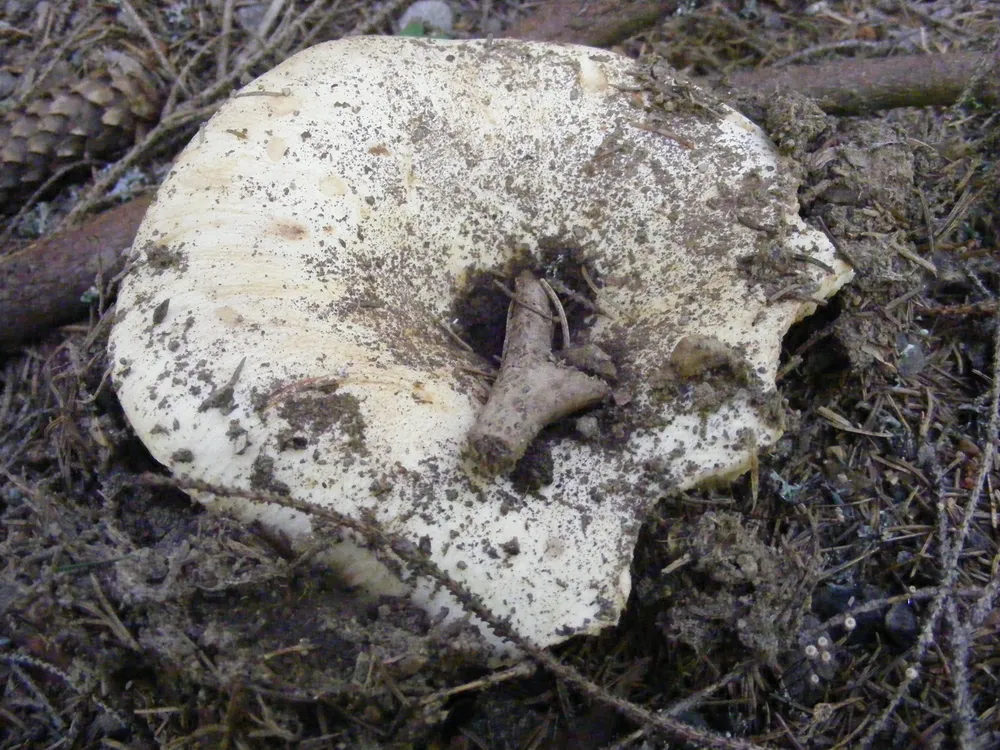
Milk-white brittlegill
Russula delica
Related reading
Frequently asked questions
Is Gilded brittlegill edible or poisonous?
Does Gilded brittlegill have gills or pores?
What does the cap of Gilded brittlegill look like?
What does the stem of Gilded brittlegill look like?
What do Gilded brittlegill smell and taste like?
Where does Gilded brittlegill grow?
Which trees does Gilded brittlegill grow under?
When should you pick Gilded brittlegill?
What can Gilded brittlegill be confused with?
How do you cook Gilded brittlegill?
Can you dry Gilded brittlegill?
What is the scientific name of Gilded brittlegill?
Sources
- [1]Вікіпедія (українська)
- [2]Атлас грибів України, Зеров Д.К. (1979)
- [3]MycoBank Database
- [4]Index Fungorum
- [5]GBIF
- [6]iNaturalist Ukraine