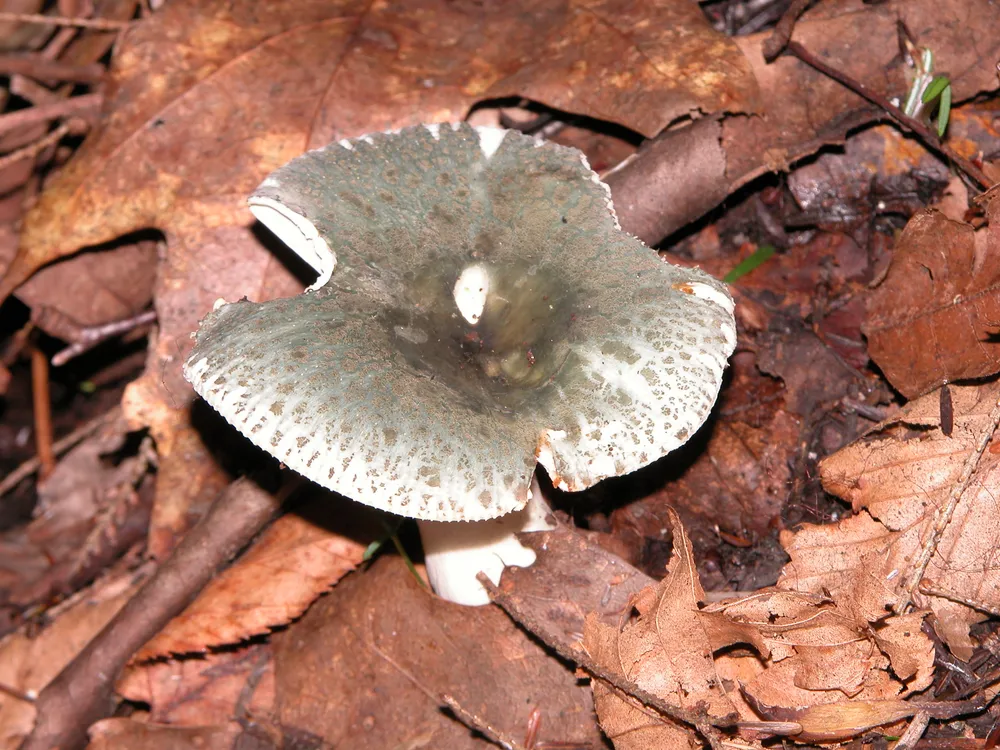
Greencracked brittlegillRussula virescens
Expert-verifiedUpdated October 3, 2026
Passport
- Edibility
- Edible
- Season
- Jun — Sep
- Hymenophore
- Gilled
- Cap color
- Green
- Size
- Medium (5–15 cm)
- Smell
- Pleasant, mushroomy
- Reviewed
- Yes ✓
Quick answers
Where to look?
Deciduous forest, Mixed forest
When does it appear?
Jun — Sep
Active months: June, July, August, September.
How to recognize it? Three signs
- Cap color: Green, Olive
- Cap shape: Convex, Flat, Concave
- Smell: Pleasant, mushroomy
Fruiting season
June – September
Description
The greencracked brittlegill (Russula virescens) is one of the most prized edible brittlegills, standing out from most members of the genus with its pleasant mild taste without bitterness. It grows in broadleaf and mixed forests, mostly under oak and beech.
It fruits from June to October. You can identify it confidently by its cracked green cap and firm white flesh. The absence of a ring and volva distinguishes brittlegills from amanitas.
Edible without parboiling. Good fried, salted and fresh. Popular in Slavic cuisine.
Cap
Cap 5–15 cm across, spherical in young mushrooms, then flat or slightly depressed. The surface is matte, dry, cracked into small polygonal patches — a characteristic “mosaic” pattern. Color green, grayish green, sometimes with yellowish or grayish zones. The margin is blunt.
Hymenophore
Gills crowded, even, brittle, white. They don't change color when damaged. Spore print white. The gills snap easily under your finger — the brittleness typical of the genus Russula.
Stem
Stem 4–10 cm tall, 1.5–3 cm thick, firm, evenly cylindrical or slightly narrowing toward the base. The surface is white, smooth or slightly wrinkled. No ring and no volva — an important safety feature.
Flesh
Flesh firm, white, crunchy, crumbles easily — the so-called “brittlegill” brittleness. It doesn't change color when damaged and releases no milk. The taste is mild and nutty, without bitterness — one of the few brittlegills that can be eaten raw without danger.
Smell
Smell unobtrusive, pleasant, faintly nutty. It lacks the sharp or unpleasant notes typical of some poisonous brittlegills. When cooked, the aroma grows stronger, taking on warm woodland notes.
Lookalikes
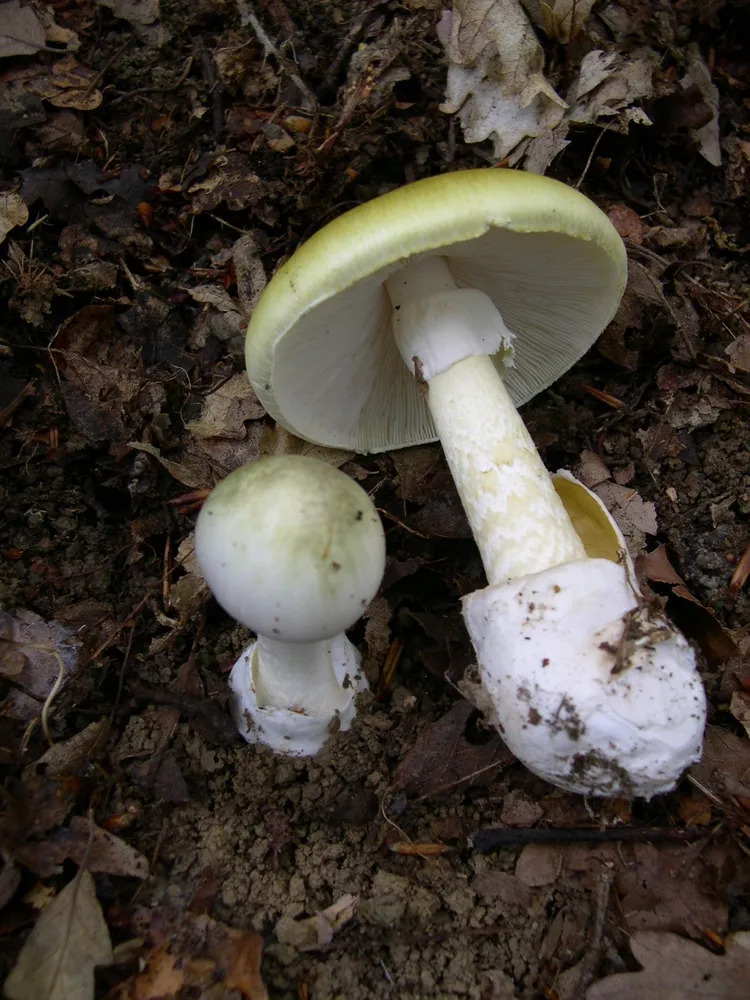
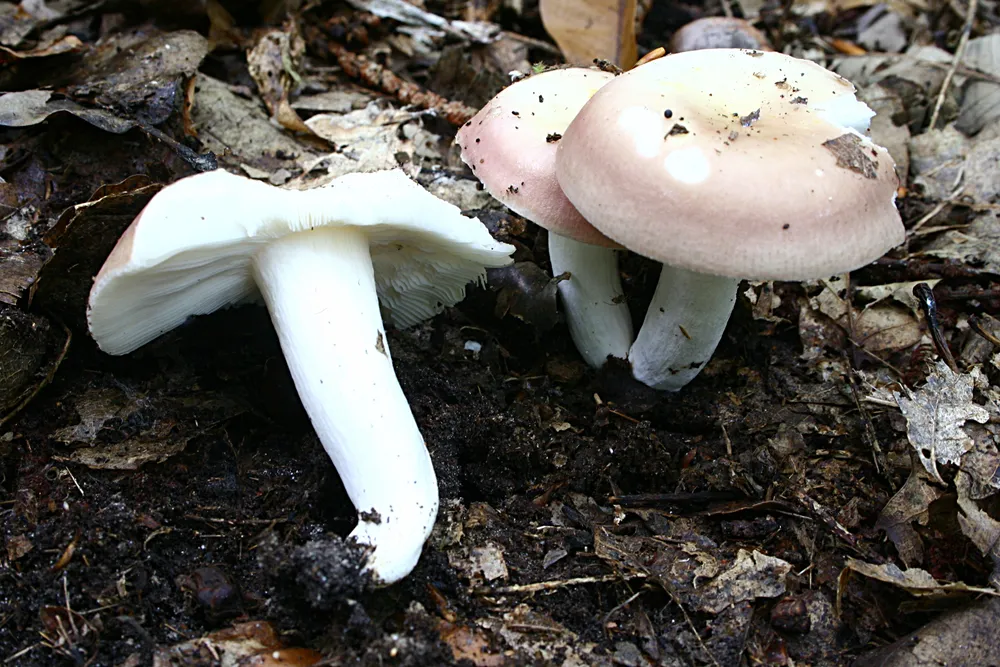
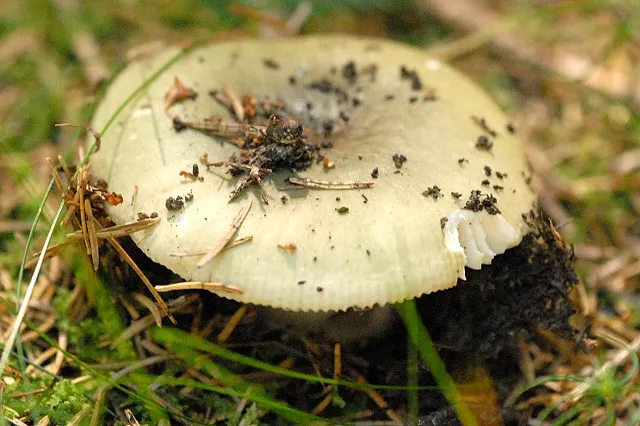
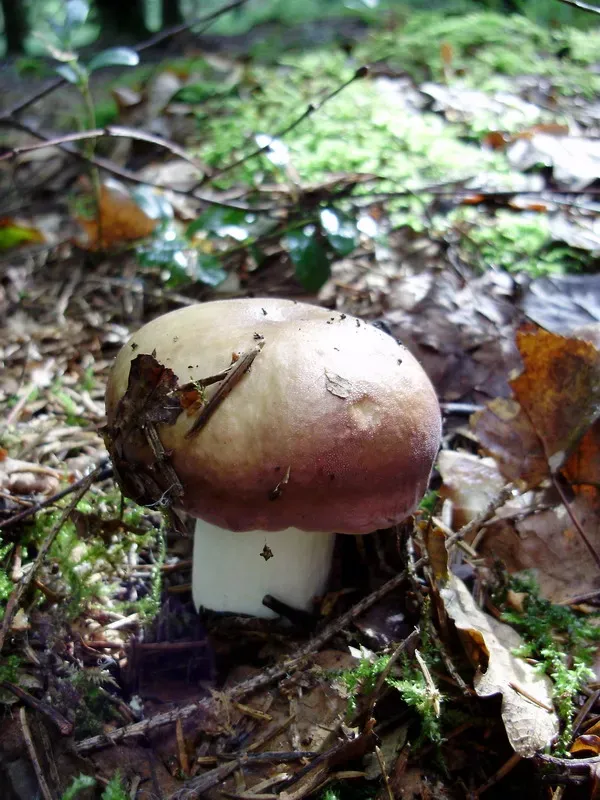
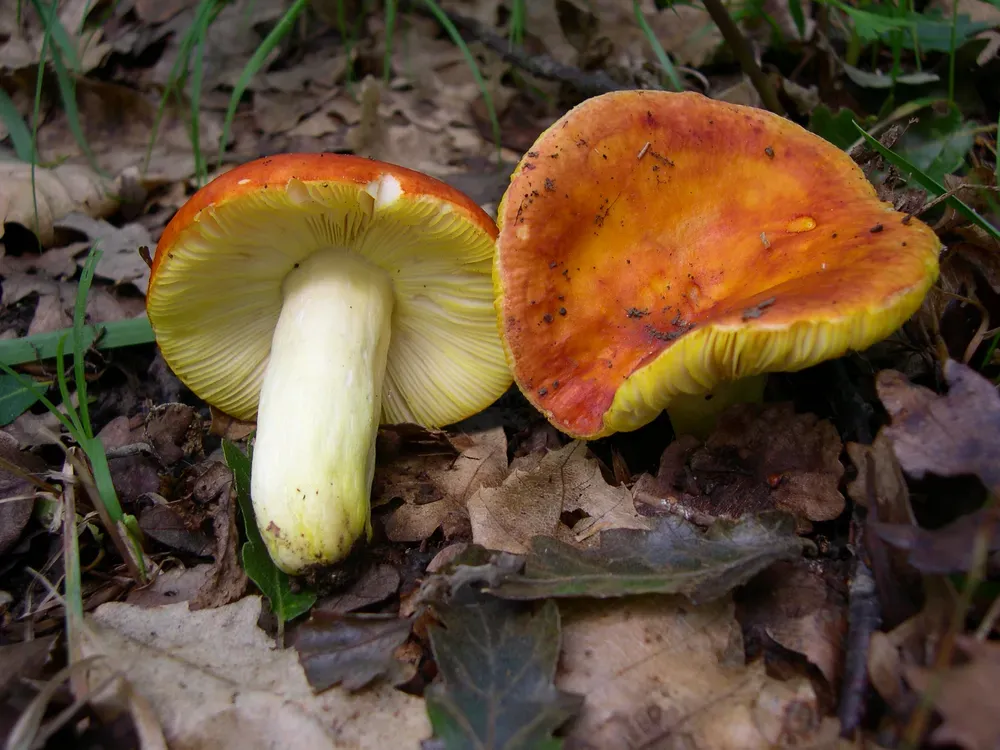
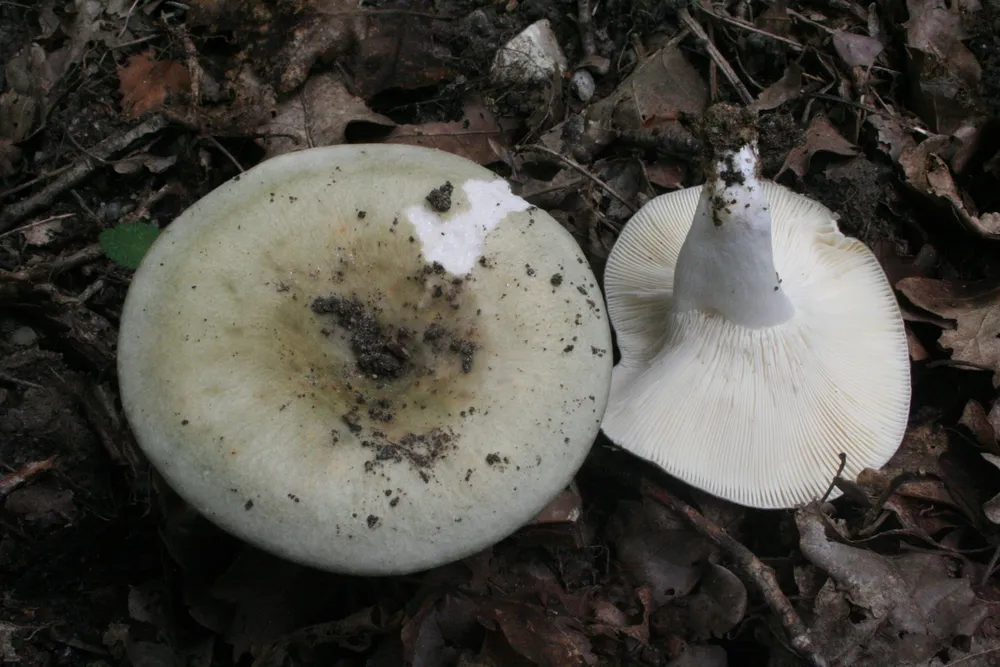
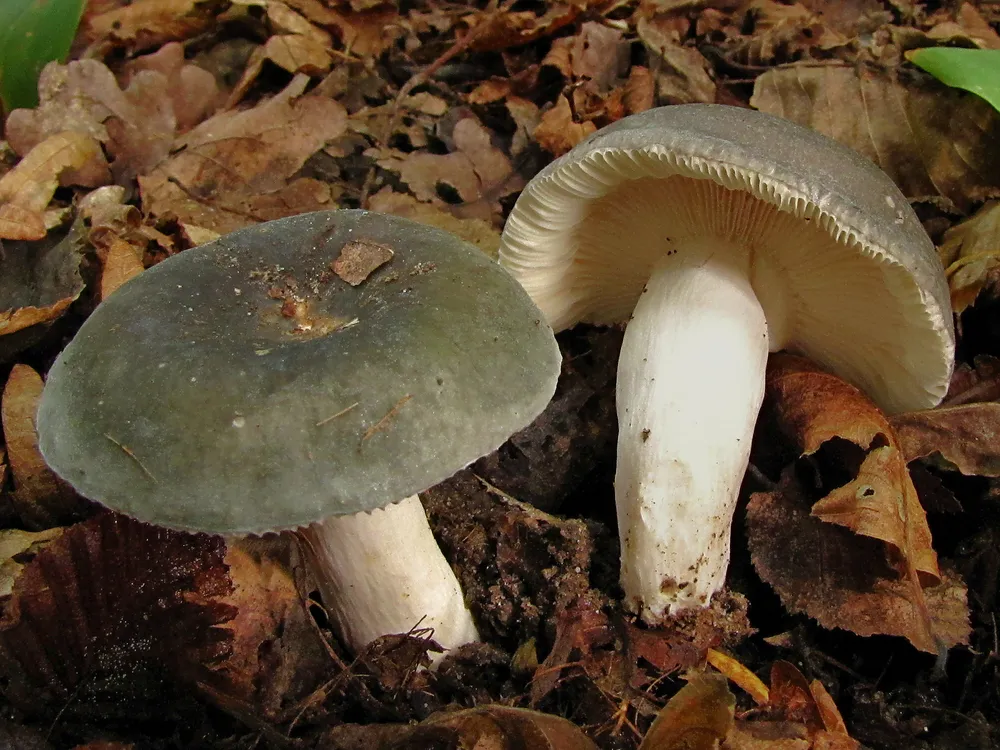
Related species
Mushrooms of the same genus and habitat — to study side by side and never mix up.
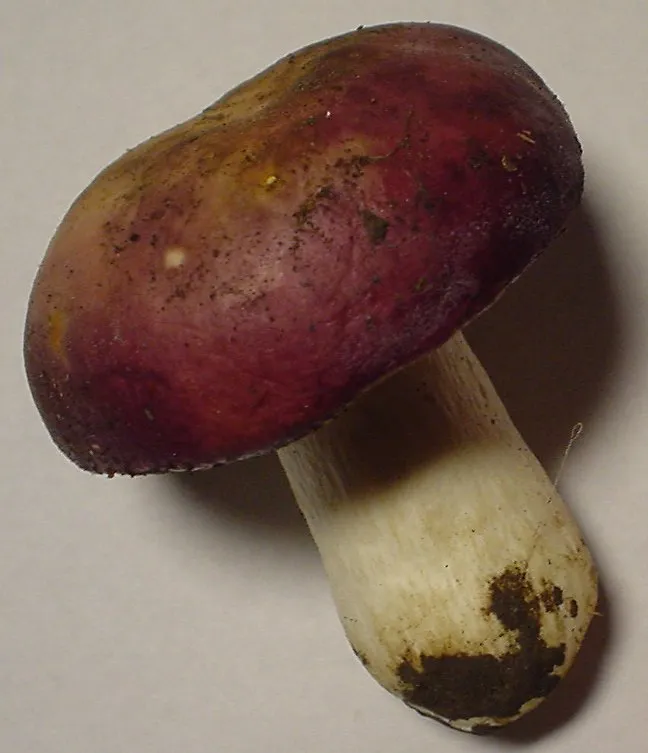
Crab brittlegill
Russula xerampelina
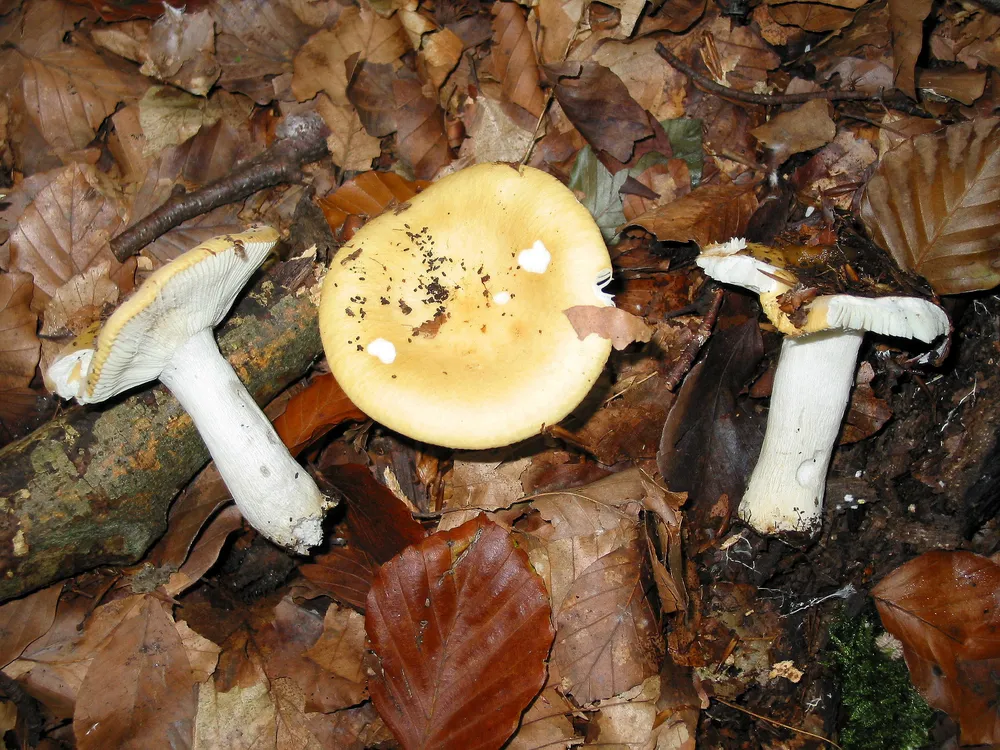
Golden brittlegill
Russula lutea
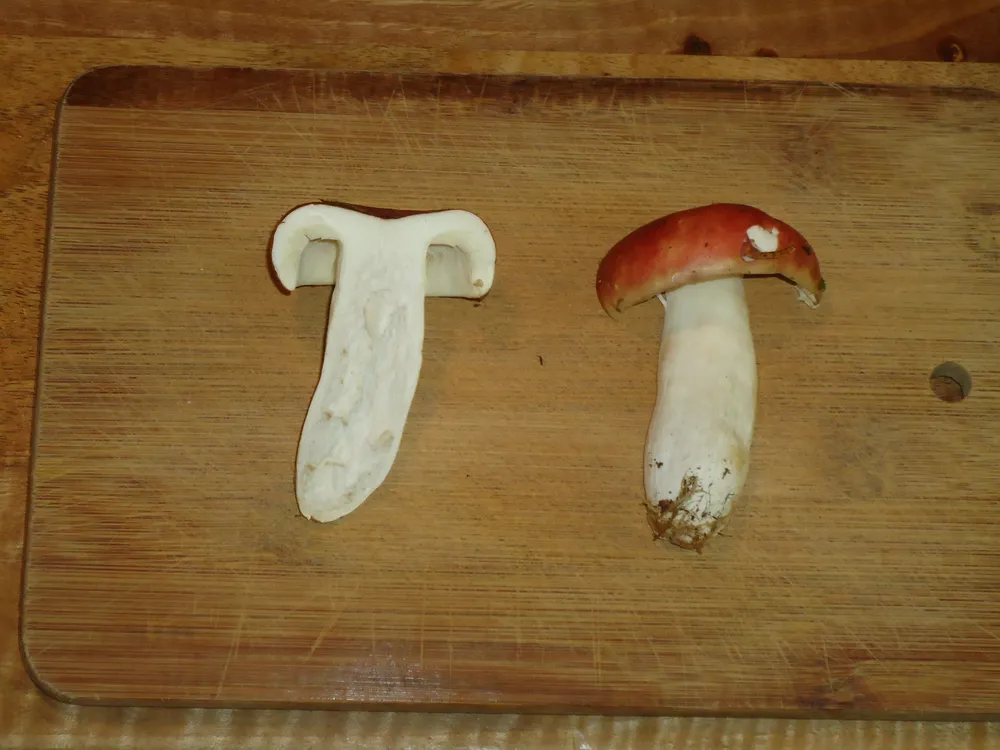
Hintapink
Russula paludosa
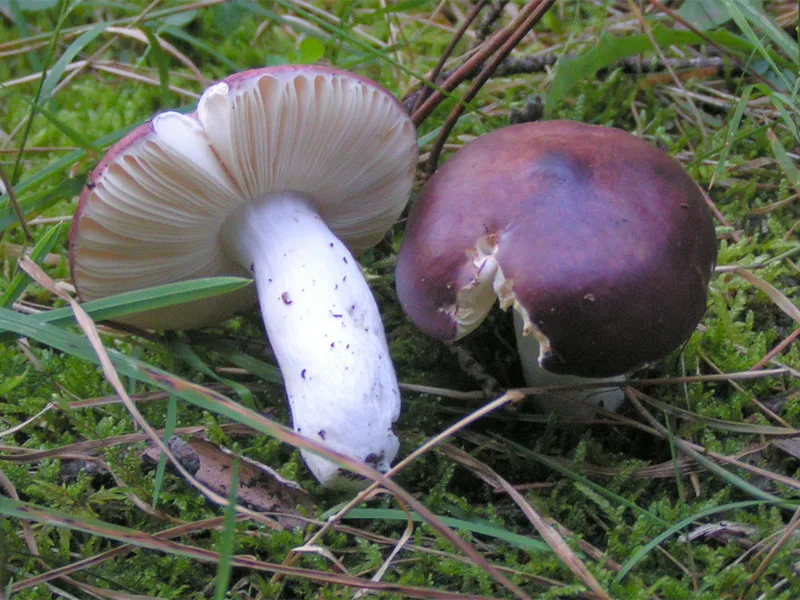
Humpback brittlegill
Russula caerulea
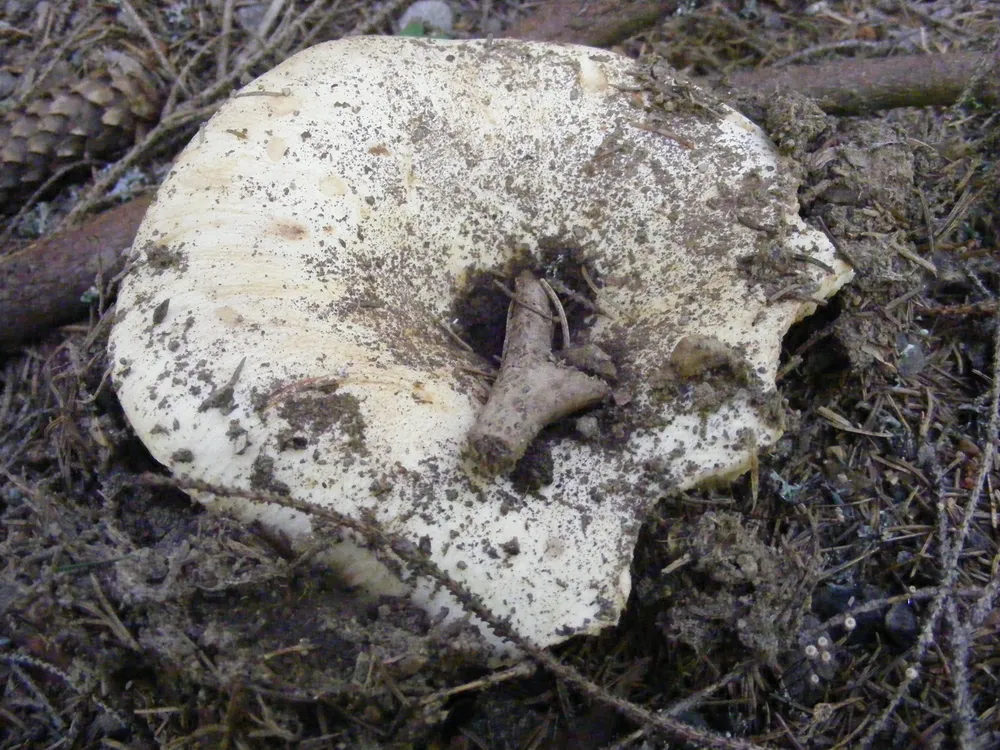
Milk-white brittlegill
Russula delica
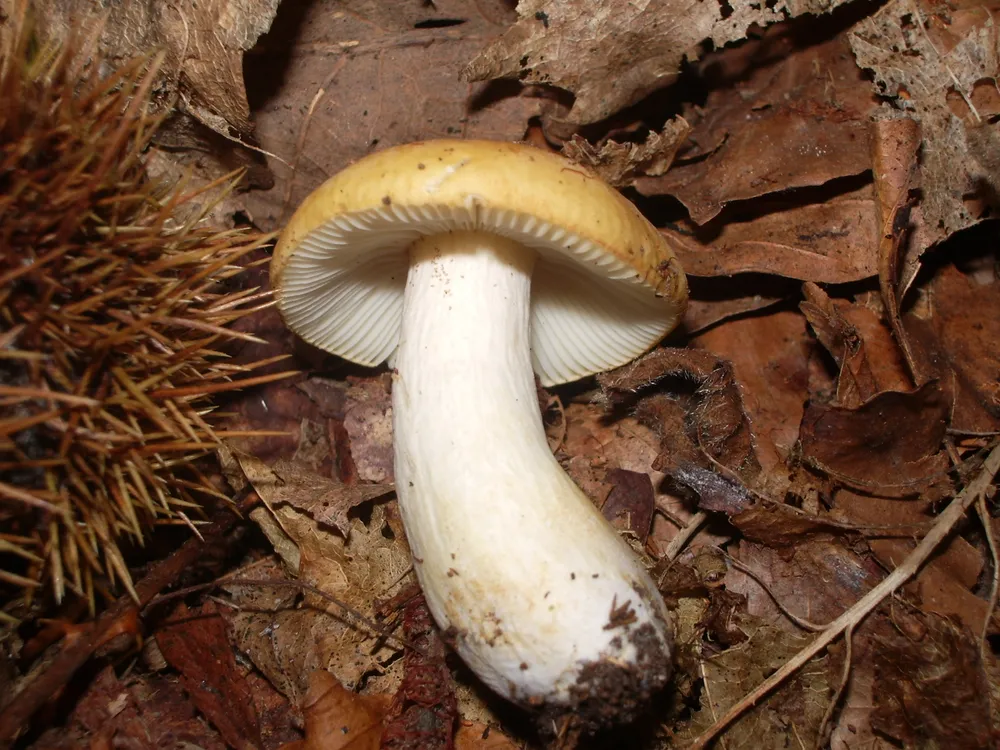
Ochre brittlegill
Russula ochroleuca
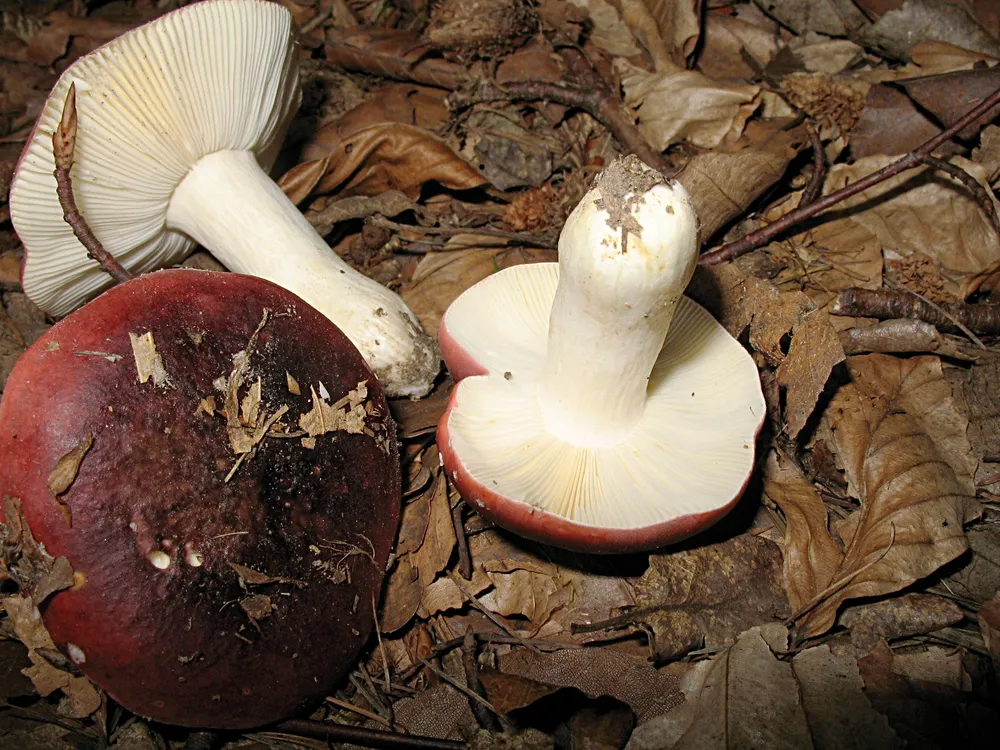
Purple brittlegill
Russula atropurpurea
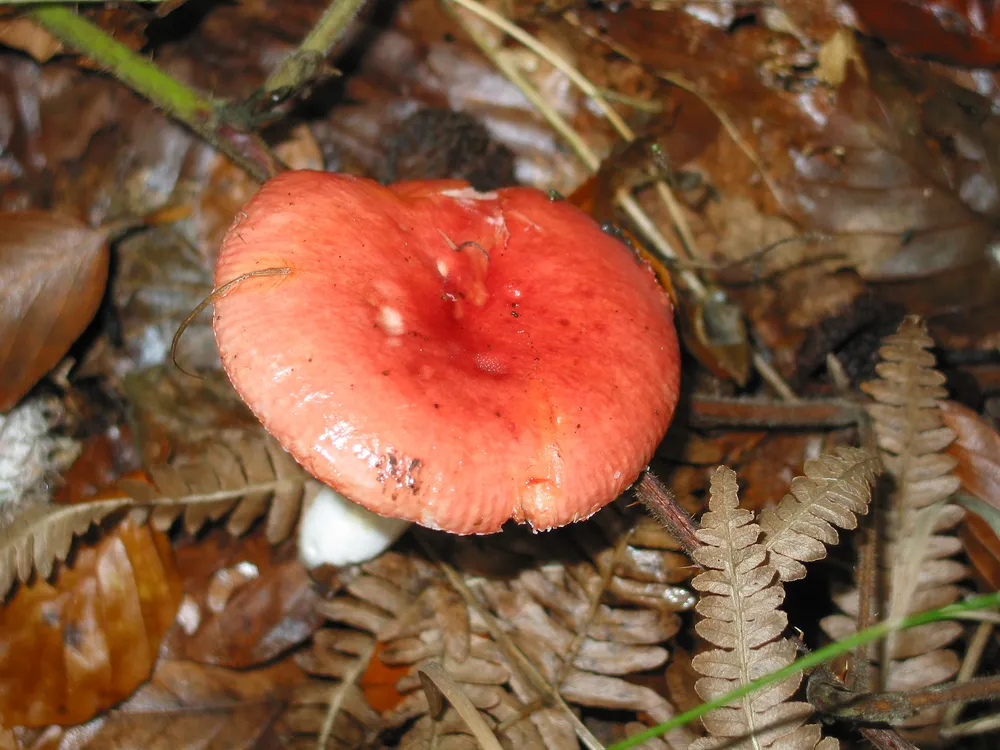
Rosy brittlegill
Russula rosea
Related reading
 Safety
Yellow knight and green brittlegill: edible or dangerous?
Greenish mushrooms make people wary, and for good reason: the deadly death cap is among them. We look at the y…
August 8, 2026·3 min Safety
Which brittlegills are poisonous, and how to tell them from edible ones
Most brittlegills are edible, but some are acrid and dangerous. Here's which brittlegills to leave behind and…
August 7, 2026·2 min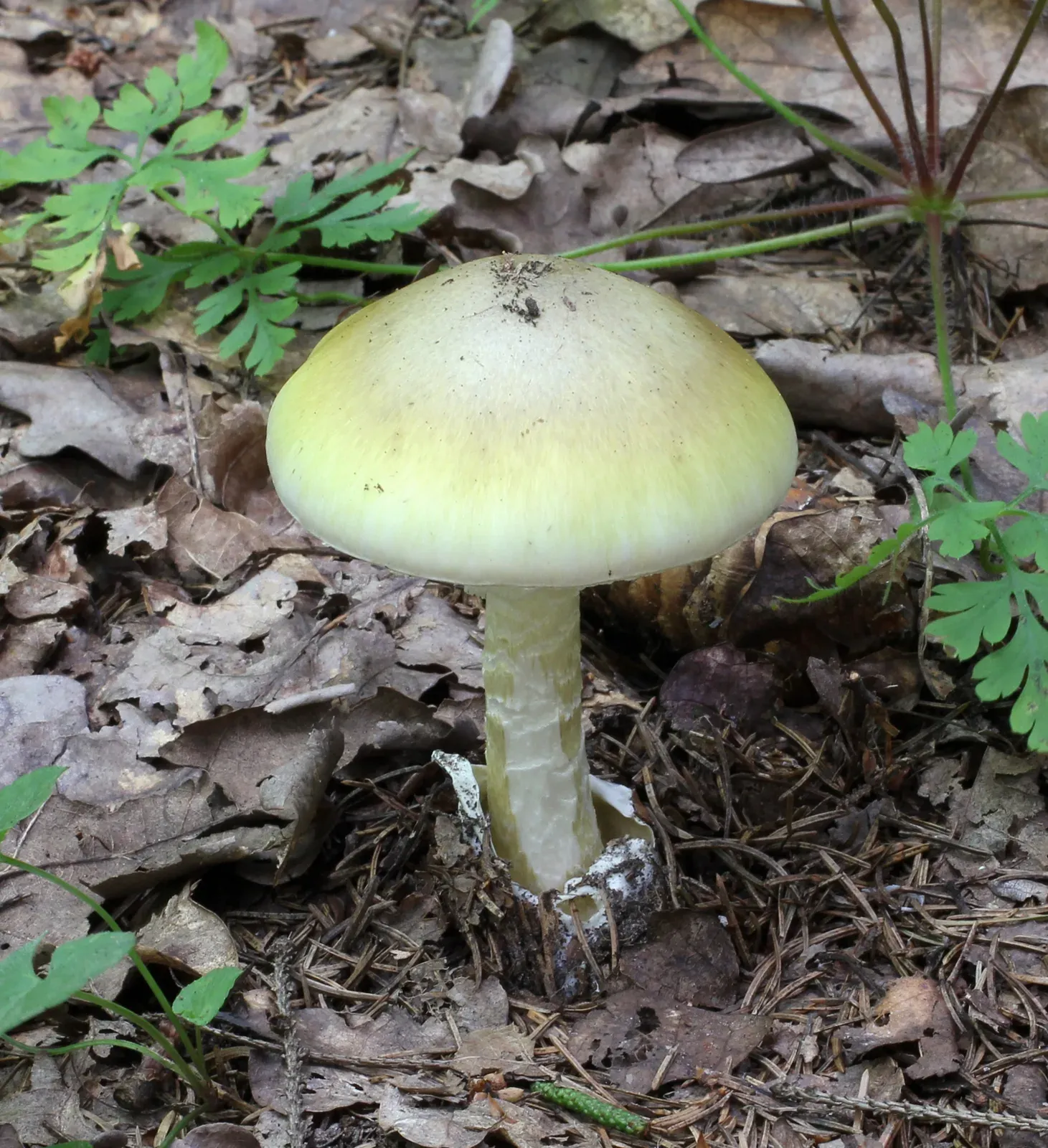 Safety
Brittlegill lookalikes: how not to confuse them with a death cap
Brittlegills hide a dangerous trap: a green or whitish brittlegill can be mistaken for the deadly death cap. H…
July 20, 2026·2 min
Frequently asked questions
Is Greencracked brittlegill edible or poisonous?
Does Greencracked brittlegill have gills or pores?
What does the cap of Greencracked brittlegill look like?
What does the stem of Greencracked brittlegill look like?
What do Greencracked brittlegill smell and taste like?
Where does Greencracked brittlegill grow?
Which trees does Greencracked brittlegill grow under?
When should you pick Greencracked brittlegill?
What can Greencracked brittlegill be confused with?
How do you cook Greencracked brittlegill?
Can you dry Greencracked brittlegill?
What is the scientific name of Greencracked brittlegill?
Sources
- [1]Атлас грибів України, Зеров Д.К. (1979)
- [2]GBIF