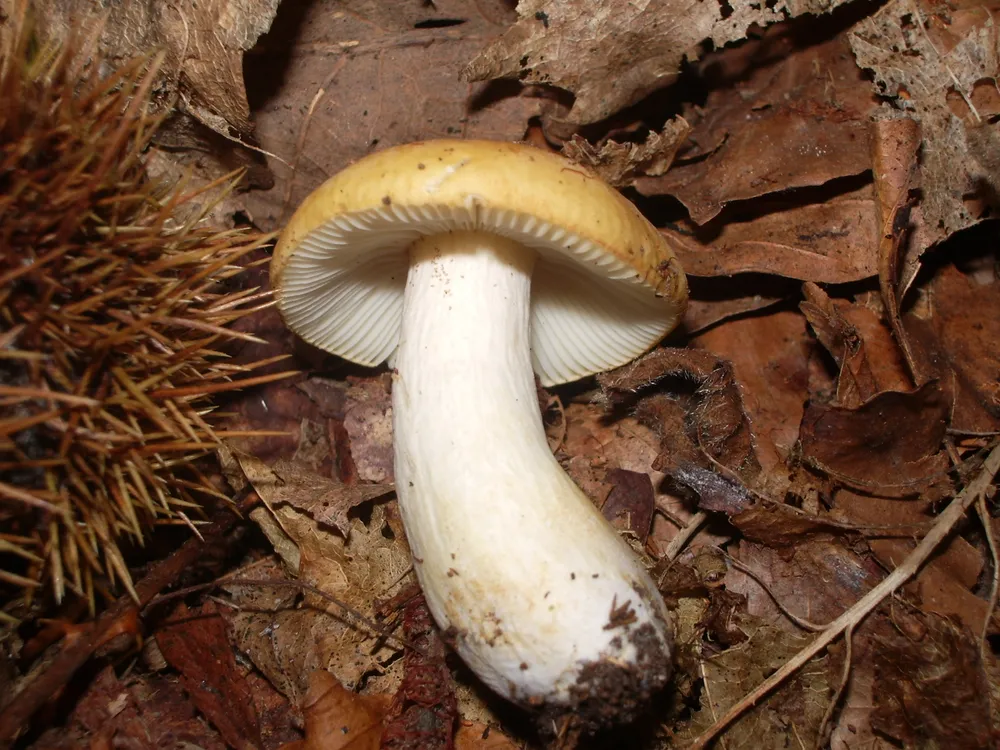
Ochre brittlegillRussula ochroleuca
Expert-verifiedUpdated October 3, 2026
Passport
- Edibility
- Conditionally edible
- Season
- Aug — Nov
- Hymenophore
- Gilled
- Cap color
- Yellow
- Size
- Medium (5–15 cm)
- Smell
- Odorless
- Reviewed
- Yes ✓
Quick answers
Where to look?
Conifer forest, Deciduous forest, Mixed forest
When does it appear?
Aug — Nov
Active months: August, September, October, November.
How to recognize it? Three signs
- Cap color: Yellow, Olive
- Cap shape: Depressed
- Smell: Odorless
Fruiting season
August – November
Description
The ochre brittlegill (Russula ochroleuca) is one of the most common autumn brittlegills in pine and spruce-pine forests. The Latin epithet ochroleuca means "ochre-white" — a spot-on description of the cap color: matte ochre-yellow, mustard-yellow, with a distinct grayish tinge, turning brownish-yellow in wet weather. The cap is 4-10 cm across, convex to flattened, with a slightly depressed center.
Conditionally edible — young fruiting bodies taste mild, but mature ones often develop a bitterish aftertaste, especially in the gills and stem. Because of this variability the species' status is ambiguous: some Soviet-era literature lists it as "edible, category 3", while Western European sources call it "conditionally edible" with mandatory boiling. The key check is a taste test before cooking.
Diagnostic features of Russula ochroleuca: Ochre-yellow, mustard-yellow, grayish-yellow cap color The cap skin peels back about 1/3 of the way (not as easily as in many brittlegills) Spore print pale cream to pale ochre Taste mild when young, bitterish when mature (tongue test) Smell faint and neutral Grows in pine, spruce and beech forests in the forest litter
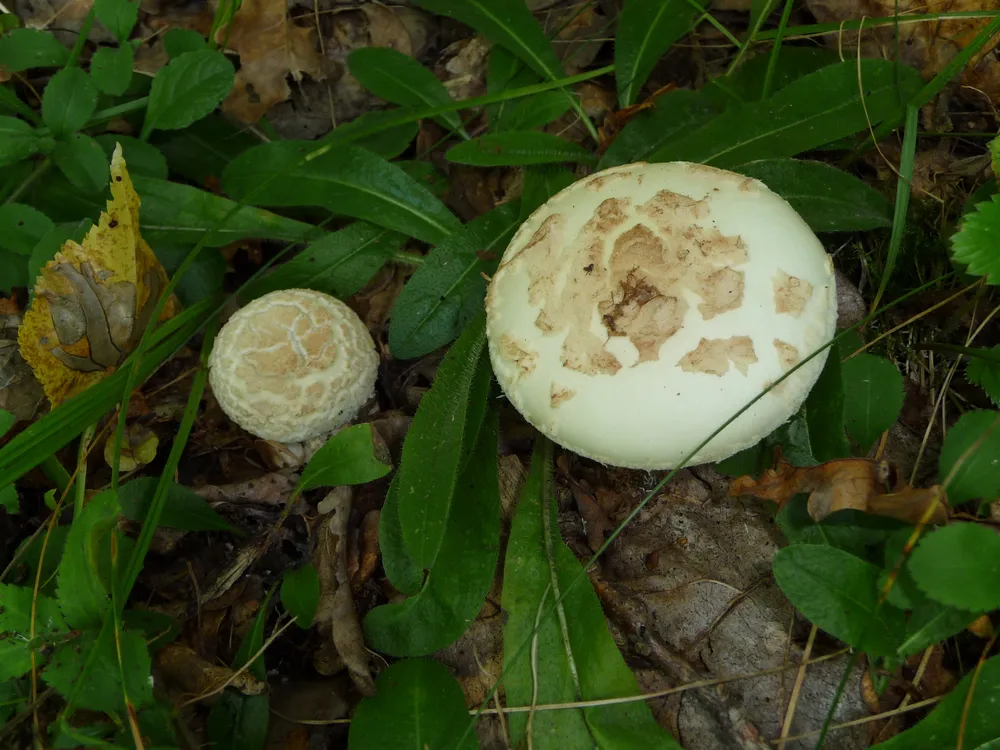
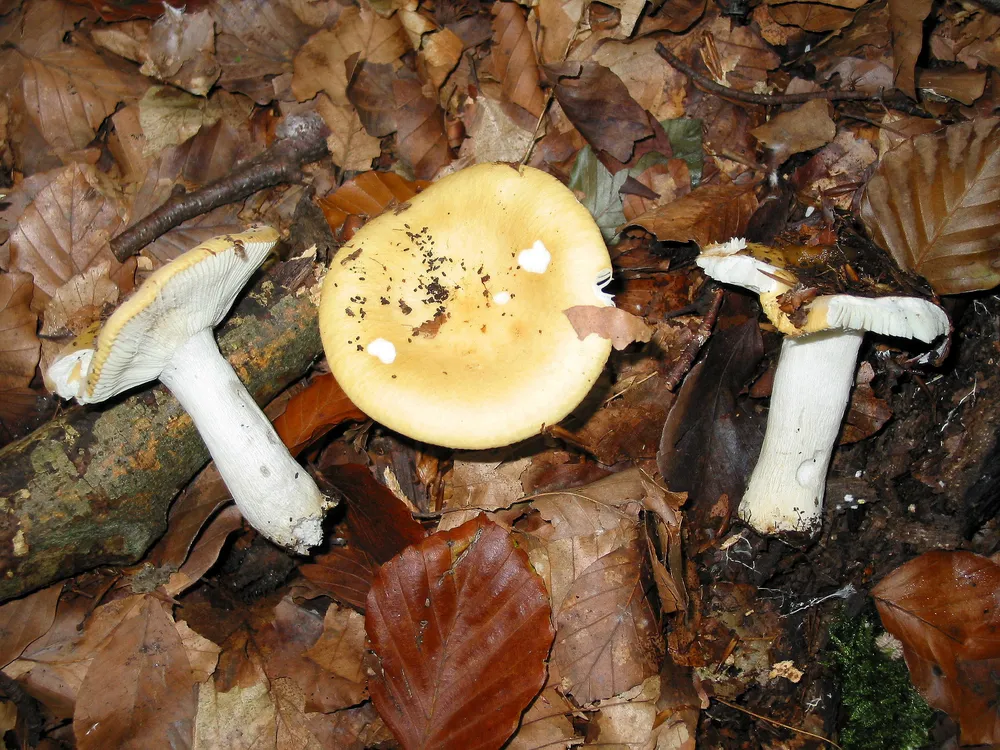
The main risk is confusing it with acrid yellowish brittlegills (R. fellea — yellow-ochre and distinctly bitter-acrid) and with poisonous yellow webcaps (Cortinarius spp.) and young false death caps (Amanita citrina) (with a ring and volva).
In Ukraine, Russula ochroleuca is common in pine, spruce and mixed forests: the Carpathians, Prykarpattia, Polissia and the forest-steppe. Season: August — November. One of the latest brittlegills — it keeps fruiting into October–November.
Cap
Cap 4-10 cm across, when young convex with an inrolled margin, with age becoming flattened with a slightly depressed center. The cap skin is matte, slightly slimy in wet weather, peels back about 1/3 of the way to the center. Color: ochre-yellow, mustard-yellow, grayish-yellow, deeper toward yellow-brown at the center, paler toward the margin. Mature caps fade to pale cream. In mature specimens the margin has fine radial grooves.
Hymenophore
Gilled hymenophore — the gills are attached or free from the stem, moderately crowded, thin, brittle. Color: whitish at first, cream to pale ochre with age. Spore print pale cream to pale ochre.
Stem
Stem 4-7 cm tall, 1-2 cm thick, firm, cylindrical, hollow in old specimens. Color: white to grayish-white, with faint grayish spots in old specimens. Surface smooth with lengthwise wrinkles. No ring.
Flesh
Flesh firm, brittle, white to cream. Does not change color when cut, or slowly turns grayish. Smell faint, neutral, taste mild when young, often bitterish when mature (tongue test).
Smell
Faint and neutral, with nothing distinctive.
›Scientific synonyms (3)
Agaricus ochroleucus (Pers.) Pers., Russula constans Britzelm., Russula granulosa Cooke
Lookalikes
Related species
Mushrooms of the same genus and habitat — to study side by side and never mix up.
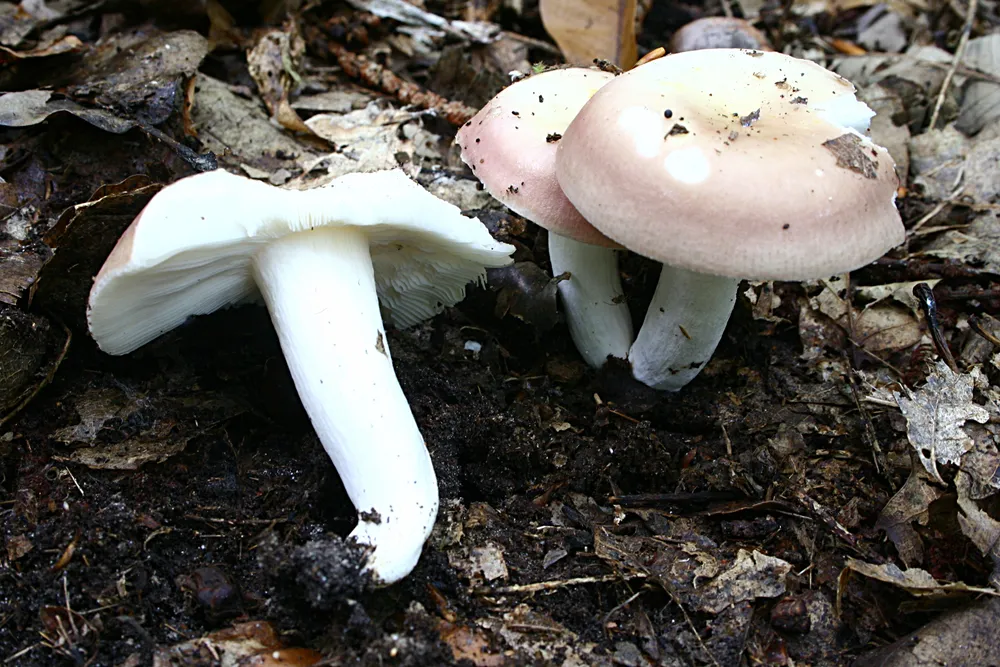
Bare-toothed russula
Russula vesca
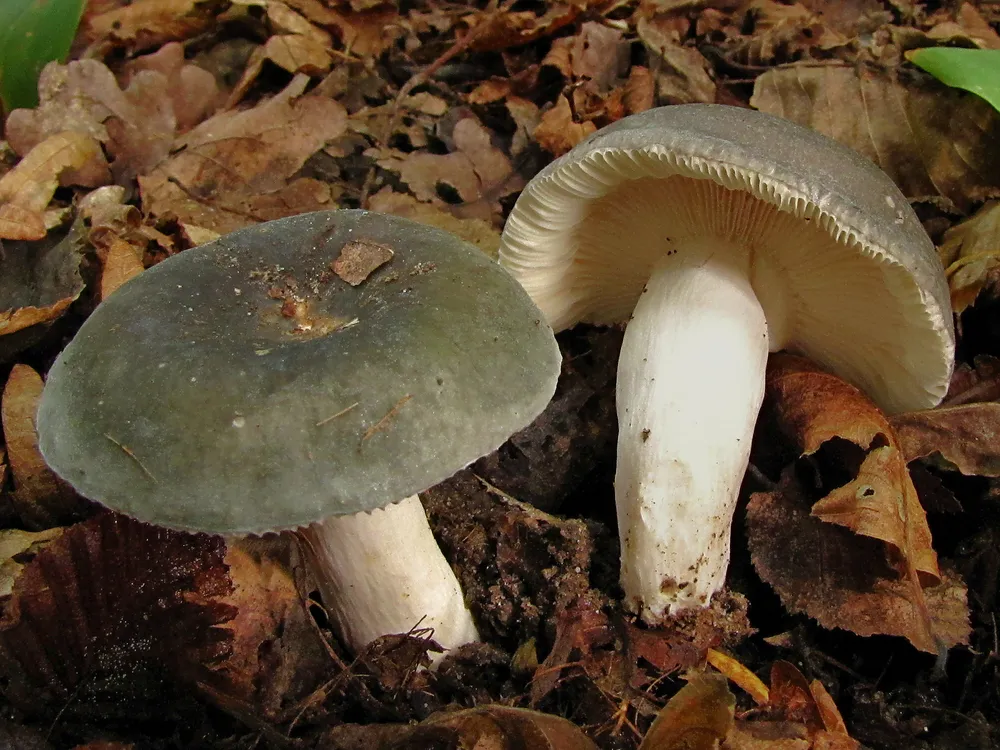
Charcoal burner
Russula cyanoxantha
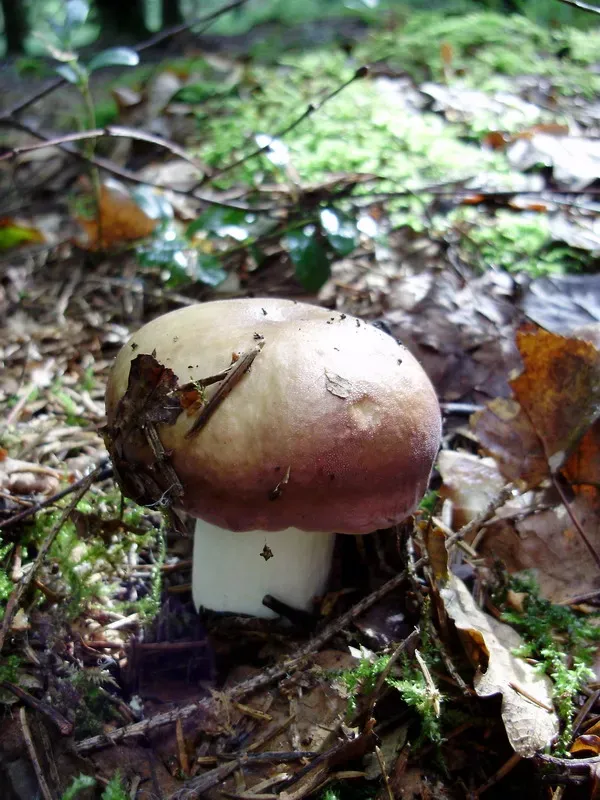
Copper brittlegill
Russula decolorans
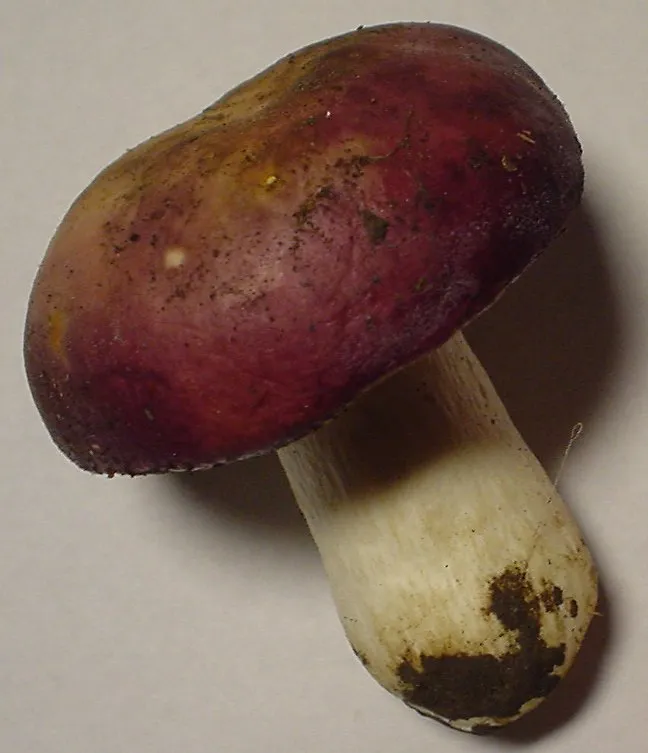
Crab brittlegill
Russula xerampelina
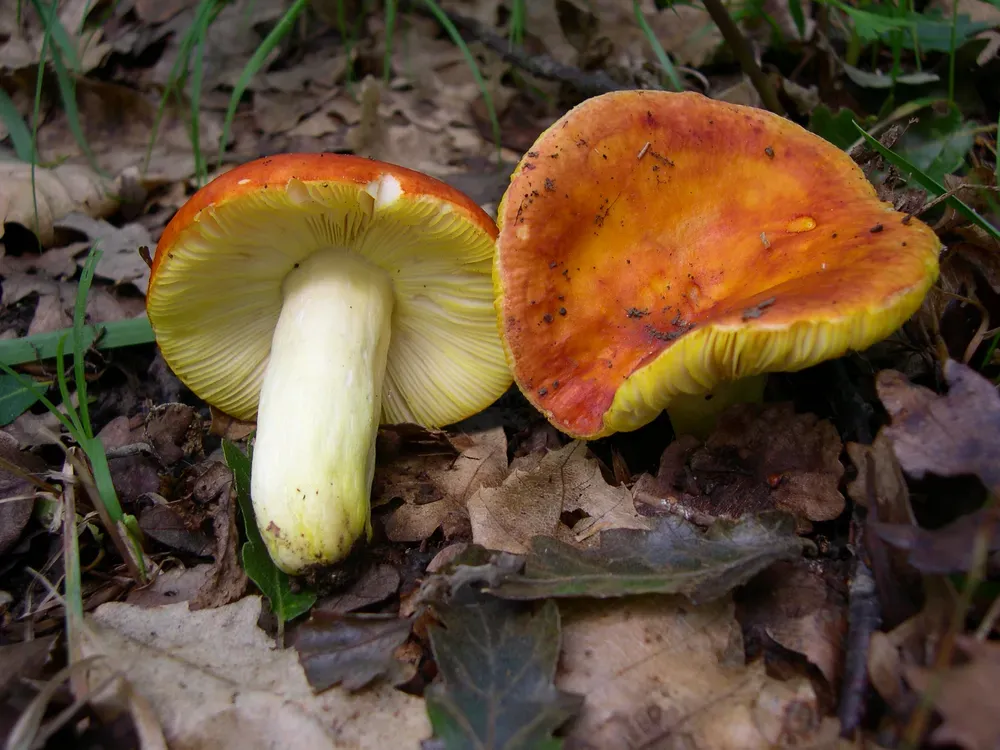
Gilded brittlegill
Russula aurea
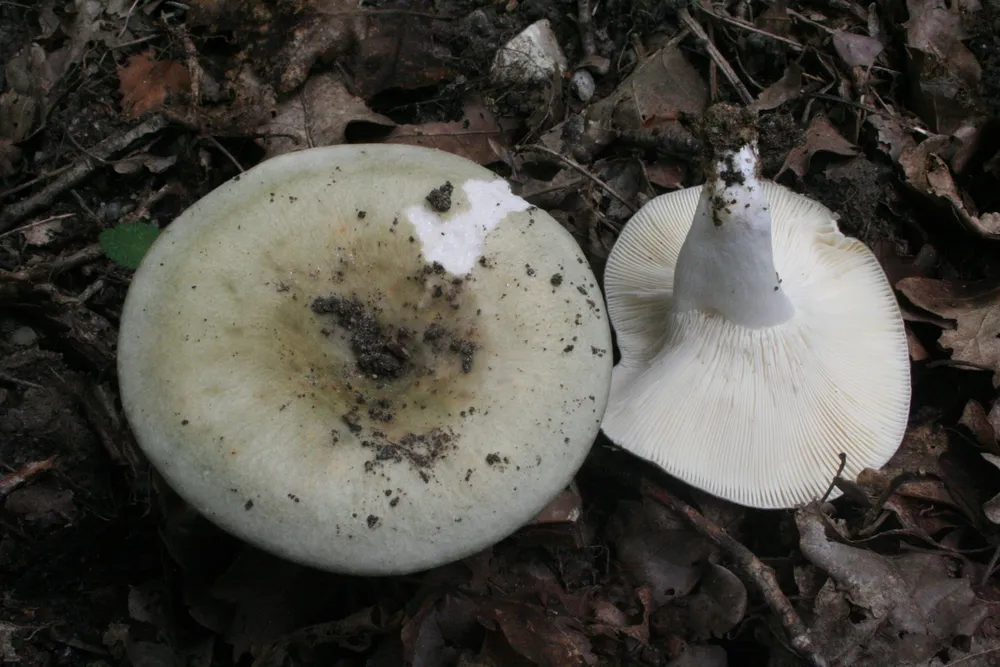
Greasy green brittlegill
Russula heterophylla
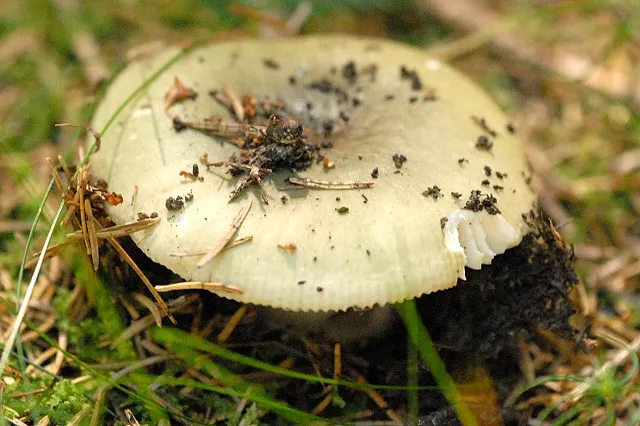
Green brittlegill
Russula aeruginea
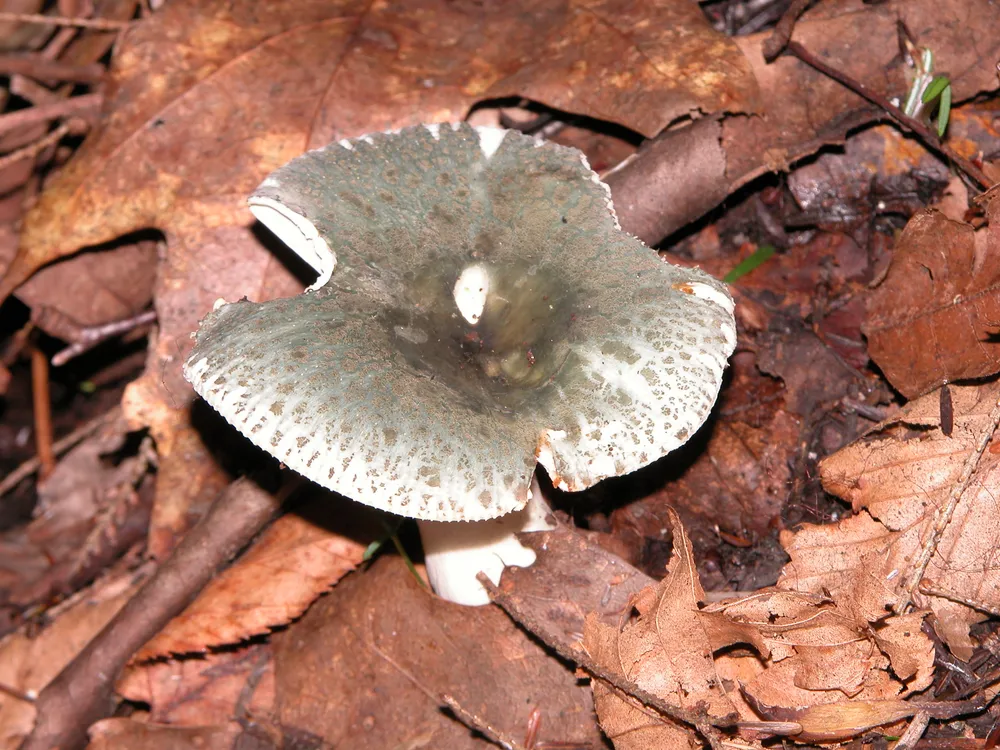
Greencracked brittlegill
Russula virescens
Frequently asked questions
Is it safe?
Safe as a conditionally edible mushroom — but always do a tongue test before cooking: hold a tiny piece (1-2 mm) of the gill edge on your tongue for 30 sec. Mild — edible; distinctly bitter and burning — throw it out (it may be R. fellea, which causes gastroenteritis). Mature fruiting bodies are often more bitter, and you're better off skipping them.
How do you cook it?
Young ones — boil for 10 min first and drain the water, then fry, add to soups or pickle. Culinary value is moderate — best in a mix with more aromatic mushrooms. Mature ones with a bitterish taste are better left behind.
How do you tell it from poisonous yellow mushrooms?
Unlike Amanita citrina (false death cap) — that one has a ring on the stem and a volva at the base. Unlike Cortinarius elegantissimus and other yellow webcaps — rusty-brown spore print (R. ochroleuca's is pale cream), plus a cobwebby veil (cortina) on young ones. Always dig out the base of the stem — no sac, no ring — it's a brittlegill.
Where should you look for it?
In pine, spruce, beech and mixed forests in the forest litter among moss and grass. It likes slightly acidic soils.
Which regions of Ukraine is it found in?
Common throughout the forest zone: the Carpathians, Prykarpattia, Polissia and the forest-steppe.
When should you look for it?
August — November, peaking in October. One of the latest brittlegills — it keeps fruiting right up to the first light frosts.
Which brittlegills is it confused with?
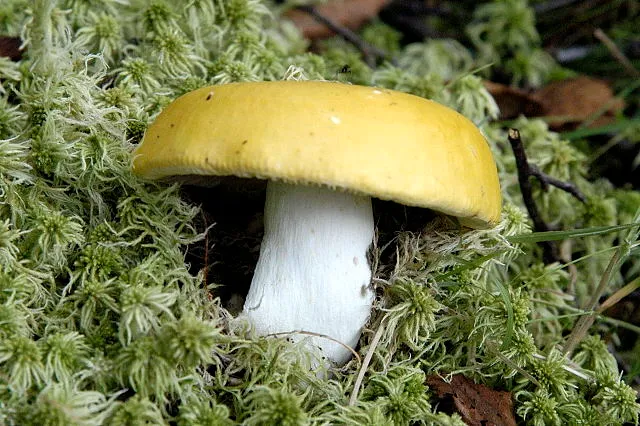
With R. fellea (geranium brittlegill, inedible!) — distinctly bitter-acrid, with a nutty smell. With R. claroflava (yellow swamp brittlegill, edible) — a richer yellow without the gray tone, grows on sphagnum. With R. acrifolia — also acrid.
Is Ochre brittlegill edible or poisonous?
Does Ochre brittlegill have gills or pores?
What does the cap of Ochre brittlegill look like?
What does the stem of Ochre brittlegill look like?
What do Ochre brittlegill smell and taste like?
Sources
- [1]Вікіпедія (українська)
- [2]Атлас грибів України, Зеров Д.К. (1979)
- [3]MycoBank Database
- [4]Index Fungorum
- [5]GBIF
- [6]iNaturalist Ukraine