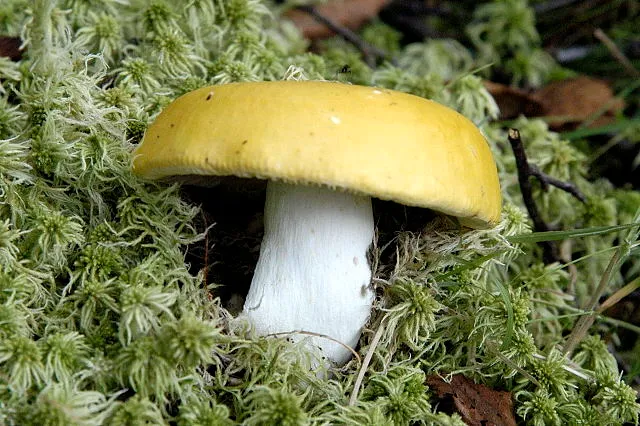
Yellow swamp brittlegillRussula claroflava
Expert-verifiedUpdated June 13, 2026
Passport
- Edibility
- Edible
- Season
- Jul — Oct
- Hymenophore
- Gilled
- Cap color
- Yellow
- Size
- Medium (5–15 cm)
- Smell
- Pleasant
- Reviewed
- Yes ✓
Quick answers
Where to look?
Mixed forest, Deciduous forest
When does it appear?
Jul — Oct
Active months: July, August, September, October.
How to recognize it? Three signs
- Cap color: Yellow
- Cap shape: Depressed
- Smell: Pleasant
Fruiting season
July – October
Description
The yellow swamp brittlegill (Russula claroflava) — an excellent edible brittlegill of damp birch and spruce-birch forests with a striking bright yellow, lemon-yellow, ochre cap. The Latin epithet claroflava means "bright yellow" (clarus — "bright", flava — "yellow") — a perfect match for its color. Cap 5-10 cm across, convex when young, flattened with age with a slightly depressed center, a rich lemon-yellow, darker in the center toward ochre-yellow.
An excellent edible mushroom of outstanding culinary quality — the flesh is tender, sweetish, not bitter, with a pleasant smell. No preliminary boiling required. Foragers value it on a par with the best brittlegills — for frying, pickling, drying. Especially tasty when young with a rich yellow color.
Diagnostic features of Russula claroflava: Intensely yellow, lemon-yellow, ochre-yellow cap (without the grayish tinge typical of R. ochroleuca!) Cap skin peels easily to 2/3 of the cap Flesh quickly turns gray to gray-black when damaged — a characteristic reaction of the species Spore print yellow-ochre Taste mild, sweetish, not bitter Smell faint, pleasant, fruity Grows in damp birch and spruce-birch forests, often on sphagnum
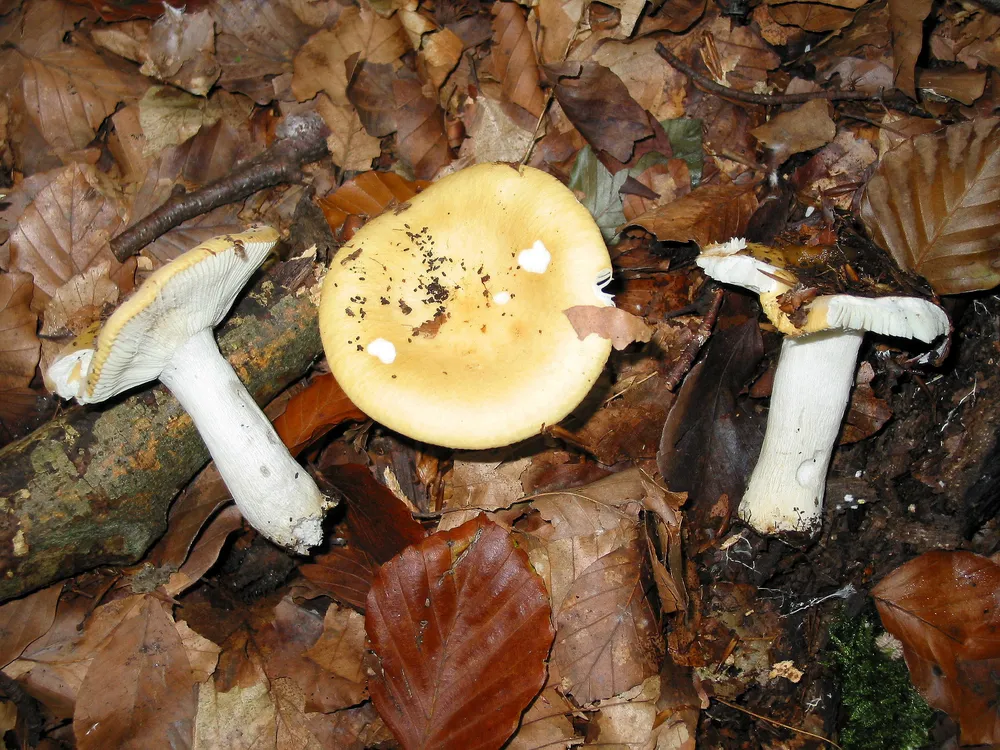
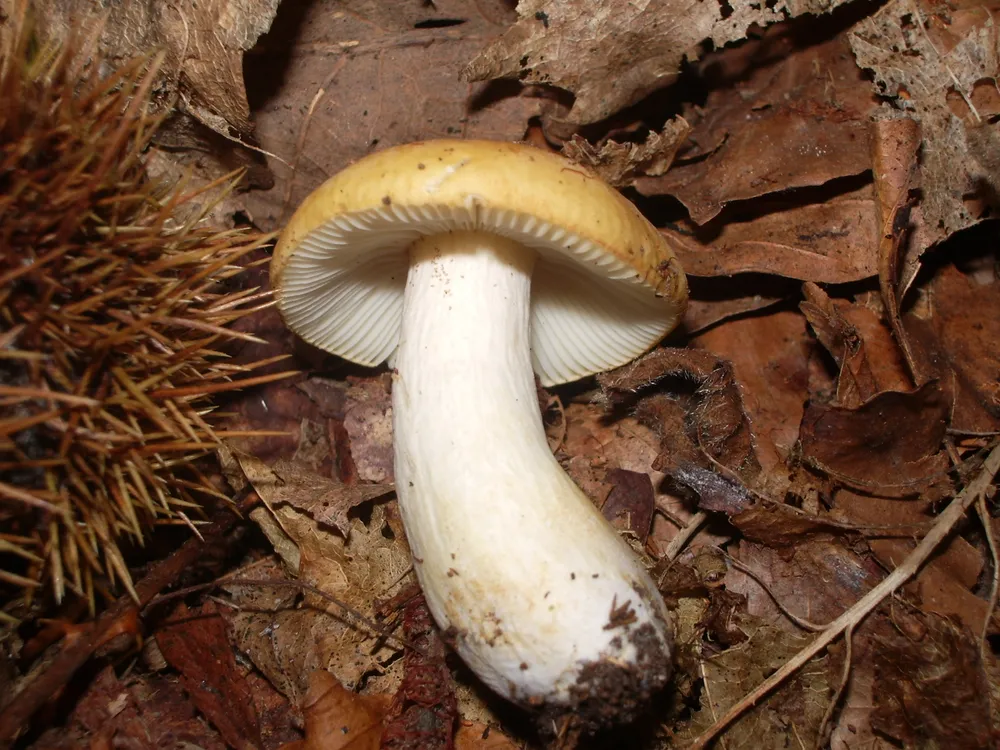
The main risk is confusing it with R. ochroleuca (ochre brittlegill, conditionally edible) — which has a grayish or mustard-yellow tone and an unpleasant bitterish taste. The key difference: R. claroflava is pure yellow, and its flesh turns gray when damaged; R. ochroleuca has a grayish tinge, and its flesh does not turn gray.
In Ukraine Russula claroflava is common in damp birch and spruce-birch forests: the Carpathians, Prykarpattia, Polissia (especially abundant in Polissia birch woods), the forest-steppe. Season July — October.
Cap
Cap 5-10 cm across, when young convex with an inrolled margin, with age becoming flattened with a slightly depressed center. The cap skin is smooth, slightly slimy in wet weather, dry and matte in dry weather, peels easily 2/3 of the way to the center. Color a rich lemon-yellow, ochre-yellow, darker in the center to yellow-brown, paler toward the margin. No grayish tinge, which sets it apart from R. ochroleuca. Mature caps have fine radial grooves at the margin.
Hymenophore
Gilled hymenophore — gills adnate or free from the stem, moderately crowded, thin, brittle. Color whitish at first, ochre-cream to yellowish with age. Spore print yellow-ochre.
Stem
Stem 5-10 cm tall, 1-2 cm thick, firm, cylindrical, hollow in old specimens. Color white to cream, quickly turns gray to gray-black when damaged — a characteristic reaction. Surface smooth with lengthwise wrinkles. No ring.
Flesh
Flesh firm, brittle, white, quickly turns gray to gray-black when cut — a reaction typical of the species (especially in the stem). Smell faint, pleasant, fruity, taste mild, sweetish, not bitter (tongue test).
Smell
Faint, pleasant, fruity, neutral-sweetish.
Lookalikes
Related species
Mushrooms of the same genus and habitat — to study side by side and never mix up.
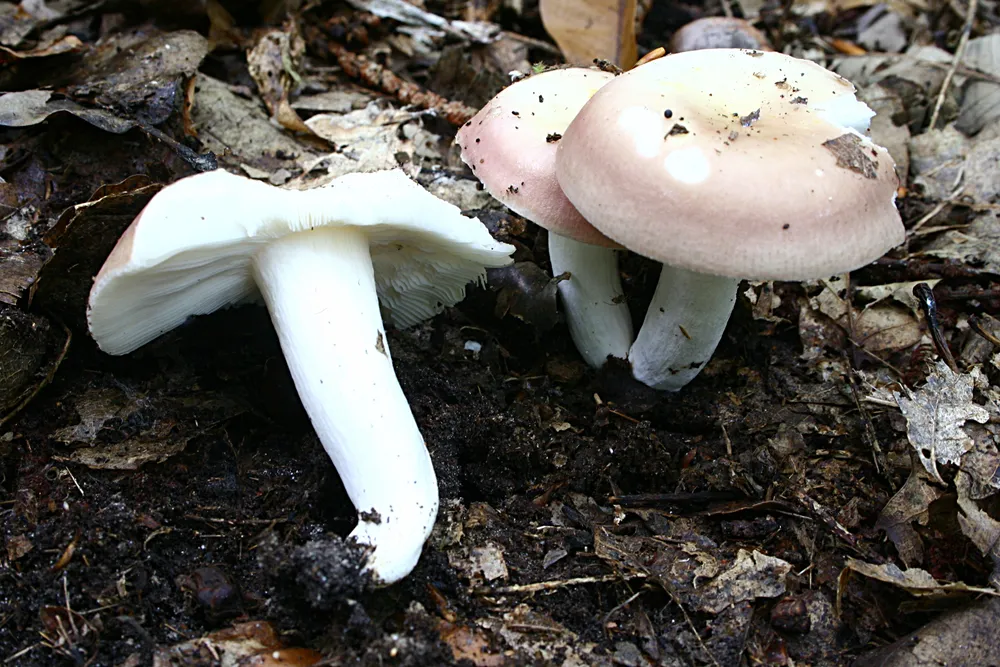
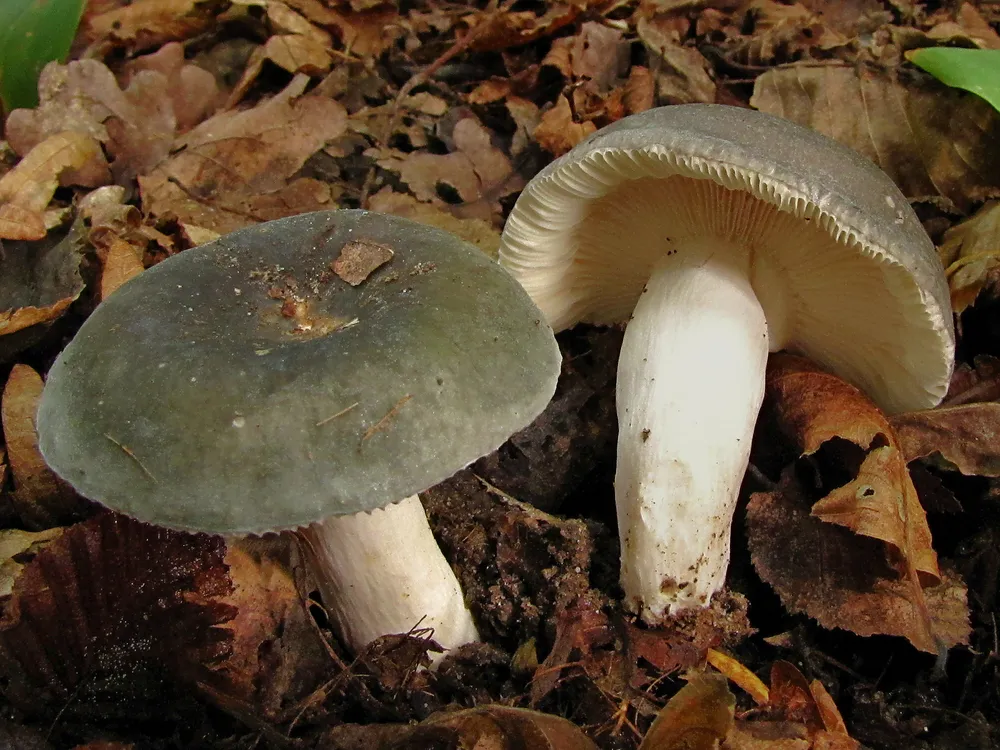
Bare-toothed russula
Russula vesca
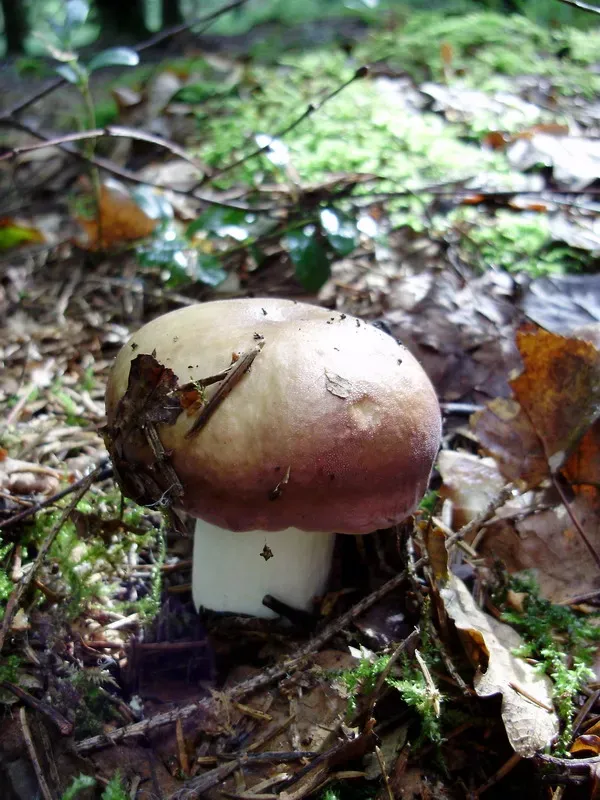
Charcoal burner
Russula cyanoxantha
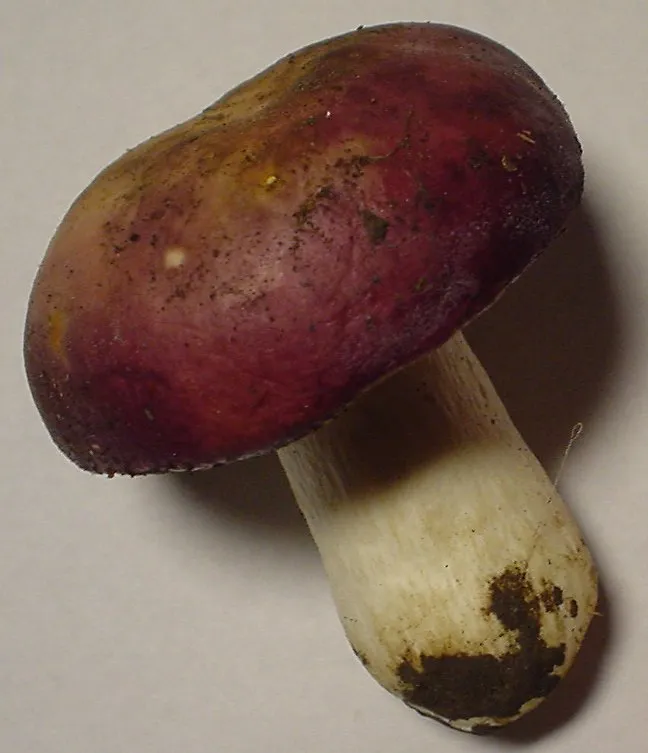
Copper brittlegill
Russula decolorans
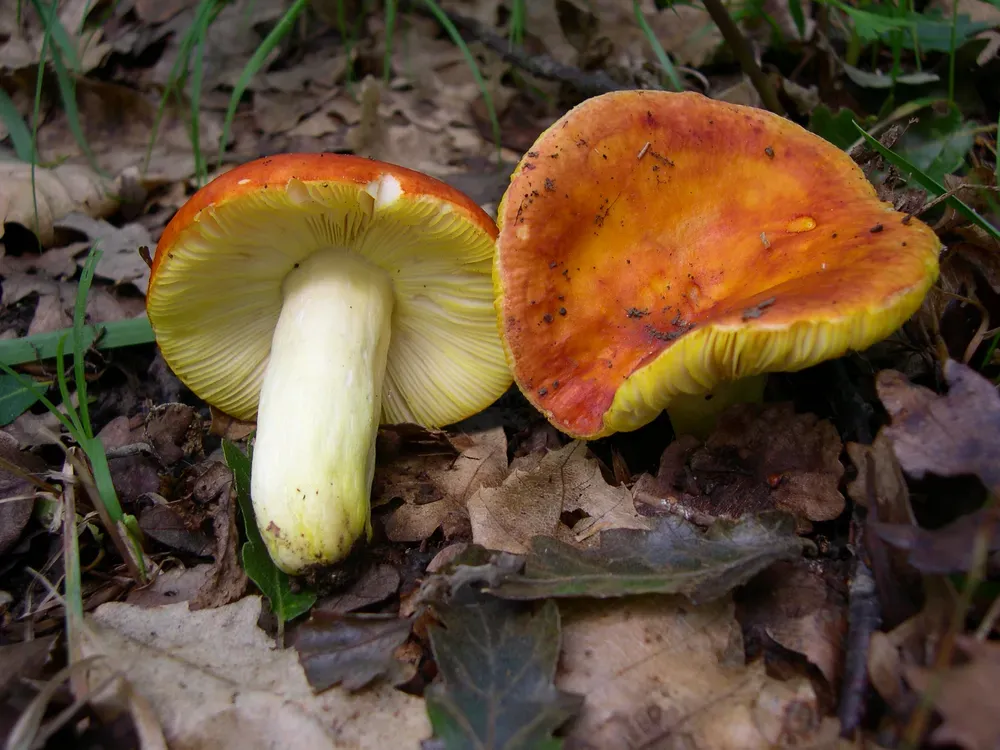
Crab brittlegill
Russula xerampelina
Gilded brittlegill
Russula aurea
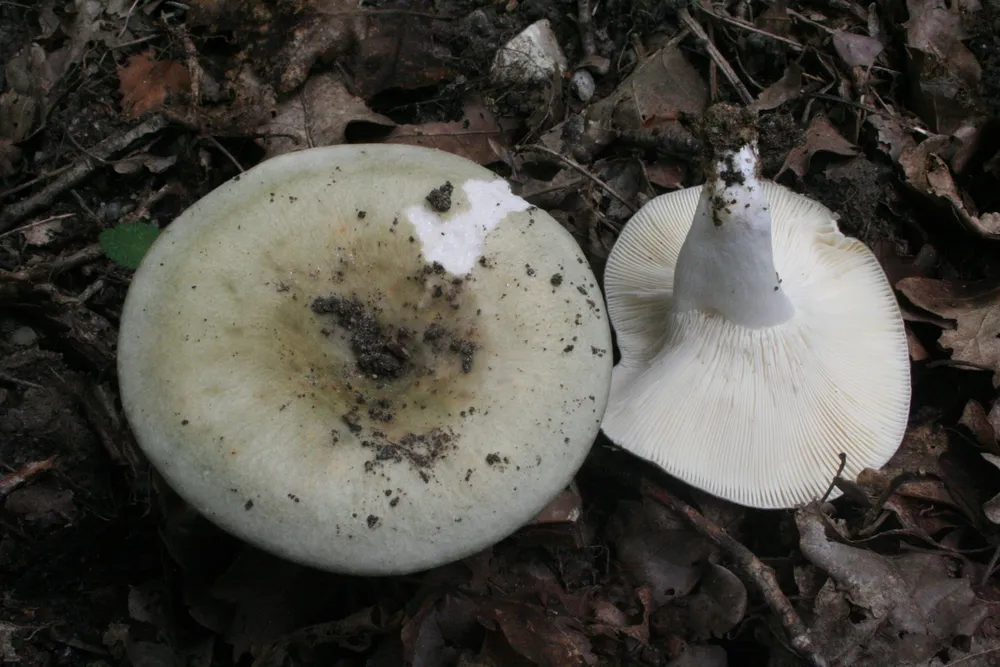
Greasy green brittlegill
Russula heterophylla
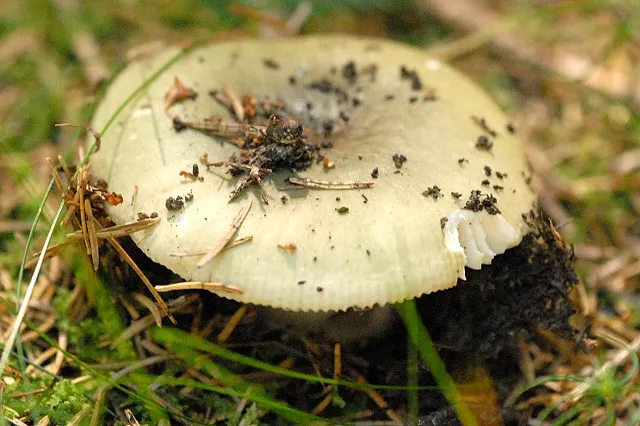
Green brittlegill
Russula aeruginea
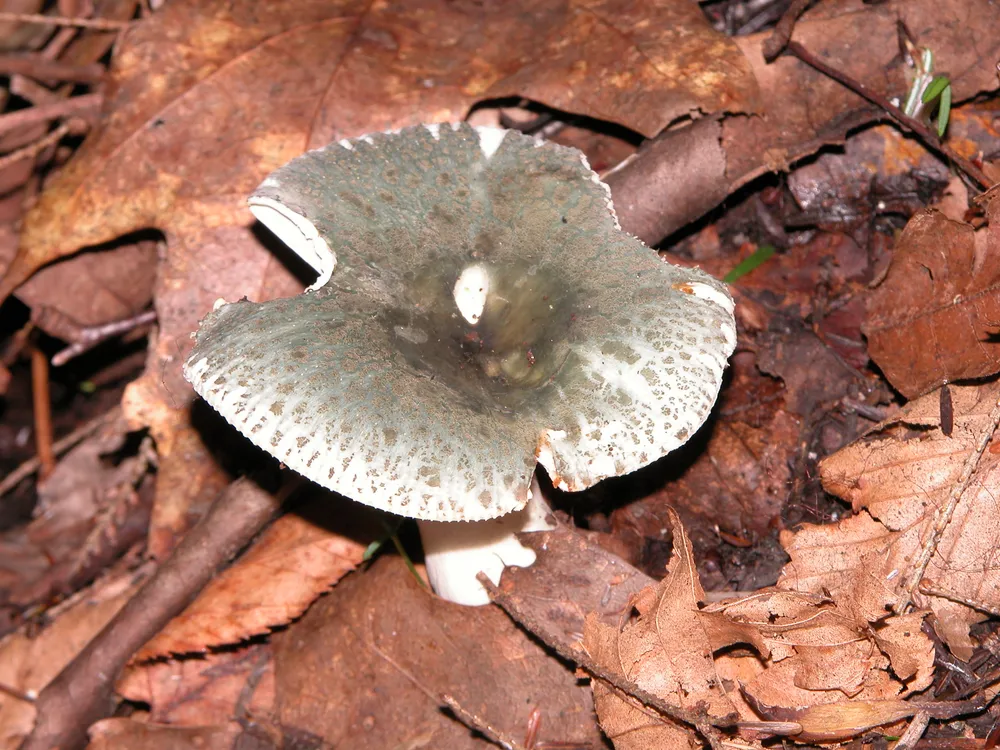
Greencracked brittlegill
Russula virescens
Frequently asked questions
How do you tell it from R. ochroleuca (conditionally edible)?
Three key differences. (1) Color: R. claroflava — pure yellow, lemon-yellow; R. ochroleuca — grayish, mustard-yellow. (2) Flesh: R. claroflava — quickly turns gray to gray-black when damaged; R. ochroleuca — does not turn gray. (3) Taste: R. claroflava — mild, sweet; R. ochroleuca — bitterish, especially in mature specimens.
How do you identify it for sure?
Four features. (1) Intensely lemon-yellow cap without a grayish tinge. (2) Flesh quickly turns gray when damaged. (3) Yellow-ochre spore print. (4) Mild, sweet taste (tongue test). (5) Grows in damp birch woods, often on sphagnum.
How do you cook it?
No preliminary boiling required (no bitterness when fresh). Young ones — fry with cream, stew with potatoes, add to soups. Pickle — excellent, keeps its shape. Dry — works fine, the aroma partly survives. In sauces — a rich nutty flavor.
Where do you find it?
In damp birch and spruce-birch forests, on the forest floor among moss, often on sphagnum cushions and in boggy patches. Prefers acidic, damp soils.
Which regions of Ukraine does it grow in?
Common in the forest zone: the Carpathians, Prykarpattia, Polissia (especially abundant in Polissia birch woods mixed with spruce), the forest-steppe.
When do you look for it?
July — October, peaking in August-September. Loves a damp autumn.
Which brittlegills is it confused with?
With R. ochroleuca (ochre brittlegill) — grayish tone, bitterish taste. With R. fellea (geranium brittlegill, inedible) — distinctly bitter and acrid, with a nutty smell. With R. lutea (yellow brittlegill) — smaller, in oak woods. The decisive check — graying flesh and a pure yellow color.
Is Yellow swamp brittlegill edible or poisonous?
Does Yellow swamp brittlegill have gills or pores?
What does the cap of Yellow swamp brittlegill look like?
What does the stem of Yellow swamp brittlegill look like?
What do Yellow swamp brittlegill smell and taste like?
Sources
- [1]Вікіпедія (українська)
- [2]Атлас грибів України, Зеров Д.К. (1979)
- [3]MycoBank Database
- [4]Index Fungorum
- [5]GBIF
- [6]iNaturalist Ukraine