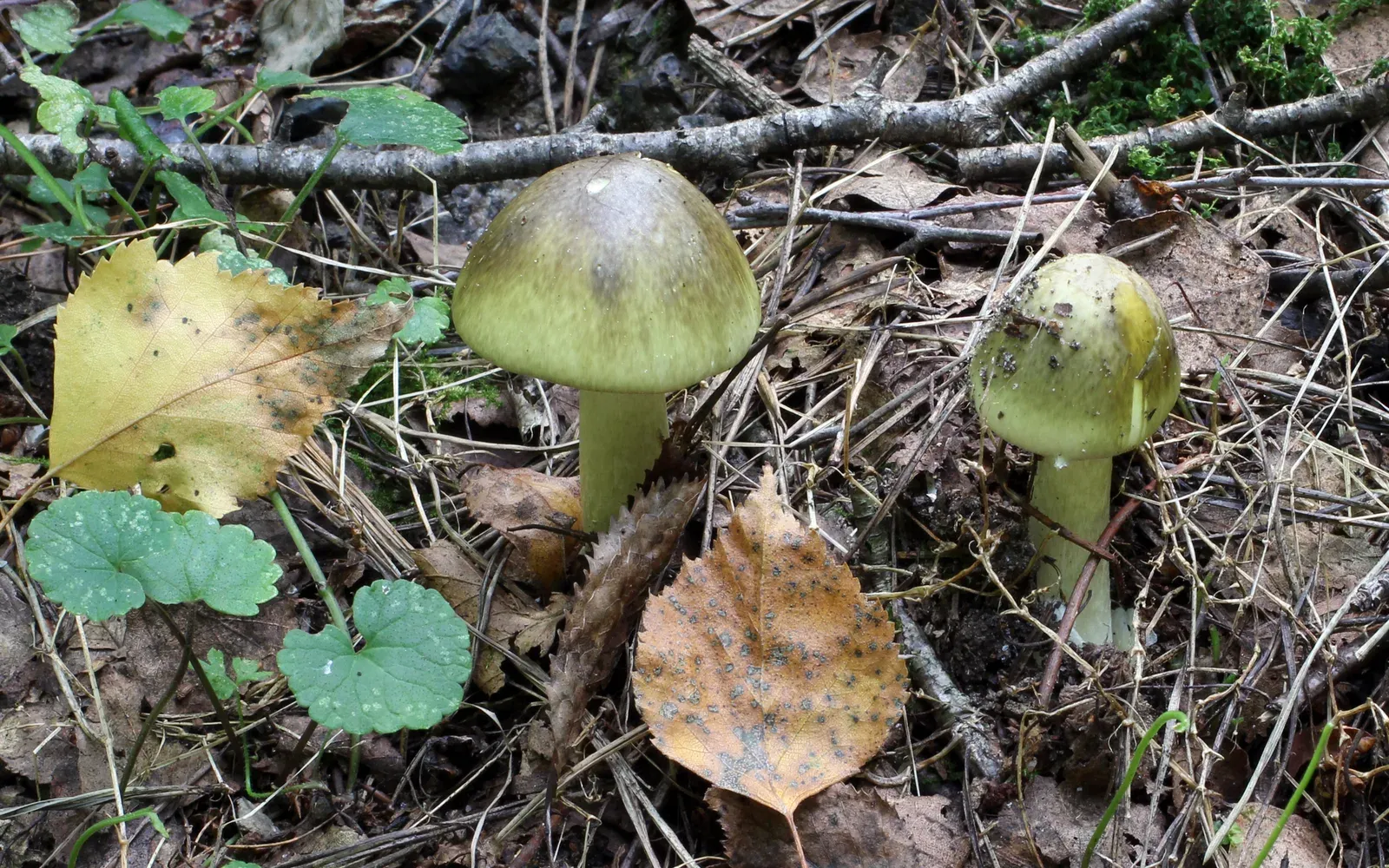
Of all the mushrooms in our forests, there's one everyone should know about, even people who never go foraging. It's the death cap. It accounts for most fatal poisonings, and the tragedy is almost always the same: the mushroom was mistaken for an edible one, put in the basket, and the trouble was noticed too late.
Let's look calmly, without needless fear, at what the death cap looks like, what it gets confused with, and why it's so treacherous. Knowing these features can save a life.
Why the death cap is so dangerous
The death cap's main treachery is that it isn't bitter, doesn't stink and has no repulsive taste. On the contrary, it tastes pleasant, so you get no danger signal at all.
The poison acts slowly and unnoticed. The first signs of poisoning appear only after six hours or even more, when the toxins have already been absorbed and have damaged the liver and kidneys. Because of this delay, people often don't connect feeling unwell with mushrooms.
Another problem is that the poison isn't destroyed by boiling, drying or salting. Even a small piece of a single mushroom can be fatal. That's why there's only one rule for the death cap: no contact with your basket at all.
How to recognize the death cap
The death cap has a few constant features, and they aren't hard to remember.
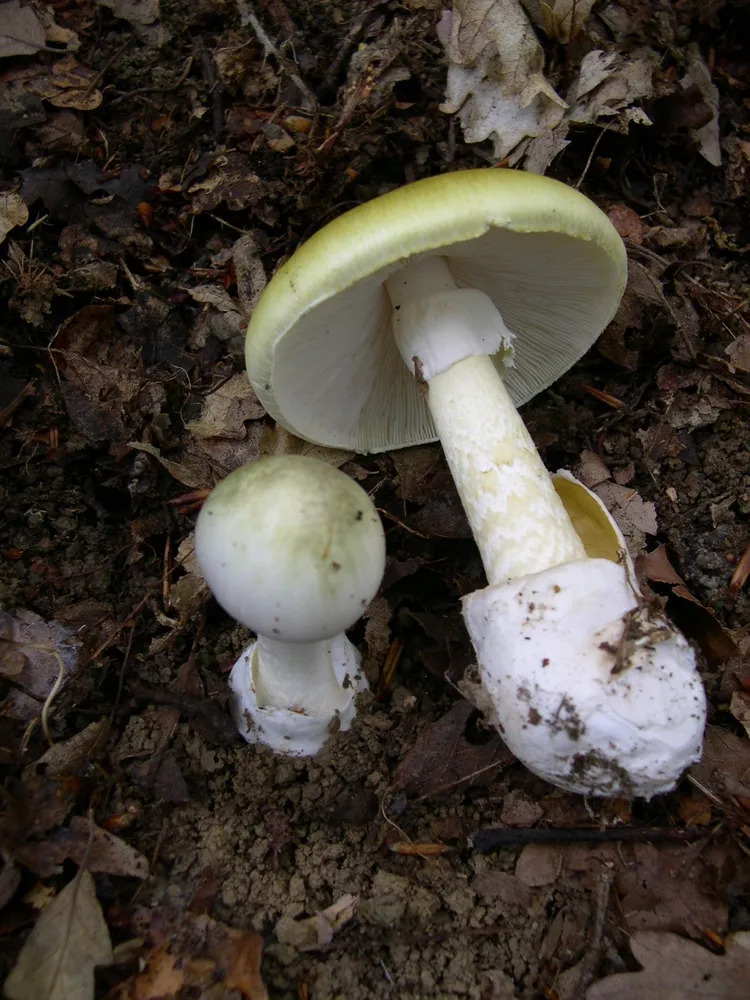
- Cap color. Most often pale green, olive or yellowish-greenish, sometimes almost white. The cap is smooth, occasionally with sparse white flakes.
- White gills. Under the cap, the gills are always pure white and stay that way even in old mushrooms.
- A skirt on the stem. At the top of the stem hangs a thin white ring that looks like a skirt.
- A sac at the base. The most important feature. At the bottom, the stem emerges from a white sac, the so-called volva. It's often invisible because it's hidden in the soil.
To see the volva, you need to carefully dig up the whole mushroom rather than cut it. That's why all suspicious mushrooms are taken out with the soil, not cut at the root. We write more about the technique itself in our article on how to pick mushrooms properly.
What it gets confused with
Most poisonings happen because the death cap resembles popular edible mushrooms.
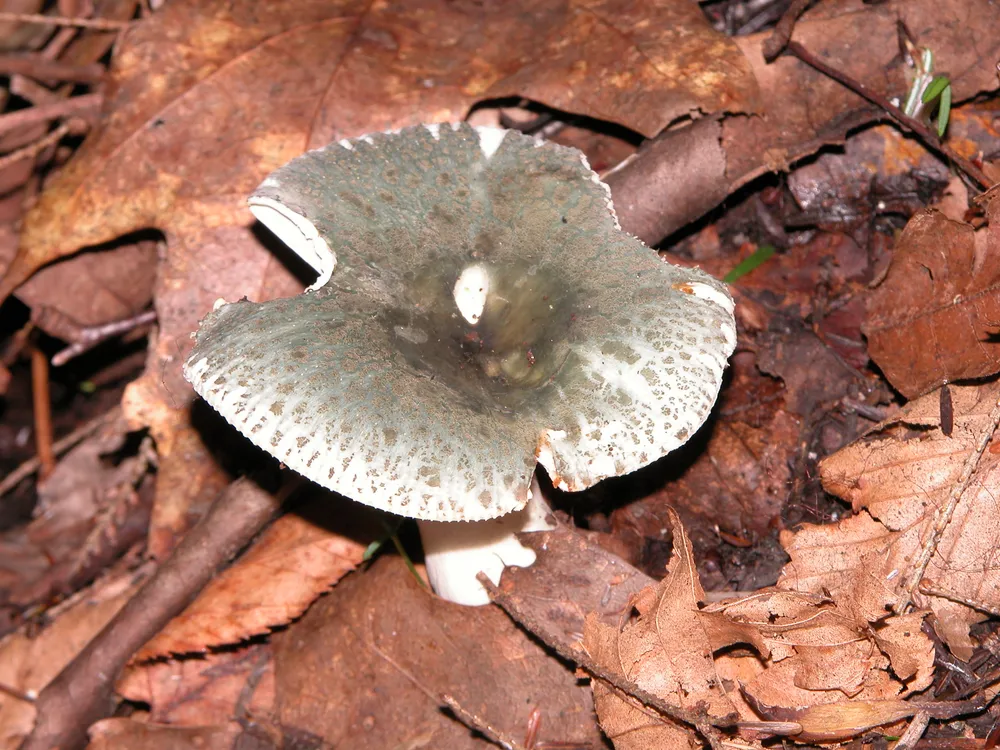
- **Young brittlegills.** The greenish cap of the death cap resembles a green brittlegill, but a brittlegill has neither a skirt nor a sac at the base. We've broken down how to tell them apart in the death cap vs. green brittlegill comparison.
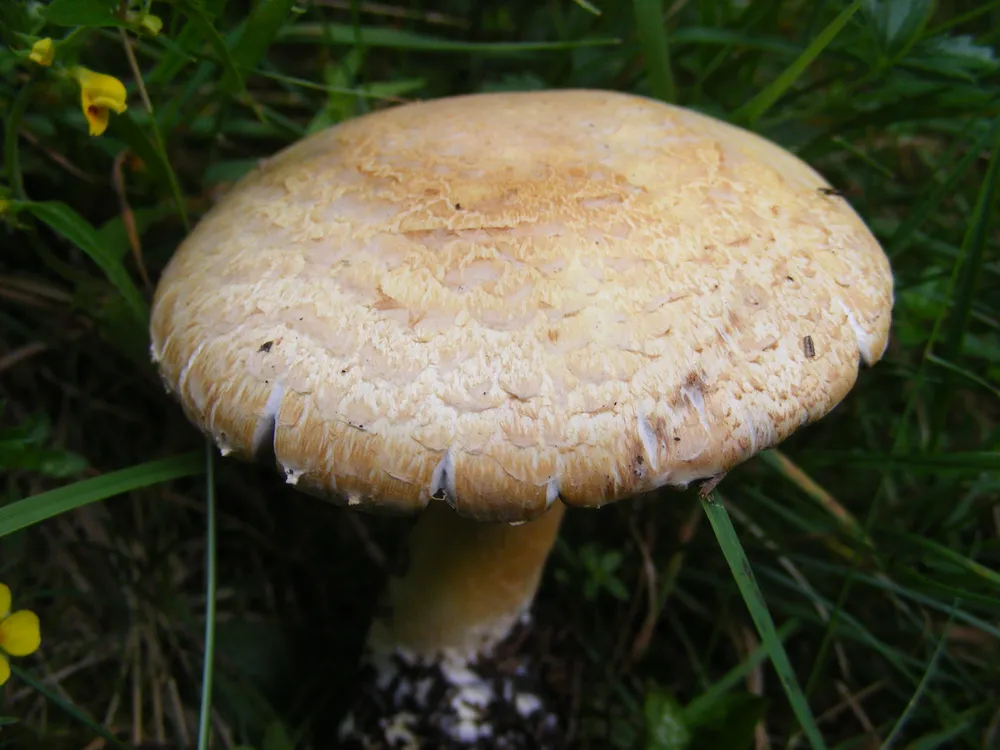
- **Field mushrooms.** A young death cap with a white cap resembles a field mushroom, but a field mushroom's gills turn pink and then darken, while the death cap's gills are always white. The differences are collected in the comparison with the field mushroom.
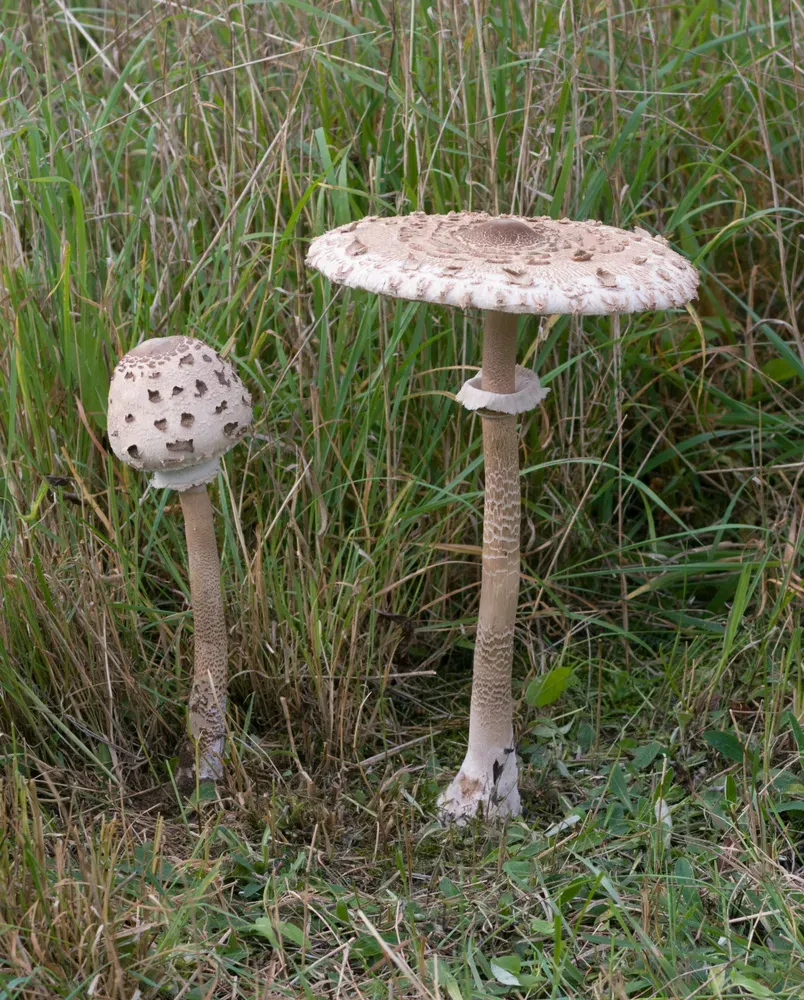
- **Parasols.** Young parasols in the egg stage also have a sac, so an inexperienced forager can make a mistake.
The common rule is simple: if you see white gills together with a skirt and a sac at the bottom of the stem, the mushroom stays in the forest.
How to avoid mistakes
A few habits will reliably protect you from tragedy.
- Don't take unfamiliar mushrooms. The best protection is to pick only the species you know for sure.
- Always look at the base of the stem. Dig up suspicious mushrooms whole to check whether there's a sac.
- Don't taste raw mushrooms. Taste won't tell you anything, but it can do harm.
- Don't pick young mushrooms in the egg stage. While a mushroom is egg-shaped, telling a death cap from a field mushroom or a parasol is almost impossible.
And if someone feels unwell after a mushroom meal, don't wait; call 112 or your local emergency number right away. We've described in detail what to do in the first hours in our article on signs of poisoning and first aid.
Sources
- “Key to the Fungi of Ukraine” (Kyiv, Naukova Dumka publishing house).
- Amanita phalloides on GBIF, the global biodiversity database.
- Amanita phalloides on MycoBank, the international fungal nomenclature database.
- Amanita phalloides on Wikipedia.
Frequently asked questions
What does the death cap look like?
The cap is pale green, olive or almost white, and the gills are pure white. The stem has a thin white skirt, and at the base, hidden in the soil, there's a white sac, the so-called volva.
Why is the death cap so dangerous?
Because it isn't bitter and tastes pleasant, so nothing puts you off. The poison acts with a delay of six hours or more, damages the liver and kidneys, and isn't destroyed by boiling, drying or salting.
How much death cap does it take to be poisoned?
Even a small piece of a single mushroom can be fatal. So you must not only never eat it, but also never put it in the same basket as other mushrooms.
What mushrooms is the death cap confused with?
Most often with green , young and in the egg stage. Checking for a skirt and a sac at the base of the stem is what saves you.
Does the poison disappear after cooking?
No. Death cap toxins aren't destroyed by boiling, drying or salting. No processing makes this mushroom safe.
How many hours until signs of poisoning appear?
Usually after six hours or more, sometimes not until the next day. This delay is the most dangerous part, because a person doesn't connect feeling unwell with mushrooms while the poison is already at work.
How do you tell the death cap from a field mushroom?
A field mushroom's gills are pink at first and then darken to brown, and there's no sac at the base. The death cap's gills are always white, and it has a skirt and a volva. Details in the .
What if you've eaten a death cap?
Call 112 or your local emergency number right away, even if you still feel fine. Don't delay. We've laid out step-by-step instructions in our article on .
Mushrooms in this article
Related articles
 Recipes & cooking
How to store fresh mushrooms, and for how long
Fresh mushrooms spoil faster than you might think. Here's how long they keep in the fridge, how to store them…
August 21, 2026·4 min How to identify
Truffles in Ukraine: do they grow here, and where to look
Truffles aren't just a French delicacy. Several species grow in Ukraine too. Here's which ones, where they occ…
August 24, 2026·2 min Safety
False morel: why this spring mushroom is dangerous
The false morel looks like a morel, but it contains a poison. Here's how to recognize it, why it's dangerous a…
August 24, 2026·2 min