Death capAmanita phalloides
Expert-verifiedUpdated October 3, 2026
Passport
- Edibility
- Deadly poisonous
- Season
- Jul — Oct
- Hymenophore
- Gilled
- Cap color
- Green
- Size
- Medium (5–15 cm)
- Smell
- Honey
- Reviewed
- Yes ✓
DEADLY POISONOUS
Eating it can cause death. Do not pick it and do not taste it.
Contains amatoxins (α-amanitin), which block RNA polymerase II, causing necrosis of liver and kidney cells.
The first symptoms (nausea, vomiting, diarrhea) appear 6–24 h after eating, most often after 8–12. Then, around the second day, comes a deceptive improvement. After that, from the third day, acute liver failure sets in.
At the slightest suspicion — go to the hospital immediately. A specific drug does exist: intravenous silibinin, registered in Ukraine precisely for death cap poisoning. But it hasn't turned out to be a magic antidote — controlled studies have never proven its effectiveness. Most of the work is done by simpler things: many hours of IV drips, sorbents, intensive care, and in the most severe cases a liver transplant. The sooner you get to the hospital, the more options the doctors have.
If you suspect poisoning, call an ambulance immediately: 112 (the European emergency number) or your local emergency number
Quick answers
Where to look?
Deciduous forest, Mixed forest
When does it appear?
Jul — Oct
Active months: July, August, September, October.
How to recognize it? Three signs
- Cap color: Green, Olive, Pale yellow
- Cap shape: Convex, Flat
- Smell: Honey, Neutral
Fruiting season
July – October
Description
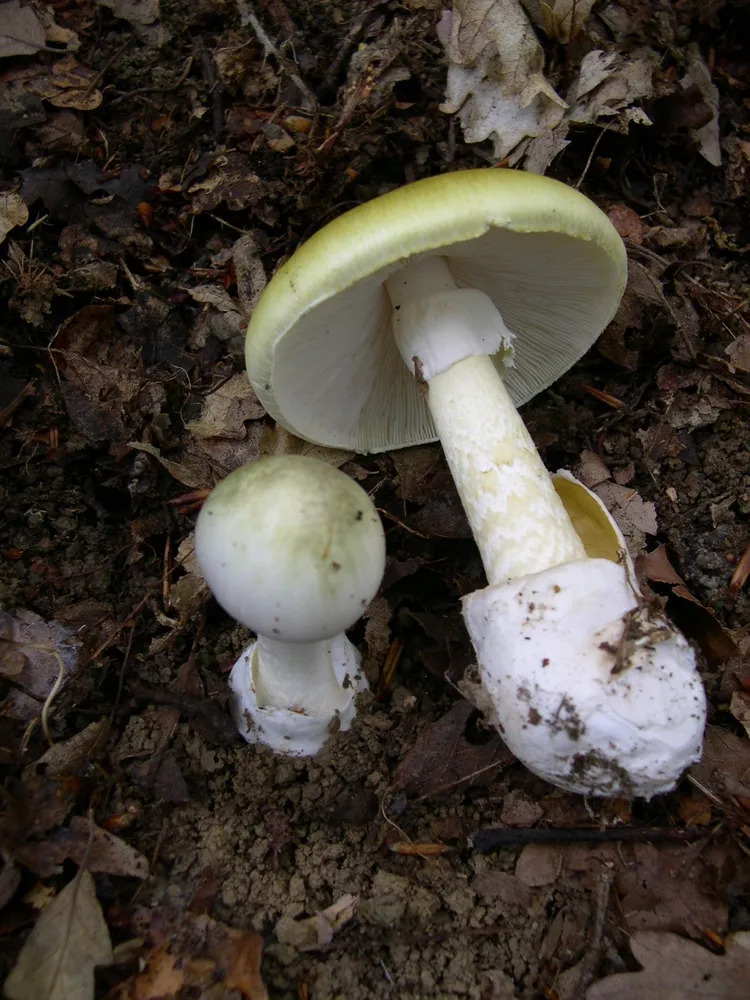
The death cap (Amanita phalloides) is the most dangerous mushroom of Ukrainian forests and one of the leading causes of fatal mushroom poisoning worldwide. Its Latin name phalloides — "phallus-shaped" — hints at its slender, elegant form, but behind that beauty lie some of the most potent toxins known to science: α- and β-amanitins. Just a third of the cap of a single mature mushroom contains a lethal dose for an adult.
The mushroom grows in deciduous and mixed forests of the temperate zone, forming mycorrhiza with oaks, beeches, hornbeams and birches. In Ukraine it occurs everywhere except the high Carpathians and the steppe. Fruiting bodies appear from July to October, most often in August–September, singly or in small groups under old oaks.
No cooking, drying, pickling or alcohol tincture destroys amanitins. Symptoms of poisoning appear 6–24 hours after eating, most often after 8–12 — when the toxin has already damaged the liver. This is a mushroom you need to know by sight and never confuse with edible ones.
Cap
The death cap's cap is 5–15 cm across. In young mushrooms it is hemispherical, later becoming flat and spread out.
The color varies from olive green and yellowish green to grayish and almost white — which is what makes identification tricky. The surface is smooth, slightly slimy in wet weather, with a characteristic radial pattern of darker fibers spreading from the center. The cap margin is even, without striations.
Hymenophore
The hymenophore is lamellate. The gills are crowded, thin and free — not attached to the stem. In both young and mature mushrooms they stay pure white — this is a critical diagnostic feature.
Not a hint of pink, cream or ochre, as in true Agaricus mushrooms. The gap between the gills and the stem is clearly defined. The veil is white and membranous, completely covering the hymenophore in young specimens.
Stem
The stem is slender, 7–15 cm tall and 1–2 cm thick. Cylindrical, widening at the base into a characteristic club-shaped bulb wrapped in a membranous sack-like volva — the main diagnostic feature.
The color is whitish green, often with a snakeskin pattern of faint bands. In the upper third there's a well-developed, hanging white ring with remnants of the veil. The surface below the ring is faintly scaly.
Flesh
The flesh is white and doesn't change color when cut — and that's the treacherous part: none of the safety signs foragers are used to relying on work here. The flesh is thin and brittle in the cap, fleshy at the base of the stem.
It doesn't change color on contact with air, neither after a minute nor after an hour. No "lovely white flesh" should reassure you — it's precisely in the white flesh of the death cap that the concentration of amanitins is highest.
Smell
The smell of a fresh mushroom is faint and hard to notice; in young specimens it's almost absent. Mature ones develop a slight sickly-sweet note, like wilted honey or stale dough.
This aroma isn't distinct enough to warn an inexperienced forager. Like other poisonous amanitas (the fly agaric, the panther cap), the death cap has only a faint, indistinct smell that gives no warning — yet another treacherous trait. A stronger odor appears only in rotting specimens.
Lookalikes
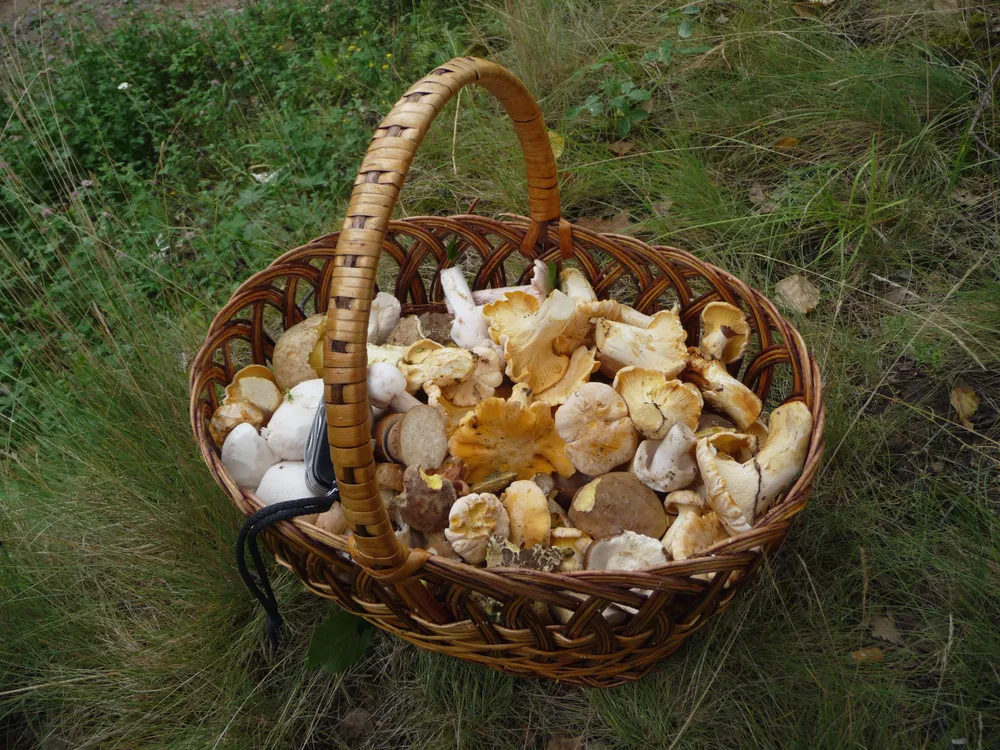
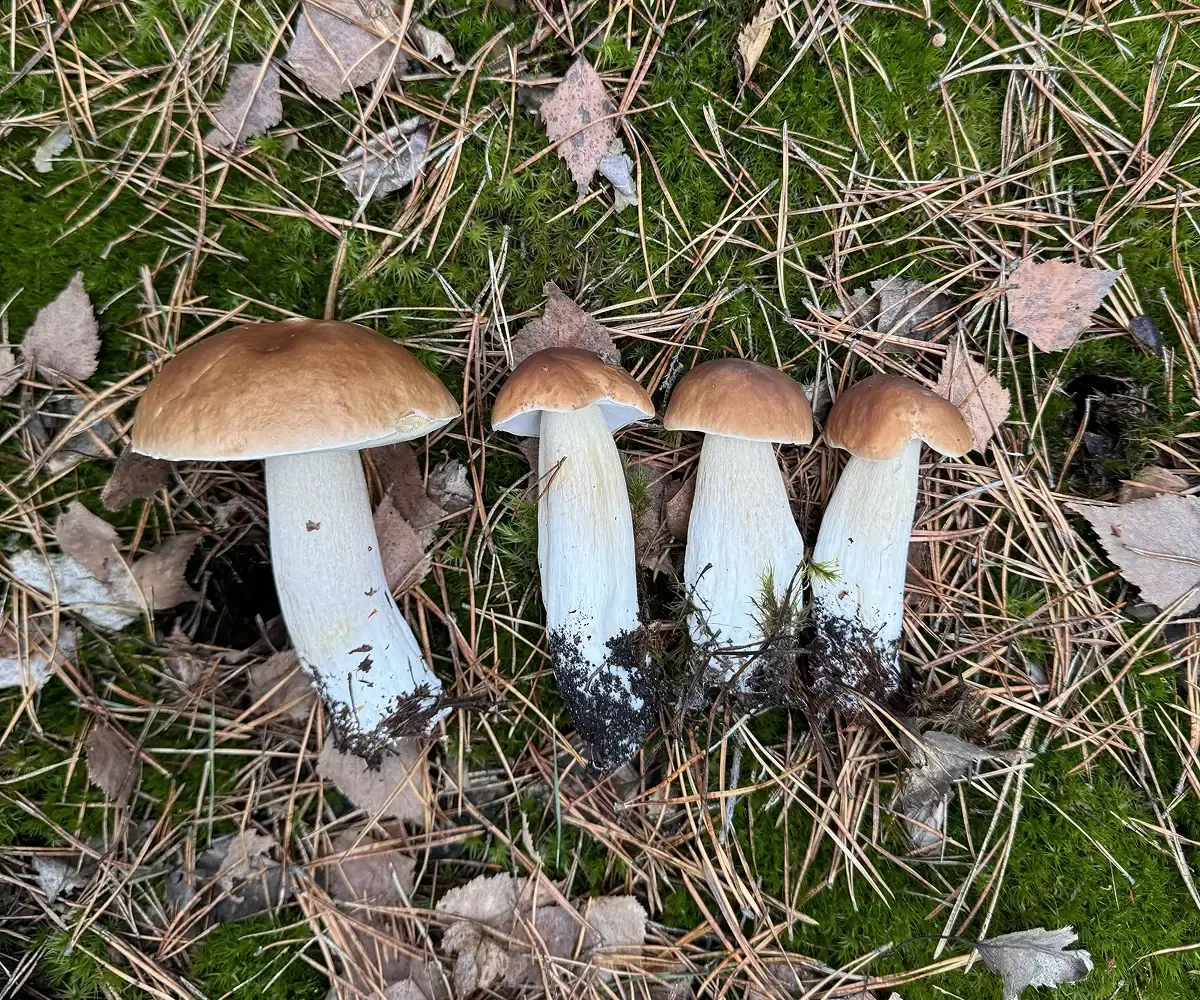
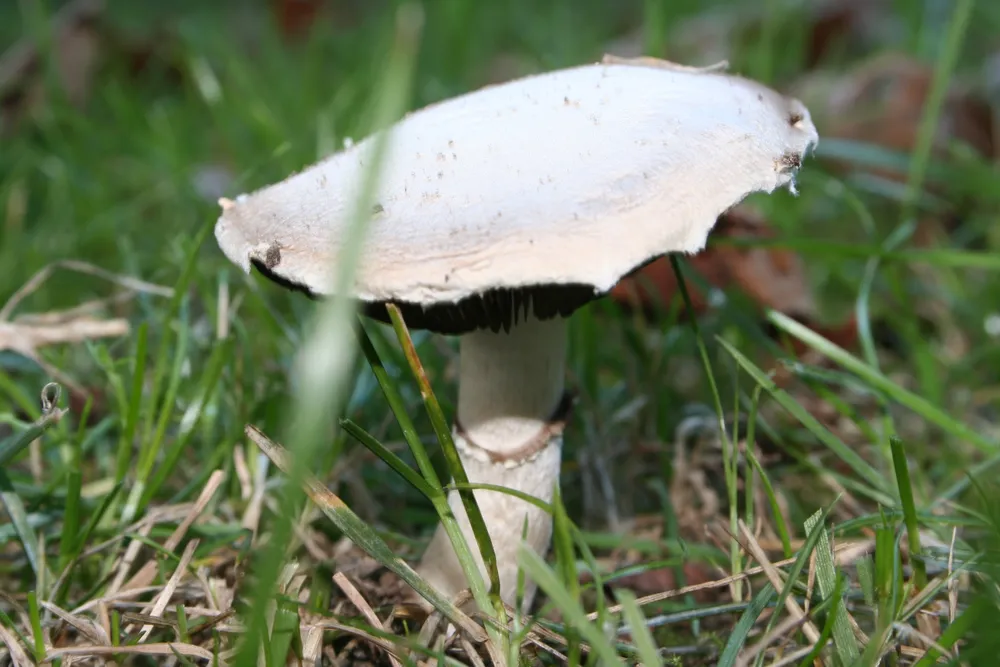
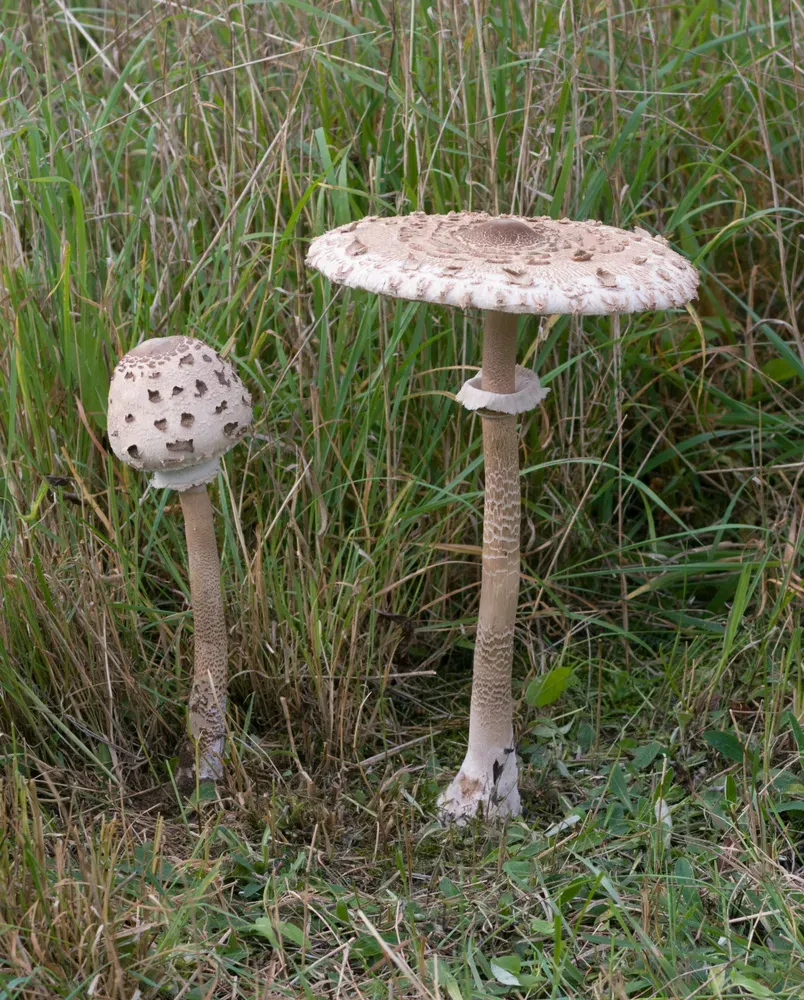
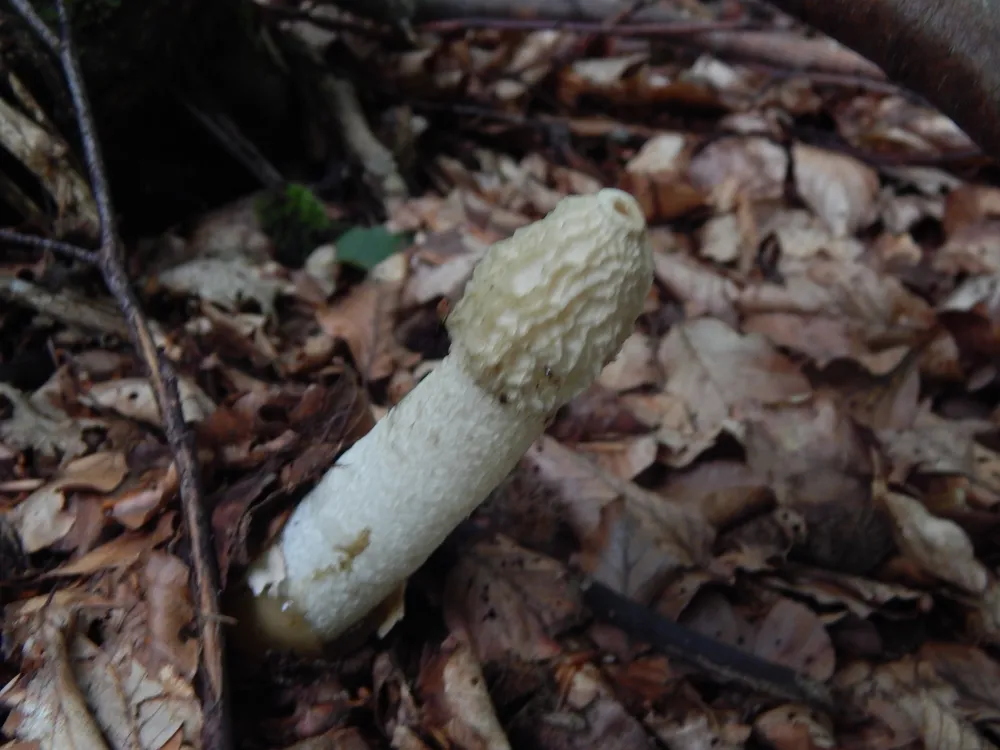
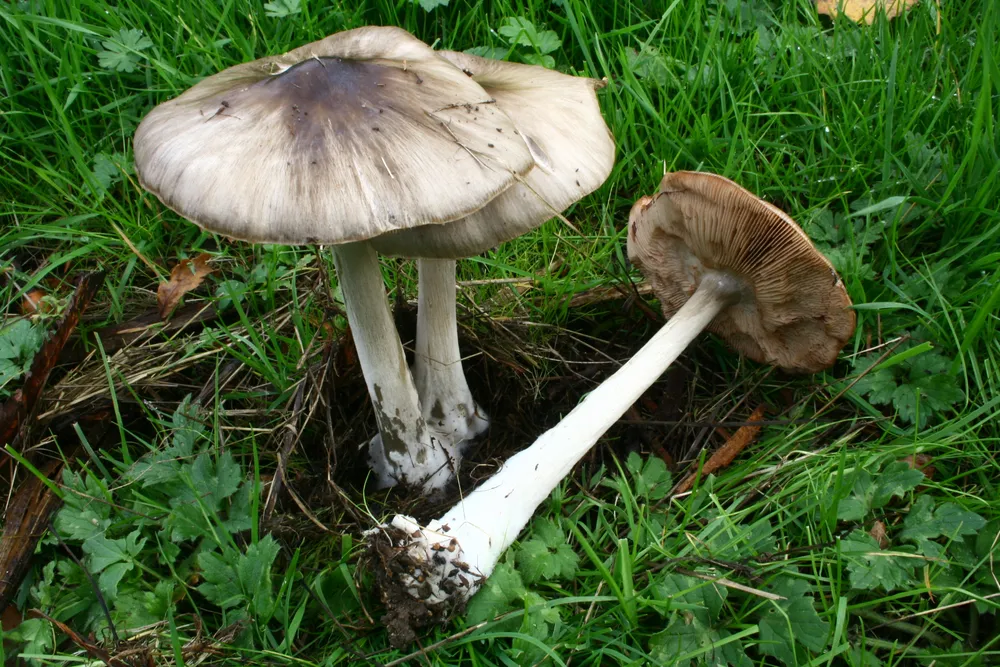
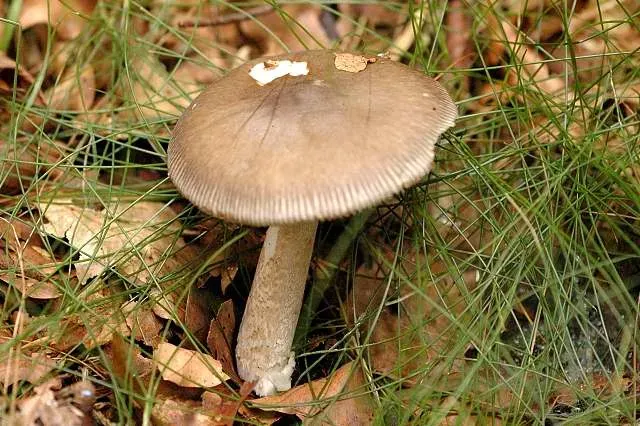
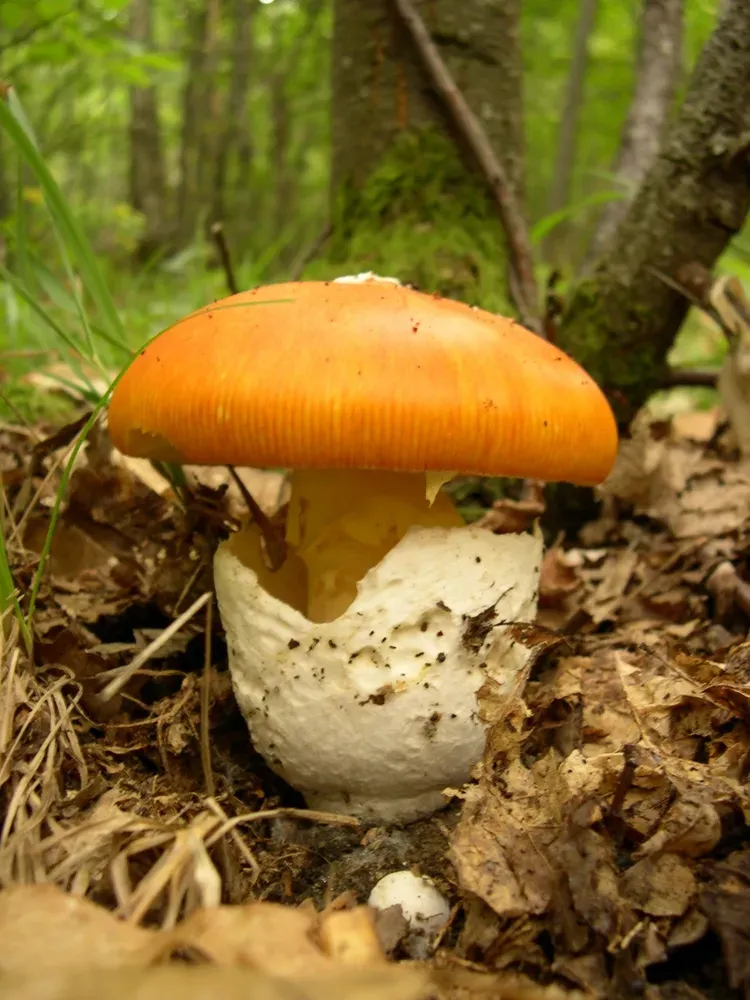
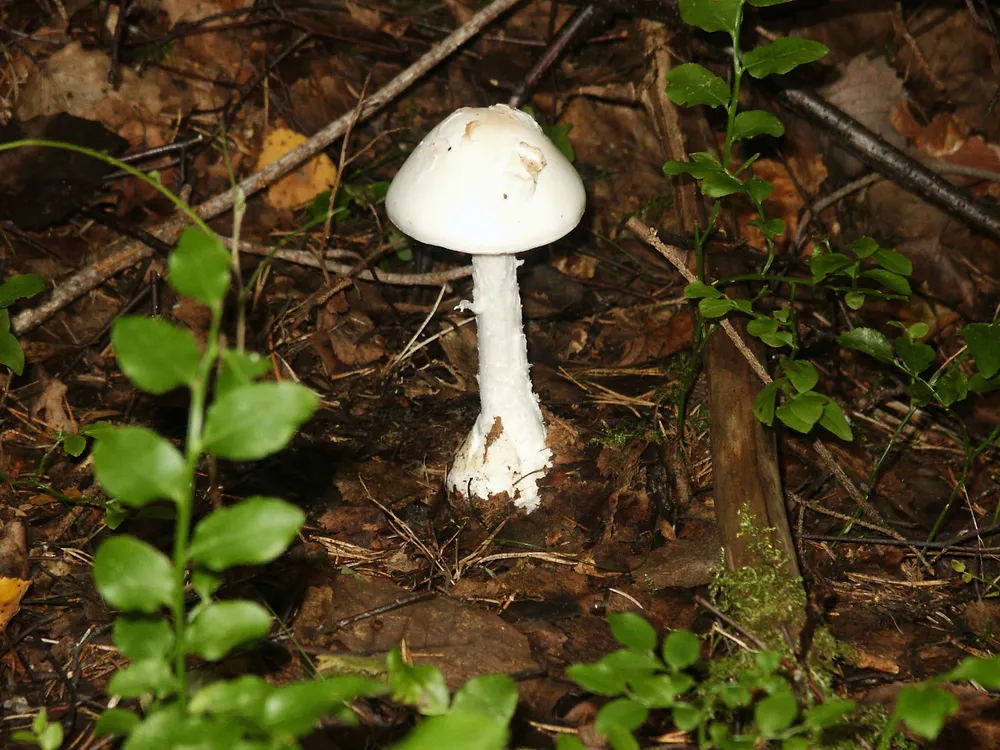
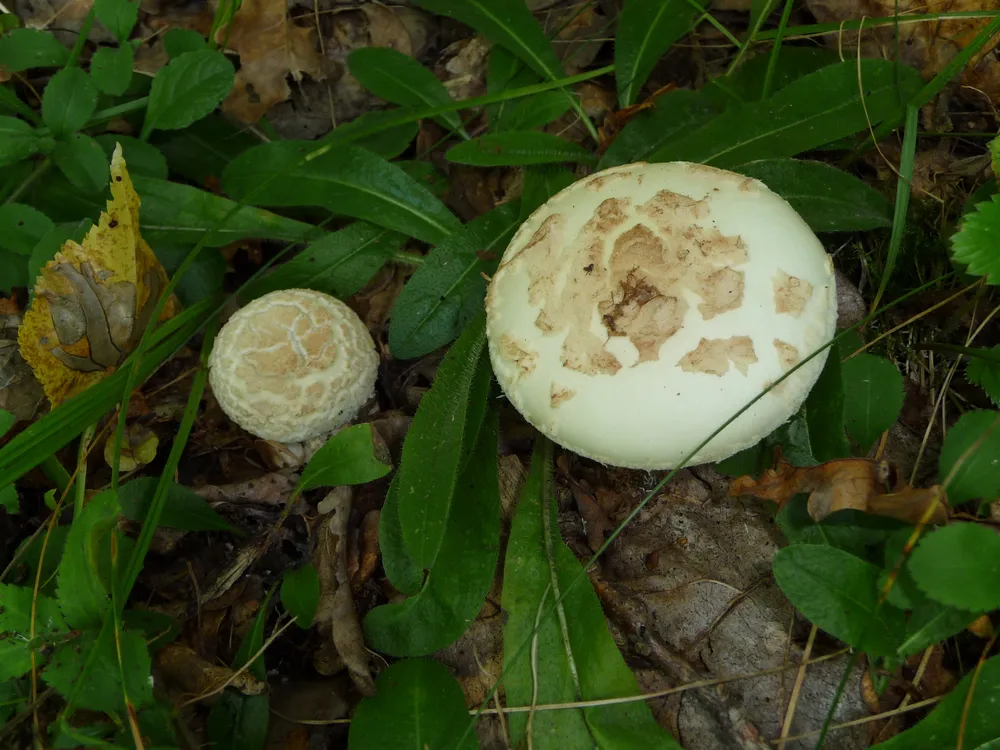
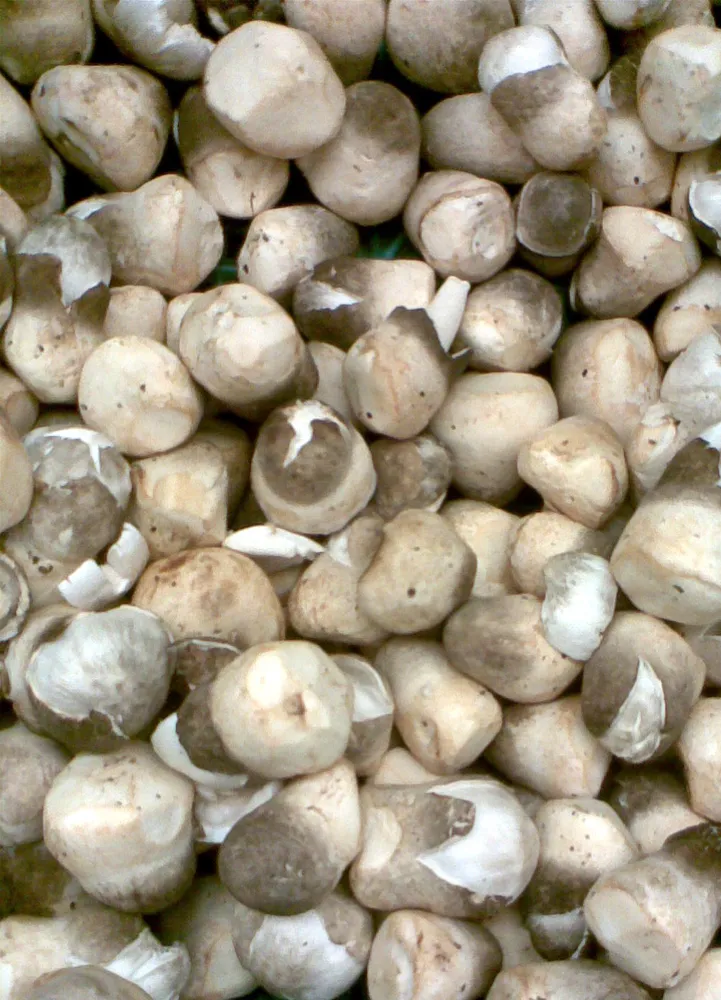
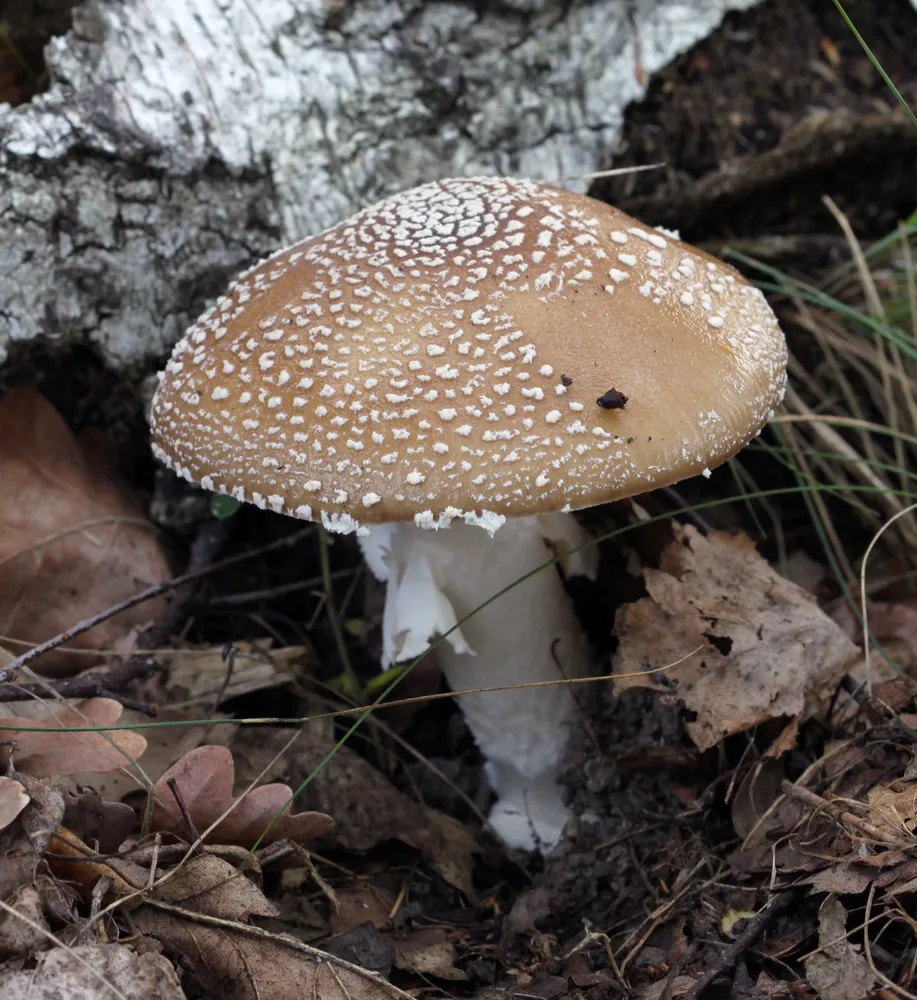
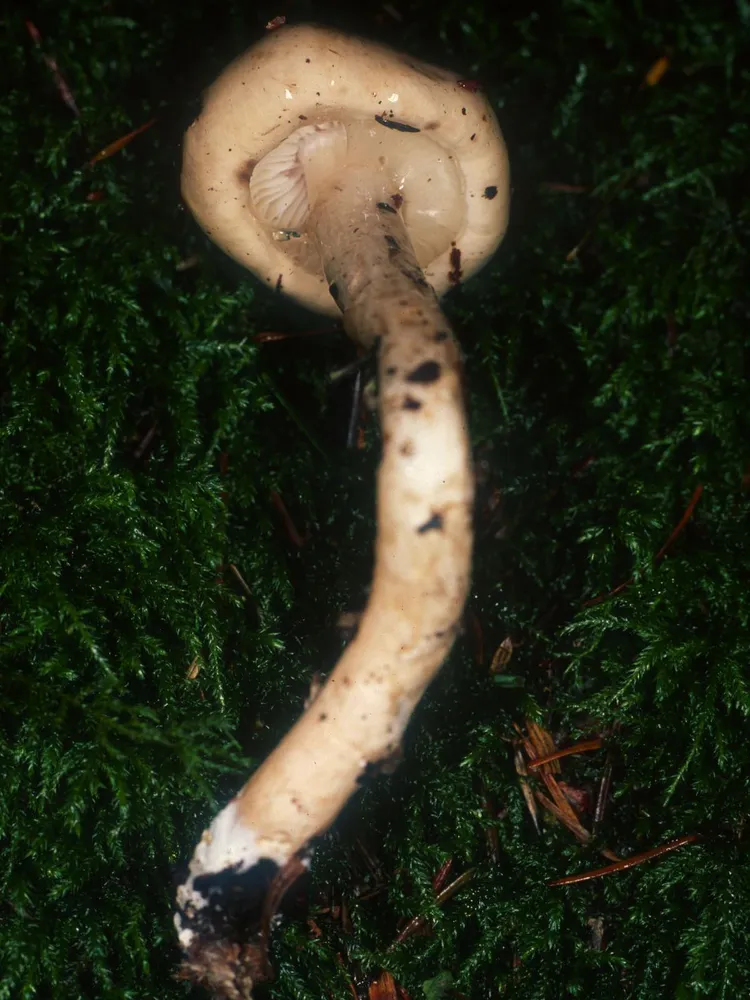
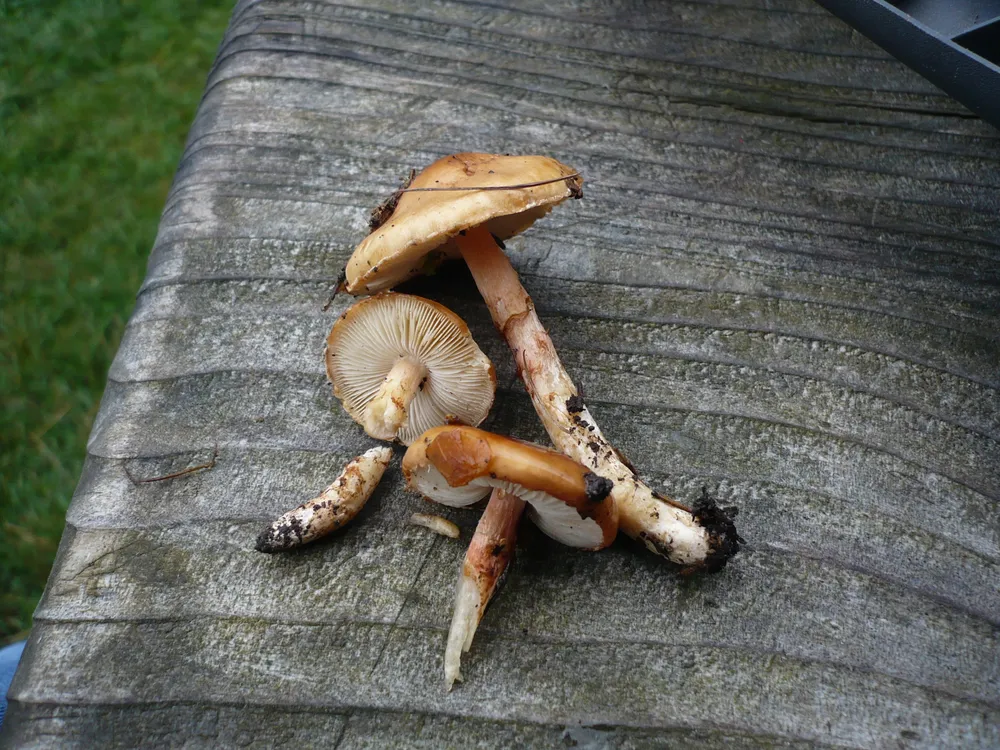
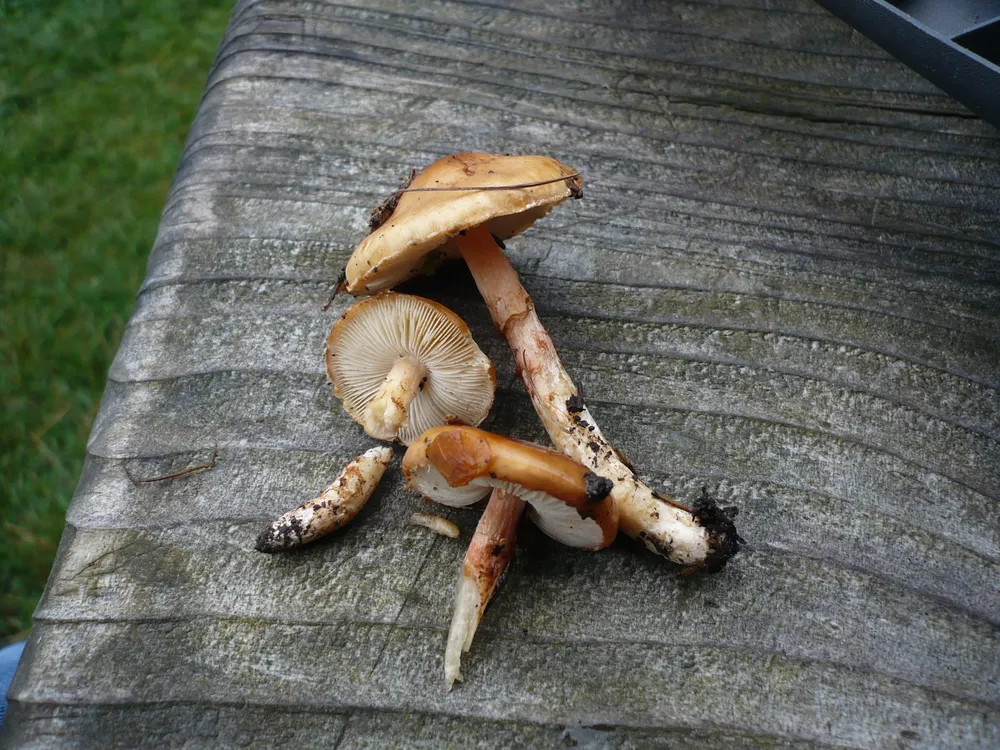
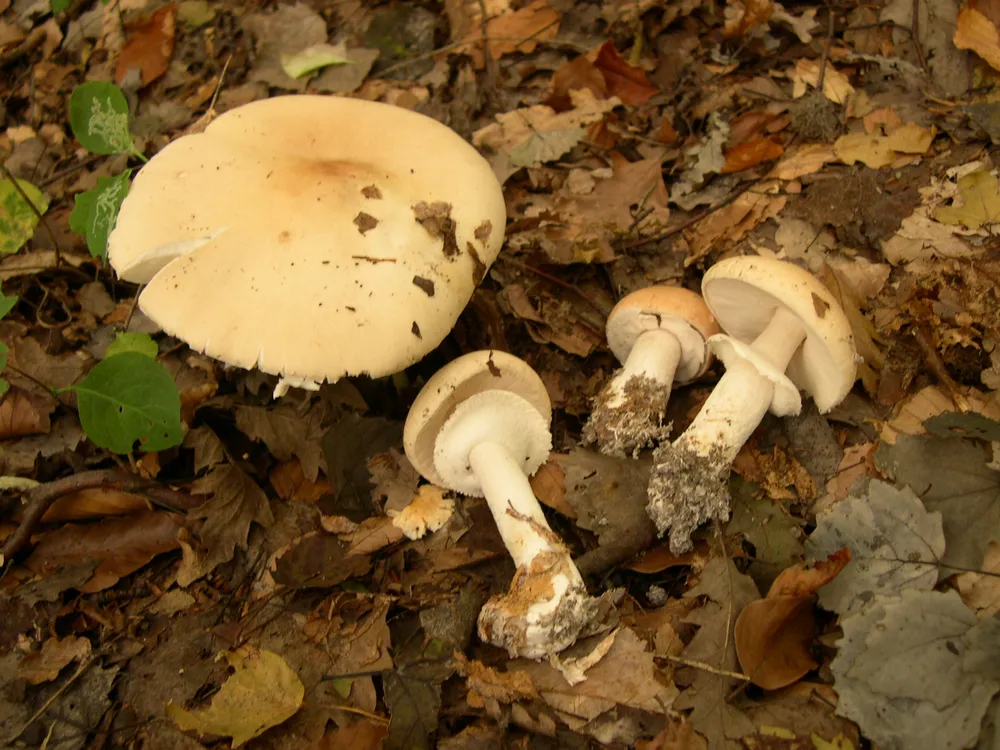
Related species
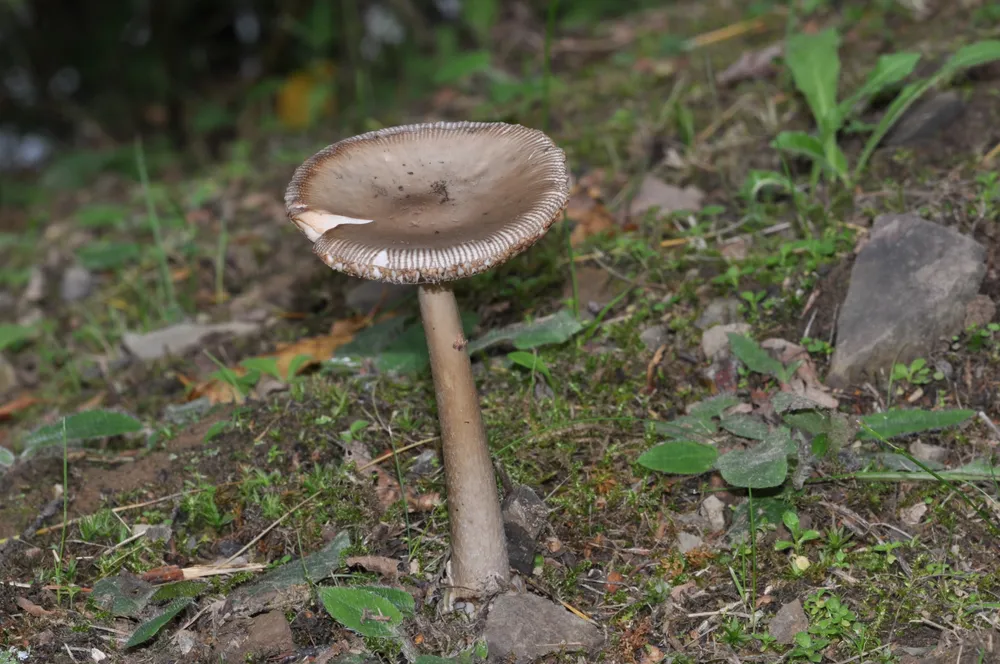
Mushrooms of the same genus and habitat — to study side by side and never mix up.
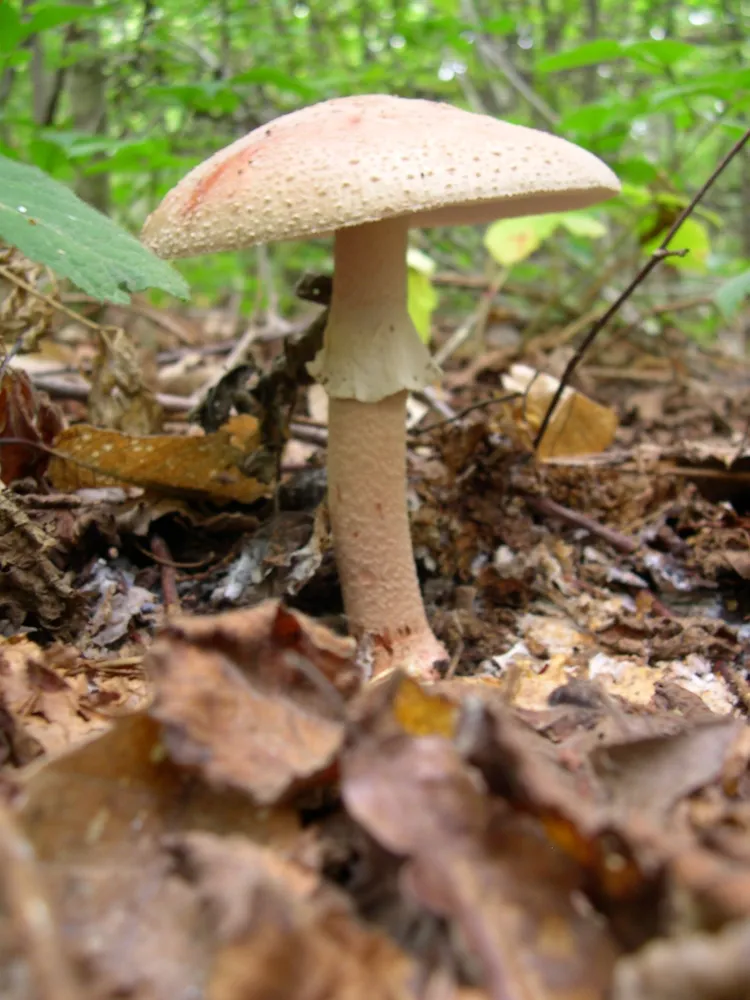
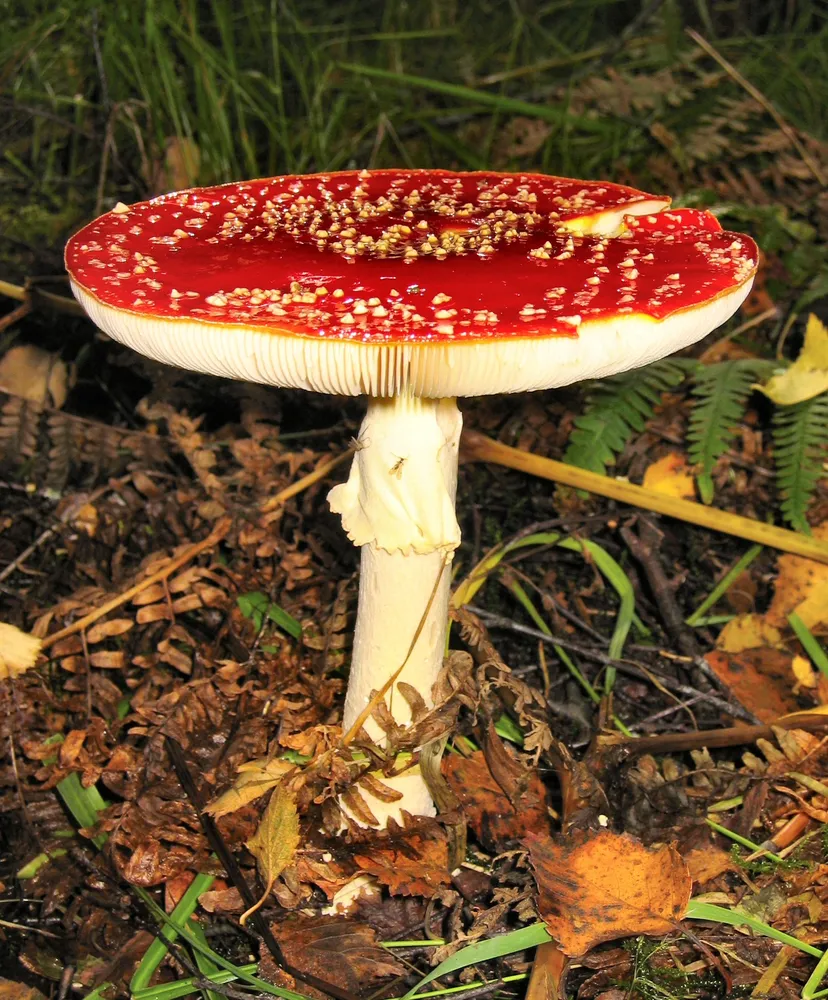
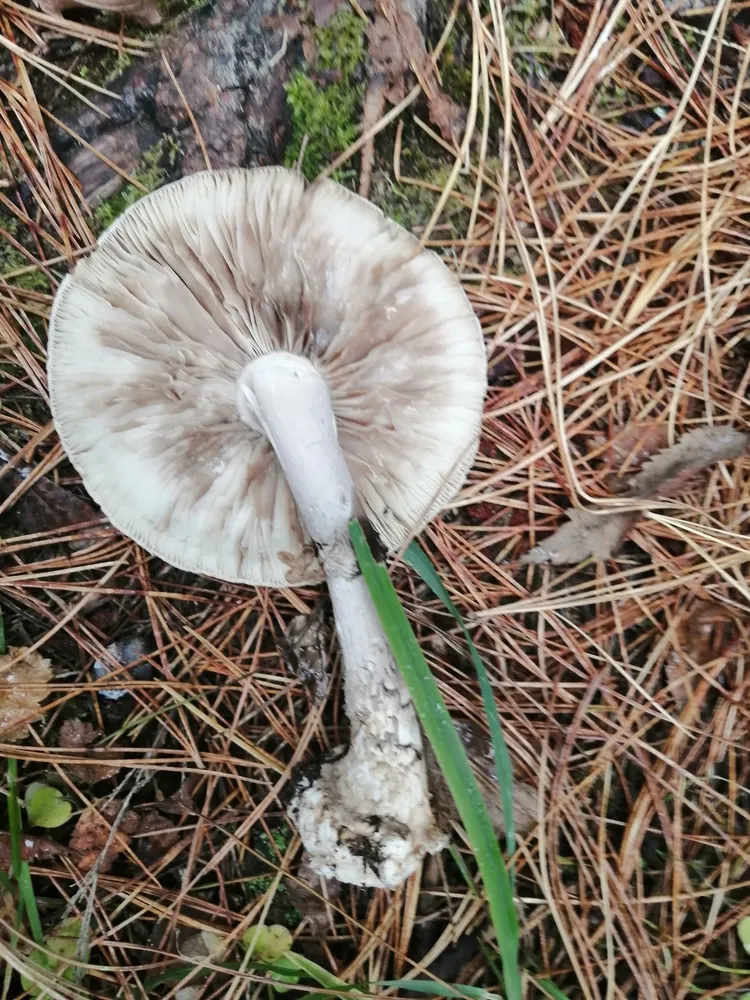
Related reading
 Safety
Can you pick mushrooms in cities and parks?
Mushrooms grow on city lawns, in parks and yards too, but you shouldn't eat them. Here's why urban mushrooms a…
August 22, 2026·3 min How to identify
Mushrooms with a ring on the stem: what it warns you about
The ring, or skirt, on the stem is an important feature you need to know how to read. Here's which mushrooms h…
August 21, 2026·3 min Where & when to forage
Mushrooms of the Kyiv region: the season, edible and poisonous species
Kyiv Oblast means Polissia pine forests in the north and mixed woods around the capital. Here's which mushroom…
August 19, 2026·3 min
Frequently asked questions
What should you do if you suspect death cap poisoning?
Call an ambulance immediately (112 or your local emergency number) and be sure to say you suspect amanitin poisoning. Symptoms (nausea, vomiting, severe diarrhea) appear 6–24 hours after eating, most often after 8–12 — when the toxin is already damaging the liver. The sooner treatment with enterosorbents and silibinin begins, the better the chances. Don't wait for it to "maybe pass".
Does the poison disappear after boiling, drying or pickling?
No. Amanitins are heat-stable — they survive boiling, drying, freezing and marinades with alcohol. One mature mushroom (about 50 g of flesh) contains a lethal dose for an adult. If even a piece of a suspicious mushroom has ended up in your basket — throw out the whole haul.
Which trees does the death cap form mycorrhiza with?
The death cap is a mycorrhizal partner mainly of broadleaf trees: oaks, beeches, hornbeams, birches. Occasionally it turns up under old pine avenues too. The most common find is next to an old oak at the forest edge. It's rare in young plantations: the mushroom loves mature, established forests.
Can you find death caps in a garden or park?
Yes, unfortunately. The death cap often grows in city parks and old home gardens where oaks or birches grow. Especially dangerous are cases involving children or tourists who mistake the white caps for "wild field mushrooms". Always show doubtful mushrooms to an expert.
When does the death cap fruit most?
In Ukraine the death cap fruits from July to mid-October, peaking in August–September. After prolonged summer rains it appears en masse exactly when foragers head into the woods most actively — and that's when most fatal poisonings happen.
Does the death cap appear every year?
Yes, wherever there's a suitable host tree. It's a stable, recurring partner — if you saw it by this oak last year, you'll very likely see it this year too. Remember the "danger spots" in your forest.
How do you tell a death cap from an Agaricus mushroom?
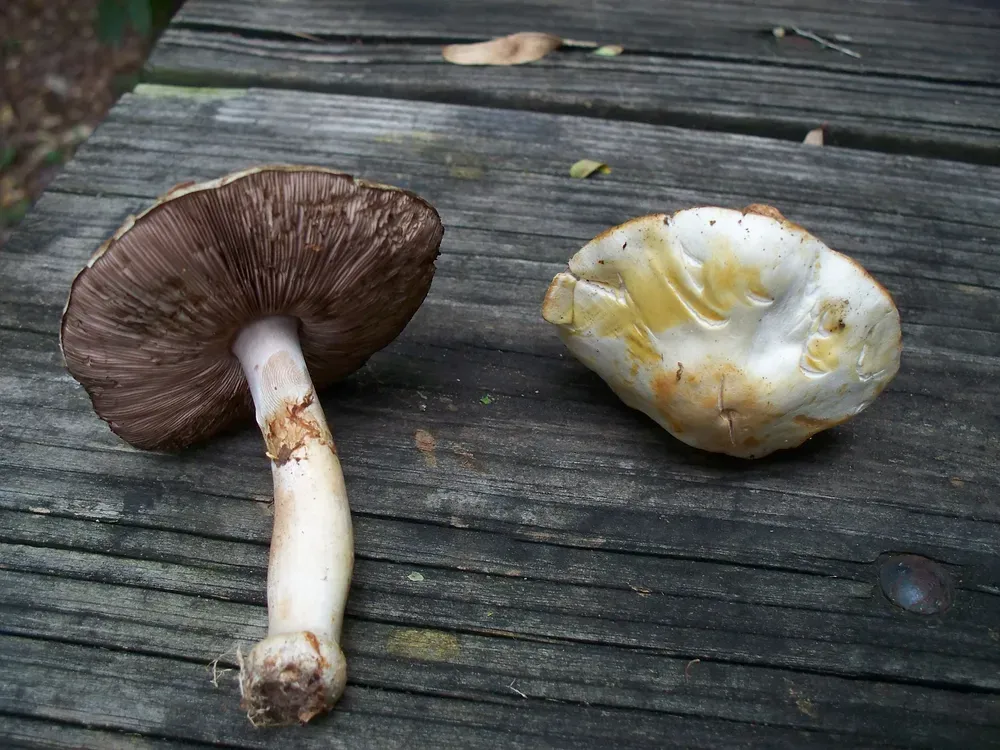
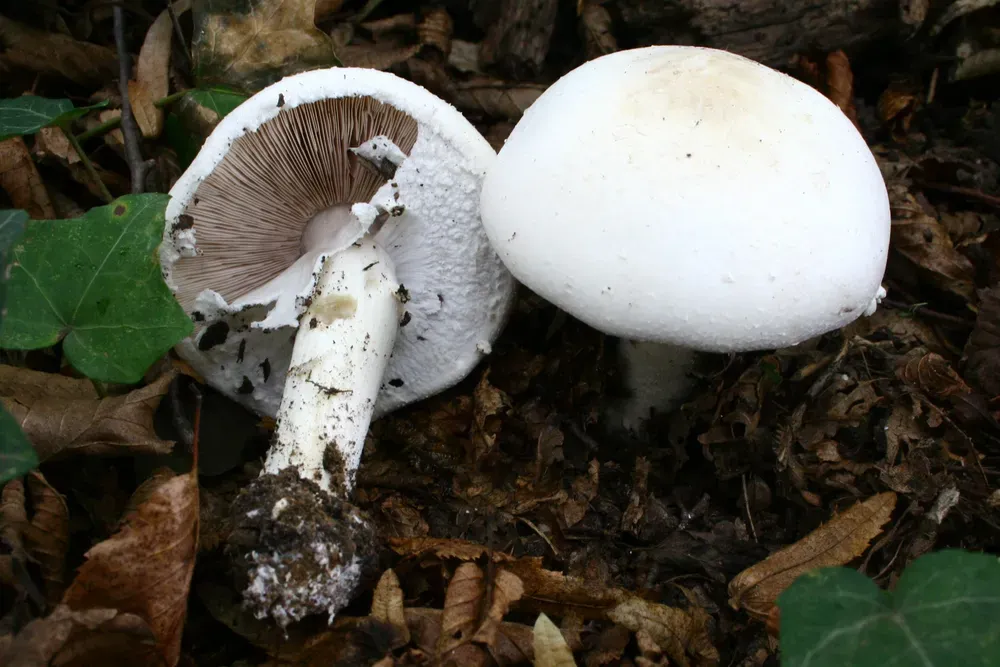
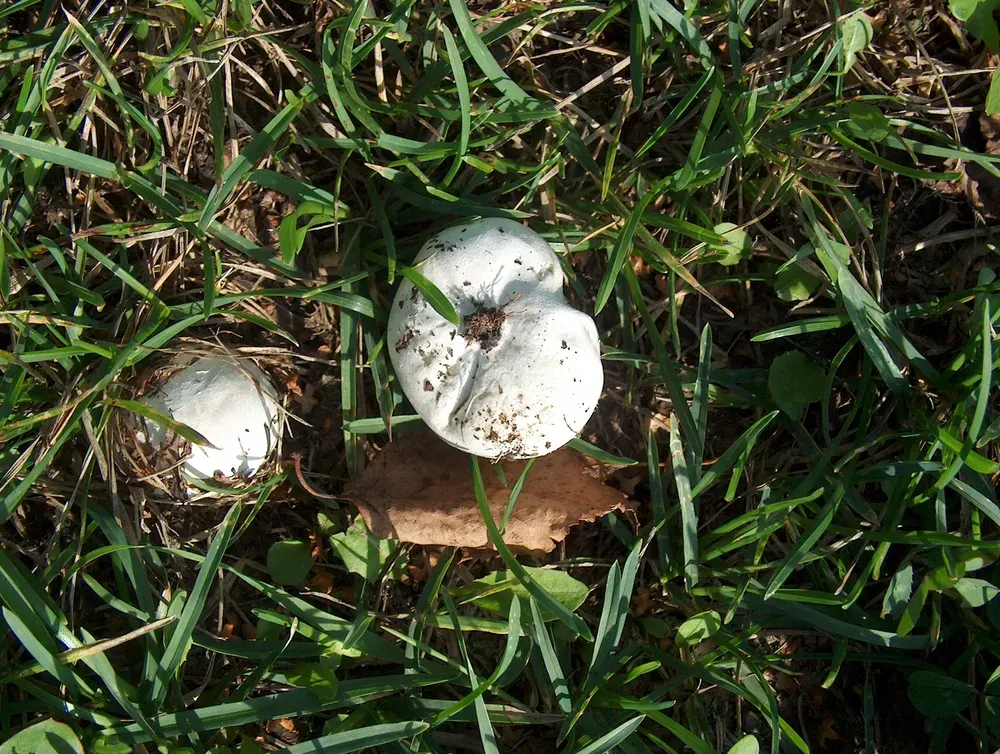
Three critical differences. Gills: the death cap's are always white, while Agaricus gills are pink in young mushrooms and chocolate brown in mature ones. Volva: the death cap always has a membranous, sack-like cup at the base of the stem; Agaricus doesn't. Smell: Agaricus smells pleasantly mushroomy, the death cap faintly or sickly. If even one feature doesn't match — throw it out.
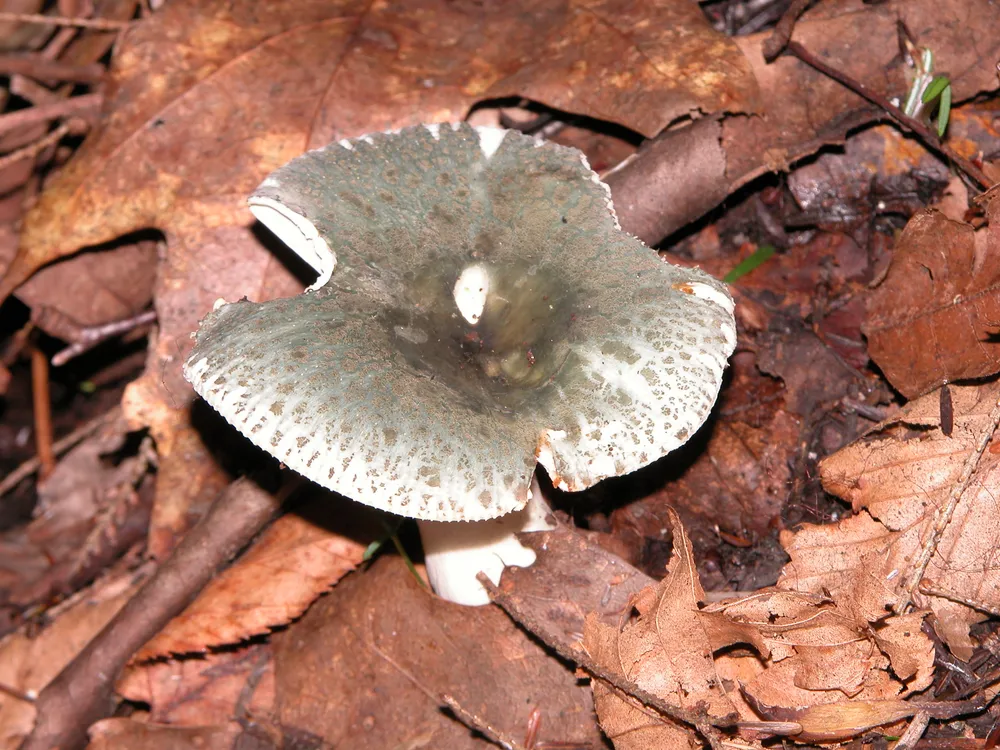
Can you confuse the death cap with the greencracked brittlegill?
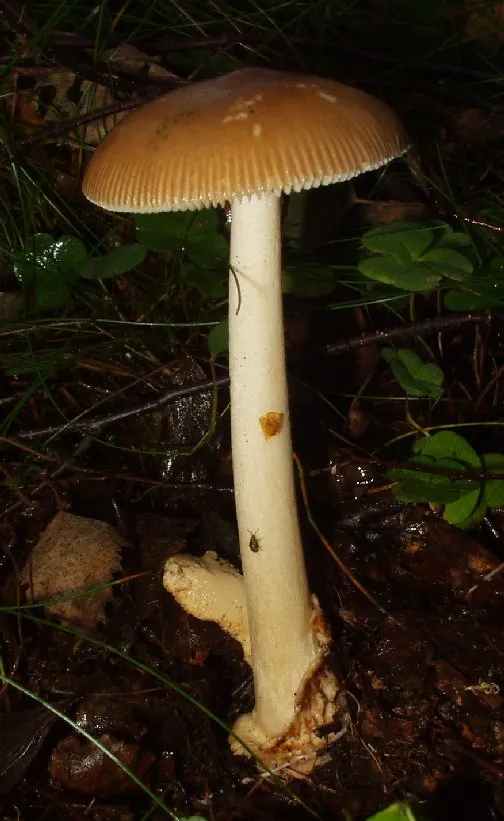
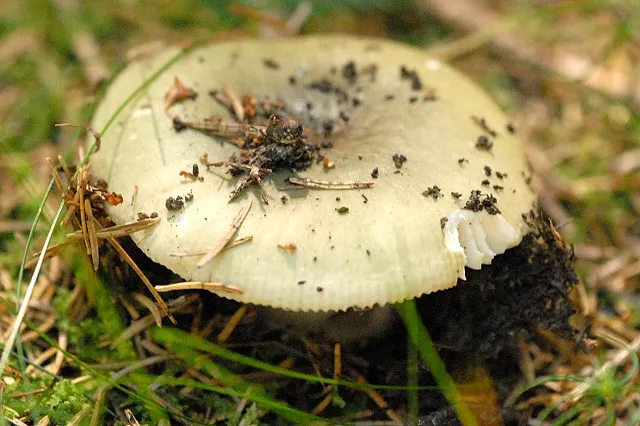
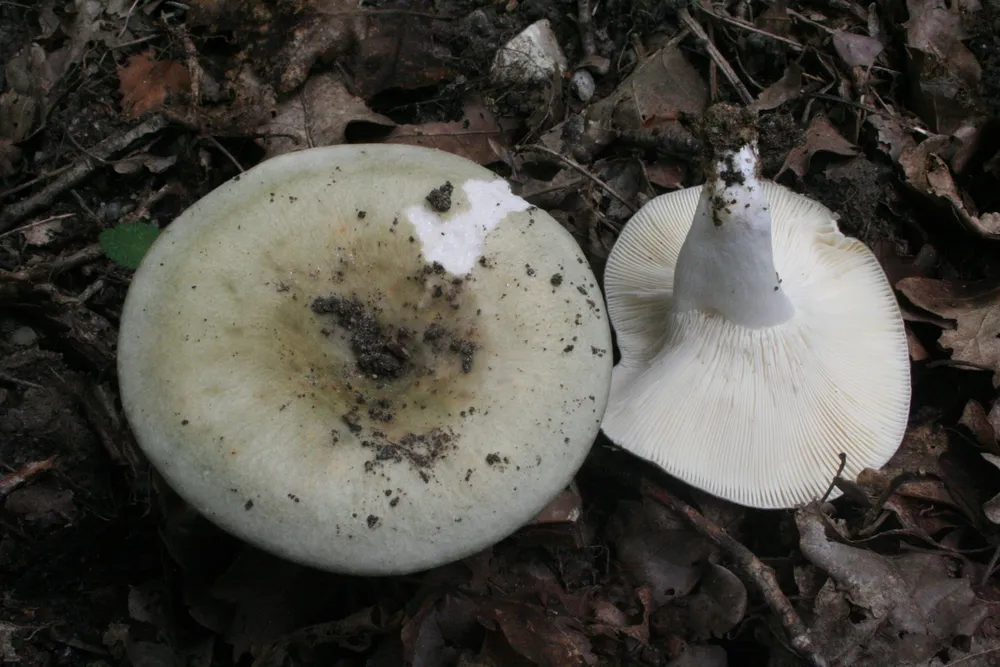
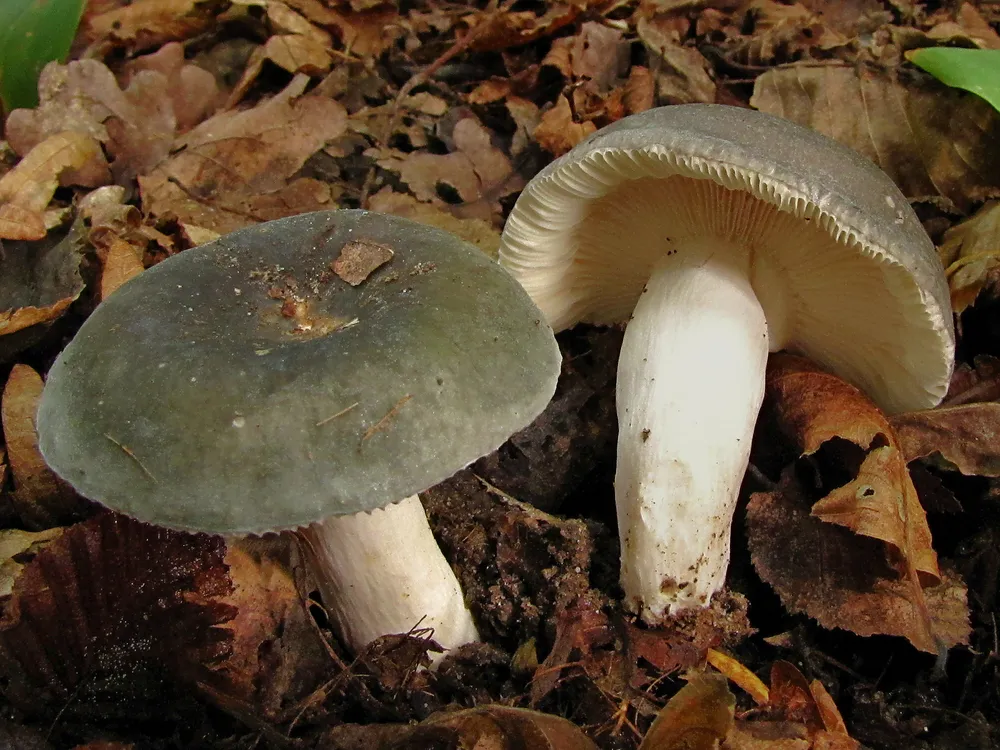
Yes, it's the most dangerous green-toned lookalike. The greencracked brittlegill has no ring and no volva — the stem is clean from top to bottom. Its gills are cream or ochre, and the flesh is crumbly. The death cap always has a ring on the stem and a cup at the base. Check the base — always dig the whole mushroom out carefully.
Is Death cap edible or poisonous?
Does Death cap have gills or pores?
What does the cap of Death cap look like?
What does the stem of Death cap look like?
Sources
- [1]Атлас грибів України, Зеров Д.К. (1979)
- [2]MycoBank Database
- [3]GBIF