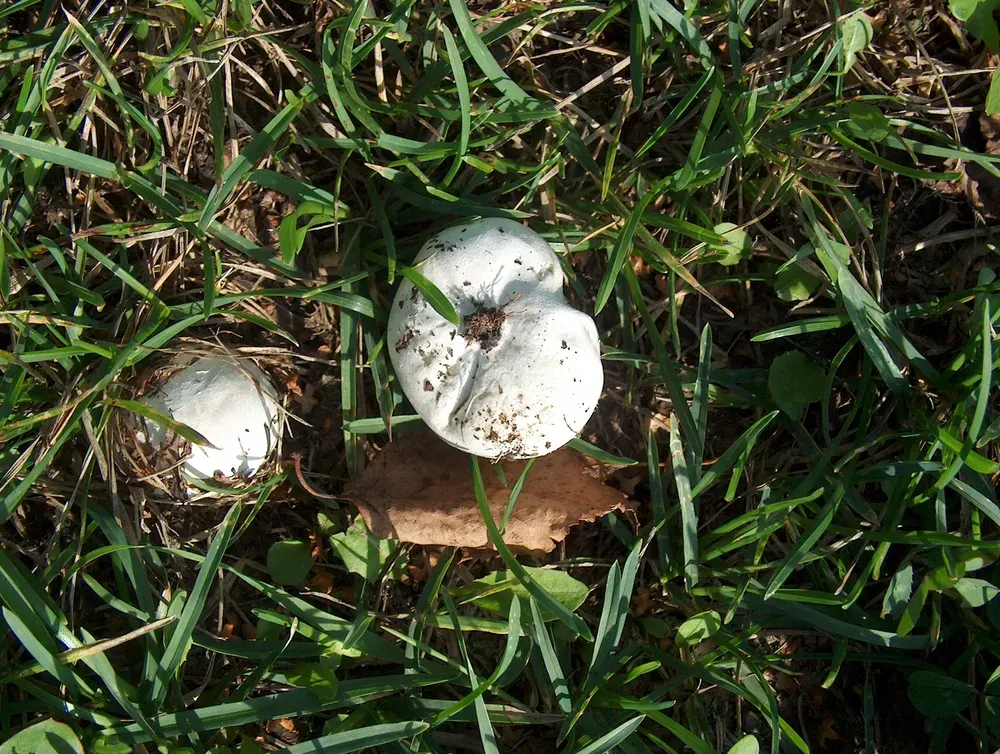
Brown puffballBovista nigrescens
Expert-verifiedUpdated August 15, 2026
Passport
- Edibility
- Edible
- Season
- Jul — Nov
- Hymenophore
- Chambered
- Cap color
- White
- Size
- Small (up to 5 cm)
- Smell
- Odorless
- Reviewed
- Yes ✓
Quick answers
Where to look?
Deciduous forest, Mixed forest
When does it appear?
Jul — Nov
Active months: July, August, September, October, November.
How to recognize it? Three signs
- Cap color: White, Cream, Brown, Black
- Cap shape: Convex
- Smell: Odorless
Fruiting season
July – November
Description
The brown puffball (Bovista nigrescens) is a small, round "ball" you often spot in meadows, pastures and along the edges of farm tracks. When young it looks like a white tennis ball 3–6 cm across; with age the outer skin peels away, revealing the distinctive dark purple-brown or almost black inner wall — hence the species name "nigrescens" ("blackening").
In Ukraine it is found throughout the steppe, forest-steppe and Polissia belts — from the Carpathians to Slobozhanshchyna. It is a saprotroph that loves open grassy spaces: commons, meadows, abandoned village gardens, roadsides along farm tracks, parks and lawns. It isn't tied to any particular mycorrhizal partner, so it grows anywhere with organically rich soil under a grass cover.
Edibility is good, but only in young, pure-white specimens with firm white flesh inside. At this stage the puffball is wonderful fried as a "mushroom steak": cut it into slices 5–8 mm thick and fry on both sides. The texture is reminiscent of tofu. At the first signs of ripening (yellowish or grayish tints in the flesh inside) the mushroom is no longer edible. An old black puffball is just a bit of natural decoration.
Cap
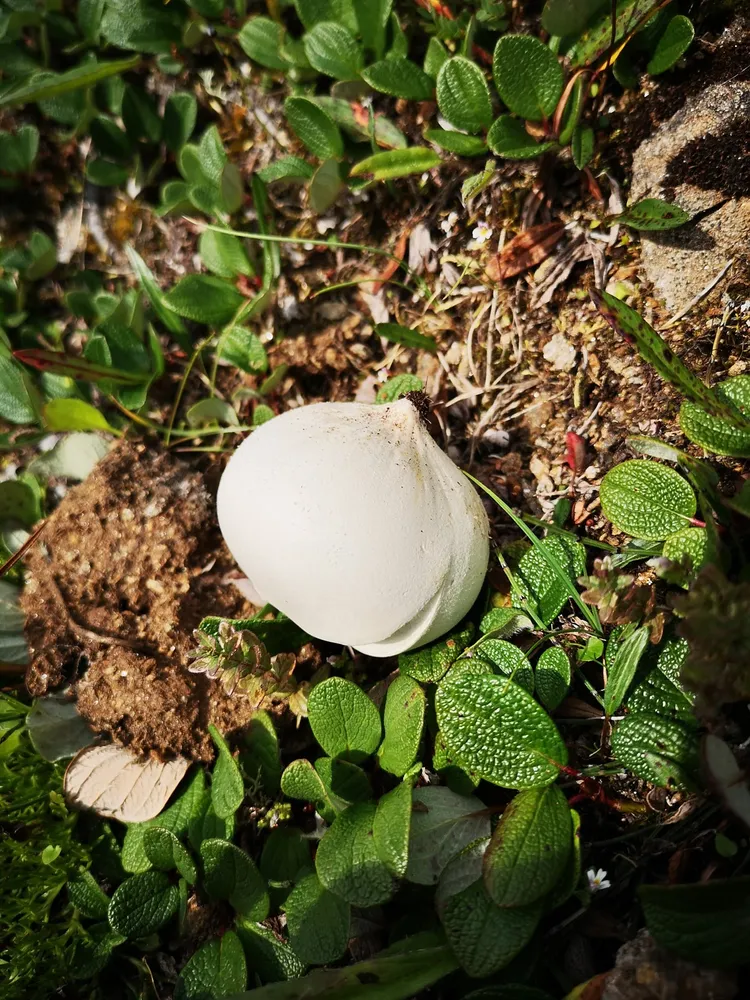
The fruiting body is a round or slightly flattened "ball" 3–6 cm across, with no stem. The outer surface of a young mushroom is smooth, white or cream. In mature ones it flakes off in small scales, exposing the dark inner wall. Old ones are entirely dark purple-brown or almost black.
Hymenophore
The spore-bearing layer is internal — it fills the whole inside of the fruiting body. In young ones it is a solid, dense white tissue (the gleba). In mature ones it turns into a powdery dark spore mass. The spores are olive-brown, with thin little tails.
Stem
There is no stem. The fruiting body is attached to the soil by a short mycelial cord that often breaks — and mature mushrooms can then roll about in the wind, scattering spores through an opening at the top.
Flesh
The gleba (inner tissue) is white, springy and delicately textured in young specimens. As it ripens it takes on a yellowish-gray tint — at this stage the mushroom is no longer edible. In old ones it turns into a dry dark powder (the spore mass).
Smell
The smell is faint, barely mushroomy; in young ones it recalls fresh egg-white batter. The taste is mild and neutral, slightly nutty in some specimens.
Lookalikes
Related species
Mushrooms of the same genus and habitat — to study side by side and never mix up.
Bulbous honey fungus
Armillaria gallica
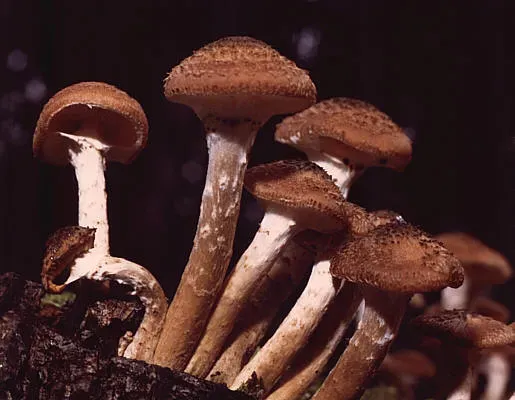
Dark honey fungus
Armillaria ostoyae
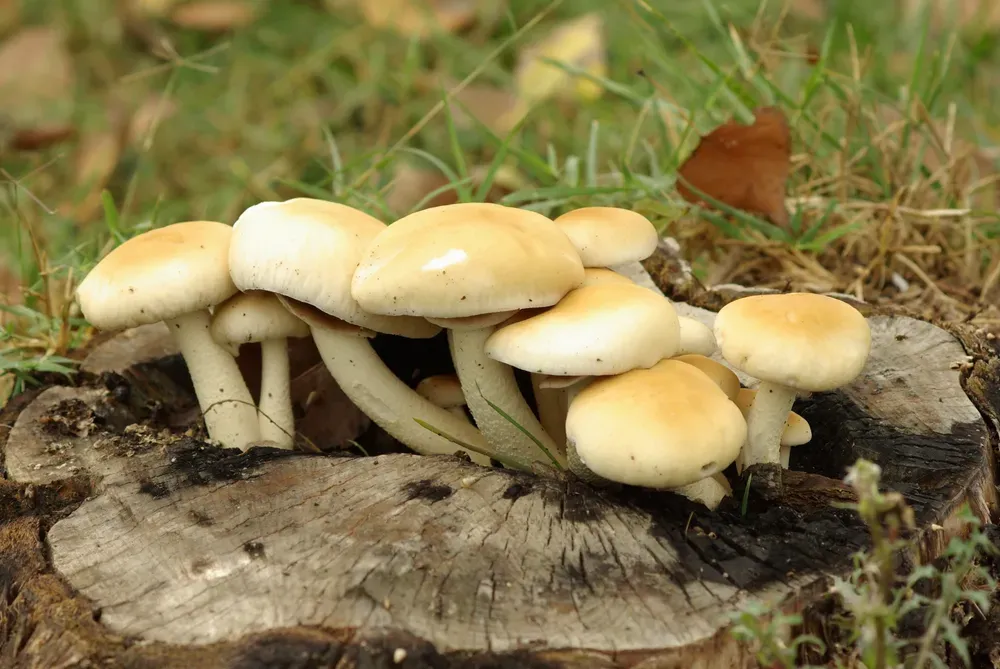
Poplar fieldcap
Cyclocybe aegerita
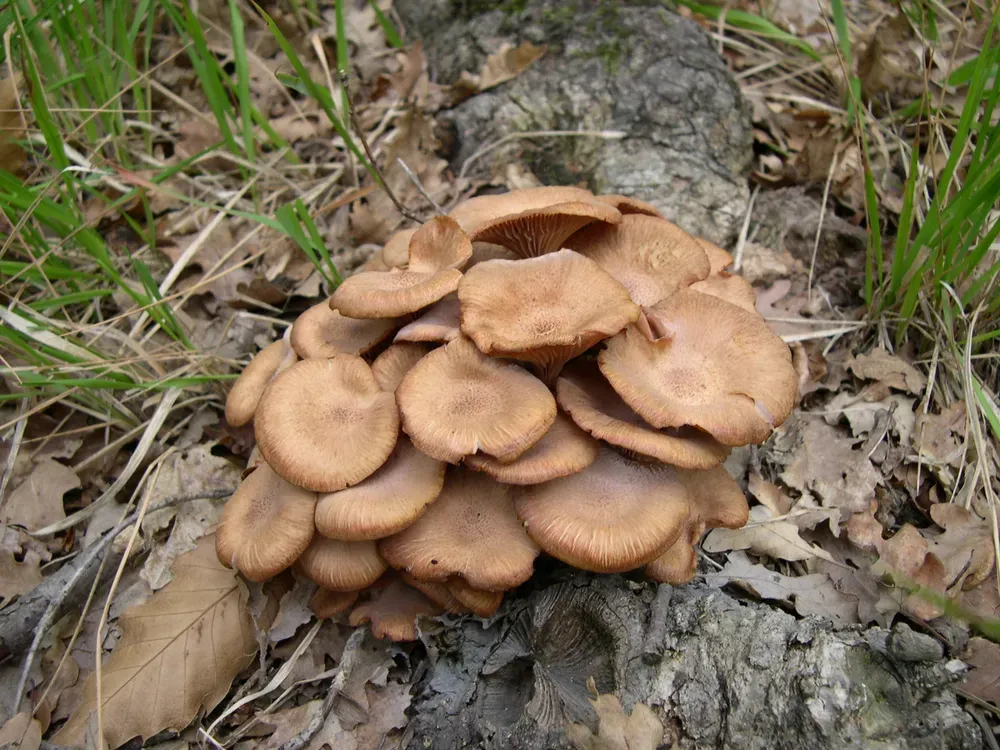
Ringless honey fungus
Desarmillaria tabescens
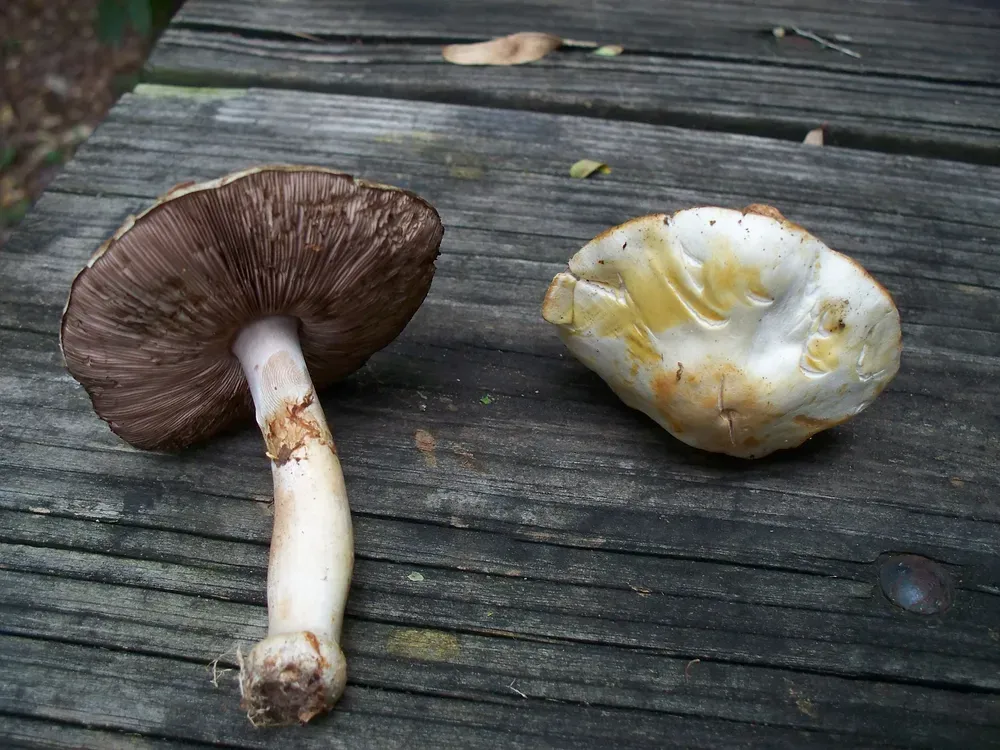
Agaricus abruptibulbus
Agaricus haemorrhoidarius
Agaricus haemorroidarius
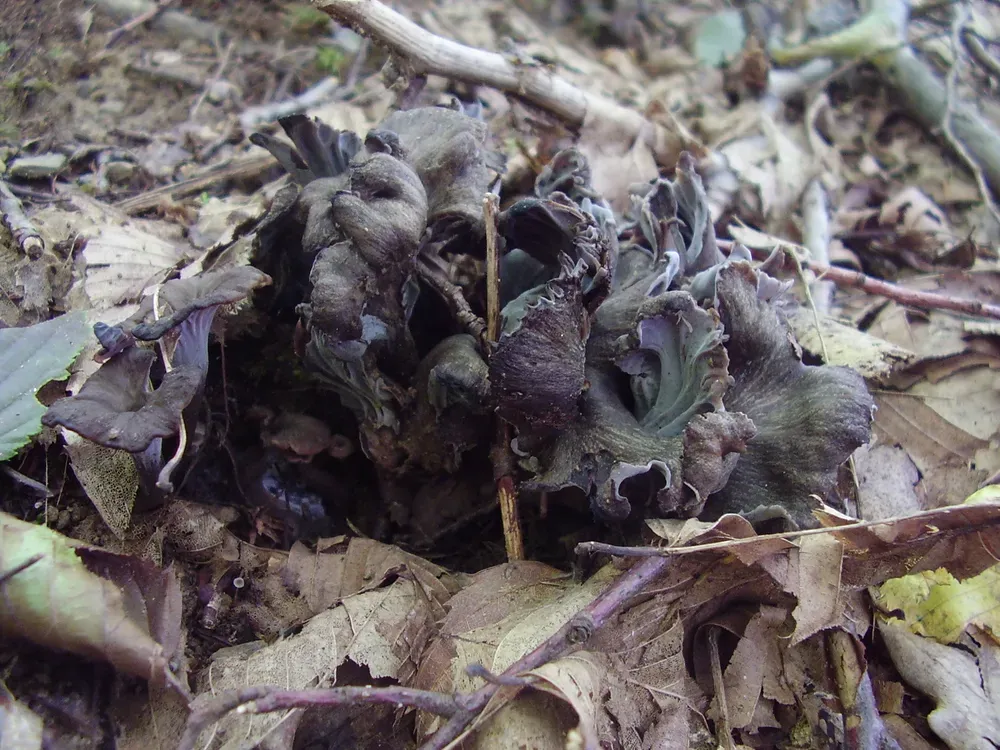
Ashen chanterelle
Cantharellus cinereus
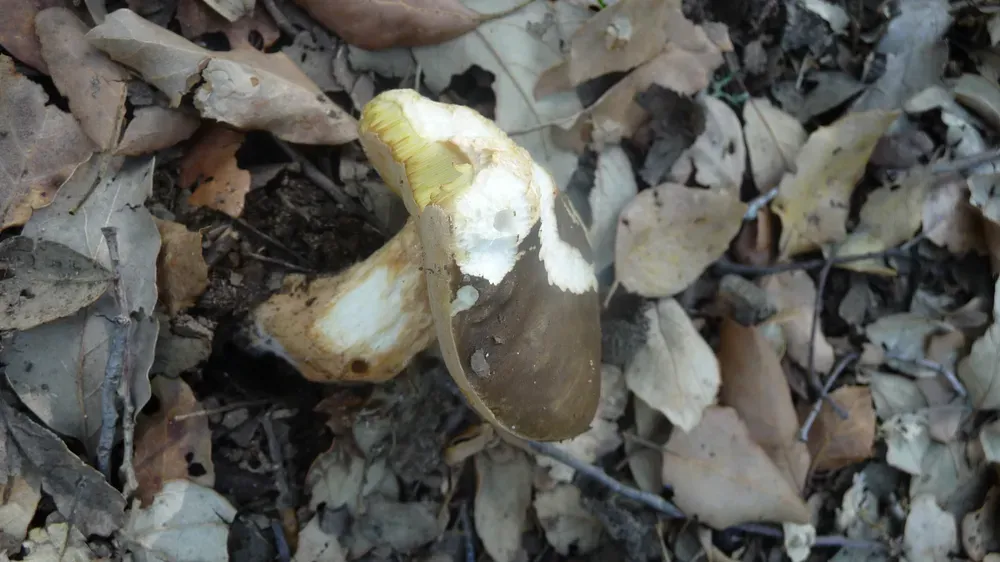
Blushing bolete
Leccinum roseofractum
Frequently asked questions
How can you tell if a puffball is edible?
Cut it in half. If the inside is solid, dense white tissue with no specks of color, it's edible. If there are any yellow, gray, olive or black tones, it is NOT edible (the mushroom has already ripened and formed spores). This is a universal rule for all puffballs.
Can it be confused with a poisonous mushroom?
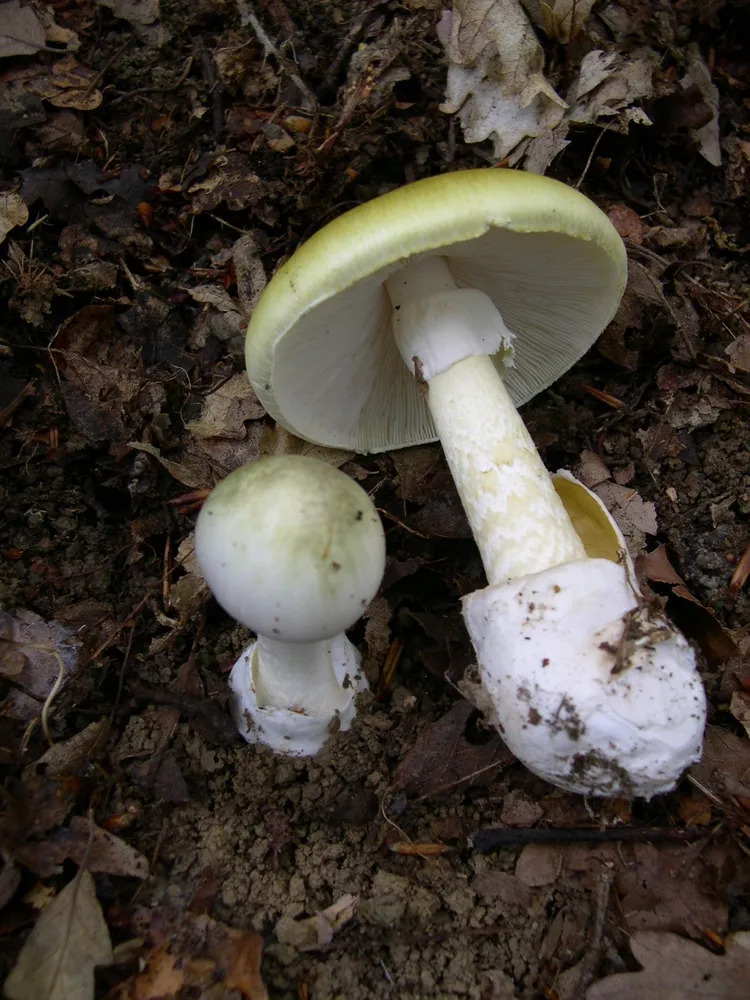
The biggest risk is mistaking a young puffball for a young (egg-stage) death cap (Amanita phalloides). The cut test: in the death cap you can see the outline of a cap and stem — the typical "mushroom anatomy". The puffball is a solid, uniform white mass with no structures at all. Always cut them open before you collect them.
Where to look for it in Ukraine?
In meadows, pastures, along the edges of farm tracks, in parks, on lawns and in abandoned village gardens. All over Ukraine, in every climate zone. It loves open grassy spaces with organically rich soil.
When does it fruit?
Late summer and all of autumn: August to November, peaking in September. Dry fruiting bodies can stay where they grew for several months, sometimes the whole winter, gradually releasing spores through the opening at the top.
How does it differ from other puffballs?
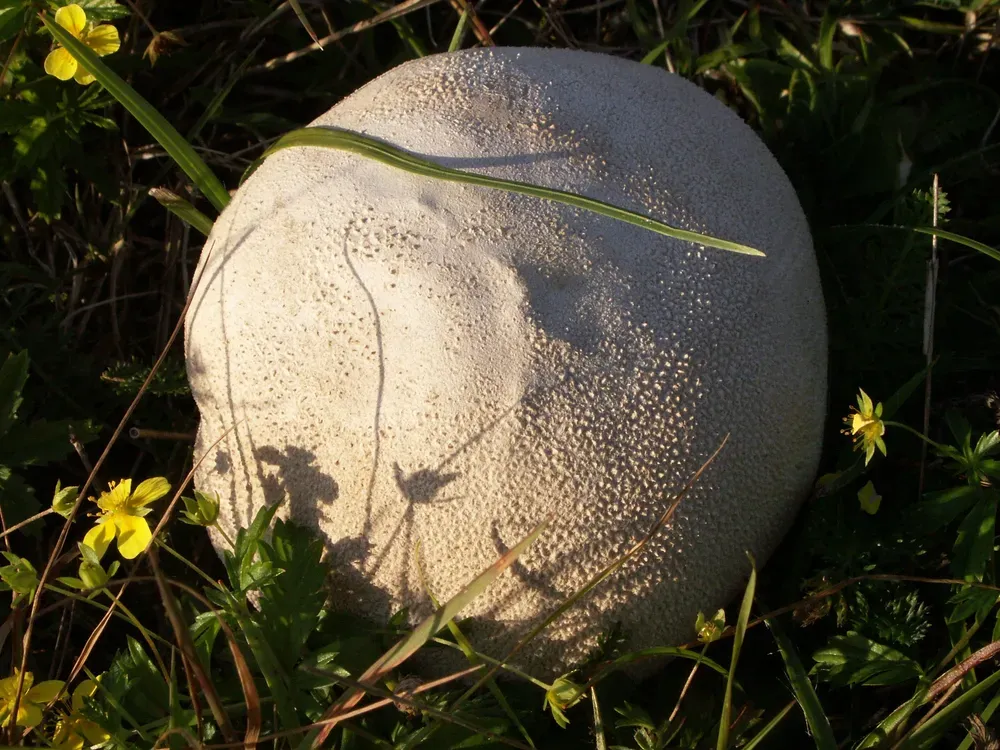
Bovista nigrescens is small (3–6 cm), with no noticeable "stem" at the base. The common puffball (Lycoperdon perlatum) has a well-defined lower "pseudo-stem" with undeveloped gleba. The giant puffball (Calvatia gigantea) is 20–50 cm across. Bovista rolls along the ground once it breaks loose — the others don't.
Why is it called "blackening"?
As it ripens, the inner tissue turns into a dark spore mass, and the outer skin peels away, exposing the dark purple-brown inner wall. Old specimens look like almost black balls — hence the species name.
How to cook it?
Only young ones with firm white flesh. Remove the outer skin (it's tough) and cut into slices 5–8 mm thick. Fry on both sides in butter or oil, like a steak. You can dredge them in flour. The texture is like tofu — the mushroom soaks up the flavor of the seasonings. There's no point drying it — at the young stage the mushroom is very watery.
Is it safe to breathe in the spores?
In large amounts — better NOT. The spores can cause respiratory irritation and, in sensitive people, allergic reactions (so-called "mushroom picker's lung"). Don't break old puffballs open near your face. In nature it's normal, but avoid it when there's no need.
Is Brown puffball edible or poisonous?
What kind of spore-bearing surface does Brown puffball have?
What does the cap of Brown puffball look like?
What does the stem of Brown puffball look like?
Sources
- [1]Вікіпедія (українська)
- [2]Атлас грибів України, Зеров Д.К. (1979)
- [3]MycoBank Database
- [4]Index Fungorum
- [5]GBIF
- [6]iNaturalist Ukraine