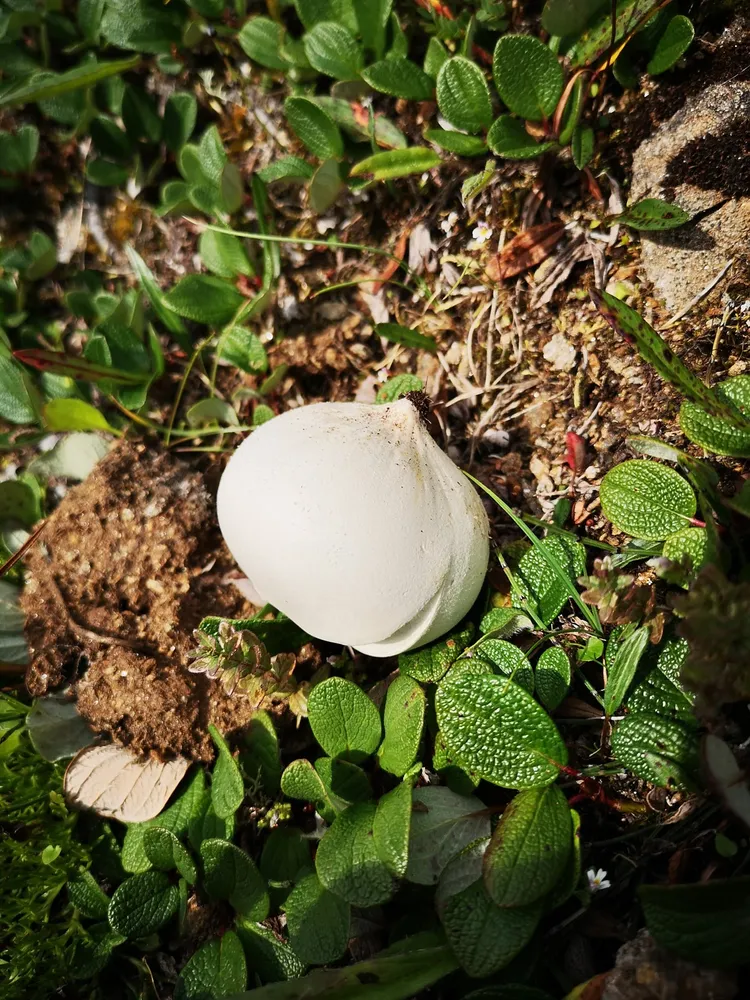
Fen puffballBovista paludosa
Expert-verifiedUpdated October 3, 2026
Passport
- Edibility
- Edible
- Season
- Aug — Oct
- Hymenophore
- Chambered
- Cap color
- White
- Size
- Small (up to 5 cm)
- Smell
- Pleasant
- Reviewed
- Yes ✓
Quick answers
Where to look?
Mixed forest
When does it appear?
Aug — Oct
Active months: August, September, October.
How to recognize it? Three signs
- Cap color: White, Cream, Brown
- Cap shape: Irregular
- Smell: Pleasant
Fruiting season
August – October
Description
Fen puffball (Bovista paludosa) is a rare, sphagnum-loving relative of common puffballs, notable for its small size (3-5 cm) and growth on sphagnum bogs. The Latin epithet paludosa means "of the marsh". In dry weather it stays intact; when mature it releases dark brown spore powder through an apical opening — typical of the genus Bovista.
Edible only when young, when the inside of the fruiting body is a firm white "gleba" (sterile flesh). Older fruiting bodies with brown spore powder inside are inedible. Not much to offer in the kitchen: the flesh is soft and neutral, not interesting as a dish on its own. Fine in a mix with other mushrooms.
Rare — listed on the regional red lists of some oblasts due to the shrinking of sphagnum bogs (drainage, peat extraction). It's not worth picking — both because of its red-list status and its low culinary value.
In Ukraine it occurs mainly in Polissia (especially Rivne, Volyn and Zhytomyr regions) and in the Carpathians (foothills with boggy riverside areas). A saprotroph on sphagnum moss and damp peaty soil. Season: August — October. It often grows singly or 2-3 fruiting bodies at a time on a carpet of sphagnum.
Cap
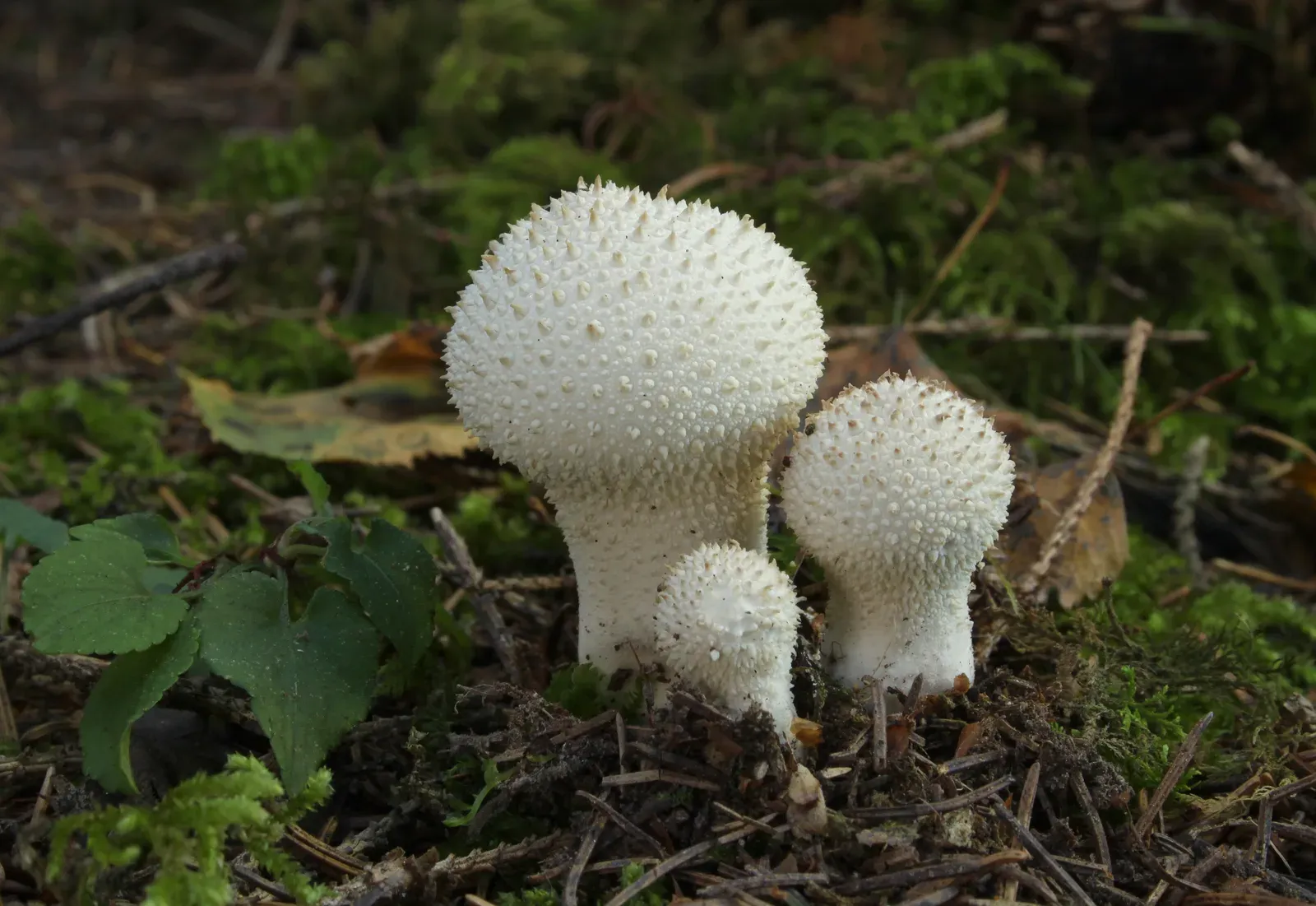
Fruiting body 3-5 cm across, spherical to flattened-spherical, with no distinct cap or stem (like all puffballs). The outer skin is whitish to cream when young, turning brown with age. Surface smooth or with fine scales in older ones.
Hymenophore
There's no hymenophore in the usual sense — the spores form inside the fruiting body, in the gleba. In young ones the gleba is firm white, marbled in cross-section. In mature ones it becomes powdery, dark olive-brown. Spore powder dark olive-brown.
Stem
Stem absent or very short, threadlike — the fruiting body is attached to the substrate by a mycelial "cap".
Flesh
In young ones — firm, marble-white, like cheese curd. When cut it doesn't change color. In mature ones it becomes powdery, with the characteristic dark brown spore powder. Faint mushroomy smell.
Smell
Faintly pleasant and mushroomy, with no distinctive notes.
›Scientific synonyms (6)
Calvatia paludosa (Lév.) De Toni (1888), Bovistella paludosa (Lév.) Pat., Bovista tunicata var. pyriformis Hazslinsky, Mycenastrum lycoperdoides Cooke, Lycoperdon bubakii Bres., Bovistella humidicola Bowerman
Lookalikes
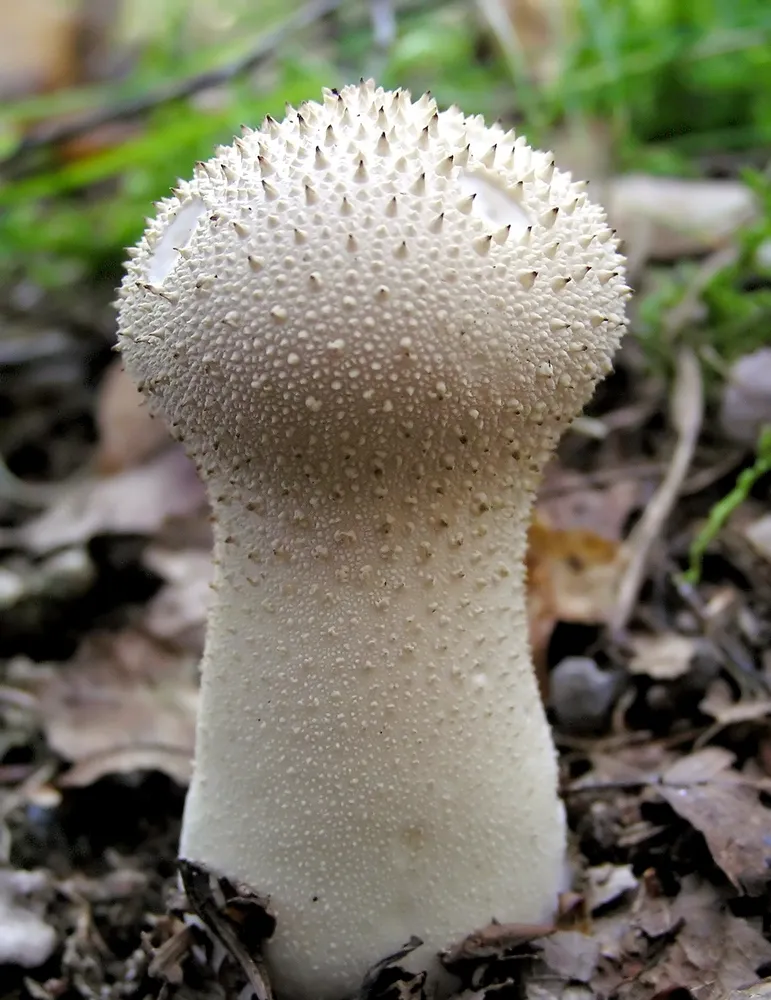
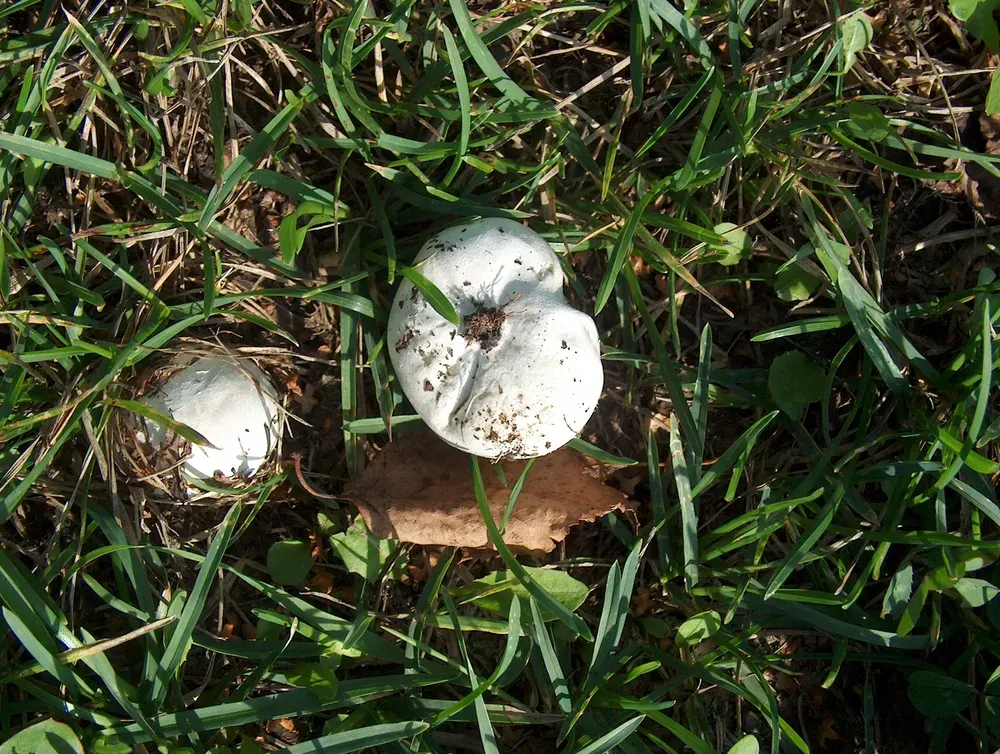
Related species
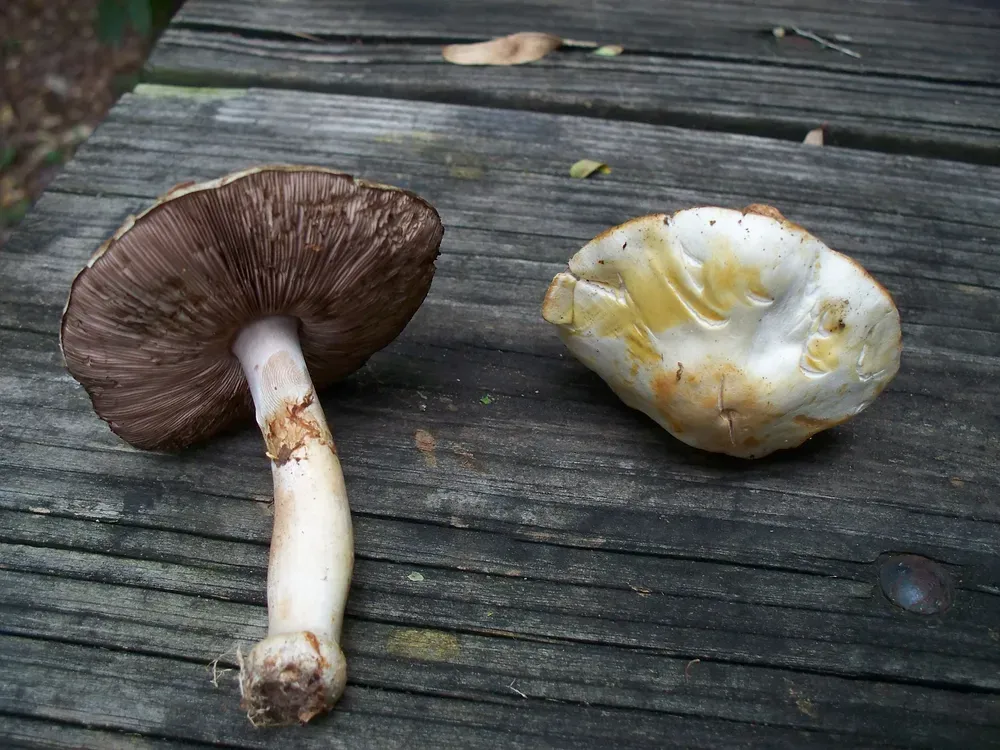
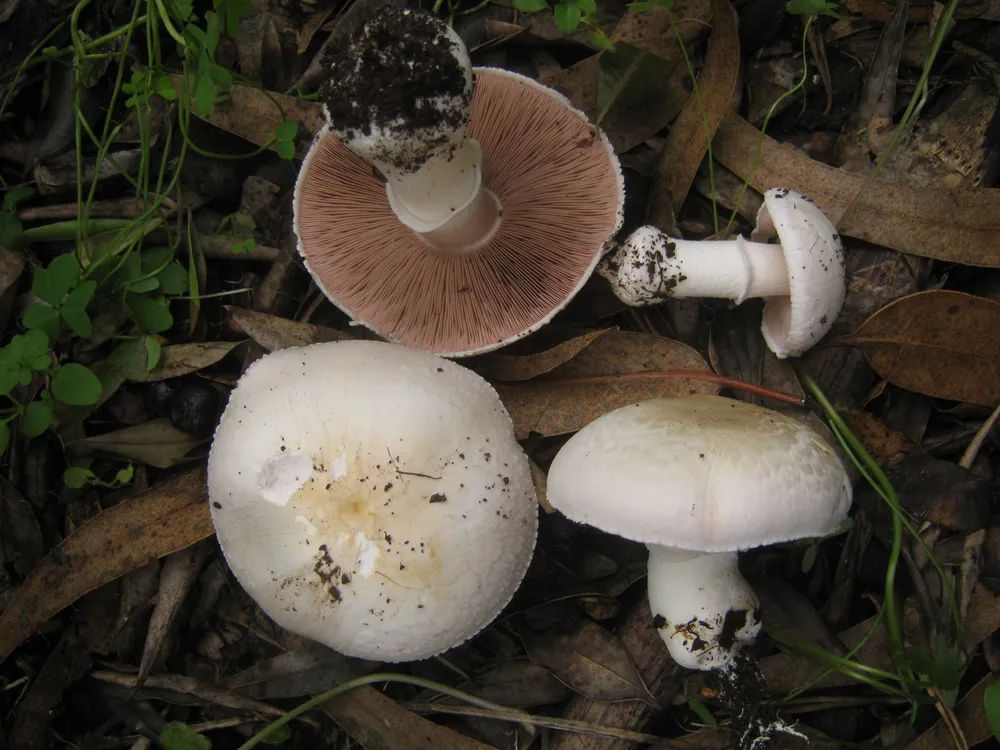
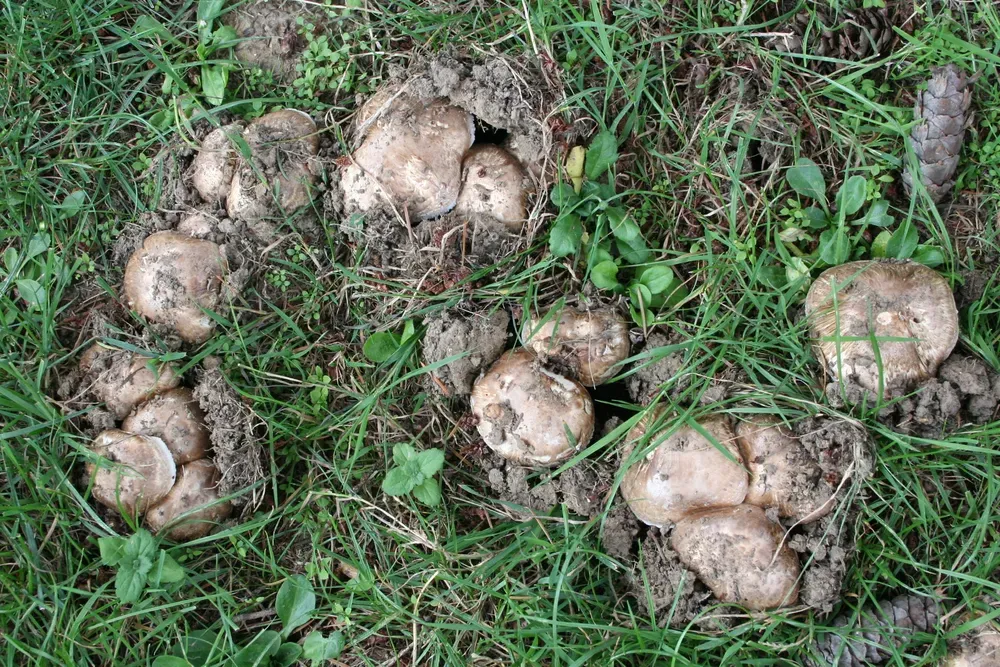
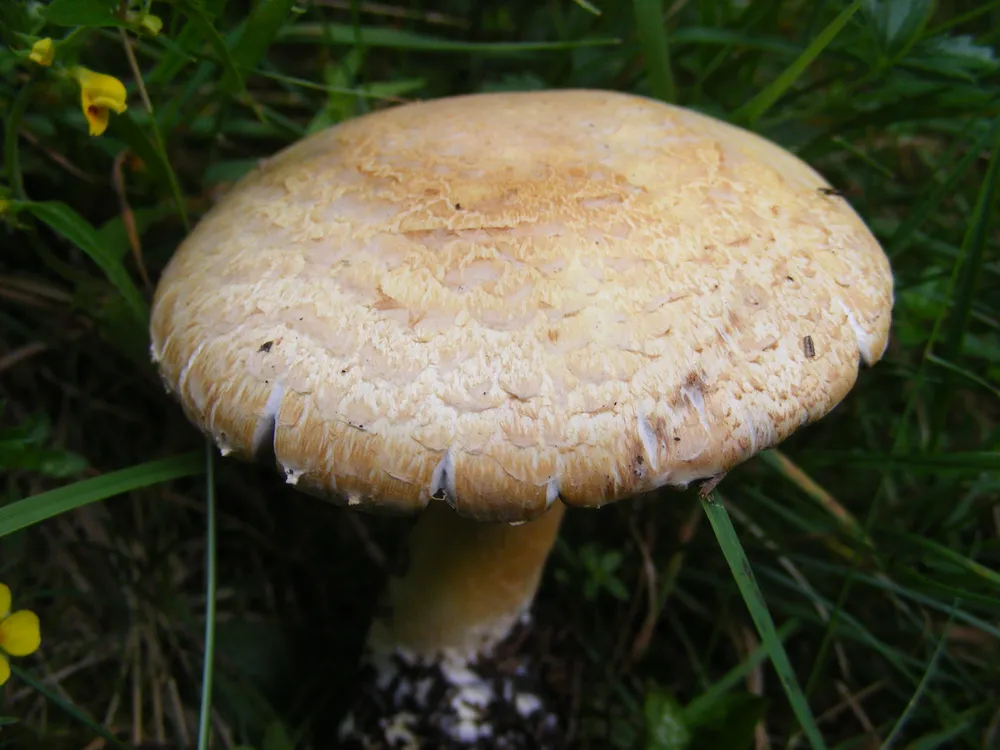
Mushrooms of the same genus and habitat — to study side by side and never mix up.
.webp)
_Fr._4948278370-2.webp)
Related reading
Frequently asked questions
Is it safe to eat?
Only young mushrooms with firm white gleba inside (check in cross-section — the flesh must be white, marbled, with no brown areas). Mature ones with powdery gleba are inedible (though not poisonous). We don't recommend picking it because the species is rare — it's an indicator of a healthy sphagnum bog that needs protection.
Does it have dangerous look-alikes?
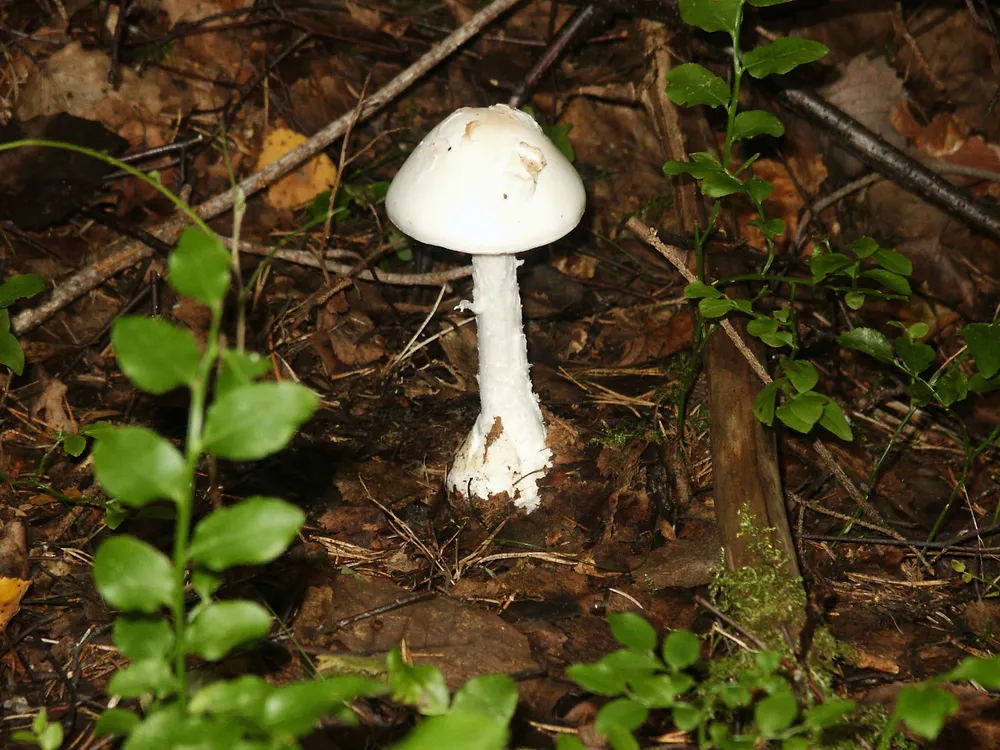
Puffballs have no dangerous look-alikes among themselves. But young amanitas (A. virosa, A. phalloides) at the "egg" stage can resemble a puffball — they're also white and spherical. The essential check is cutting it open: a puffball in cross-section shows marbled white gleba with no visible structures. In a young amanita, the developing cap and stem are already visible inside, like an embryo. Always cut a puffball open before cooking — that's your basic insurance.
Where should you look for it?
On sphagnum bogs and boggy riverside areas — among moss, in damp peaty soil. It likes sunny, open bogs with sparse trees.
Which regions of Ukraine is it found in?
Mostly in Polissia (Rivne, Volyn and Zhytomyr regions), and partly in the Carpathians (boggy foothill areas). It doesn't occur in the steppe or forest-steppe.
When should you look for it?
August — October, peaking in September. It likes moderately damp, cool weather.
How is it different from common puffballs?
By size and habitat. Common puffballs (Lycoperdon, Bovista nigrescens) are larger (5-10 cm) and grow in meadows and forests. The fen puffball is small (3-5 cm) and grows only on sphagnum. The second feature is the apical opening in mature ones: in Bovista paludosa it's characteristic, distinct and central.
Is it worth going out for?
No. It's a rare red-listed species in some oblasts, an indicator of an intact sphagnum bog. If you find it, take a photo and let it grow. Edible puffball alternatives are plentiful in ordinary habitats (Lycoperdon perlatum, Lycoperdon pyriforme, Bovista nigrescens).
How do you cook it, if someone takes the chance?
Like common puffballs: cut it open and make sure the flesh is white and marbled. Remove the outer skin. Fry it with onions like an omelet (the flesh has a cheese-like texture). In a mix with other mushrooms. Pickling — works less well, the flesh falls apart. Drying — not worth it, the flesh loses its shape.
Is Fen puffball edible or poisonous?
What kind of spore-bearing surface does Fen puffball have?
What does the cap of Fen puffball look like?
What does the stem of Fen puffball look like?
Sources
- [1]Вікіпедія (українська)
- [2]Атлас грибів України, Зеров Д.К. (1979)
- [3]MycoBank Database
- [4]Index Fungorum
- [5]GBIF
- [6]iNaturalist Ukraine