Agaricus squamuliferus
Expert-verifiedUpdated October 3, 2026
Passport
- Edibility
- Edible
- Season
- Jun — Oct
- Hymenophore
- Gilled
- Cap color
- White
- Size
- Medium (5–15 cm)
- Smell
- Pleasant
- Reviewed
- Yes ✓
Quick answers
Where to look?
Deciduous forest, Mixed forest
When does it appear?
Jun — Oct
Active months: June, July, August, September, October.
How to recognize it? Three signs
- Cap color: White, Cream, Brown
- Cap shape: Convex
- Smell: Pleasant, Almond
Fruiting season
June – October
Description
Agaricus squamuliferus is one of the humblest relatives of the store-bought mushroom, with distinctive fine brownish scales on the cap that resemble fish scales. It is not the plump mushroom you buy at the supermarket: the scales and smaller size make it look more like a young parasol mushroom, but the gills are pink when young and darken to chocolate when mature, the classic feature of the genus Agaricus.
Edible, but of modest culinary merit. Young mushrooms are meaty, with the characteristic almond-mushroom flavor of Agaricus. In old ones the flesh becomes viscous and dark, and the dish turns out an unappetizing gray. Suitable for frying and for pickling in a mix with other Agaricus species.
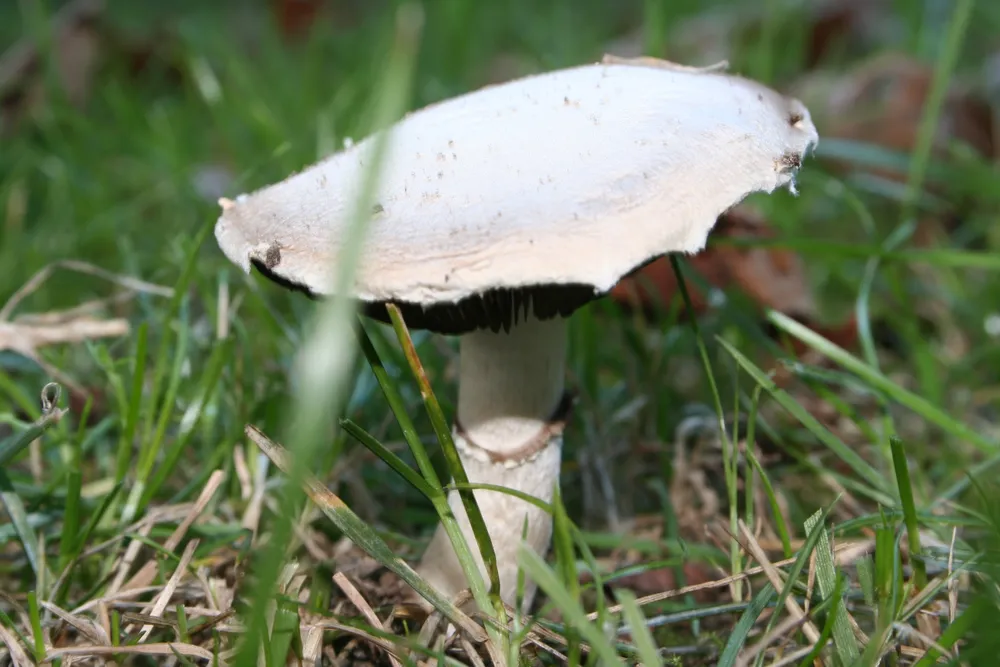
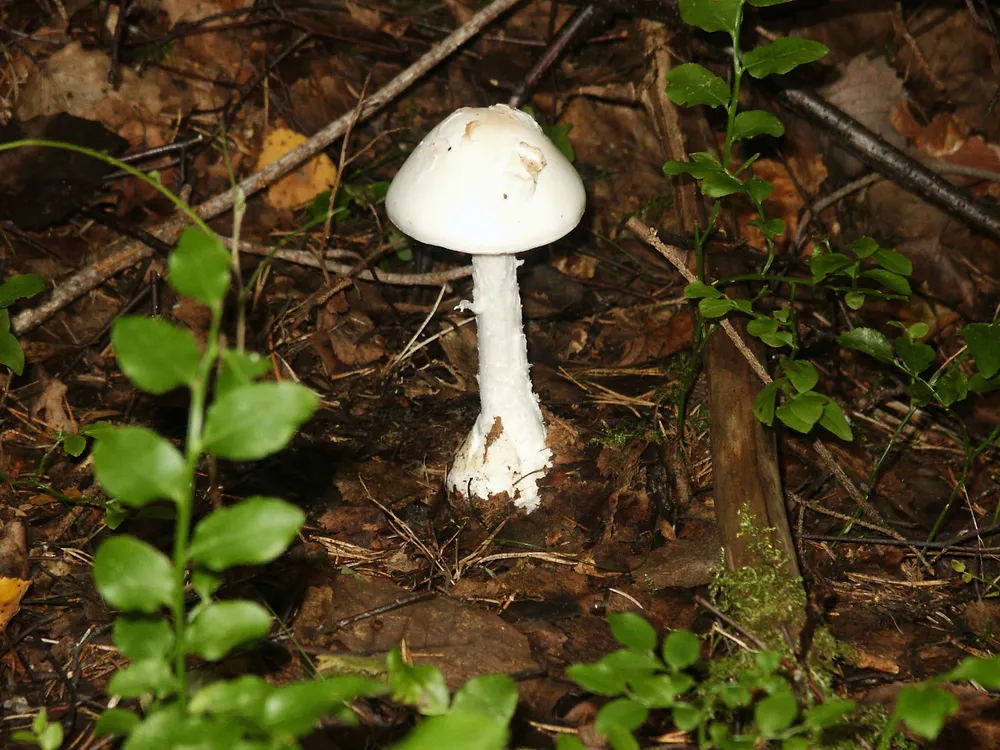
Safety is critical. All wild Agaricus species carry a potential risk because of their deadly resemblance to amanitas (Amanita virosa, A. phalloides, A. citrina) when young. The key safeguard: wait for pink or dark brown gills; a young amanita has pure white gills. When in doubt, do NOT pick it. The second danger is the yellow stainer (Agaricus xanthodermus), poisonous (not deadly): gastrointestinal upset 1–6 h after eating; its giveaway is flesh that yellows when touched and a distinct smell of ink or carbolic. If it smells of medicine, skip it.
In Ukraine it is widespread in deciduous and mixed forests: the Carpathians, Prykarpattia, Polissia, the forest-steppe. A saprotroph, it grows on humus-rich soil, in forest litter, on forest edges, in parks. Season June to October.
Cap
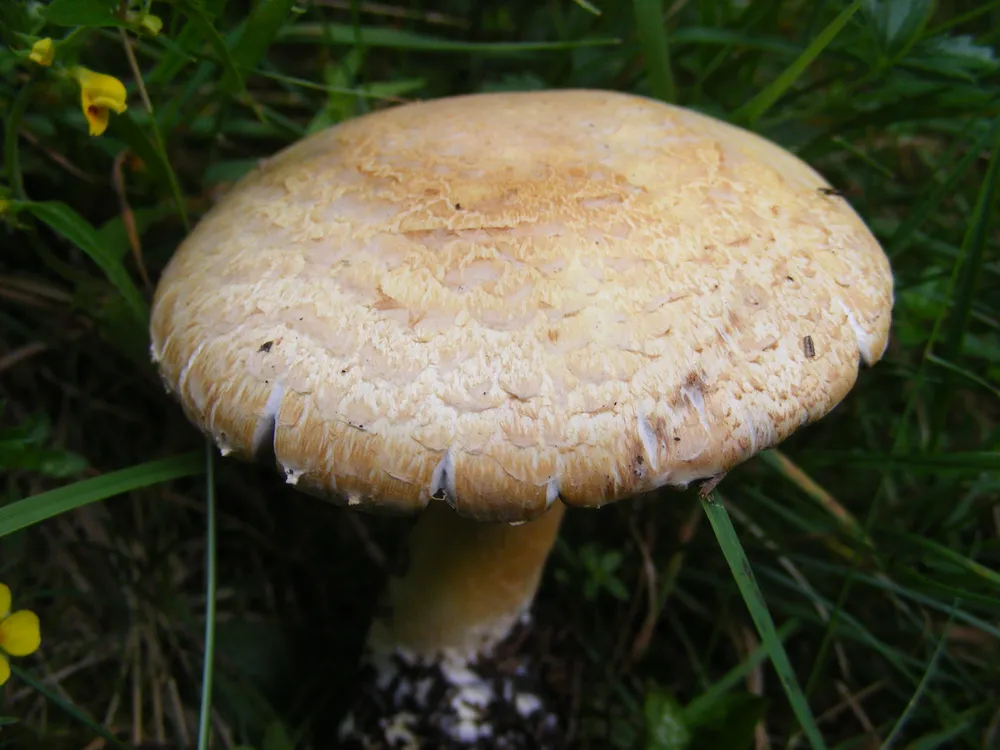
Cap 4-9 cm across, hemispherical to egg-shaped when young, becoming convex-flat with age. Color whitish to grayish-cream, with fine brownish or gray-brown radially arranged scales, a distinctive feature of the species. There are more scales in the center and fewer toward the cap edge. The surface is dry, not slimy.
Hymenophore
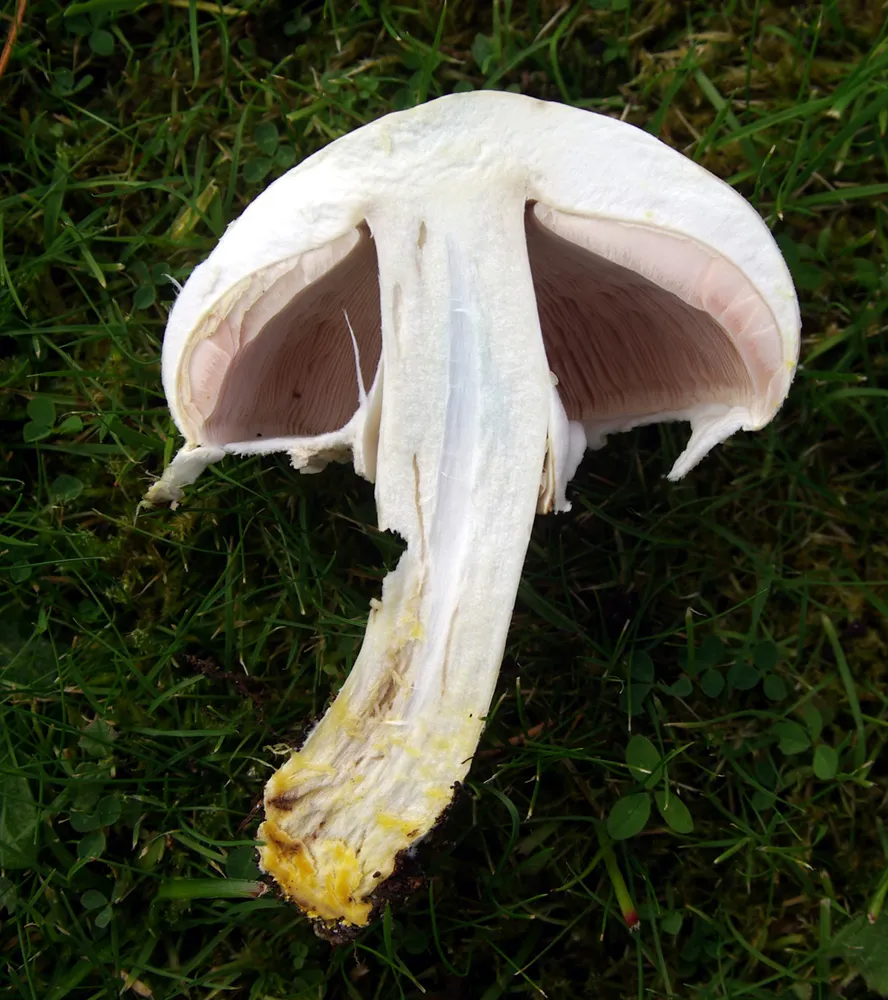
Gilled hymenophore: gills free (not attached to the stem), crowded. When young they are pink (a characteristic feature of the genus Agaricus, unlike the white gills of amanitas), and with age they become chocolate-brown to dark brown. Spore print dark brown.
Stem
Stem 5-10 cm tall, 0.8-1.5 cm thick, cylindrical, slightly thickened at the base. Color white to cream. A white membranous ring in the upper part, distinct when young; in older mushrooms it may slip down or dry out. Above the ring the stem is smooth, below it has fine lengthwise fibers.
Flesh
Flesh firm, white; when cut it slowly turns pinkish to brownish, especially in the lower stem. This is the classic protective feature of the genus Agaricus against Amanita. In amanitas the flesh does not change color. Pleasant mushroomy smell with an almond note.
Smell
Pleasant and mushroomy, with a subtle almond-anise note, typical of many Agaricus species. It does not smell of ink, medicine or carbolic (if it does, it is the yellow stainer: do not eat it).
Lookalikes
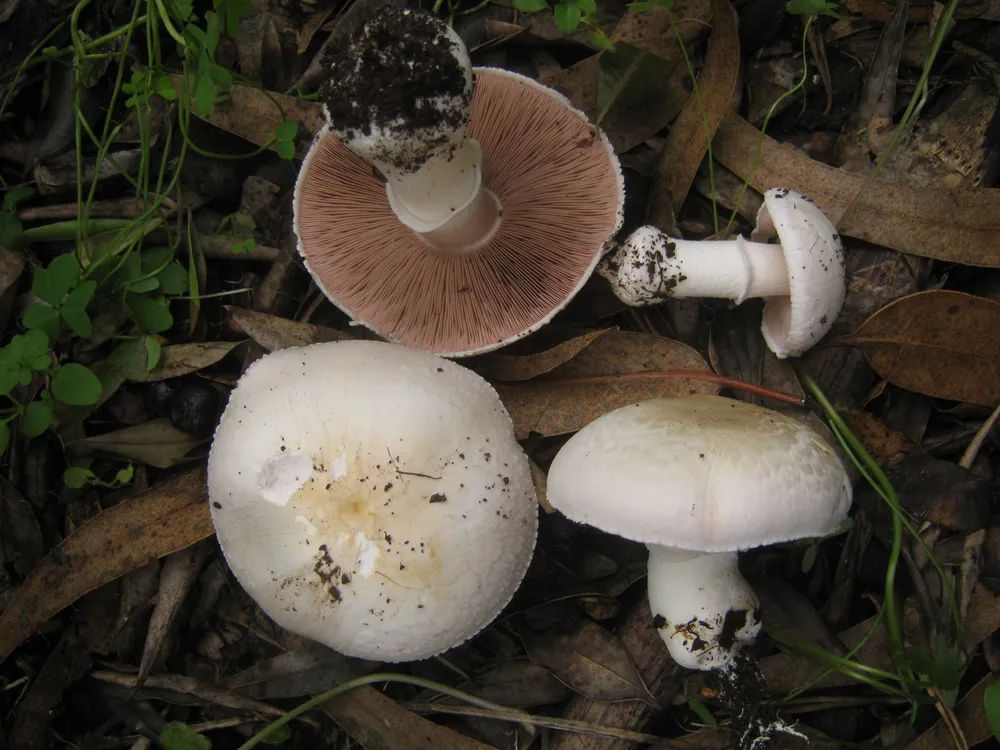
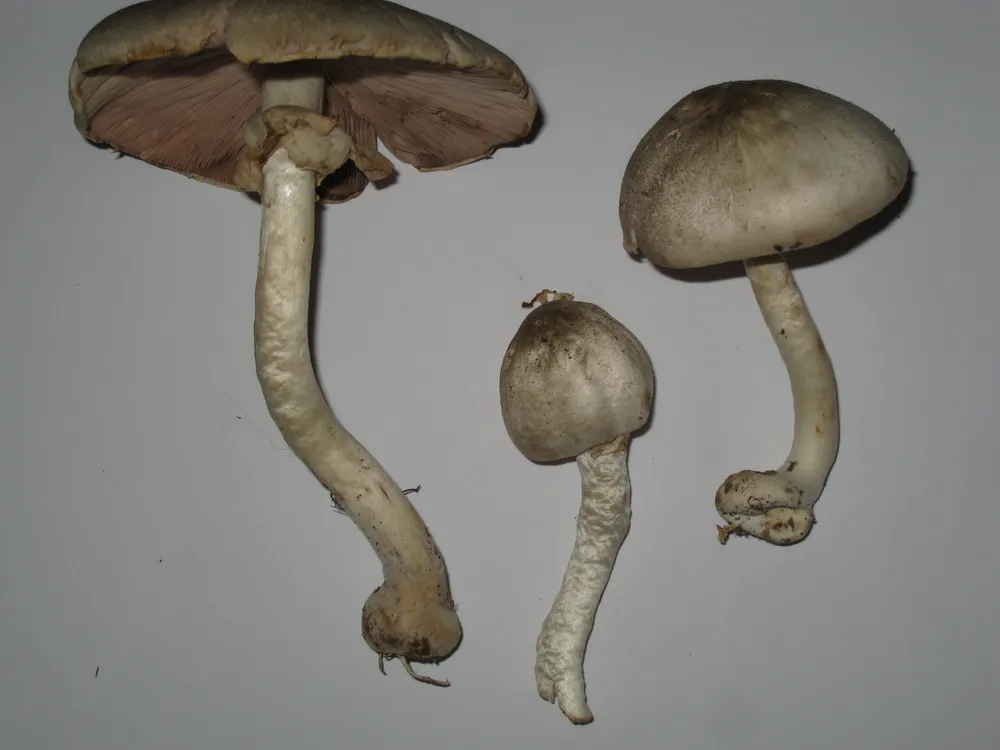
Related species
Mushrooms of the same genus and habitat — to study side by side and never mix up.
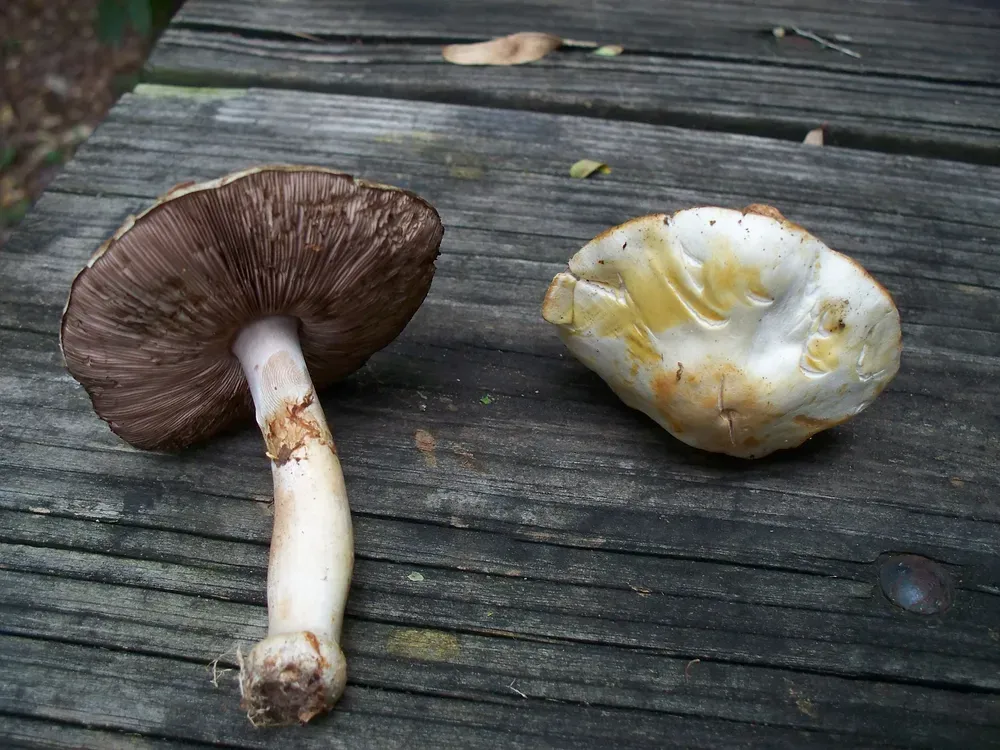
.webp)
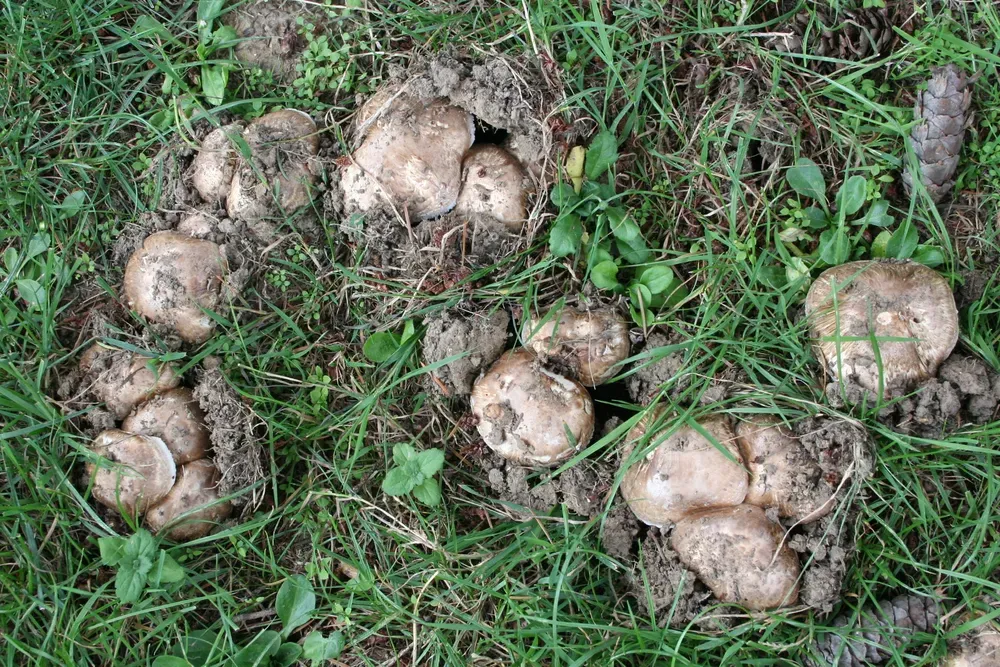
_Fr._4948278370-2.webp)
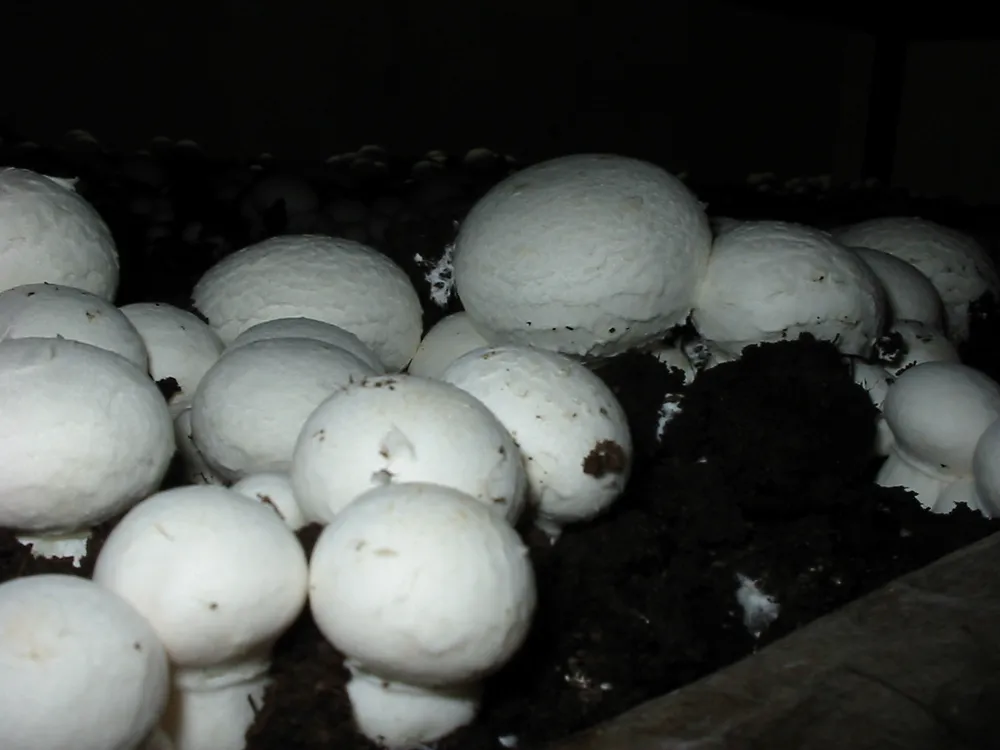
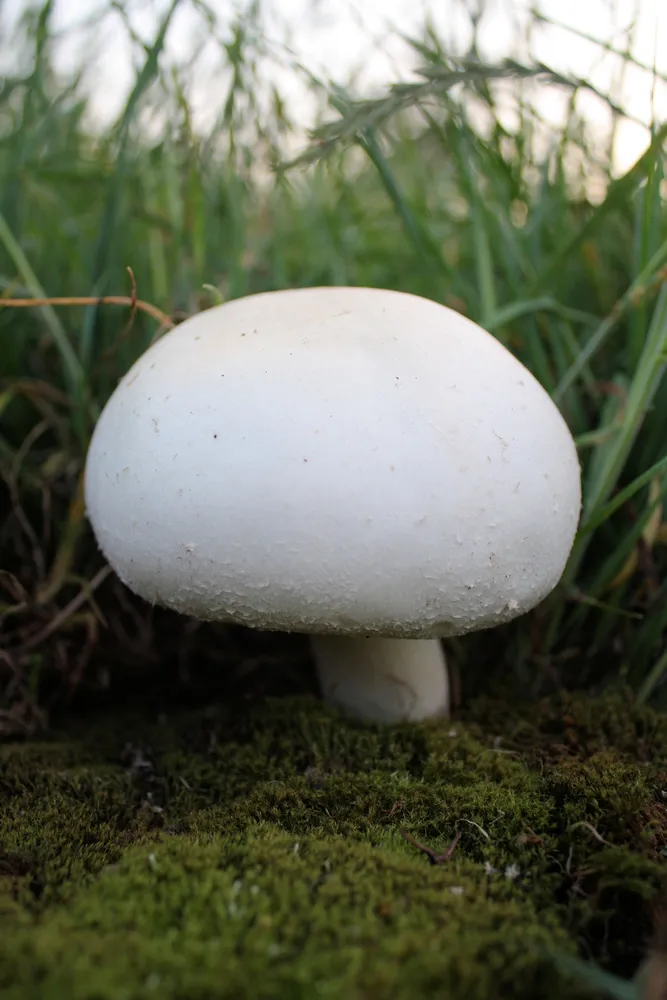
.webp)
Frequently asked questions
Is it safe to eat?
Yes, provided it is reliably identified. Most important: make sure the gills are pink or dark brown, not white. In young amanitas (A. virosa, A. phalloides) the gills are always white and free; in Agaricus they are pink/dark brown. Old mushrooms with soft flesh are better skipped. Young store-bought ones are safer than forest finds picked by eye.
How can I reliably tell it apart from the destroying angel?
Three critical features. (1) Gills: in the amanita they are WHITE at every stage of growth. In the Agaricus they are pink when young, dark brown when mature. This is the most reliable difference. (2) Volva: the amanita has a sac-like volva, an "eggshell" at the base of the stem. The Agaricus has no volva at the base of the stem. So always dig up the stem rather than cutting it: if you find the remains of an "eggshell", it is an amanita. (3) Flesh when cut: in the Agaricus it turns pinkish to brownish; in the amanita it stays white. Any doubt at all: do NOT pick it.
What does it mean if it smells like a pharmacy or ink?
This is the yellow stainer (Agaricus xanthodermus): a poisonous relative: not deadly, but it causes gastrointestinal upset (nausea, abdominal pain, diarrhea 1-6 h after eating). It has a characteristic sharp smell of ink, phenol, medicinal ointment, and the flesh in the lower stem turns bright yellow when damaged. If it smells unwholesome or the stem yellows when pressed, skip it.
Where should I look for it?
In deciduous and mixed forests, on humus-rich soil among fallen leaves, on forest edges and in forest clearings. A saprotroph, not tied to any particular tree. It also turns up in city parks and lawns, but you should not pick it there because of heavy-metal accumulation.
Which regions of Ukraine is it found in?
Throughout the forest and forest-steppe zones: the Carpathians, Prykarpattia, Polissia, the forest-steppe. In the steppe, in floodplain oak woods and parks.
When should I look for it?
June to October, peaking in August-September. It loves warm, damp weather after summer rains.
Which Agaricus species is it confused with?
With the blushing wood mushroom (A. silvaticus): also scaly on the cap, but larger, and its flesh reddens more strongly. With the field mushroom (A. campestris): no scales, grows in meadows. With the yellow stainer (A. xanthodermus): poisonous, smells of medicine. The blushing wood mushroom and the field mushroom are edible and tasty, so mixing those two up is not critical. The yellow stainer, though, will make you ill, and confusing any of them with an amanita can be fatal.
How do I cook it?
Fry it with onion and sour cream: a classic dish. Pickle it after boiling for 10 min with bay leaf and black pepper. Stew it with potatoes. Young caps can be added to salads after a quick sauté. In soup it gives a slightly dark broth because of the mature dark gills; this is normal and doesn't affect the taste.
Is Agaricus squamuliferus edible or poisonous?
Does Agaricus squamuliferus have gills or pores?
What does the cap of Agaricus squamuliferus look like?
What does the stem of Agaricus squamuliferus look like?
Sources
- [1]Вікіпедія (українська)
- [2]Атлас грибів України, Зеров Д.К. (1979)
- [3]MycoBank Database
- [4]Index Fungorum
- [5]GBIF
- [6]iNaturalist Ukraine