THIS DATA HAS NOT BEEN VERIFIED BY AN EXPERT. Use at your own risk.
.webp)
Macro mushroomAgaricus crocodilinus
Under reviewUpdated October 3, 2026
Passport
- Edibility
- Edible
- Season
- May — Oct
- Hymenophore
- Gilled
- Cap color
- White
- Size
- Large (over 15 cm)
- Smell
- Anise
- Reviewed
- Under review
Quick answers
Where to look?
Meadow, Field
When does it appear?
May — Oct
Active months: May, June, July, August, September, October.
How to recognize it? Three signs
- Cap color: White, Cream
- Cap shape: Convex, Flat
- Smell: Anise
Fruiting season
May – October
Description
The macro mushroom, known to science as Agaricus crocodilinus (and also as Agaricus macrosporus or A. urinascens), is one of the largest Agaricus species of our meadows: its snow-white cap often reaches 20, and sometimes a full 30–40 centimeters across. The species epithet «crocodilinus» points to a telltale feature of the mature cap — its surface cracks into coarse, plate-like scales reminiscent of crocodile skin. It is a saprotroph of open country, settling in meadows, pastures and steppe patches with lush grass.
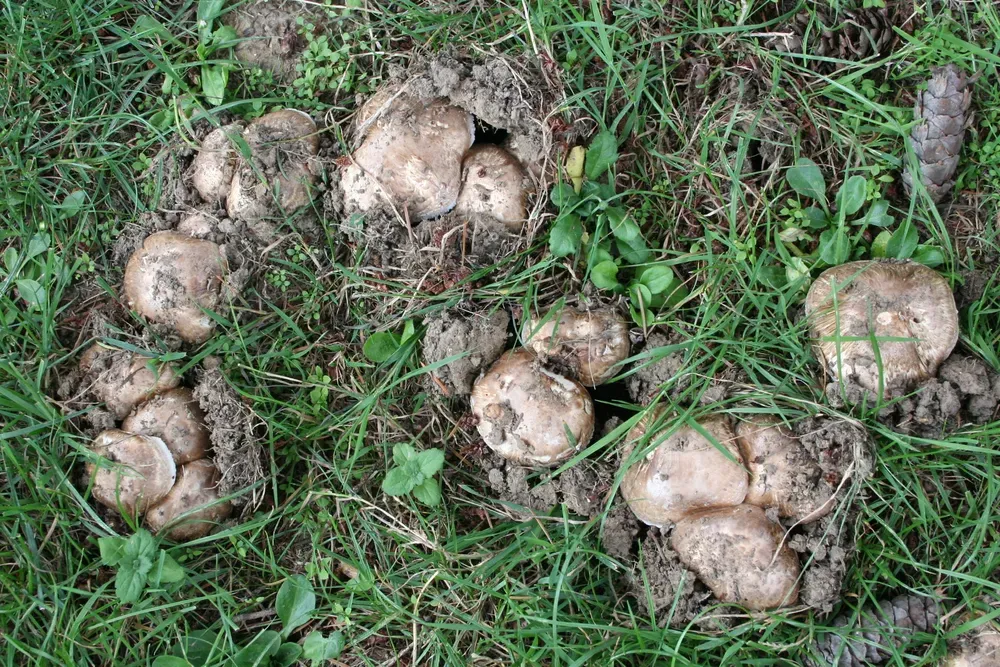
In Ukraine, the macro mushroom turns up in meadows, grazing land, steppes and roadsides all over the country, more often in the southern regions. It fruits during the warm half of the year — from late spring to autumn, especially after rain. The mushroom appears singly or in groups, often forming «fairy rings».
In terms of edibility, the macro mushroom is a good, highly prized edible with a pleasant aniseed-almond scent and dense, meaty flesh. It is fried, stewed and dried. Still, keep two cautions in mind: first, even young mushrooms are often wormy; second, as a large soil-dwelling mushroom, it can accumulate heavy metals, so pick it well away from roads and polluted places. As with all Agaricus species, check that the gills turn pink and that there is no volva.
Cap
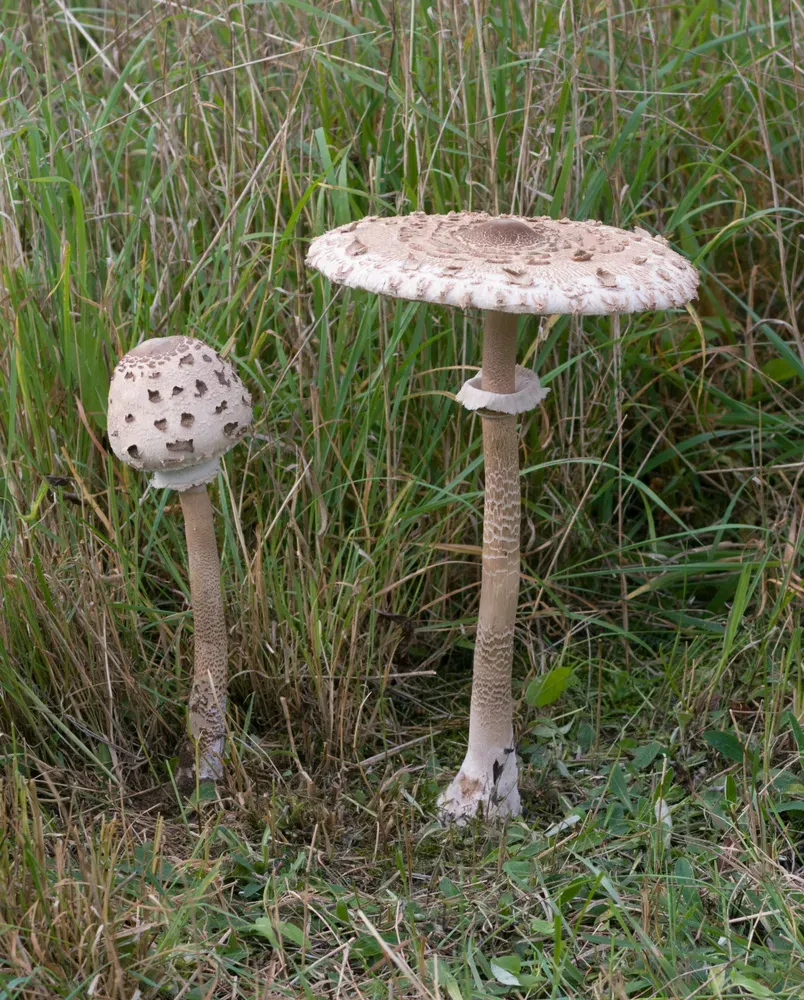
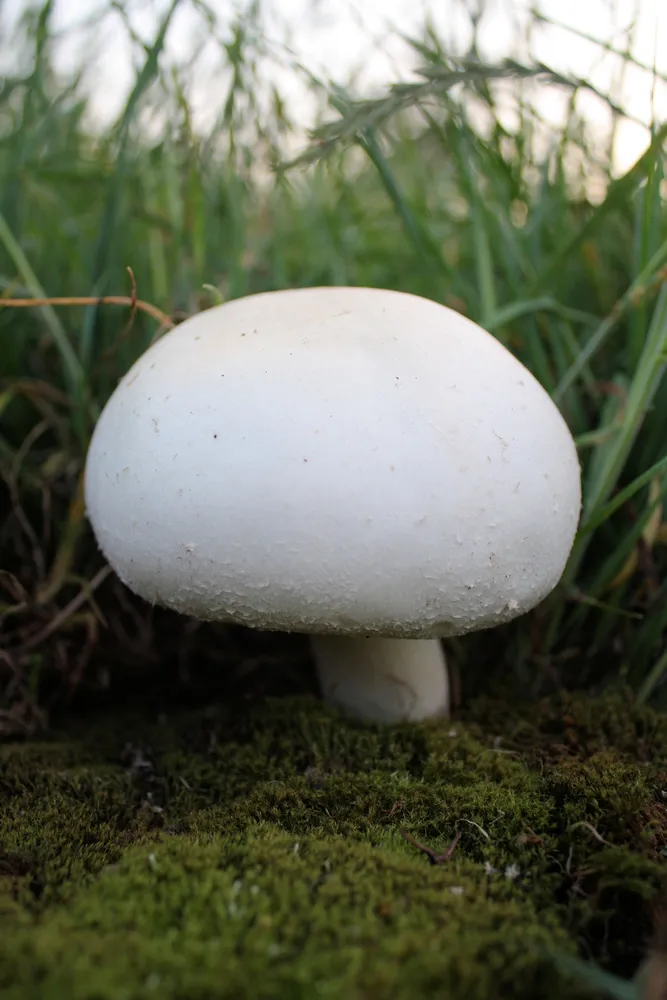
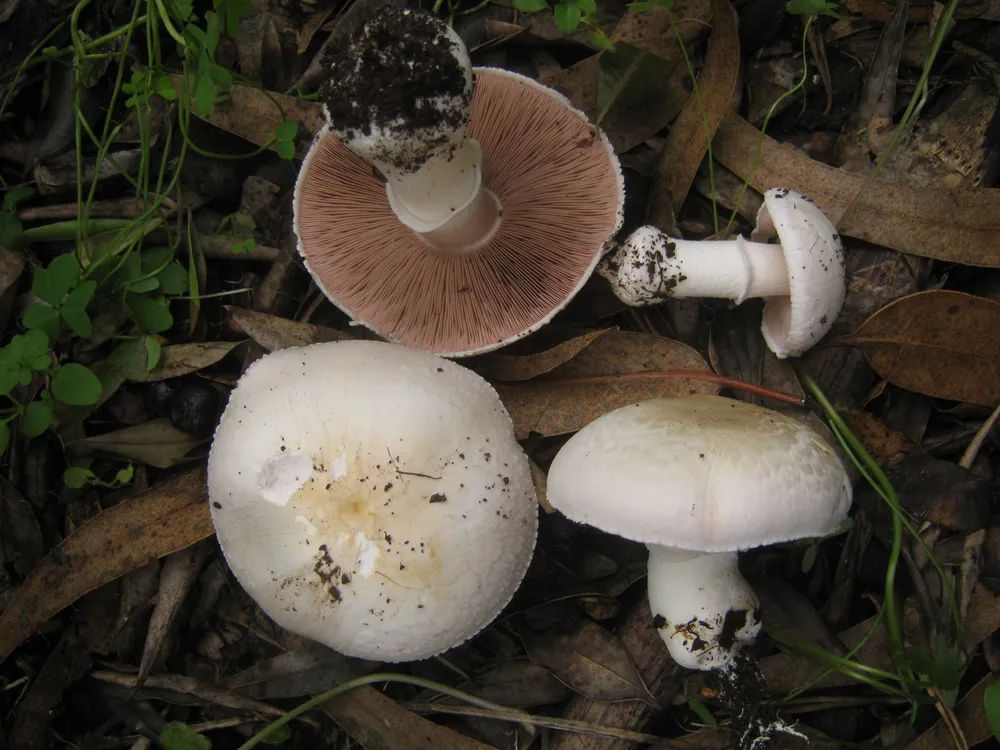
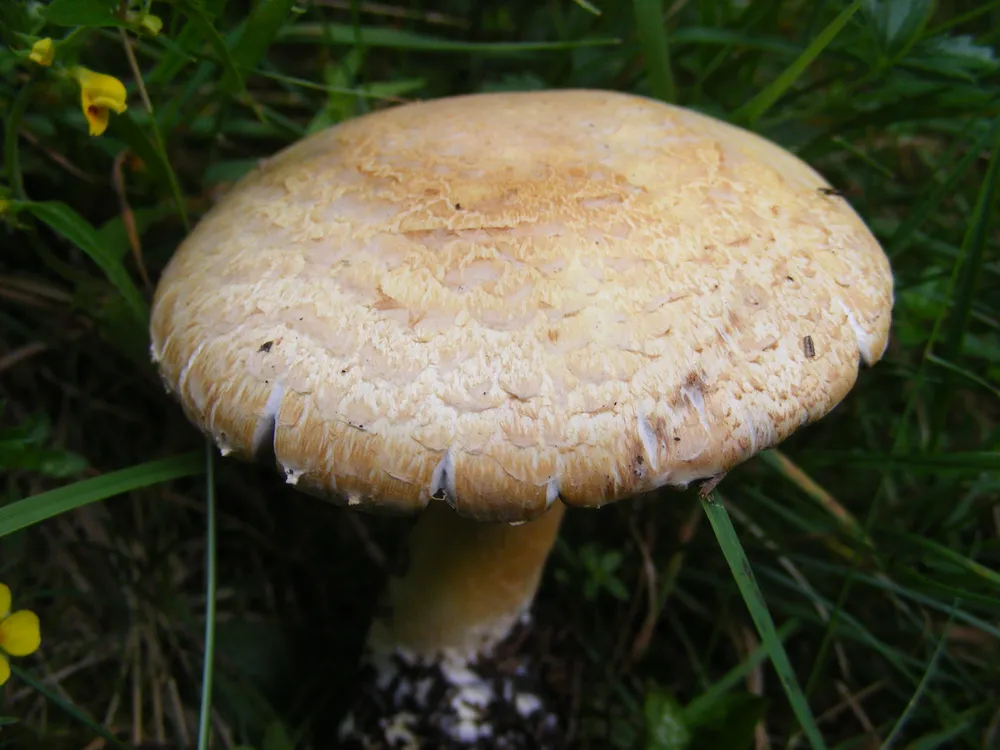
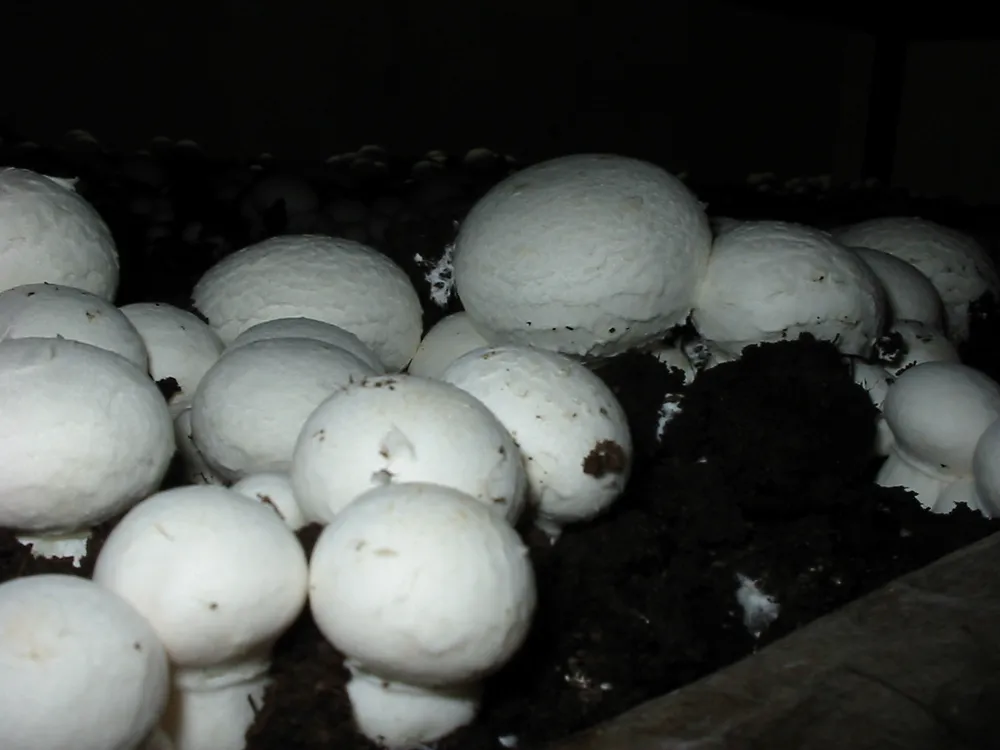
The cap of the macro mushroom is very large — from 8 to 20, and in mature specimens up to 30–40 centimeters in diameter. When young it is almost spherical, with a thick, inrolled margin; with age it opens out to convex and flat. The surface is white or cream, dry; smooth in young mushrooms, but with age it cracks into coarse, plate-like scales reminiscent of crocodile skin. It slowly turns yellow when touched.
Hymenophore
The hymenophore is gilled. The gills are free and very crowded. Their color changes with age: in young mushrooms they are pale pink or grayish pink, then darken to chocolate brown and blackish brown. The spore print is dark brown; the spores are noticeably large, which is exactly what the common name refers to. The pinkish young gills set this Agaricus apart from the white-gilled poisonous amanitas.
Stem
The stem is massive, thick, firm and white, 5 to 12 centimeters tall, often shorter than the cap is wide, with a thickened base. In the upper part there is a large, firm, whitish ring. The stem may turn yellow when touched. There is no volva at the base — an important difference from the poisonous amanitas.
Flesh
The flesh is white, thick and firm; when cut, it slowly turns yellow or pinkish, especially at the base of the stem. The taste is mild and pleasant, with a nutty note. It has a distinct aniseed-almond scent that lingers even during cooking. Because even young mushrooms tend to be wormy, check them carefully.
Smell
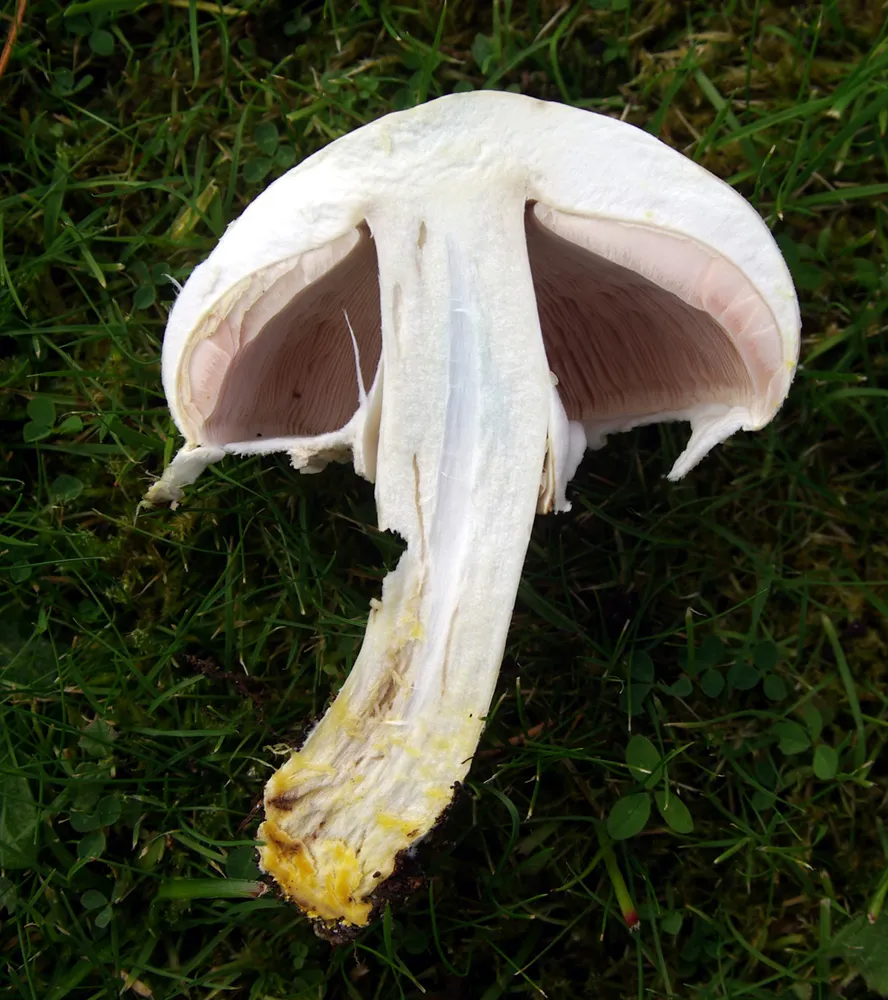
The smell is strong and pleasant, aniseed-almond — one of the defining features of the species. If, however, the mushroom smells of ink or carbolic and the stem base turns bright yellow, it is the poisonous yellow stainer, and you must not take it.
›Scientific synonyms (2)
Agaricus macrosporus (F.H. Møller & Jul. Schäff.) Pilát, Agaricus urinascens (F.H. Møller & Jul. Schäff.) Singer
Lookalikes
_Fr._4948278370-2.webp)
Related species
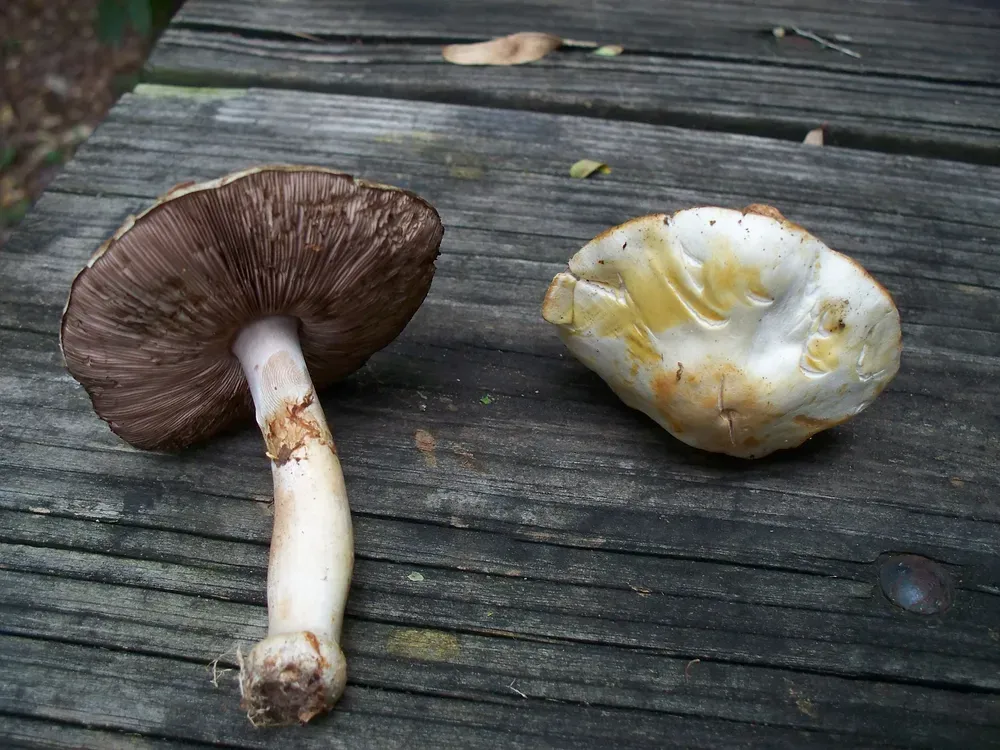
Mushrooms of the same genus and habitat — to study side by side and never mix up.
.webp)
Frequently asked questions
Is Macro mushroom edible or poisonous?
Does Macro mushroom have gills or pores?
What does the cap of Macro mushroom look like?
What does the stem of Macro mushroom look like?
What do Macro mushroom smell and taste like?
Where does Macro mushroom grow?
When should you pick Macro mushroom?
What can Macro mushroom be confused with?
How do you cook Macro mushroom?
Can you dry Macro mushroom?
What is the scientific name of Macro mushroom?
Sources
- [1]Вікіпедія (українська)
- [2]Атлас грибів України, Зеров Д.К. (1979)
- [3]MycoBank Database
- [4]Index Fungorum
- [5]GBIF
- [6]iNaturalist Ukraine