Parasol mushroomMacrolepiota procera
Expert-verifiedUpdated October 3, 2026
Passport
- Edibility
- Edible
- Season
- Jun — Nov
- Hymenophore
- Gilled
- Cap color
- Brown
- Size
- Giant (>25 cm)
- Smell
- Pleasant
- Reviewed
- Yes ✓
Quick answers
Where to look?
Deciduous forest, Mixed forest
When does it appear?
Jun — Nov
Active months: June, July, August, September, October, November.
How to recognize it? Three signs
- Cap color: Brown, Grey, Cream
- Cap shape: Flat
- Smell: Pleasant
Fruiting season
June – November
Description
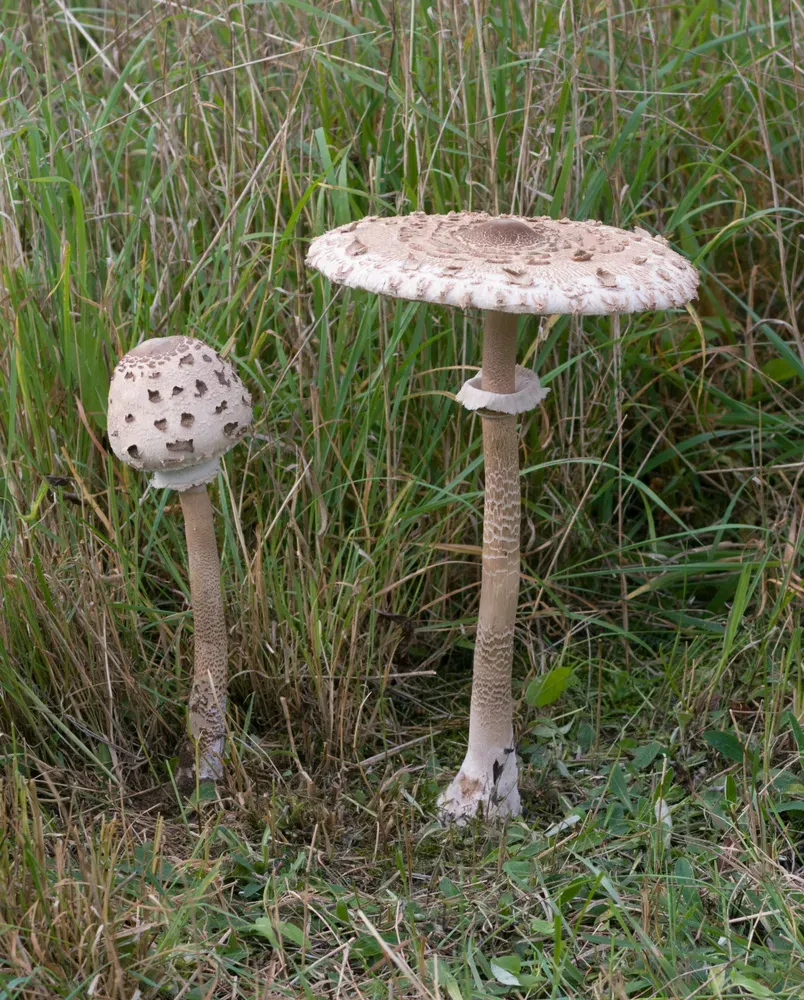
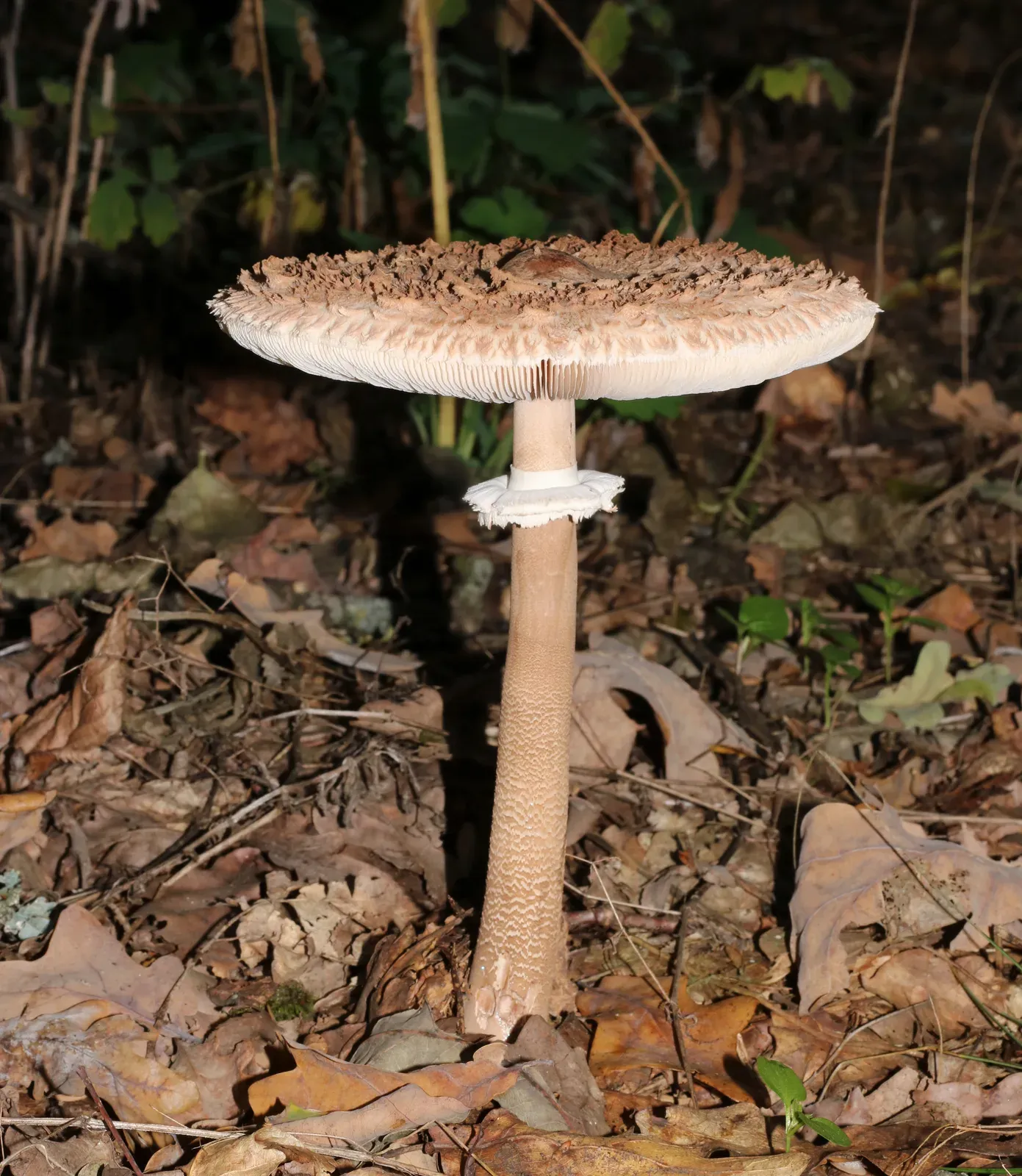
The parasol mushroom is one of the most recognizable and prized edible mushrooms of Ukraine's forests and meadows. Mature fruiting bodies really do look like an umbrella: a tall, slender stem up to 30 cm high and a broad, flat cap 30-40 cm across, covered with coarse brown scales on a light gray background. The stem is thin, with a distinctive “snakeskin” zigzag pattern of dark patches and a fleshy movable ring near the top — the classic features of the genus Macrolepiota.
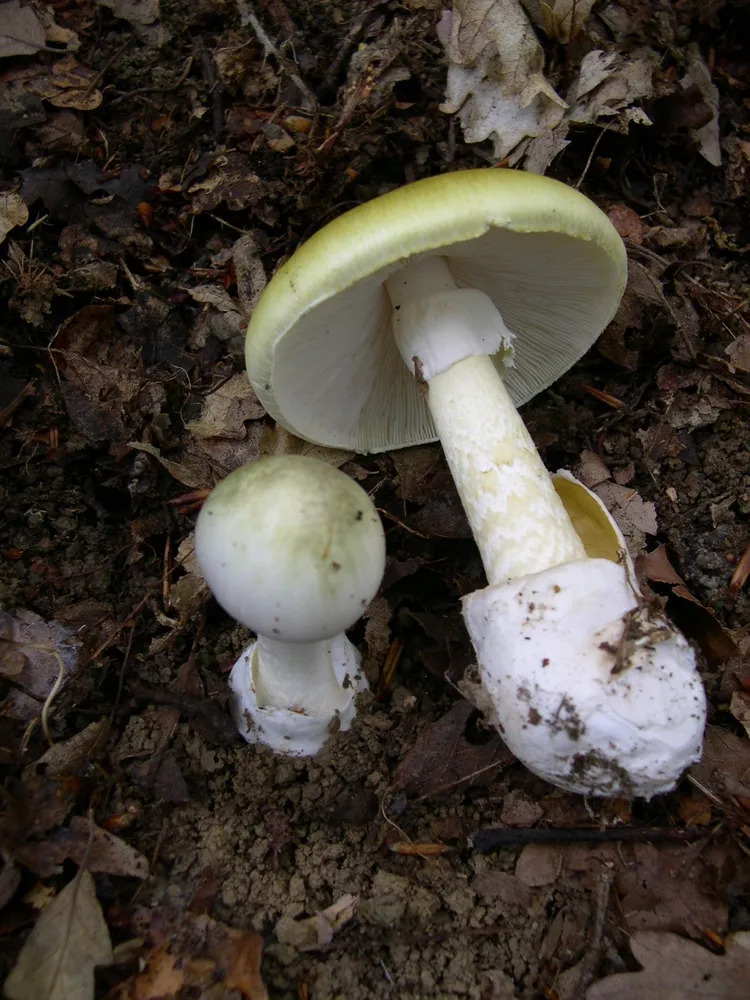
This is an excellent edible mushroom and a true delicacy. The caps of young fruiting bodies are breaded and fried like schnitzels — a classic of forest cooking. The flesh is tender, with a delicate nutty, mushroomy flavor; in young ones it is firm and juicy. The stems are too fibrous — people don't eat them; leave them in the forest to spread spores, or dry them for mushroom powder. The key rule for beginners: make sure it really is Macrolepiota procera and NOT a young amanita. The parasol is a mature mushroom, not closed, with free gills and a free, movable ring; amanitas are usually smaller, with a fixed ring and often with a volva at the base (the parasol has no volva).
In Ukraine it is widespread throughout the forest and forest-steppe zones. You'll find it on forest edges, in clearings, in open deciduous and mixed woods, in meadows and pastures. Season: June–November, with several flushes after heavy rains.
Cap
Cap large, 10-30 (sometimes up to 40) cm across. Egg-shaped at first, then opening out flat like an umbrella, with a small blunt bump in the center. The background color is light gray to grayish brown, and the surface is covered with large brown or grayish-brown scales in concentric rings; the center is darker and smoother. The skin peels easily away from the flesh.
Hymenophore
Gills. The gills are crowded, thin and free (they don't touch the stem) — an important feature of the genus. White at first, turning cream to yellowish with age. Spore print white.
Stem
Stem tall, 15-30 (up to 35) cm high, 1-2 cm thick, cylindrical, slightly swollen at the base (no volva — this is crucial!). Gray-brown with a distinctive “snakeskin” zigzag pattern of darker scaly patches — a diagnostic feature. Near the top there is a fleshy movable ring (you can slide it up and down), whitish above, with a brown edge below.
Flesh
The flesh in the cap is white, soft, juicy in young ones, softer and a bit limp in old ones. When cut, it stays white and does not change color — an important difference from similar species. The flesh in the stem is tough and fibrous — not edible.
Smell
A pleasant nutty smell with a subtle mushroomy note. The taste is mild and delicately nutty — especially when fried.
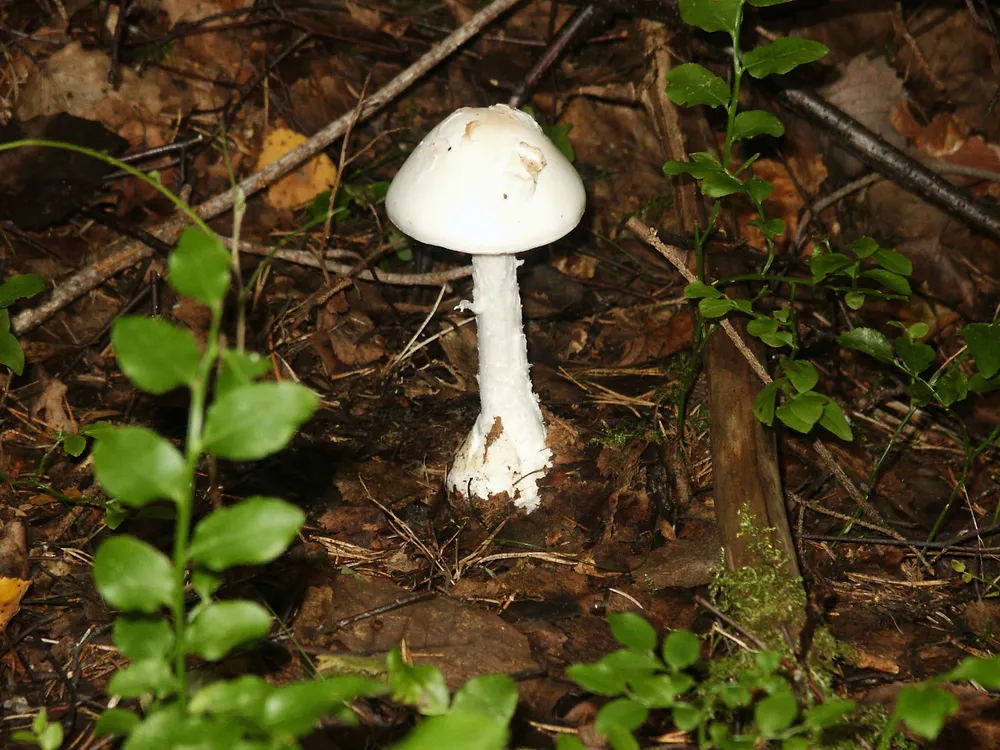
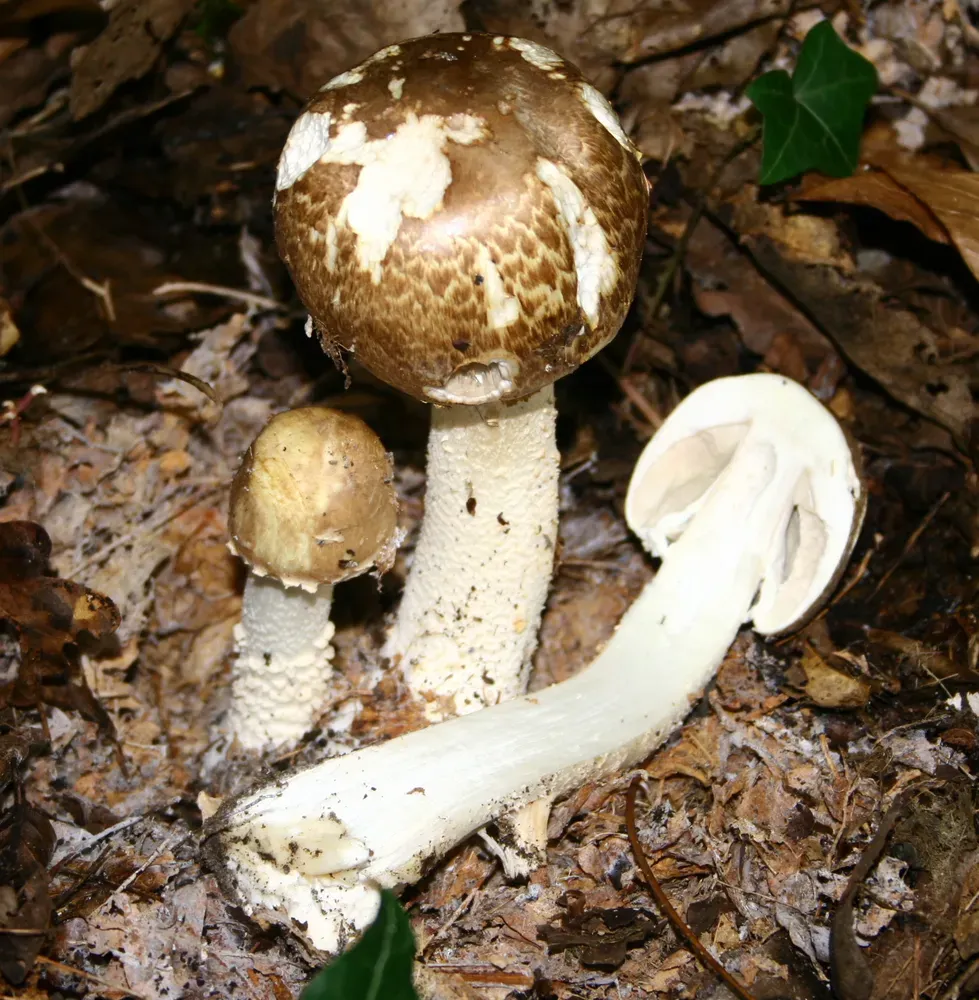
Lookalikes
_M.M._Moser_ex_Bon_61894_crop.webp)
.webp)
Related species
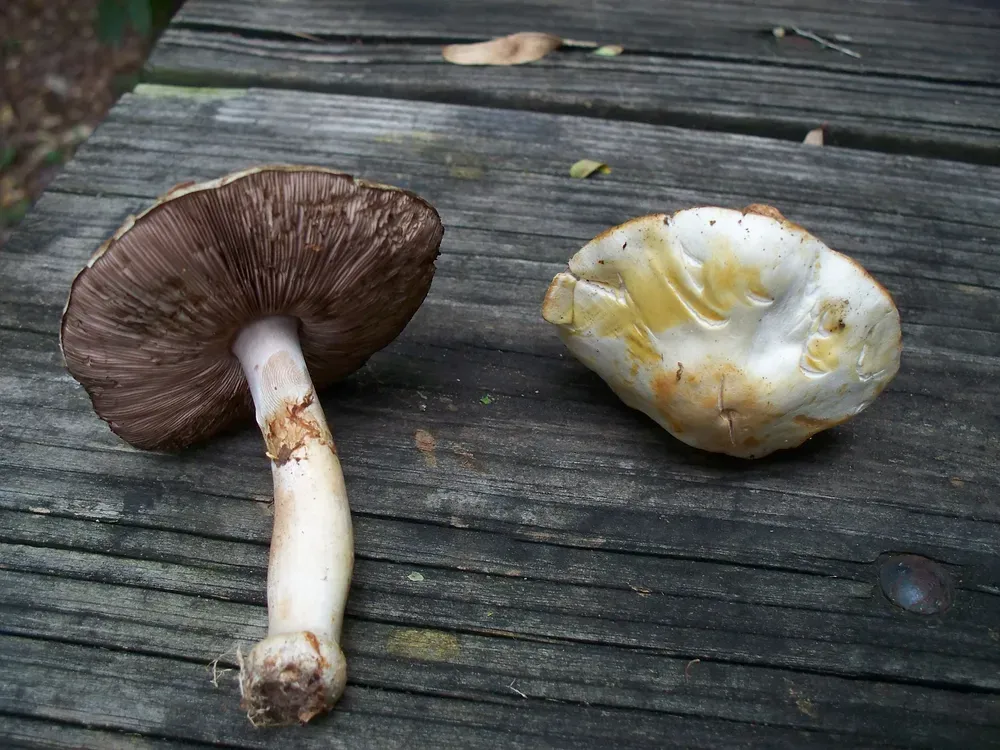
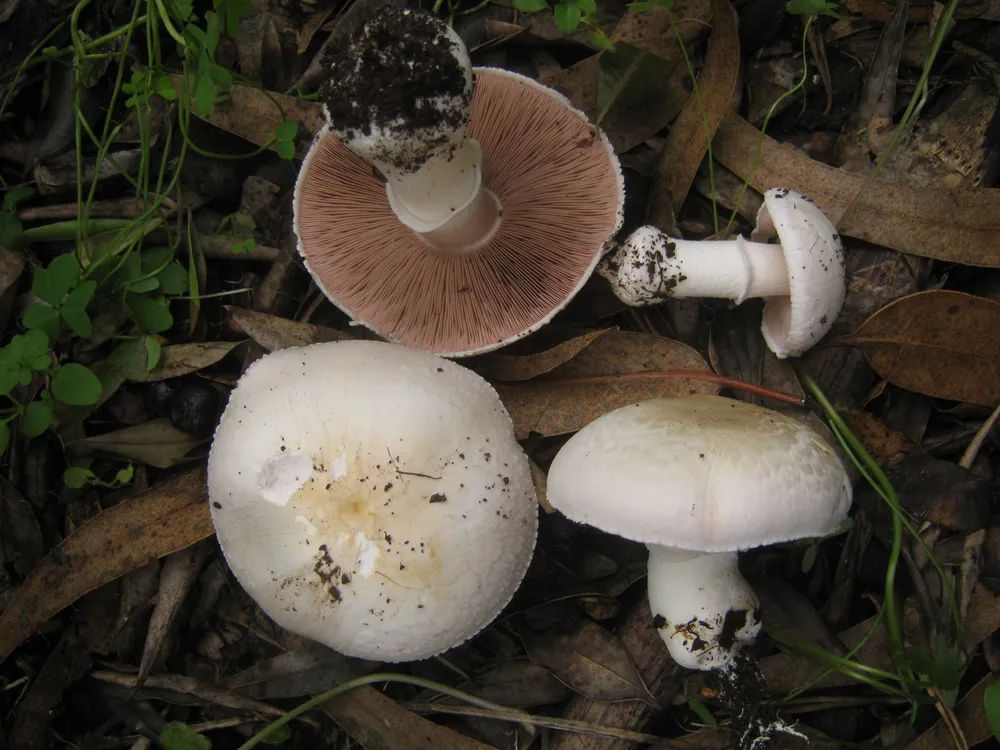
Mushrooms of the same genus and habitat — to study side by side and never mix up.
.webp)
_Fr._4948278370-2.webp)
Related reading
 How to identify
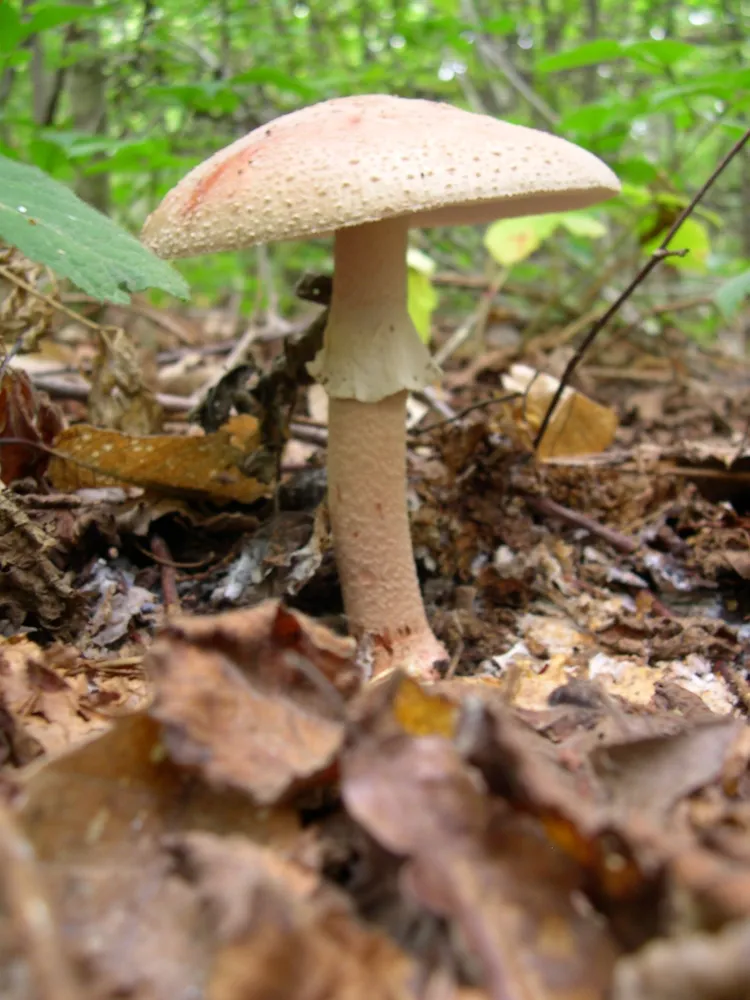
Mushrooms with a ring on the stem: what it warns you about
The ring, or skirt, on the stem is an important feature you need to know how to read. Here's which mushrooms h…
August 21, 2026·3 min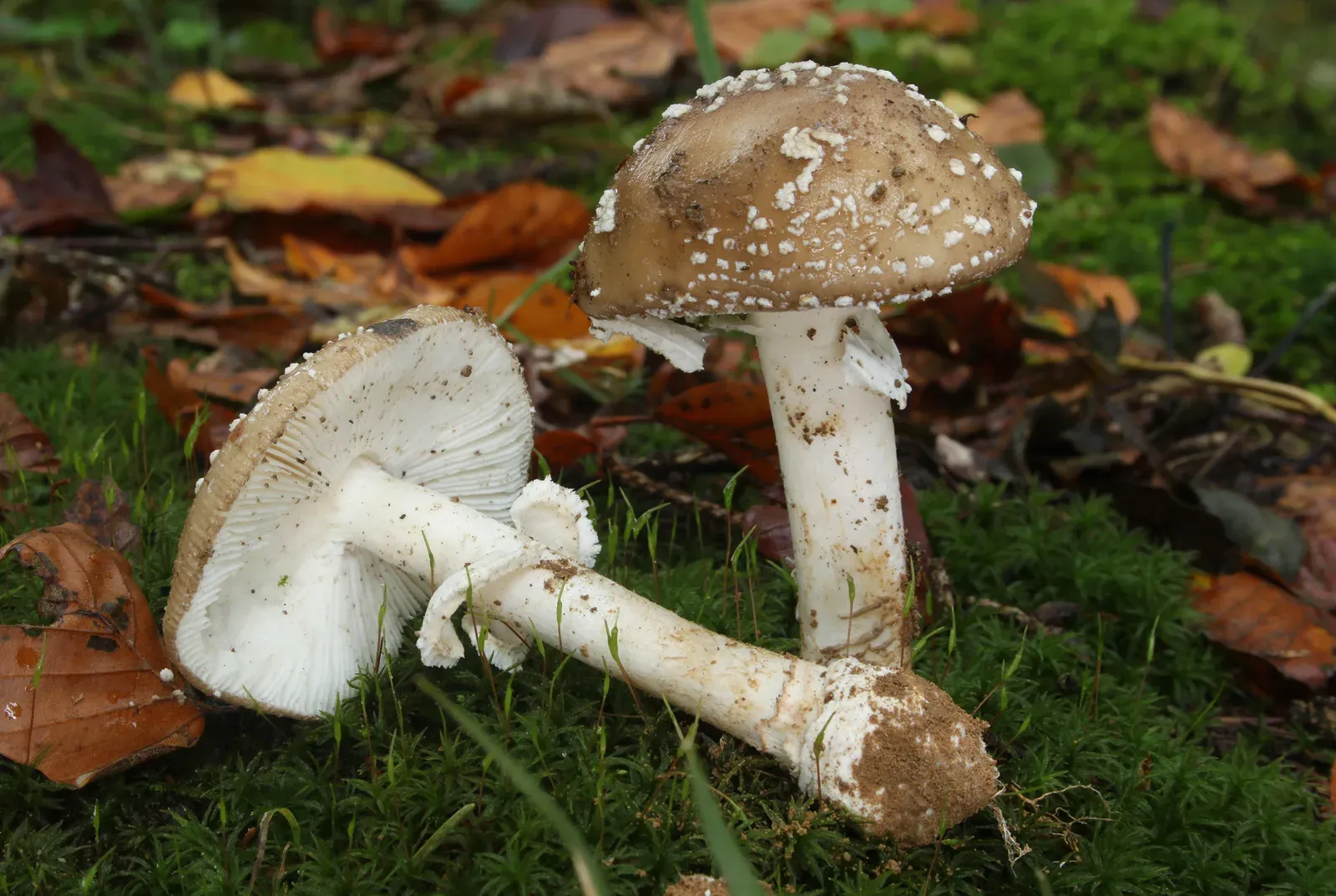 Safety
Panther cap: how to tell it from edible mushrooms
The panther cap is one of the most poisonous mushrooms in our forests, and it sometimes gets mistaken for edib…
July 20, 2026·2 min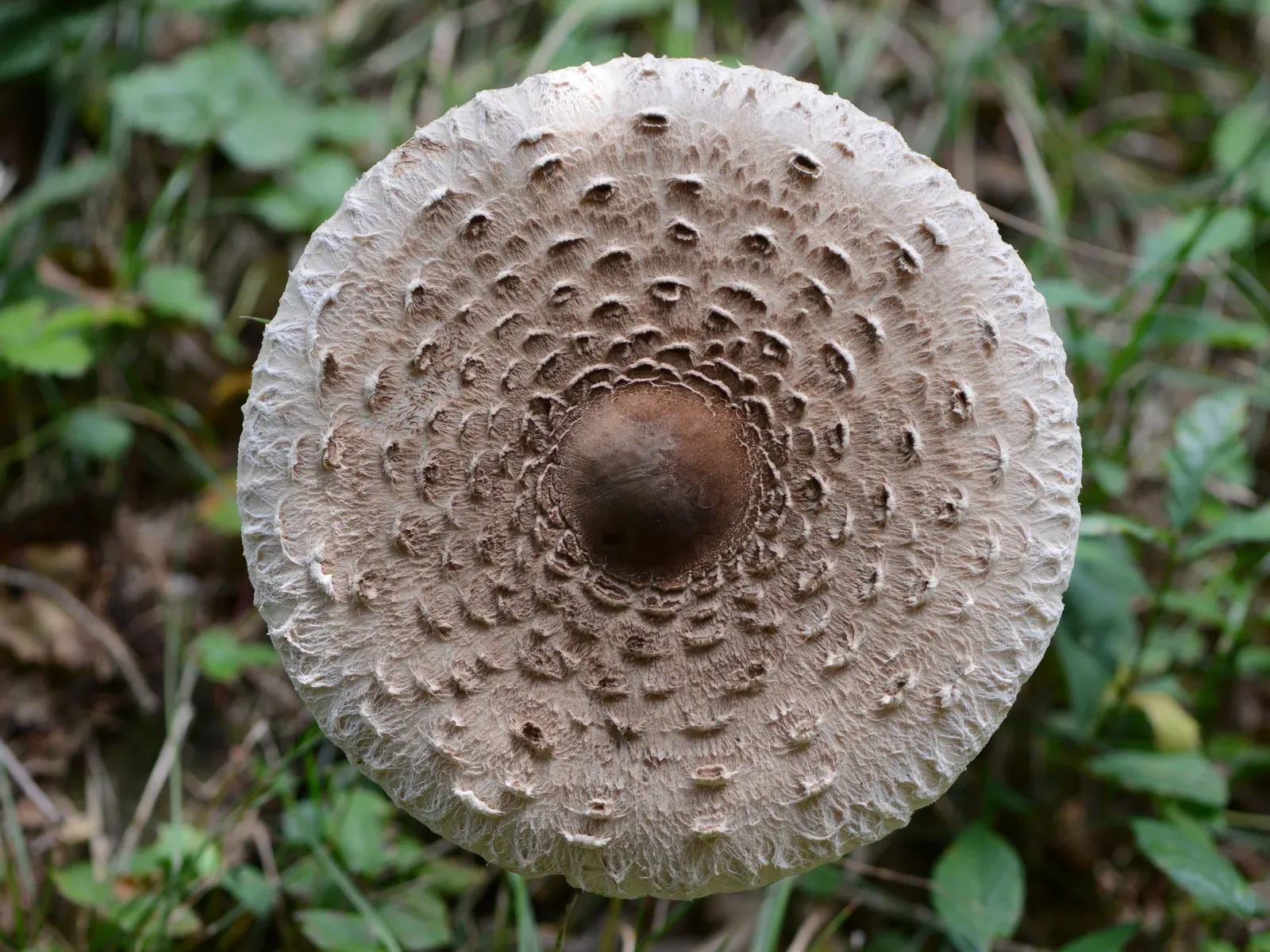 Where & when to forage
Parasol mushroom: when and where to pick it
The parasol mushroom, also called the umbrella mushroom, is a big, tasty mushroom of forest edges and clearing…
July 19, 2026·2 min
Frequently asked questions
Is it safe to eat?
Yes, it's an excellent edible mushroom, a delicacy. A mature parasol with its telltale features (a big “umbrella” on a tall snakeskin-patterned stem, a fleshy movable ring, white spore print, no volva) is hard to confuse with dangerous species. Take only the caps — the stems are tasteless and fibrous.
How should you cook it?
Peel the skin off the cap and cut it into 2-4 pieces. The classic way: dip in egg, coat in breading (flour + breadcrumbs) and fry in oil for 3-5 min on each side — like a schnitzel. It also works in soups, stewed or pickled. The stems are too fibrous — better to dry them for mushroom powder. The flesh needs no pre-boiling.
Where should you look for it?
On forest edges, in clearings, in open deciduous and mixed woods, in meadows and pastures near the forest. It loves rich soil and open, sun-warmed spaces. It often grows in “fairy rings” of 5-20 fruiting bodies. A soil saprotroph — it doesn't need trees.
Which regions of Ukraine does it grow in?
Throughout the forest and forest-steppe zones: the Carpathians, Prykarpattia, Polissia, the Western/Right-Bank/Left-Bank Forest-Steppe. In the steppe — in shelterbelts, parks, and meadows near woodland plantings. One of the most common large edible mushrooms.
When should you look for it?
June–November. Several flushes after rain. The first in June–July, the second in August, the third and most abundant in September–October. In a warm autumn, it lasts into November. It tolerates the first light frosts.
Does it grow in winter?
No, fruiting stops once nights drop below freezing. The last fruiting bodies appear in November if the autumn is warm. In winter — only dried parasols in your pantry.
What is it confused with?
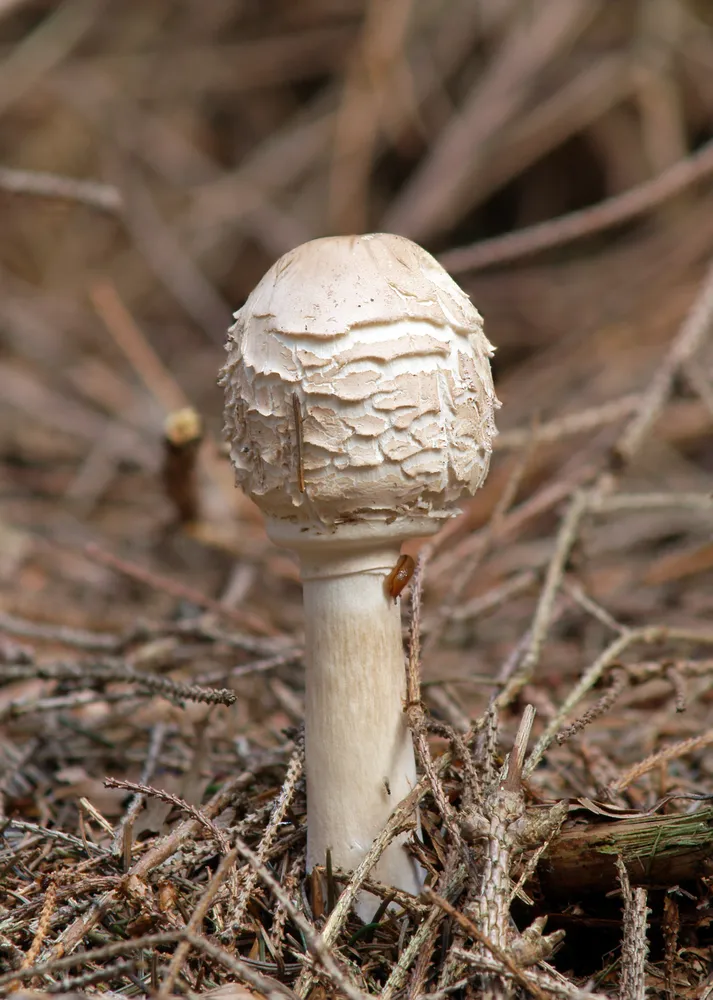
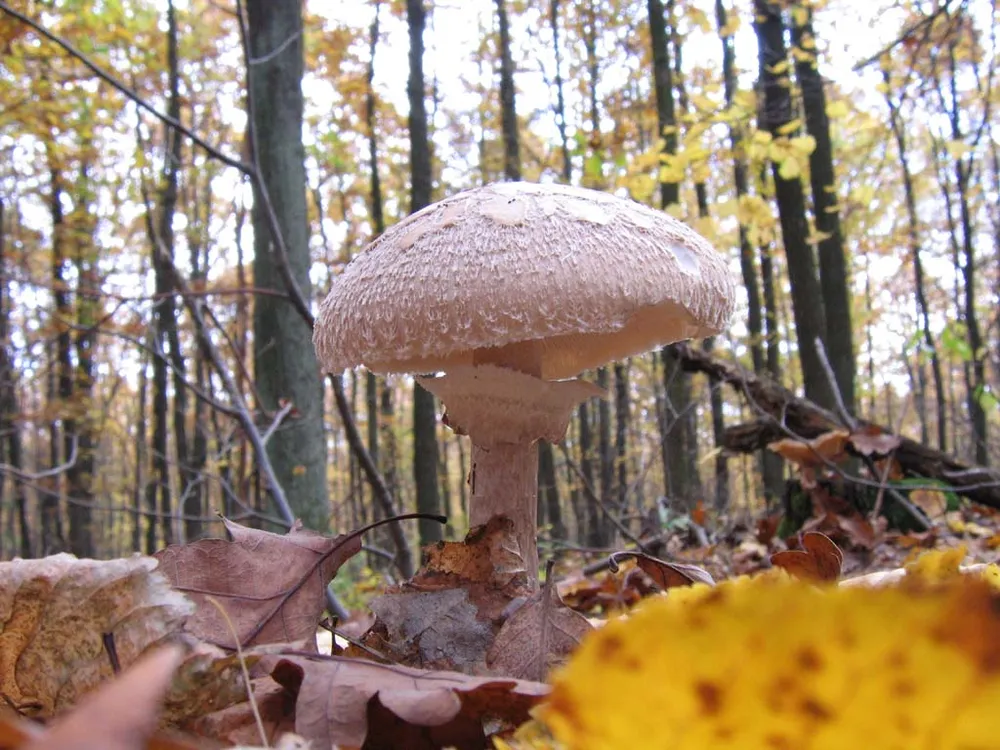
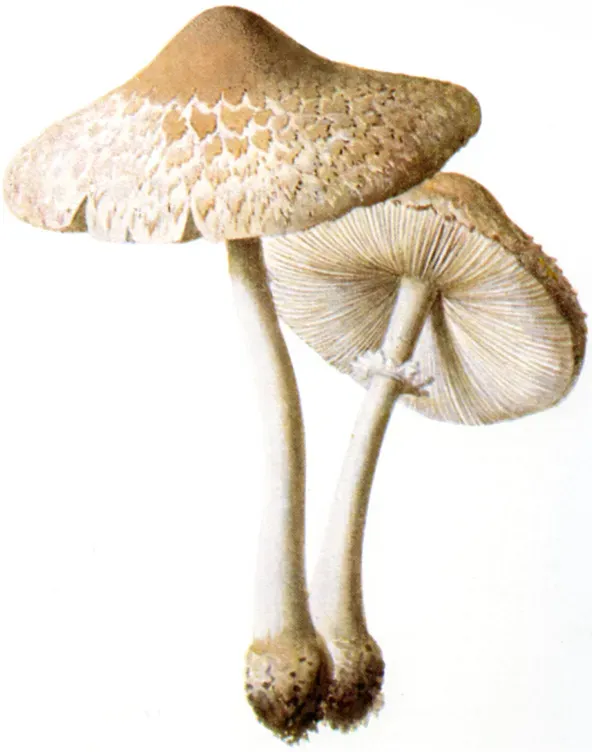
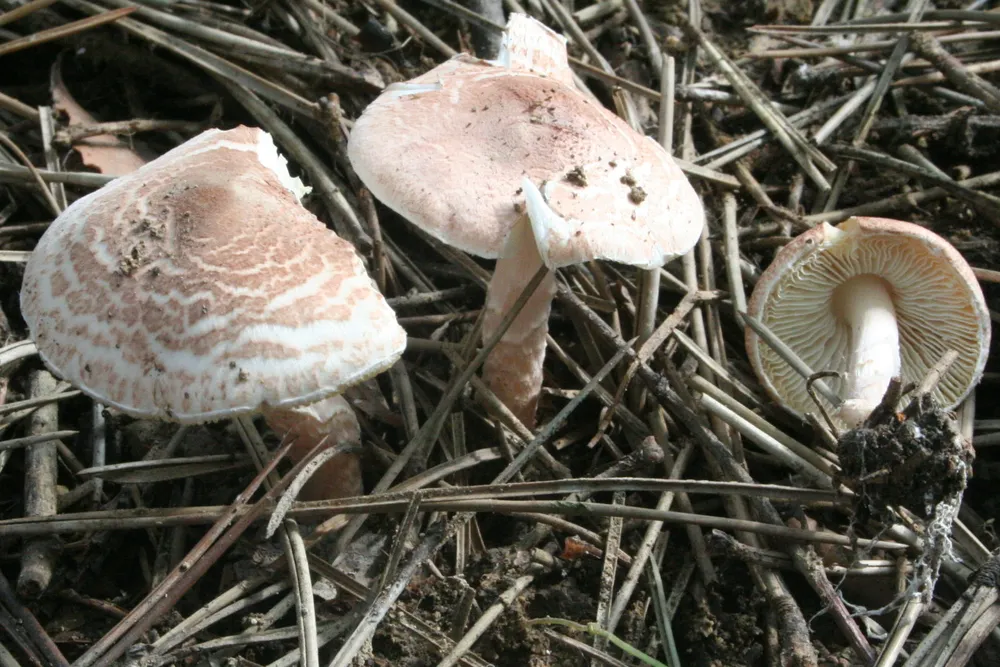
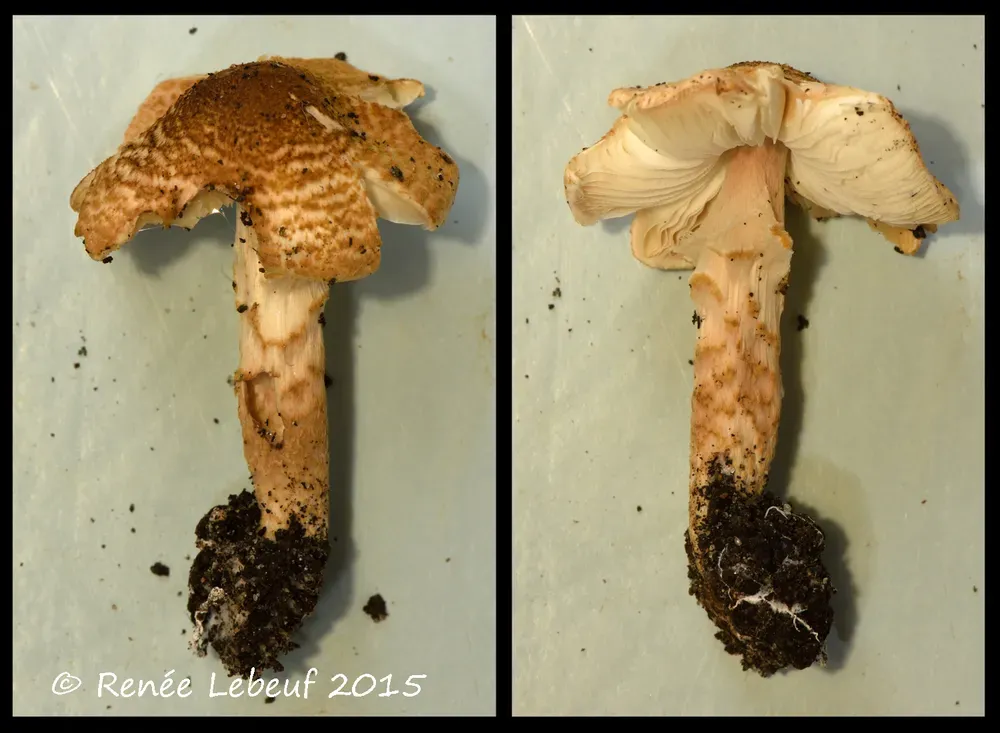
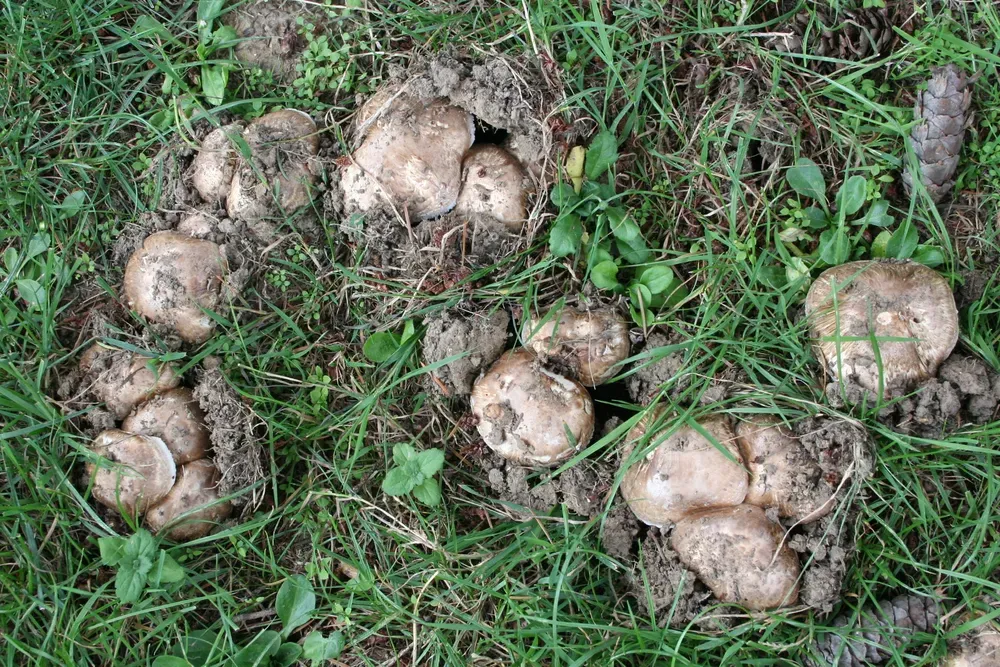
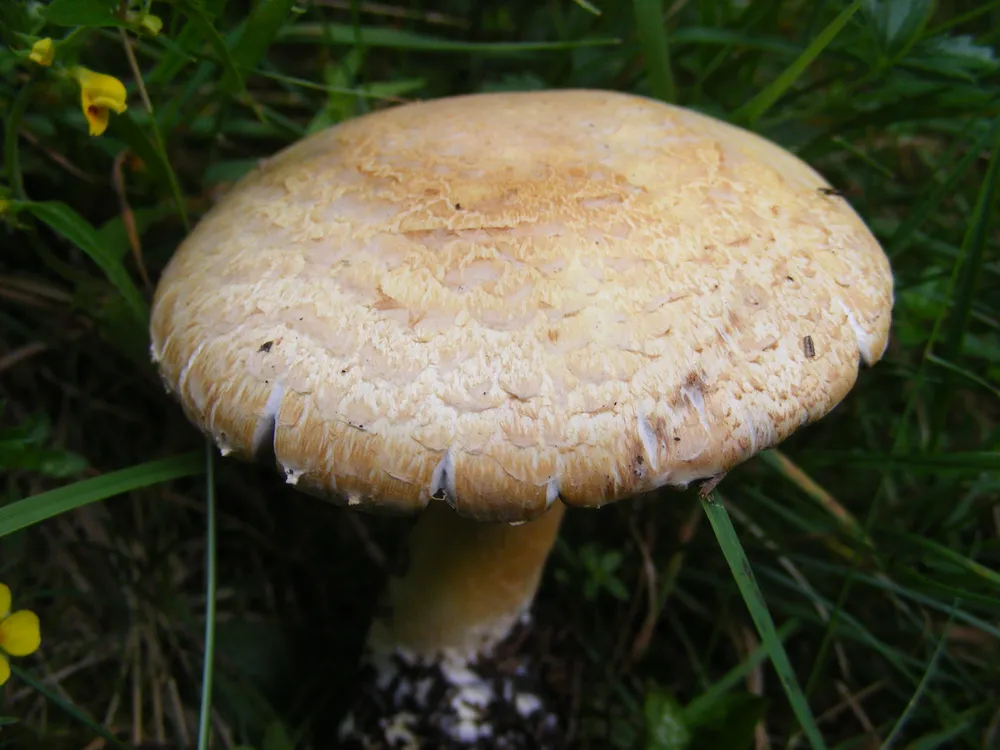
With the shaggy parasol (Chlorophyllum rhacodes) — it's also large and edible, but its flesh turns red when cut (sometimes brown). The parasol mushroom's flesh is white and does not change. Both are edible, but the shaggy parasol can upset some people's stomachs. A more dangerous lookalike is Chlorophyllum molybdites (poisonous, with a green spore print), very rare in Ukraine.
Can it be confused with an amanita?
Only at the young, closed stage (the “egg”). An open parasol has three key features that amanitas lack: (1) large size (cap 15+ cm), (2) a movable fleshy ring you can slide up and down, (3) no volva (the sac at the base of the stem). Plus the snakeskin pattern on the stem. If there is a volva, it's an amanita, however similar it looks. Better not to pick young closed parasols — wait until they open.
Is Parasol mushroom edible or poisonous?
Does Parasol mushroom have gills or pores?
What does the cap of Parasol mushroom look like?
What does the stem of Parasol mushroom look like?
Sources
- [1]Вікіпедія (українська)
- [2]Атлас грибів України, Зеров Д.К. (1979)
- [3]MycoBank Database
- [4]Index Fungorum
- [5]GBIF
- [6]iNaturalist Ukraine