_M.M._Moser_ex_Bon_61894_crop.webp)
White dapperlingLeucoagaricus leucothites
Expert-verifiedUpdated October 3, 2026
Passport
- Edibility
- Unknown
- Season
- Jun — Oct
- Hymenophore
- Gilled
- Cap color
- White
- Size
- Medium (5–15 cm)
- Smell
- Odorless
- Reviewed
- Yes ✓
Quick answers
Where to look?
Deciduous forest, Mixed forest
When does it appear?
Jun — Oct
Active months: June, July, August, September, October.
How to recognize it? Three signs
- Cap color: White, Cream
- Cap shape: Convex
- Smell: Odorless
Fruiting season
June – October
Description
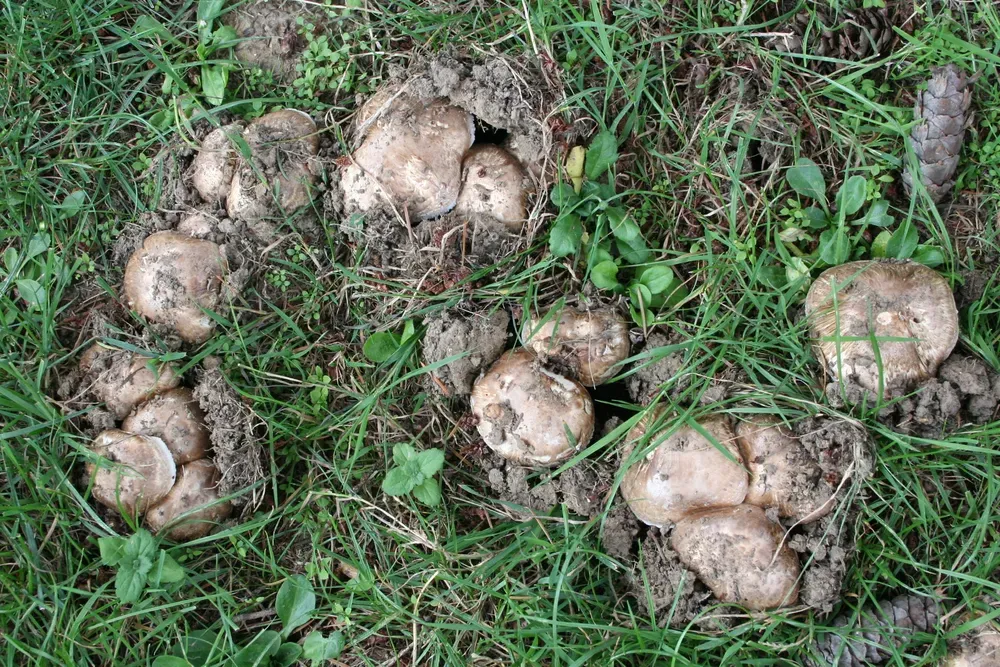
The white dapperling (Leucoagaricus leucothites) is a mushroom with a controversial culinary reputation. It looks like a young Agaricus or a small parasol mushroom: a white cap 5-10 cm across with scales, and a white stem with a ring. Old Soviet field guides classed it as conditionally edible after boiling. Modern Western sources put a question mark next to it or flag it as potentially dangerous — there are reports of gastrointestinal upsets and even rare suspected cases of mild liver damage. The genus Leucoagaricus includes several deadly poisonous species (notably Leucoagaricus helveola), and the risk of misidentification is very real.
This is a mushroom of uncertain status — at MycoNote we list it as unknown as a deliberately safe position, with a strong recommendation NOT to pick it for eating. Its culinary value isn't worth the potential risk: the genus has killer relatives, and confusing them in the field is a real possibility. If you see a white mushroom with scales and a ring on the stem on a lawn, let it be. There are plenty of other clear-cut species for safe foraging (porcini, chanterelle, honey fungus, orange bolete). We treat this species as an interesting subject for science and photography, but not for the basket.
In Ukraine it is widespread throughout the forest-steppe zone: on lawns, in parks, gardens, at forest edges and on waste ground. A saprotroph. The season runs June–October, peaking in September. It often grows in groups of 5-15 fruiting bodies, sometimes in rings. One of the most common "urban" mushrooms — you'll find it in any city park in the forest-steppe.
Cap
Cap 4-10 cm across; hemispherical to convex when young, later flattening out with a small bump in the center. Color white to cream, sometimes with pale ochre or cream scales in the center; smooth and silky-white when young. The cap skin is finely fibrous or covered with small, flattened scales. The cap margin is thin, inrolled when young.
Hymenophore
Gills. The gills are crowded, thin, free (not attached to the stem). White to cream in young mushrooms, creamy-pinkish with age (hence the Ukrainian name, which means "red-gilled"). The spore print is white to pale pink — an important diagnostic feature (in Agaricus it's blackish-brown).
Stem
Stem 5-10 cm tall, 0.7-1.5 cm thick, cylindrical, slightly thickened toward the base. White to cream. On the stem there's a simple membranous ring, distinct in young mushrooms, may disappear with age. The surface is smooth.
Flesh
Flesh of medium thickness, white, with a barely noticeable pink tint at the base of the stem. It doesn't change color when cut.
Smell
Faint and neutral, with no distinct notes. Don't taste it — its safety status is undetermined.
›Scientific synonyms (7)
Hypophyllum scissum Paulet, Agaricus naucinus Fr., Leucoagaricus naucinus (Fr.) Singer, Agaricus leucothites Vittad., Lepiota olgae Velen., Leucoagaricus subcretaceus Bon, Leucoagaricus subcretaceus Bon
Lookalikes
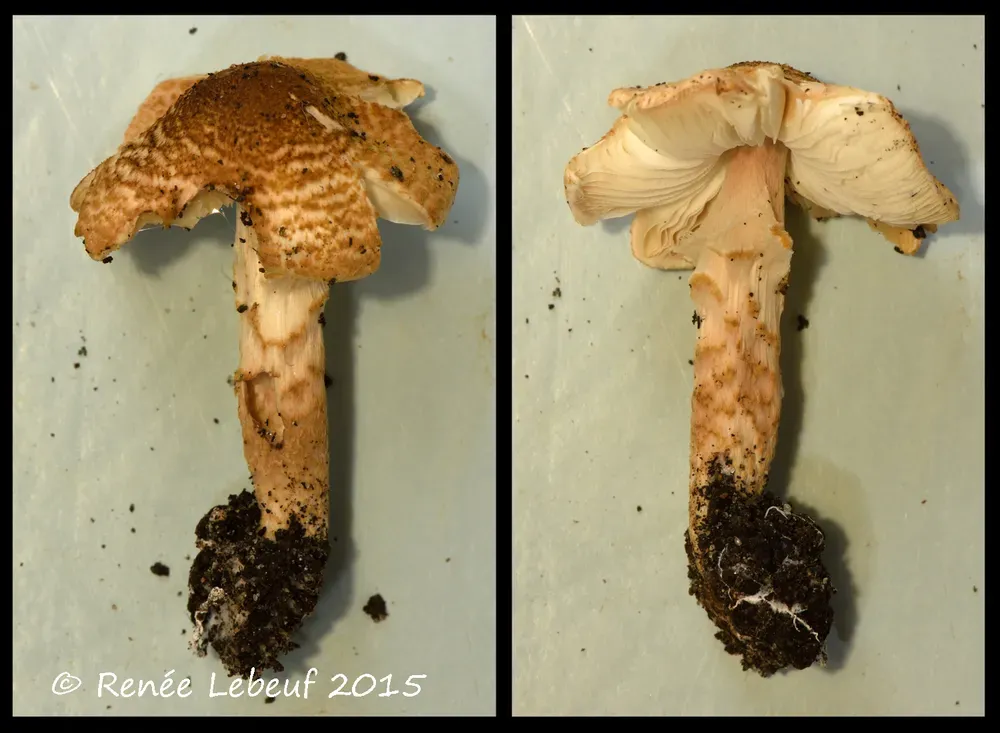
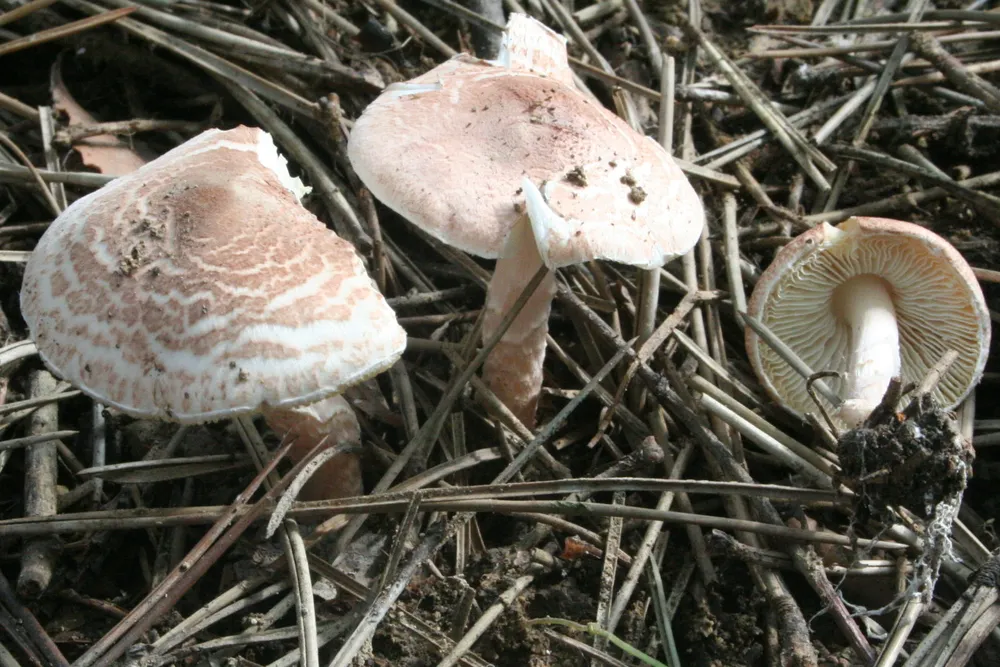
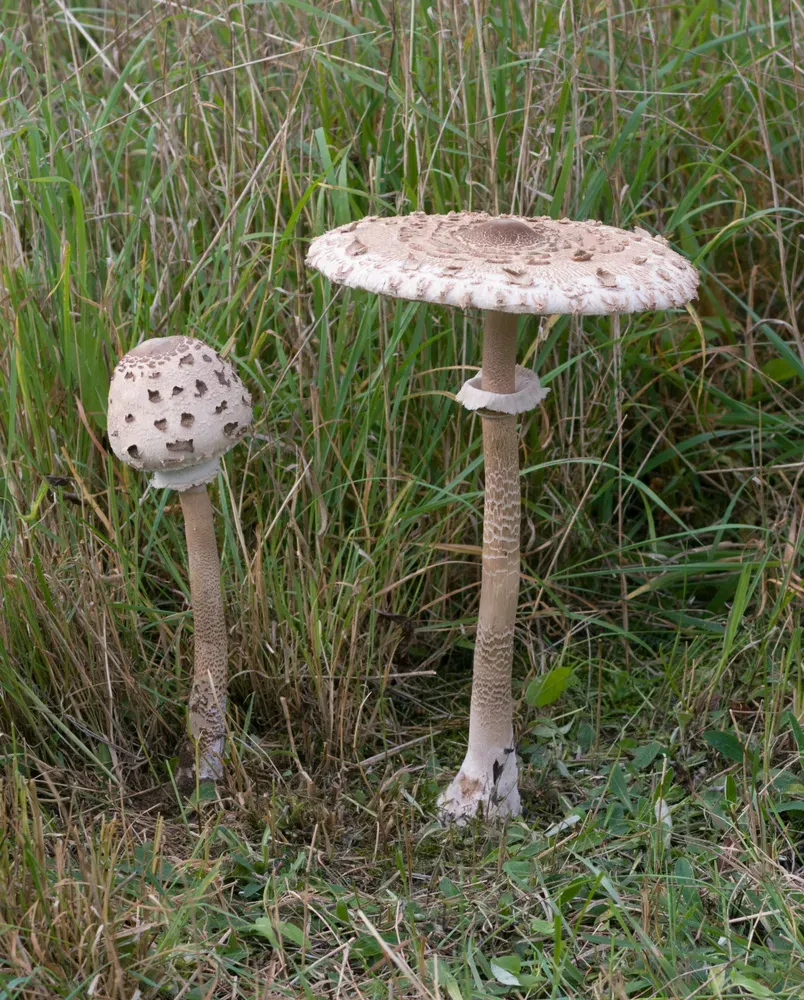
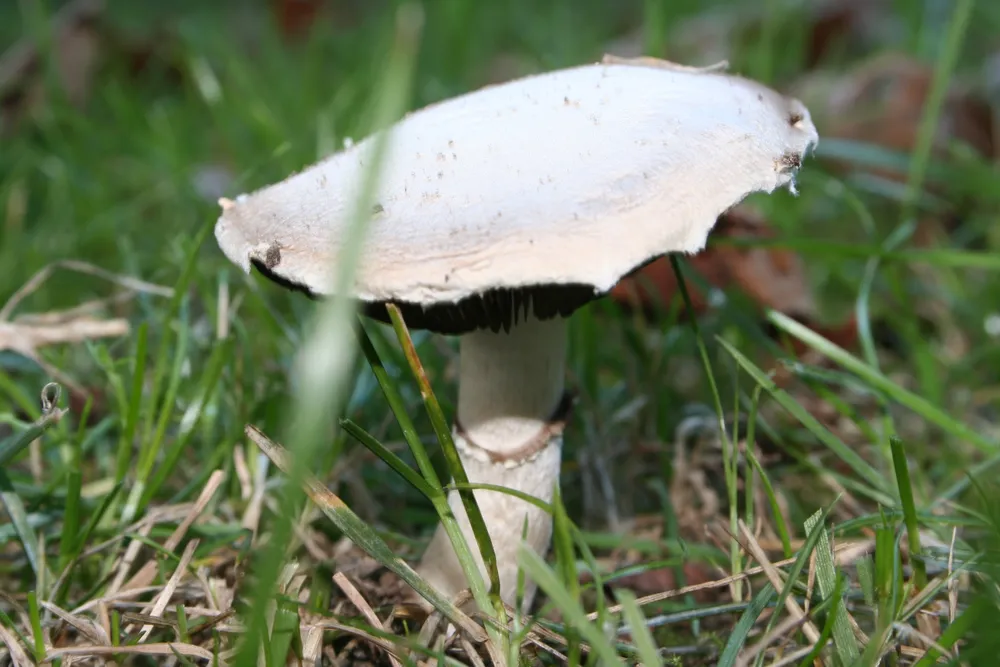
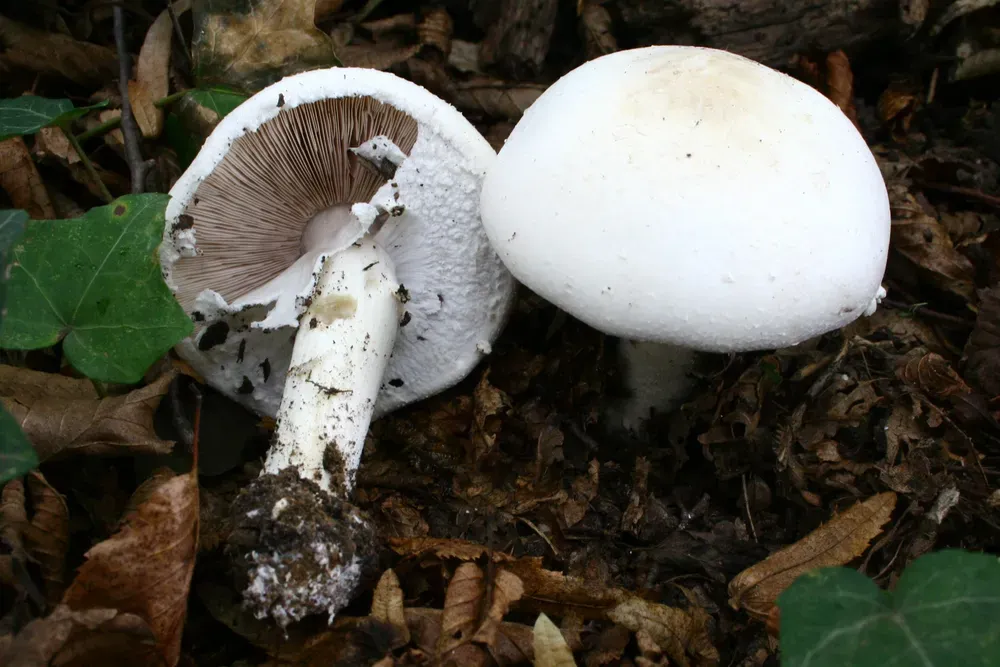
Related species
Mushrooms of the same genus and habitat — to study side by side and never mix up.
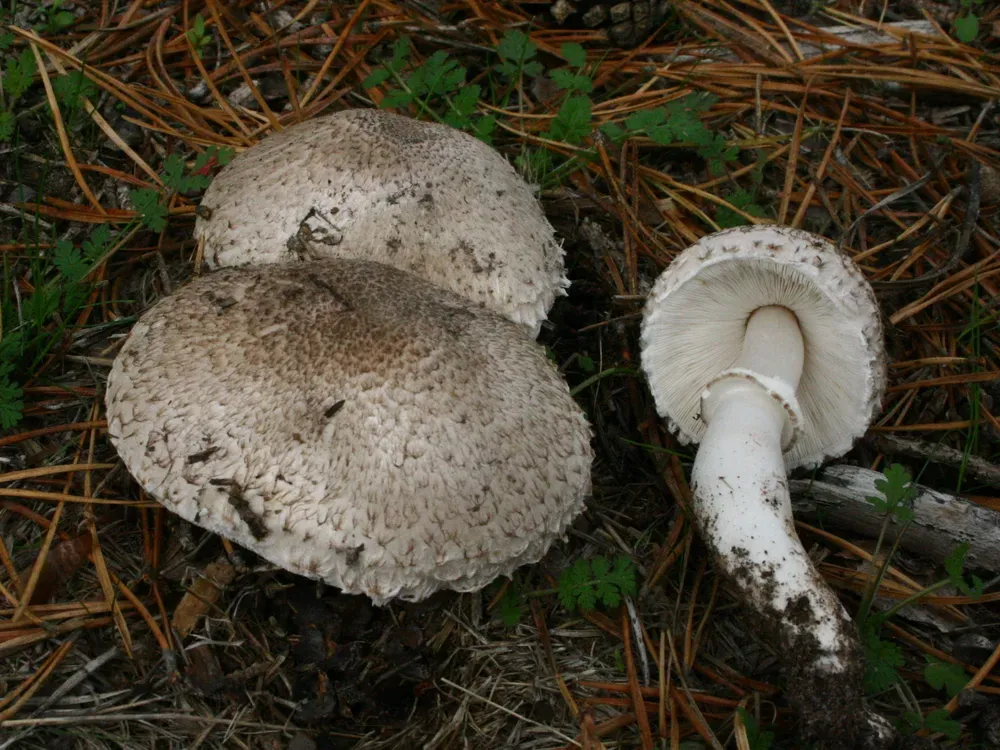
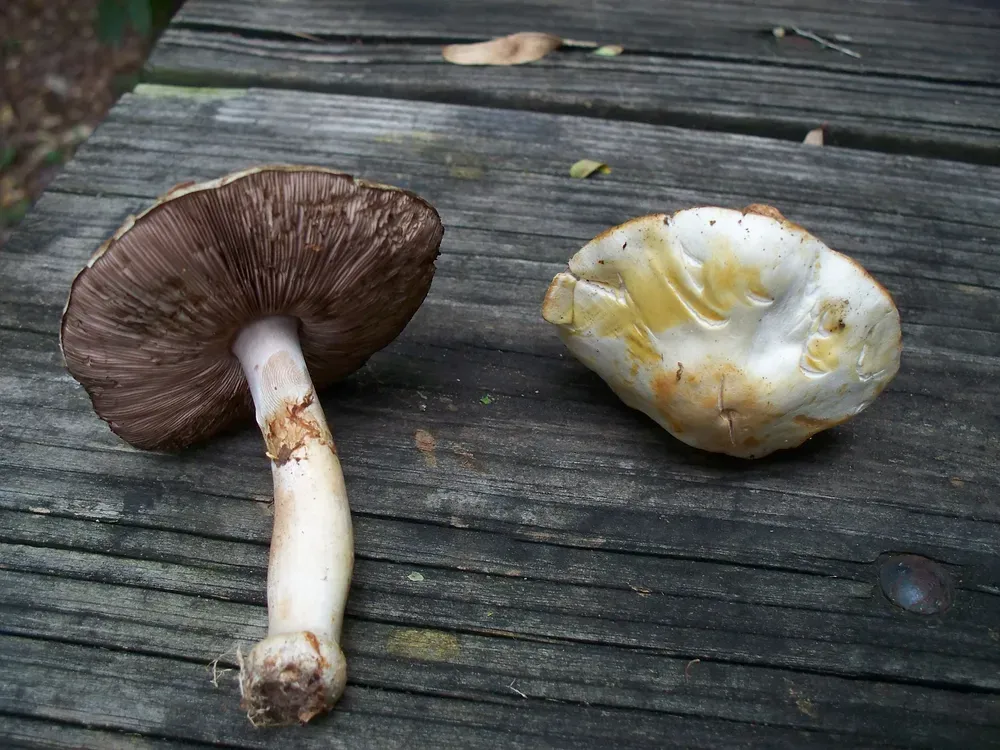
.webp)
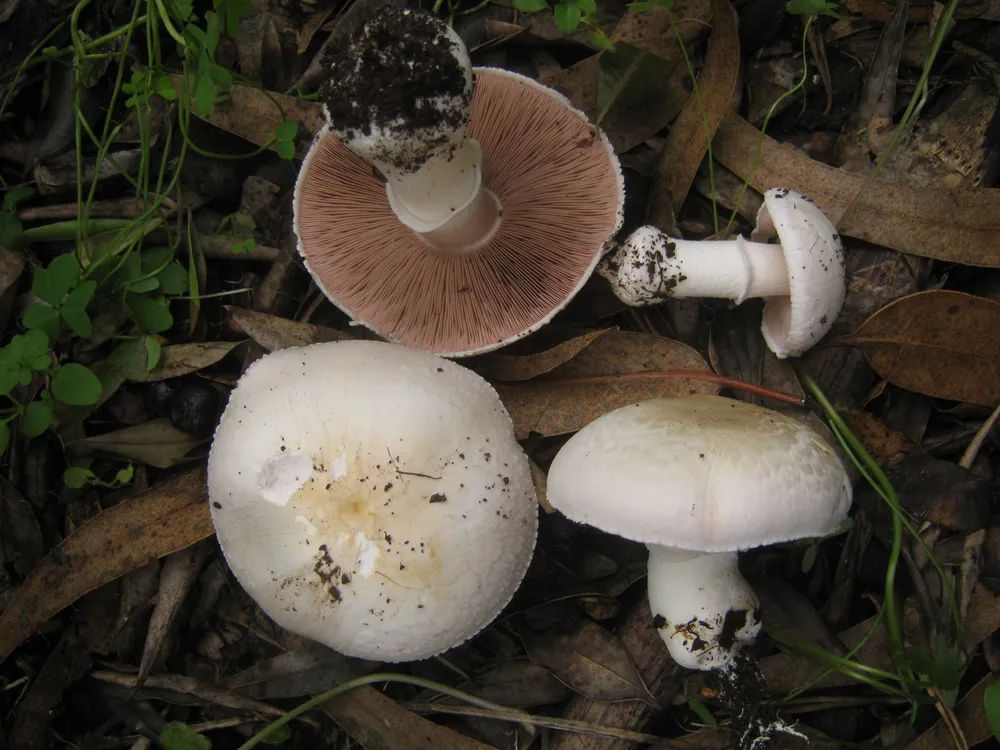
_Fr._4948278370-2.webp)
Frequently asked questions
Can you eat it?
We strongly advise against it. The species' status is disputed: old field guides classed it as conditionally edible, while modern sources warn of possible gastrointestinal upsets and potential liver damage. The genus Leucoagaricus includes deadly poisonous species (L. helveola — amatoxins), and confusion is a real risk. The culinary value doesn't justify the risk. At MycoNote we list it as unknown as a deliberately safe position — walk on by.
What happens if you eat it by accident?
Most likely gastrointestinal upset (nausea, vomiting, diarrhea) after 1-3 hours. In most cases it passes without serious consequences. But there's a risk of confusion with its relative L. helveola (deadly poisonous, containing amatoxins) — and then the symptoms are different: a deceptive improvement after 36-72 hours, liver failure from the third day. If you've eaten it, call 112 or your local emergency number and keep any leftover mushrooms for identification. Don't judge how serious it is by how you feel in the first hours.
If Soviet books say it's edible, is that wrong?
Mushroom classifications change over time, especially for groups where new toxins have been found or the taxonomy has been rethought. Modern mycology is far more cautious about L. leucothites because of its closeness to deadly poisonous relatives. Modern mycologists' rule: "if you're not sure it's safe, it doesn't go in the pot." Old field guides are fine to keep for history, but not for the kitchen.
Where should you look for it?
On lawns, in parks, gardens, at forest edges, in allotment areas and on waste ground. It loves rich, grassy soils. It often grows in groups of 5-15 fruiting bodies, sometimes in rings. An "urban" species.
Where in Ukraine does it occur?
Throughout the forest-steppe and steppe zones: in parks and public gardens. Rarer in the Carpathians and Polissia. Common in towns and cities from Lviv to Luhansk.
When does it fruit?
June — October, peaking in August–September. A long season. Your best chance to find it is 5-7 days after heavy rain.
What is it confused with?
With young Agaricus mushrooms (Agaricus) — their gills go from pink → brownish-black, while in L. leucothites they're white to pale pink and the spore print is white, not black. With the parasol mushroom (Macrolepiota procera) — it's much larger (10-30 cm), with a characteristic snakeskin pattern on the stem. With dangerous ones: L. helveola (deadly poisonous) — smaller, with pinkish scales, no ring. Reliably telling L. leucothites from L. helveola in the field is next to impossible.
How can you identify it for sure?
On principle, we don't advise trying to pin down its identity with eating in mind. Instead, follow a simple rule: "any white mushroom with a ring and white gills on a lawn" — walk on by. Picking white mushrooms with a ring is only safe if you're an experienced mycologist who knows all the fine differences. For the average forager, it's safer to leave this species in nature.
Is White dapperling edible or poisonous?
Does White dapperling have gills or pores?
What does the cap of White dapperling look like?
What does the stem of White dapperling look like?
Sources
- [1]Вікіпедія (українська)
- [2]Атлас грибів України, Зеров Д.К. (1979)
- [3]MycoBank Database
- [4]Index Fungorum
- [5]GBIF
- [6]iNaturalist Ukraine