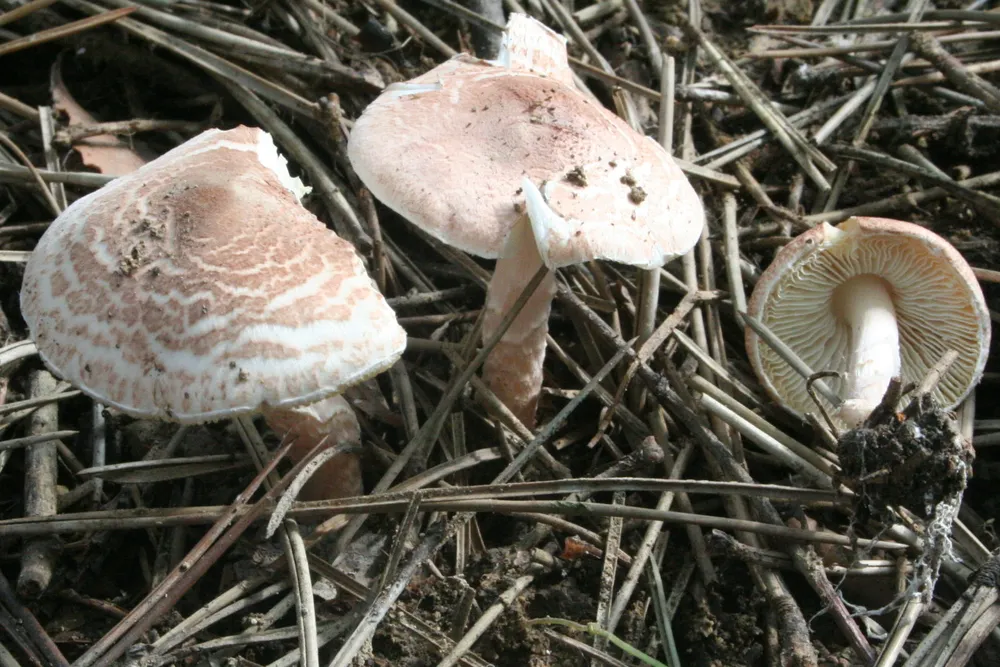
Deadly dapperlingLepiota brunneoincarnata
Expert-verifiedUpdated October 3, 2026
Passport
- Edibility
- Deadly poisonous
- Season
- Jun — Oct
- Hymenophore
- Gilled
- Cap color
- Cream
- Size
- Small (up to 5 cm)
- Smell
- Pleasant
- Reviewed
- Yes ✓
DEADLY POISONOUS
Eating it can cause death. Do not pick it and do not taste it.
Toxin: amatoxins (α-amanitin, β-amanitin — the same as in Amanita phalloides). The concentration is enough for fatal poisoning of an adult from 50-100 g of raw mushroom, and of a child from a single piece. The action is slow, in phases: (1) 0-12 h — nothing, the person feels fine; (2) 12-36 h — acute gastroenteritis: profuse vomiting, watery diarrhea, abdominal pain, dehydration (1-2 days); (3) 36-72 h — deceptive improvement (a "lucid interval") — it seems to have passed; (4) from the third day — hepatorenal failure: jaundice, bleeding, hepatic coma; (5) days 6-16 — death without a liver transplant, in severe cases. Treatment: in hospital only (intravenous silibinin, activated charcoal, many hours of IV drips, hemodialysis; for severe damage — a liver transplant). The sooner you see a doctor, the better the chances. Urgency is critical: the first 24 hours give the best chance of full recovery.
If you suspect poisoning, call an ambulance immediately: 112 (the European emergency number) or your local emergency number
Quick answers
Where to look?
Deciduous forest, Mixed forest
When does it appear?
Jun — Oct
Active months: June, July, August, September, October.
How to recognize it? Three signs
- Cap color: Cream, Pink, Red, Brown
- Cap shape: Convex
- Smell: Pleasant
Fruiting season
June – October
Description
The deadly dapperling (Lepiota brunneoincarnata) is one of the three deadly dangerous mushrooms of European lawns, alongside the death cap and some galerinas. It's a small mushroom, 2-5 cm across, with a cream or pale pinkish cap densely covered in concentric rings of reddish-brown scales — as if someone had sprinkled the cap with red pepper. It grows on cultivated lawns, in parks, gardens and flower beds — exactly where children often play. In the last 20 years alone, dozens of fatal cases have been documented in Europe, mostly among preschool children who put the mushroom in their mouths "to try it".
This is a deadly poisonous mushroom containing amatoxins — the very same toxins as in the death cap. Amatoxins destroy liver and kidney cells at the molecular level (they block RNA polymerase). The action is slow and treacherous; the clock starts at the meal: for the first 12 hours — nothing, the person feels fine. Then, after 12-36 hours, come sudden gastrointestinal symptoms (nausea, vomiting, diarrhea). Then, after 36-72 hours, another "lucid interval" — it seems to have passed. And finally — massive liver and kidney damage from the third day, with possible death without a liver transplant. No cooking or processing method neutralizes the toxins. There is no safe dose — even a single mushroom in a soup can kill a child.
In Ukraine it is widespread throughout the forest-steppe zone: on cultivated lawns, in parks, gardens, flower beds, playgrounds and at forest edges. Saprotroph. Season June-October, peaking in September. It often grows in groups of 3-15 fruiting bodies on uniform grassy patches. A special danger: it grows exactly where children play and looks appealing enough that a child may want "to try it" — "a pretty little mushroom like an umbrella".
Cap
The cap is small: 2-5 cm across, hemispherical to convex in young mushrooms, later flattening out with a broad, low bump in the center. The color is pale cream or pinkish-cream overall, with characteristic concentric rings of reddish-brown or brick-colored scales (as if dusted with ground pepper). The scales are denser at the center of the cap and sparser toward the edge. The surface beneath the scales is smooth.
Hymenophore
Gilled hymenophore. The gills are crowded, thin, free (not attached to the stem). Color white to cream, cream-ochre with age. The spore print is white — an important feature for telling it apart from Agaricus mushrooms (theirs is chocolate-black).
Stem
Stem 3-6 cm tall, 0.3-0.7 cm thick, cylindrical, slender. Whitish in the upper part, and in the lower part with reddish-brown or pink tones and small scales. The ring is either absent or present as a thin, indistinct band of scales — practically invisible in mature mushrooms. The stem flesh is firm.
Flesh
Flesh thin, white, with a pinkish tinge in the lower part of the stem. Doesn't change color quickly when cut. No pronounced odor — a delicate fruity smell.
Smell
Faintly fruity-sweet, reminiscent of apples — and that's exactly what makes it so treacherous. The smell doesn't raise alarm; it's even appealing, especially to children. Don't rely on smell or taste for identification — neither signals deadly toxicity.
›Scientific synonyms (4)
Lepiota barlae Pat. 1905, Lepiota barlaeana Pat. 1909, Lepiota patouillardii Sacc. & Trotter 1912, Lepiota patouillardi Sacc. & Trotter 1912
Lookalikes
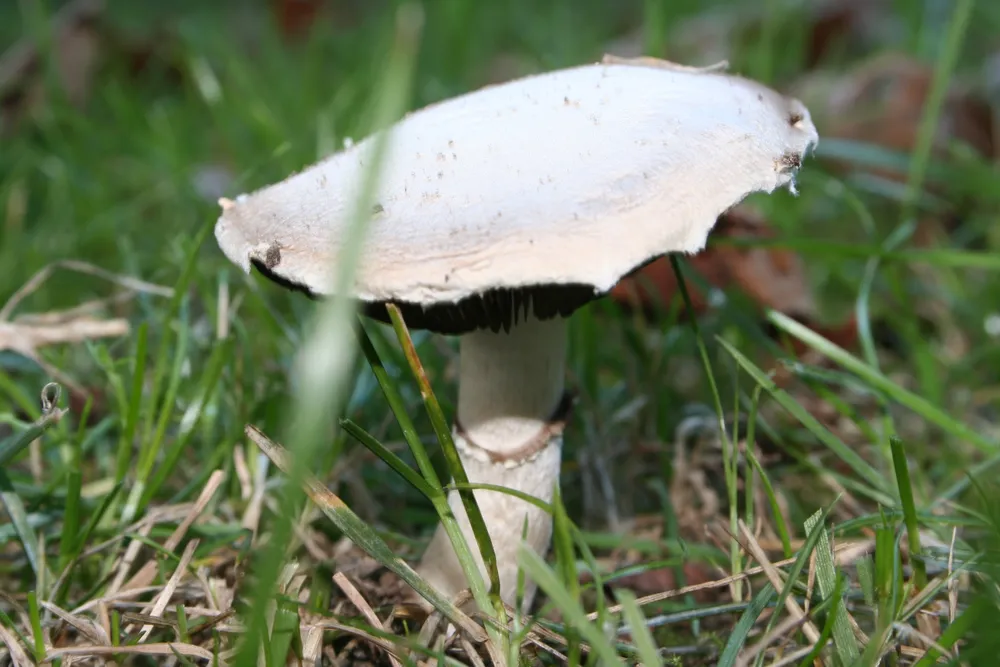
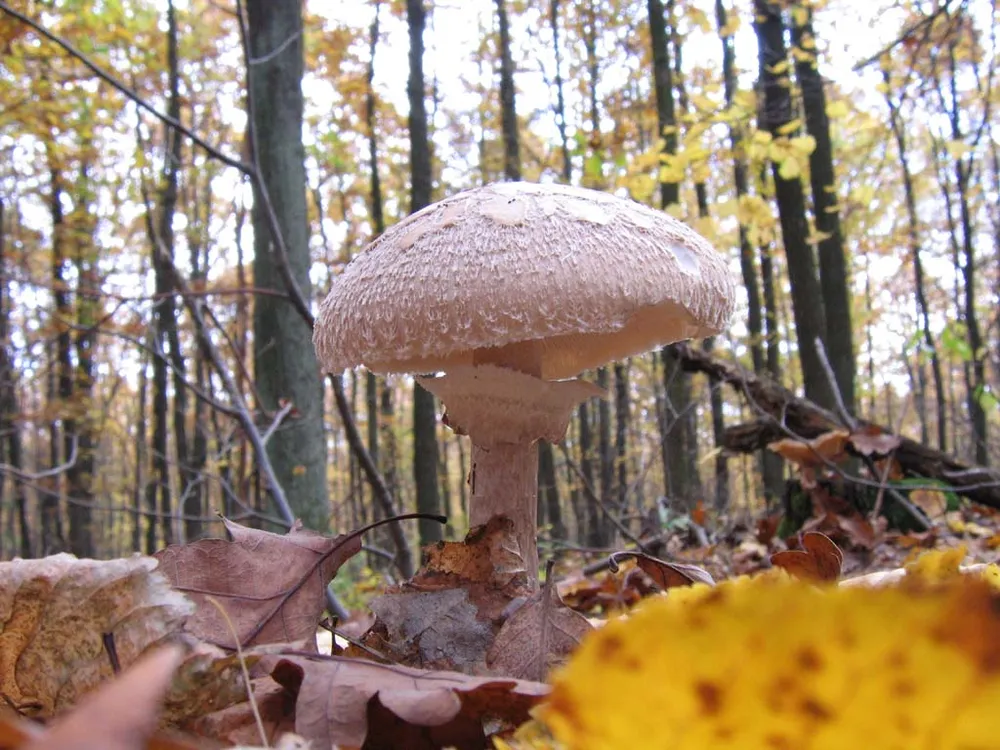
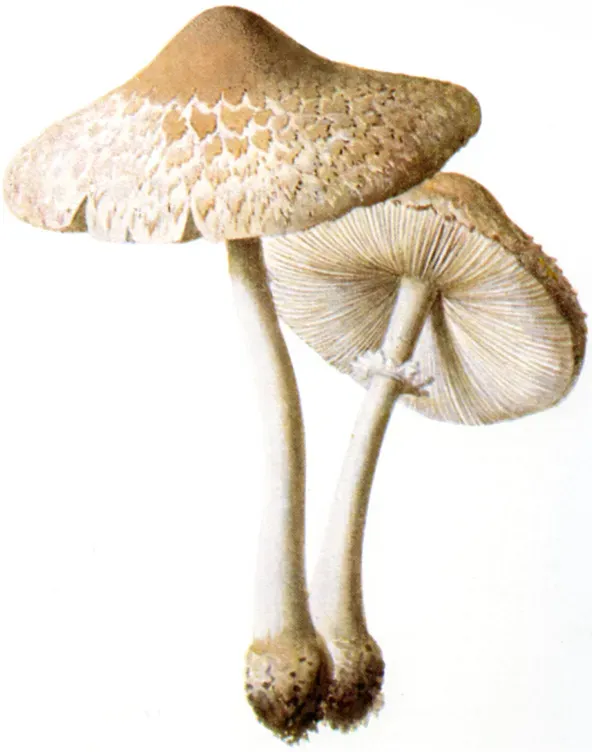
_M.M._Moser_ex_Bon_61894_crop.webp)
Related species
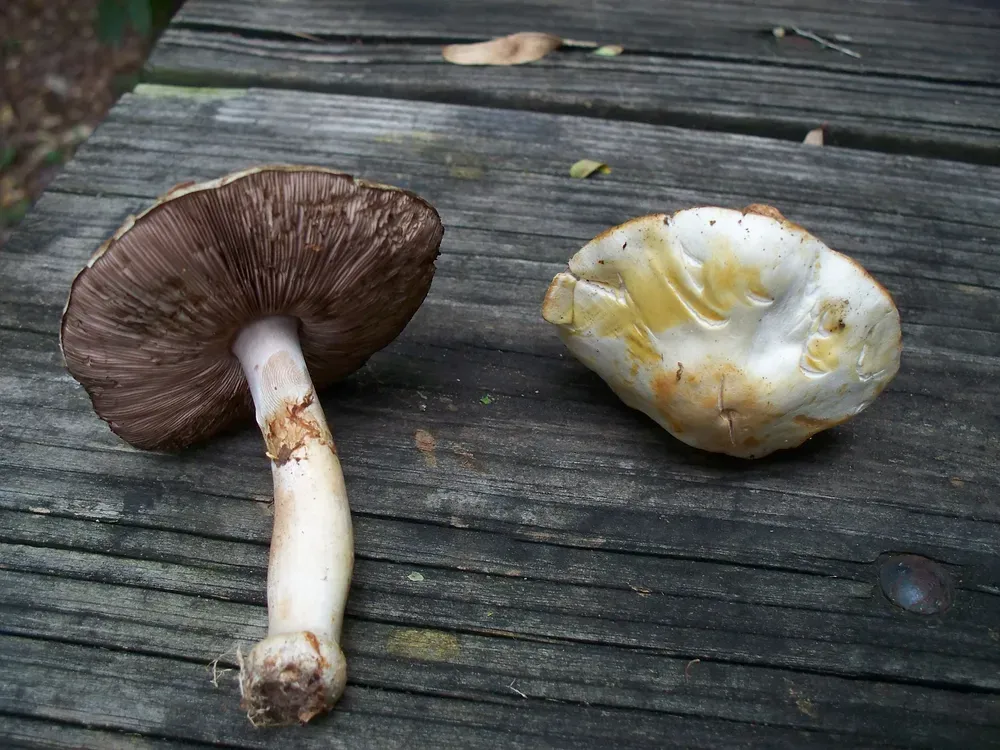
Mushrooms of the same genus and habitat — to study side by side and never mix up.
.webp)
_Fr._4948278370-2.webp)
Frequently asked questions
Is this really a deadly mushroom?
Yes — it's one of the most dangerous mushrooms in Europe, alongside the death cap. Documented deaths are mostly among children who ate the mushroom from a lawn. Absolutely do not touch it, don't let children play with it, don't cut it with bare hands (collect it in a bag and wash your hands). If you suspect a child has swallowed some — go to the hospital immediately, even if the child has no symptoms. For the first 12 hours there are no signs at all, but that's exactly when the chances of saving them are best.
What happens if a child swallowed a piece?
Call 112 or your local emergency number immediately. Don't wait for symptoms — there won't be any for the first 12 hours. Put the remains of the mushroom in a bag (or take a photo). In hospital, treatment will start preventively: activated charcoal, silibinin intravenously as a specific anti-amatoxin therapy. The earlier it starts, the better the chances. On day 1-2, hemodialysis and liver function monitoring may be needed. A single piece can be fatal for a child — don't downplay how serious this is.
How do you check your yard for this mushroom?
Inspect lawns, flower beds, gaps between paving stones and the edges of paths. It looks like a small white umbrella with brownish scales "sprinkled with pepper". Found one? Carefully cut it out with a trowel along with a chunk of soil, then burn it or throw it out in a sealed bag. Don't pull it out with bare hands. Wash your hands with soap. Check the spots where you found it regularly over the following months — the mycelium can produce fruiting bodies again.
Can it be cooked safely somehow?
No. Amatoxins dissolve in water but are not destroyed by heat: neither boiling nor pouring off the cooking water makes the mushroom safe. No processing method — boiling, pickling, drying, freezing — neutralizes them. There is no safe dose.
Where does it usually grow?
On cultivated lawns, in parks, gardens, flower beds, playgrounds and at forest edges. It likes fertile grassy soils with moderate moisture. It often grows in groups of 3-15 fruiting bodies on patches of 1-3 m². Especially often in the very same spots where parasol mushrooms (Macrolepiota) and young Agaricus mushrooms grow — edible species, and mixing them up is the most fatal confusion.
Which regions of Ukraine is it found in?
Throughout the forest-steppe zone: all three forest-steppe belts, Polissia, the Carpathians (lower belts). In the steppe — in parks and public gardens. Common in towns and villages: at dachas and in the parks of big cities (Kyiv, Lviv, Kharkiv, Odesa). A classic "urban" danger.
When does it fruit?
June — October, peaking in August-September. A very long season — practically the whole warm period. Especially abundant in a wet autumn. The best chance of finding it is 5-7 days after heavy rain, on a freshly watered lawn.
Which edible mushrooms is it most often confused with?
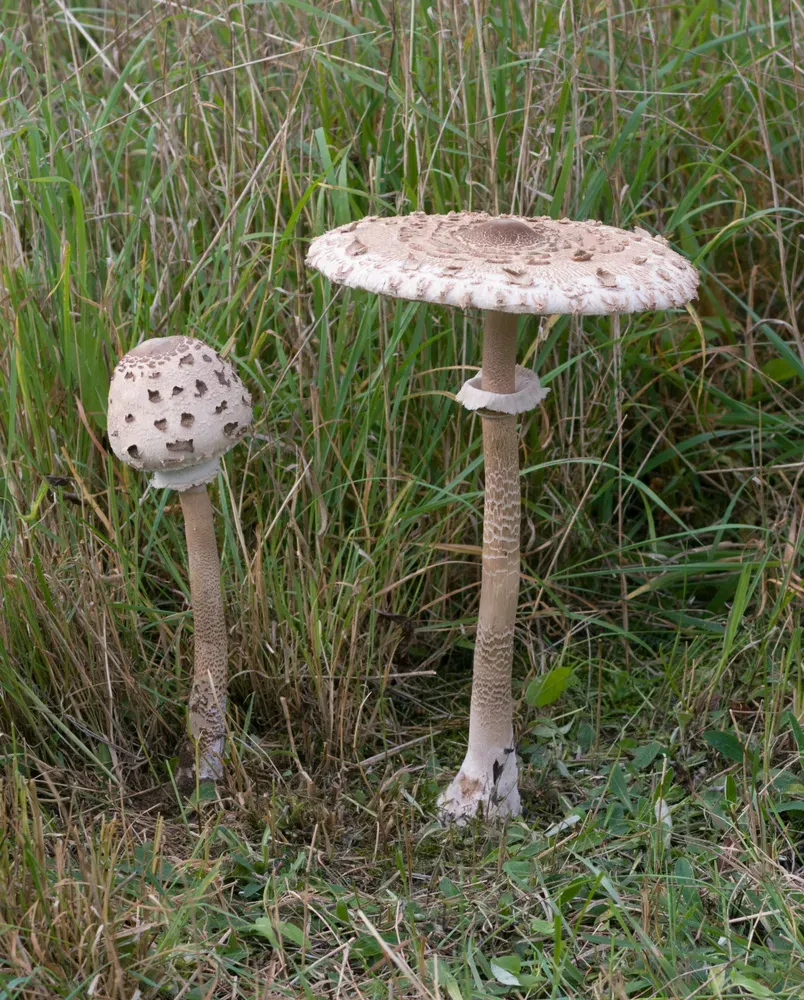
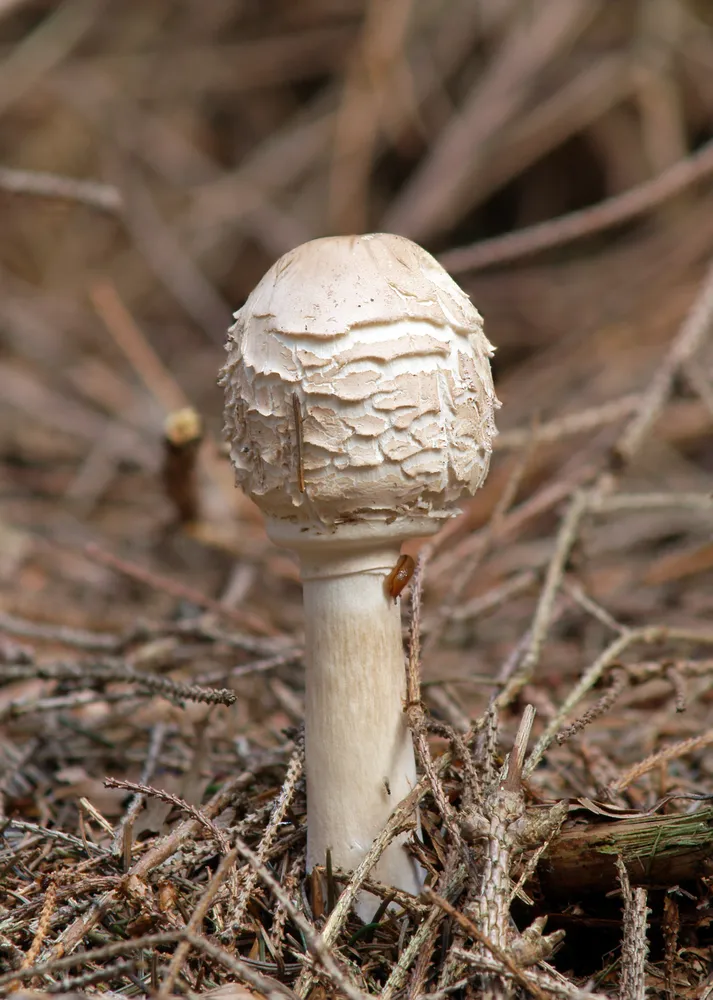
With young parasol mushrooms (Macrolepiota procera) — edible and delicious. The key difference: the parasol mushroom is big (10-30 cm!), while Lepiota brunneoincarnata is small (2-5 cm). If you find a small scaly "parasol", it's not a young parasol but most likely a poisonous Lepiota. Adult parasol mushrooms are always big — young ones with an inrolled edge can also be 5-10 cm, but they already have a clearly large fruiting body. If it's small, on a thin stem, with a cream-pink tone — don't pick it. The general rule: don't collect any small Lepiota, period.
Is Deadly dapperling edible or poisonous?
Does Deadly dapperling have gills or pores?
What does the cap of Deadly dapperling look like?
What does the stem of Deadly dapperling look like?
Sources
- [1]Вікіпедія (українська)
- [2]Атлас грибів України, Зеров Д.К. (1979)
- [3]MycoBank Database
- [4]Index Fungorum
- [5]GBIF
- [6]iNaturalist Ukraine