THIS DATA HAS NOT BEEN VERIFIED BY AN EXPERT. Use at your own risk.
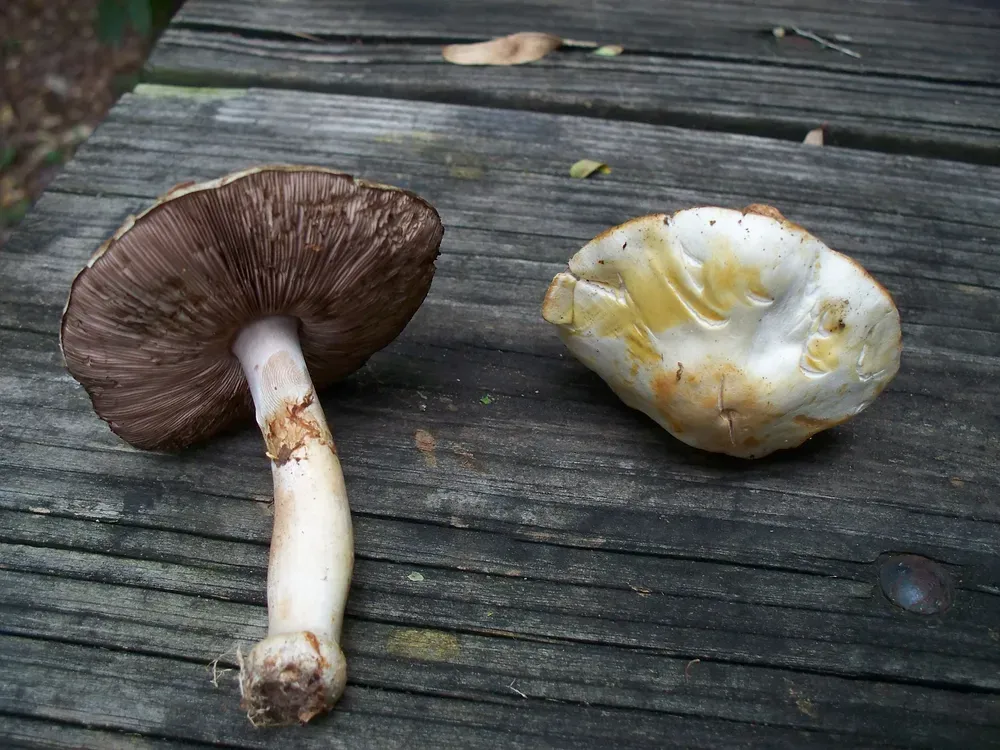
Agaricus abruptibulbus
Under reviewUpdated October 3, 2026
Passport
- Edibility
- Edible
- Season
- Jul — Oct
- Hymenophore
- Gilled
- Cap color
- White
- Size
- Medium (5–15 cm)
- Smell
- Anise
- Reviewed
- Under review
Quick answers
Where to look?
Deciduous forest, Conifer forest, Mixed forest
When does it appear?
Jul — Oct
Active months: July, August, September, October.
How to recognize it? Three signs
- Cap color: White, Cream
- Cap shape: Convex, Flat
- Smell: Anise
Fruiting season
July – October
Description
Agaricus abruptibulbus is a slender white woodland Agaricus whose most telling feature is hidden near the ground: the base of its stem ends abruptly in a distinct rounded bulb, as if cut off, which is what the species name refers to (from the Latin «abruptus» — sudden, broken off). Like its close relative the wood mushroom, it has a delicate anise-almond aroma and slowly turns yellow when touched. It is a saprotroph that feeds on forest humus and grows under broadleaf and conifer trees.
In Ukraine Agaricus abruptibulbus grows in broadleaf, mixed and conifer forests throughout the country, on humus-rich soils and at forest edges. It fruits in the second half of summer and in autumn — from July to October. The mushroom appears singly or in small groups among the forest litter.
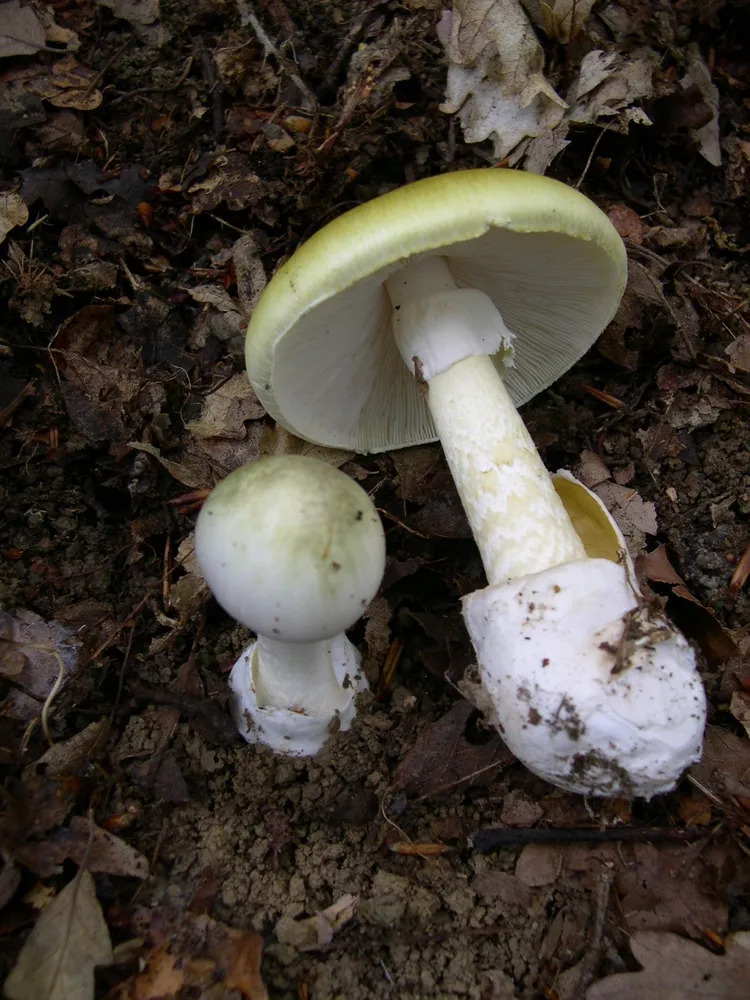
In terms of edibility, Agaricus abruptibulbus is a good edible mushroom with a pleasant anise aroma. It is fried, stewed and dried. As with all white Agaricus species, be especially careful when picking: young fruiting bodies can be confused with the deadly poisonous white amanitas. So always check that the gills turn pink and then darken (rather than staying white), and that there is no sac-like volva at the base of the stem — do not mistake the characteristic rounded bulb of this Agaricus for an amanita's volva.
Cap
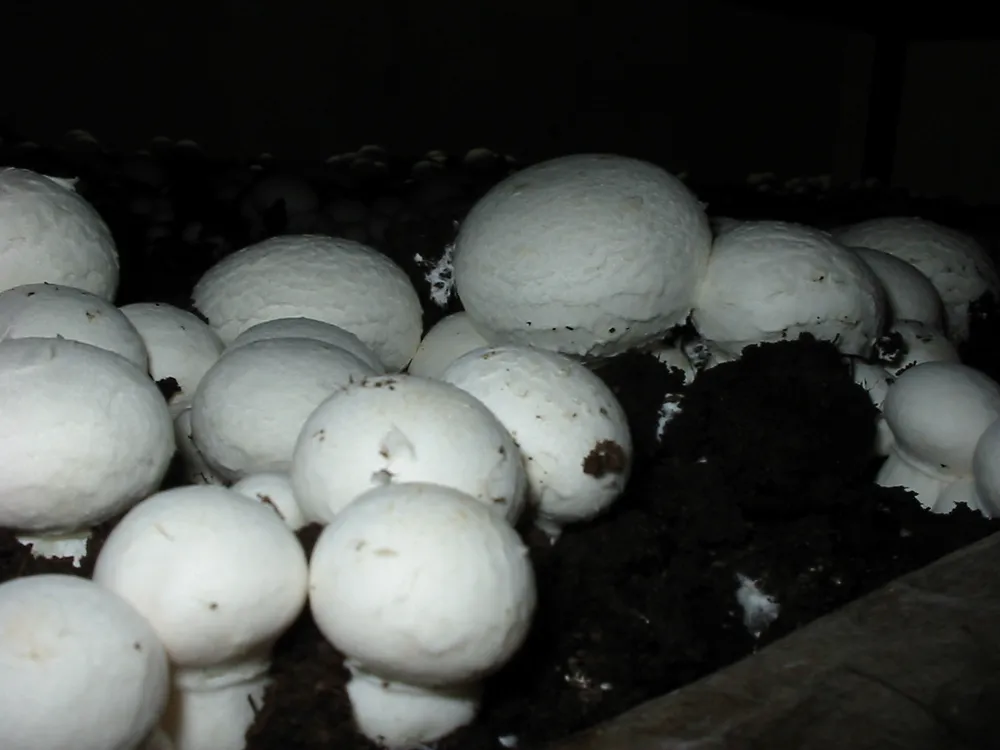
The cap of Agaricus abruptibulbus reaches 5 to 12 centimeters across. When young it is bell-shaped or cylindrical, opening out with age to convex and flat. The surface is smooth, silky-fibrous, dry, pure white or cream; it slowly turns yellow when touched and with age, especially at the margin. Yellowing on touch is an important diagnostic feature.
Hymenophore
The hymenophore is gilled. The gills are free, not attached to the stem, and very crowded. Their color changes with age: in young mushrooms they are pale pink or grayish-pink, later darkening to chocolate brown and almost black. The spore print is dark brown. The pinkish young gills are the key feature that distinguishes Agaricus from the white-gilled, deadly poisonous amanitas.
Stem
The stem is slender, white, 6 to 12 centimeters tall; its defining trait is an abruptly widened, rounded bulb at the base, as if cut off. In the upper part there is a large hanging ring — a trace of the veil. The stem may turn yellow when touched. There is no true sac-like volva at the base; do not mistake the distinct bulb of this Agaricus for an amanita's volva.
Flesh
The flesh is white and thin, slowly turning yellow when cut, especially at the base of the stem. The taste is mild and pleasant, with no bitterness. Its main hallmark is a sweetish aroma of anise or bitter almond, which distinguishes this species from its unpleasant-smelling yellow-staining lookalike.
Smell
The smell is pleasant, sweetish, of anise and almond — one of the defining features of the species. But if the mushroom smells of ink or carbolic, and the base of the stem turns bright yellow when cut, it is the poisonous yellow stainer, and you must not pick it.
›Scientific synonyms (2)
Agaricus abruptus Peck (1900), Agaricus sylvicola var. abruptibulbus (Peck) Kerrigan
Lookalikes
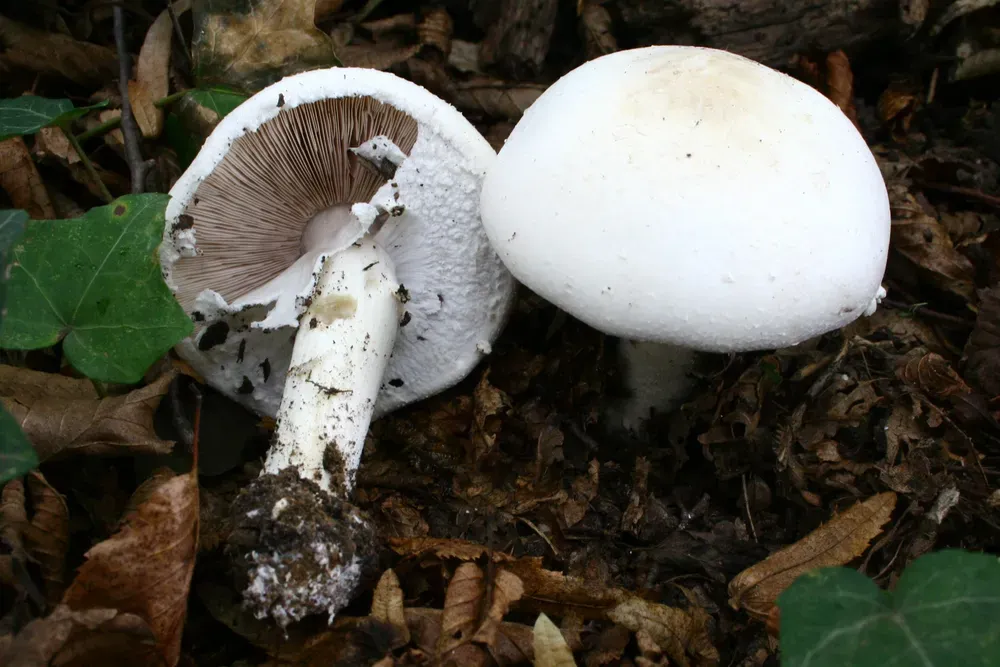
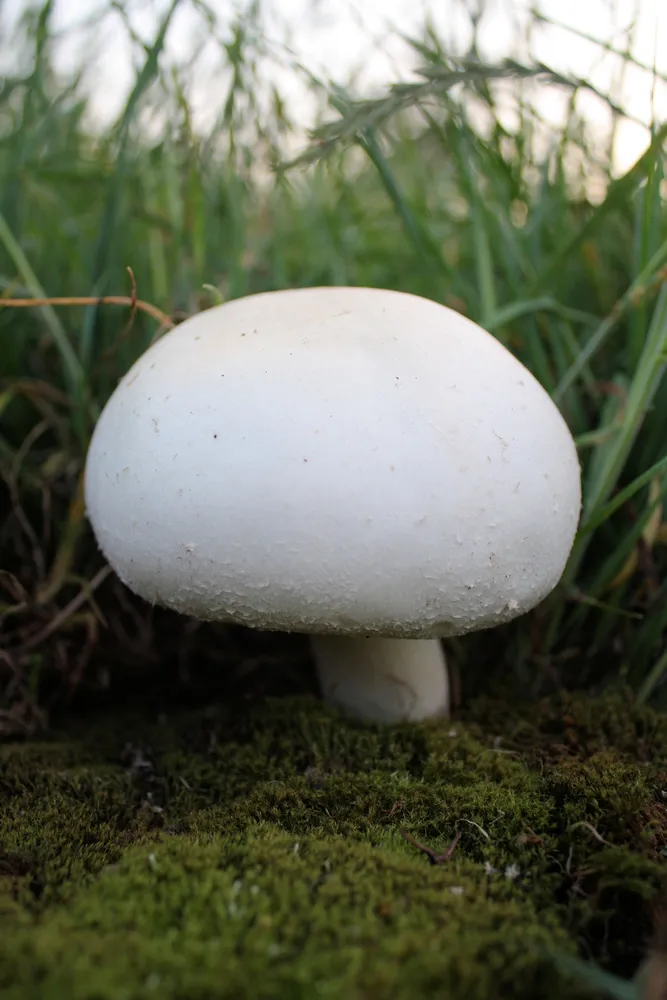
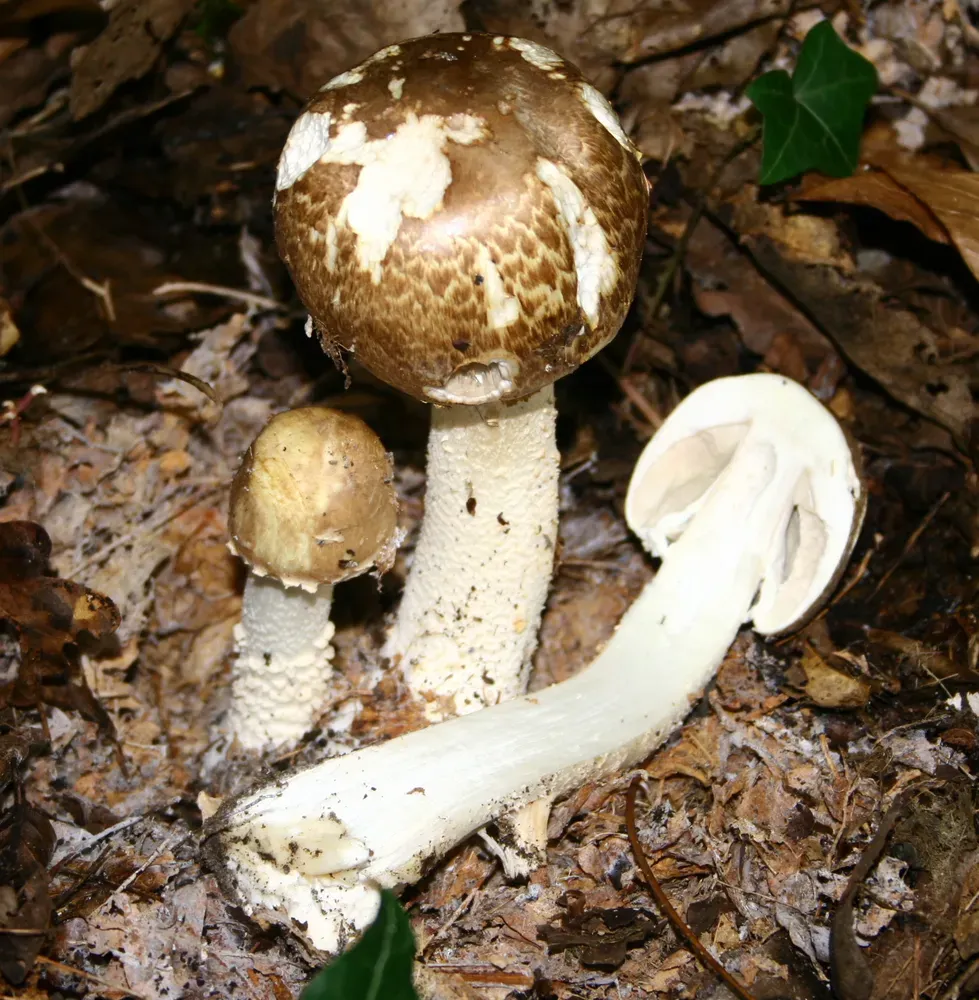
Related species
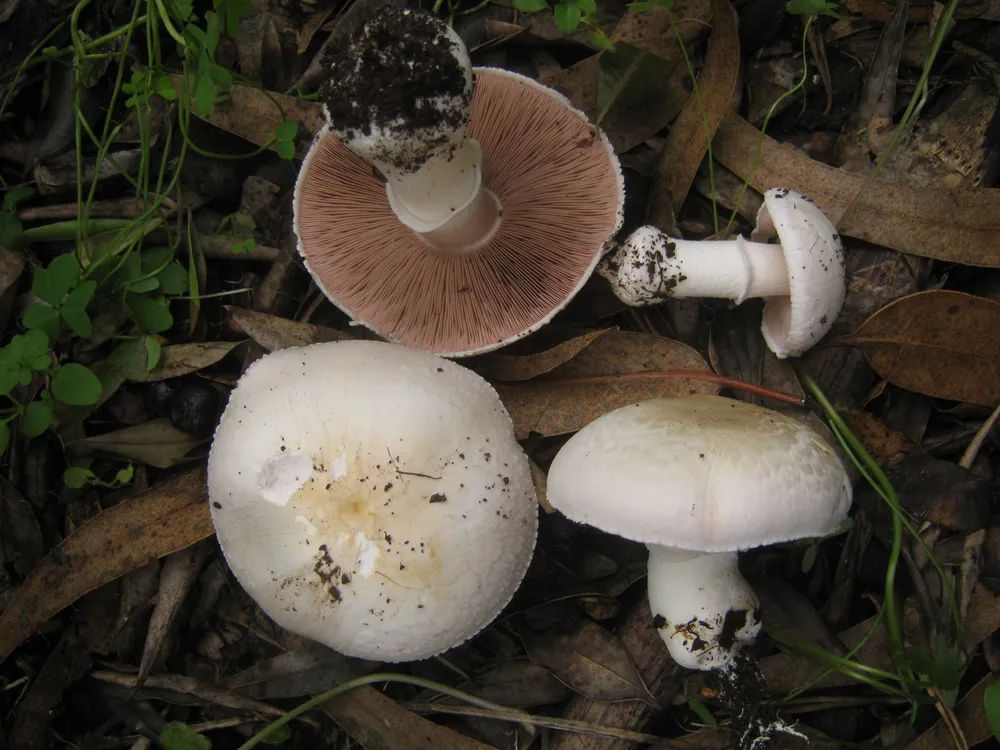
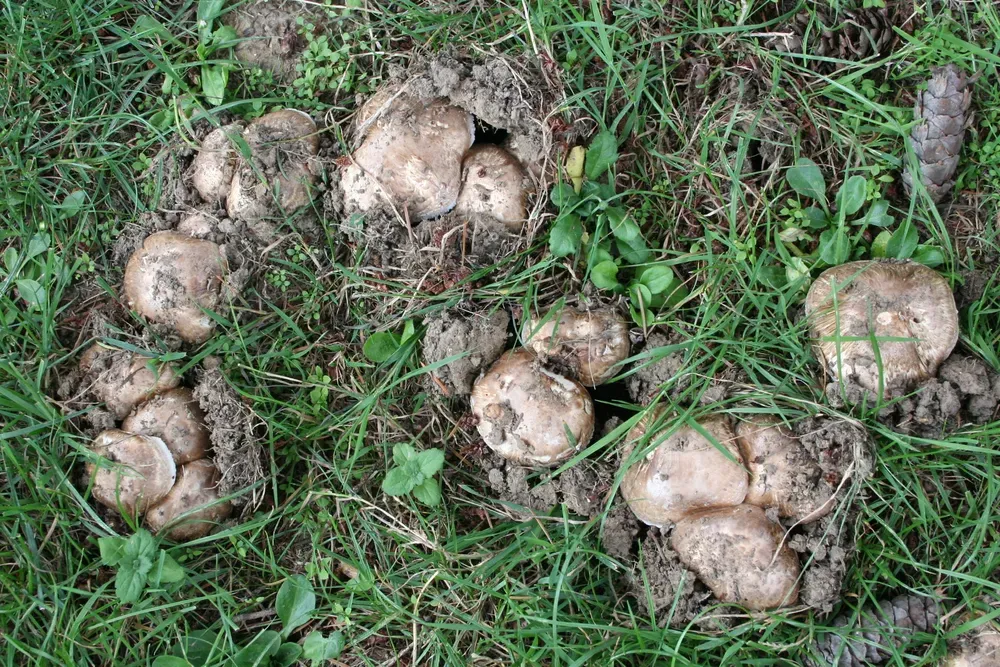
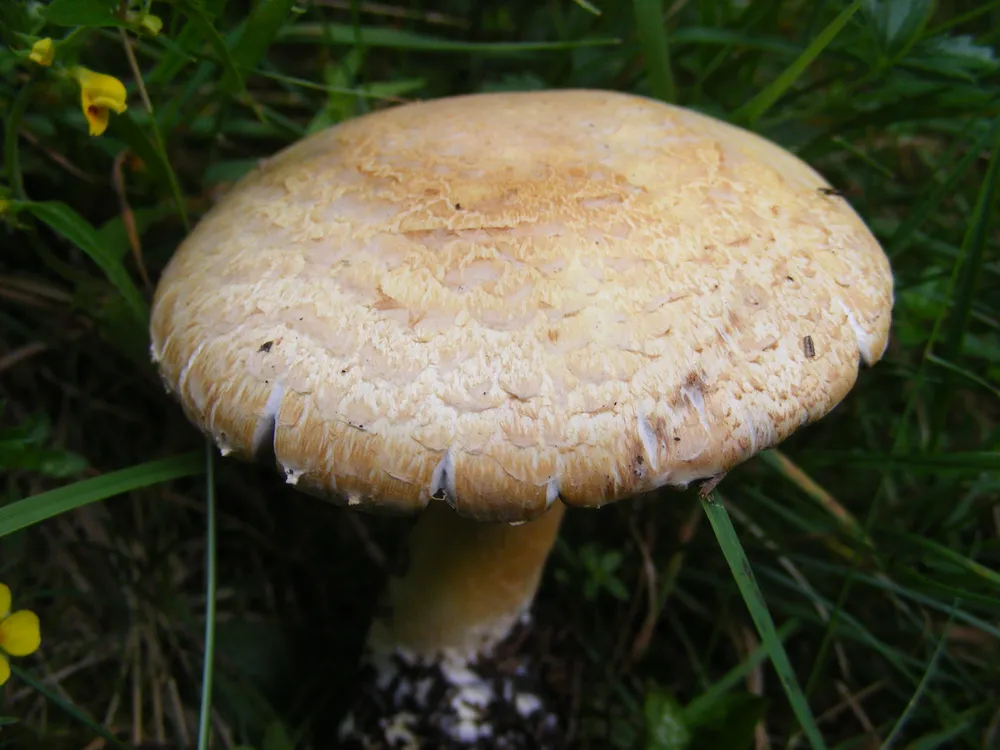
Mushrooms of the same genus and habitat — to study side by side and never mix up.
.webp)
_Fr._4948278370-2.webp)
Frequently asked questions
Is Agaricus abruptibulbus edible or poisonous?
Does Agaricus abruptibulbus have gills or pores?
What does the cap of Agaricus abruptibulbus look like?
What does the stem of Agaricus abruptibulbus look like?
What do Agaricus abruptibulbus smell and taste like?
Where does Agaricus abruptibulbus grow?
Which trees does Agaricus abruptibulbus grow under?
When should you pick Agaricus abruptibulbus?
What can Agaricus abruptibulbus be confused with?
How do you cook Agaricus abruptibulbus?
Can you dry Agaricus abruptibulbus?
What is the scientific name of Agaricus abruptibulbus?
Sources
- [1]Вікіпедія (українська)
- [2]Атлас грибів України, Зеров Д.К. (1979)
- [3]MycoBank Database
- [4]Index Fungorum
- [5]GBIF
- [6]iNaturalist Ukraine