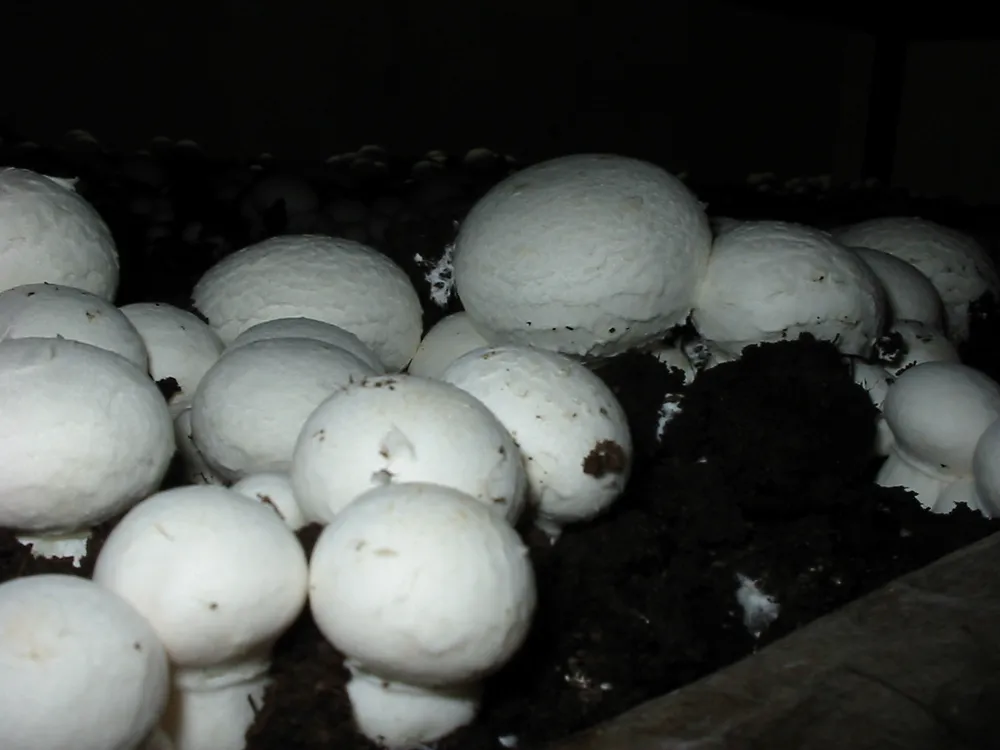
Button mushroomAgaricus bisporus
Expert-verifiedUpdated October 3, 2026
Passport
- Edibility
- Edible
- Season
- Apr — Oct
- Hymenophore
- Gilled
- Cap color
- White
- Size
- Medium (5–15 cm)
- Smell
- Pleasant, mushroomy
- Reviewed
- Yes ✓
Quick answers
Where to look?
Meadow, Field
When does it appear?
Apr — Oct
Active months: April, May, June, July, August, September, October.
How to recognize it? Three signs
- Cap color: White, Cream, Brown
- Cap shape: Convex, Flat
- Smell: Pleasant, mushroomy, Anise
Fruiting season
April – October
Description
The button mushroom (Agaricus bisporus) is the most widely cultivated mushroom in the world, sold as the "champignon". In the wild it is rare, found in compost and enriched soils in Europe and North Africa. It is grown commercially in a white form (button) and a brown form (cremini, portobello).
Unlike its wild relatives, commercial strains lack a pronounced smell and taste, but they have a firm texture and keep longer. Wild specimens are more aromatic and fuller in flavor.
Edible raw and cooked. One of the most hypoallergenic mushrooms, and easy to digest.
Cap
Cap 5–12 cm across, globular or hemispherical in young mushrooms, then flat-convex. Surface smooth or slightly scaly, from white to grayish brown depending on the strain. Margin rolled under in young mushrooms.
Hymenophore
Gills free, crowded, pink or pale at first, then darkening to purplish brown and almost black. Gill color is a reliable sign of freshness: pink means a fresh mushroom, dark brown means a mature one.
Stem
Stem 3–8 cm tall, 1–2 cm thick, even or slightly tapering downward, firm, solid. White. A thin membranous ring in the upper or middle part. No volva.
Flesh
Flesh firm, white, turning slightly pinkish when cut. Does not yellow. Taste mild, neutral in cultivated forms, more pronounced in wild specimens.
Smell
Cultivated forms have a moderate, mushroomy, unobtrusive smell. Wild specimens have a more distinct, slightly anise-almond aroma. Frying intensifies the aroma many times over.
Lookalikes
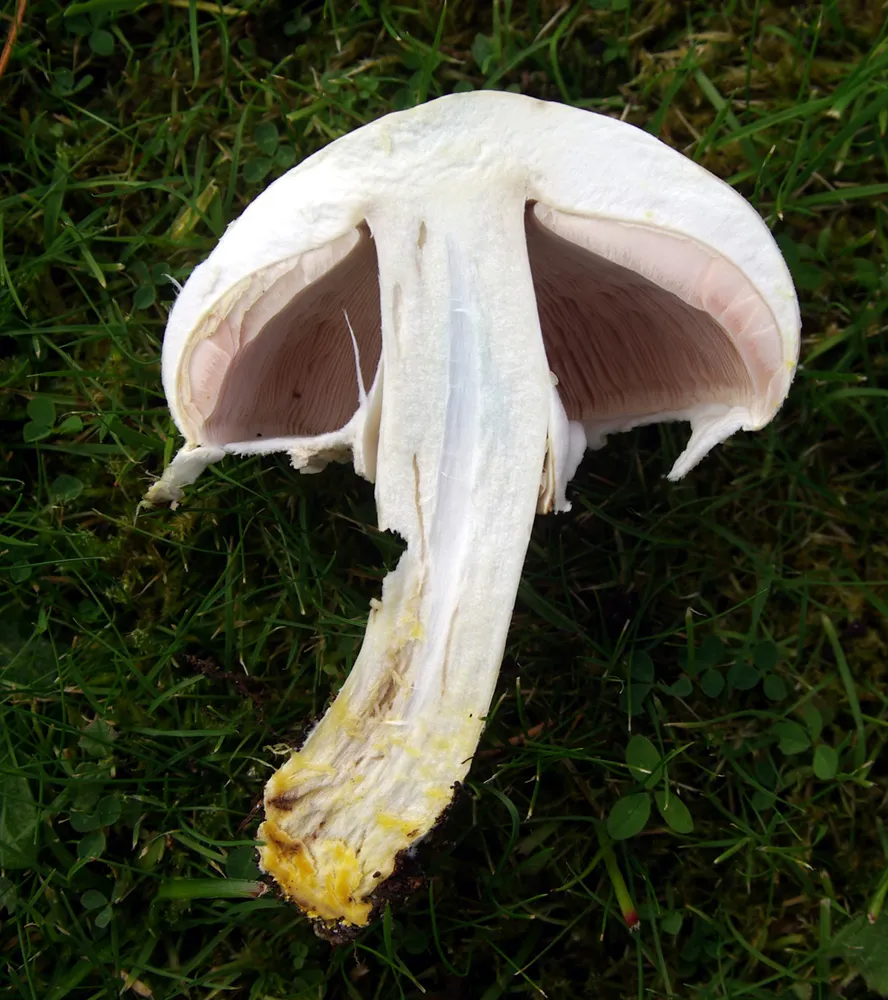
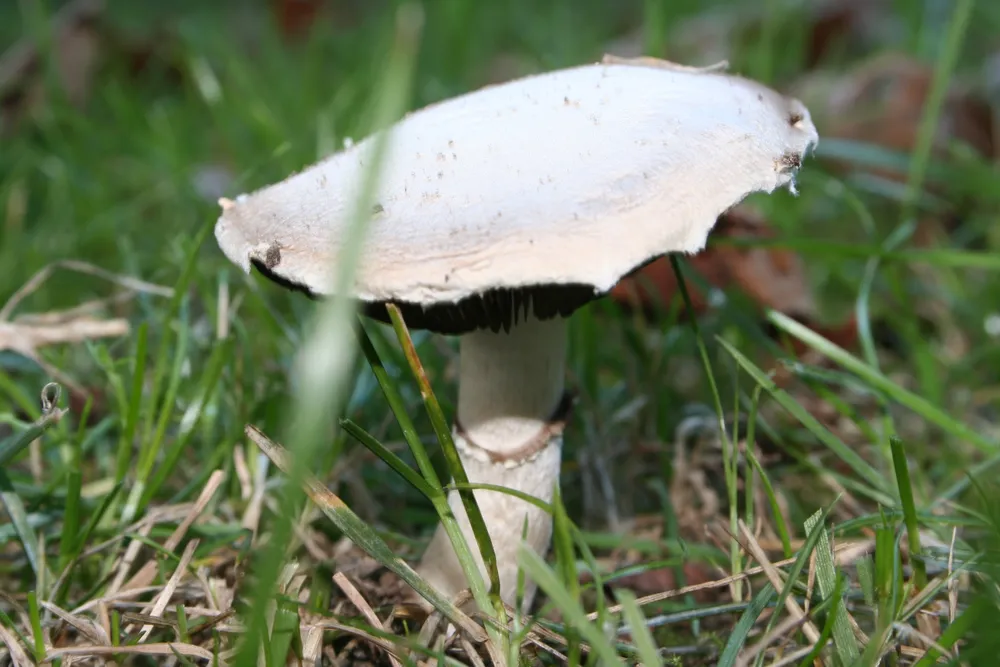
Related species
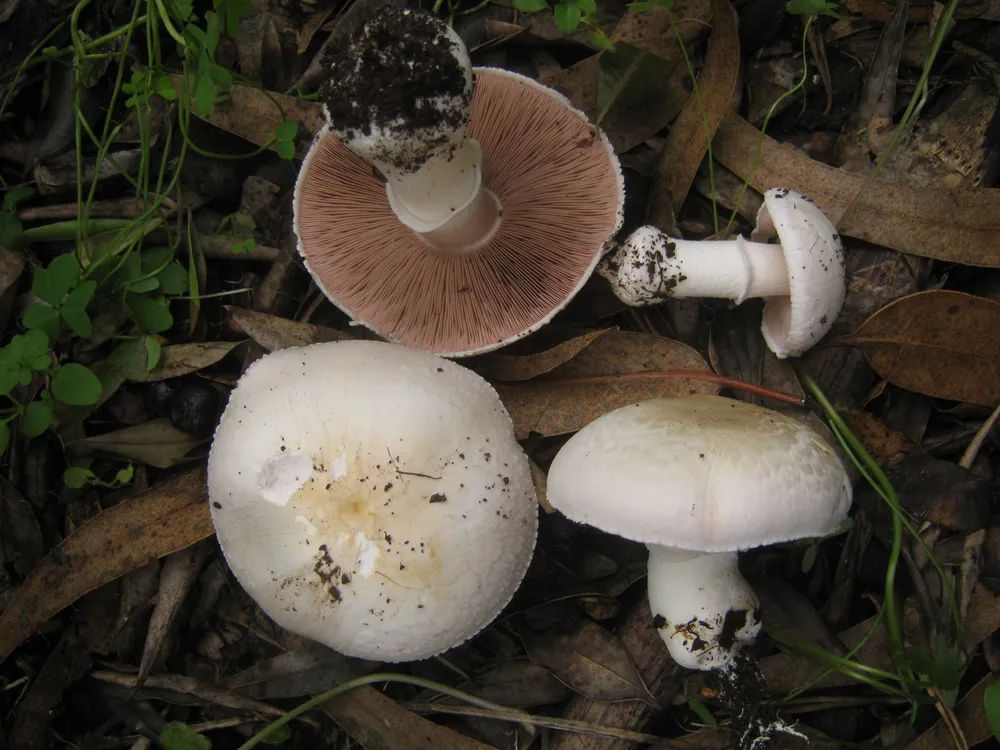
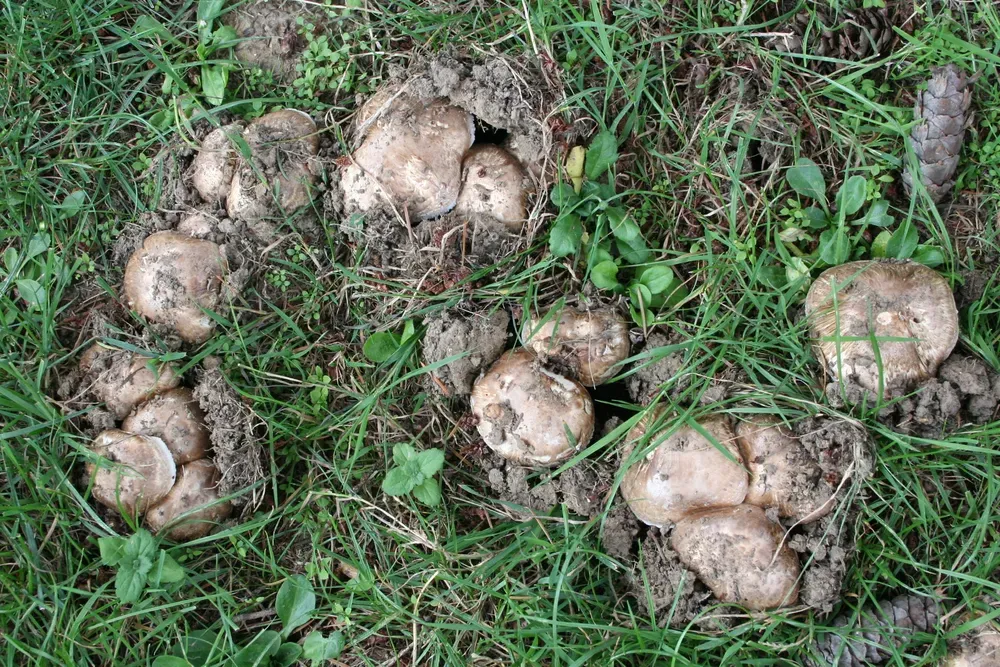
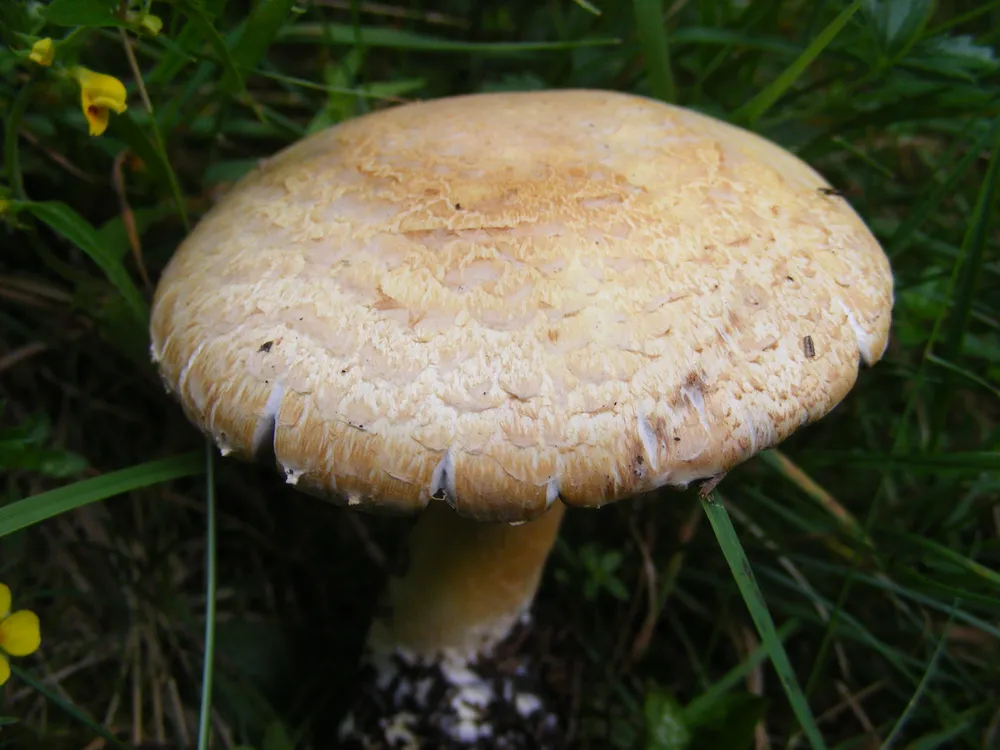
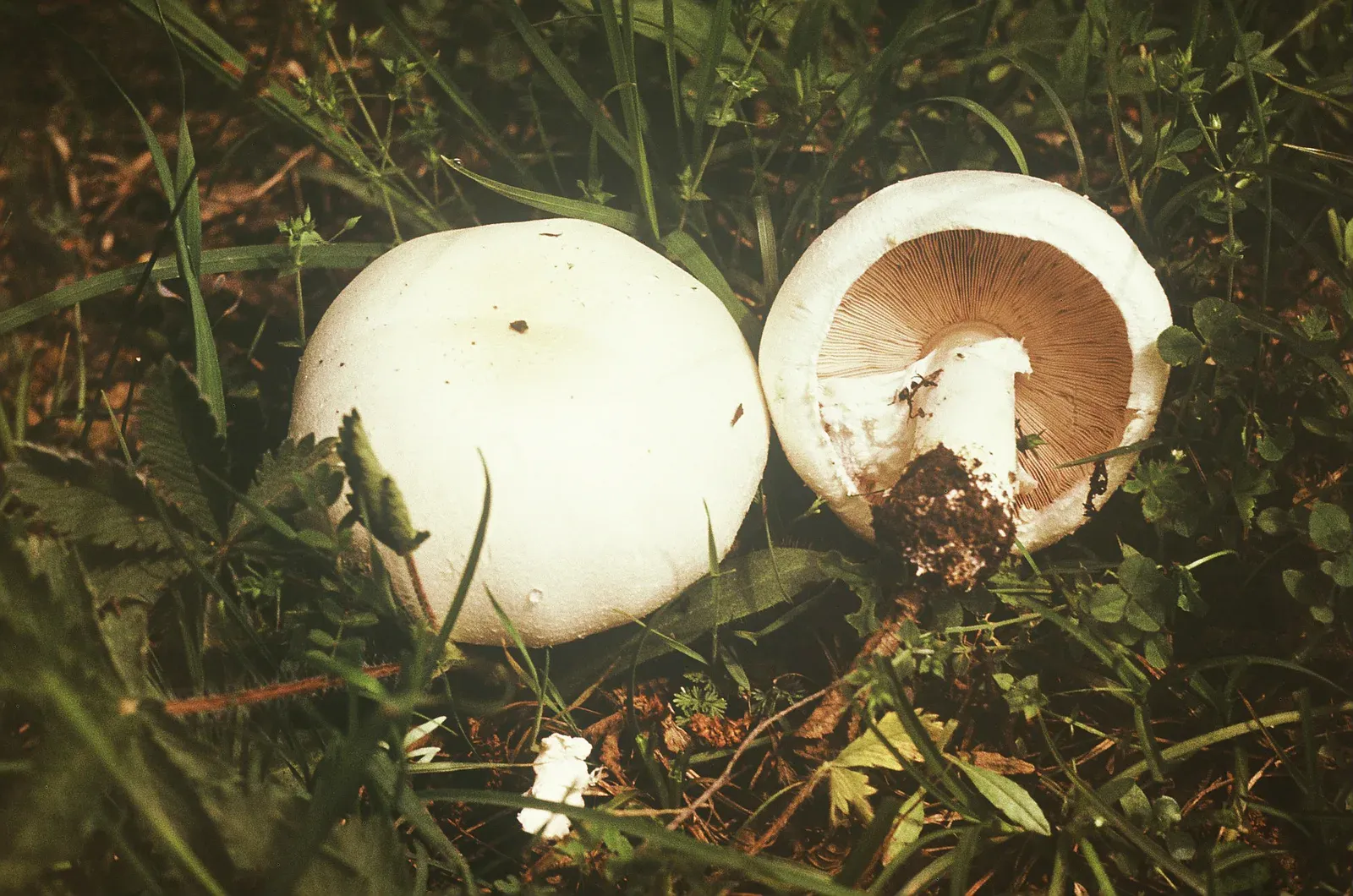
Mushrooms of the same genus and habitat — to study side by side and never mix up.
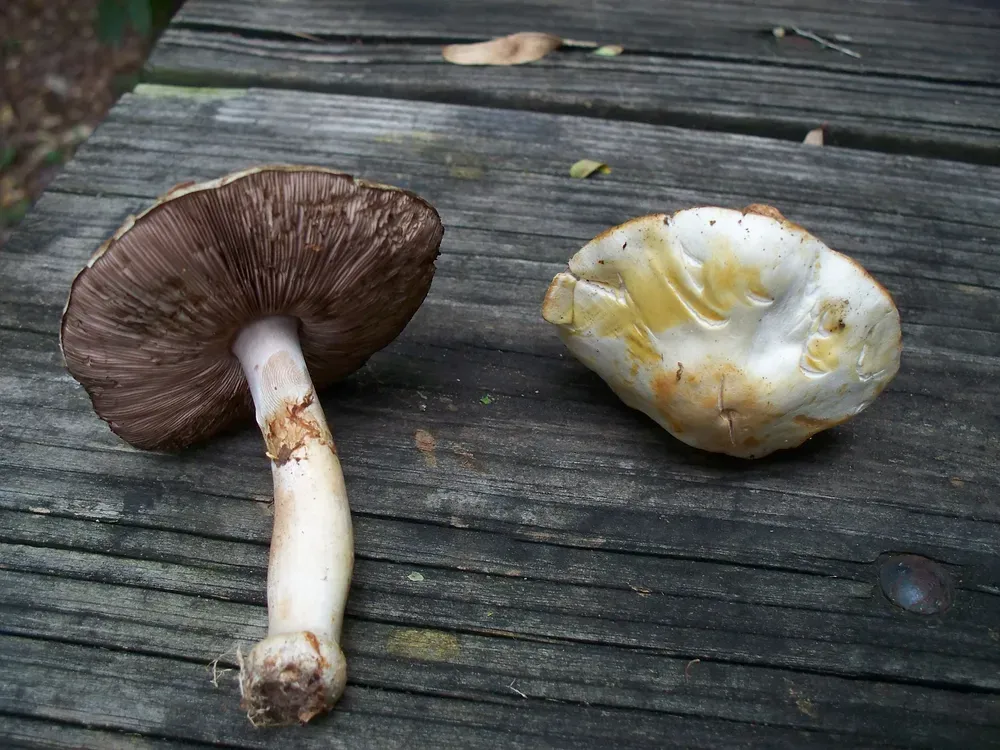
.webp)
_Fr._4948278370-2.webp)
Related reading
Frequently asked questions
Is Button mushroom edible or poisonous?
Does Button mushroom have gills or pores?
What does the cap of Button mushroom look like?
What does the stem of Button mushroom look like?
What do Button mushroom smell and taste like?
Where does Button mushroom grow?
When should you pick Button mushroom?
What can Button mushroom be confused with?
How do you cook Button mushroom?
Can you dry Button mushroom?
What is the scientific name of Button mushroom?
Sources
- [1]Атлас грибів України, Зеров Д.К. (1979)
- [2]GBIF