
Everyone knows Agaricus from the store, but few people realize that a whole family of wild Agaricus mushrooms grows in nature — tasty and nutritious. They're picked in meadows, gardens and forests throughout the warm half of the year. There's just one problem: you need to be able to tell a young Agaricus from the deadly death cap.
Let's go through the main types of Agaricus and the reliable features that keep you safe.
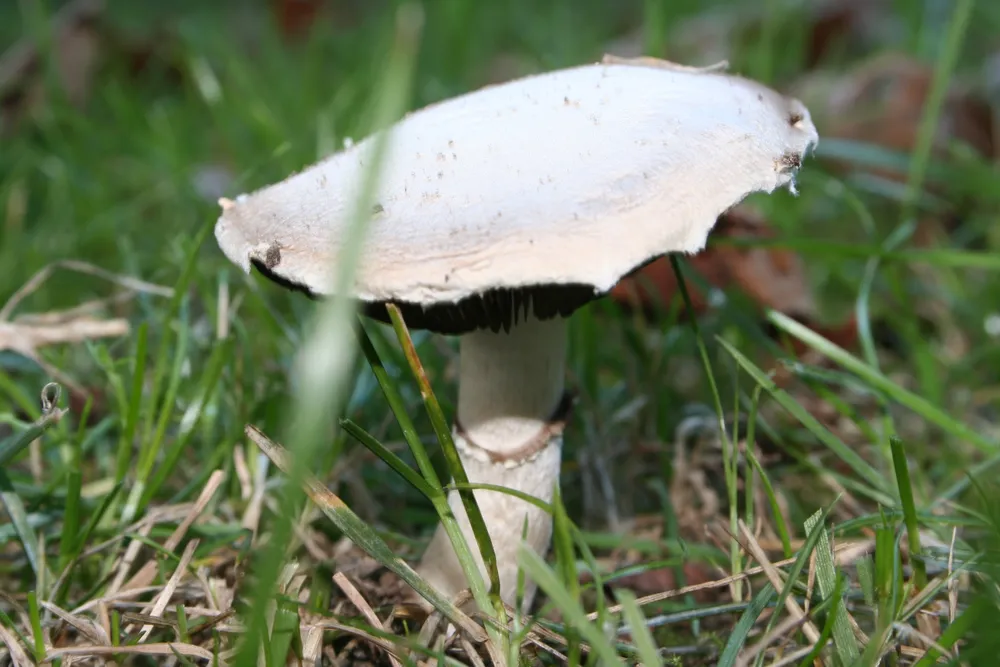
Field mushroom and horse mushroom
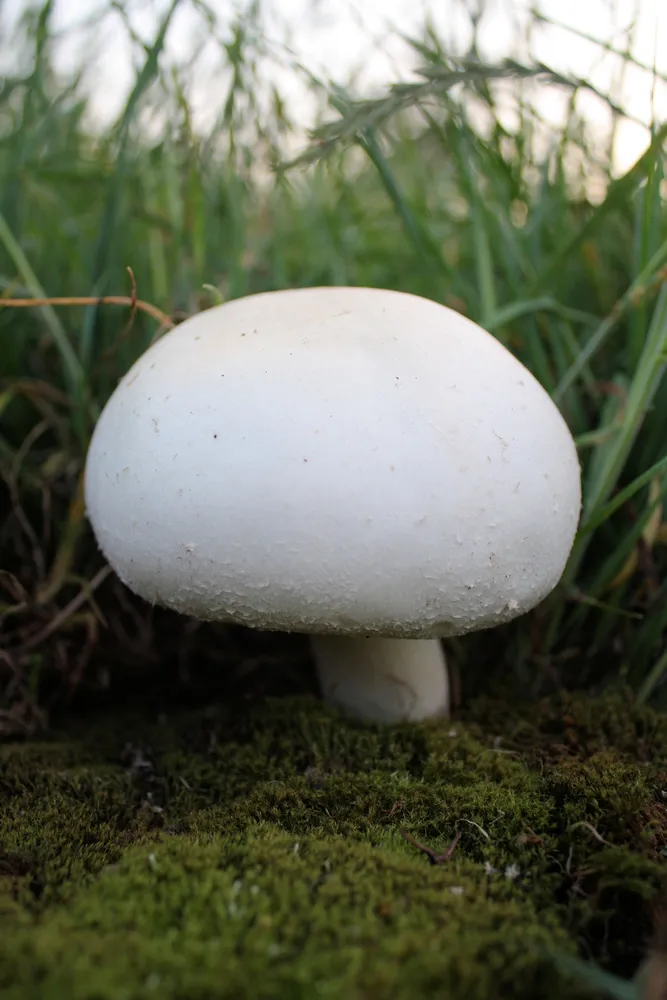
- Field mushroom — a classic of meadows and pastures: a white cap, pink gills that turn brown with age, and a pleasant mushroomy smell. The most common wild Agaricus.
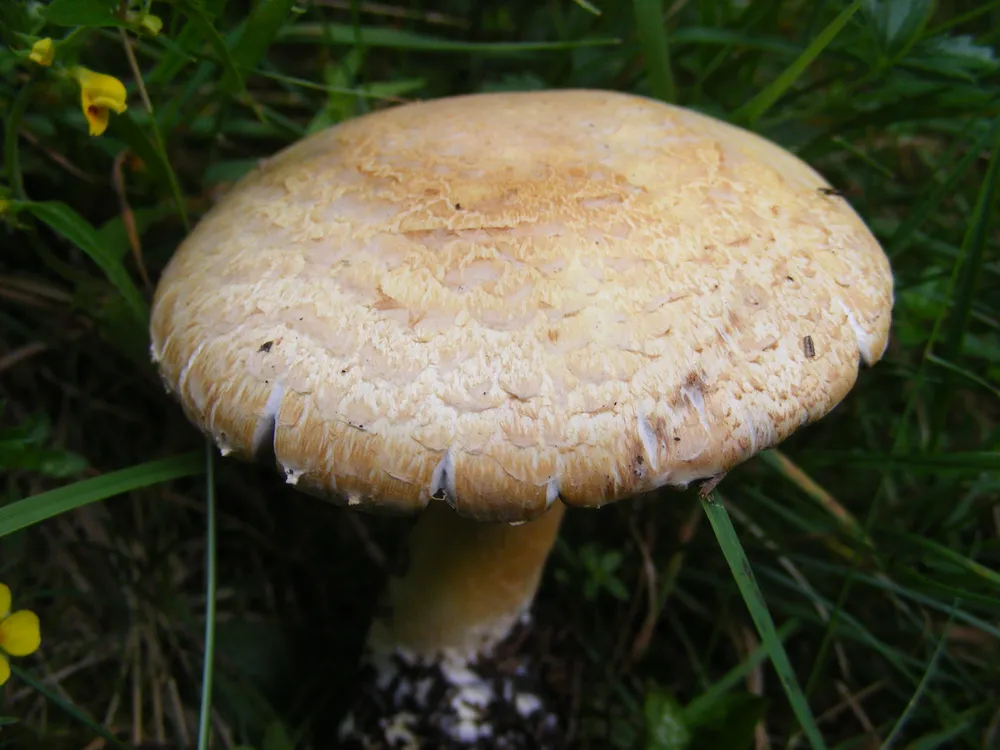
- Horse mushroom — bigger, with a ring on the stem and an aniseed-almond smell; grows in meadows, along forest edges and in gardens.
Both are excellent edible mushrooms.
Blushing wood mushroom
Grows in forests, often coniferous ones, under trees. The cap has brown scales, and the flesh turns slightly red when broken. It's tasty, but wood-dwelling Agaricus species are exactly the ones that demand the most care when identifying.
Cultivated Agaricus
The store-bought mushroom (button mushroom) is a domesticated relative of the wild species. It's grown in greenhouses, so there's no risk of mixing up the species — it's the safest way to eat Agaricus.
The main danger: the death cap
A young white Agaricus is easiest to confuse with the death cap. The key differences:
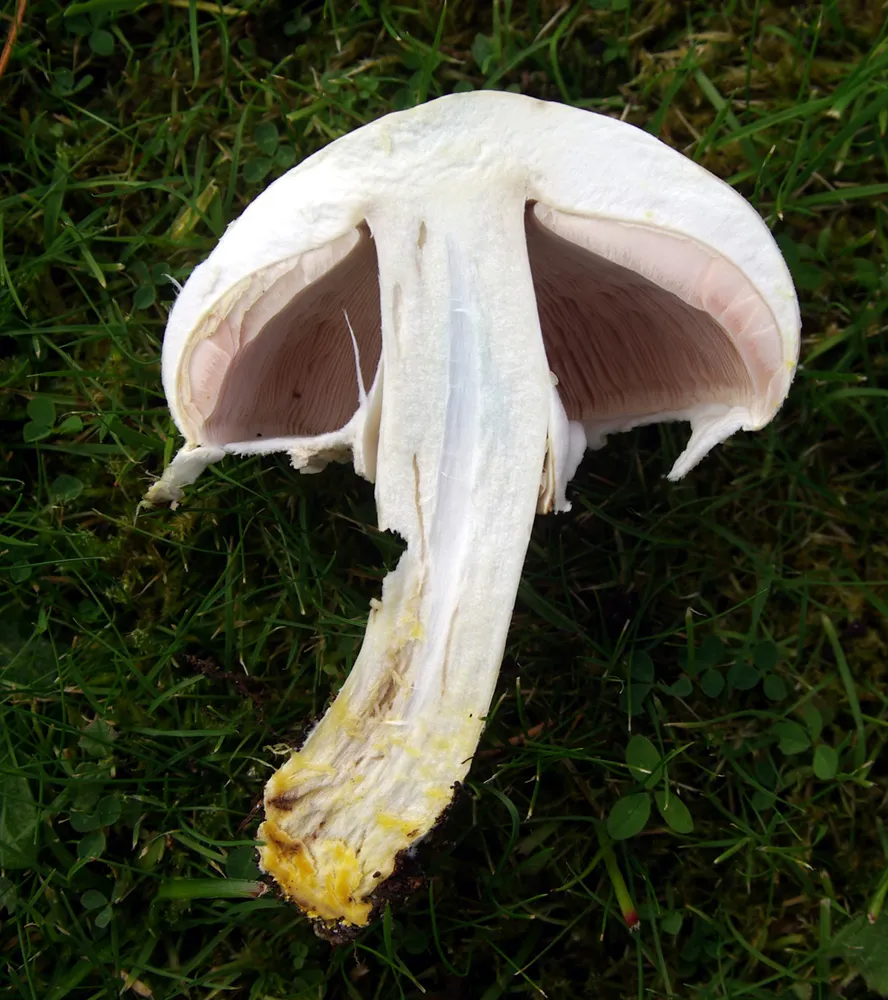
- Agaricus gills turn pink, then brown; in the death cap they are always white.
- At the base of an Agaricus stem there is no volva and no bulb; the death cap has both.
For more on how to tell Agaricus from the death cap, see our separate article. Also avoid Agaricus mushrooms that turn sharply yellow when broken and have an unpleasant smell — some of them are poisonous species.
Sources
- “Key to the Fungi of Ukraine” (Kyiv, Naukova Dumka publishing house).
- Agaricus campestris, Agaricus arvensis in GBIF, the global biodiversity database.
- Agaricus in MycoBank, the international fungal nomenclature database.
- Agaricus on Wikipedia.
Frequently asked questions
What types of Agaricus are there?
Wild ones — the field, horse and wood mushrooms — plus the cultivated one (the store-bought button mushroom). All are edible, but you need to be able to tell the wild ones from their lookalikes.
Which Agaricus is the most common?
The field mushroom — a classic of meadows and pastures with a white cap and pink gills that turn brown with age.
How do you tell Agaricus from the death cap?
Agaricus gills turn pink, then brown, and there's no volva at the base of the stem; the death cap's gills are always white, and it has a volva with a bulb.
Are all Agaricus mushrooms edible?
Most are, but there are poisonous species that turn sharply yellow when broken and smell unpleasant. Don't pick those.
Where do wild Agaricus mushrooms grow?
Field and horse mushrooms grow in meadows, pastures, along forest edges and in gardens; the wood mushroom grows under trees, often in coniferous forests.
How is the store-bought mushroom different from wild ones?
It's a domesticated species (the button mushroom) grown in greenhouses. There's no risk of confusing it with a poisonous mushroom.
Why do wood Agaricus mushrooms need more care?
Because young white mushrooms are easier to confuse with the death cap, and poisonous lookalikes grow nearby in the forest. Always check the gills and the base of the stem.
What does it mean if an Agaricus turns yellow when broken?
Sharp yellowing with an unpleasant smell is typical of poisonous Agaricus species. Better not to pick a mushroom like that.
Mushrooms in this article
Related articles
 How to identify
Truffles in Ukraine: do they grow here, and where to look
Truffles aren't just a French delicacy. Several species grow in Ukraine too. Here's which ones, where they occ…
August 24, 2026·2 min Recipes & cooking
How to store fresh mushrooms, and for how long
Fresh mushrooms spoil faster than you might think. Here's how long they keep in the fridge, how to store them…
August 21, 2026·4 min Recipes & cooking
How long to boil mushrooms
Boiling time depends on the type of mushroom and on what you're cooking next. Here's a clear cheat sheet: how…
August 22, 2026·4 min