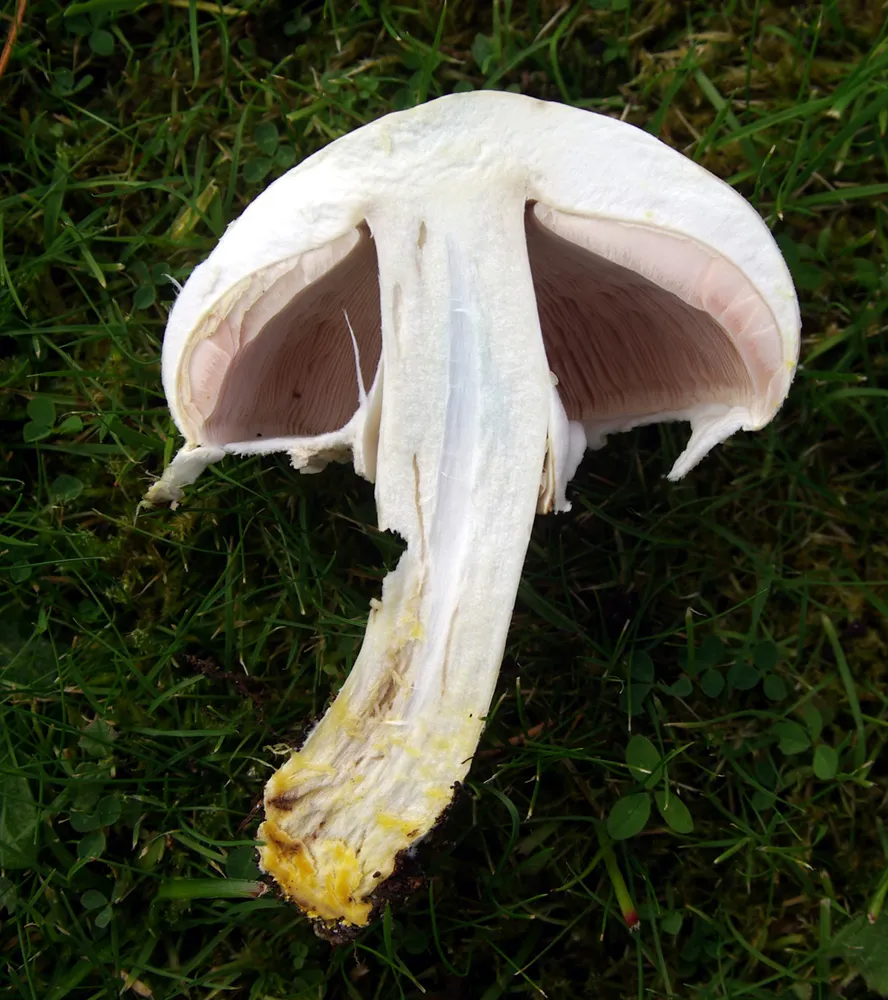
Yellow stainerAgaricus xanthodermus
Expert-verifiedUpdated October 3, 2026
Passport
- Edibility
- Poisonous
- Season
- Jun — Nov
- Hymenophore
- Gilled
- Cap color
- White
- Size
- Medium (5–15 cm)
- Smell
- Chemical
- Reviewed
- Yes ✓
POISONOUS
Eating it causes poisoning. Do not pick it unless you have identified it with certainty.
Contains phenol, toxic phenolic compounds and unidentified gastrotoxins. Causes acute gastroenteritis: nausea, repeated vomiting, abdominal pain, diarrhea 1-6 hours after eating. In severe cases — dehydration, hypotension, tachycardia. Not fatal, but needs medical attention, especially for children and older people.
Symptoms last 12-24 hours; full recovery usually takes 1-2 days. There is no specific antidote — treatment is symptomatic: gastric lavage (within the first 2 h), activated charcoal, IV fluids, antiemetics.
A unique feature: about 50% of people have a genetic tolerance and don't react to the toxins at all (the mechanism is unknown — probably a variation in detoxification enzymes). That's why Soviet literature gives contradictory descriptions: some authors label it edible, others poisonous. The modern canon of Western mycology (since the 1980s): do not eat it. There's no way to know in advance which half of humanity any given forager belongs to.
What to do if you suspect poisoning: contact a doctor, and call emergency services (112 or your local emergency number) for severe vomiting or diarrhea. Drink plenty of fluids to prevent dehydration. Keep any leftover mushrooms for identification. Don't induce vomiting at home, and take activated charcoal only on a doctor's advice. In mild cases — rest and a light diet, but only after you've talked to a doctor.
If you suspect poisoning, call an ambulance immediately: 112 (the European emergency number) or your local emergency number
Quick answers
Where to look?
Deciduous forest
When does it appear?
Jun — Nov
Active months: June, July, August, September, October, November.
How to recognize it? Three signs
- Cap color: White, Cream, Yellow
- Cap shape: Convex
- Smell: Chemical
Fruiting season
June – November
Description
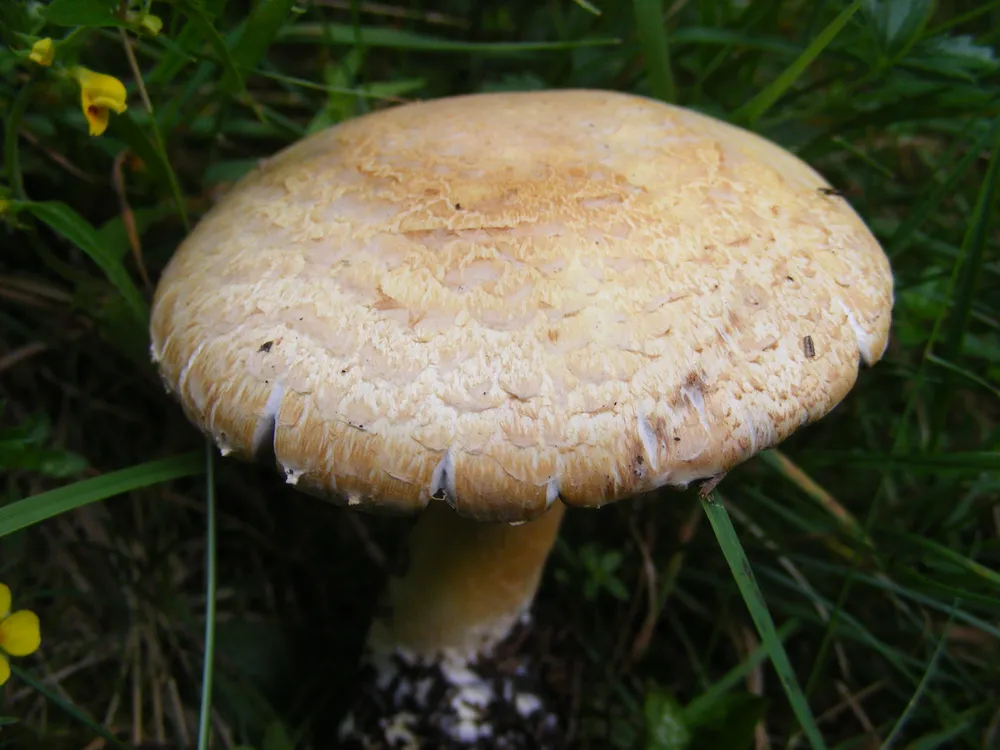
The yellow stainer (Agaricus xanthodermus), known in folk speech as "the staining poisoner" or "the carbolic mushroom", is the best-known poisonous Agaricus in the European flora. It looks a lot like its edible relatives — a white fleshy cap, pink gills when young, a ring on the stem. But it has two key signs of toxicity: (1) when damaged, the flesh at the base of the stem turns bright chrome yellow, often within seconds; (2) a distinct unpleasant smell of ink, phenol, medicinal ointment, creosote — the very smell of a hospital corridor.
Not deadly poisonous, but it causes acute gastroenteritis: nausea, repeated vomiting, abdominal pain, diarrhea 1-6 hours after eating. Symptoms last 12-24 hours and in severe cases require hospitalization due to dehydration. Children and older people are especially vulnerable. About 50% of people have a genetic tolerance and don't react at all — hence its muddled "poisonous, or maybe not" reputation in Soviet literature. The canon of modern mycology: do not eat it under any circumstances, since there's no way to know in advance which half of humanity any given forager belongs to.
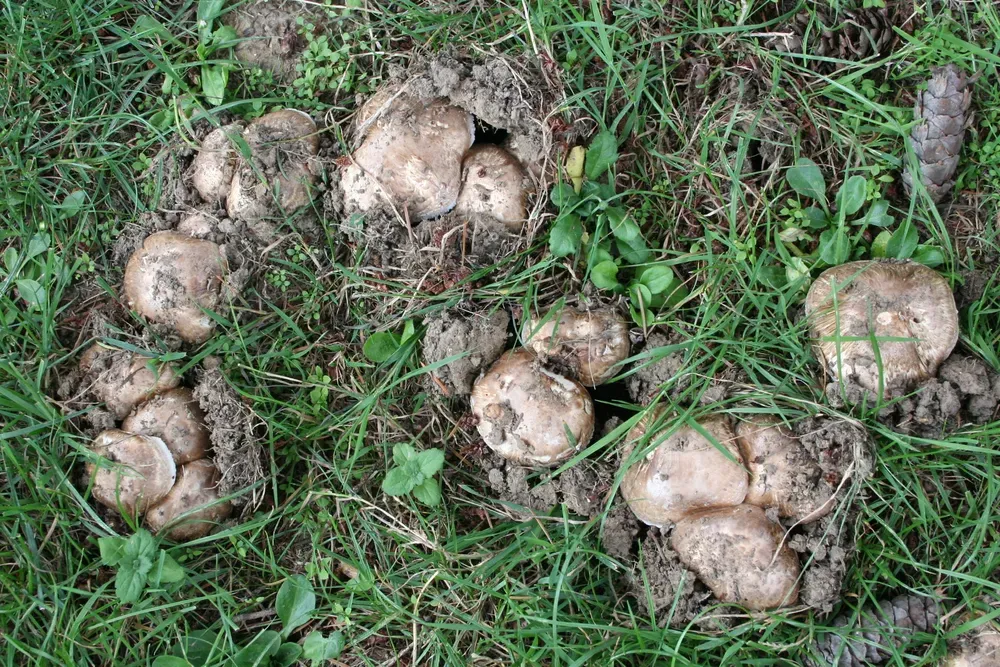
In Ukraine it occurs throughout the country: parks, lawns, forest edges, floodplain meadows, vegetable gardens. A saprotroph. Season: June — November. One of the most common "park" mushrooms, so knowing it on sight is a must for every forager who picks Agaricus mushrooms.
Cap
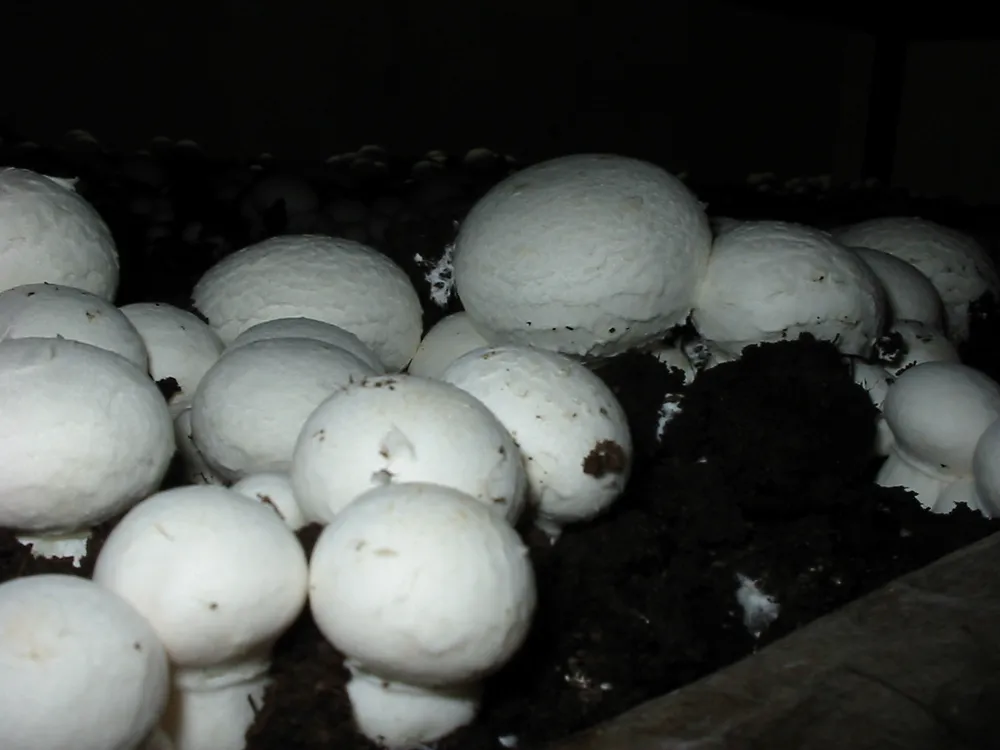
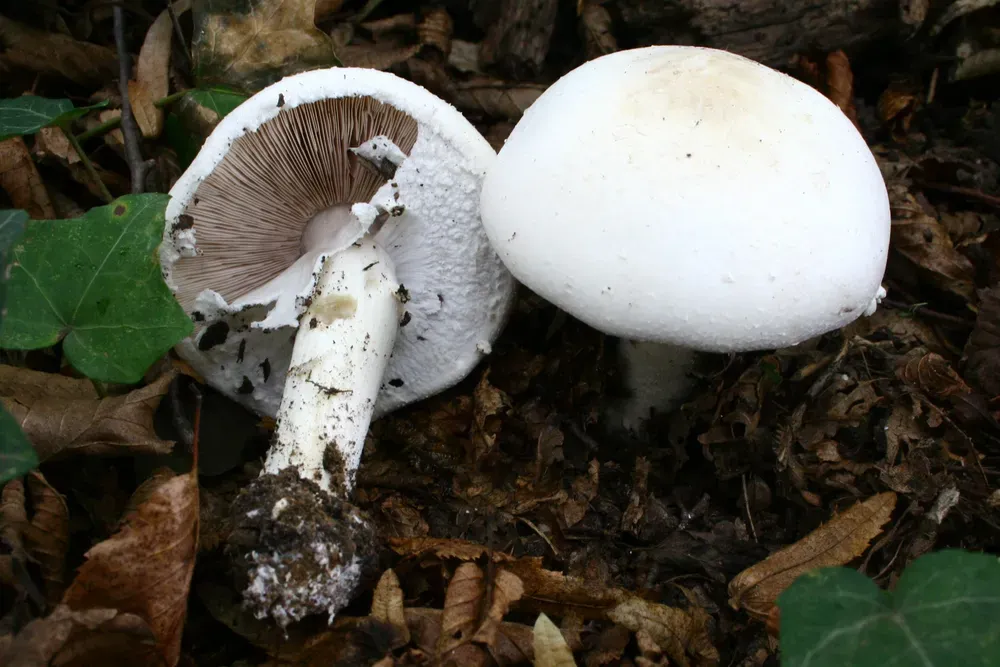
Cap 5-15 cm across; in young mushrooms firmly hemispherical to squared-off (a characteristic feature — the "square" young cap), later becoming convex to flat. Color white to cream, sometimes grayish-brown in the center. The most characteristic sign — touching the cap or its margin leaves bright chrome-yellow spots, especially noticeable in young mushrooms. The surface is smooth, slightly sticky in wet weather.
Hymenophore
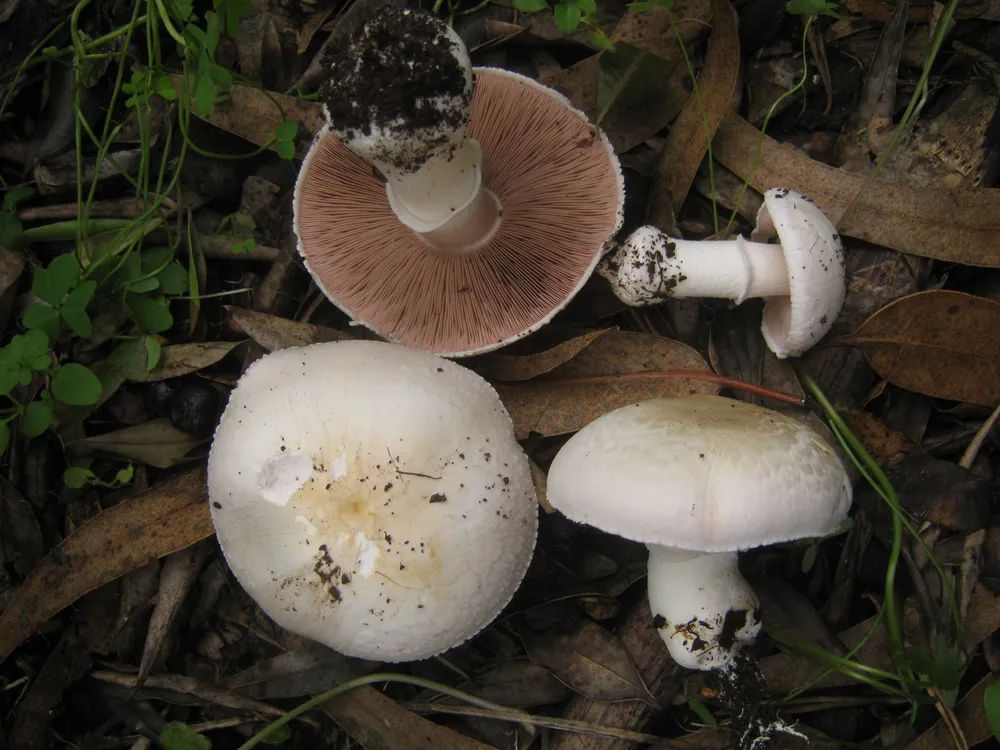
Gilled hymenophore — gills free, crowded. When young — pale pinkish-gray, becoming with age dark brown, chocolate-blackish. Spore print dark brown. The gill color is typical of Agaricus — it doesn't help tell the yellow stainer apart.
Stem
Stem 5-12 cm tall, 1-2 cm thick, cylindrical, with a pronounced bulbous base (a difference from other Agaricus species, whose stems are more even). Color white. The most important diagnostic sign: when cut, the flesh at the base of the stem and in the bulb is bright chrome yellow, often almost neon, and the reaction is fast (10-30 seconds). On the upper part — a white membranous ring, distinct in young mushrooms.
Flesh
Flesh firm, white in the cap and upper stem, bright yellow at the base of the stem even when undamaged. When cut, THE BASE OF THE STEM TURNS BRIGHT CHROME YELLOW — the main diagnostic sign. The cap yellows too, but more weakly. The smell is distinct and unpleasant — ink, phenol, medicinal ointment, creosote.
Smell
Distinct and unpleasant, with notes of ink, phenol, medicinal ointment, creosote, printer's ink. It comes out when you rub the flesh between your fingers, especially at the base of the stem. This smell is the most reliable sign: no edible Agaricus smells like this.
Lookalikes
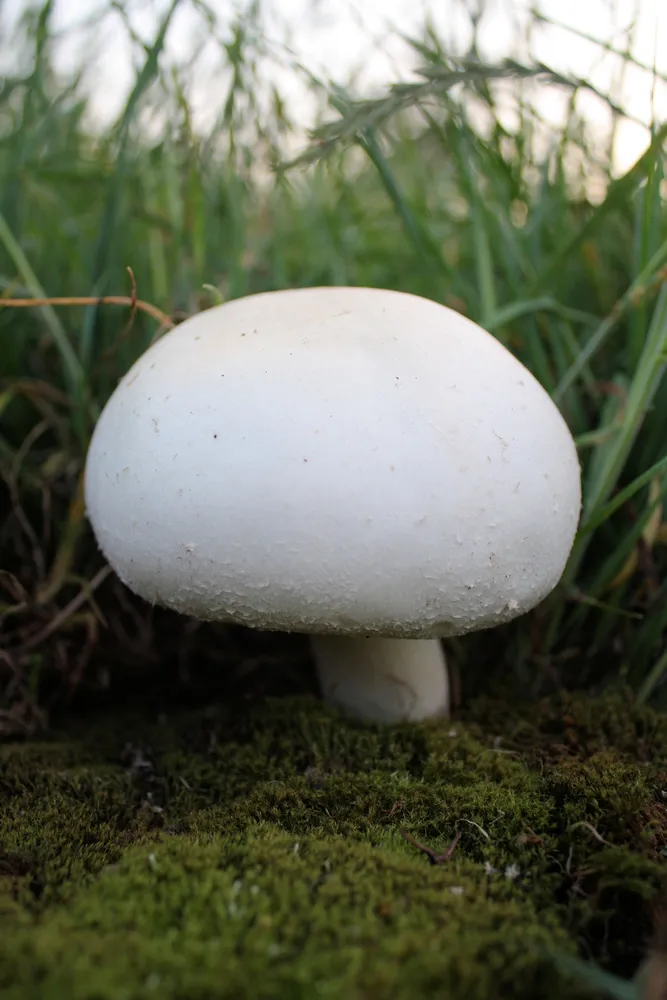
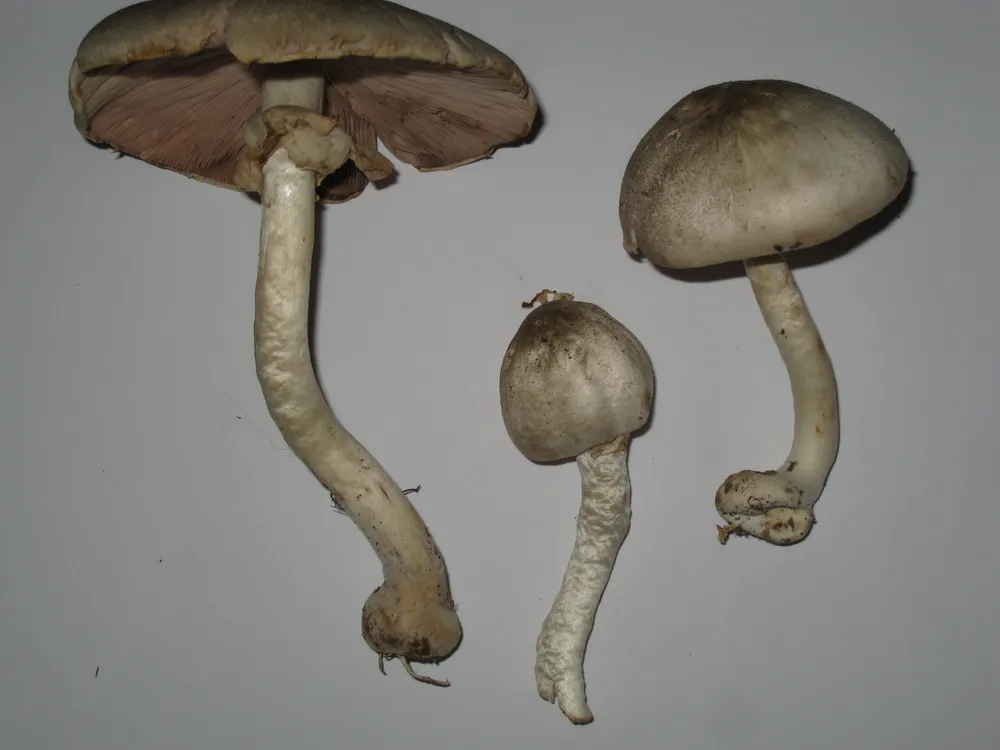
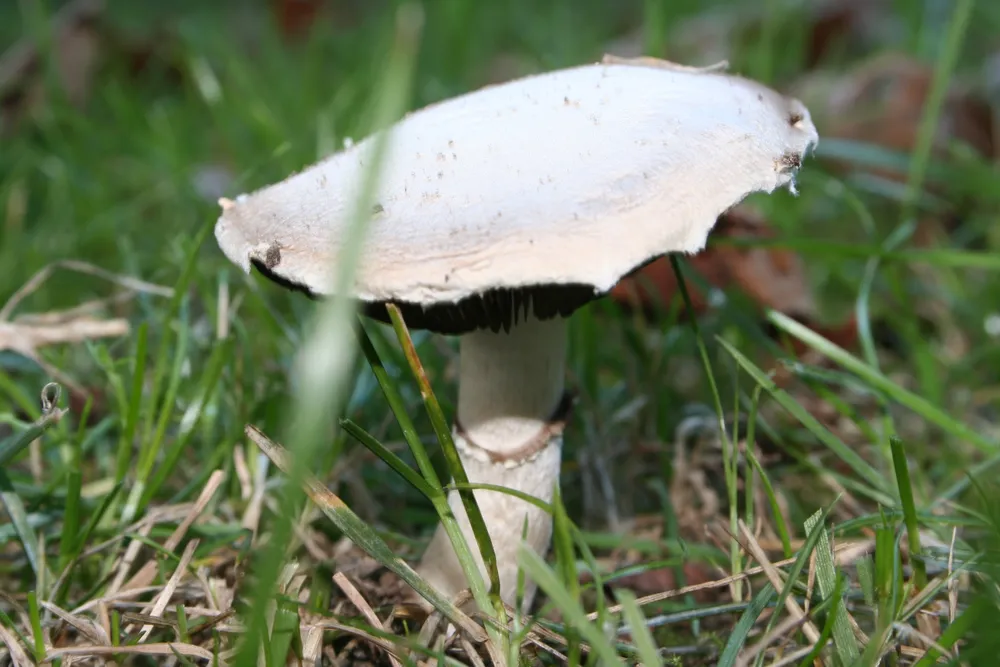
.webp)
.webp)
_Fr._4948278370-2.webp)
Related species
Mushrooms of the same genus and habitat — to study side by side and never mix up.
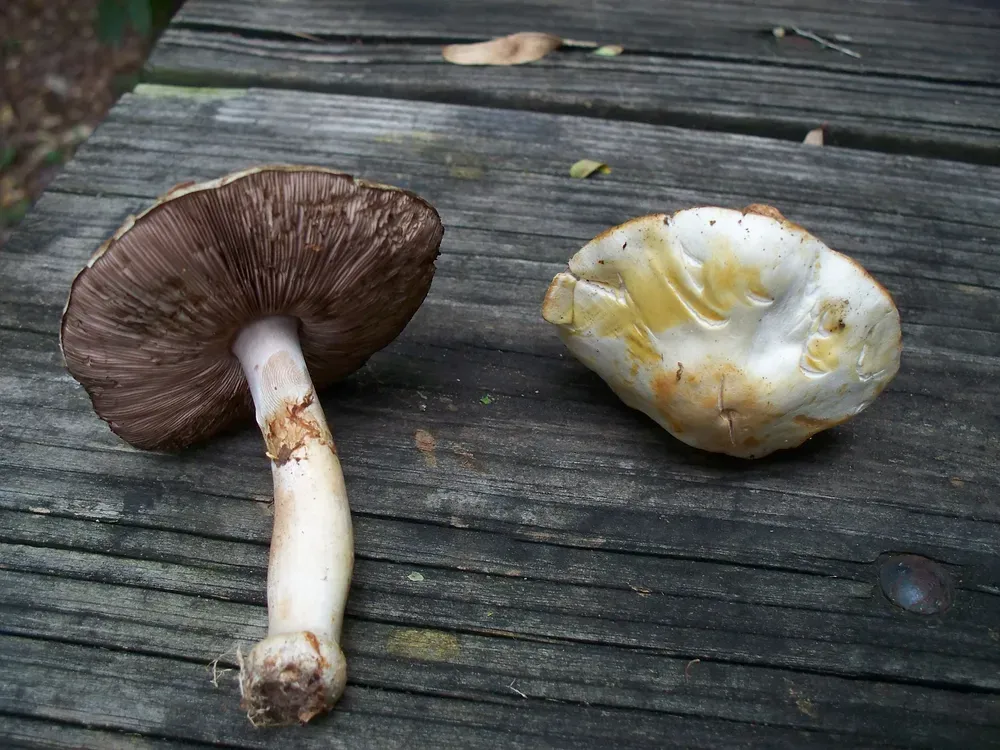
Agaricus abruptibulbus
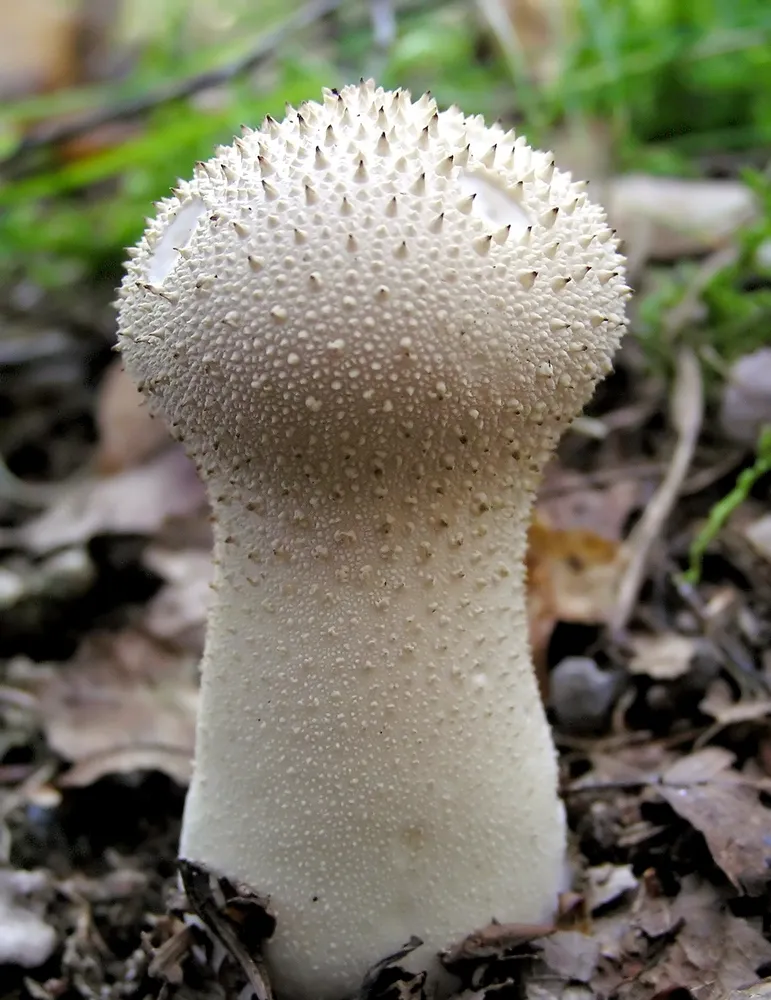
Common puffball
Lycoperdon perlatum
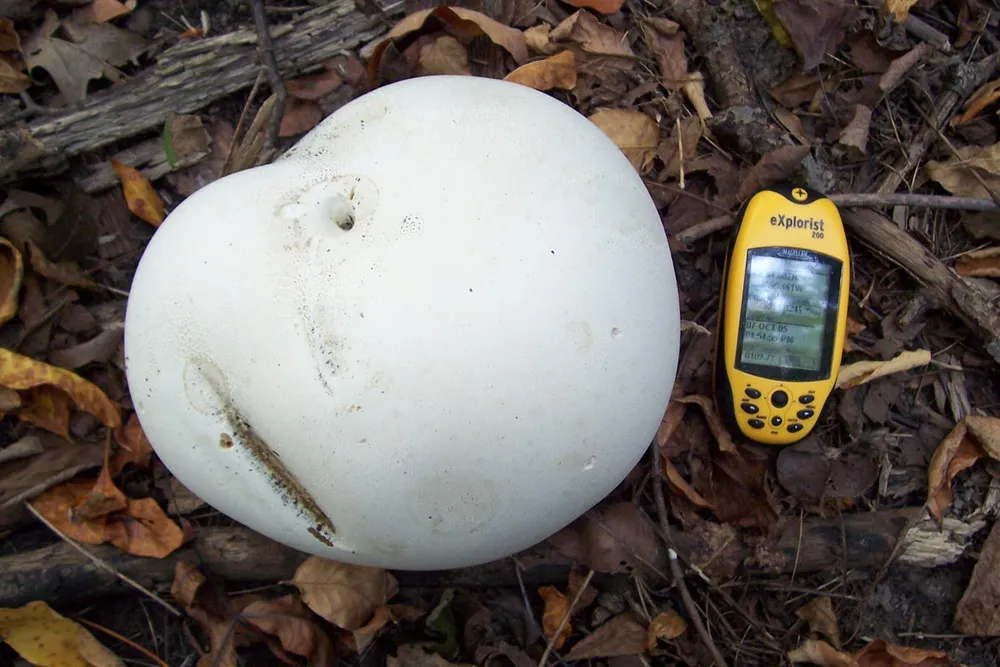
Giant puffball
Calvatia gigantea
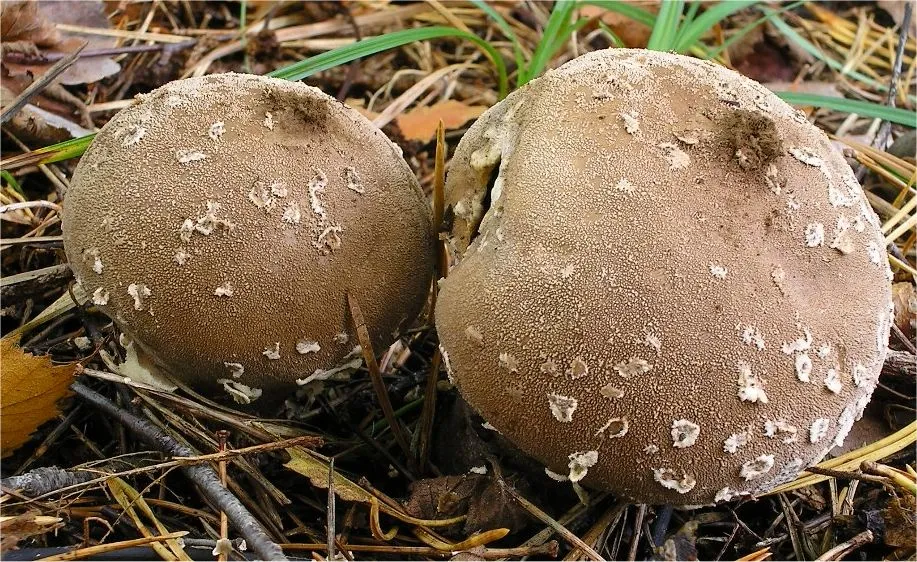
Lycoperdon mammiforme
Lycoperdon mammaeforme
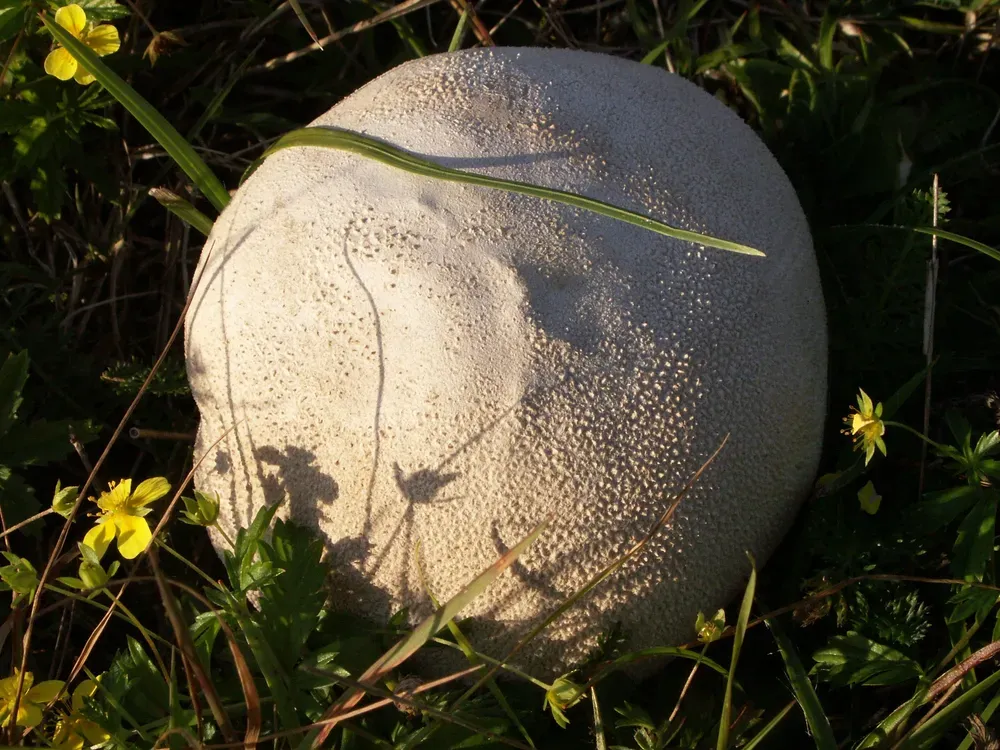
Meadow puffball
Lycoperdon pratense
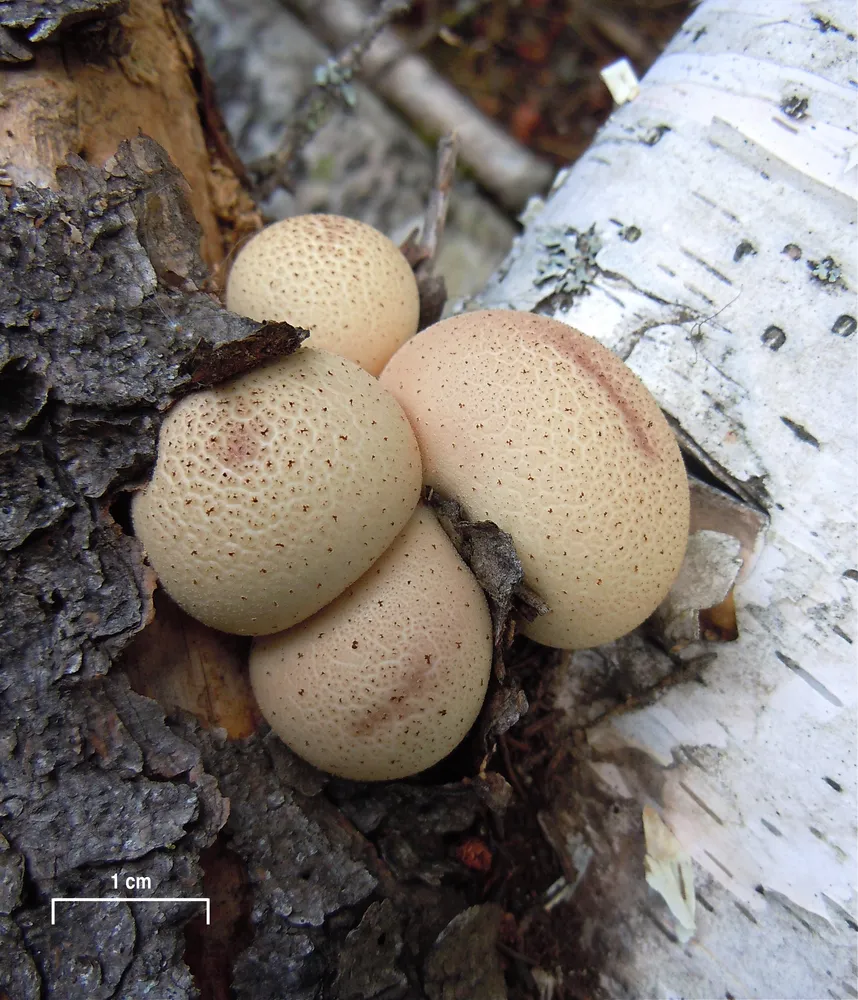
Stump puffball
Lycoperdon pyriforme
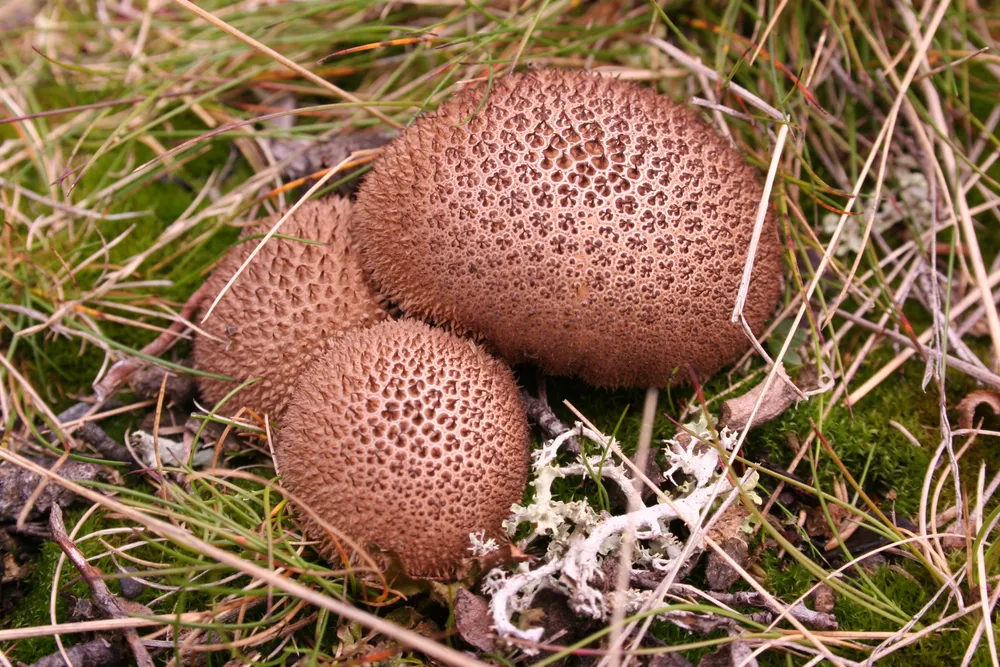
Umber-brown puffball
Lycoperdon umbrinum
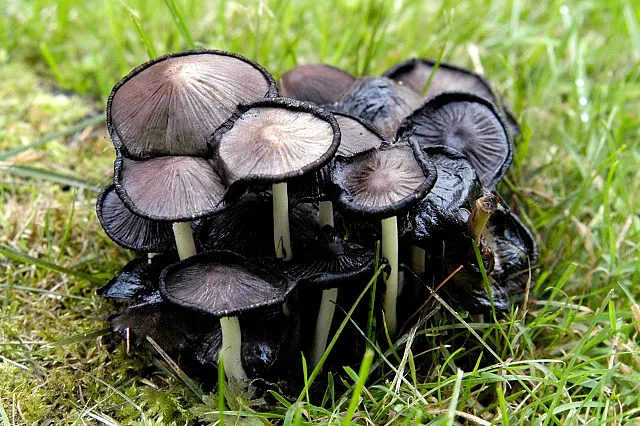
Common ink cap
Coprinopsis atramentaria
Related reading

Frequently asked questions
Can you eat it?
No, it's poisonous. It causes acute gastroenteritis in about half of people (the other half don't react thanks to a genetic tolerance, but there's no way to know in advance which one you are). The canon of modern mycology: do not eat it under any circumstances.
How do you tell it from edible Agaricus mushrooms?
Two critical signs, taken together. (1) Smell: the yellow stainer smells of ink, phenol, medicinal ointment, creosote — UNPLEASANT. Edible Agaricus mushrooms smell pleasant, with a hint of anise or almond. (2) Flesh color when cut: the yellow stainer turns bright chrome yellow at the base of the stem within seconds. Edible Agaricus species (field, blushing wood, horse) — turn pinkish or slowly yellow in the cap, not bright chrome in the stem. Either of these signs means a complete ban on eating it.
What happens if you eat it by accident?
After 1-6 hours: nausea, repeated vomiting, abdominal pain, diarrhea. In severe cases — dehydration. It lasts 12-24 hours; no serious fatal cases have been described, but everyone affected suffers badly. What to do: contact a doctor and drink plenty of fluids; call emergency services (112 or your local emergency number) for severe vomiting or if a child is affected. Don't induce vomiting at home, and take activated charcoal only on a doctor's advice.
Why do some people eat it and feel fine, while others get poisoned?
Genetic variation in detoxification enzymes (presumably CYP2E1 or other P450 phenol conjugates). About 50% of people quickly neutralize the mushroom's phenolic compounds and feel no symptoms. The other 50% react with acute gastroenteritis. You can't determine your own tolerance in advance without a test that nobody has ever run. So the rule is simple: don't try it.
Why did Soviet books still call it conditionally edible?
Because of that same genetic variation — authors who happened to be tolerant ate it without trouble and recommended it. By the 1980s Western mycology had collected enough poisoning cases to revise the classification. Modern sources (Roger Phillips, David Arora, GBIF, Index Fungorum) unambiguously label it poisonous. The old Soviet advice is outdated.
Where should you look for it, so you learn to recognize it?
In parks, lawns, forest edges, floodplain meadows, vegetable gardens, near livestock farms — the very places where edible Agaricus mushrooms grow. That's exactly what makes it dangerous: it grows right next to the horse mushroom and the field mushroom and often ends up in the basket by mistake.
Which regions of Ukraine is it found in?
All over the country — from the Carpathians to the steppe. One of the most common "park" mushrooms in Kyiv, Lviv, Kharkiv and Odesa. It turns up in the same places where edible Agaricus mushrooms grow.
When should you look for it?
Rather — "when to avoid it." June — November, peaking in August-September. Its season coincides with the main season of edible Agaricus mushrooms.
What mushrooms is it confused with?
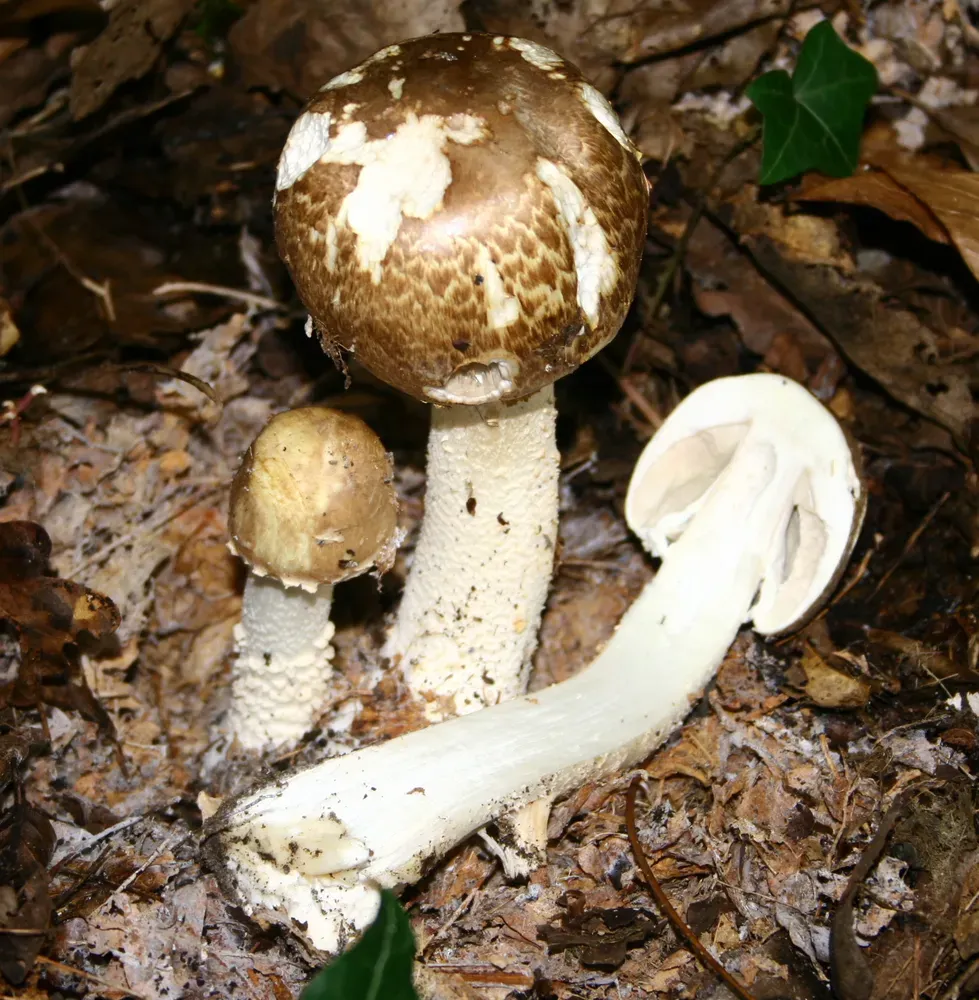
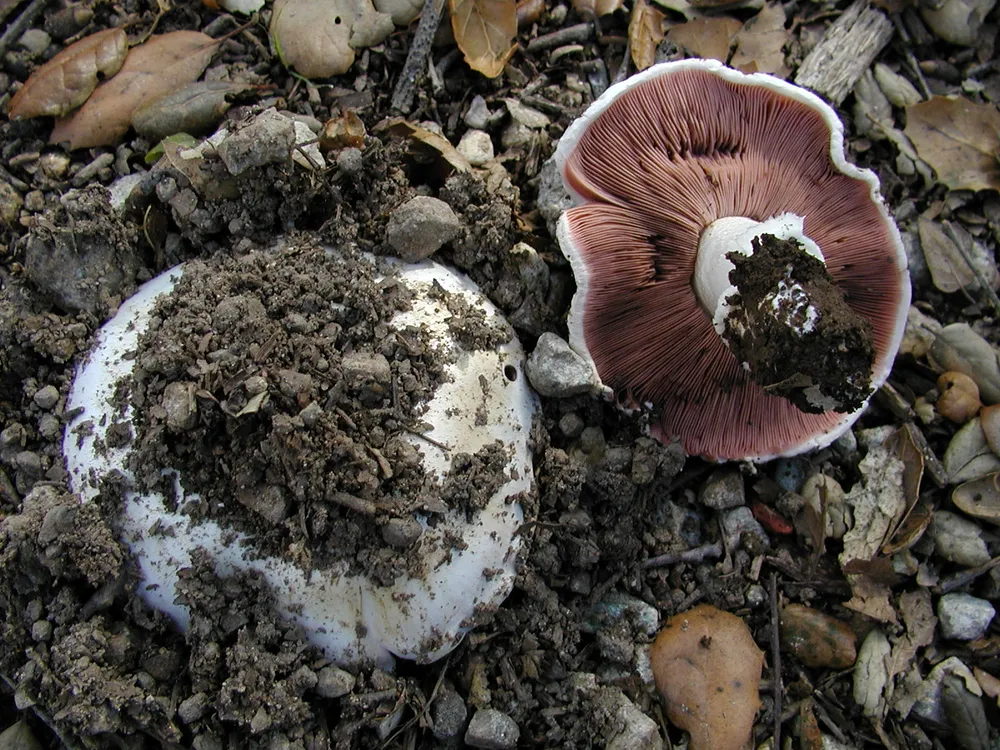
With the field mushroom (A. campestris), the horse mushroom (A. arvensis), the blushing wood mushroom (A. silvaticus) — all of them edible. The key differences are the smell and the color of the stem when cut. Any doubt — leave it, it has no culinary value worth the risk.
Is Yellow stainer edible or poisonous?
Does Yellow stainer have gills or pores?
What does the cap of Yellow stainer look like?
Sources
- [1]Вікіпедія (українська)
- [2]Атлас грибів України, Зеров Д.К. (1979)
- [3]MycoBank Database
- [4]Index Fungorum
- [5]GBIF
- [6]iNaturalist Ukraine