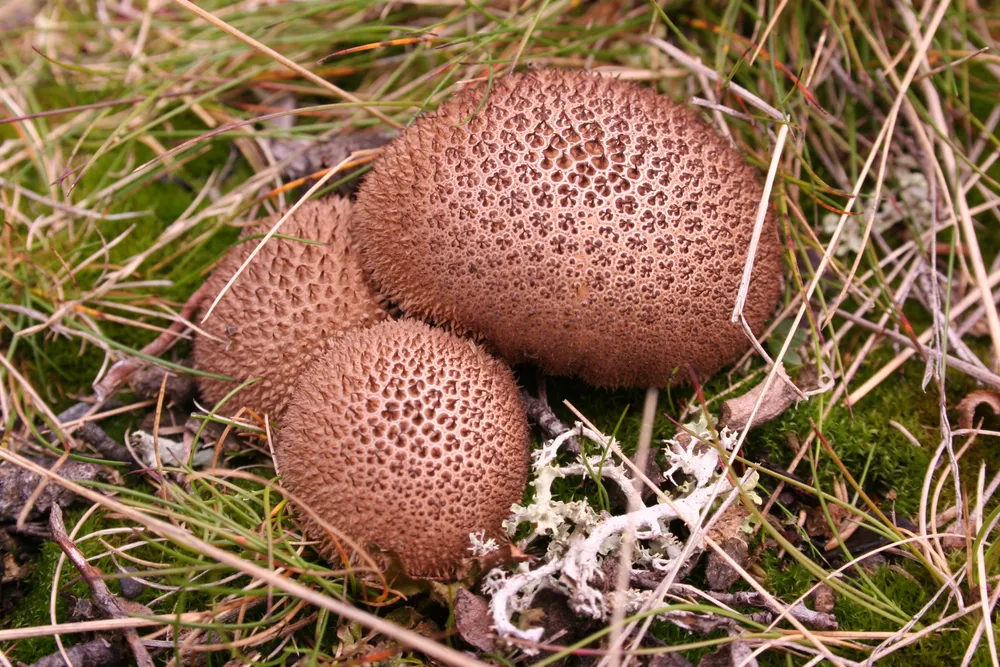
Umber-brown puffballLycoperdon umbrinum
Expert-verifiedUpdated June 13, 2026
Passport
- Edibility
- Inedible
- Season
- Aug — Oct
- Hymenophore
- Chambered
- Cap color
- Brown
- Size
- Small (up to 5 cm)
- Smell
- Odorless
- Reviewed
- Yes ✓
Quick answers
Where to look?
Conifer forest, Mixed forest
When does it appear?
Aug — Oct
Active months: August, September, October.
How to recognize it? Three signs
- Cap color: Brown, Dark brown
- Cap shape: Convex
- Smell: Odorless
Fruiting season
August – October
Description
The umber-brown puffball (Lycoperdon umbrinum) is a small forest puffball with a characteristic dark brown skin. Among its relatives, which are mostly yellowish or grayish-white, this species is noticeably darker: a young mushroom is almost blackish-brown, and with age it lightens a little to umber (hence the name). It is densely covered with short sharp spines that rub off over time, leaving a net-like pattern on the surface. Small, often hard to spot in moss, with a thin stem — a true modest little dweller of coniferous forests.
This is an inedible mushroom — not poisonous, but not eaten because of its small size, dark flesh and lack of any notable culinary qualities. Flesh is whitish-gray in a young mushroom but quickly takes on a purple-brown tint, which sets it apart from the white-fleshed edible puffballs (the stump puffball, the common puffball). When mature, the flesh turns into a dark olive powdery mass of spores. It is not eaten — only young puffballs with pure white flesh are fit for cooking.
In Ukraine it is widespread in coniferous and mixed forests, mostly where pine and spruce dominate. A saprotroph — it grows on forest litter among moss, on rotting wood, on sandy and acidic soils. Season — August-October. It often grows singly or in small groups of 2-5 fruiting bodies. Found mainly in Polissia and the Carpathians.
Cap
The fruiting body (a puffball has no cap in the usual sense — the whole fruiting body comes "in one package") is pear-shaped or round with a narrowed base, 2-5 cm across and 3-6 cm tall. The surface is densely covered with short dark brown or umber spines that rub off with age, leaving a net-like pattern of paler patches. In a young mushroom the color is almost blackish-brown, in a mature one chestnut-brown to umber.
Hymenophore
The spore-bearing tissue is enclosed inside the fruiting body (this is a gasteromycete — the spores ripen inside). At first the flesh is whitish-gray, soft, with the spongy look typical of the genus. With age it turns purple-brown, and then becomes a dark olive or chocolate-brown powdery mass of spores. The spores escape through a small pore that opens at the top of the fruiting body once it is mature.
Stem
The pseudostem (false stem) is well defined — a cone-shaped narrowing downward to 1-2 cm thick, with no clear boundary between the "cap" and the "stem". Flesh of the stem stays sterile (no spores), spongy, and shrinks with age.
Flesh
In a young mushroom it is whitish-gray, soft, spongy. It quickly takes on a purple-brown tint — this is the fundamental difference from the white-fleshed edible puffballs. The smell is faint and neutral.
Smell
Faint, neutral, barely noticeable. No distinctive aromas. Don't taste it — the mushroom is inedible.
Lookalikes
Related species
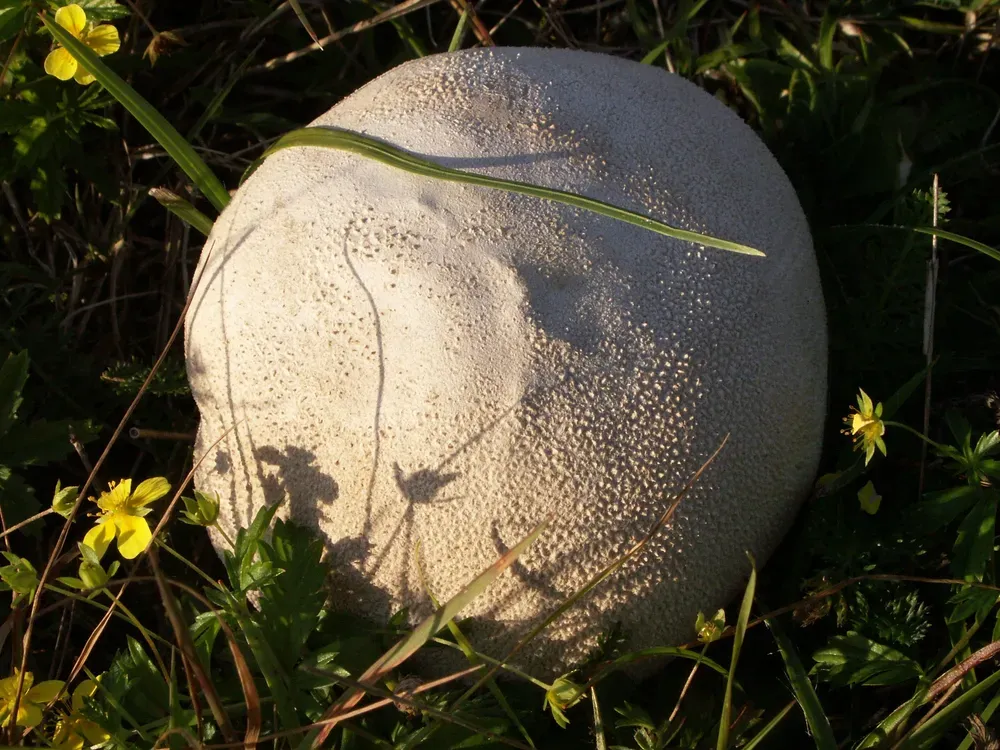
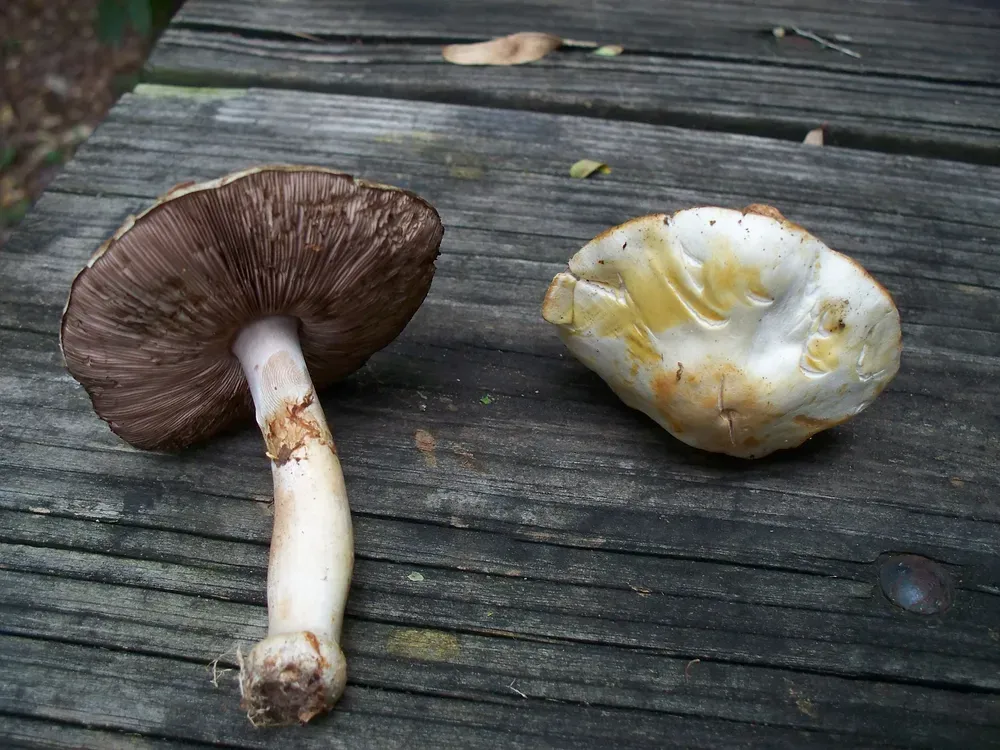
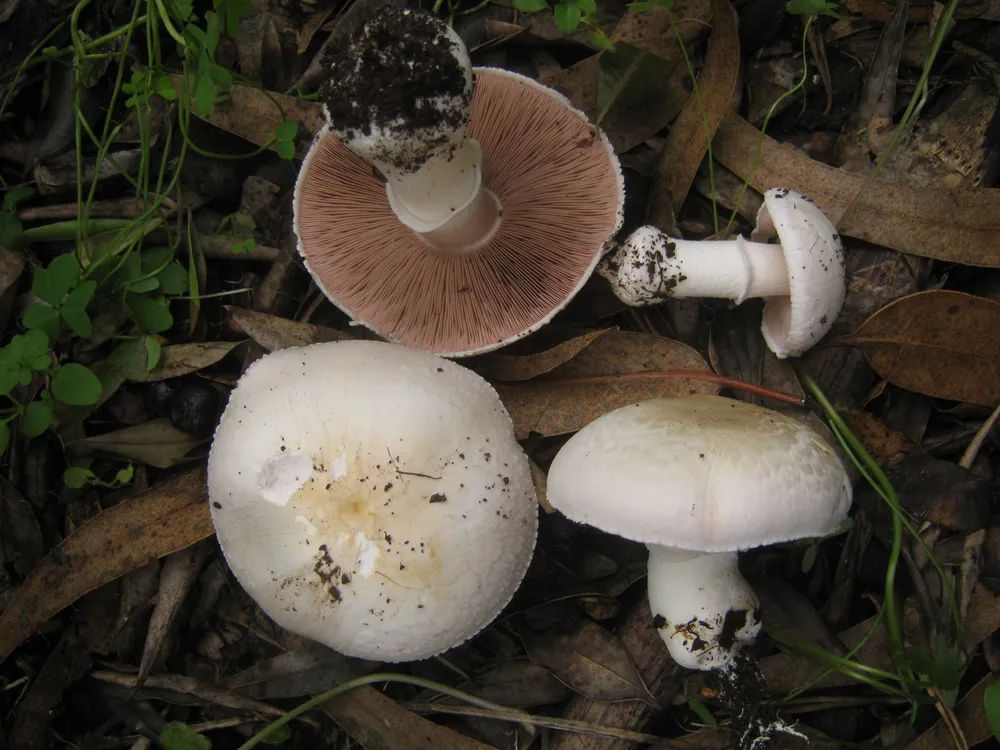
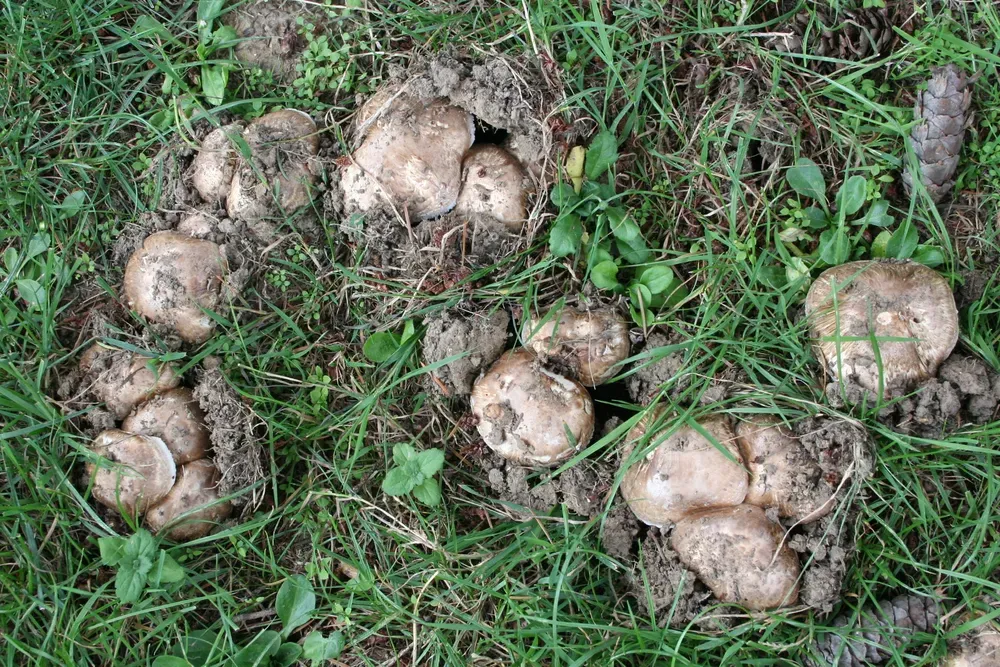
Mushrooms of the same genus and habitat — to study side by side and never mix up.
.webp)
Frequently asked questions
Can you eat it?
It is not eaten. Not poisonous, but inedible: the flesh quickly darkens to purple-brown, the mushroom is small and has no culinary qualities. The only puffballs worth cooking are those whose young flesh is pure white and uniform — that's the common puffball, the pearled puffball, the stump puffball. If the flesh has a purple or brown tint, it's a different species, and you leave it.
What happens if you eat it by accident?
No serious poisonings have been described — this is not a toxic species. But dark-tinged flesh is usually bitter and causes mild stomach discomfort. In large amounts it can cause indigestion. If you ate it by mistake — drink more water and watch how you feel; if symptoms appear — see a doctor.
How do you tell it from edible puffballs?
Two features: (1) Color of the spines — in the umber-brown puffball they are dark brown, blackish; in edible ones they are white, cream or grayish. (2) Flesh when cut — in the umber-brown puffball it quickly turns purple-brown; in edible ones it stays pure white throughout their youth. If in doubt — cut a young mushroom in half and take a look.
Where does it usually grow?
In coniferous and mixed forests dominated by pine and spruce. It likes sandy and acidic soils, moss cover, forest litter of needles. It often grows among sphagnum moss, on rotting wood, and on the edges of pine forests.
Which regions of Ukraine is it found in?
Mainly in Polissia (Volyn, Rivne, Zhytomyr, Kyiv and Chernihiv regions), the Carpathians and Prykarpattia. In the forest-steppe and steppe it is rarer — only in pine forests.
When to look for it?
August — October, peaking in September. A warm, damp autumn is the best time. It doesn't fruit before summer or in winter.
What is it confused with?
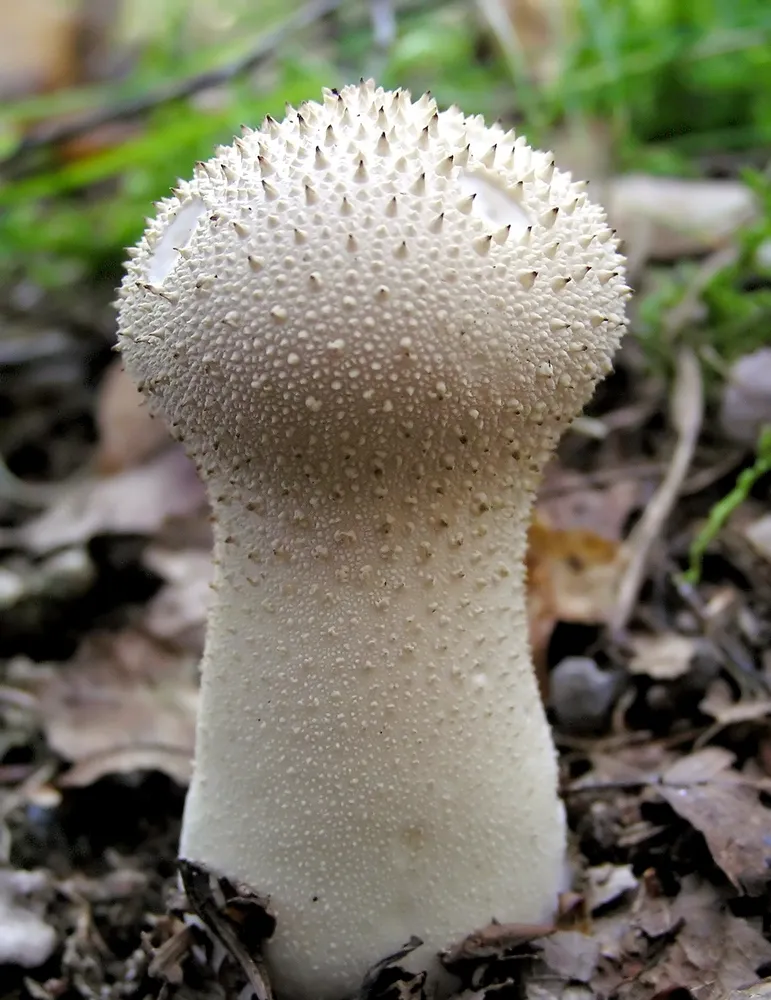
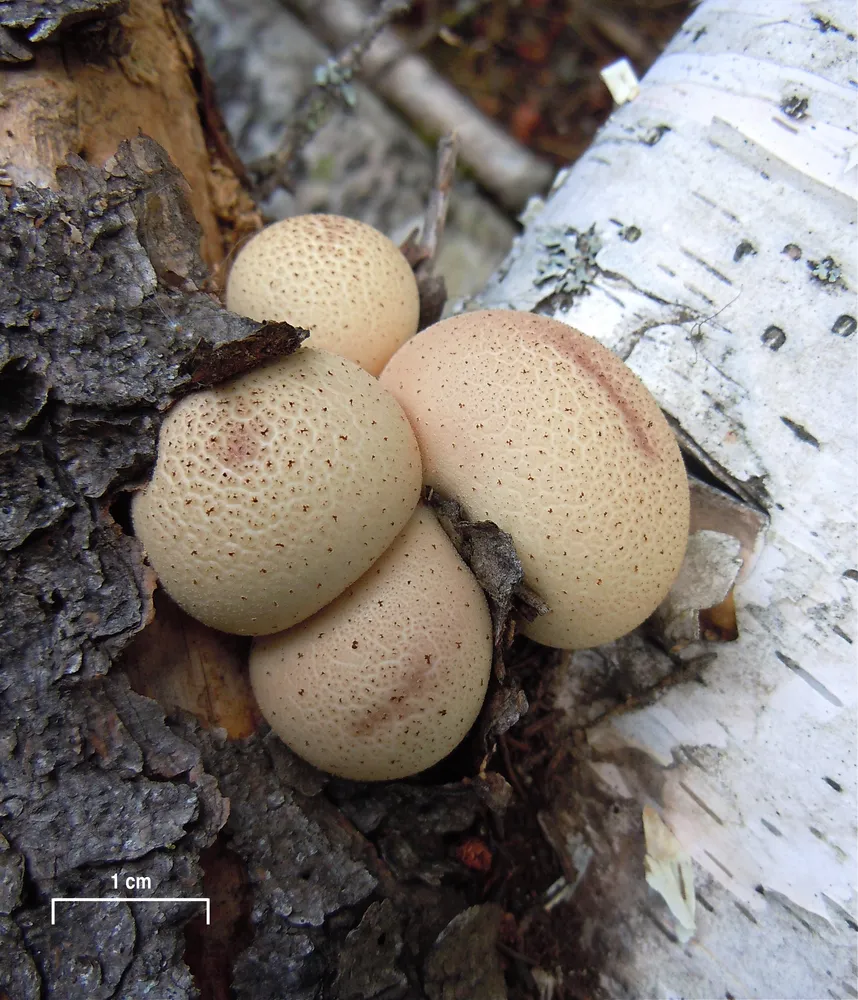
With the common puffball (Lycoperdon perlatum) — that one is paler, with white or cream spines and white flesh when young. With the stump puffball (Lycoperdon pyriforme) — that one grows on rotting wood and has a smooth surface (no spines). With the common earthball (Scleroderma citrinum) — that one has a yellow-ochre hard skin with scales and is poisonous — it causes stomach upsets.
Can you learn to identify it reliably?
Yes — three features together: (1) small dark brown spines; (2) a pear shape with a narrowed base; (3) flesh that quickly turns purple-brown when cut. If all three match — it's L. umbrinum. As a simple check, cut it in half: you'll see the contrast with its white-fleshed edible relatives.
Is Umber-brown puffball edible or poisonous?
What kind of spore-bearing surface does Umber-brown puffball have?
What does the cap of Umber-brown puffball look like?
What does the stem of Umber-brown puffball look like?
Sources
- [1]Вікіпедія (українська)
- [2]Атлас грибів України, Зеров Д.К. (1979)
- [3]MycoBank Database
- [4]Index Fungorum
- [5]GBIF
- [6]iNaturalist Ukraine