THIS DATA HAS NOT BEEN VERIFIED BY AN EXPERT. Use at your own risk.
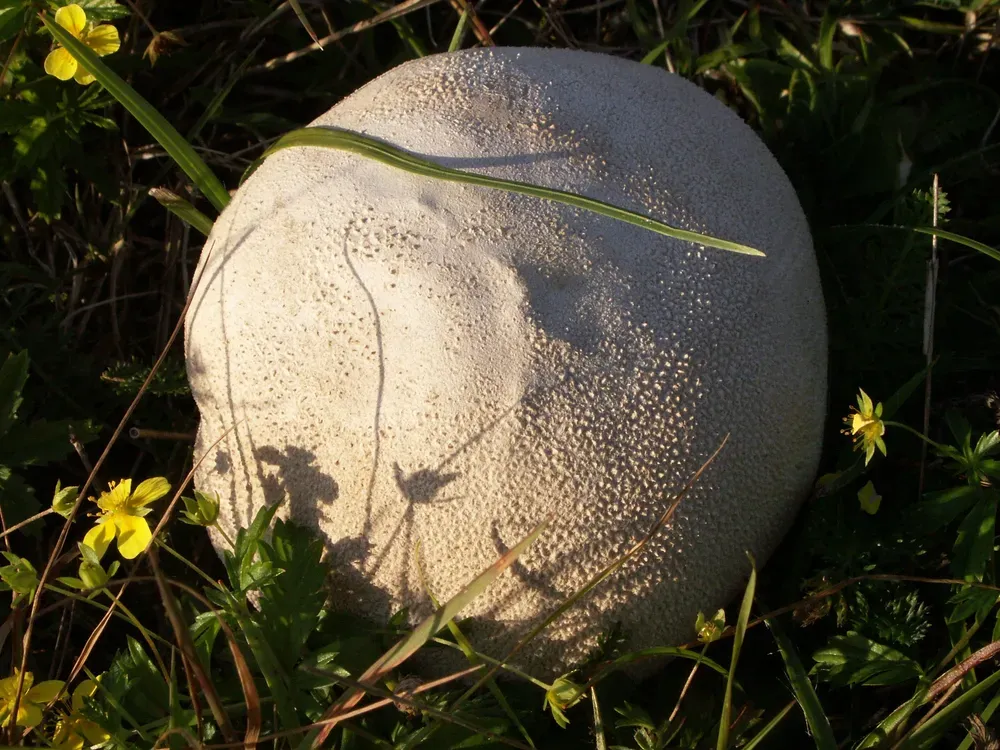
Meadow puffballLycoperdon pratense
Under reviewUpdated October 3, 2026
Passport
- Edibility
- Edible
- Season
- Jun — Oct
- Hymenophore
- Chambered
- Cap color
- White
- Size
- Small (up to 5 cm)
- Smell
- Pleasant
- Reviewed
- Under review
Quick answers
Where to look?
Meadow, Field
When does it appear?
Jun — Oct
Active months: June, July, August, September, October.
How to recognize it? Three signs
- Cap color: White, Cream, Brown
- Cap shape: Irregular
- Smell: Pleasant
Fruiting season
June – October
Description
The meadow puffball, known to science as Lycoperdon pratense (often also as Vascellum pratense), is a small white puffball of open spaces that grows right in the grass, like an upside-down spinning top or a squashed little pear. Like all puffballs, it has neither a cap nor gills: the spores ripen inside a closed fruiting body and are released through an opening at the top as the mushroom ages. It is a saprotroph that feeds on plant debris and settles in meadows, pastures, lawns and roadsides.
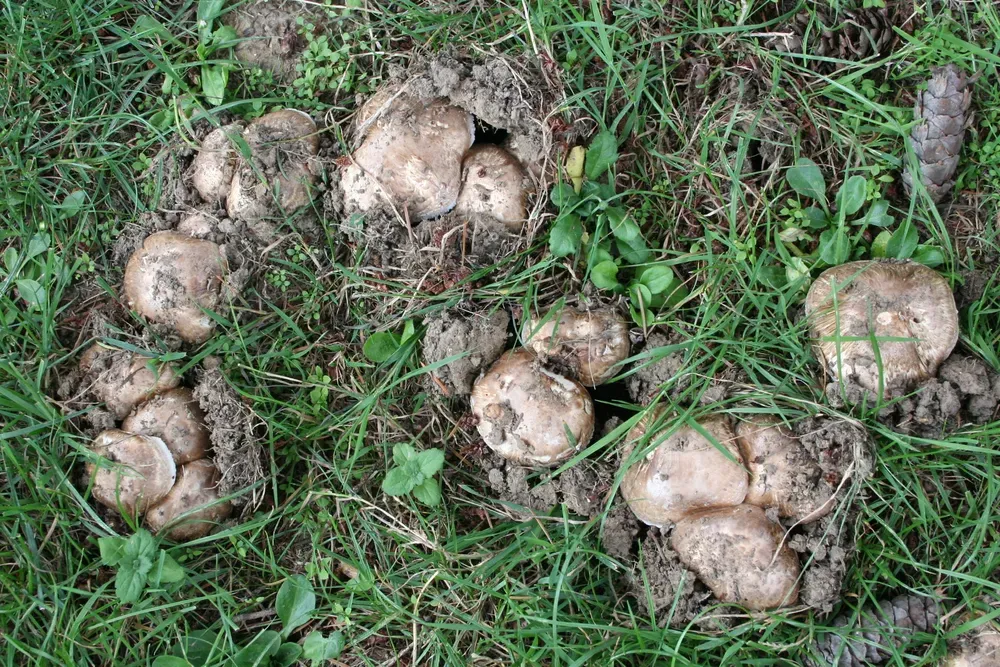
In Ukraine the meadow puffball is found in meadows, commons, parks and grassy clearings throughout the country. Its fruiting season is long — from early summer into autumn, June through October, especially after rain, which is just what the genus's folk name hints at. The mushroom appears singly or in groups in the grass.
In terms of edibility, the meadow puffball is a good edible mushroom — but only when young, while the flesh inside is pure white and springy, like cheese. Such young puffballs are fried and added to omelets and soups; their flavor is mild and pleasant. As soon as the flesh starts turning yellow or brown and becoming a spore mass, the mushroom is no longer edible. The golden rule of puffball foraging: always cut the fruiting body in half and make sure it is uniformly white inside, with no hint of developing gills and no dark tones.
Cap
There is no true cap. The fruiting body is flattened-globose or shaped like an upside-down pear, 2 to 4 centimeters tall and wide, with a noticeably narrowed sterile base acting as a false stem. The surface is white or cream, covered with tiny mealy scales and spines that rub off with age, leaving a smoother brown skin. At maturity an opening forms at the top, through which the spores pour out.
Hymenophore
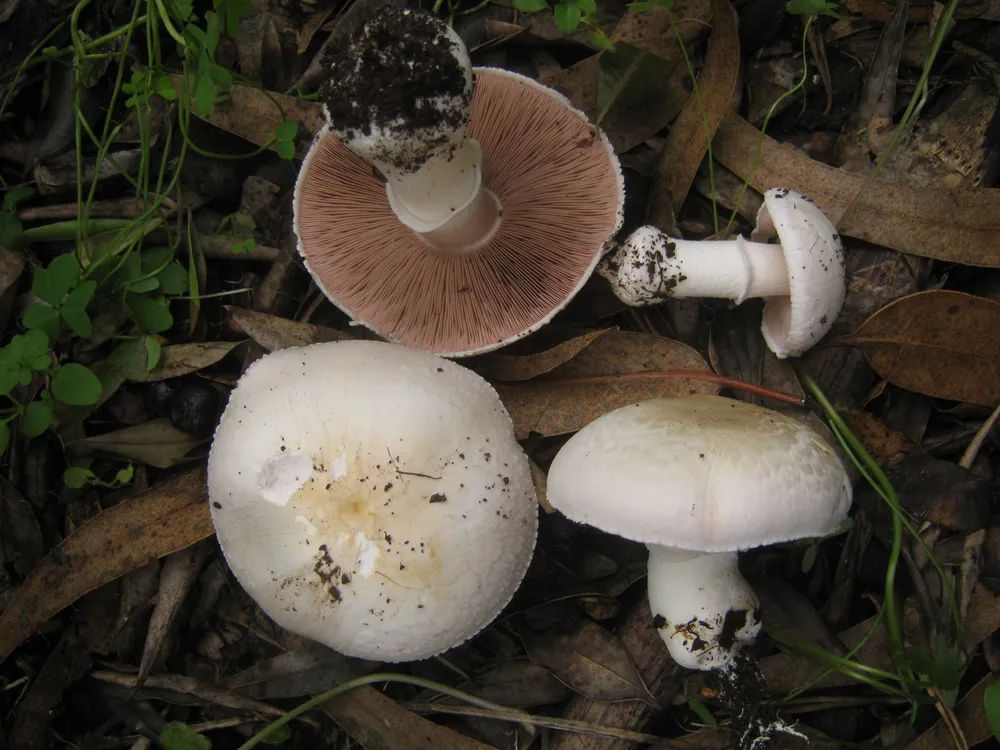
There is no hymenophore in the usual sense. The spores ripen inside the closed fruiting body (the gleba). In young mushrooms the inner mass is pure white and firm; as it matures it turns yellow, then brown, and becomes a powdery olive-brown spore mass. Inside there is a thin membrane separating the spore-bearing part from the sterile base. The spore print is olive-brown.
Stem
There is no true stem; the lower part of the fruiting body narrows into a short sterile false stem that remains even after the spores have dispersed. It is spongy, whitish, and turns brown with age. This narrowed base is what makes the mushroom look like a spinning top or a pear turned upside down, narrow end down.
Flesh
The flesh (gleba) of young mushrooms is pure white, uniform and springy, like firm cheese, with no hint of developing gills. Only in this state is the mushroom edible. When cut, it must be evenly white; the slightest yellowing or browning means the mushroom has matured and is no longer edible. Young flesh tastes mild and pleasant.
Smell
The smell is faint, pleasant, mushroomy, with no sharp notes. The aroma is not a defining feature; the mushroom is recognized by its white, pear-shaped fruiting body with tiny spines, its growth in meadows and the uniformly white flesh inside when young.
›Scientific synonyms (2)
Vascellum pratense (Pers.) Kreisel (1962), Lycoperdon depressum Bonord.
Lookalikes
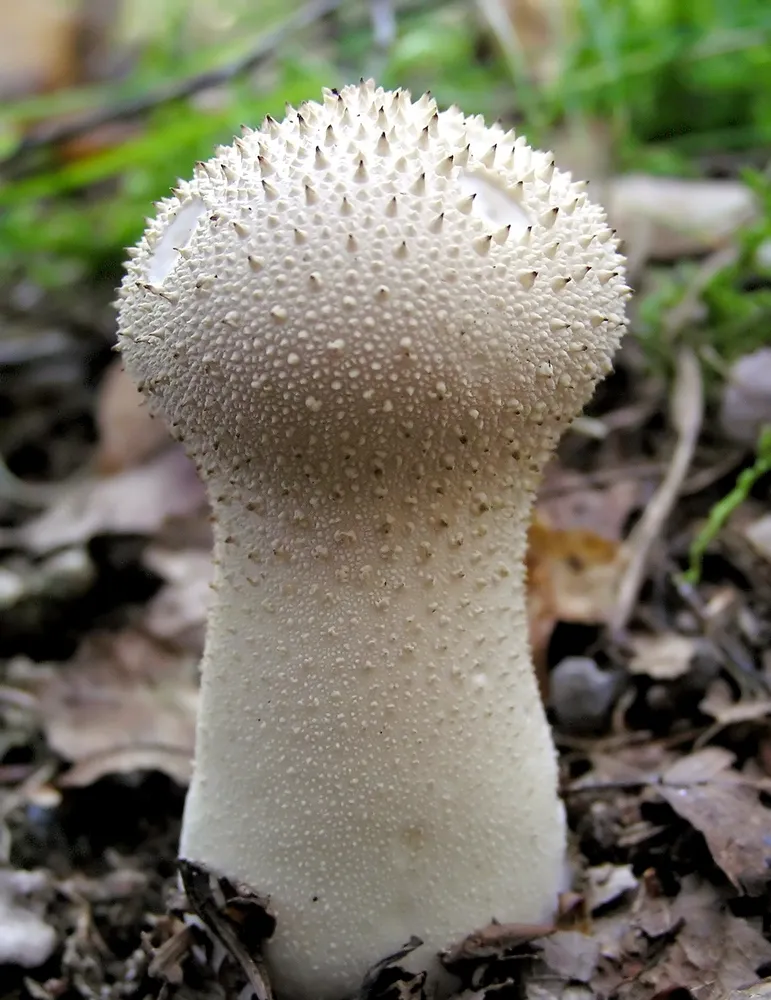
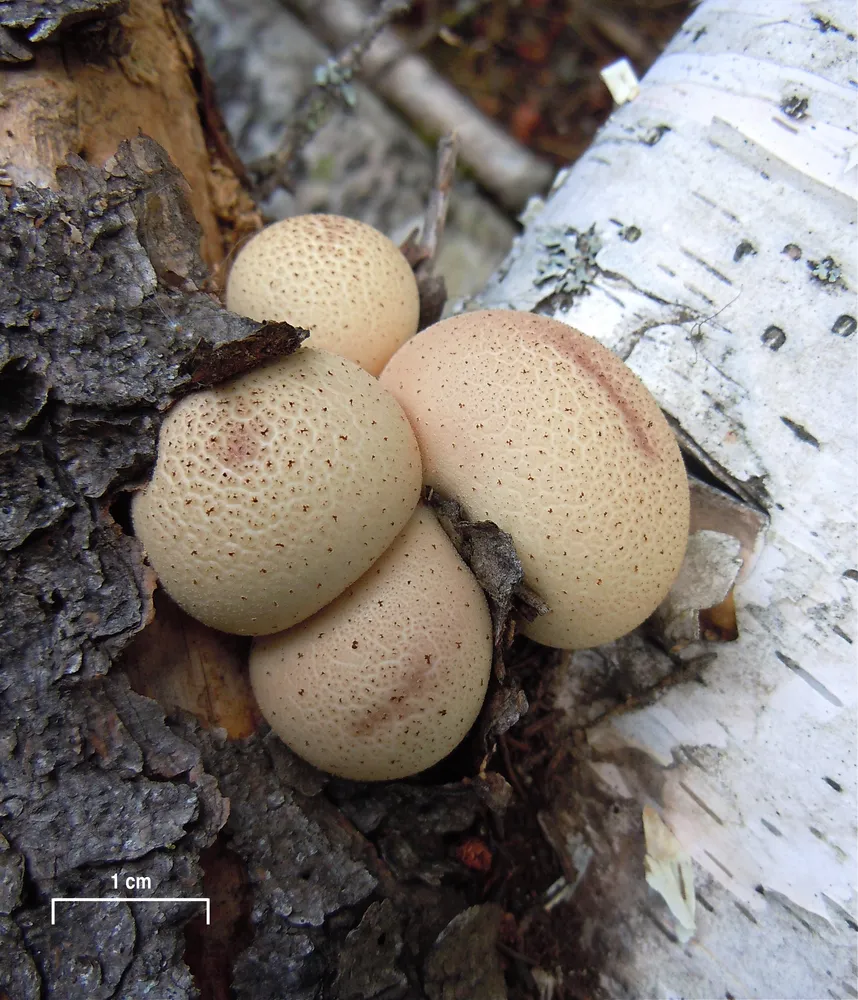
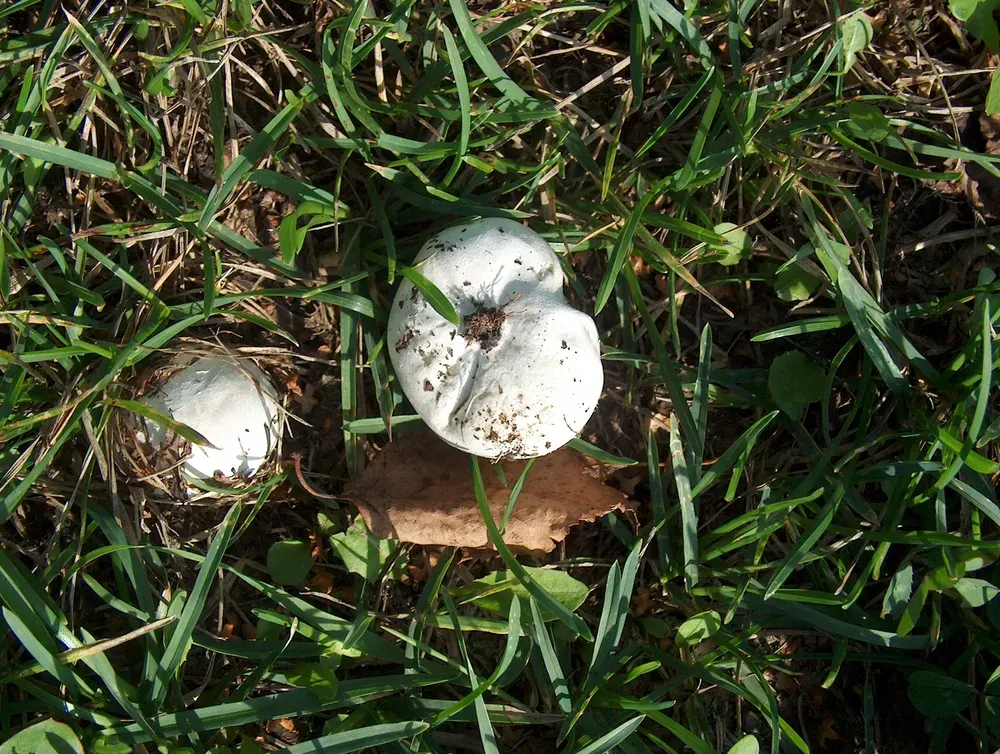
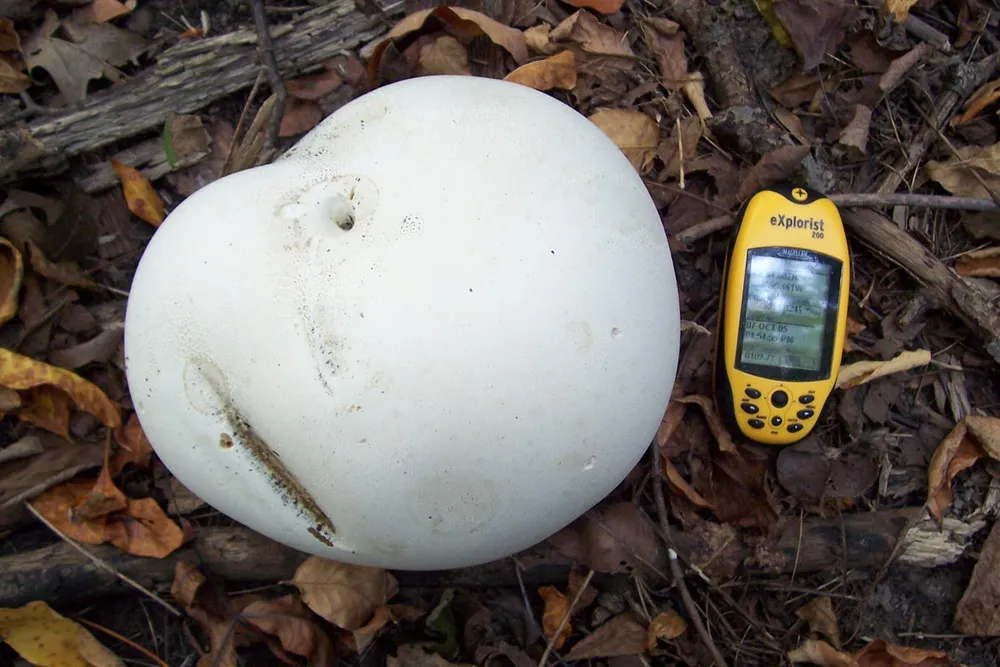
Related species
Mushrooms of the same genus and habitat — to study side by side and never mix up.
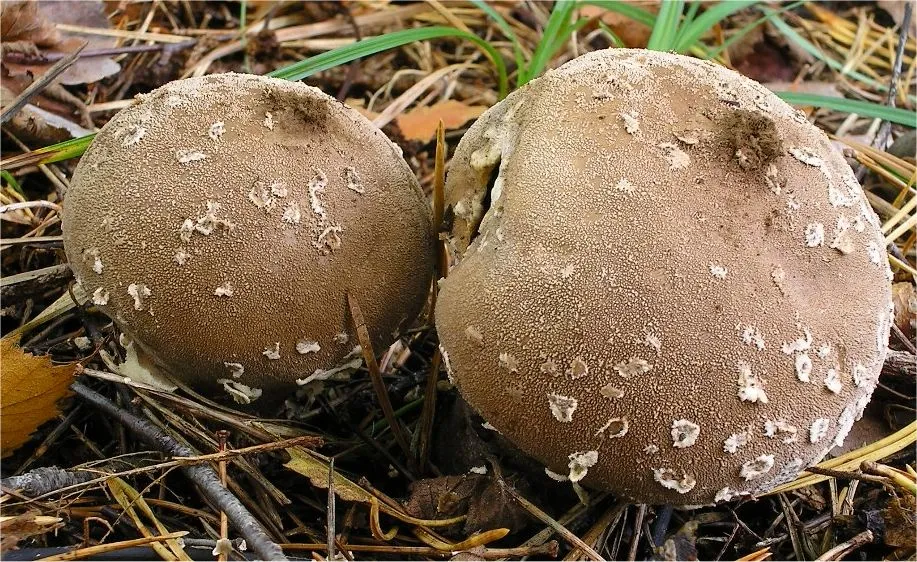
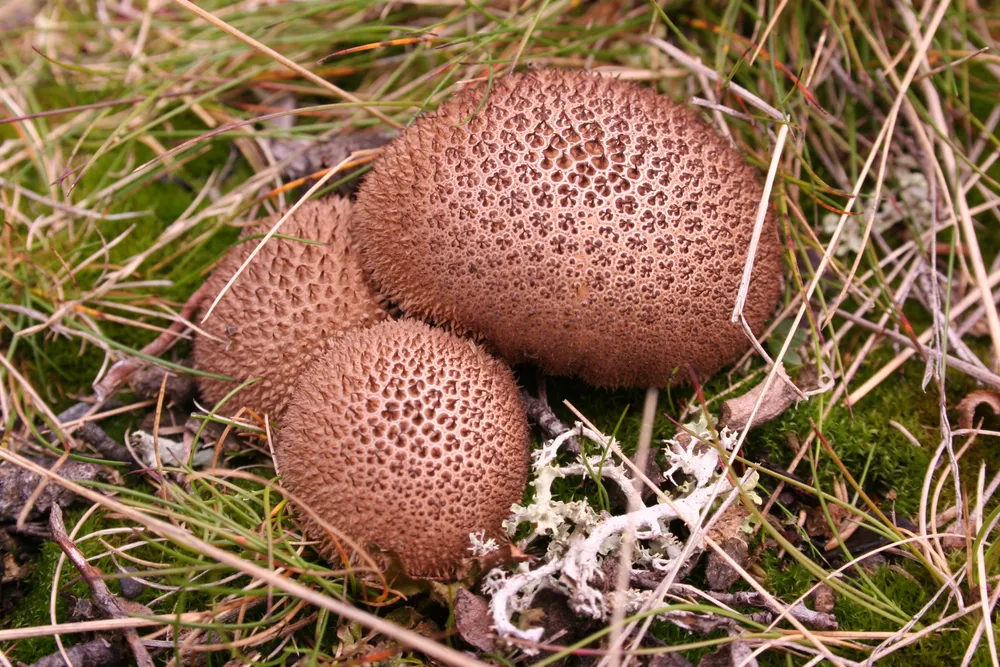
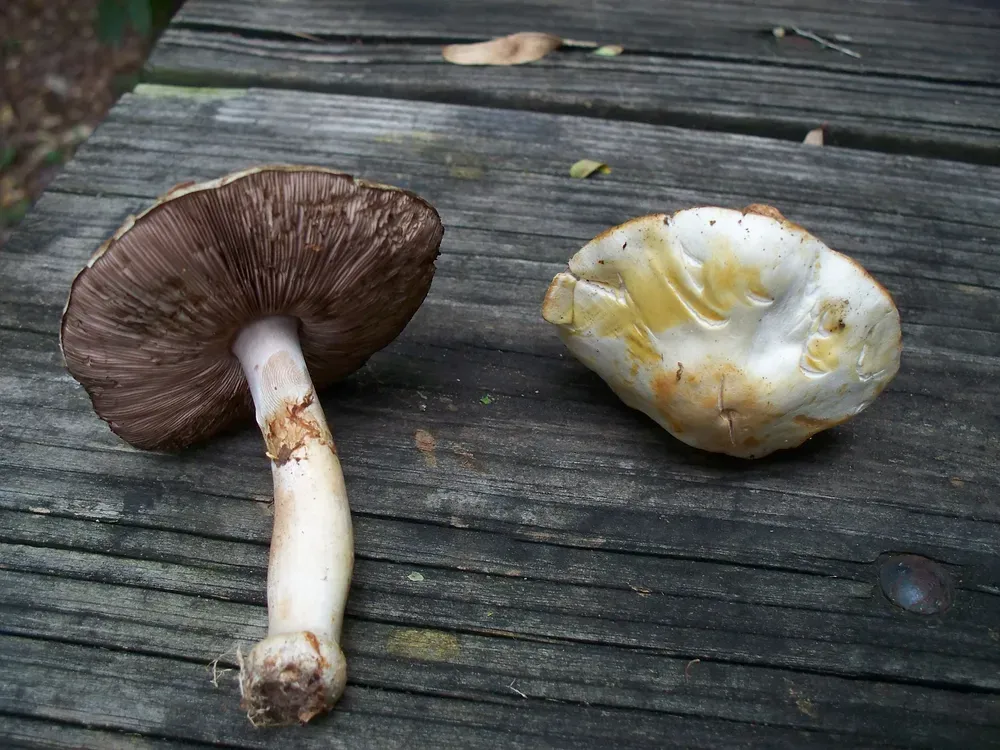
.webp)
Frequently asked questions
Is Meadow puffball edible or poisonous?
What kind of spore-bearing surface does Meadow puffball have?
What does the cap of Meadow puffball look like?
What does the stem of Meadow puffball look like?
What do Meadow puffball smell and taste like?
Where does Meadow puffball grow?
When should you pick Meadow puffball?
What can Meadow puffball be confused with?
How do you cook Meadow puffball?
Can you dry Meadow puffball?
What is the scientific name of Meadow puffball?
Sources
- [1]Вікіпедія (українська)
- [2]Атлас грибів України, Зеров Д.К. (1979)
- [3]MycoBank Database
- [4]Index Fungorum
- [5]GBIF
- [6]iNaturalist Ukraine