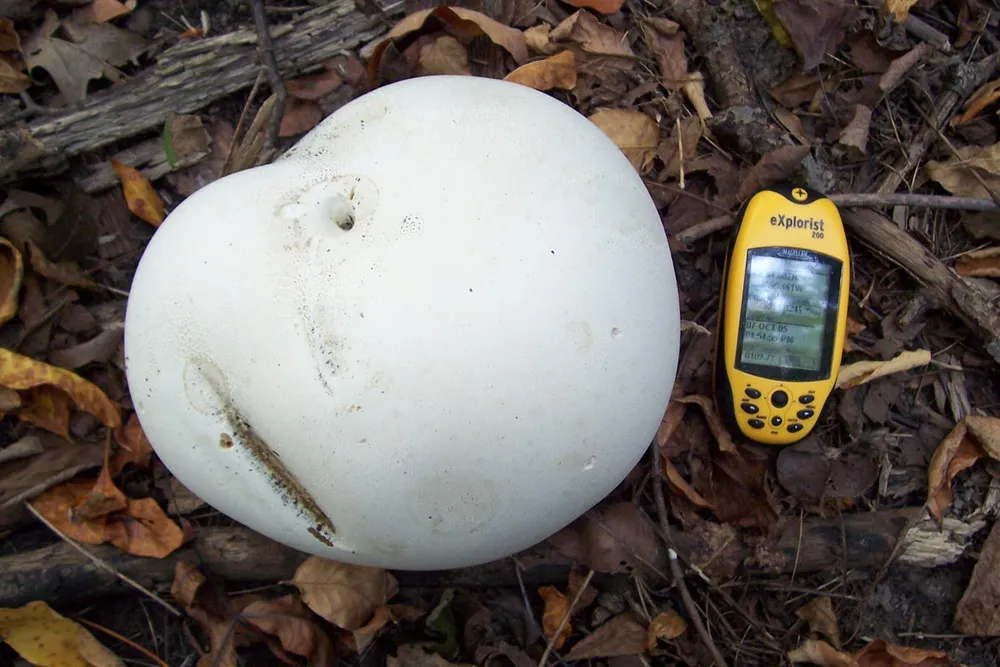
Giant puffballCalvatia gigantea
Expert-verifiedUpdated October 3, 2026
Passport
- Edibility
- Edible
- Season
- Jul — Sep
- Cap color
- White
- Size
- Large (over 15 cm)
- Smell
- Neutral
- Reviewed
- Yes ✓
Quick answers
Where to look?
Meadow, Field
When does it appear?
Jul — Sep
Active months: July, August, September.
How to recognize it? Three signs
- Cap color: White
- Cap shape: Convex
- Smell: Neutral
Fruiting season
July – September
Description
The giant puffball (Calvatia gigantea) is one of the largest mushrooms in the world: fruit bodies often reach 40–80 cm across and weigh up to 20 kg. It grows in meadows, pastures and clearings, often in large rings. Widespread throughout Eurasia and North America.
Edible only when young, while the flesh is pure white throughout when cut. As soon as any yellowness or grayness appears inside, the mushroom is unfit to eat. Old fruit bodies turn into a mass of greenish-brown spore powder.
Fried in breadcrumbs, the mushroom has a texture reminiscent of tofu or cheese. A single fruit body can feed a large family.
Cap
Fruit body globular or slightly flattened, with no distinction between cap and stem — from the outside it looks like a big white ball or a loaf of bread. Surface smooth, leathery, white at first, then yellowing and browning; in mature ones it cracks and peels.
Hymenophore
Internal hymenophore: the spores form inside the fruit body (gasteromycete development). In young mushrooms the firm gleba — the flesh — is pure white and uniform throughout. As it matures, it turns into a yellow-green mass of spores — a powder that disperses through cracks in the skin.
Stem
There is no stem in the classic sense. The fruit body is attached to the soil by thin white mycelial cords. The lower part may be slightly narrowed, forming a pseudostem.
Flesh
Flesh (gleba) evenly white when young, firm, juicy, with no cavities. Taste delicate, slightly nutty. Once yellowness or an ammonia smell appears, eating it is out of the question — such a mushroom is already toxic.
Smell
A young mushroom smells pleasant, unobtrusive, slightly mealy. Mature and overripe specimens have a sharp, spicy, ammonia smell — a signal that the mushroom is no longer edible.
Lookalikes
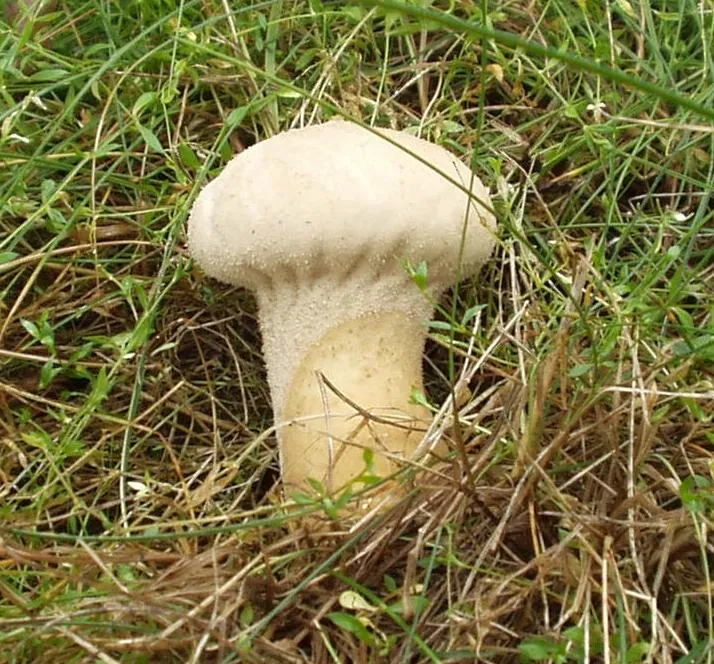
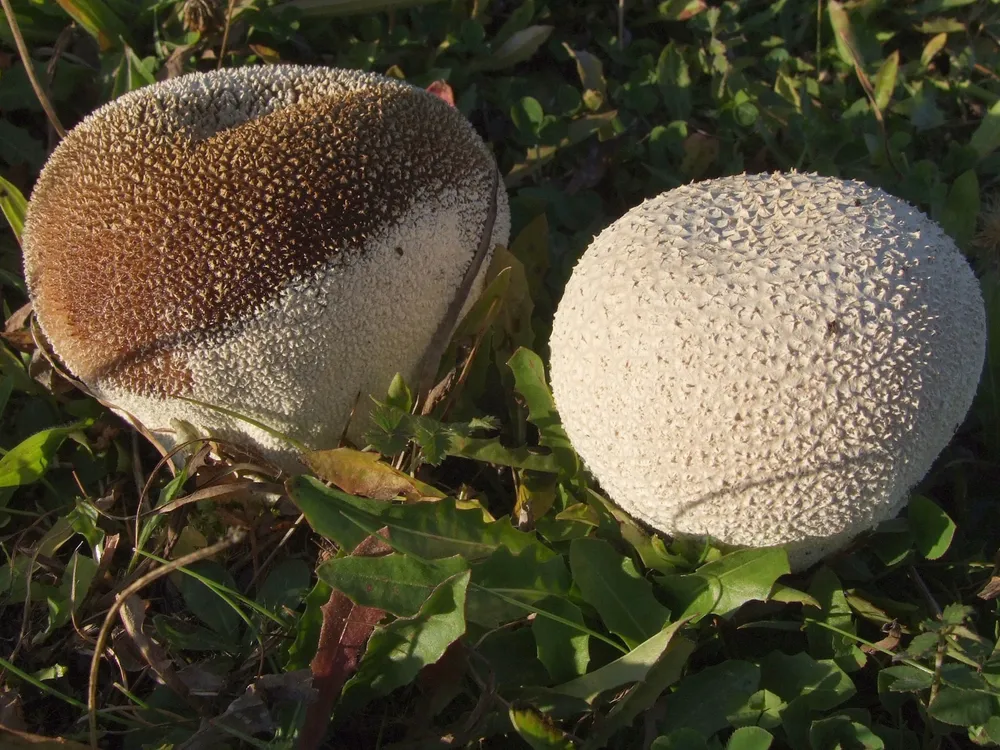
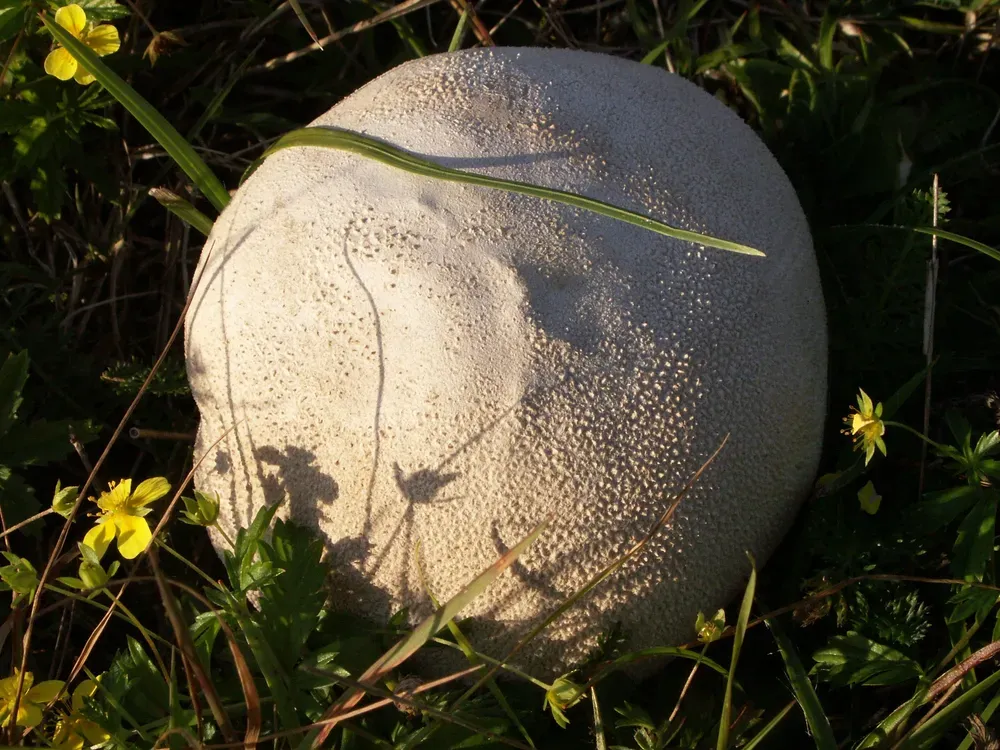
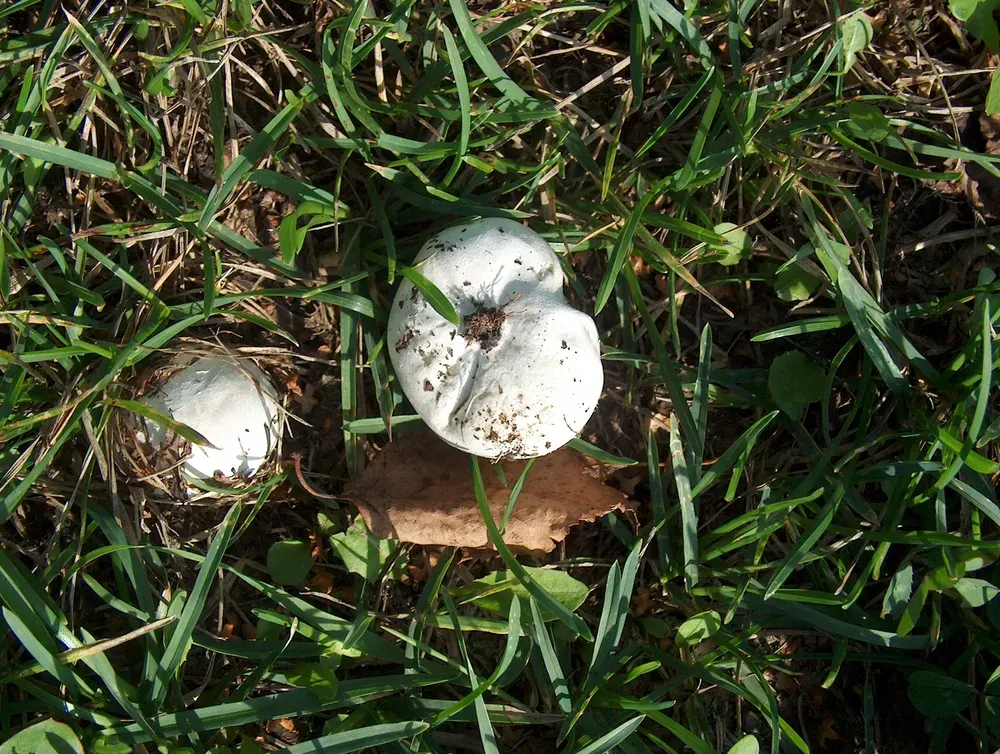
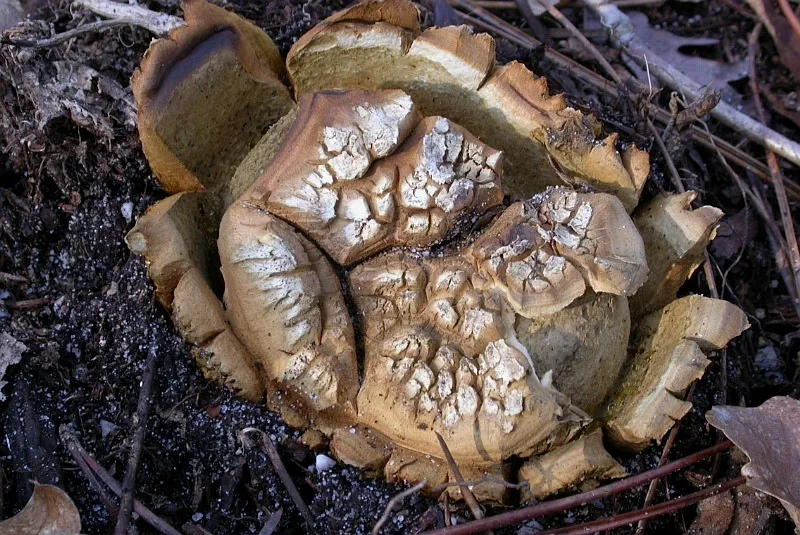
Related species
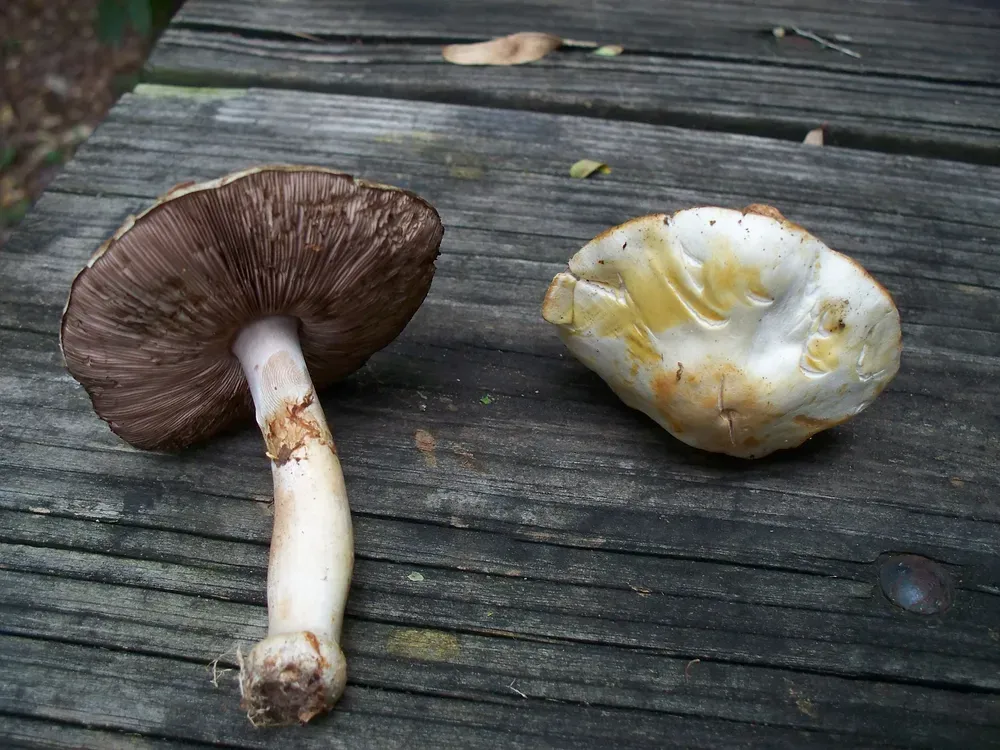
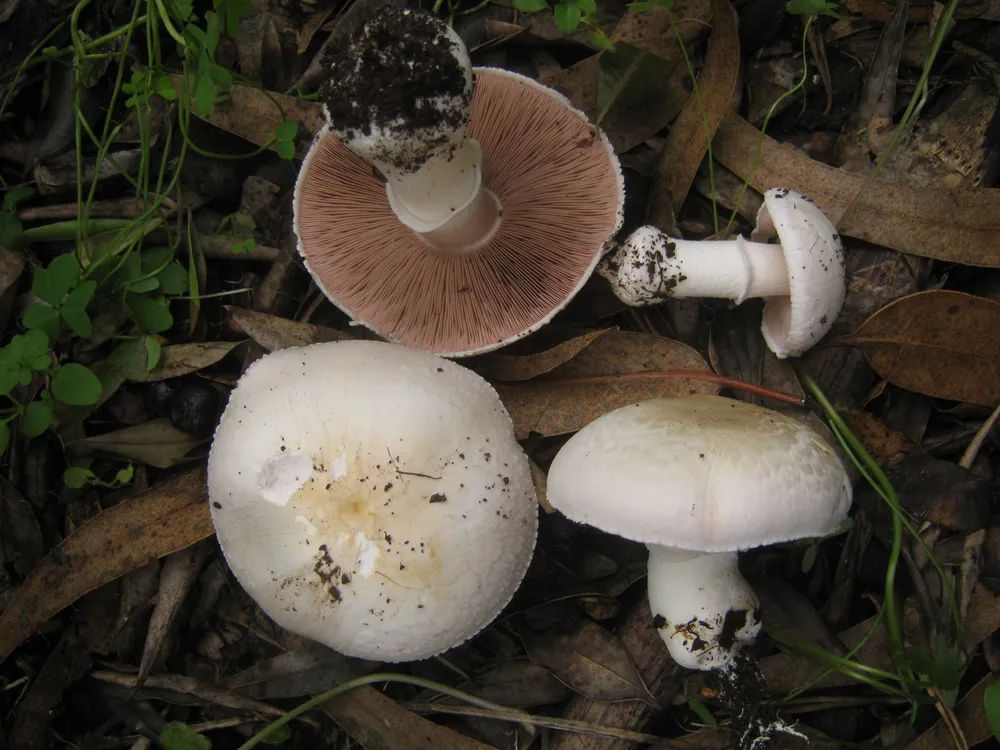
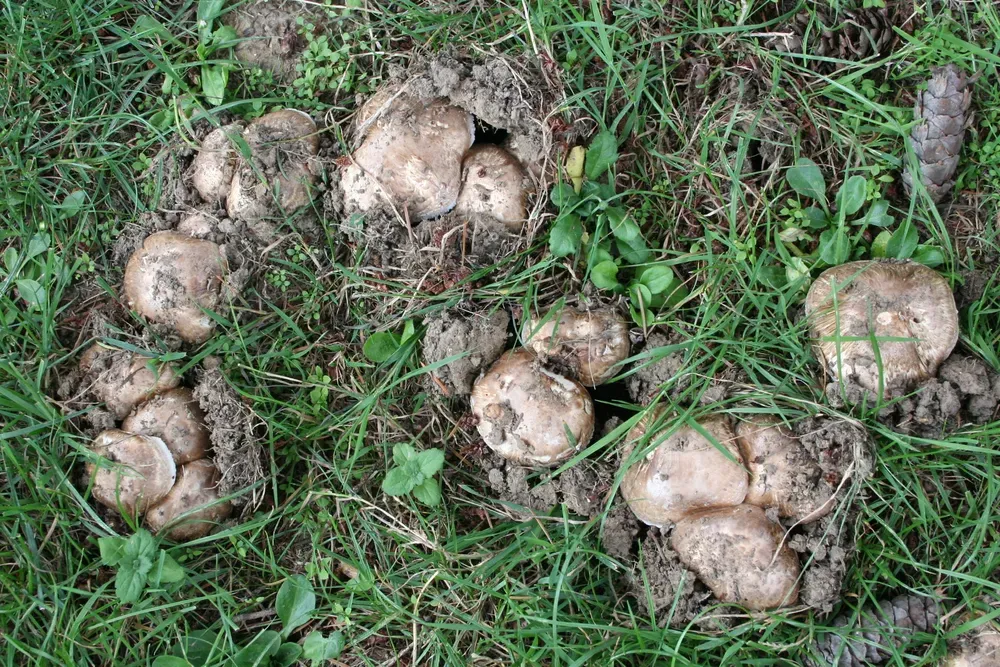
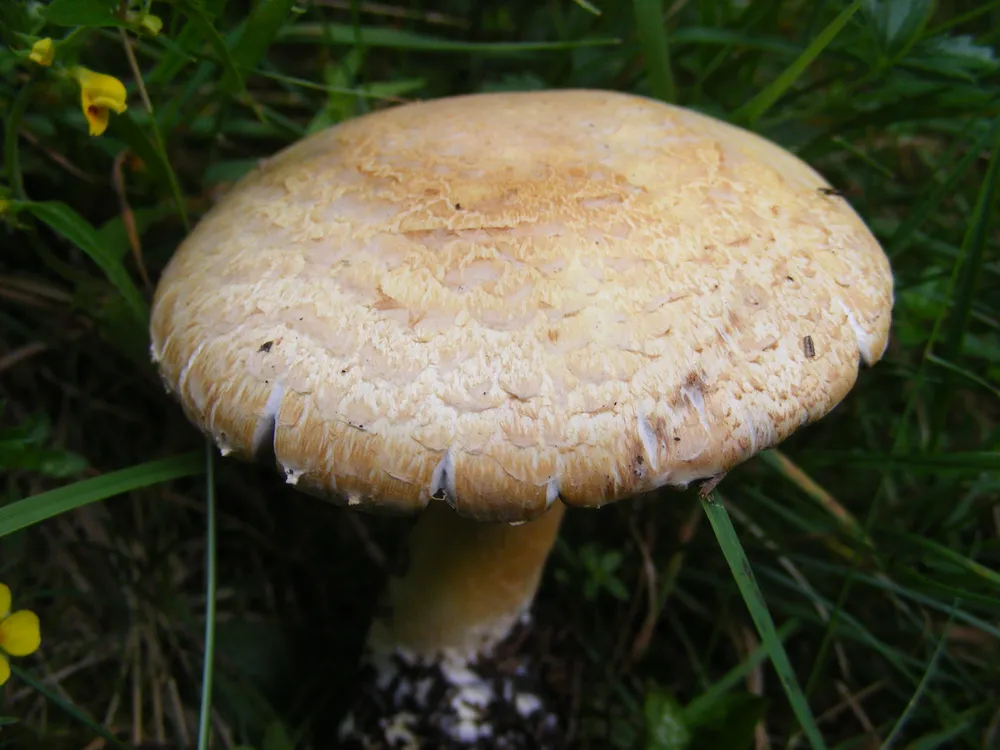
Mushrooms of the same genus and habitat — to study side by side and never mix up.
.webp)
_Fr._4948278370-2.webp)
Related reading
._Locatie,_De_Kruidhof_Buitenpost_01.webp)
Frequently asked questions
Is Giant puffball edible or poisonous?
What does the cap of Giant puffball look like?
What does the stem of Giant puffball look like?
What do Giant puffball smell and taste like?
Where does Giant puffball grow?
When should you pick Giant puffball?
What can Giant puffball be confused with?
How do you cook Giant puffball?
Can you dry Giant puffball?
What is the scientific name of Giant puffball?
Sources
- [1]Атлас грибів України, Зеров Д.К. (1979)
- [2]GBIF