Common stinkhornPhallus impudicus
Expert-verifiedUpdated October 3, 2026
Passport
- Edibility
- Edible
- Season
- May — Oct
- Hymenophore
- Smooth
- Cap color
- White
- Size
- Large (over 15 cm)
- Smell
- Chemical
- Reviewed
- Yes ✓
Quick answers
Where to look?
Deciduous forest, Mixed forest
When does it appear?
May — Oct
Active months: May, June, July, August, September, October.
How to recognize it? Three signs
- Cap color: White, Olive, Brown
- Cap shape: Conical
- Smell: Chemical
Fruiting season
May – October
Description
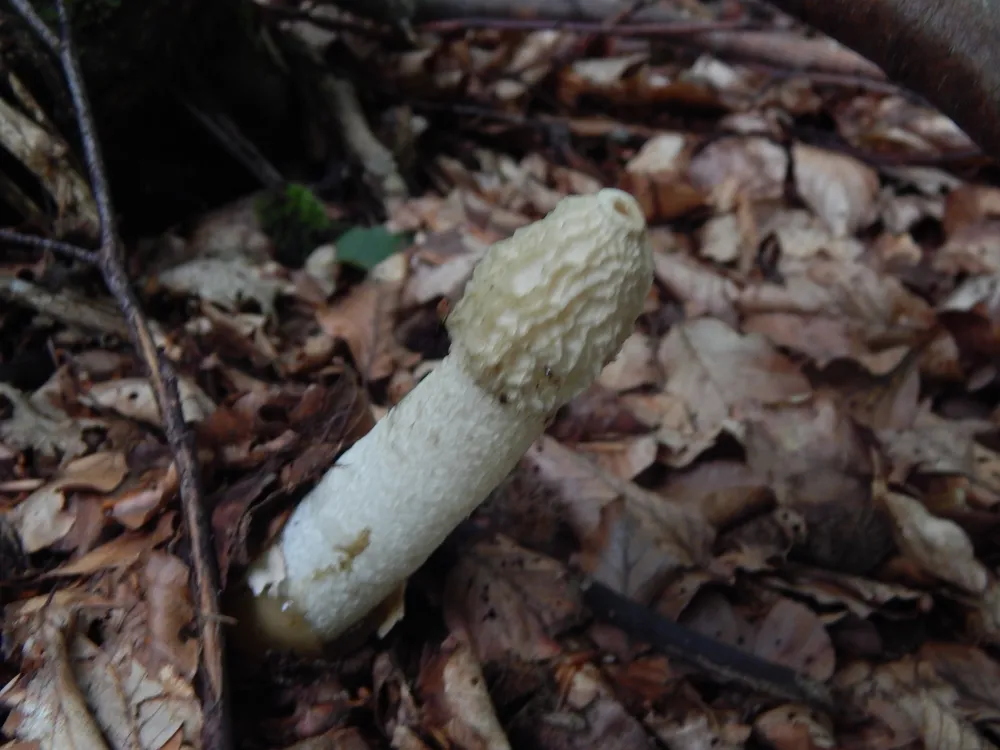
The common stinkhorn is perhaps the most "theatrical" mushroom of Ukrainian forests. It all starts with a white or cream egg 4-6 cm across, like a big drop of water rising from the soil. Overnight — literally within a few hours — a long white stem shoots out of it, topped with a bell-shaped cap covered in foul-smelling olive gleba. The smell is so strong you can catch it tens of meters away — this mushroom is for flies, not for us.
The common stinkhorn is edible only at the egg stage, before the skin bursts. The flesh of a young egg has a delicate, radish-like taste; it is sometimes eaten raw in salads once the slimy layer is removed, or fried. In folk medicine, a tincture of the eggs is traditionally used externally, but there is no evidence base for taking it internally — be wary of "healing mushroom" legends.
In Ukraine, the common stinkhorn grows in deciduous and mixed forests — especially beech and oak woods with well-decomposed litter, near rotting wood. It is regularly recorded in the Carpathians, Prykarpattia, Polissia and the Western Forest-Steppe. The season is long — from late April to November, but fruiting is always sudden and short.
Cap
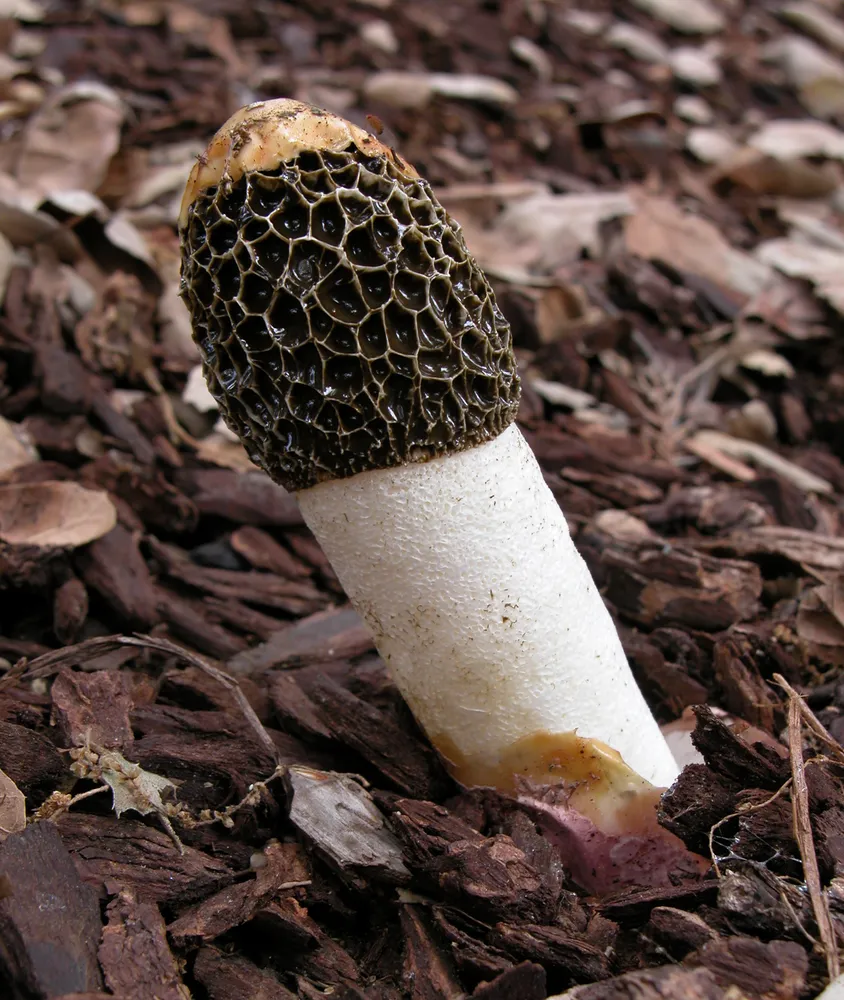
At the egg stage — a white or cream sphere 4-6 cm across with a thick, slimy skin. In the mature mushroom — a bell-shaped cap 3-5 cm tall, covered in dark olive or greenish-brown slimy gleba with a honeycomb structure.
Hymenophore
The hymenophor is a slimy gleba on the cap surface. The spores are tiny and are carried by flies drawn to the powerful carrion smell — a specialized dispersal mechanism of the stinkhorn family.
Stem
Stem 12-22 cm tall, 2-4 cm thick, white or cream, cylindrical, hollow inside. The surface is spongy, delicate and brittle. It grows out of the egg in 2-4 hours — one of the fastest growth rates among fungi.
Flesh
At the egg stage — white with a greenish gelatinous layer under the skin, firm, with a delicate taste. In the mature mushroom — spongy, brittle, white. Does not change color when cut.
Smell
In a young egg — faint, barely mushroomy, with a hint of radish. In the mature mushroom — extremely strong and unpleasant, reminiscent of carrion or rotting meat. The smell travels tens of meters through the air and attracts flies that spread the spores.
Lookalikes
Related species
Mushrooms of the same genus and habitat — to study side by side and never mix up.
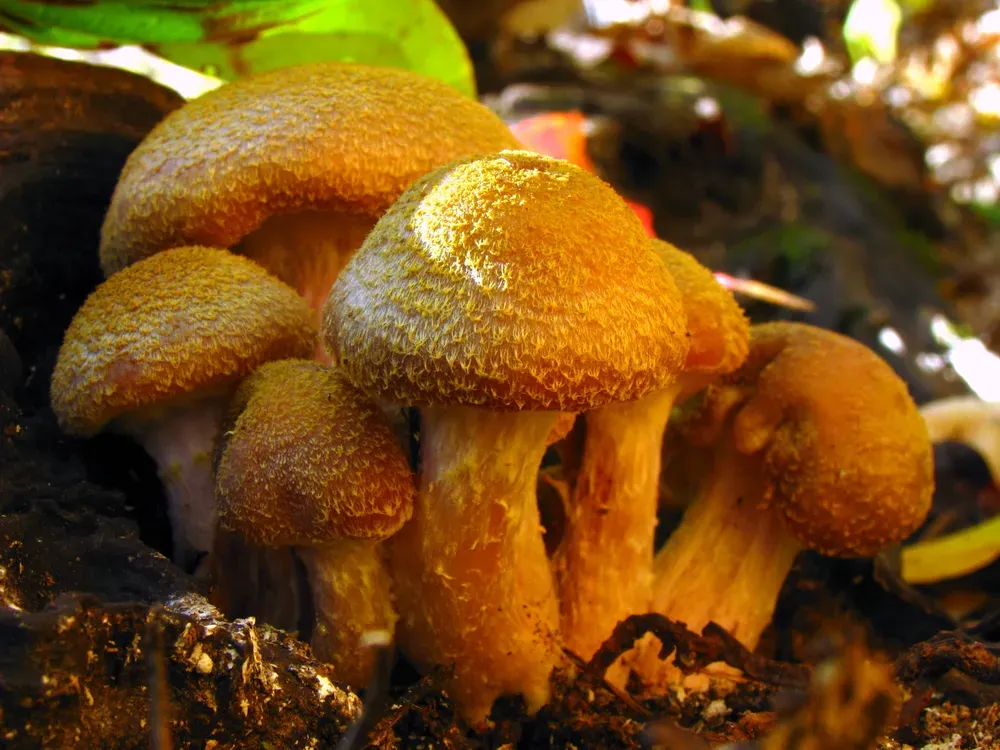
Bulbous honey fungus
Armillaria gallica
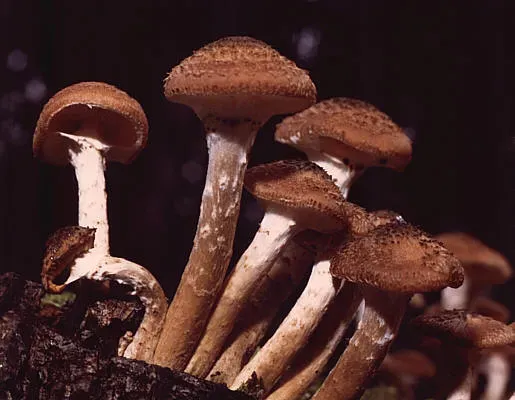
Dark honey fungus
Armillaria ostoyae
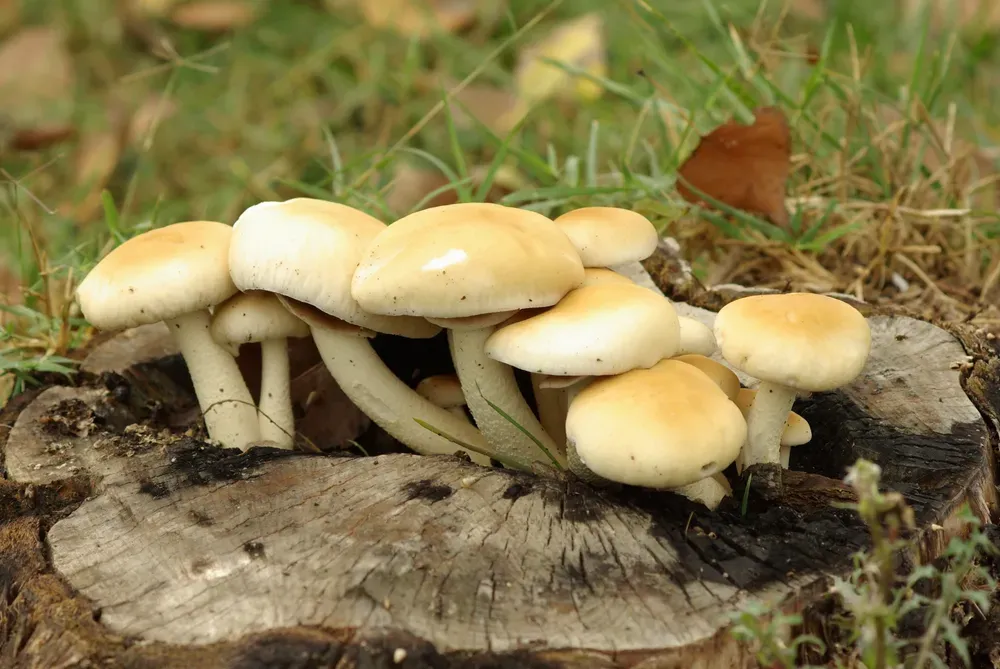
Poplar fieldcap
Cyclocybe aegerita
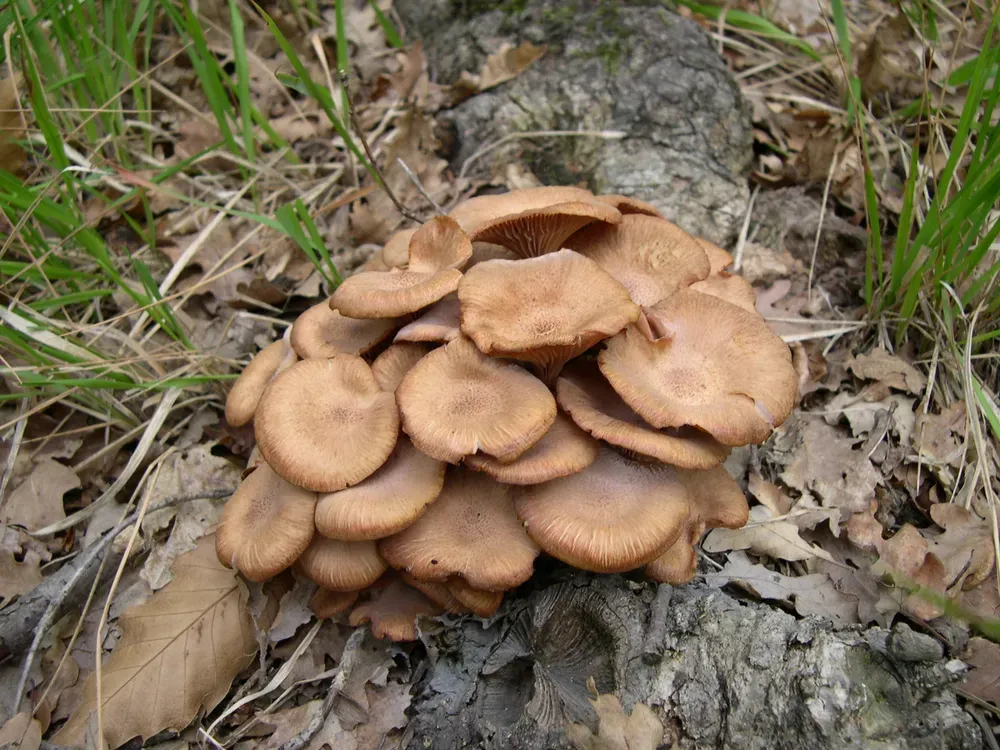
Ringless honey fungus
Desarmillaria tabescens
Agaricus abruptibulbus
Agaricus haemorrhoidarius
Agaricus haemorroidarius
Ashen chanterelle
Cantharellus cinereus
Blushing bolete
Leccinum roseofractum
Related reading
 Science & taxonomy
The biggest and most amazing mushrooms of Ukraine
Mushrooms aren't just what ends up in your basket: from giant puffballs to perennial bracket fungi and the lar…
July 29, 2026·2 min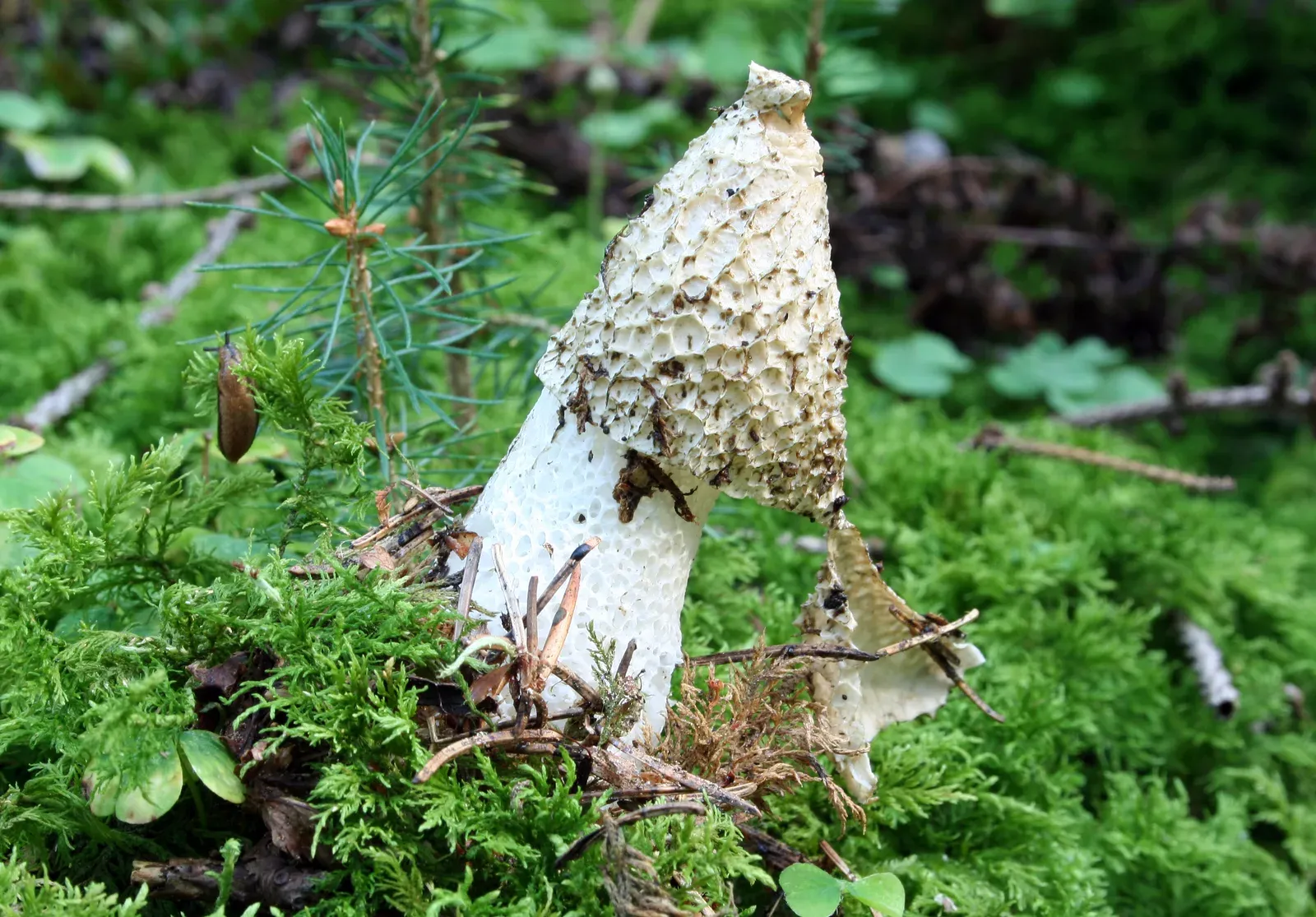 How to identify
Common stinkhorn: what it looks like and where it grows
The common stinkhorn is an unusual mushroom that grows out of an “egg” and surprises you with its pungent smel…
July 16, 2026·2 min
Frequently asked questions
Can you eat it?
Yes, but only at the egg stage, before the skin bursts. Peel off the slimy outer skin — the flesh inside is white, firm, with a radish-like taste. You can eat it raw in a salad or lightly fried. The mature mushroom with a stem and cap is not eaten — the slimy gleba has a sharp, unpleasant smell and is not fit for food.
Is it true that the stinkhorn heals?
In folk medicine, a tincture of the eggs is used externally as a rub. There is no medical evidence base for treating tumors or other serious diseases internally. Treat such recommendations with caution, especially if someone suggests using it in place of a doctor.
Where should you look for it?
In deciduous and mixed forests with rich, humus-laden soil — especially beech, oak and birch woods. It loves spots near rotting wood in shady forests with good moisture. In open areas and conifer woods it turns up less often.
Which regions of Ukraine does it grow in?
Throughout the forest zone: the Carpathians, the Carpathian foothills, Zakarpattia, Prykarpattia, Polissia, the Western and Right-Bank Forest-Steppe. In the steppe it is much rarer — there it is replaced by the dune stinkhorn (Phallus hadriani), which is adapted to dry sands.
When does it appear?
From late April to November, but fruiting is always sudden and irregular. Favorable conditions are warm, humid weather after good rains. The peak falls in July–September.
How long does the fruiting body last?
Very briefly. From the egg skin bursting to the cap falling apart takes 1-2 days. A day after you spot an opened mushroom, it is already starting to wilt. If you want to collect it at the egg stage, come back to the same spot every day.
What is it confused with?
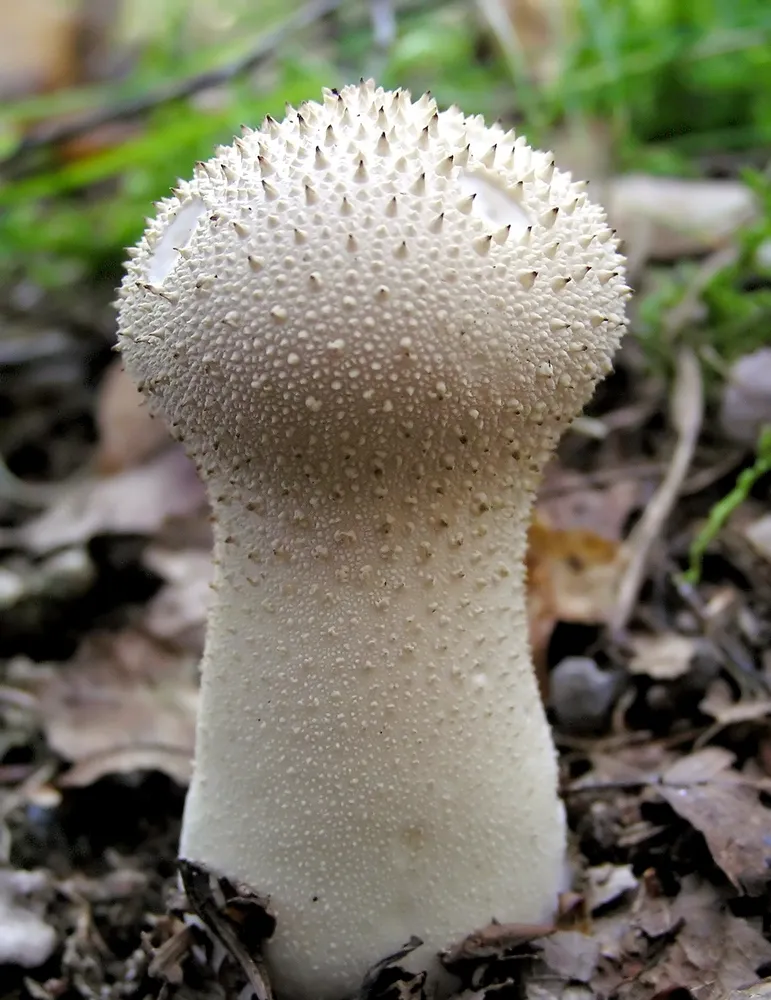
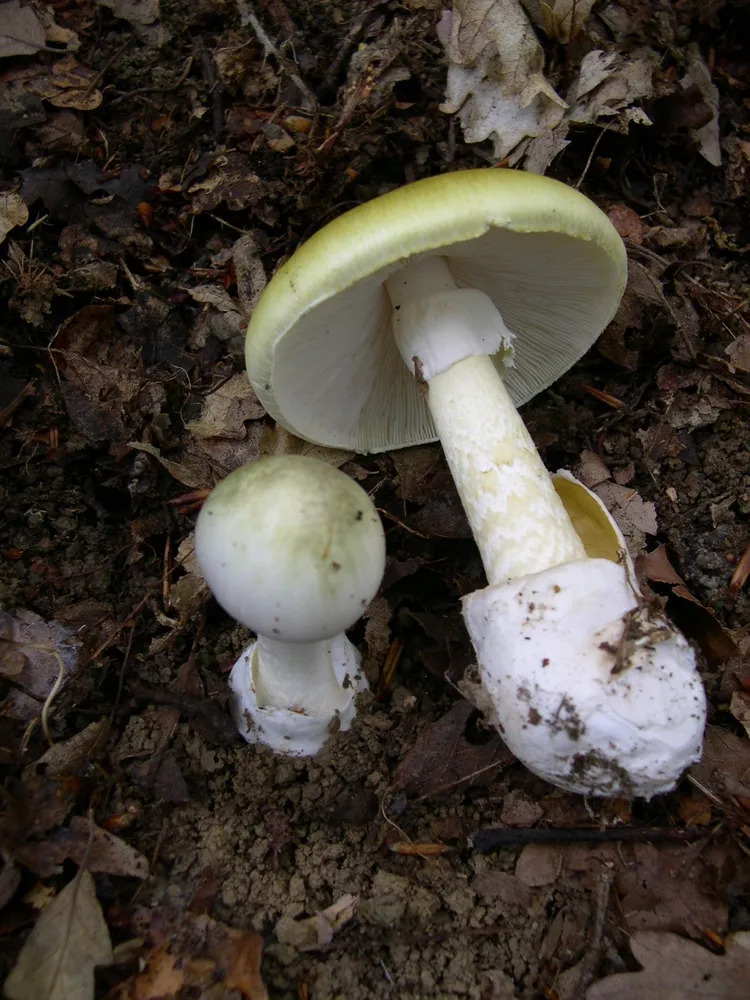
A stinkhorn egg in the ground looks like a young puffball or an amanita fruiting body. Cut it lengthwise: the stinkhorn shows a layered structure — skin, a greenish gelatinous layer, and the embryo of the stem and cap inside. A puffball has uniform flesh with no layers.
How does it differ from the dune stinkhorn?
The common stinkhorn grows in deciduous and mixed forests, and its egg skin is white. The dune stinkhorn (Phallus hadriani) grows on sandy soils in the steppe and dunes, and its egg skin has a distinct pink or purple tint. Once mature, they are practically impossible to tell apart without a microscope.
Is Common stinkhorn edible or poisonous?
What kind of spore-bearing surface does Common stinkhorn have?
What does the cap of Common stinkhorn look like?
What does the stem of Common stinkhorn look like?
Sources
- [1]Вікіпедія (українська)
- [2]Атлас грибів України, Зеров Д.К. (1979)
- [3]MycoBank Database
- [4]Index Fungorum
- [5]GBIF
- [6]iNaturalist Ukraine