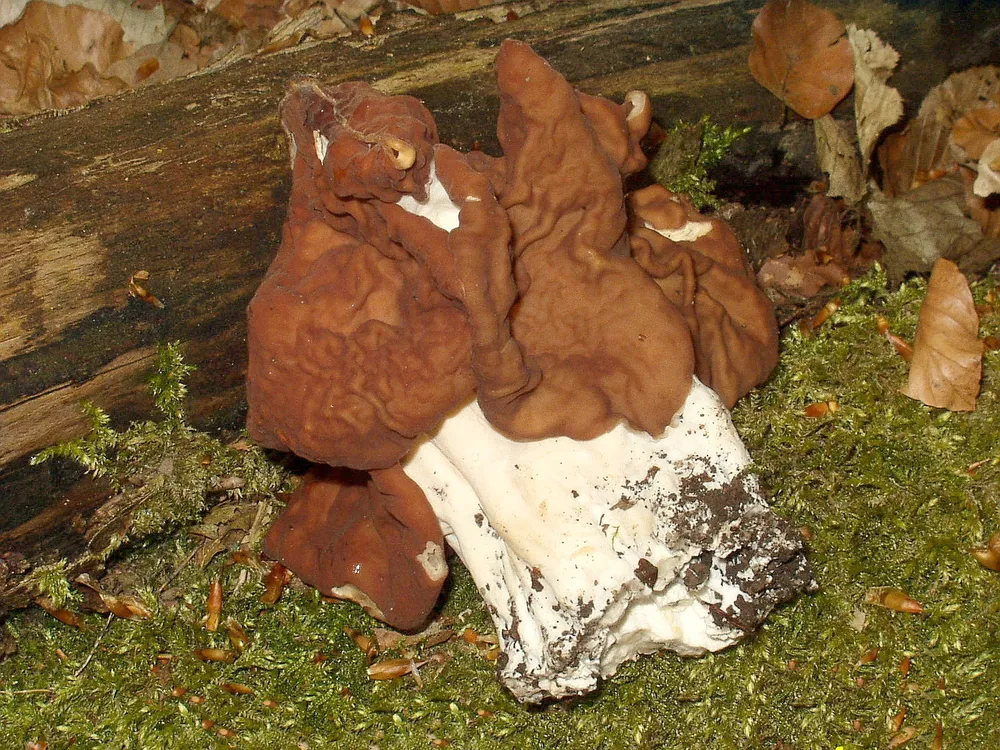
False morelGyromitra esculenta
Expert-verifiedUpdated August 15, 2026
Passport
- Edibility
- Poisonous
- Season
- Mar — Jun
- Hymenophore
- Smooth
- Cap color
- Brown
- Size
- Medium (5–15 cm)
- Smell
- Pleasant
- Reviewed
- Yes ✓
POISONOUS
Eating it causes poisoning. Do not pick it unless you have identified it with certainty.
GYROMITRIN POISONING is life-threatening.
Active toxin: GYROMITRIN (acetaldehyde N-methyl-N-formylhydrazone); concentration in fruit bodies is 50-300 mg/kg fresh weight (highly variable!).
Metabolism: in the stomach, gyromitrin is hydrolyzed to N-methyl-N-formylhydrazine, and then to MONOMETHYLHYDRAZINE (MMH) — a hydrazine compound used as rocket fuel.
How MMH acts: LIVER TOXIN — damages the liver HEMOLYTIC — destroys red blood cells, causes hemoglobinuria NEUROTOXIN — affects the central nervous system, causes seizures CARCINOGEN (IARC Group 2B — "possibly carcinogenic to humans") Inhibits pyridoxine (vitamin B6)-dependent enzymes — hence the antidote: IV pyridoxine
Heat breakdown is NOT COMPLETE: Gyromitrin PARTLY evaporates with the steam during boiling (boiling point 87°C) Not all molecules are destroyed — some remain in the flesh The steam from boiling is toxic too — cooks have been poisoned by inhaling it Drying (for months to years) — better, but not a complete method No method guarantees safety
Cumulative toxicity: Small doses eaten repeatedly build up in the liver Regular eaters risk cirrhosis and hepatocellular cancer Deaths have been reported in people who ate "small portions every spring for several years"
Individual sensitivity: Some people can eat a lot without visible symptoms (once) Others are fatally poisoned by a single 100-200 g portion Genetic variability in N-acetyltransferase 2 (NAT2): "fast acetylators" partly detoxify it, "slow" ones do not
LATENCY PERIOD: 6-12 hours (sometimes up to 24 h). This is what makes false morels so treacherous: by the time symptoms start, people no longer connect them with the mushroom they ate that morning.
Symptoms by phase:
Phase I (6-24 h): Nausea, repeated vomiting Diarrhea (often bloody) Cramping abdominal pain Headache, dizziness Fever
Phase II (12-72 h): — critical Jaundice (yellowing of the whites of the eyes and skin) Dark urine (hemoglobinuria from destroyed red blood cells) Transaminases raised 10-100 times (severe hepatitis) Anemia (hemolysis) Azotemia (raised urea and creatinine) — kidney failure Methemoglobinemia
Phase III (3-7 days): — lethal Hepatic coma Multiple organ failure Seizures (MMH neurotoxicity) Death from liver failure or complications
Mortality up to 10-15% in significant poisoning without timely treatment. With timely medical care (pyridoxine, hemodialysis, rehydration), mortality is <5%.
FIRST AID — IMMEDIATELY: 1. CALL 112 or your local emergency number RIGHT AWAY, even if there are no symptoms but you know false morels were eaten. DO NOT WAIT for symptoms — the latency period is 6-12 h. 2. Keep a sample of the mushroom (fresh or from vomit) for the toxicologist 3. ACTIVATED CHARCOAL within the first 1-2 h after eating 4. IN HOSPITAL — INTRAVENOUS PYRIDOXINE (vitamin B6) — the antidote for hydrazine poisoning. Dose: 25 mg/kg slowly IV, repeated if needed. This is the absolute priority. 5. IV fluid therapy — rehydration, electrolyte correction 6. Liver monitoring — transaminases, bilirubin, prothrombin time, checked every 4-6 h 7. Blood monitoring — hemoglobin, reticulocytes, hemolysis markers 8. If hemolysis occurs — blood transfusion, urine alkalinization (to prevent kidney damage from hemoglobin) 9. Hemodialysis if there are signs of kidney failure or high MMH levels in the blood
PREVENTION: DO NOT EAT. No processing method guarantees safety. Modern mycology's rule is a complete ban on eating it. If false morels are part of your culinary tradition, gradually replace them with safe spring mushrooms (morels, St George's mushroom, button mushrooms).
If you suspect poisoning, call an ambulance immediately: 112 (the European emergency number) or your local emergency number
Quick answers
Where to look?
Conifer forest, Mixed forest
When does it appear?
Mar — Jun
Active months: March, April, May, June.
How to recognize it? Three signs
- Cap color: Brown, Dark brown
- Cap shape: Irregular
- Smell: Pleasant
Fruiting season
March – June
Description
The false morel (Gyromitra esculenta) is the best-known and most dangerous spring ascomycete in Europe, and its Latin name esculenta (literally "edible") is one of the most dramatic mistakes in binomial nomenclature. The name was given back in the 1800s, when gyromitrin had not yet been discovered and false morels were widely eaten in folk cooking. Today it is known as a serious liver toxin, hemolytic agent and carcinogen that causes dozens of deaths in Europe every year.
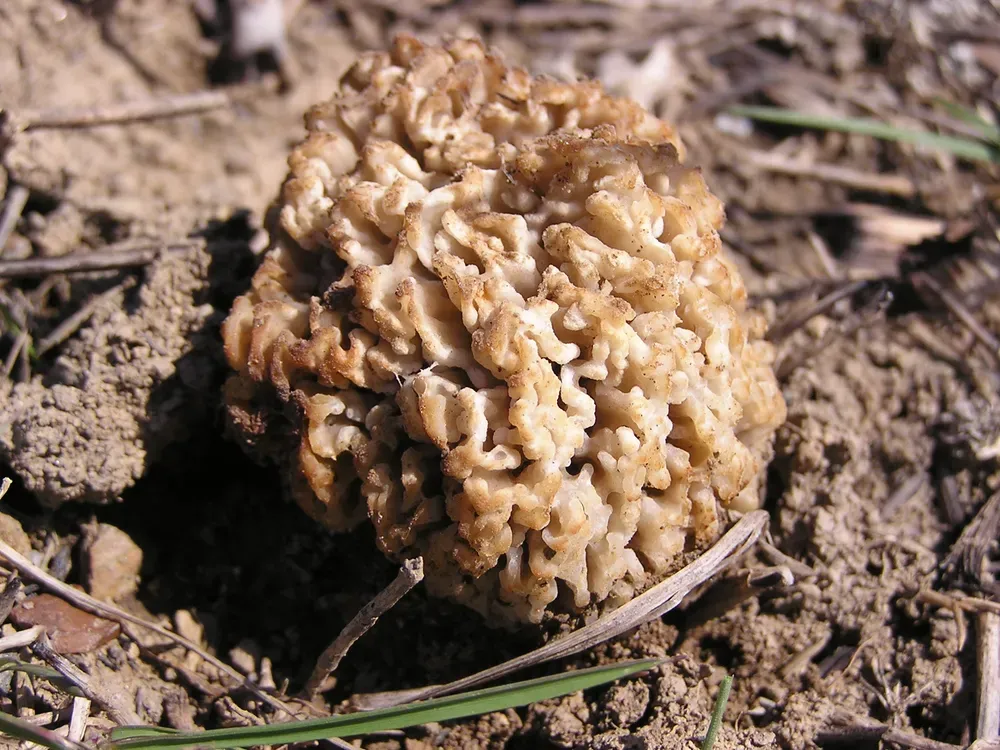
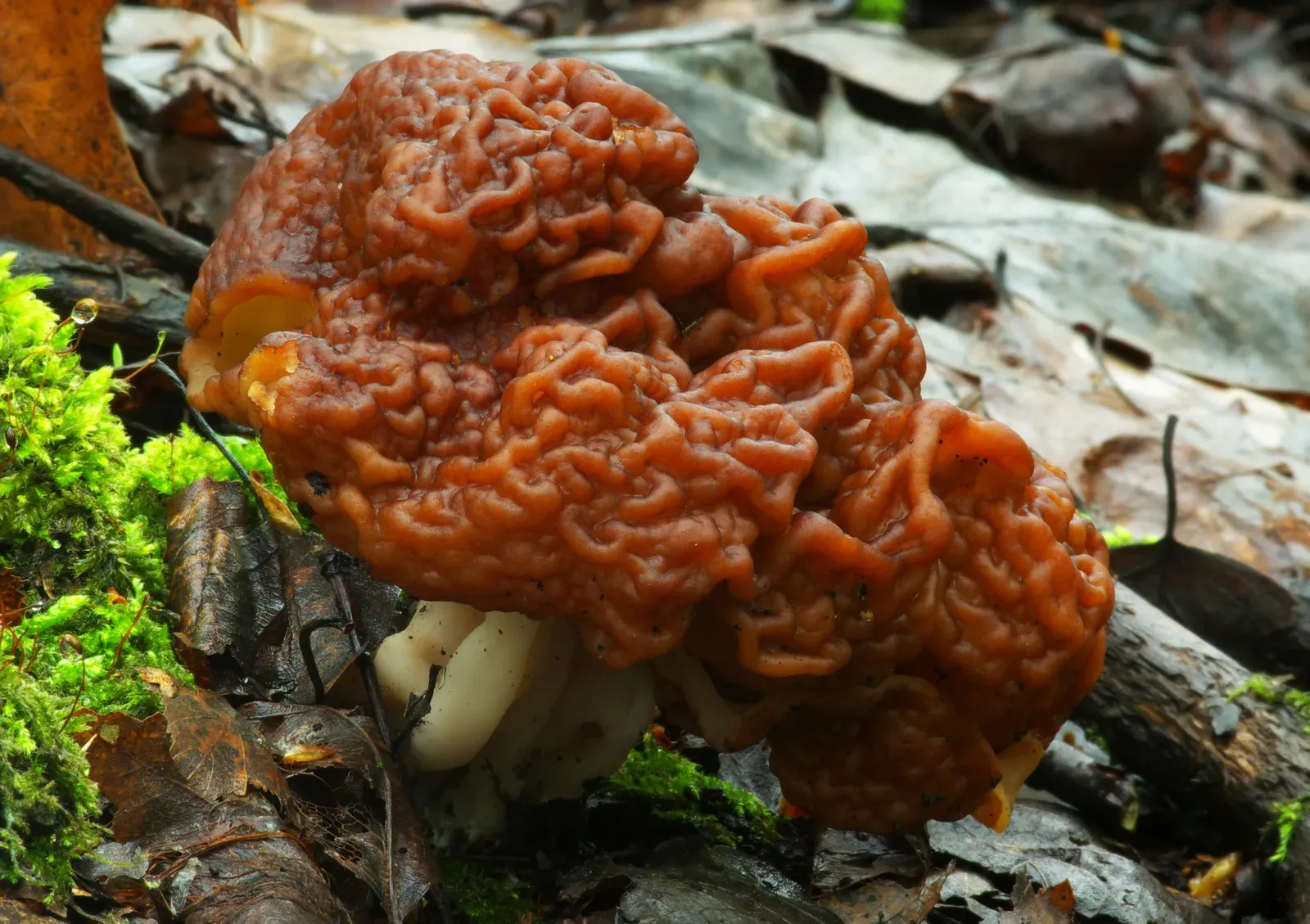
Cap 3-10 cm across, convoluted and brain-like, folded and wrinkled, dark chestnut-brown to blackish brown, with no clear boundary between the "cap" and the stem. Overall shape: round to flattened-round, with numerous irregular convoluted folds. It looks like a wrinkled walnut or a brain (hence its folk name, the "brain mushroom").
DEADLY POISONOUS when undercooked and CUMULATIVELY TOXIC even when prepared correctly. The active toxin is GYROMITRIN (N-methyl-N-formylhydrazone), which is metabolized in the stomach into MONOMETHYLHYDRAZINE (MMH) — a hydrazine compound used as rocket fuel. MMH is a liver toxin (damages the liver), hemolytic agent (destroys red blood cells), neurotoxin (affects the central nervous system) and carcinogen (IARC Group 2B).
Poisoning symptoms set in 6-12 hours (sometimes up to 24 h) after eating: nausea, vomiting, diarrhea, then jaundice, dark urine (hemoglobinuria), hepatitis, hemolysis, and in severe cases liver failure, coma, death within 3-7 days. Mortality up to 10-15% in significant poisoning without timely treatment.
"Folk" processing does not guarantee safety: Boiling (even long boiling with several changes of water) only partly neutralizes gyromitrin — some of it evaporates with the steam, but not all of it Cooks preparing false morels have been poisoned by inhaling the steam! Drying (for years) is better, but also not complete No processing method guarantees safety
The rule in Europe: Scandinavia (Sweden since 1986, Norway, Finland) has banned commercial sale. Switzerland has banned it. Italy has banned it. In Poland, Ukraine and parts of Central Europe people traditionally still eat it, but this is gradually changing as things move toward a complete ban.
The modern recommendation: DO NOT EAT IT AT ALL. No culinary value makes up for the risk of liver poisoning, possibly fatal hemolysis and long-term carcinogenic effects. There are plenty of unquestionably safe spring mushrooms (morels — Morchella spp., St George's mushroom — Calocybe gambosa).
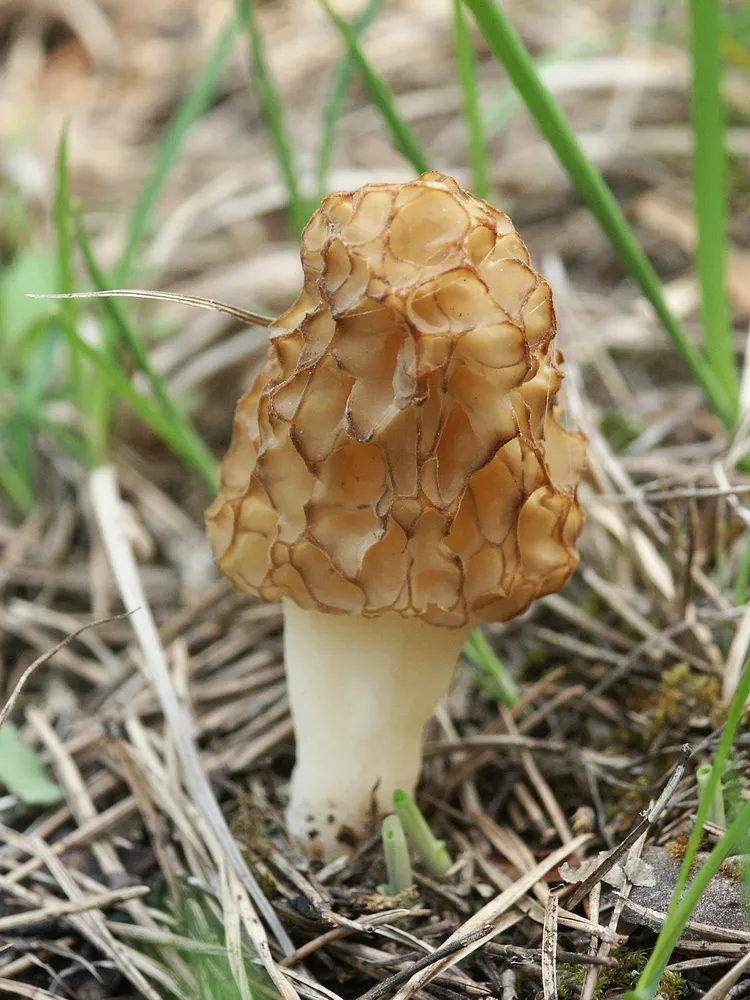
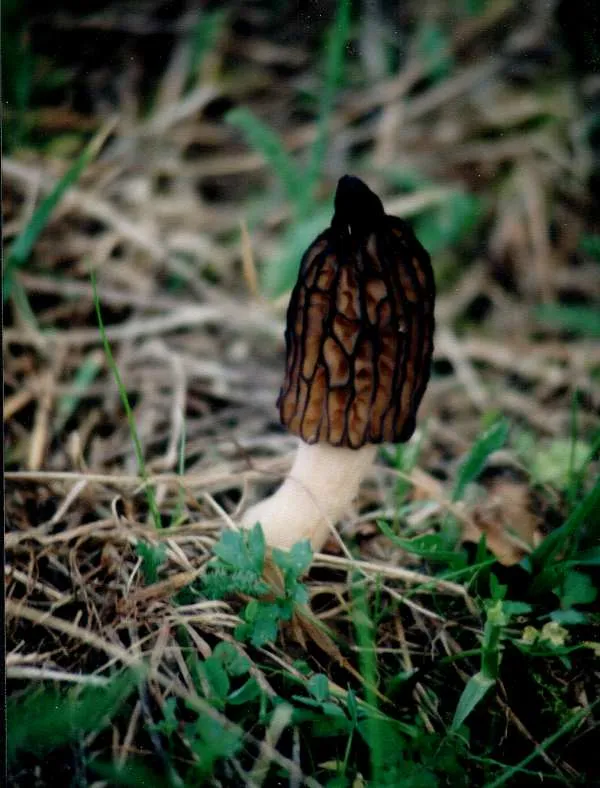
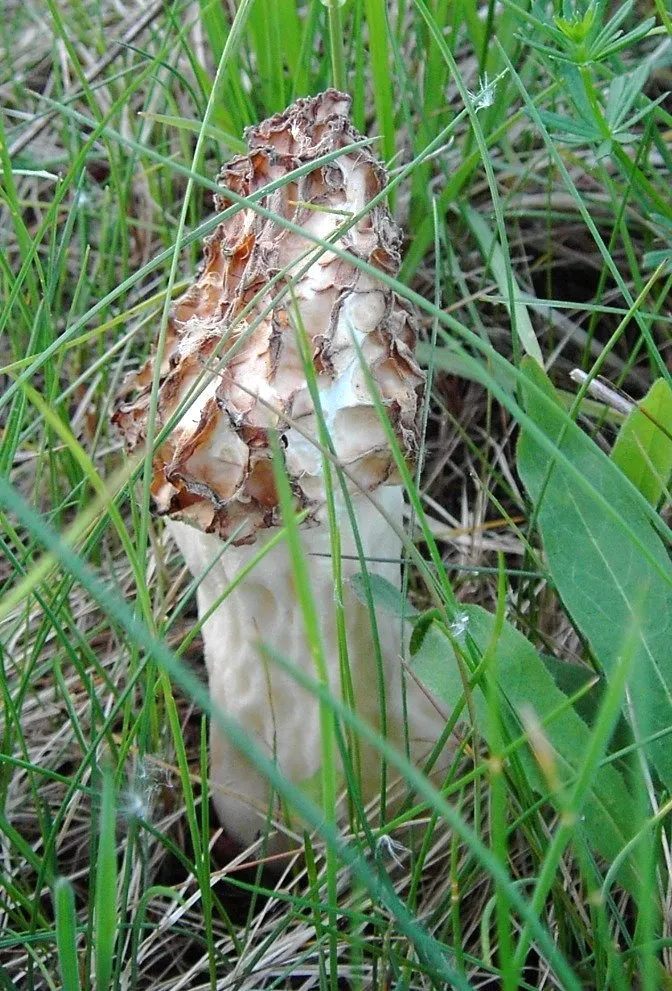
The main diagnostic difference from morels (edible): False morels: the cap is convoluted and brain-like, without regular pits, completely filled with flesh Morels: the cap is pitted and net-like, with regular pits (like a sponge), hollow inside
In Ukraine, Gyromitra esculenta is common in spring pine and spruce-pine forests: the Carpathians, Prykarpattia, Polissia, and in places the forest-steppe. Season: April — May, after the snow melts.
Cap
Cap 3-10 cm across, convoluted and brain-like, folded and wrinkled, with no clear boundary between the "cap" and the stem. Overall shape round to flattened-round, with numerous irregular convoluted folds — it looks like a wrinkled brain or a large walnut. Color dark chestnut-brown to blackish brown, deeper in the center. Surface matte, with fine felty fibers. Not pitted (a key difference from morels).
Hymenophore
Ascomycete — the spore-bearing surface covers the convoluted outer surface of the cap. Spores form in sacs (asci). Spore print yellowish white to pale ocher.
Stem
Stem 3-7 cm tall, 1.5-3 cm thick, short, fleshy, cylindrical. Color whitish to grayish cream, with distinct lengthwise folds. Partly hidden under the cap and sunk into the ground.
Flesh
Flesh thin, brittle, dirty white to cream. Cap and stem completely filled with flesh (NOT hollow — the key difference from morels). Does not change color when cut.
Smell
Faint, pleasant and mushroomy, with a fruity note — NOT a warning sign; it won't remind you of anything rotten or sour. The smell seems "normal".
Lookalikes
Related species
Mushrooms of the same genus and habitat — to study side by side and never mix up.
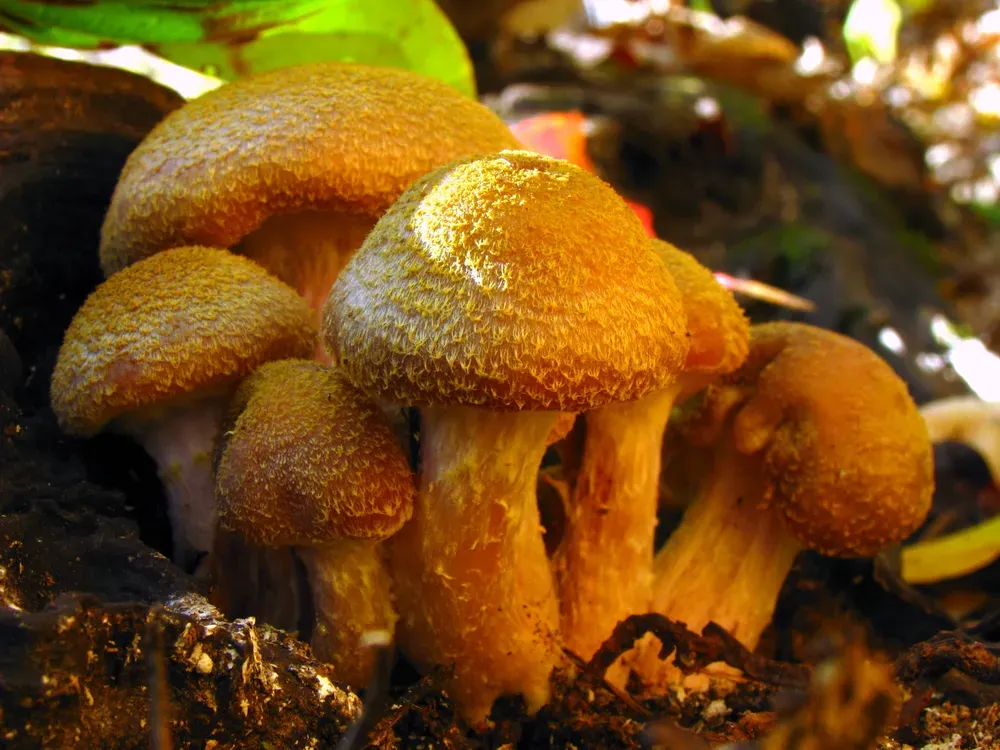
Bulbous honey fungus
Armillaria gallica
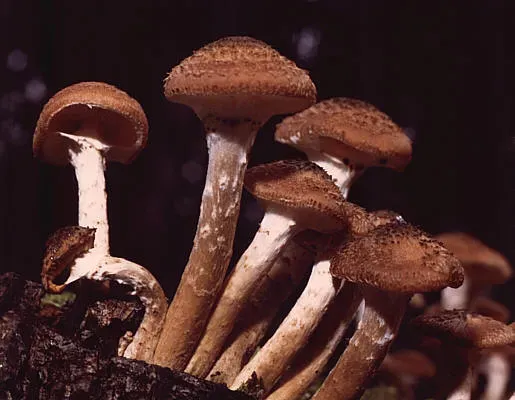
Dark honey fungus
Armillaria ostoyae
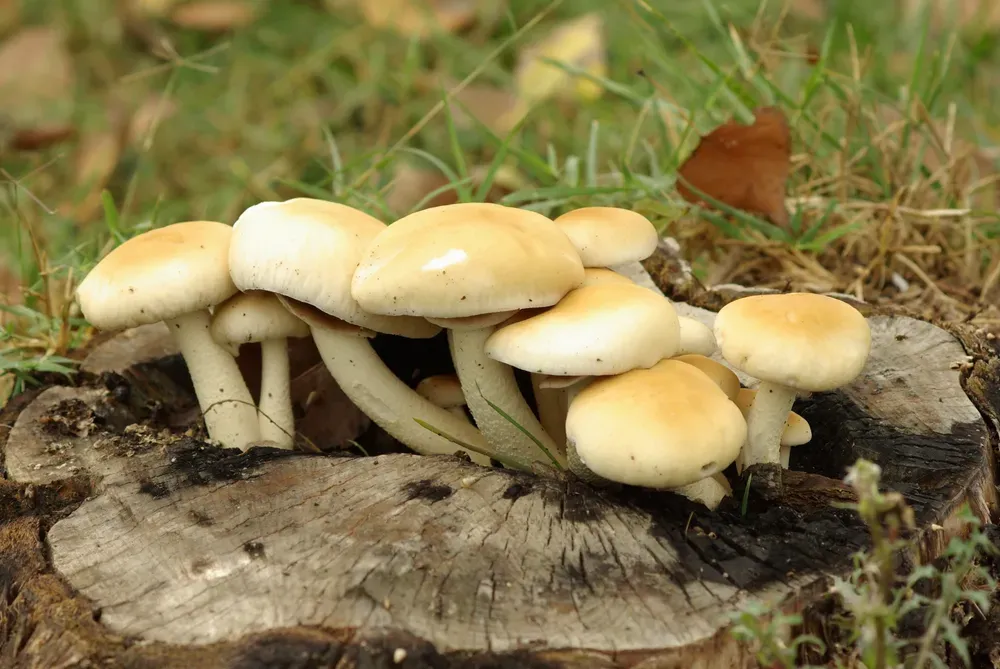
Poplar fieldcap
Cyclocybe aegerita
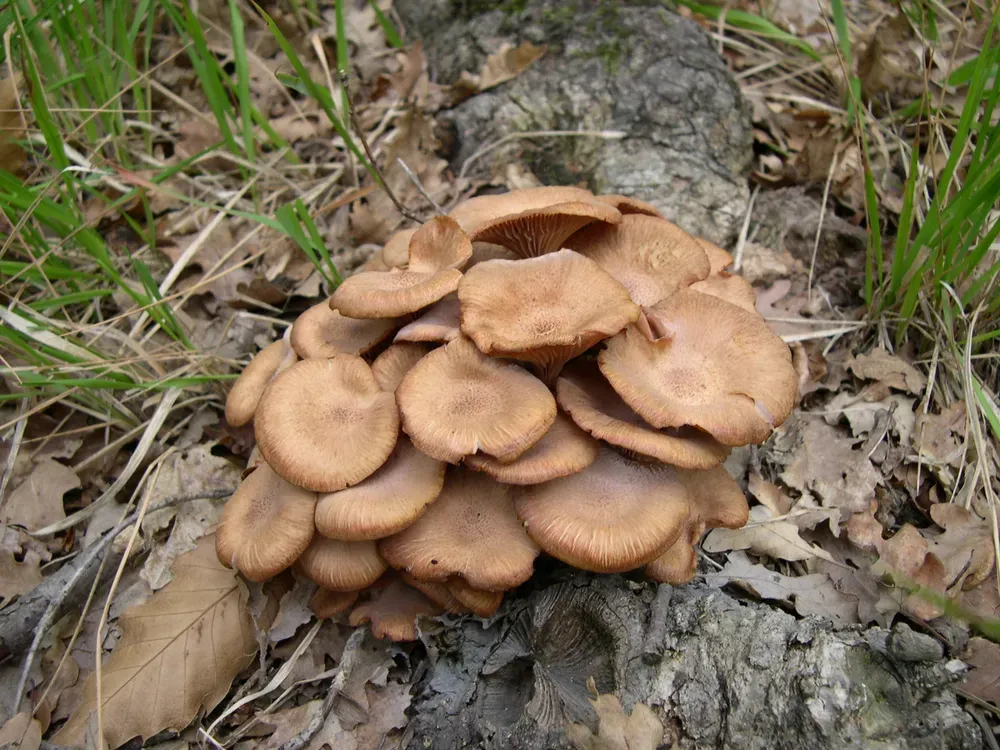
Ringless honey fungus
Desarmillaria tabescens
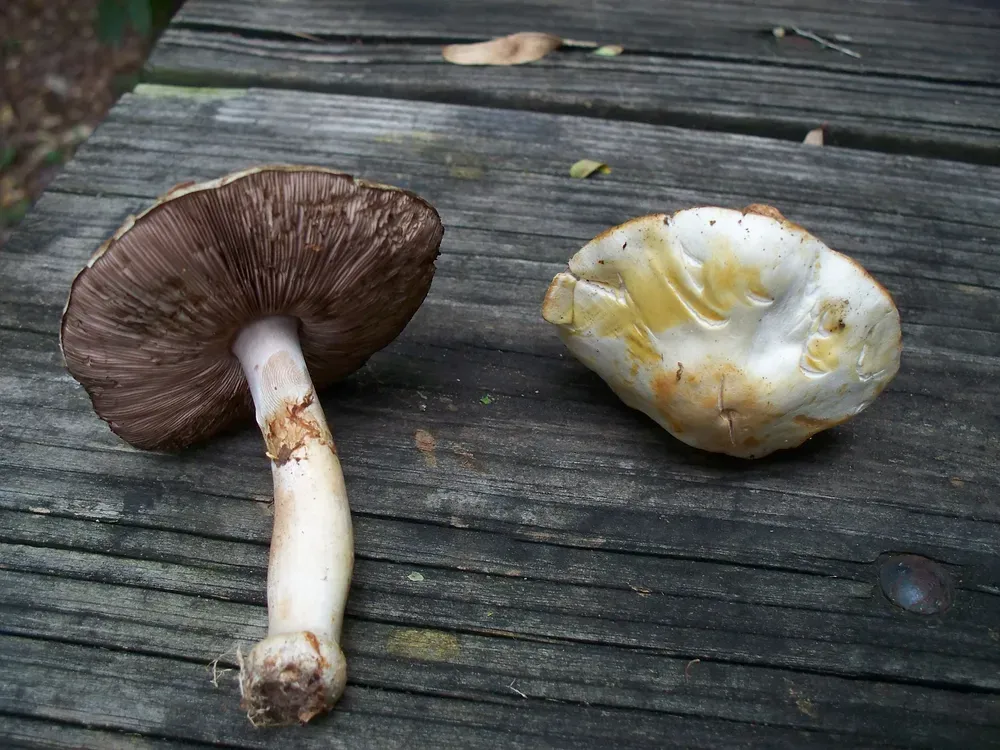
Agaricus abruptibulbus
Agaricus haemorrhoidarius
Agaricus haemorroidarius
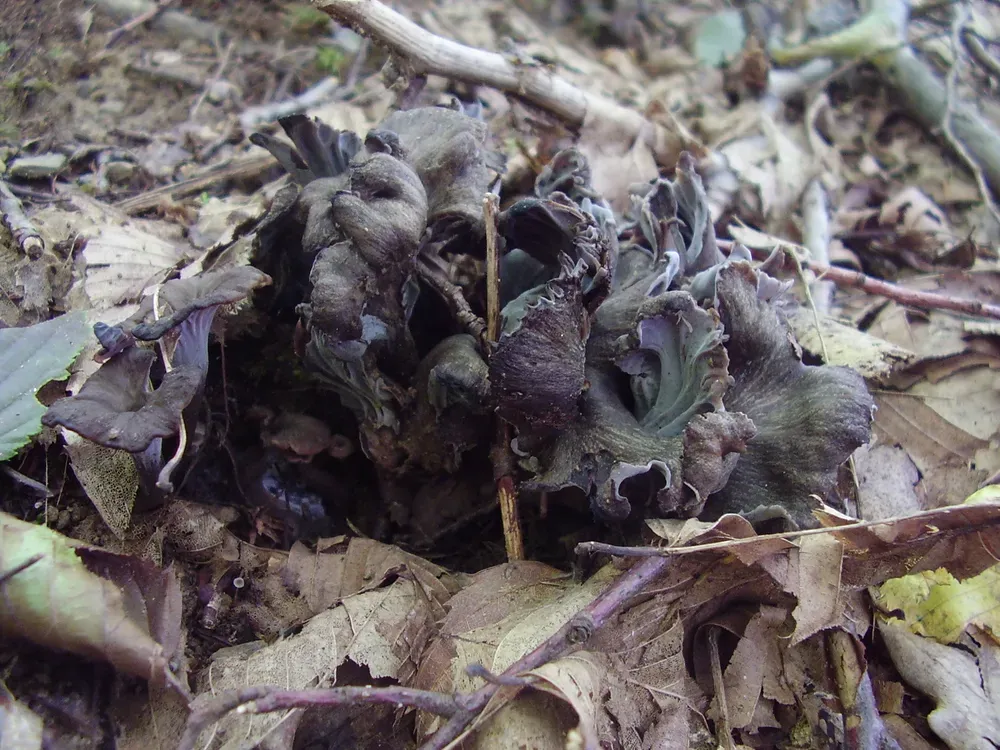
Ashen chanterelle
Cantharellus cinereus
Blushing bolete
Leccinum roseofractum
Related reading
 Safety
False morel: why this spring mushroom is dangerous
The false morel looks like a morel, but it contains a poison. Here's how to recognize it, why it's dangerous a…
August 24, 2026·2 min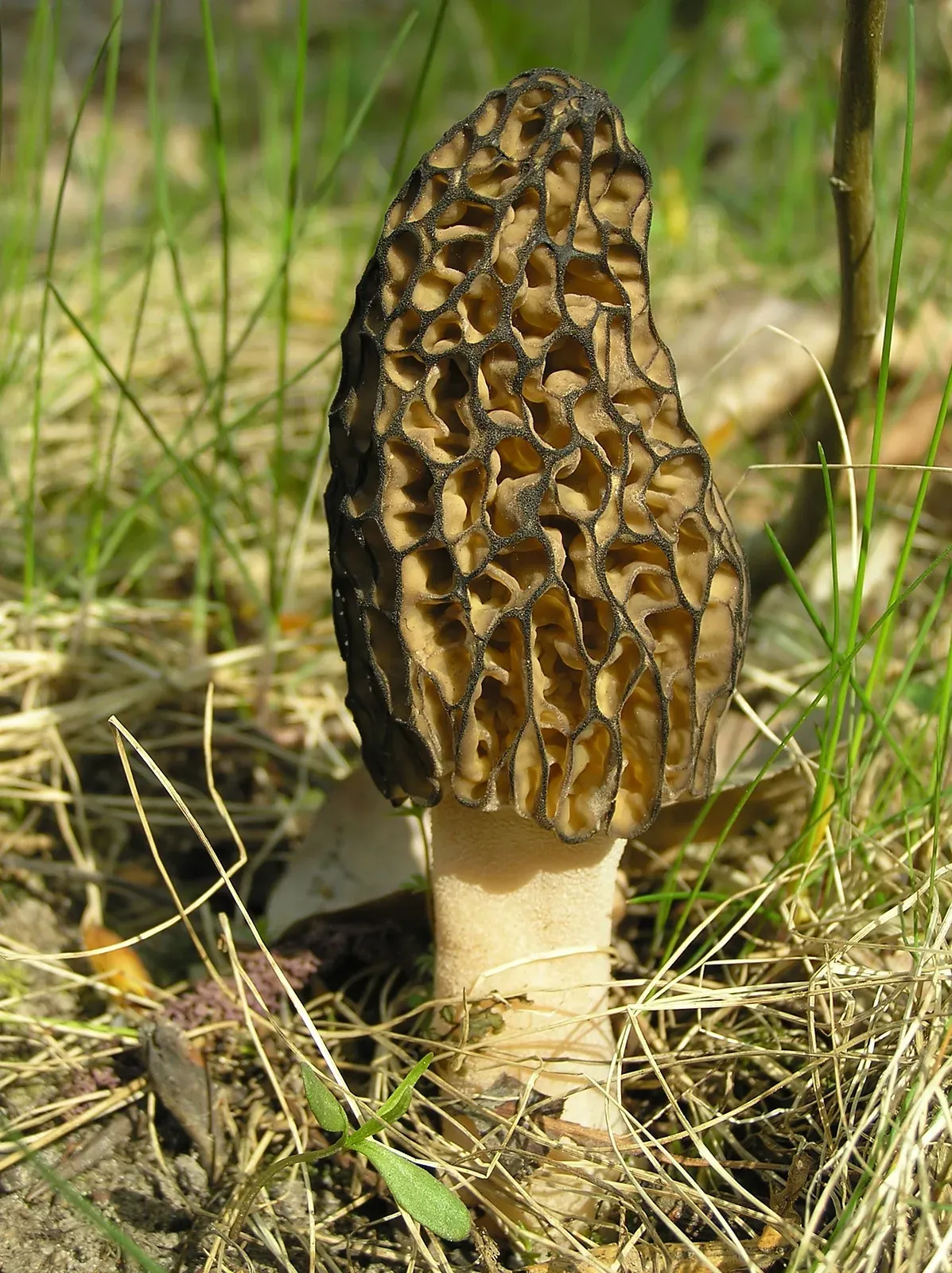 Where & when to forage
When to pick morels and false morels, the first spring mushrooms
As soon as the snow melts, morels appear in the woods — the first mushrooms of the year. Here's when and where…
August 18, 2026·3 min Safety
Deadly poisonous mushrooms of Ukraine: the four you must know
Among hundreds of mushrooms, a few can kill with a single meal. Here are four deadly poisonous mushrooms of Uk…
August 14, 2026·3 min
Frequently asked questions
Can you eat it if you boil it well?
ABSOLUTELY NOT. Gyromitrin is a partly heat-labile toxin that boiling neutralizes only incompletely: some of it evaporates with the steam, but not all of it leaves the fruit body. Deaths have been reported in people who boiled false morels "correctly" and still got poisoned. Cumulative carcinogenicity — dangerous with repeated eating, even when "cooked correctly". In Scandinavia, Switzerland and Italy, sale has been banned since the 1980s. The modern rule: DO NOT EAT IT AT ALL.
But doesn't the Latin name mean 'edible'?
Yes, and it's a historical mistake. The name esculenta was given in the 1800s, before gyromitrin was discovered (it was only identified in 1968). False morels were widely eaten in folk cooking, and poisonings were often not linked to the mushroom (because of the 6-12 h latency, symptoms appeared "the next day" and were blamed on "something else I ate"). Modern mycology is clear: here the Latin name has nothing to do with real safety.
How do you tell it apart from true morels (edible)?
The key check is the structure of the cap. Morels (Morchella esculenta, M. conica): the cap is PITTED AND NET-LIKE, with EVEN, REGULAR PITS, like a sponge or honeycomb. The cap is HOLLOW INSIDE — cut it open and you'll see a cavity. False morels (Gyromitra esculenta): the cap is CONVOLUTED AND BRAIN-LIKE, folded and wrinkled, WITHOUT regular pits, like a wrinkled brain or walnut. The cap and stem are COMPLETELY FILLED with flesh. Cut it open and you'll see flesh inside. This is the only reliable way to tell them apart!
What should you do if you suspect poisoning?
Call 112 or your local emergency number IMMEDIATELY, even if the person feels fine right now (the latency period is 6-12 h, sometimes up to 24!). Keep a sample of the mushroom for identification. In hospital — IV pyridoxine (vitamin B6) as a specific antidote, activated charcoal, rehydration, liver and kidney monitoring. DO NOT WAIT for symptoms — liver damage is already under way, even if the person feels fine.
How much do you have to eat to be poisoned?
The amount of toxin varies (50-300 mg/kg fresh weight). Sensitivity is individual. Poisoning has been reported from 50-100 g of raw or poorly boiled mushroom, and from even less in sensitive people. There is no "safe dose" — this mushroom is not food.
Where might you come across it, so you can recognize it?
In spring pine and spruce-pine forests on forest litter among moss and grass, after the snow melts. It likes damp, shady spots. It often grows singly or in groups of 2-5 fruit bodies.
Where in Ukraine is it found?
Common in the forest zone wherever conifers grow: the Carpathians, Prykarpattia, Polissia, and in places the forest-steppe.
When can you find it?
April — May, after the snow melts. One of the earliest spring mushrooms. In a cold spring the season shifts toward the end of May.
Which mushrooms is it confused with?
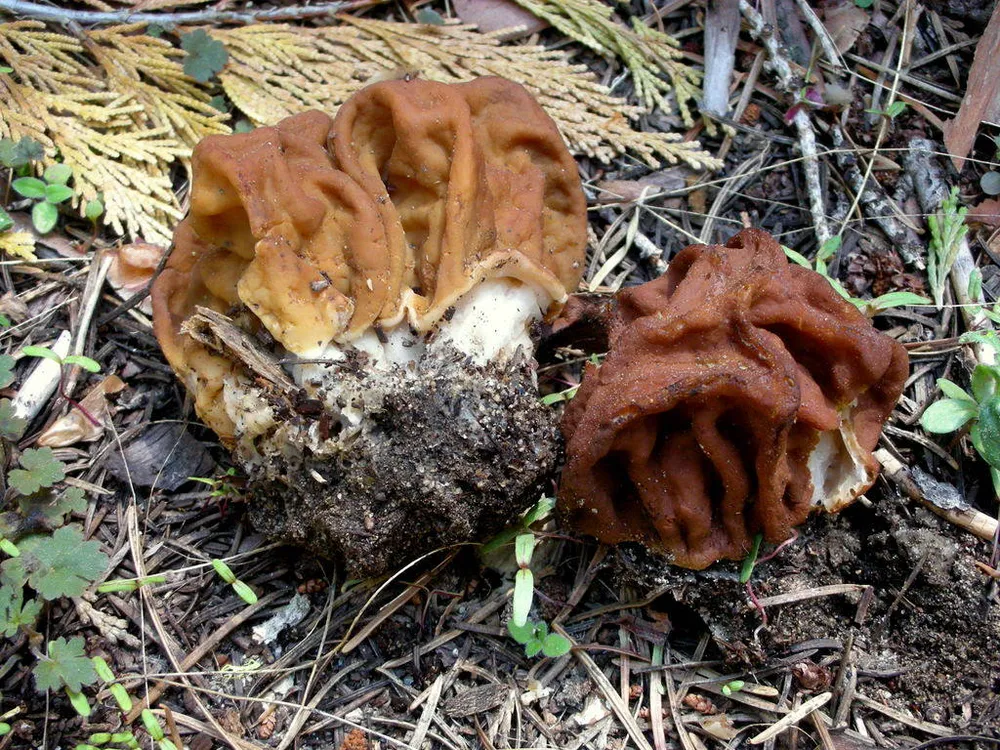
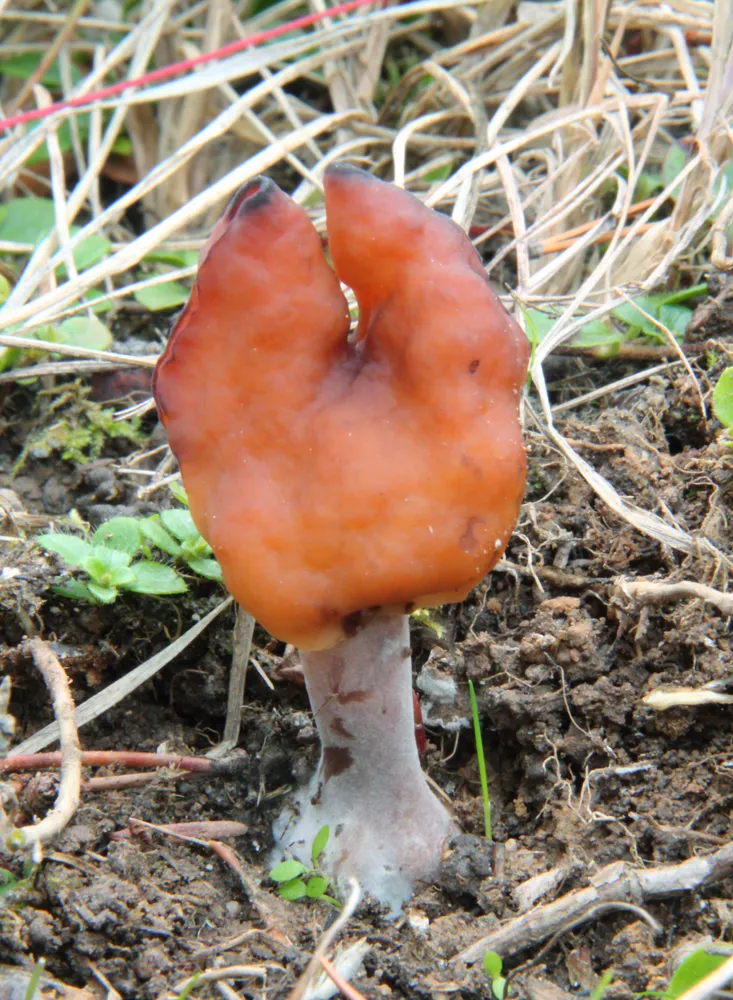
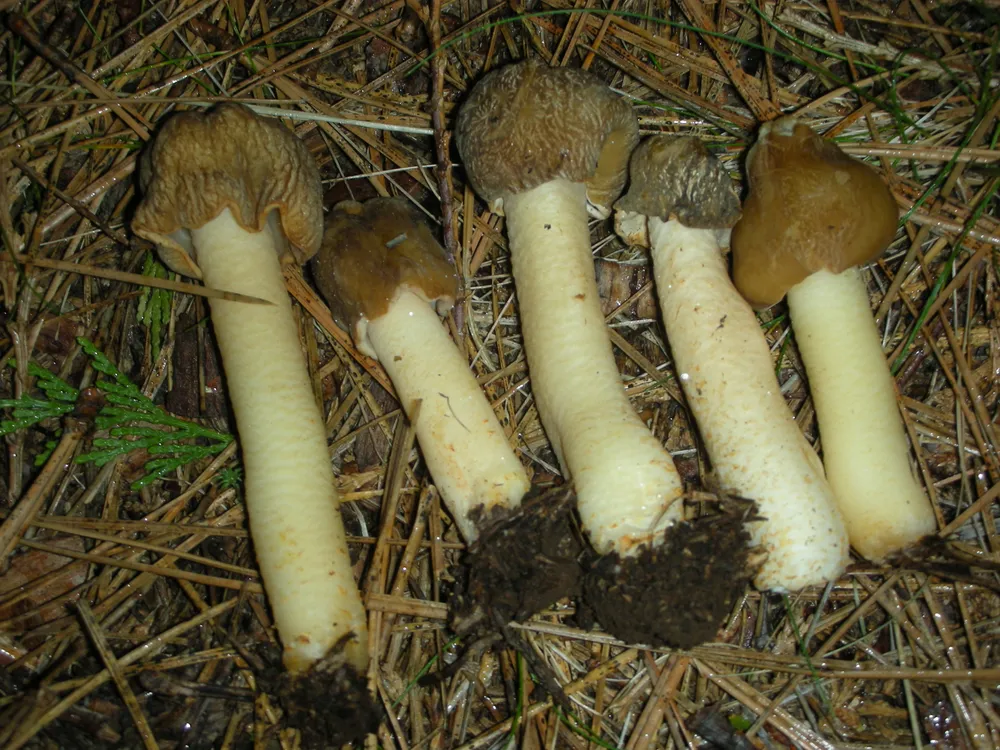
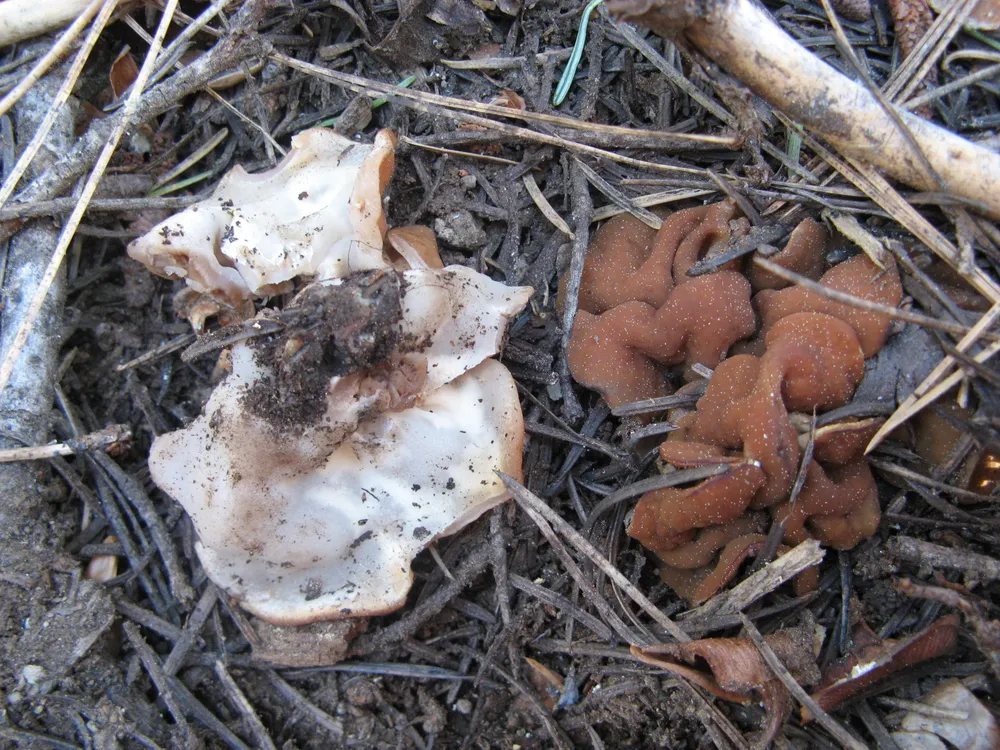
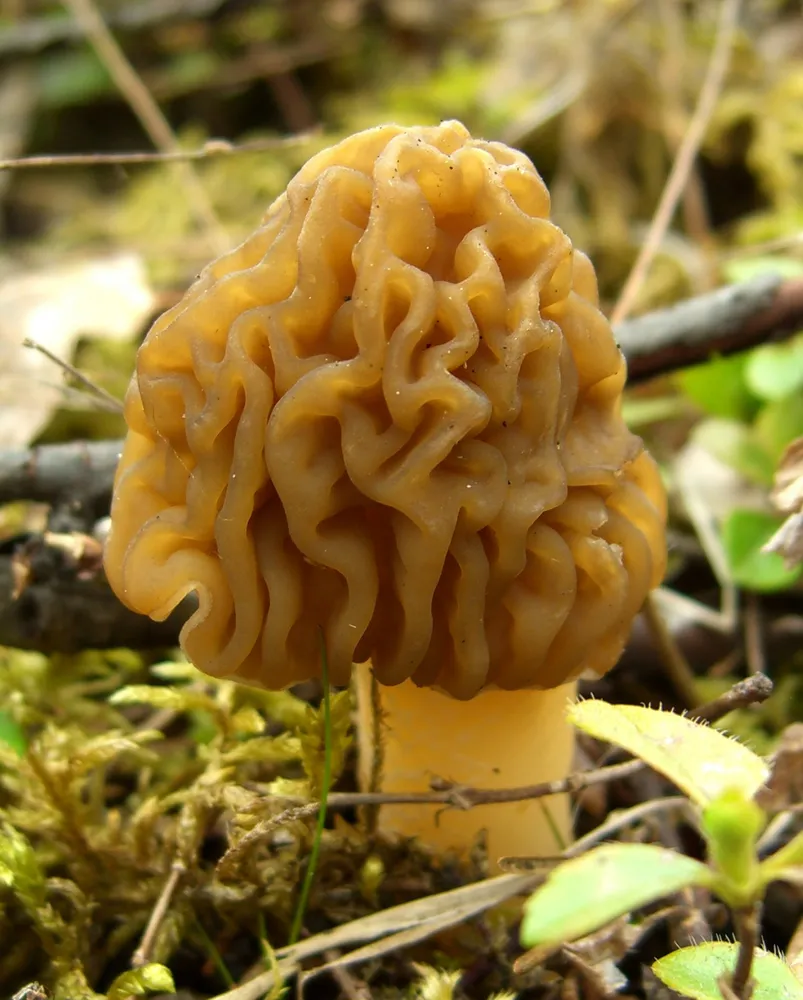
With Morchella esculenta (common morel, edible!) — a pitted, net-like cap with regular pits, hollow inside. With Morchella conica (black morel, edible!) — also pitted, conical in shape. With Gyromitra gigas (snow false morel, also poisonous) — larger, paler cream-chestnut, in the same habitats. With Gyromitra infula (pouched false morel, also poisonous) — smaller, in autumn, a miter-shaped cap with pointed lobes.
What if it's a beloved family recipe?
I understand — in many Ukrainian families, false morels are part of the spring tradition. But this is a historical recipe from the era before gyromitrin was discovered (1968). Grandma and grandpa ate them and "nothing happened" — most likely thanks to individual NAT2 tolerance and luck with particular portions. What we know about toxicology today says: better not. Switch to morels (Morchella) — truly edible spring mushrooms with the same "springtime" flavor profile, without the risk of liver poisoning. Or to St George's mushroom (Calocybe gambosa) — another tasty spring find.
Is False morel edible or poisonous?
What kind of spore-bearing surface does False morel have?
Sources
- [1]Вікіпедія (українська)
- [2]Атлас грибів України, Зеров Д.К. (1979)
- [3]MycoBank Database
- [4]Index Fungorum
- [5]GBIF
- [6]iNaturalist Ukraine