Helvella monachella
Expert-verifiedUpdated October 3, 2026
Passport
- Edibility
- Inedible
- Season
- Mar — Oct
- Hymenophore
- Smooth
- Cap color
- Brown
- Size
- Small (up to 5 cm)
- Smell
- Chemical
- Reviewed
- Yes ✓
Quick answers
Where to look?
Deciduous forest, Mixed forest, Conifer forest
When does it appear?
Mar — Oct
Active months: March, April, May, June, July, August, September, October.
How to recognize it? Three signs
- Cap color: Brown, Dark brown, White
- Cap shape: Irregular
- Smell: Chemical
Fruiting season
March – October
Description
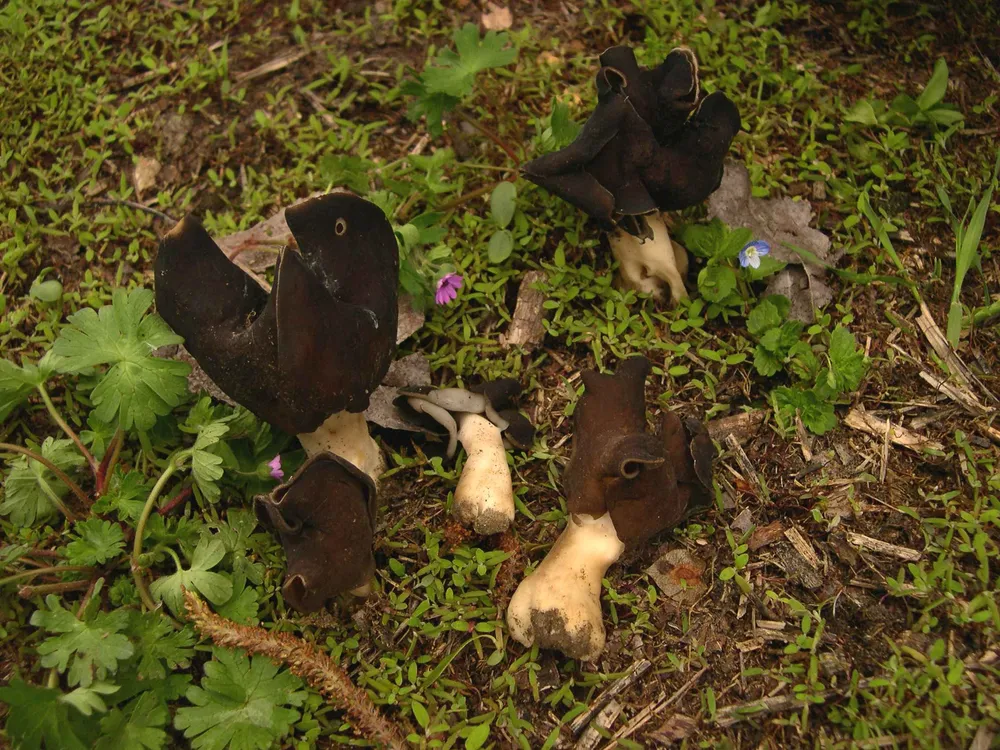
Helvella monachella is the most elegant of Ukraine's helvellas. A small cap with 2-3 vertical lobes that resembles the silhouette of a monk in a black cassock: the upper part is gray-chestnut-brown and dark, while the underside is white. The name stuck precisely because of this contrast. Its size is modest — a 2-4 cm cap on a short white stem.
This is an inedible mushroom and, on top of that, listed in the Red Data Book of Ukraine (3rd edition, 2009). Do not pick it, not even out of curiosity. The flesh has a strong unpleasant smell, as is often the case with species that deter animal attention. Zero culinary value, a very real protected status. If you come across it, which is very rare, take a photo, note the coordinates, and leave the mushroom in peace.
In Ukraine it is documented in the central part of the country — Dnipropetrovsk, Poltava, Cherkasy, and Kirovohrad regions, as well as Kyiv, Chernihiv, and Odesa regions. It likes the edges of deciduous and conifer forests and sandy soils. The season is unusually long — March–October, but fruiting is irregular and solitary.
Cap
Cap 2-4 cm, saddle-shaped, with 2-3 vertical lobes. The upper (outer) surface is gray-chestnut-brown, dark, with a silky sheen. The underside is white, and the contrast is visible from afar. The margins are wavy and uneven. This is the species' calling card — a two-toned saddle-shaped cap.
Hymenophore
A smooth hymenium on the upper (darker) surface of the cap lobes. An ascomycete structure — spores mature in asci. Spore print white. Spores ellipsoid, smooth, typical of the genus.
Stem
Stem 2.5-4.5 cm tall, 3-7 mm thick, cylindrical, widening at the base. White, smooth, without pronounced ribs. Hollow inside.
Flesh
The flesh is thin, waxy-brittle, white. Does not change color when cut. It has a strong unpleasant smell — a diagnostic feature of the species.
Smell
A distinct unpleasant smell of the flesh is one of the key diagnostic features. It is described as «musty» or «chemical». We don't taste it — it is inedible and red-listed.
›Scientific synonyms (7)
Leptopodia monachella (Scop.) Boud., Phallus monachella Scop., Helvella infula Schaeff., Elvela infula Schaeff. (1774), Helvella brunnea J.F. Gmel., Gyromitra infula (Schaeff.) Quél., Physomitra infula (Schaeff.) Boud.
Lookalikes
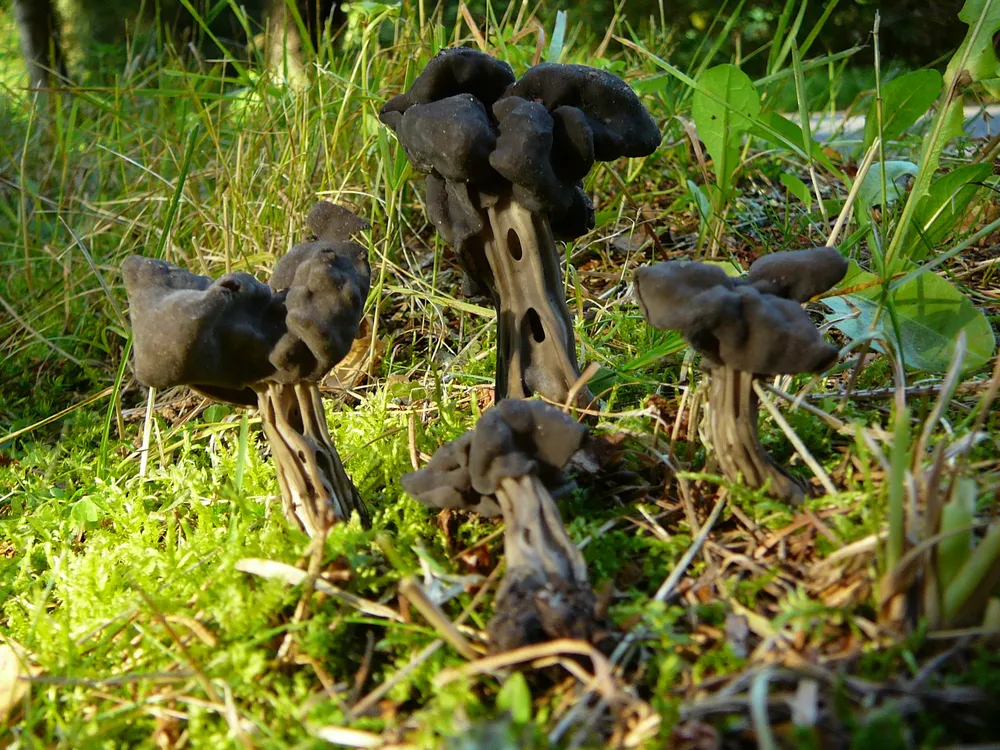
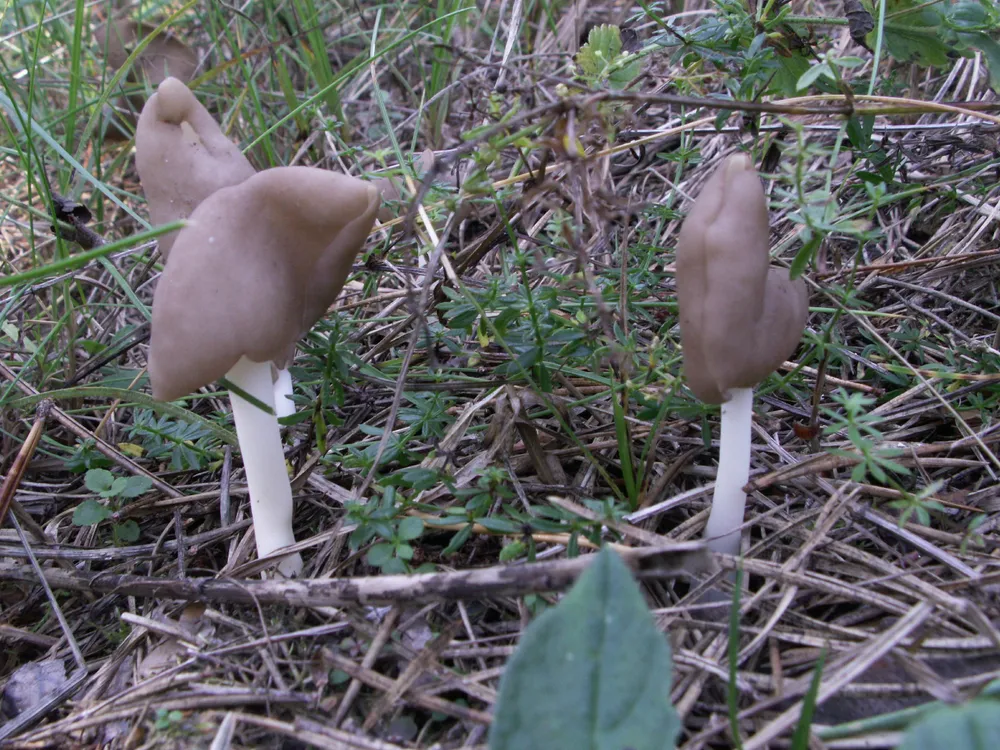
Related species
Mushrooms of the same genus and habitat — to study side by side and never mix up.
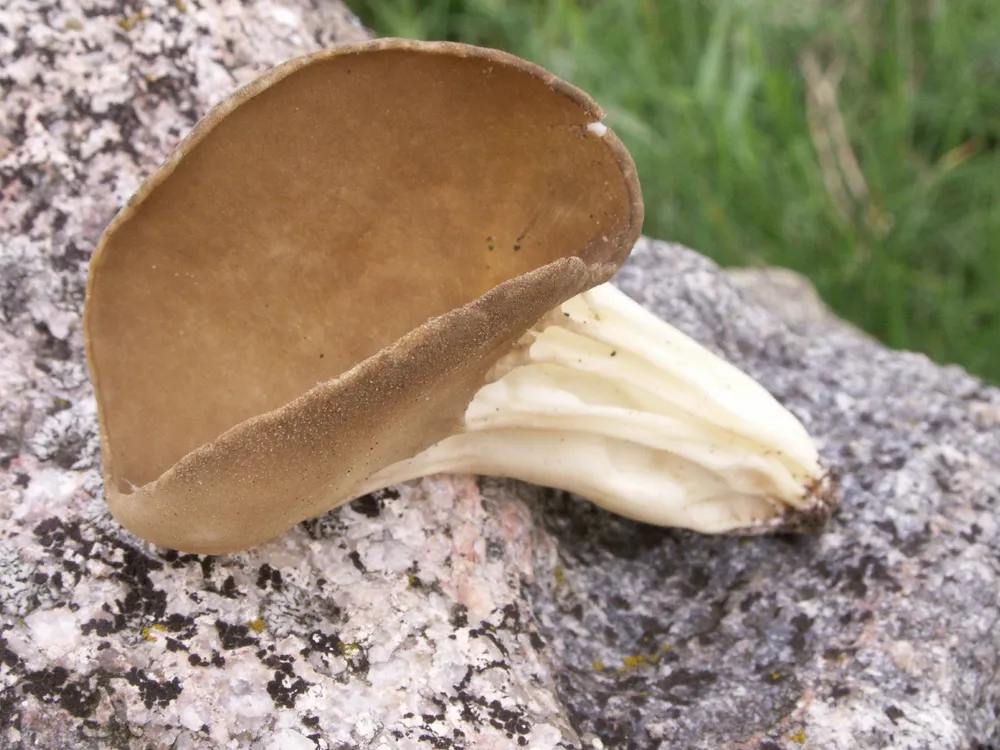
Vinegar cup
Helvella acetabulum
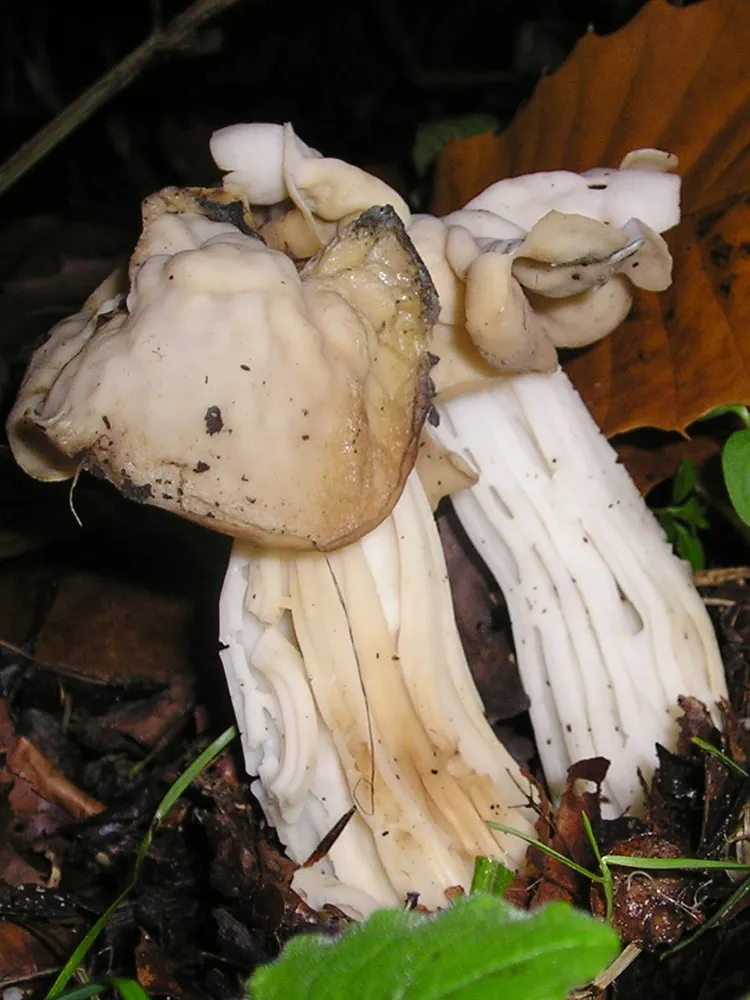
White saddle
Helvella crispa
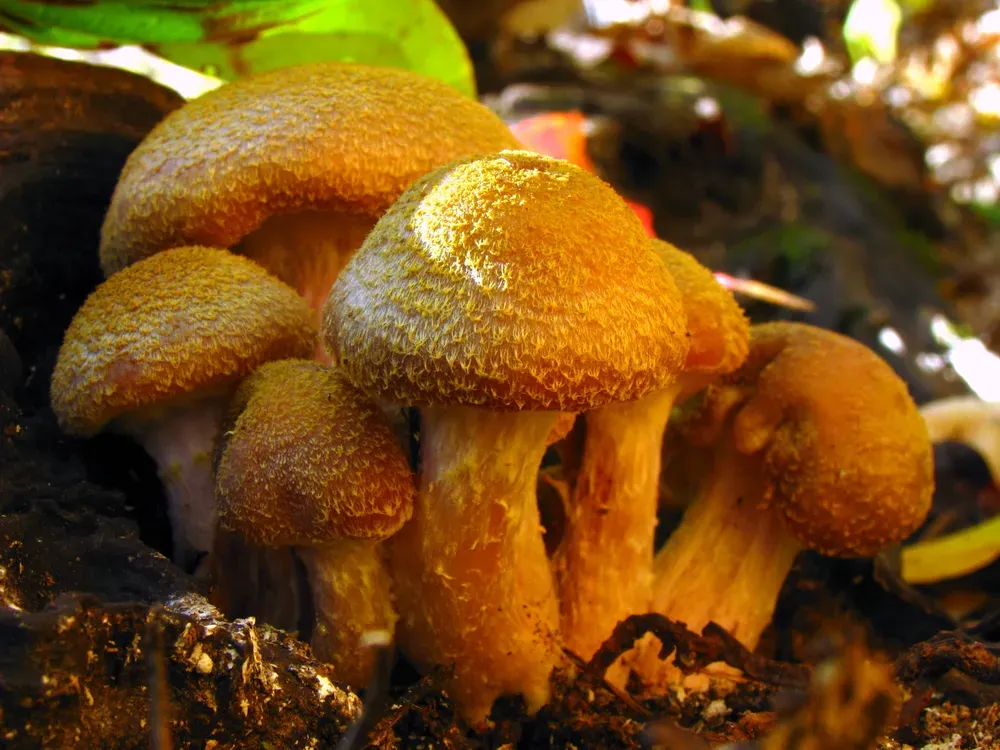
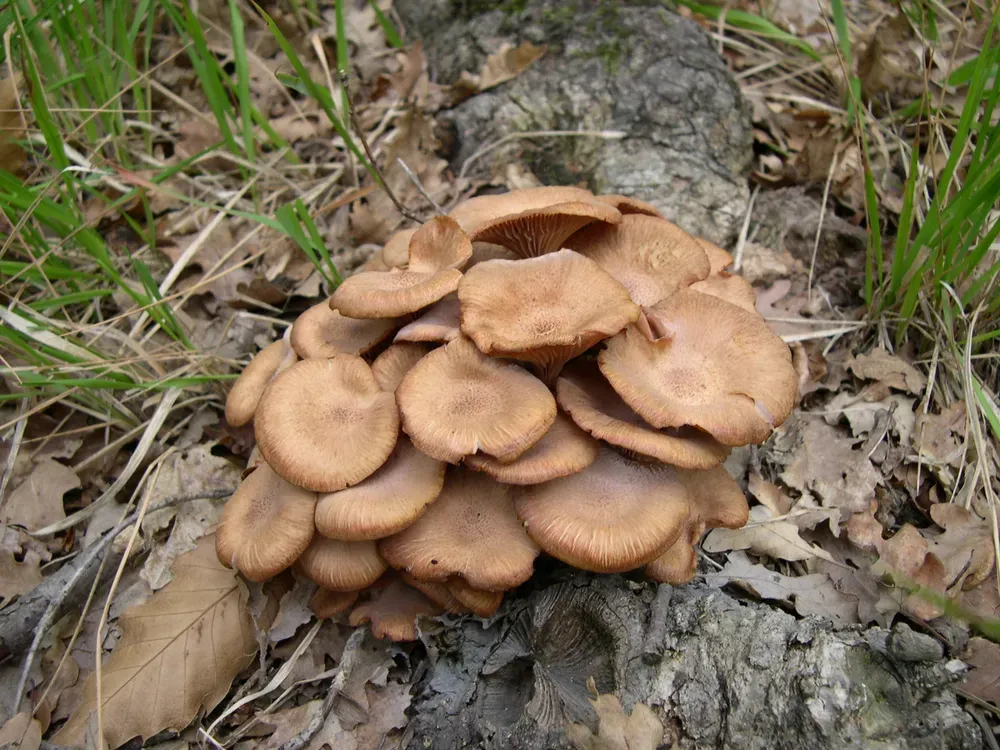
Bulbous honey fungus
Armillaria gallica
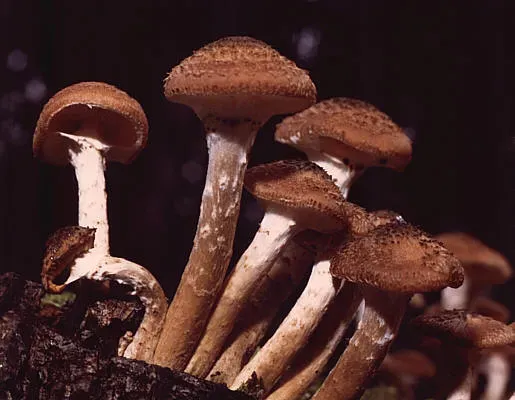
Dark honey fungus
Armillaria ostoyae
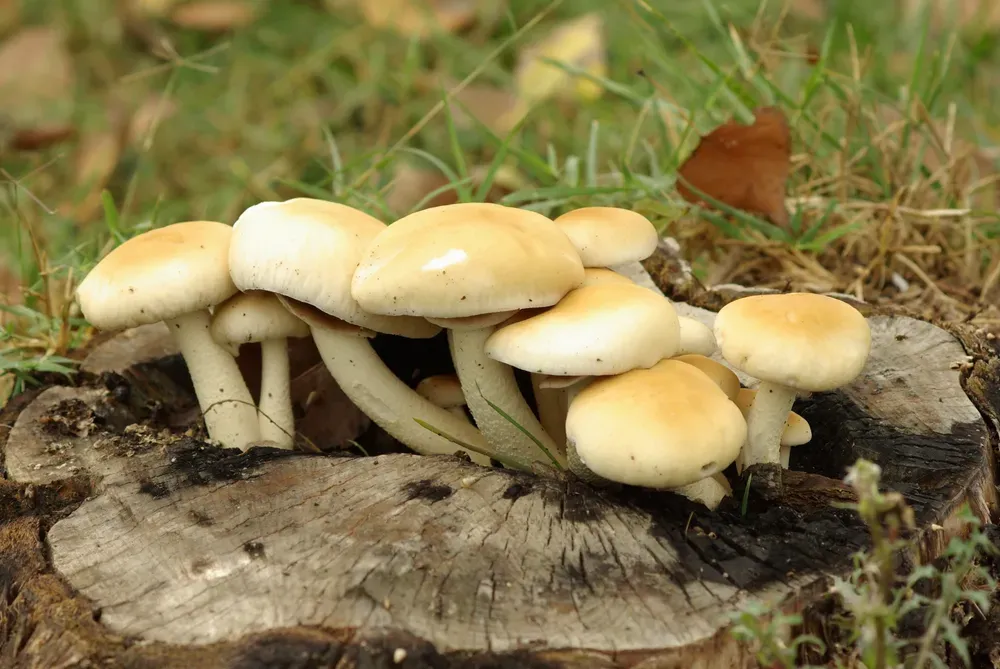
Poplar fieldcap
Cyclocybe aegerita
Ringless honey fungus
Desarmillaria tabescens
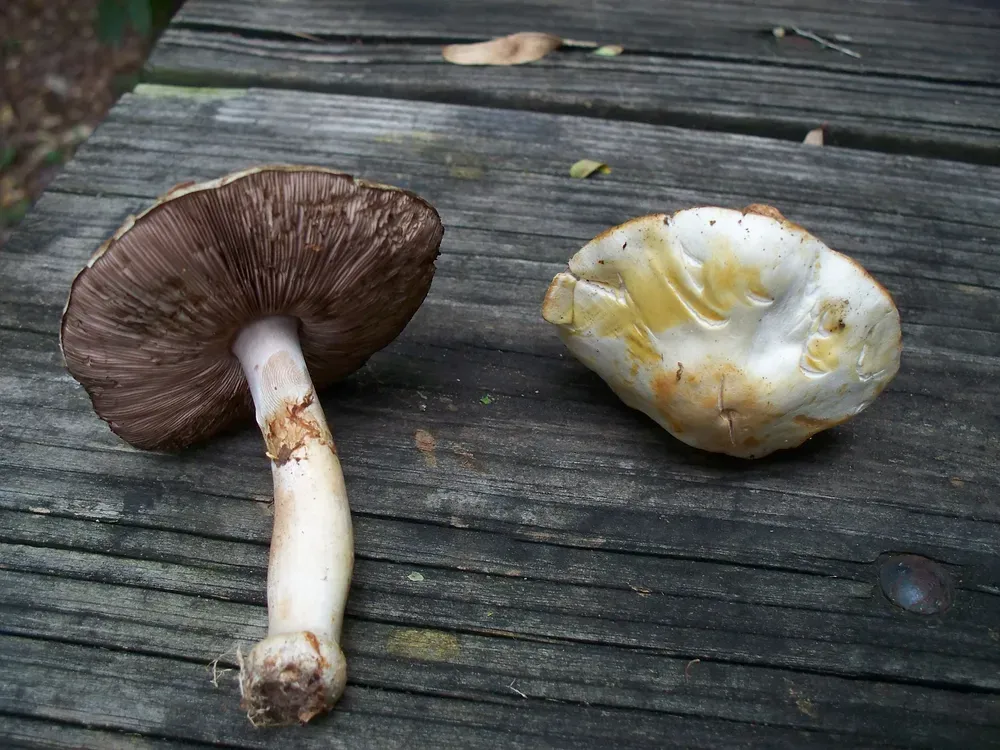
Agaricus abruptibulbus
Agaricus haemorrhoidarius
Agaricus haemorroidarius
Frequently asked questions
Can you pick it?
NO. This is a Red Data Book species (Red Data Book of Ukraine, 3rd edition). Picking it is prohibited by law. Plus, the mushroom is inedible with an unpleasant smell. There is no reason at all to put it in your basket.
What should you do if you find it?
It is a rarity. Take a photo, note the coordinates, date, and circumstances of the find. Leave it where it is. If you want to add it to a scientific database, report it to iNaturalist Ukraine or a local nature conservation center.
Where should you look for it?
On the edges of deciduous and conifer forests, on sandy and moderately sandy soils. It likes sunny spots, the edges of forest roads, small clearings. Solitary — never in groups.
Which regions of Ukraine is it found in?
Central Ukraine: Dnipropetrovsk, Poltava, Cherkasy, Kirovohrad regions. Also Kyiv, Chernihiv, and Odesa regions. These are the locations documented in the Red Data Book. It has not been recorded in the Carpathians or Polissia.
When should you look for it?
The season is very long — March–October. That is unusual for helvellas. But fruiting is solitary and irregular — the mushroom may appear in April and again in September in the same spot, or not appear at all.
Why is it so hard to find?
Several reasons: its very small size (a 2-4 cm cap), its camouflaging gray-brown color, solitary fruiting, and a limited range. Plus, the population has declined over recent decades due to landscape changes. It is a classic «background rare species».
What is it confused with?
With other small helvellas — especially Helvella ephippium and young Helvella lacunosa. What sets this species apart: a clear two-toned contrast (dark cap, white stem), vertical cap lobes, and a strong unpleasant smell. Young H. lacunosa lacks such a distinct smell.
Can it be mistaken for a morel?
Only at a very quick glance. Morels are much larger (5-15 cm), have a honeycomb cap with pits and ridges, and grow in spring. H. monachella is small (up to 4 cm), with a smooth lobed cap. Silhouette and size tell them apart without fail.
Is Helvella monachella edible or poisonous?
What kind of spore-bearing surface does Helvella monachella have?
What does the cap of Helvella monachella look like?
What does the stem of Helvella monachella look like?
Sources
- [1]Вікіпедія (українська)
- [2]Атлас грибів України, Зеров Д.К. (1979)
- [3]MycoBank Database
- [4]Index Fungorum
- [5]GBIF
- [6]iNaturalist Ukraine