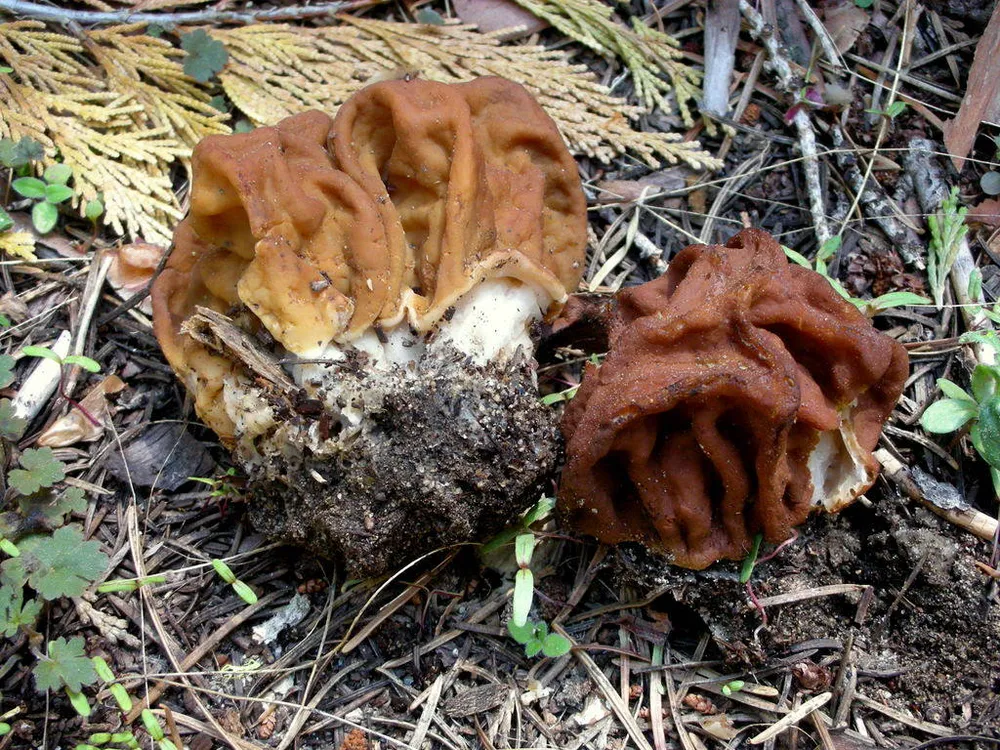
Snow false morelGyromitra gigas
Expert-verifiedUpdated October 3, 2026
Passport
- Edibility
- Poisonous
- Season
- Apr — Jun
- Hymenophore
- Smooth
- Cap color
- Cream
- Size
- Large (over 15 cm)
- Smell
- Pleasant
- Reviewed
- Yes ✓
POISONOUS
Eating it causes poisoning. Do not pick it unless you have identified it with certainty.
Gyromitrin poisoning — serious and potentially fatal.
Active toxins: GYROMITRIN (acetaldehyde N-methyl-N-formylhydrazone) — the main toxin In the stomach it turns into monomethylhydrazine (MMH) — the same compound used as rocket fuel MMH is a liver toxin, hemolytic agent, neurotoxin, carcinogen (IARC Group 2B)
Heat lability — INCOMPLETE: When boiled (100°C), it partly evaporates with the steam NOT ALL molecules are destroyed Air-drying (for years) works better than boiling, but not completely either No processing method guarantees safety
Cumulative toxicity: Small doses from repeated meals build up in the liver Regular eaters risk cirrhosis, liver cancers and blood cancers
Individual sensitivity varies widely: Some people can eat a lot with no visible symptoms Others get fatal poisoning from a single serving Genetic variation in the enzymes that metabolize hydrazines
Latency period: 6-12 h (sometimes up to 24 h) — later than with the death cap
Symptoms: Phase I (6-12 h): nausea, vomiting, diarrhea, abdominal pain, headache Phase II (12-72 h): jaundice, dark urine (hemoglobinuria), hepatitis, hemolysis, fever Phase III (3-7 days): in severe poisoning — liver failure, kidney failure, methemoglobinemia, neurological disorders (seizures, coma)
Fatality rate: up to 10-15% after eating a significant amount without timely treatment.
First aid: 1. AMBULANCE — 112 or your local emergency number, without fail, even if you subjectively "feel better" — phase II is still ahead 2. Keep a sample of the mushroom for identification 3. Activated charcoal in the first 1-2 h 4. In hospital: high-dose intravenous PYRIDOXINE (vitamin B6) — the antidote for hydrazine poisoning (25 mg/kg, slowly) 5. Rehydration, monitoring of liver, kidneys and blood 6. Hemodialysis in severe cases
PREVENTION: don't eat false morels. The modern consensus is a complete ban as food, regardless of tradition. In Scandinavia they have been banned from sale since 1986. Poland and Ukraine are gradually moving the same way. There's no culinary value that would make up for the risk.
If you suspect poisoning, call an ambulance immediately: 112 (the European emergency number) or your local emergency number
Quick answers
Where to look?
Conifer forest, Mixed forest
When does it appear?
Apr — Jun
Active months: April, May, June.
How to recognize it? Three signs
- Cap color: Cream, Brown
- Cap shape: Irregular
- Smell: Pleasant
Fruiting season
April – June
Description
The snow false morel, or giant false morel (Gyromitra gigas, synonyms — Discina gigas, Neogyromitra gigas), is a large spring ascomycete with a distinctive convoluted "brain-like" cap, POISONOUS because it contains gyromitrin and related toxic hydrazine compounds. The Latin epithet gigas means "giant" — and the name is apt: the cap can reach 10-20 cm across (twice the size of the common false morel, G. esculenta). Overall look — a convoluted, brain-like, folded and wrinkled cap in cream to chestnut tones, resembling a brain or a walnut, on a short, thick stem.
POISONOUS — contains GYROMITRIN (acetaldehyde N-methyl-N-formylhydrazone), which the body metabolizes into monomethylhydrazine (MMH) — a toxic compound used as rocket fuel. MMH is a liver toxin, hemolytic agent, neurotoxin and carcinogen (IARC Group 2B). Poisoning symptoms — nausea, vomiting, hepatitis, hemolysis, and in severe cases seizures, coma, death.
In folk tradition the snow and common false morels were "considered edible" after several boilings, discarding all the water each time, and drying. The modern consensus — DO NOT EAT IT AT ALL: (1) gyromitrin is partly heat-stable and is not fully destroyed by boiling; (2) it is a cumulative toxin — small doses from repeated meals build up; (3) it is carcinogenic in the long term; (4) individual sensitivity varies widely — one person has no trouble, another gets fatal poisoning from the same amount; (5) in Scandinavia, commercial sale has been banned since 1986 as a food product. In Poland and Ukraine people still traditionally eat it, but it's a gamble.
Key features of Gyromitra gigas: A large, convoluted, brain-like cap (10-20 cm), cream to chestnut in color The cap is not "cup-shaped" but convoluted and folded (like a wrinkled brain or a walnut) A short, thick, WHITISH stem (3-5 cm tall, 3-5 cm thick) Flesh brittle, thin, dirty white Smell faint, pleasant, mushroomy — NOT a warning sign Grows in coniferous forests in spring (April–May) after the snow melts
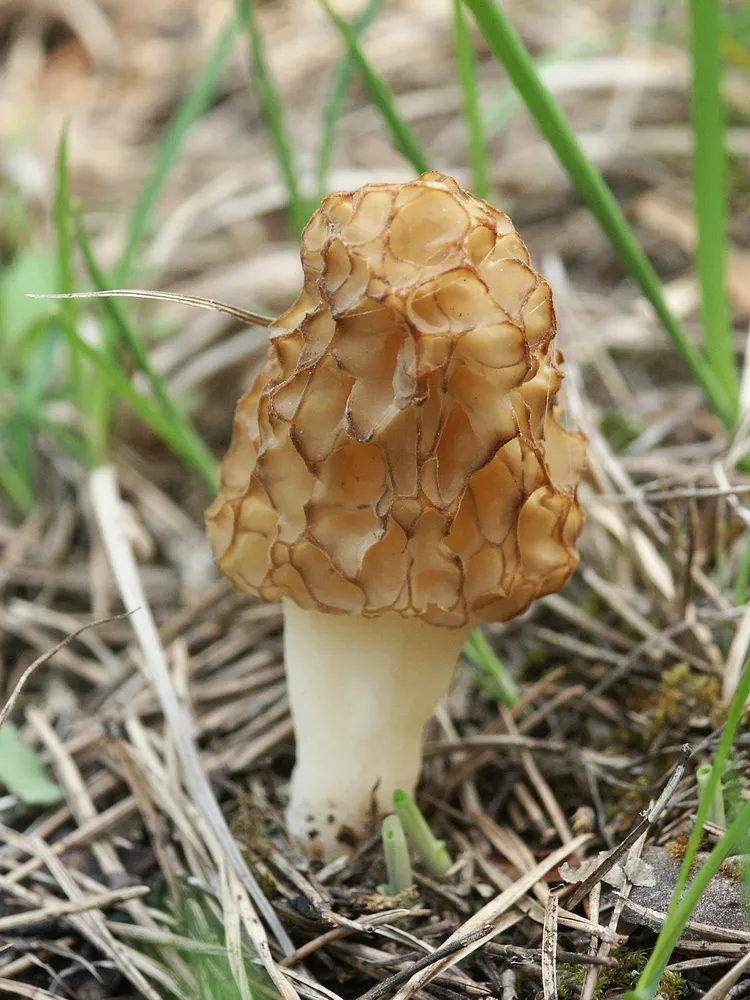
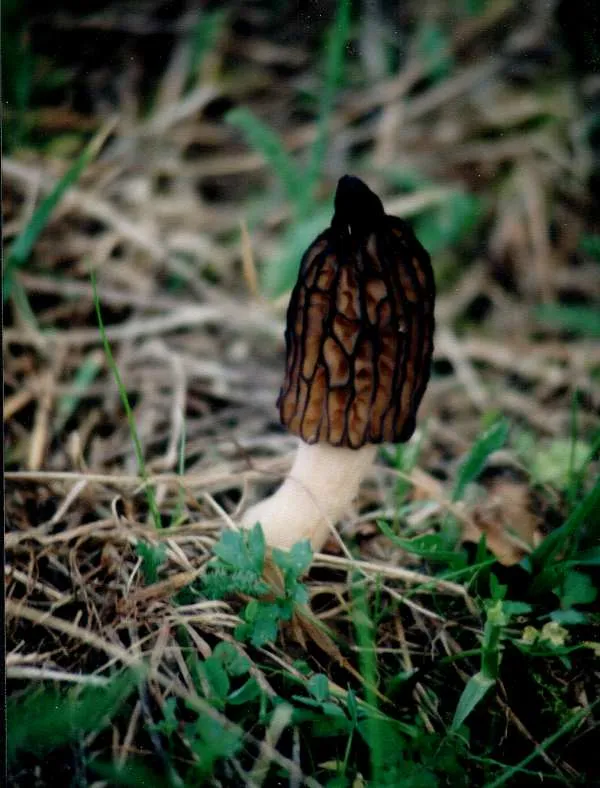
The main thing is to recognize it, because it can end up in your basket alongside true morels (Morchella) — also spring mushrooms with a convoluted cap. The key differences between morels and false morels: Morels (Morchella): the cap is honeycombed, with distinct, regular pits, and the cap is HOLLOW INSIDE False morels (Gyromitra): the cap is convoluted and brain-like, with no regular pits, and the flesh in the cap and stem is COMPLETELY FILLED (thicker)
In Ukraine, Gyromitra gigas is uncommon, mostly in spring pine and spruce-pine forests of the Carpathians, the Carpathian foothills and Polissia. Season: April — May, after the snow melts.
Cap
Cap 10-20 cm across, convoluted and brain-like, folded and wrinkled, with no clear boundary between "cap" and stem. Overall shape globular to flattened-globular, with numerous convoluted folds. Color cream-chestnut, ocher-brown, deeper in the center. Surface matte, with fine felty fibers. Not honeycombed (unlike morels).
Hymenophore
Ascomycete — the spore-bearing surface covers the convoluted outer surface of the cap. Spores form in sacs (asci), not on gills. Spore print yellowish white to pale ocher.
Stem
Stem 3-5 cm tall, 3-5 cm thick — very short and thick, fleshy. Color whitish to cream, with distinct lengthwise folds. Often almost hidden under the cap.
Flesh
Flesh thin, brittle, dirty white to cream. Doesn't change color when cut. The cap and stem are completely filled with flesh (unlike morels, which have a hollow cap).
Smell
Faint, pleasant, mushroomy, with no warning features.
›Scientific synonyms (4)
Helvella gigas Krombh. (1834), Neogyromitra gigas (Krombh.) S.Imai (1938), Maublancomyces gigas (Krombh.) Herter (1950), Discina gigas (Krombh.) Eckblad (1968)
Lookalikes
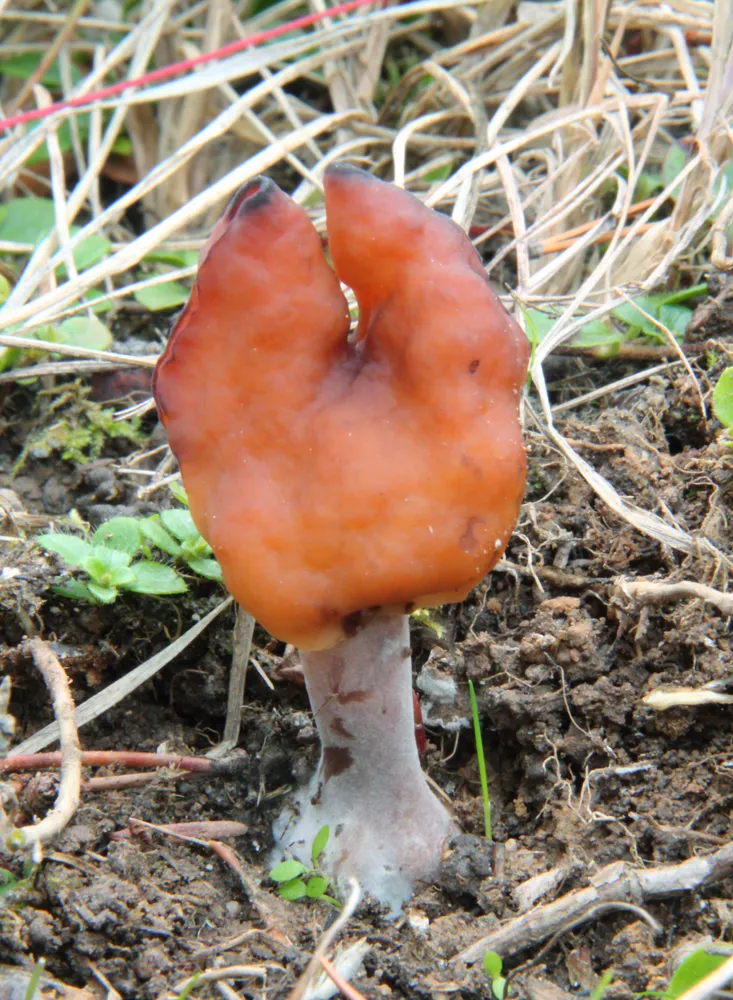
Related species
Mushrooms of the same genus and habitat — to study side by side and never mix up.
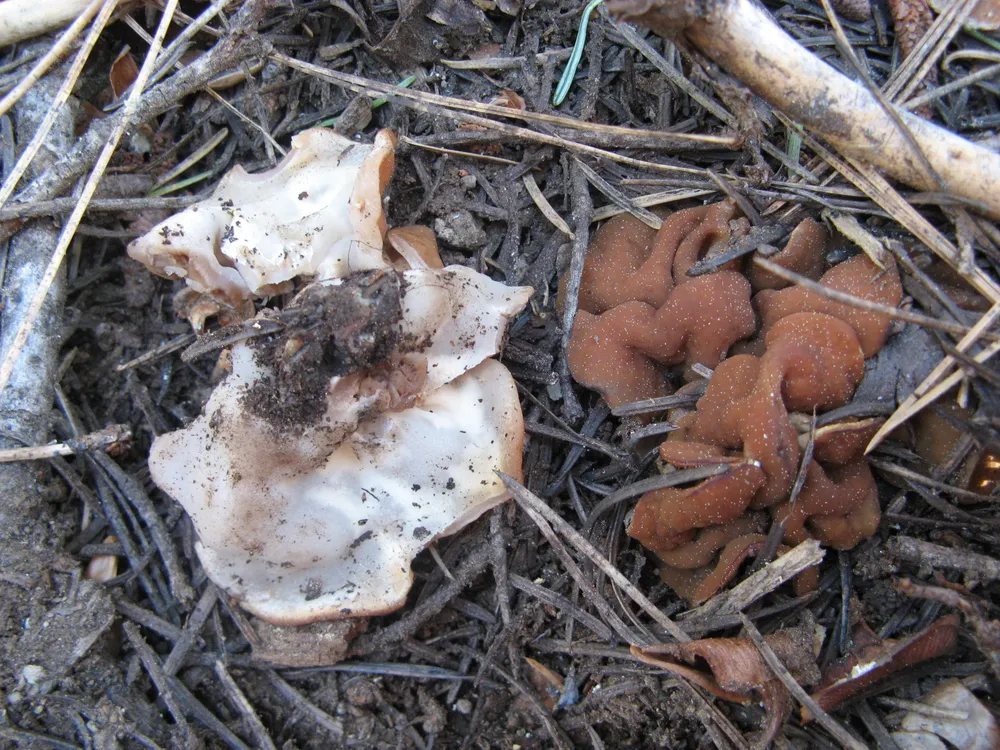
Discina ancilis
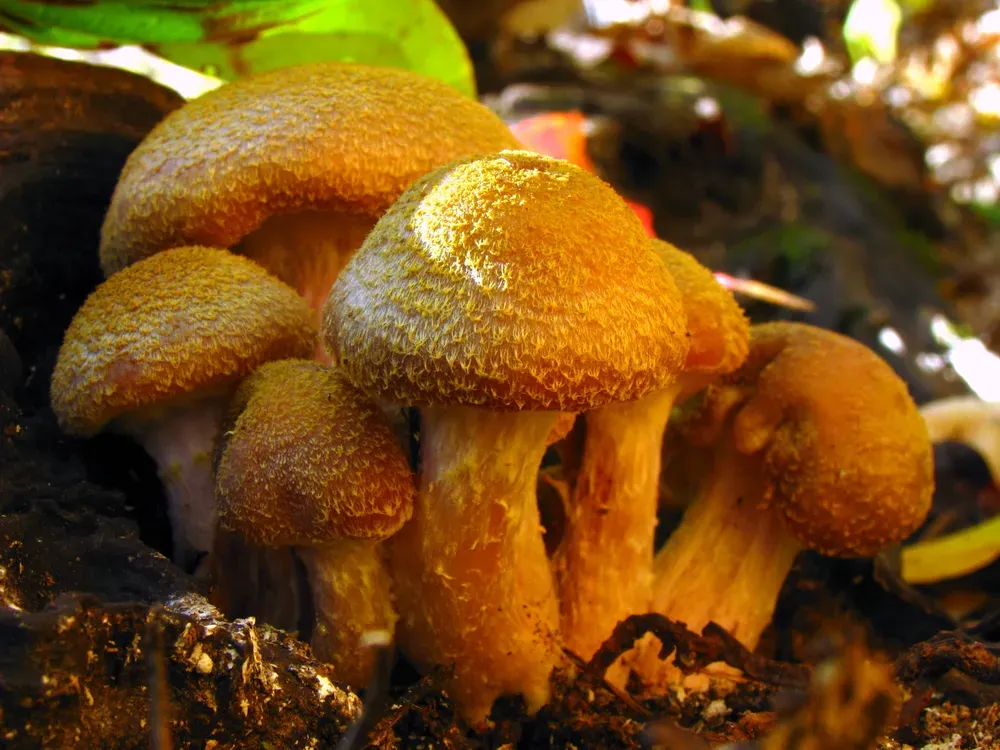
Bulbous honey fungus
Armillaria gallica
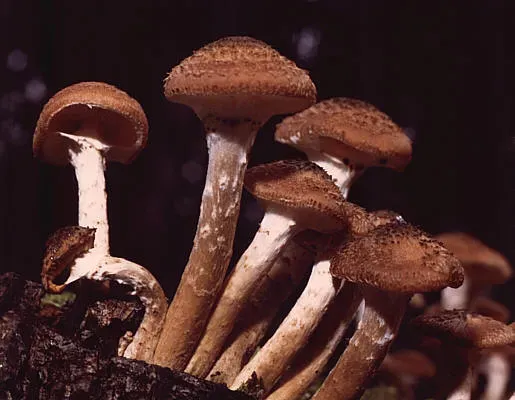
Dark honey fungus
Armillaria ostoyae
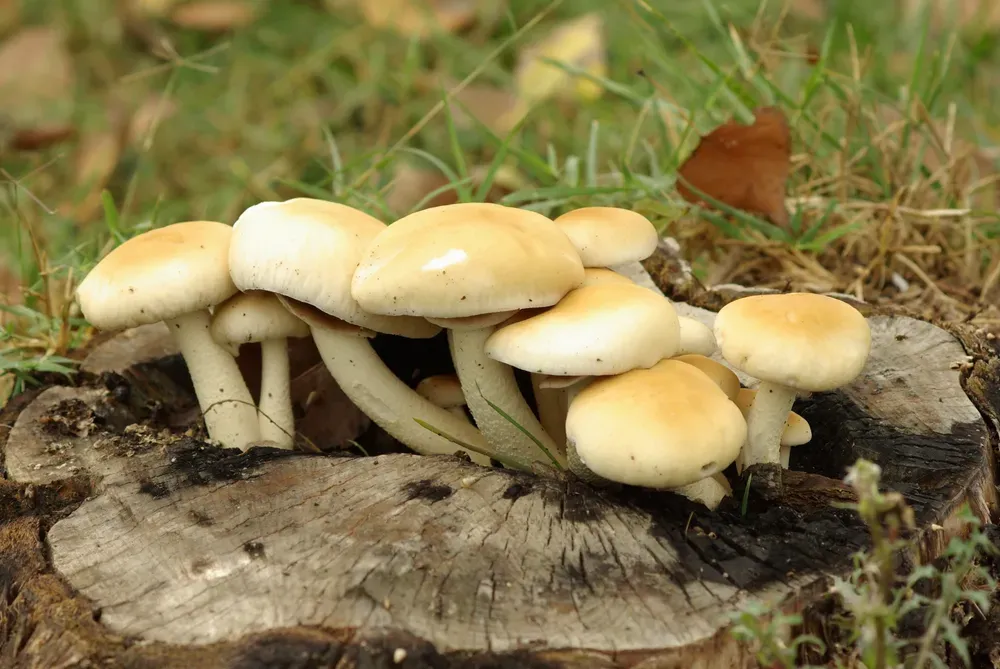
Poplar fieldcap
Cyclocybe aegerita
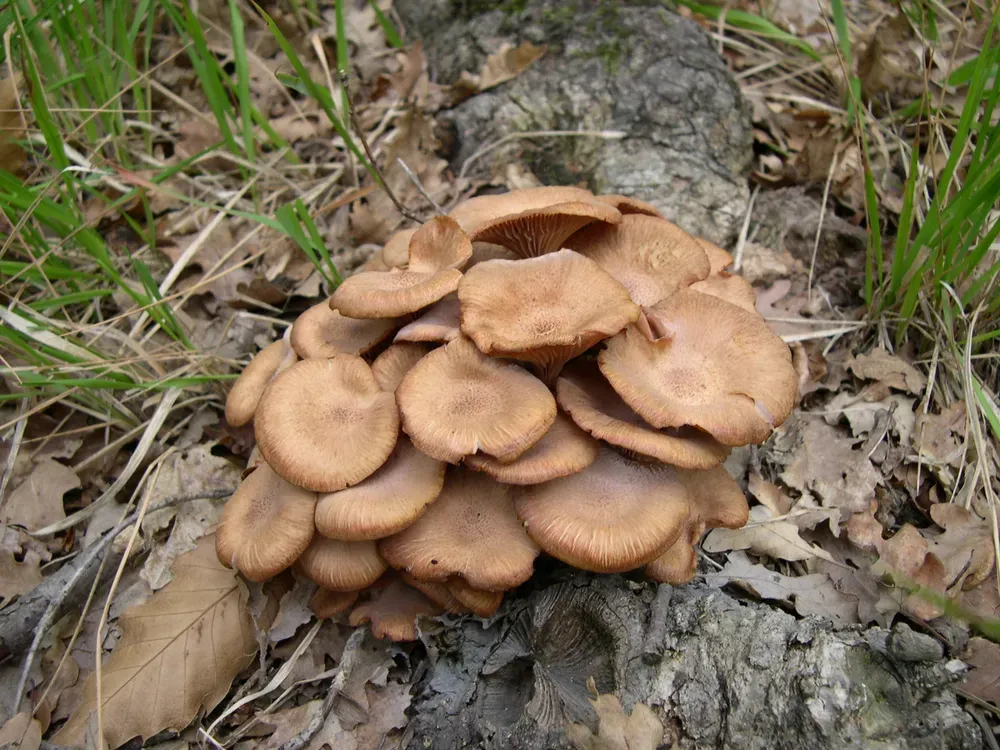
Ringless honey fungus
Desarmillaria tabescens
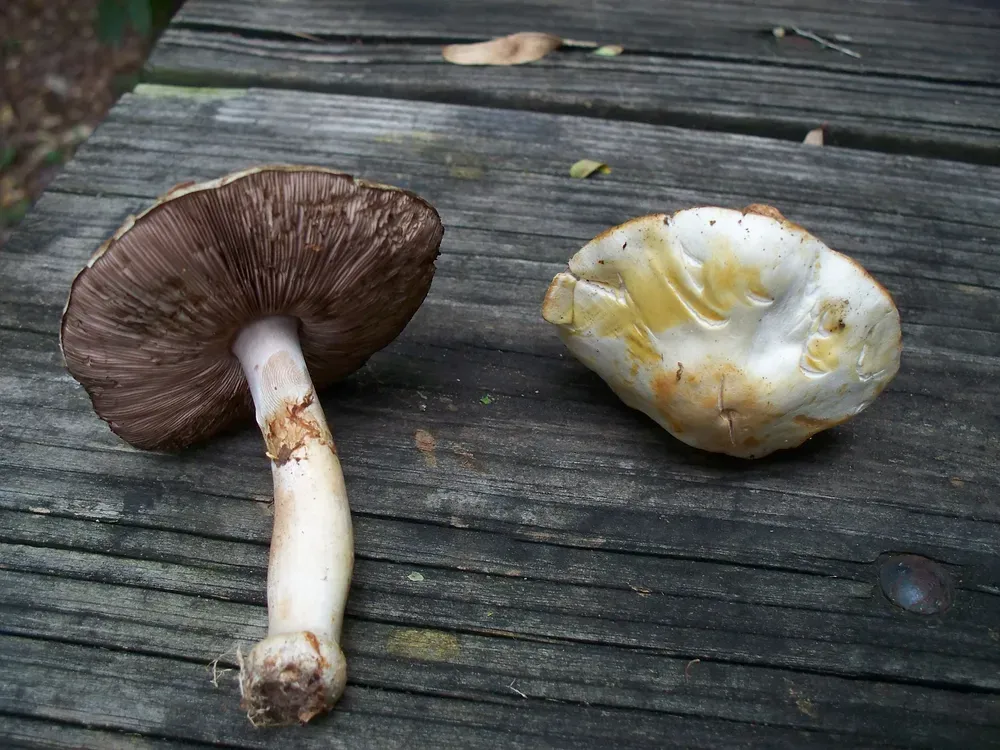
Agaricus abruptibulbus
Agaricus haemorrhoidarius
Agaricus haemorroidarius
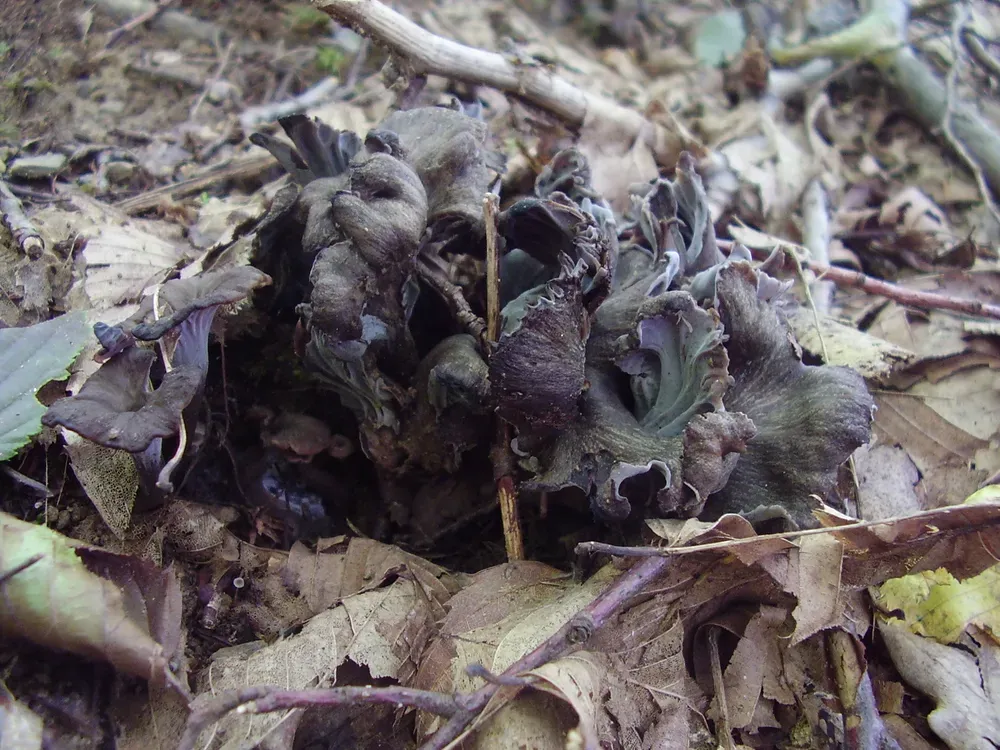
Ashen chanterelle
Cantharellus cinereus
Frequently asked questions
Can you eat it if you boil it well?
Better not. Gyromitrin is only PARTLY heat-labile — boiling neutralizes it incompletely. No processing method (long boiling, drying, soaking) GUARANTEES safety. On top of that, gyromitrin accumulates in the liver and is carcinogenic in the long term. The modern consensus — DO NOT EAT IT AT ALL. No dish is worth the risk of liver poisoning and cancer complications.
What about "grandma's" recipes?
The folk tradition arose before anyone knew about gyromitrin (discovered only in 1968). The fact that many people survived "grandma's recipes" is not proof of safety, but of individual tolerance (the genetics of hydrazine metabolism) and luck with a particular serving (toxin content varies). Scandinavia, Switzerland and Italy have banned commercial sale. The current position of mycologists and toxicologists is a firm DO NOT EAT.
How do you tell it apart from true morels?
The key check is the structure of the cap. Morels (Morchella esculenta, M. conica): the cap is HONEYCOMBED, with distinct, even, regular pits, like a sponge. False morels (Gyromitra): the cap is CONVOLUTED AND BRAIN-LIKE, folded and wrinkled, WITHOUT regular pits, like a wrinkled brain. Second check: morels — the cap is HOLLOW INSIDE (cut it open and you'll see the cavity); false morels — the cap is COMPLETELY FILLED with flesh.
What should you do in case of poisoning?
AMBULANCE — 112 or your local emergency number, immediately, even before symptoms appear, if you know false morels were eaten. Symptoms start after 6-12 h, but that does NOT mean all is well — the liver and blood damage phase is still ahead (after 12-72 h). Keep a sample of the mushroom for identification. In hospital — high-dose intravenous pyridoxine (vitamin B6) as an antidote, rehydration, monitoring of liver and kidneys.
Where can you come across it, so you'll recognize it?
In coniferous forests in spring (pine, spruce) — on the forest floor among moss, after the snow melts. It likes damp, shady spots. Often grows singly or in groups of 2-5 fruiting bodies.
Which regions of Ukraine is it found in?
Uncommon: mostly in the Carpathians, the Carpathian foothills and Polissia — in natural pine-spruce forests.
When can you find it?
April — May, after the snow melts. One of the earliest spring mushrooms — it appears while most others are still asleep.
Which mushrooms is it confused with?
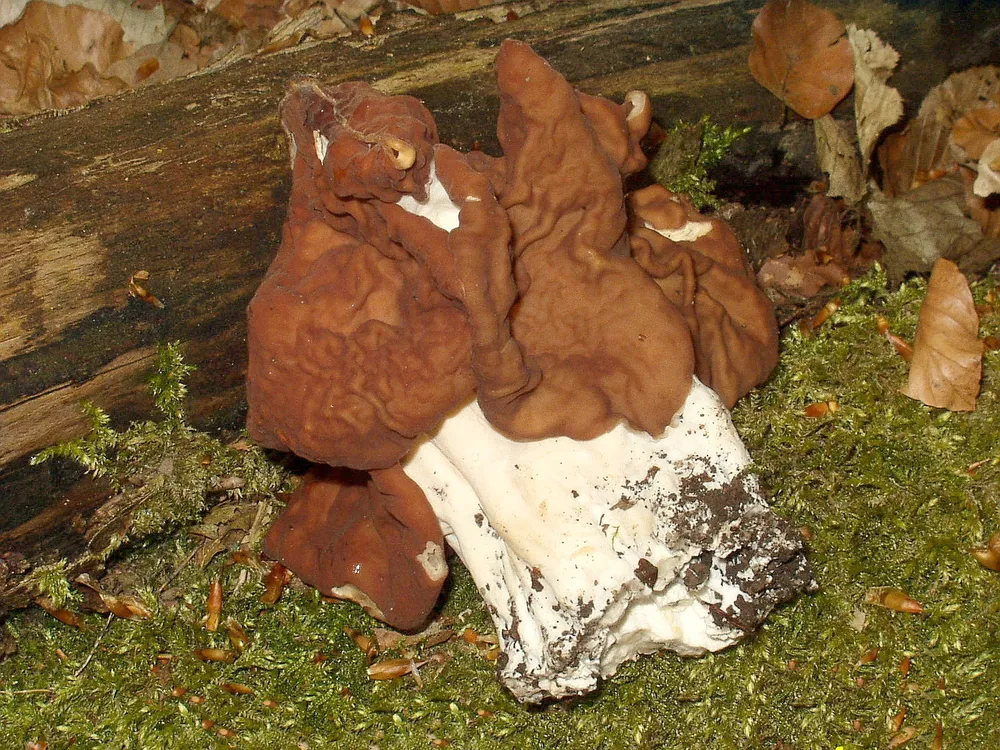
With Morchella esculenta, M. conica (morels, EDIBLE) — honeycombed cap with regular pits, hollow inside. With Gyromitra esculenta (false morel, also poisonous!) — smaller (5-10 cm), darker chestnut-brown, also brain-like. With Gyromitra infula (pouched false morel, also poisonous) — miter-shaped cap, clearly lobed, in autumn.
Is Snow false morel edible or poisonous?
What kind of spore-bearing surface does Snow false morel have?
What does the cap of Snow false morel look like?
What does the stem of Snow false morel look like?
Sources
- [1]Вікіпедія (українська)
- [2]Атлас грибів України, Зеров Д.К. (1979)
- [3]MycoBank Database
- [4]Index Fungorum
- [5]GBIF
- [6]iNaturalist Ukraine