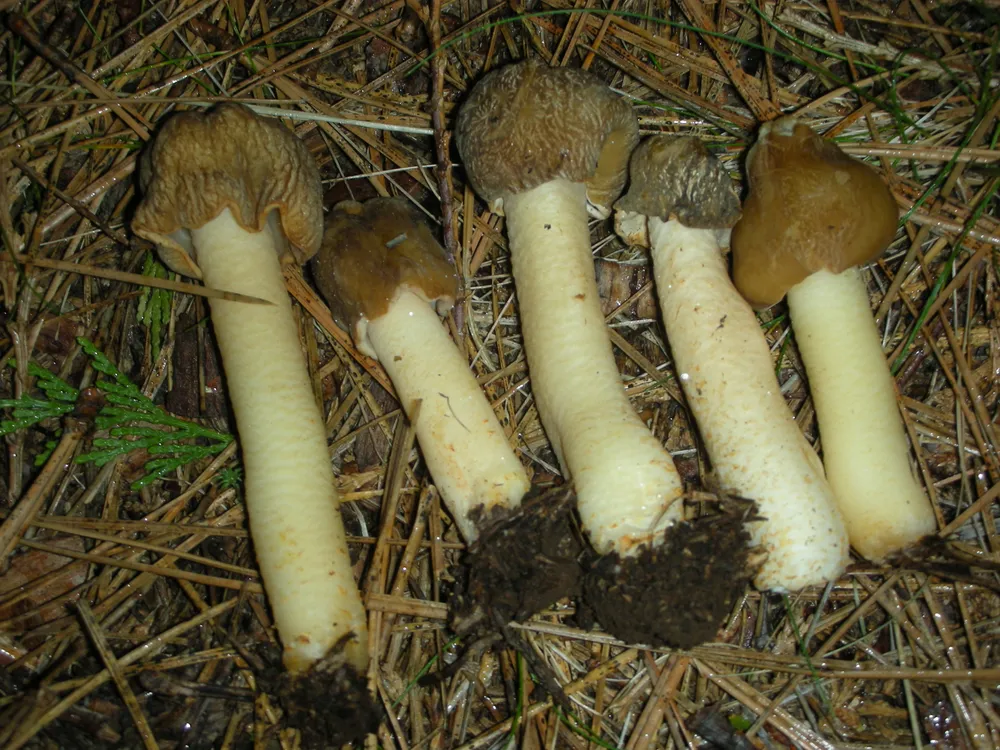
Thimble morelVerpa conica
Expert-verifiedUpdated October 3, 2026
Passport
- Edibility
- Conditionally edible
- Season
- Apr — May
- Hymenophore
- Smooth
- Cap color
- Brown
- Size
- Small (up to 5 cm)
- Smell
- Odorless
- Reviewed
- Yes ✓
Quick answers
Where to look?
Deciduous forest, Mixed forest
When does it appear?
Apr — May
Active months: April, May.
How to recognize it? Three signs
- Cap color: Brown, Cream
- Cap shape: Conical
- Smell: Odorless
Fruiting season
April – May
Description
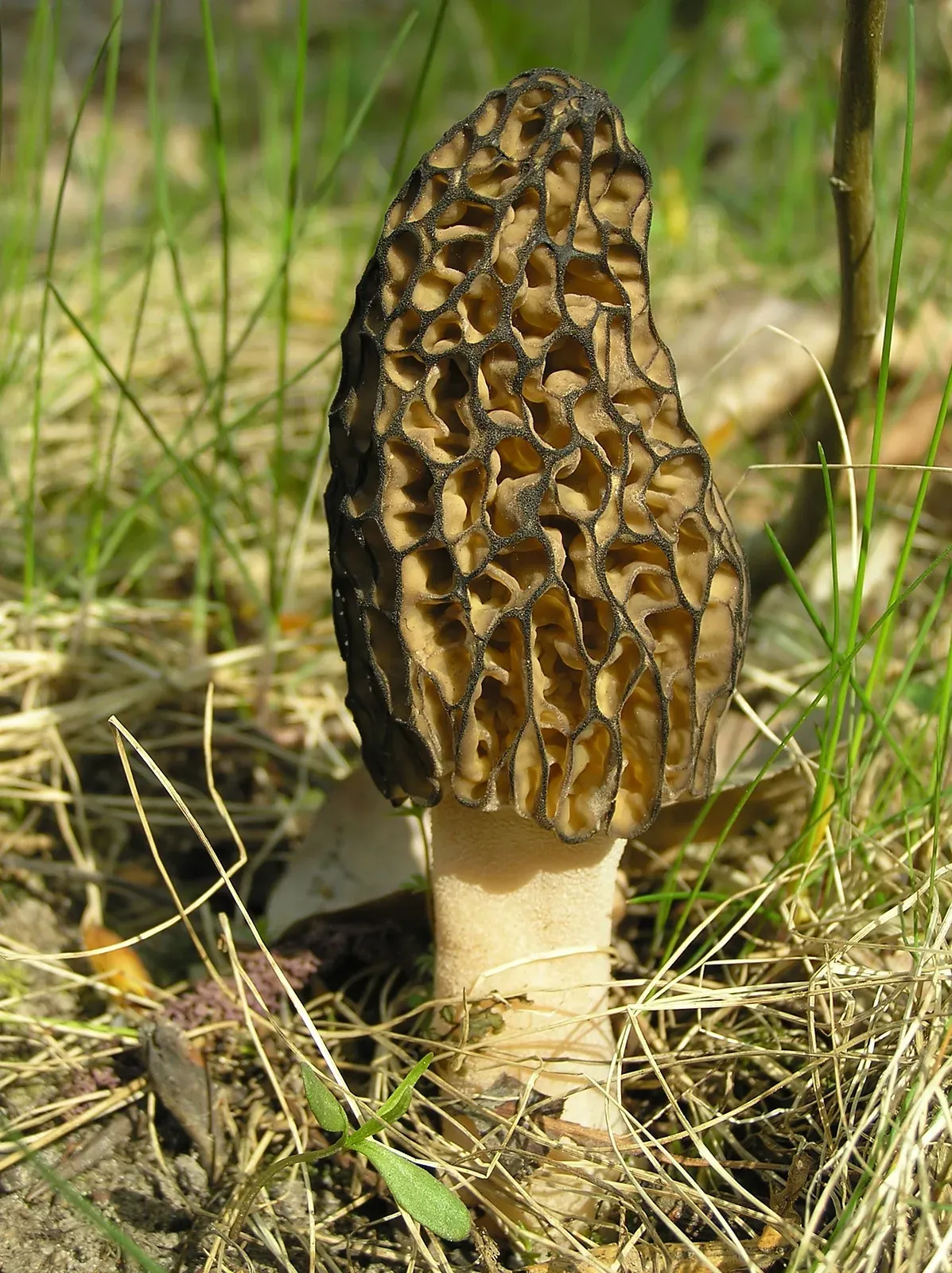
The thimble morel is a spring mushroom, a relative of morels, but not nearly as popular. It looks modest: a thin white stem and a small bell-shaped light-brown cap that resembles a tiny thimble. It is not easy to find — it looks fragile and easily gets lost among last year's leaves.
This is a conditionally edible mushroom of low culinary value. As in all spring ascomycetes, the flesh contains gyromitrin-like compounds, so the thimble morel must not be eaten without mandatory boiling — 10–15 minutes in water, then drain the water. Only after that is the mushroom fit for frying. It must not be eaten raw or undercooked — that risks poisoning.
In Ukraine, it grows mainly in the Forest-Steppe, in deciduous stands of ash, maple and hornbeam, and along forest edges. The season is very short — April–May, in practice just a couple of weeks. Foragers chasing morels often walk right past — the thimble morel is too small for them.
Cap
Cap 1–3 cm tall, bell-shaped or conical (hence the name). Light brown or ochre in color, with a white or cream underside. The surface is smooth or slightly wrinkled, but without a clear honeycomb structure — the key difference from morels.
Hymenophore
A smooth or slightly folded hymenium on the outer surface of the cap. Ascomycete structure: the spores mature in asci inside the hymenial layer. Spores smooth, colorless, elliptical.
Stem
Stem 5–10 cm tall, 0.5–1 cm thick, cylindrical, hollow inside. White or pale yellowish. The surface is finely granular or mealy-scaly. Brittle — breaks easily.
Flesh
Flesh thin, tender, white, brittle. Does not change color when cut. Indistinct in taste and smell.
Smell
A faint mushroomy smell, barely noticeable. Mild taste, without distinct notes.
›Scientific synonyms (4)
Phallus conicus O.F.Müll. (1775), Leotia conica (O.F.Müll.) Pers. (1801), Relhanum conicum (O.F.Müll.) Gray (1821), Monka conica (O.F.Müll.) Kuntze (1898)
Lookalikes
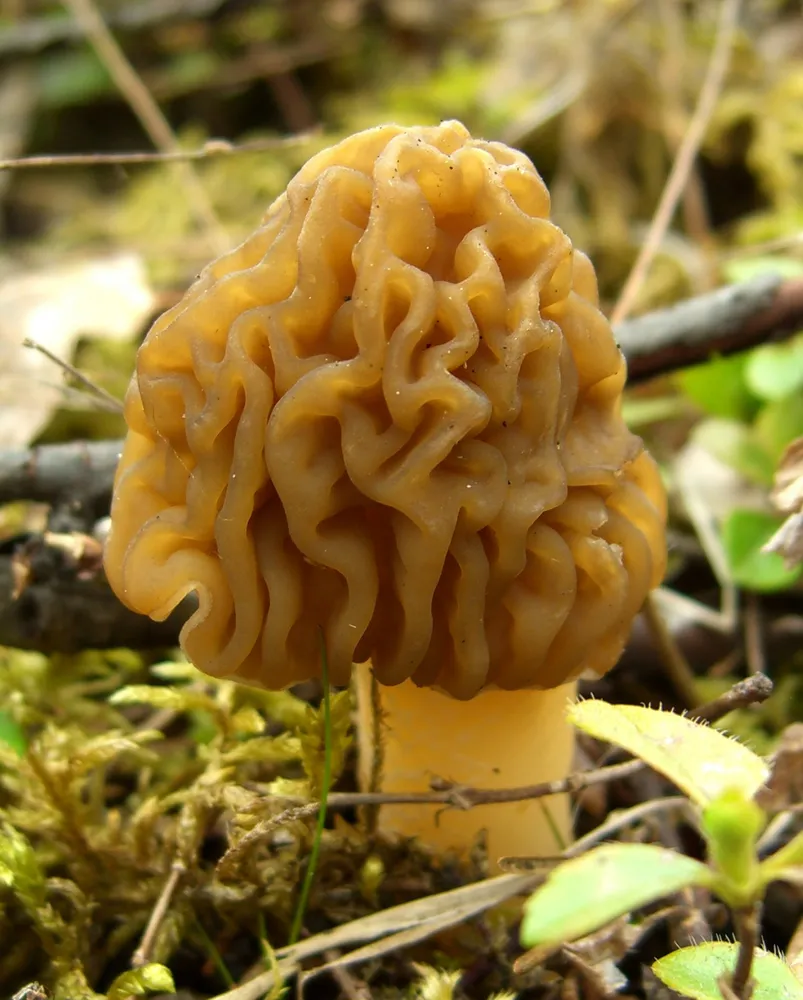
Related species
Mushrooms of the same genus and habitat — to study side by side and never mix up.
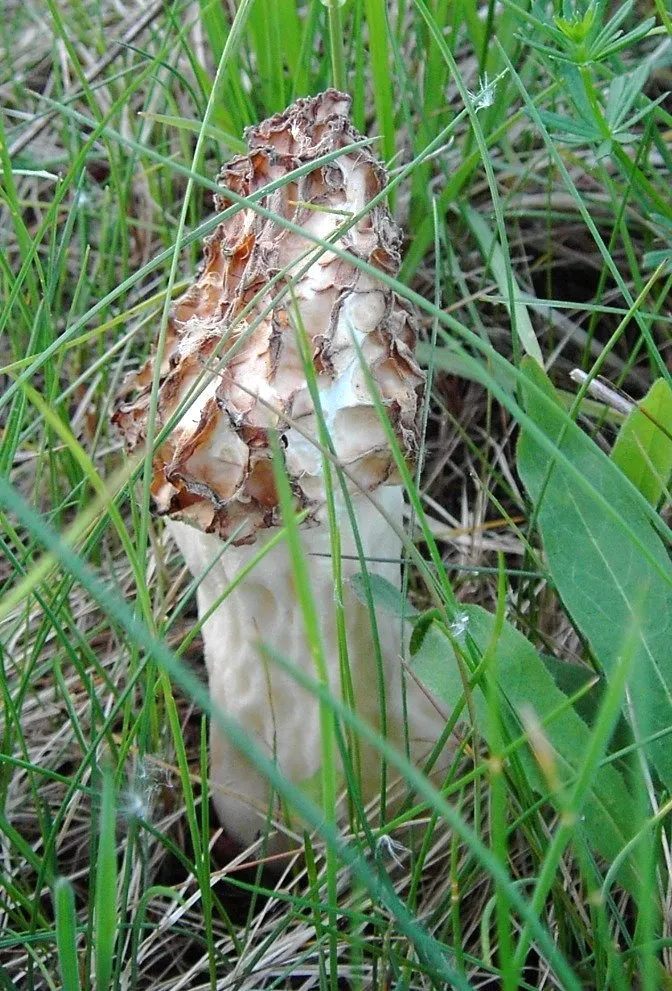
Morchella crassipes
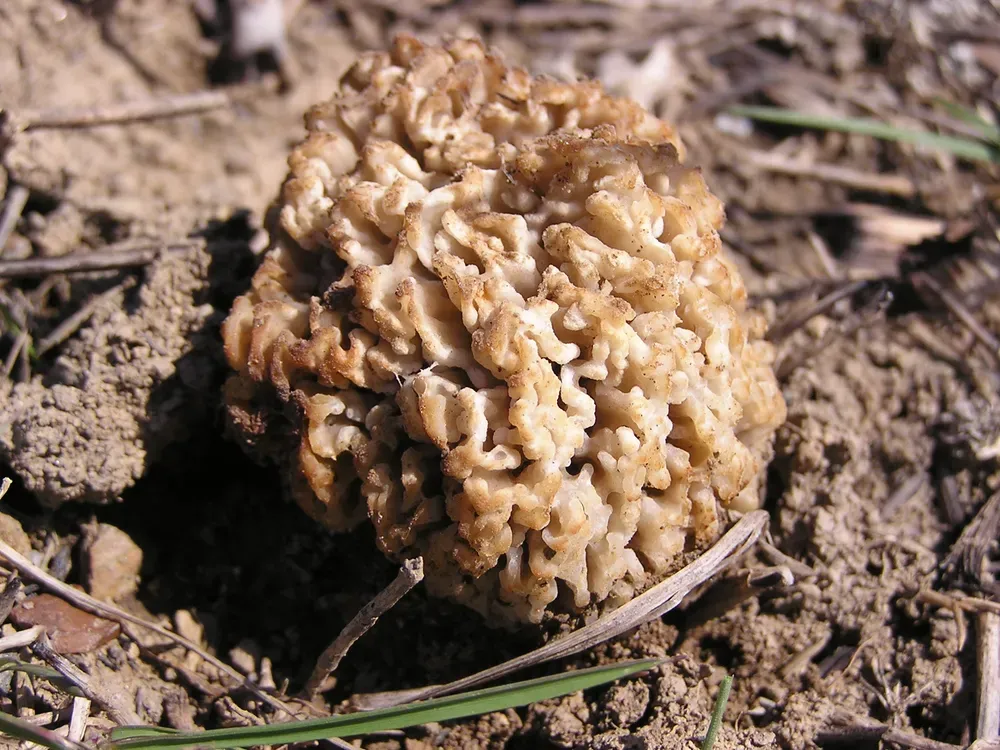
Morchella steppicola
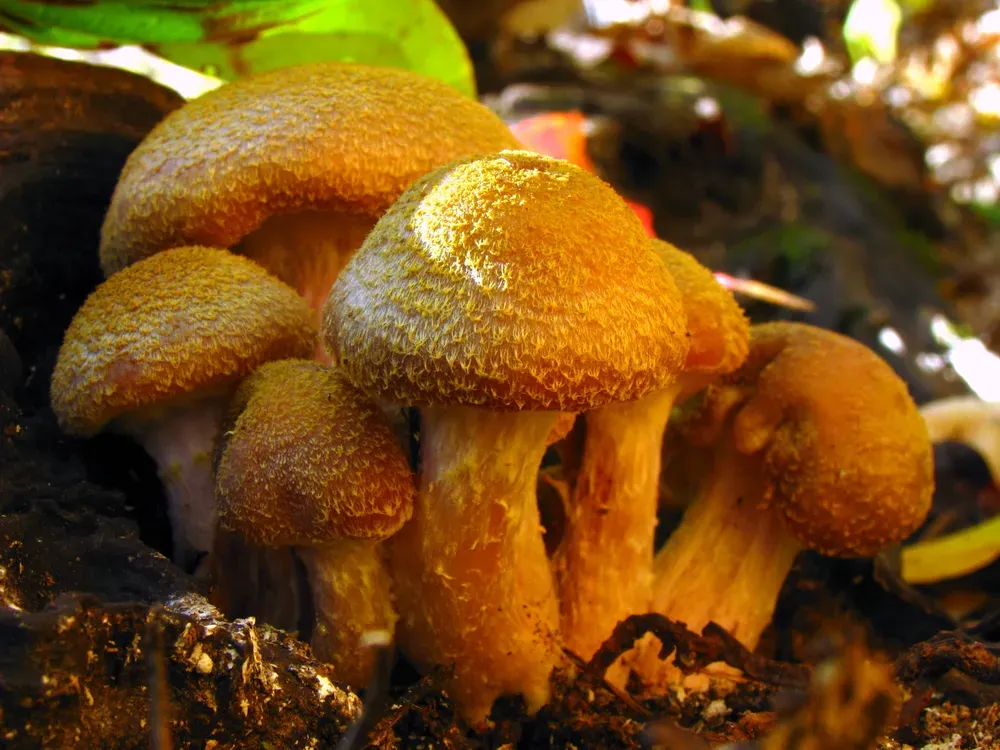
Bulbous honey fungus
Armillaria gallica
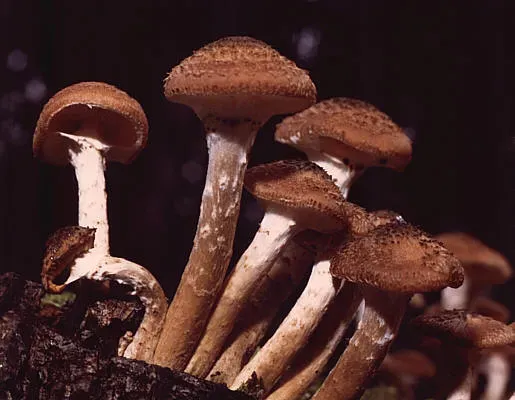
Dark honey fungus
Armillaria ostoyae
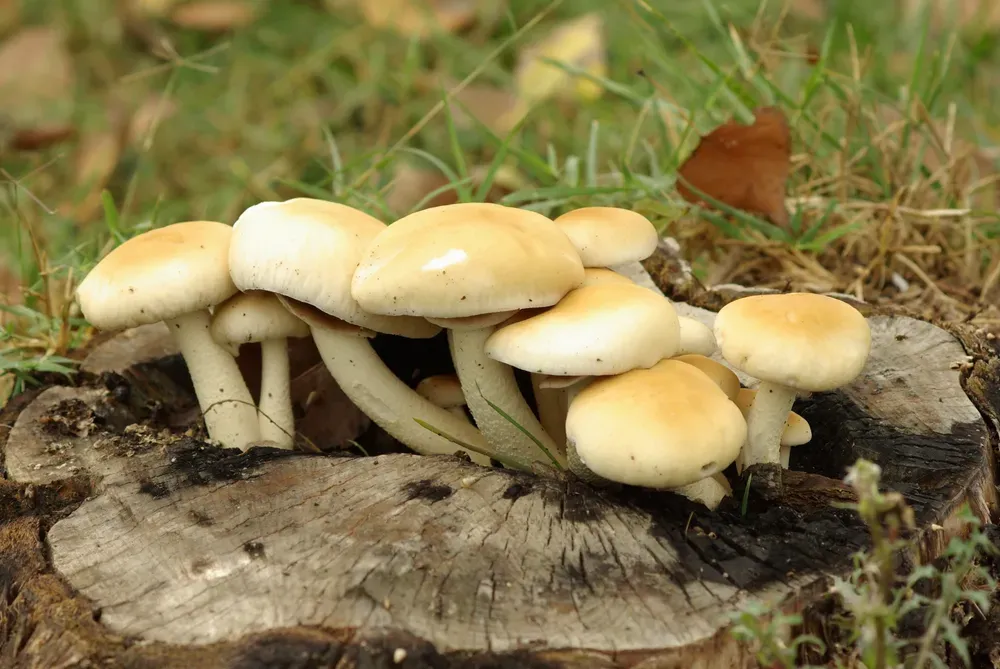
Poplar fieldcap
Cyclocybe aegerita
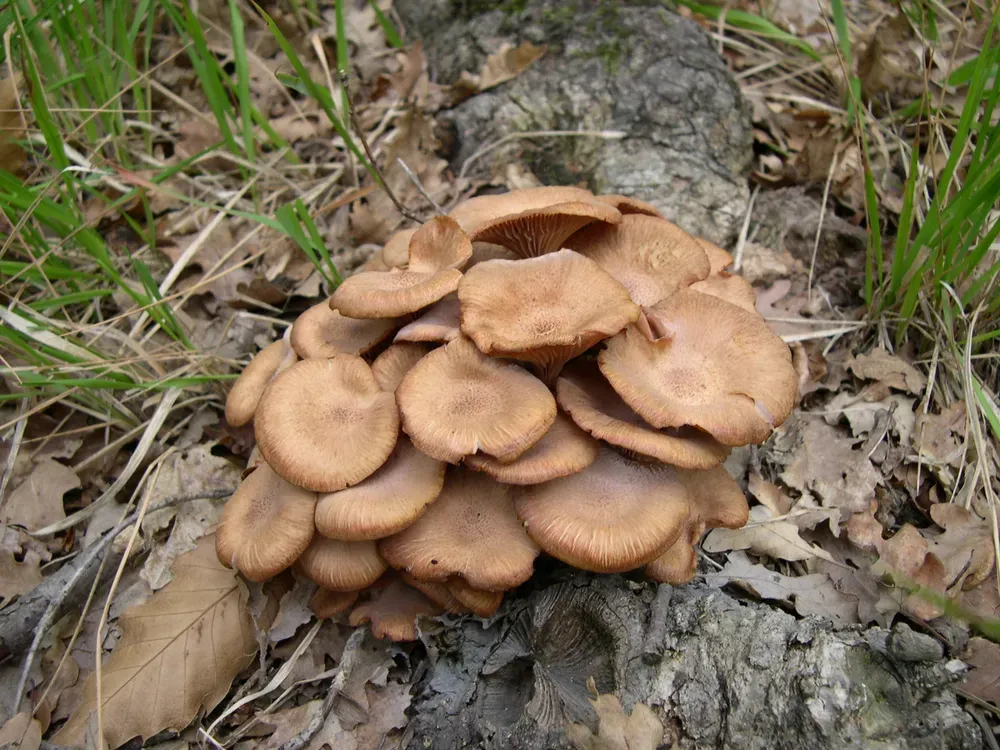
Ringless honey fungus
Desarmillaria tabescens
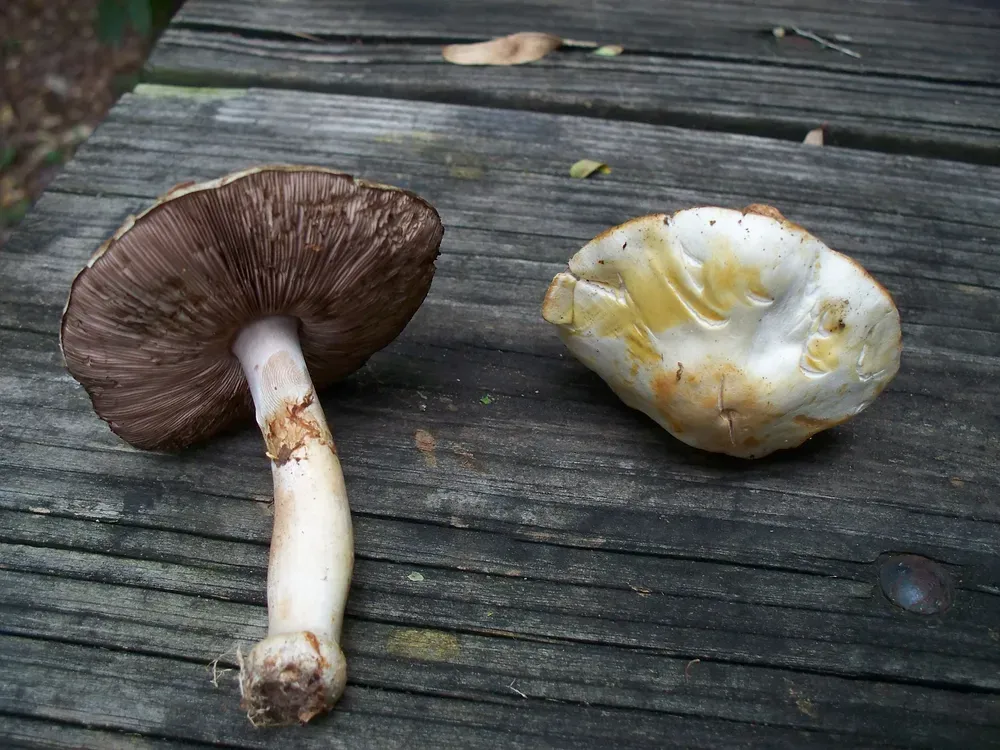
Agaricus abruptibulbus
Agaricus haemorrhoidarius
Agaricus haemorroidarius
Related reading
Frequently asked questions
Can you eat it?
Yes, but only after mandatory pre-boiling for 10-15 minutes in water, then draining the liquid. Raw or undercooked, the thimble morel causes poisoning — nausea, abdominal pain, headache.
Why does it have to be boiled?
The flesh contains gyromitrin-type compounds — toxins shared by spring ascomycetes (morels, false morels, Verpa). They dissolve in water during prolonged boiling. Without boiling, the toxins remain active.
Where should you look for it?
In bright deciduous forests and plantings — ash, maple, hornbeam, aspen. It loves forest edges, glades, and parks and orchards with leaf litter. It grows on the ground, singly or in small groups.
Which regions of Ukraine is it found in?
Mainly in the Forest-Steppe — central Ukraine, from Khmelnytskyi to Kharkiv region. It is also recorded sporadically in Polissia, and much more rarely in the south.
When should you look for it?
April–May. This is a classic spring mushroom that appears together with morels — as soon as the soil warms to 10-12°C. The season is short — two to three weeks.
Can it appear in autumn?
No. The thimble morel is a strictly spring species. It does not fruit in autumn. If you see something similar in September–October, it is a different mushroom (possibly a dog stinkhorn or a young common stinkhorn).
What is it confused with?
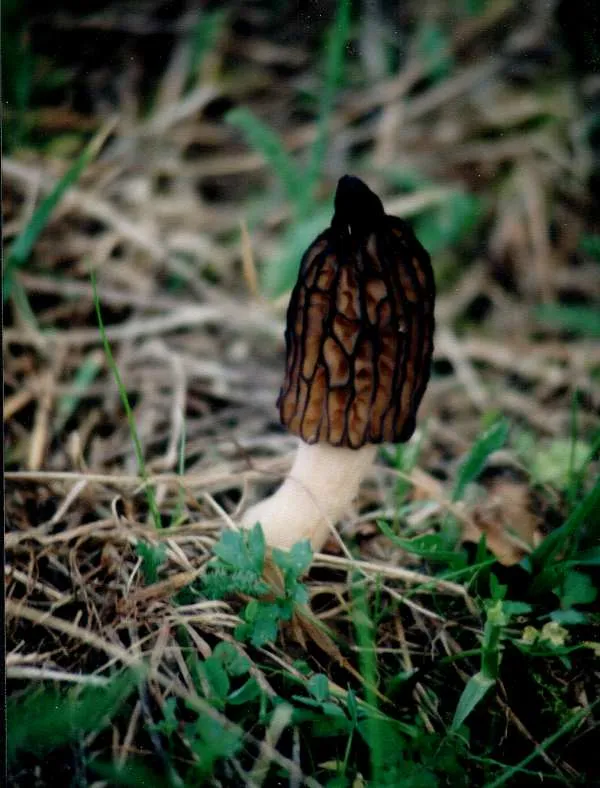
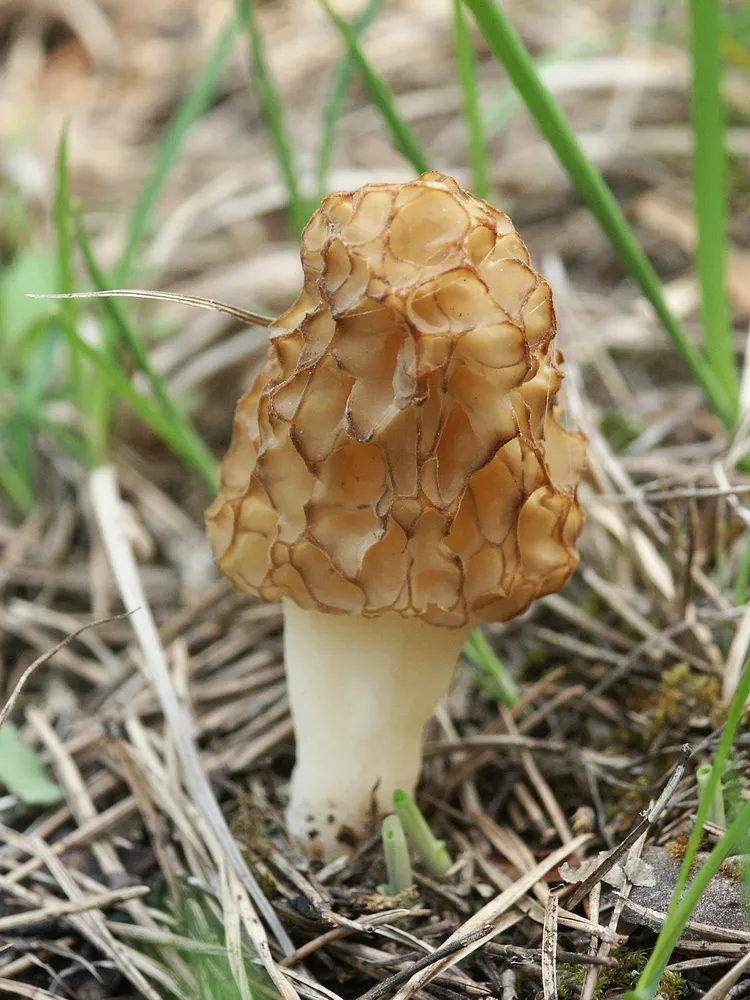
With morels — especially the black morel (Morchella conica). The main difference: a morel's cap is honeycombed, with clear ridges and pits, and fully attached to the stem. The thimble morel's cap is smooth or slightly wrinkled and attached only at the top — like a thimble on a finger.
Can it be confused with a false morel?
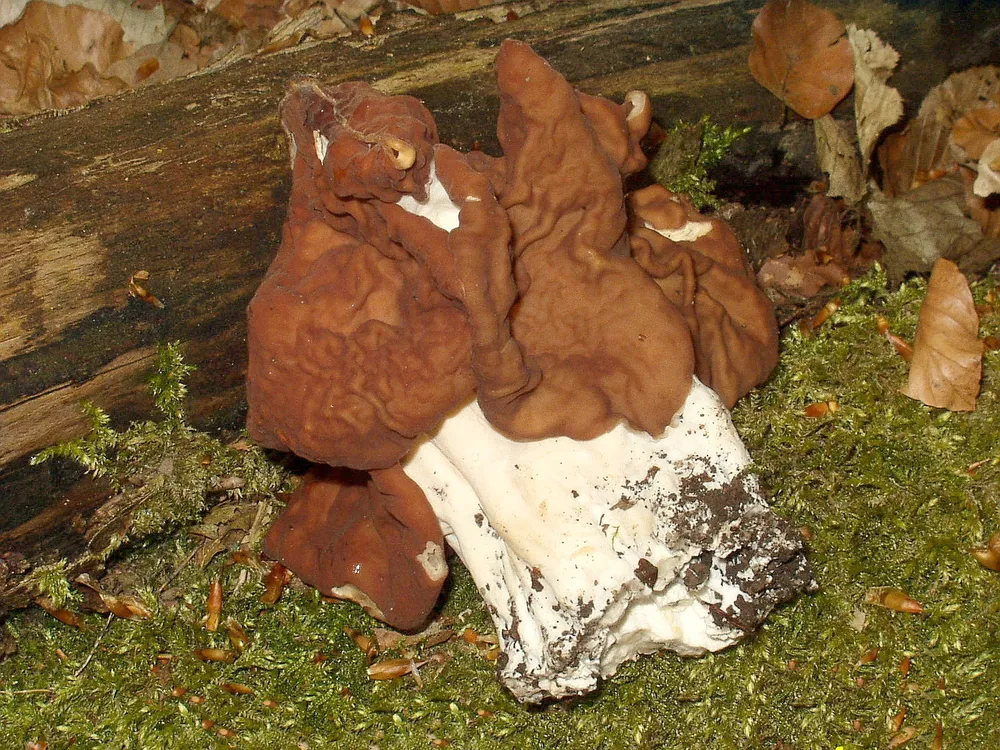
With the false morel (Gyromitra esculenta) — less likely, but possible for a beginner. The false morel is larger, its cap looks like a brain or crumpled fabric, dark brown. The thimble morel is an order of magnitude smaller and has a clear bell shape. The false morel is also far more toxic — be especially careful with it.
Is Thimble morel edible or poisonous?
What kind of spore-bearing surface does Thimble morel have?
What does the cap of Thimble morel look like?
What does the stem of Thimble morel look like?
Sources
- [1]Вікіпедія (українська)
- [2]Атлас грибів України, Зеров Д.К. (1979)
- [3]MycoBank Database
- [4]Index Fungorum
- [5]GBIF
- [6]iNaturalist Ukraine