Morchella steppicola
Expert-verifiedUpdated August 6, 2026
Passport
- Edibility
- Conditionally edible
- Season
- Apr — Jun
- Hymenophore
- Chambered
- Cap color
- Brown
- Size
- Small (up to 5 cm)
- Smell
- Pleasant
- Reviewed
- Yes ✓
Quick answers
Where to look?
Deciduous forest
When does it appear?
Apr — Jun
Active months: April, May, June.
How to recognize it? Three signs
- Cap color: Brown, Grey, Olive
- Cap shape: Irregular
- Smell: Pleasant
Fruiting season
April – June
Description
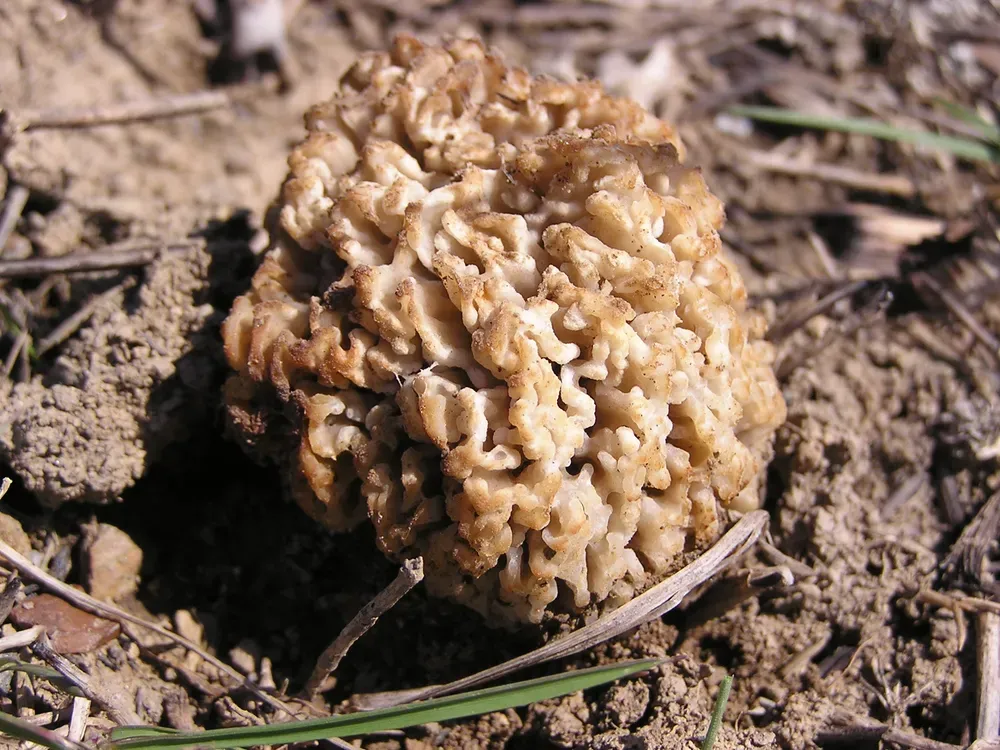
Morchella steppicola is the most mysterious and rarest of Ukraine's morels. Unlike its forest relatives, this species grows in open steppe, on virgin or long-fallow land, and especially often on burned ground after steppe fires. Its small spherical fruiting bodies with a net-like wrinkled surface look like embers come to life amid the wheat-colored October landscape.
Its range is limited to the Ukrainian and Moldovan Steppe, the southern regions of Russia and Central Asia — Turkmenistan, Kazakhstan, Uzbekistan, Tajikistan. In Ukraine it's reliably known from the steppe part of the Left Bank (Luhansk, Donetsk and Zaporizhzhia regions), Crimea, and scattered finds in the south of the Odesa and Mykolaiv regions. The season is short: May and early June, peaking 7–14 days after significant spring rains.
In the fourth edition of the Red Book of Ukraine (2021) the mushroom was removed from the list of protected species — after newer, more detailed surveys its population was judged more stable. So picking it is formally allowed, but given its rarity and the threatened steppe ecosystem, please be careful: don't pull up the mycelium, and photograph your finds for iNaturalist. As food, the mushroom is conditionally edible: always boil it for 15–20 minutes and discard the water, then fry or braise. Raw or undercooked morels of any species are dangerous (they contain hydrazine compounds).
Cap
The fruiting body is compact, with a spherical or egg-shaped to spherical “cap” 2–5.5 cm across. The surface is uneven, with a distinct net-like honeycomb pattern of pits and irregular ridges — as in all morels. The color is grayish brown or olive brown, more yellowish in young mushrooms, darker in old ones. The inner cavity is small.
Hymenophore
The spore-bearing layer lines the pits of the honeycomb pattern on the outer surface. No gills, no tubes — a typical ascomycete of the order Pezizales. Spore print yellowish.
Stem
The stem is short and thick: 0.8–1.5 cm tall, 1.2–3.3 cm thick. White to cream, with characteristic lengthwise wrinkles and furrows. In mature mushrooms the stem is sometimes hidden in the soil, so only the cap is visible.
Flesh
The flesh is white, thin, waxy and brittle. Inside the fruiting body there's a hollow, typical of morels. It doesn't change color when cut.
Smell
Smell faint, pleasantly mushroomy, with a note of fresh forest litter. Taste mild, not bitter.
Lookalikes
Related species
Mushrooms of the same genus and habitat — to study side by side and never mix up.
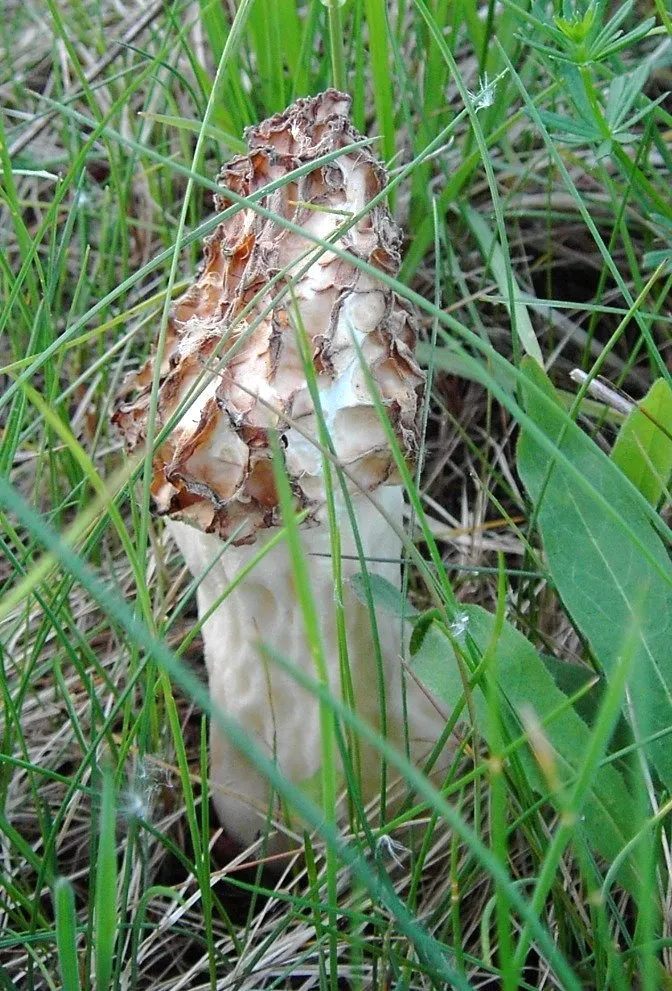
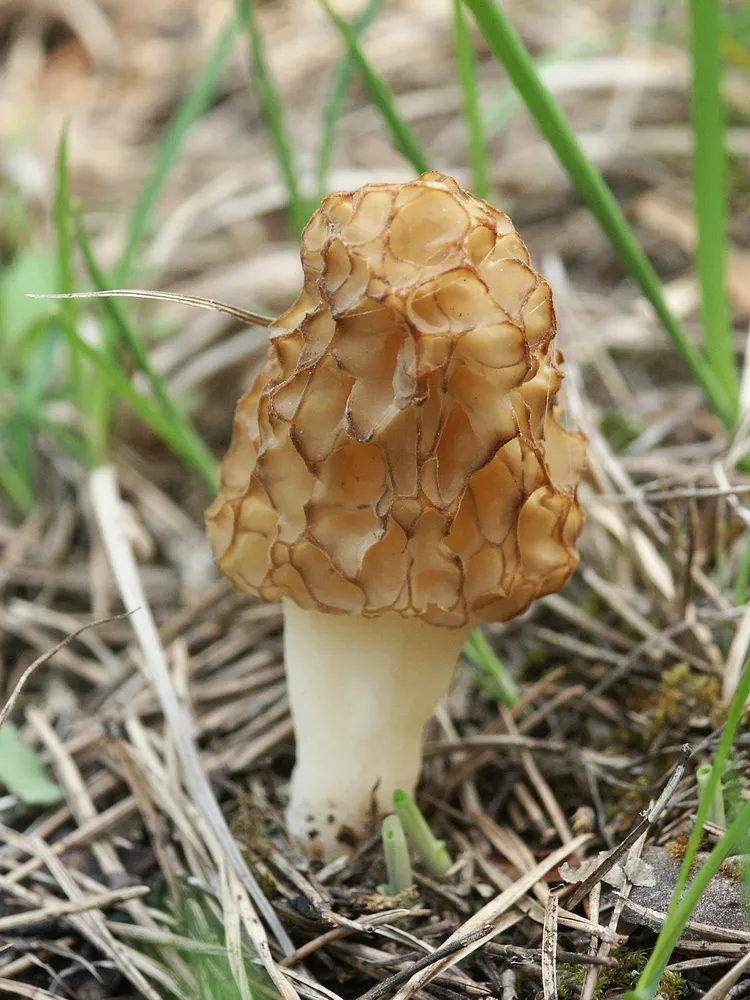
Morchella crassipes
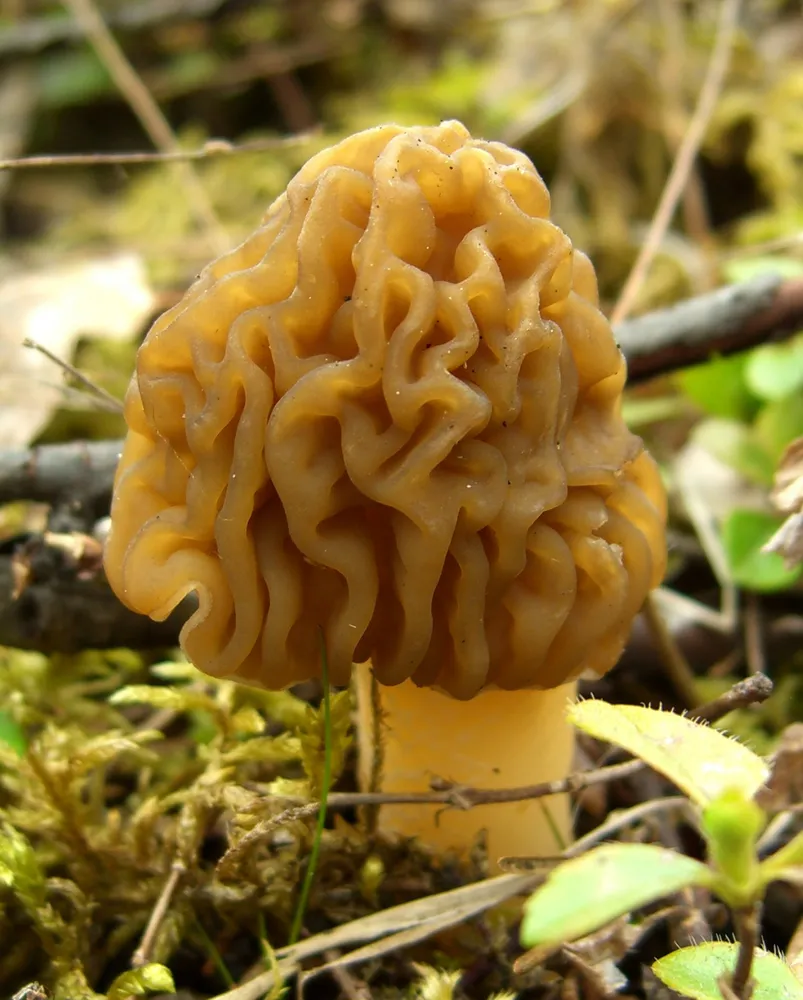
Early false morel
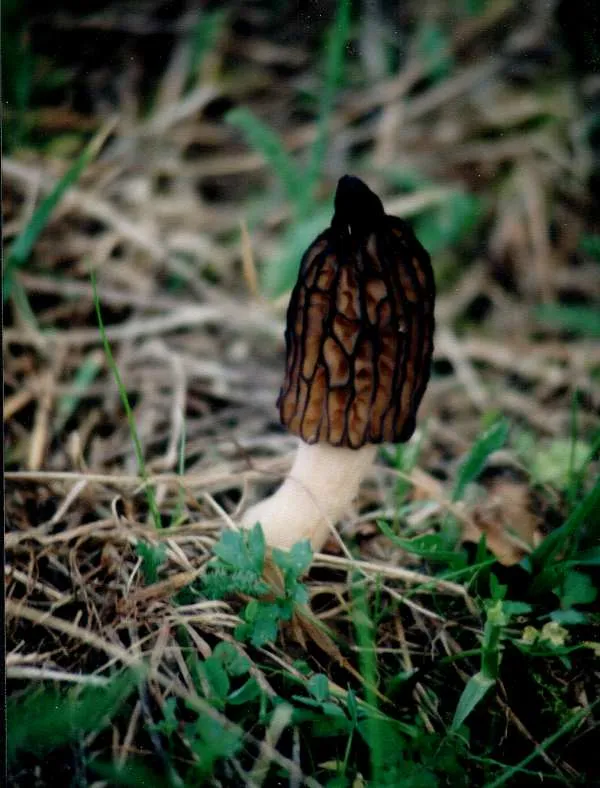
Verpa bohemica
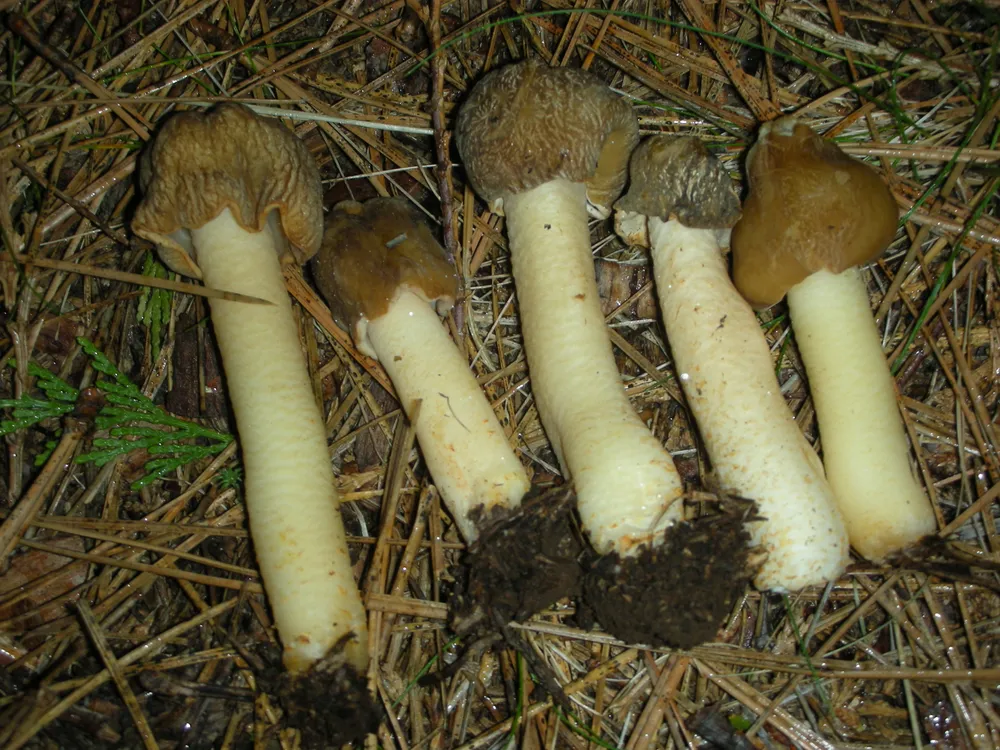
Thimble morel
Verpa conica
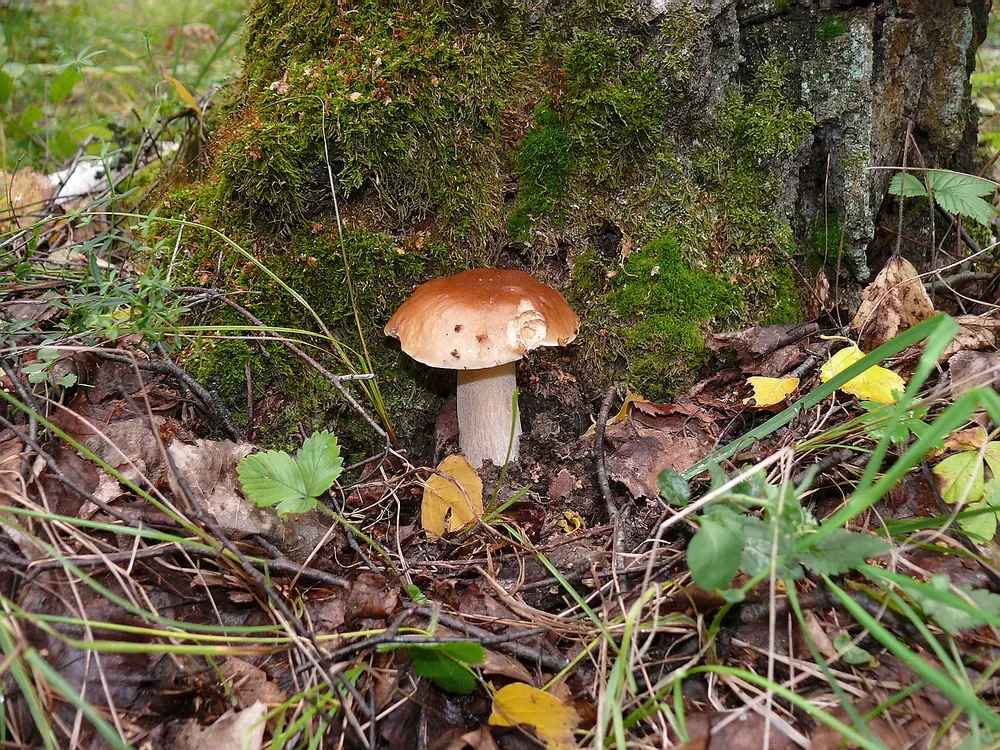
Boletus betulicola
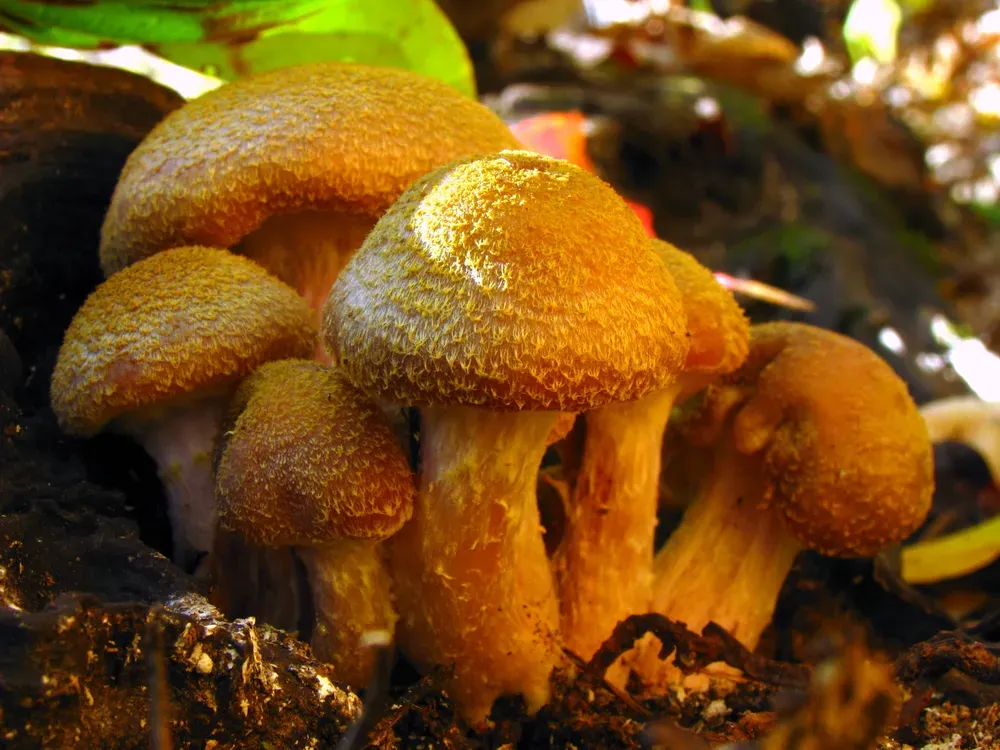
Bulbous honey fungus
Armillaria gallica
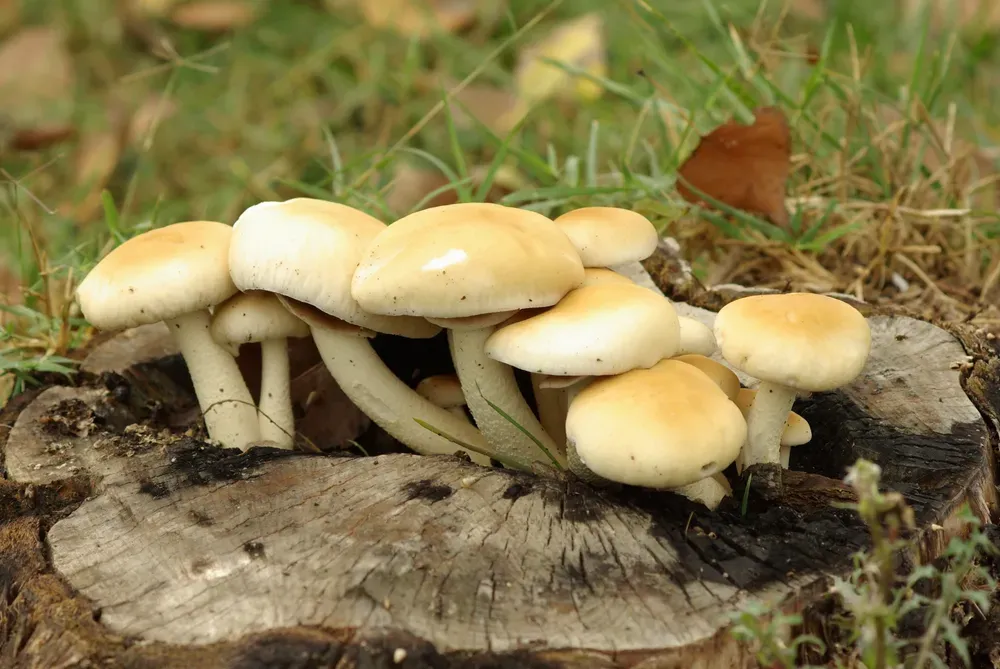
Poplar fieldcap
Cyclocybe aegerita
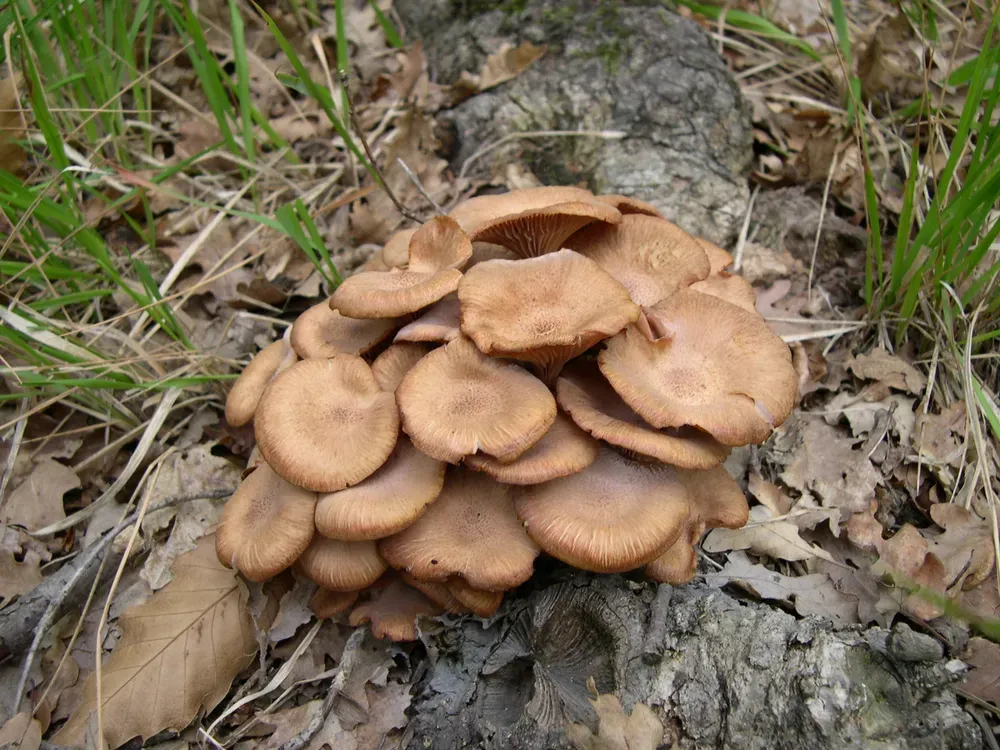
Ringless honey fungus
Desarmillaria tabescens
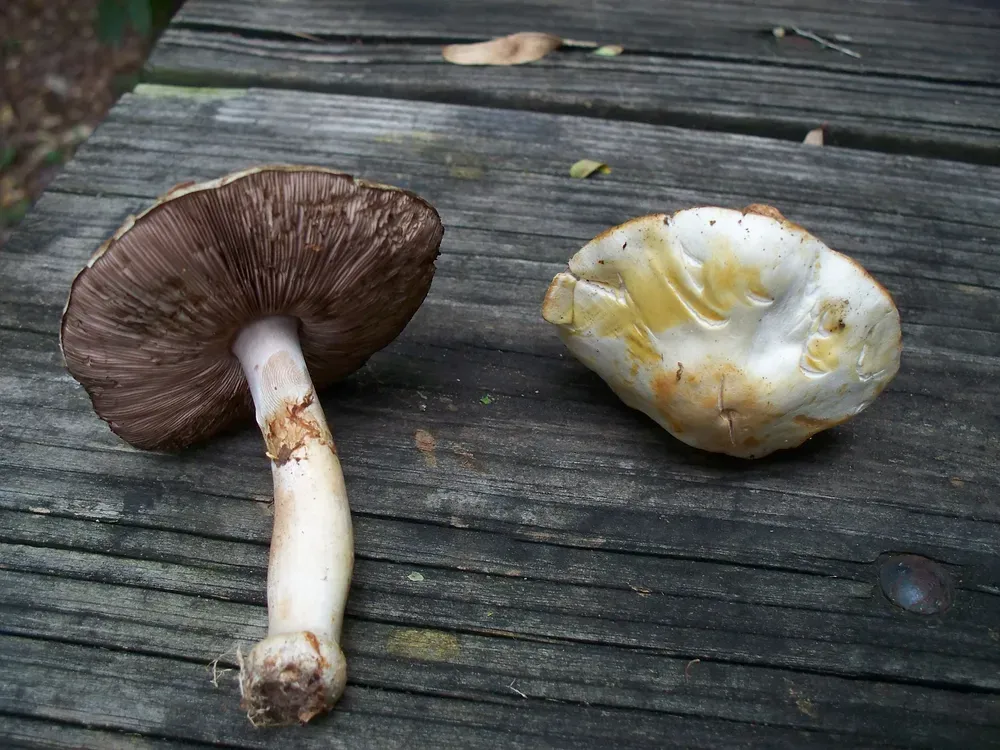
Agaricus abruptibulbus
Frequently asked questions
Is Morchella steppicola safe to eat?
Only after proper cooking: always boil for 15–20 min and DISCARD the water (hydrazine compounds remain in it), then fry or braise with vegetables. Raw or poorly boiled morels of any species are toxic. Do not eat with alcohol (the same goes for false morels).
Is it listed in the Red Book?
In the fourth edition of the Red Book of Ukraine (2021) it was removed from the list of protected species. Picking is formally allowed. But the species is rare, so we recommend moderation: take only the odd specimen, don't pull it up with the mycelium, and record your finds with photos on iNaturalist.
Where to look in Ukraine?
In open steppe, on virgin and long-fallow land, especially often on sites of steppe fires. Luhansk, Donetsk and Zaporizhzhia regions, the south of the Odesa and Mykolaiv regions, steppe Crimea. It doesn't grow in forests or shelterbelts.
When does it appear?
May to early June — a very short season of 2–3 weeks. It likes warm, humid days after April downpours. In dry springs it may not appear at all. It's most likely to show up 7–14 days after significant rain.
How is it different from other morels?
Morchella steppicola is the most compact and roundest: its height and width are about equal, and the stem is short (often hidden in the soil). Forest morels (Morchella esculenta, M. conica) are more elongated, with a more noticeable pale stem. And they live in forests, not in the steppe.
Why does it grow on burned ground?
It's a pioneer mushroom — after fires the ashy soil becomes more alkaline, competing saprotrophs die off, and morel spores get a “window” for the mycelium to develop. That's why, after steppe fires the previous summer, burned sites fruit abundantly the following spring.
Can it be confused with the false morel?
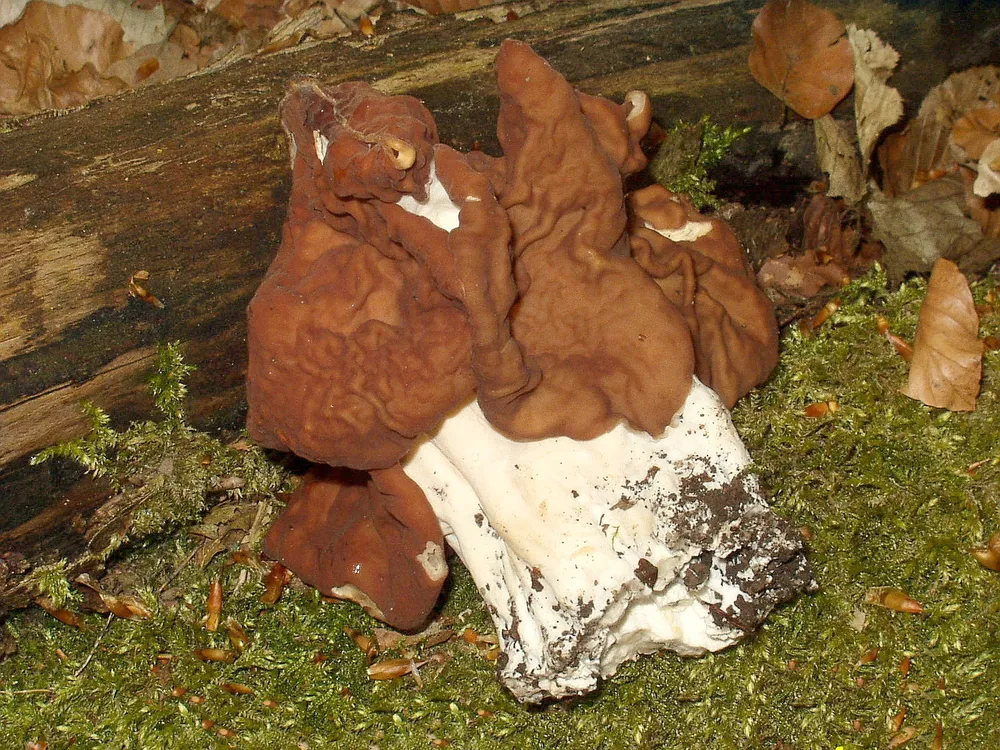
Yes, it looks broadly similar — also a convoluted surface, also spring. But the false morel (Gyromitra esculenta) has a larger, shapeless, “brain-like” cap and grows in pine forests (not in the steppe). And it's far more dangerous: it contains the poison gyromitrin. Be careful.
How to cook it?
1) Clean off soil and small debris (don't soak for long — the mushroom is thin). 2) Boil in salted boiling water for 15–20 min. 3) You MUST discard the water. 4) Rinse the boiled mushroom under running water. 5) Only now fry it with onion, braise it in sour cream, or add it to soups.
Is Morchella steppicola edible or poisonous?
What kind of spore-bearing surface does Morchella steppicola have?
What does the cap of Morchella steppicola look like?
What does the stem of Morchella steppicola look like?
Sources
- [1]Вікіпедія (українська)
- [2]Атлас грибів України, Зеров Д.К. (1979)
- [3]MycoBank Database
- [4]Index Fungorum
- [5]GBIF
- [6]iNaturalist Ukraine