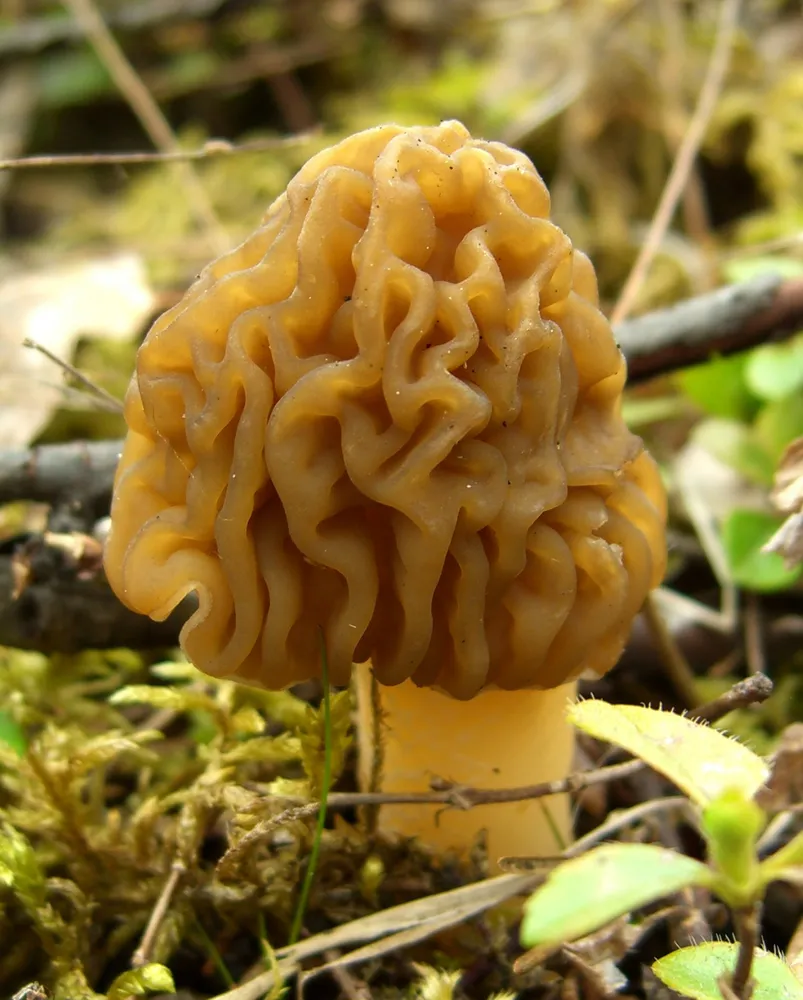
Early false morelVerpa bohemica
Expert-verifiedUpdated October 3, 2026
Passport
- Edibility
- Conditionally edible
- Season
- Apr — May
- Hymenophore
- Smooth
- Cap color
- Brown
- Size
- Medium (5–15 cm)
- Smell
- Pleasant
- Reviewed
- Yes ✓
Quick answers
Where to look?
Deciduous forest, Mixed forest
When does it appear?
Apr — May
Active months: April, May.
How to recognize it? Three signs
- Cap color: Brown, Yellow
- Cap shape: Conical
- Smell: Pleasant
Fruiting season
April – May
Description
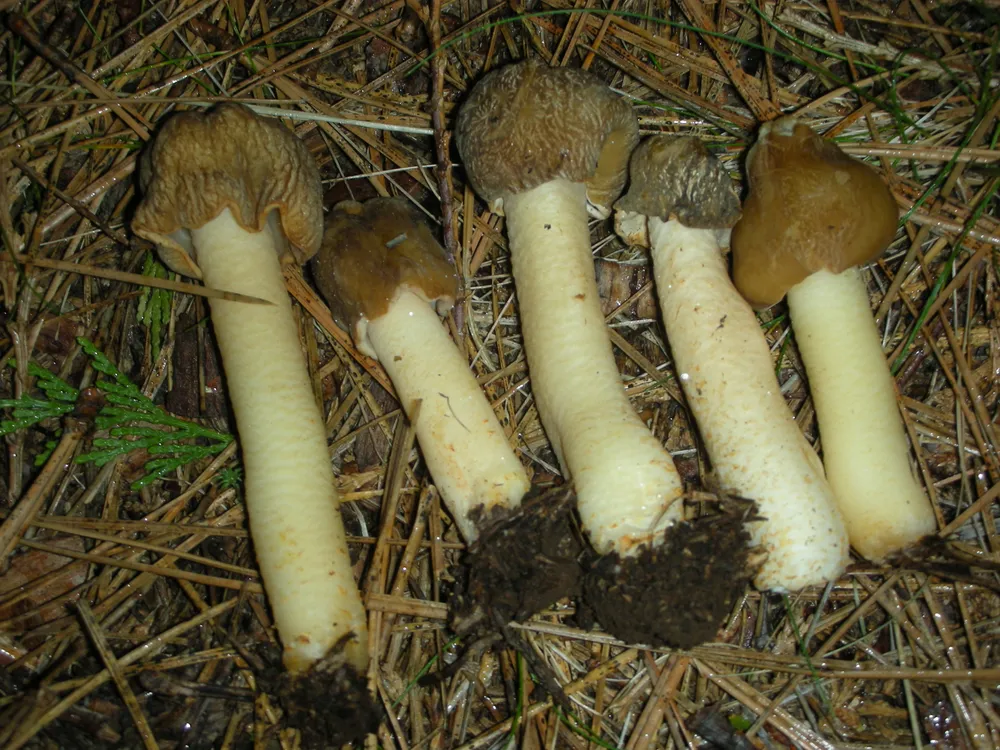
The early false morel (Verpa bohemica) is one of the very first spring mushrooms, appearing while snow still lingers, together with false morels and early morels. It looks very much like a true morel: a brown, pitted, thimble-shaped cap on a cream stem. But there is a fundamental anatomical difference — in a true morel the cap is fused to the stem along its whole length, while in Verpa the cap hangs freely from the top of the stem, like a hood pulled over it. Hence the Ukrainian name "shapynka" ("little cap") — the cap here looks more like a cape than a morel.
This is conditionally edible mushroom of category 4, with a caveat: if undercooked or eaten in large amounts, it causes gastrointestinal upset, and in some people more serious symptoms, including loss of coordination. The reason is a small amount of gyromitrin-like compounds (methylhydrazines). Cook it always with 15-20 minutes of boiling, draining the water. Raw, or dried without heat treatment — do not eat it. In some countries (Germany, Switzerland) this mushroom is officially banned from sale because of its toxicological risks. In Ukraine it is traditionally eaten alongside true morels — and that is exactly where the main danger of a mix-up lies.
In Ukraine it is common in deciduous woods with aspen, poplar and alder; in river floodplains, parks and gardens. A saprotroph. Its season is strictly spring: April to May, peaking in mid-April, together with the flowering of aspen and poplar. It often grows in groups of 3-15 fruit bodies on bare soil among fallen leaves.
Cap
Cap 2-5 cm tall, 2-4 cm across, bell-shaped or thimble-like, hangs from the top of the stem like a hood (it does not fuse with the stem — the fundamental difference from true morels). The surface is wrinkled and pitted, with irregular furrows and folds, without clear honeycomb cells. Color yellow-brown, ochre-brown, dark brown. The inner surface (facing the stem) is paler, cream.
Hymenophore
The hymenophore covers the outer surface of the cap (as in all Pezizales). It consists of layers of asci in which the spores mature. Spore print yellowish to light brown.
Stem
Stem 5-12 cm tall, 1-2 cm thick, cylindrical, hollow inside or filled with spongy flesh. White to cream, light ochre with age. Surface finely granular, with crosswise furrows. No ring.
Flesh
Flesh thin, waxy, brittle. Light ochre in the cap, whitish in the stem. Does not change color when cut.
Smell
Faint, pleasant mushroomy smell. Mild taste. Note: taste is no indicator of safety — the toxins have no distinct taste.
Lookalikes
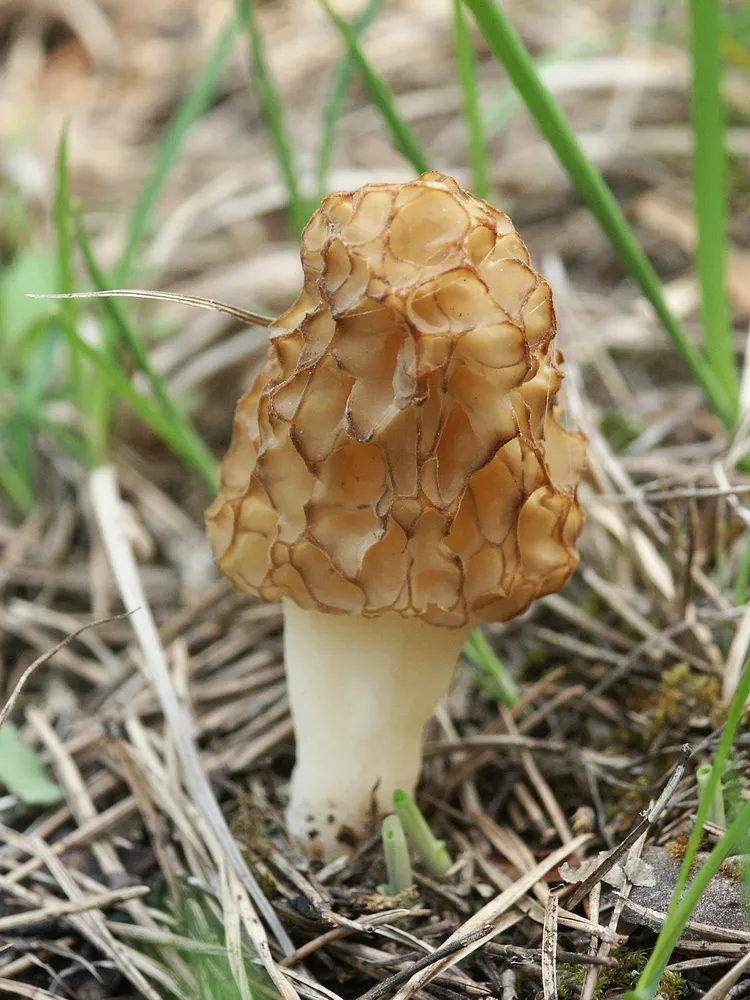
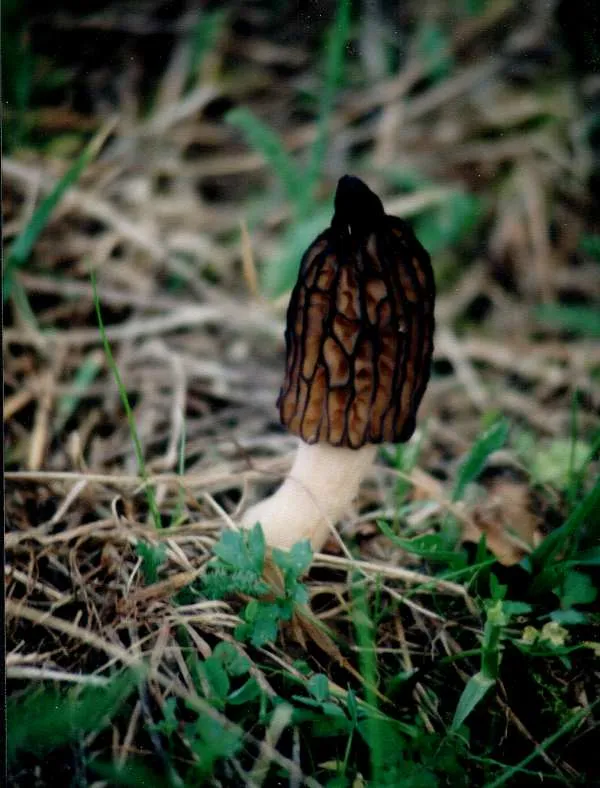
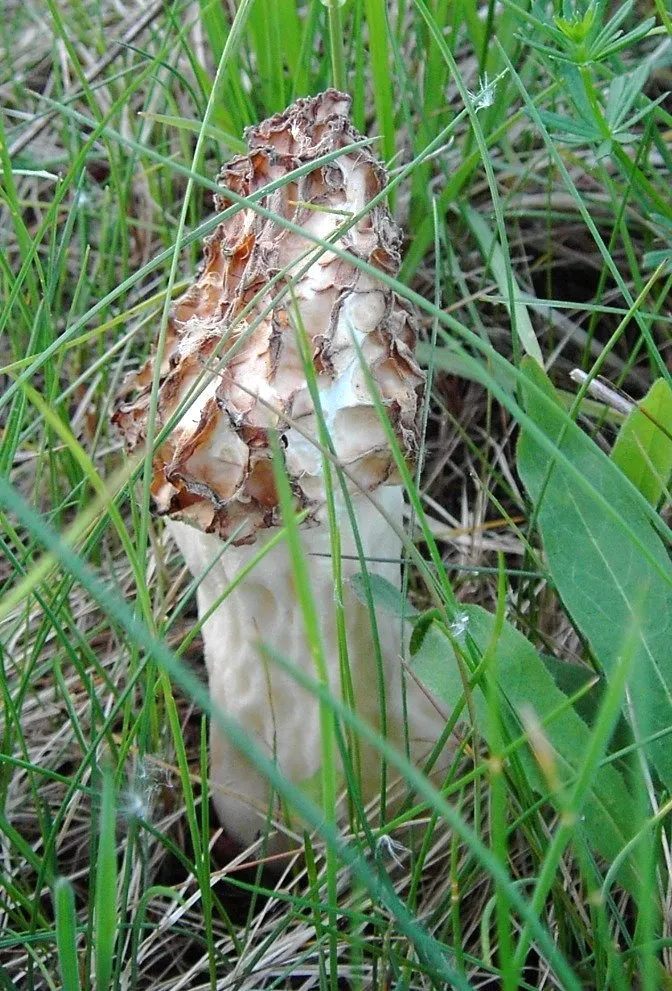
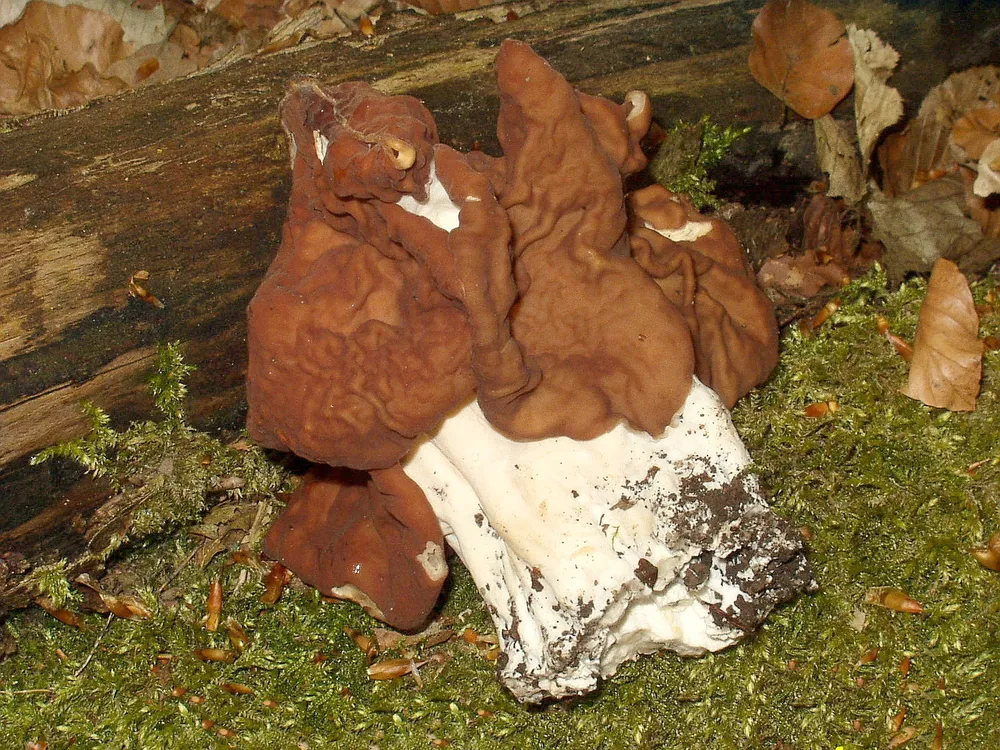
Related species
Mushrooms of the same genus and habitat — to study side by side and never mix up.
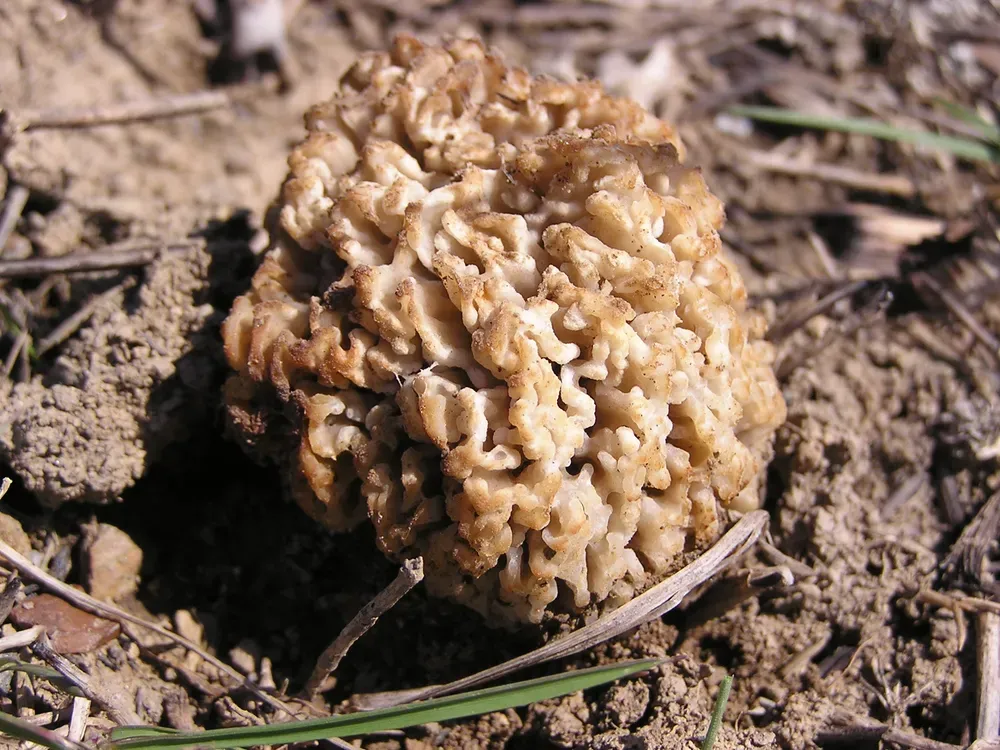
Morchella steppicola
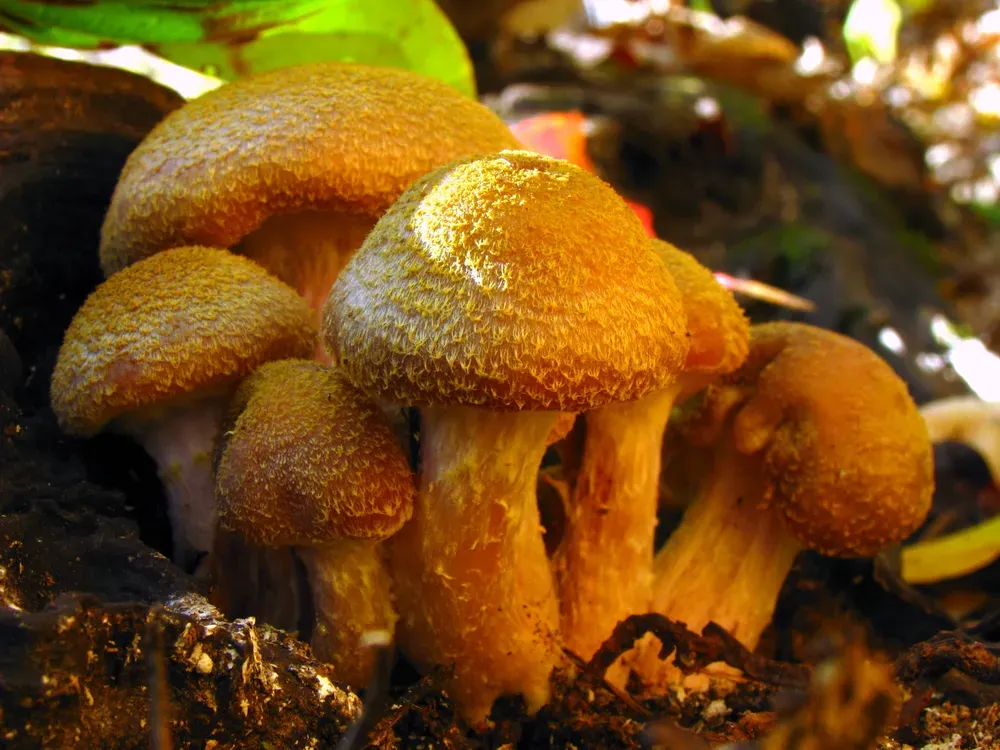
Bulbous honey fungus
Armillaria gallica
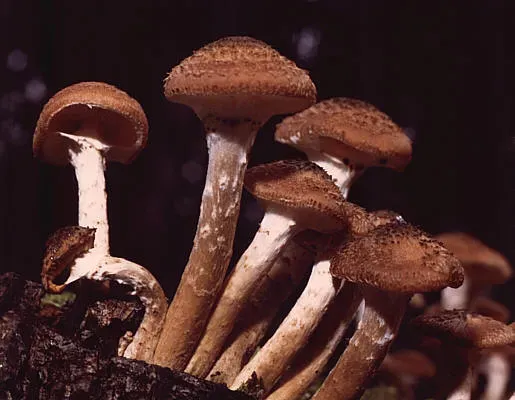
Dark honey fungus
Armillaria ostoyae
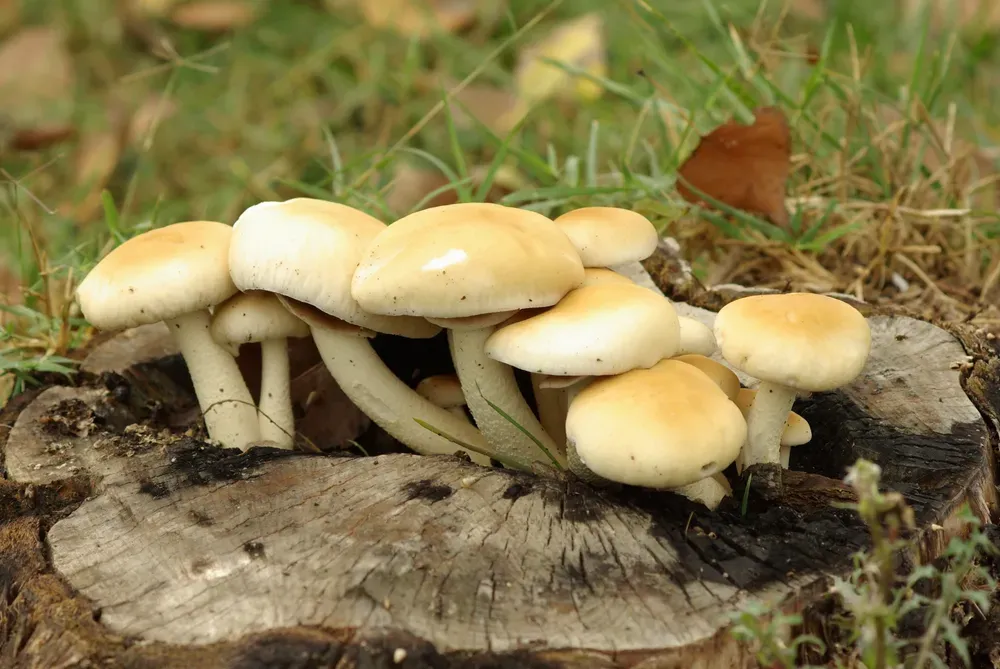
Poplar fieldcap
Cyclocybe aegerita
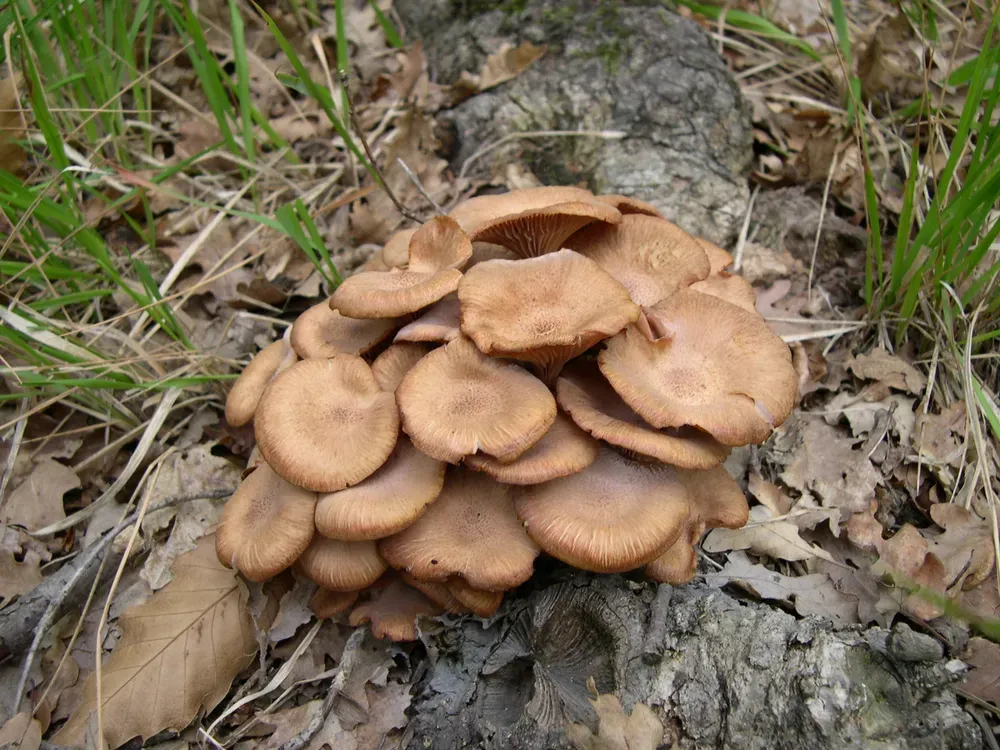
Ringless honey fungus
Desarmillaria tabescens
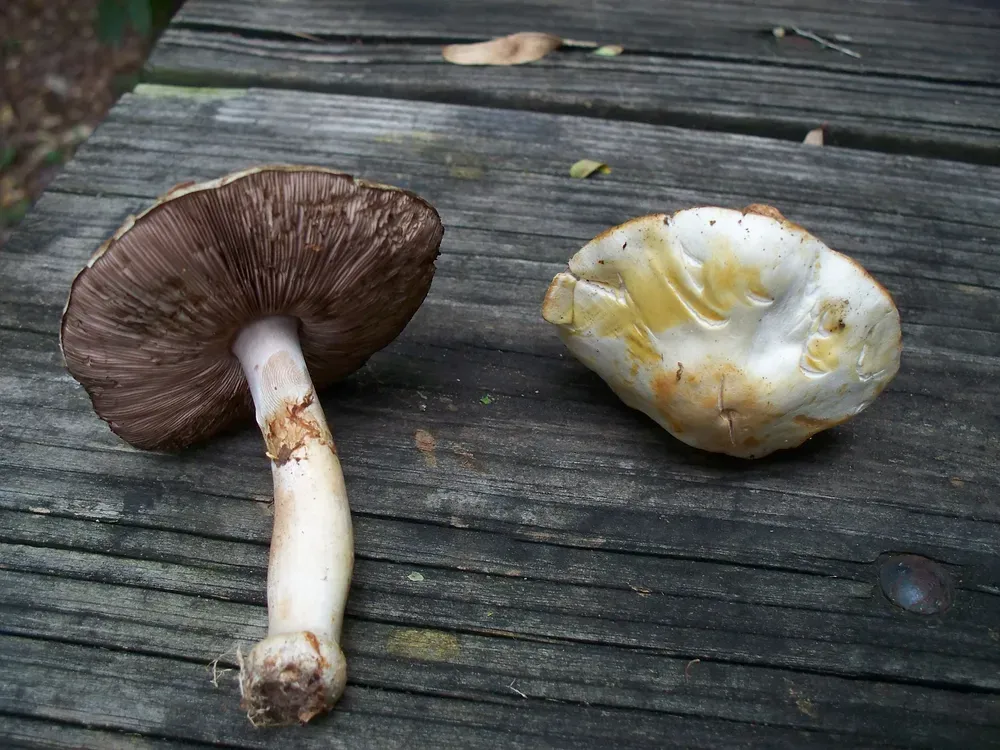
Agaricus abruptibulbus
Agaricus haemorrhoidarius
Agaricus haemorroidarius
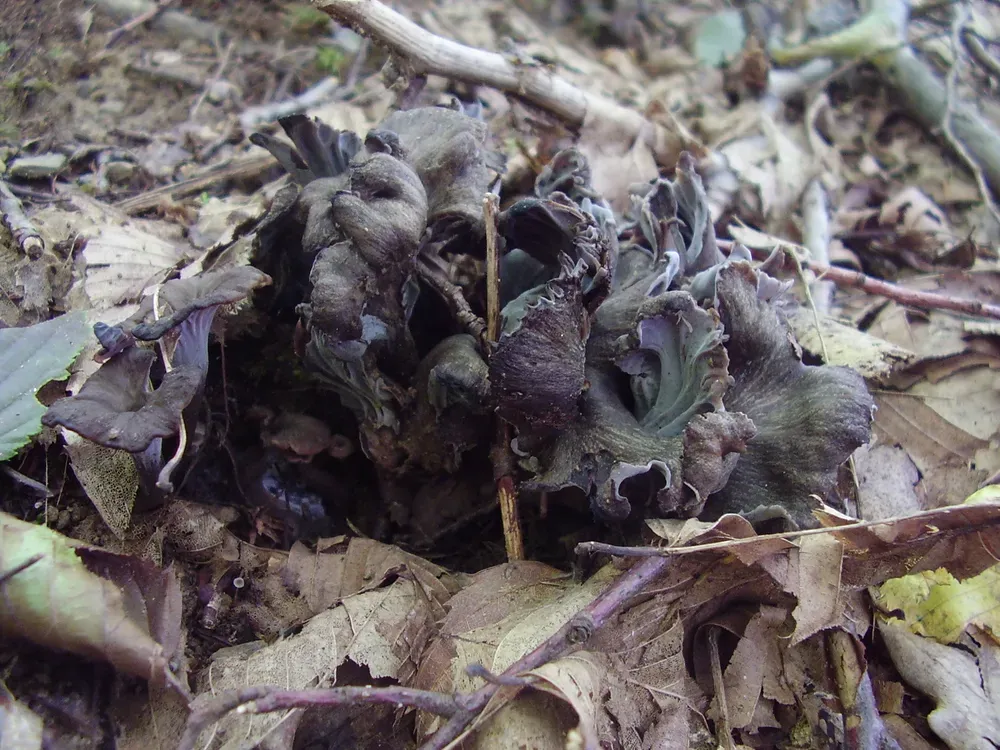
Ashen chanterelle
Cantharellus cinereus
Related reading
Frequently asked questions
How do you cook it properly?
Mandatory steps: (1) clean and rinse thoroughly (there is often sand in the folds of the cap); (2) boil for 15-20 minutes in plenty of water; (3) drain the water — it holds the soluble toxins; (4) rinse the mushrooms again under cold water. Then fry, stew or add to sauces. do not eat it raw, dried without treatment, or after only a short boil.
What happens if you eat it undercooked?
6-12 hours after the meal — nausea, vomiting, diarrhea, muscle weakness, loss of coordination, headache. In severe cases — liver and kidney damage. Call 112 or your local emergency number and collect the mushroom leftovers for identification. Don't drink alcohol — it strengthens the toxic effect. Especially dangerous for children and older people.
Can you eat it every day during the season?
NO. The toxins tend to accumulate in the body. The safe rule: do not eat it several days in a row, and avoid alcohol during and after the meal. At most — one portion 1-2 times a week. In some EU countries this mushroom is officially banned because of the risks.
Where should you look for it?
In deciduous forests with aspen, poplar, alder; in floodplains along rivers, in parks and gardens, among fallen leaves. It likes rich, moist, alkaline soils. It often grows next to young aspen or poplar thickets. It doesn't grow in conifer forests or on acidic soils.
Which regions of Ukraine is it found in?
Polissia, the Forest-Steppe (especially in the floodplain forests of the Dnipro, Desna and Dniester), the Carpathians and Prykarpattia. In the steppe — in ravine forests and park plantings.
When should you look for it?
April to May, peaking from mid-April. It coincides with the flowering of aspen and poplar and with willow pollen. One of the very first mushrooms of the season — it appears even before the first true morels. By June-July it no longer fruits.
How do you tell it from a true morel?
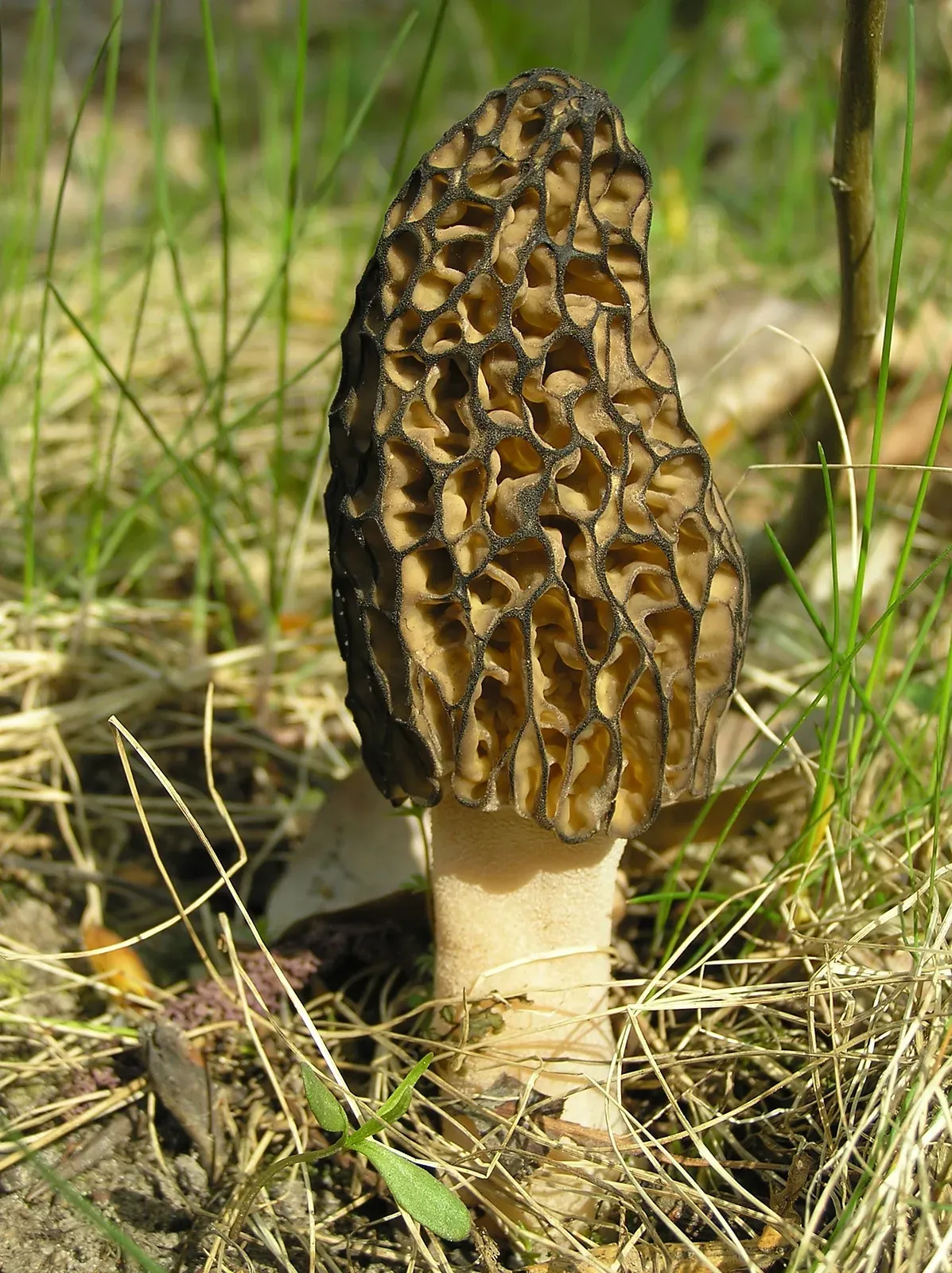
The key difference: in a true morel (Morchella), the cap is fused to the stem along its entire length — between the cap and the stem there is no gap. In Verpa bohemica the cap hangs freely from the top of the stem like a hood — there is space between the cap and the stem. Cut it in half and you'll see the difference right away. Also, in Verpa the cap is folded and wrinkled, while a true morel has clear honeycomb pits.
And is it confused with the false morel?
It's hard to confuse it with the false morel (Gyromitra esculenta): the false morel has a brain-shaped cap — irregular, convoluted folds with no clear center. Verpa has a neat, bell-shaped cap with furrows. But both mushrooms are poisonous without proper preparation. And both contain gyromitrin — so the preparation rules are the same: long boiling, draining the water, eating in moderation.
Is Early false morel edible or poisonous?
What kind of spore-bearing surface does Early false morel have?
What does the cap of Early false morel look like?
What does the stem of Early false morel look like?
Sources
- [1]Вікіпедія (українська)
- [2]Атлас грибів України, Зеров Д.К. (1979)
- [3]MycoBank Database
- [4]Index Fungorum
- [5]GBIF
- [6]iNaturalist Ukraine