Elastic saddleHelvella elastica
Expert-verifiedUpdated October 3, 2026
Passport
- Edibility
- Conditionally edible
- Season
- Aug — Oct
- Hymenophore
- Smooth
- Cap color
- Cream
- Size
- Small (up to 5 cm)
- Smell
- Odorless
- Reviewed
- Yes ✓
Quick answers
Where to look?
Deciduous forest, Mixed forest
When does it appear?
Aug — Oct
Active months: August, September, October.
How to recognize it? Three signs
- Cap color: Cream, Yellow, Grey, Brown
- Cap shape: Irregular
- Smell: Odorless
Fruiting season
August – October
Description
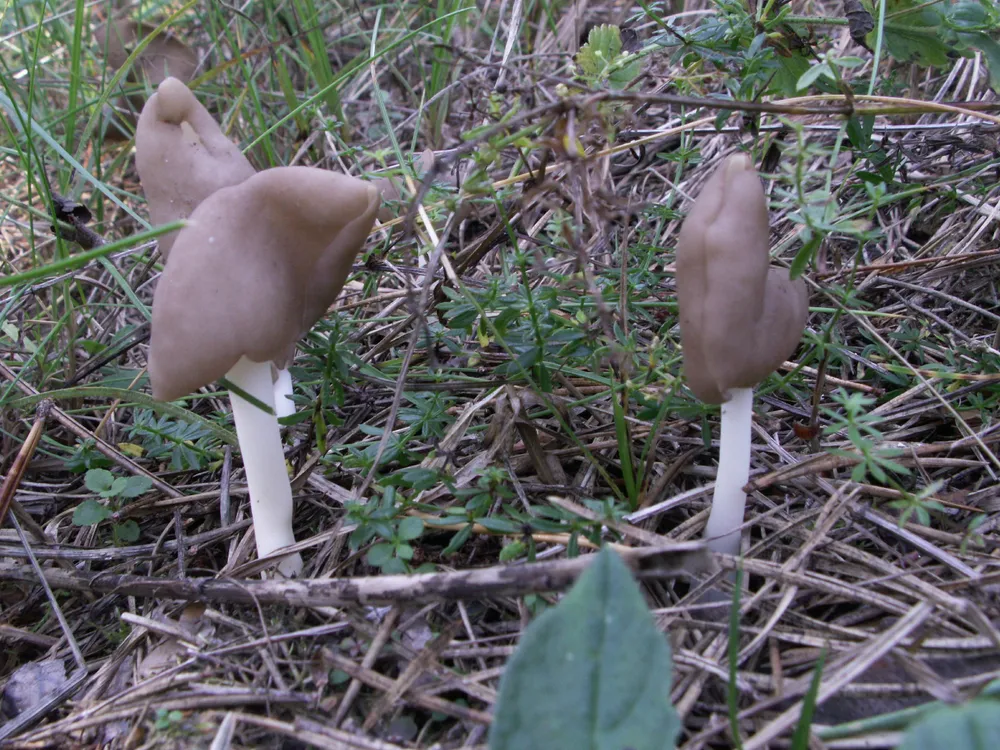
The Elastic saddle is a small but recognizable late-summer and early-autumn ascomycete. It looks delicate: a pale grayish-brown two-lobed (saddle-shaped) cap on a thin white hollow stem. Only 5-9 cm tall, so it's easy to miss among the leaf litter at a forest edge. The name “elastic” refers to the springy texture of the flesh, which regains its shape after bending.
This is a conditionally edible mushroom of low quality. As with all Helvella, it must be boiled for 15-20 minutes and the water poured away, because the flesh contains gyromitrin-like compounds. It has practically no culinary value: the flesh is thin, the flavor faint. This is a mushroom “for photos and the herbarium,” not for the kitchen. If you come across one, take a good look at the saddle-shaped cap — it's the calling card of the genus.
In Ukraine it grows on soil in deciduous and mixed forests, at forest edges and in open plantations. It has been documented in the Carpathians and other forest regions. The season is August–October. Not a mass-fruiting species — you're more likely to find single fruit bodies than groups.
Cap
Cap 1.5-4 cm, two-lobed, saddle-shaped — made up of two distinct lobes hanging over the stem. Color pale yellowish to grayish brown. Surface smooth, without pronounced texture. Margins free, not fused to the stem — this sets it apart from Helvella crispa.
Hymenophore
Smooth hymenium on the upper (convex) surface of the cap. Ascomycete structure — spores form in asci. Spore print white. Spores ellipsoid, smooth, 17-20 × 10-15 µm — large, typical of the genus.
Stem
Stem 2-6 cm tall, 3-6 mm thick, cylindrical, slender, hollow inside. Color white, smooth, without distinct ribs (unlike other Helvella). This is the key feature of the species — a smooth stem, not a grooved one.
Flesh
The flesh is thin, waxy and springy, white. Doesn't change color when cut. Springy — it regains its shape after bending, hence the name “elastic.”
Smell
No noticeable smell. We don't taste it raw — potentially toxic.
›Scientific synonyms (1)
Leptopodia elastica (Bull.) Boud. (1907)
Lookalikes
Related species
Mushrooms of the same genus and habitat — to study side by side and never mix up.
Bulbous honey fungus
Armillaria gallica
Dark honey fungus
Armillaria ostoyae
Poplar fieldcap
Cyclocybe aegerita
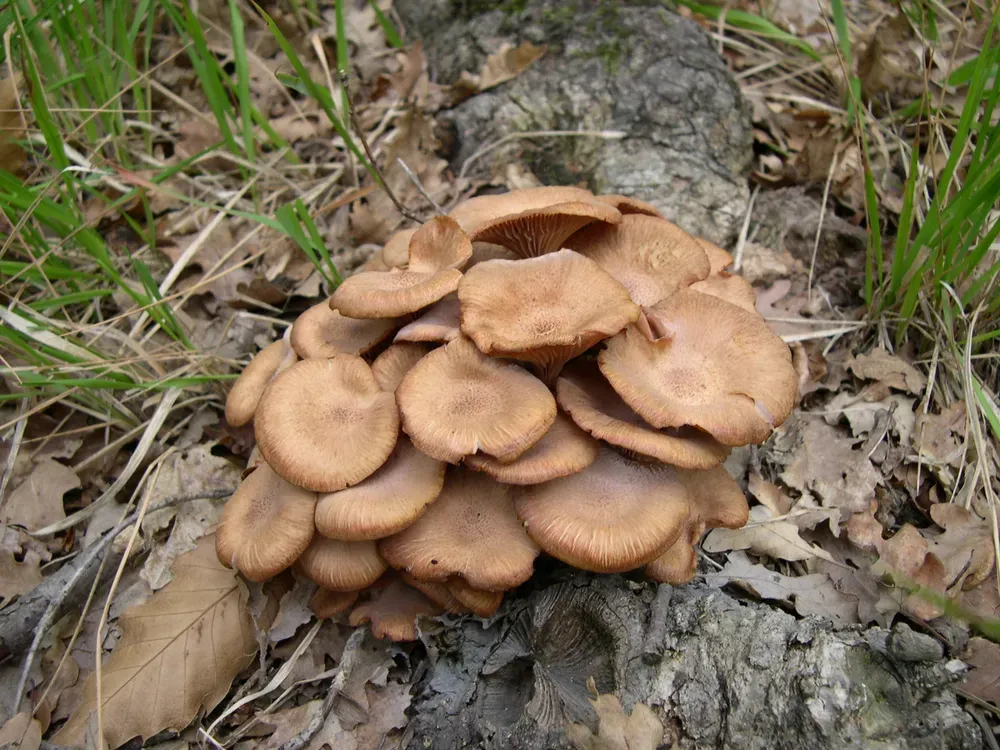
Ringless honey fungus
Desarmillaria tabescens
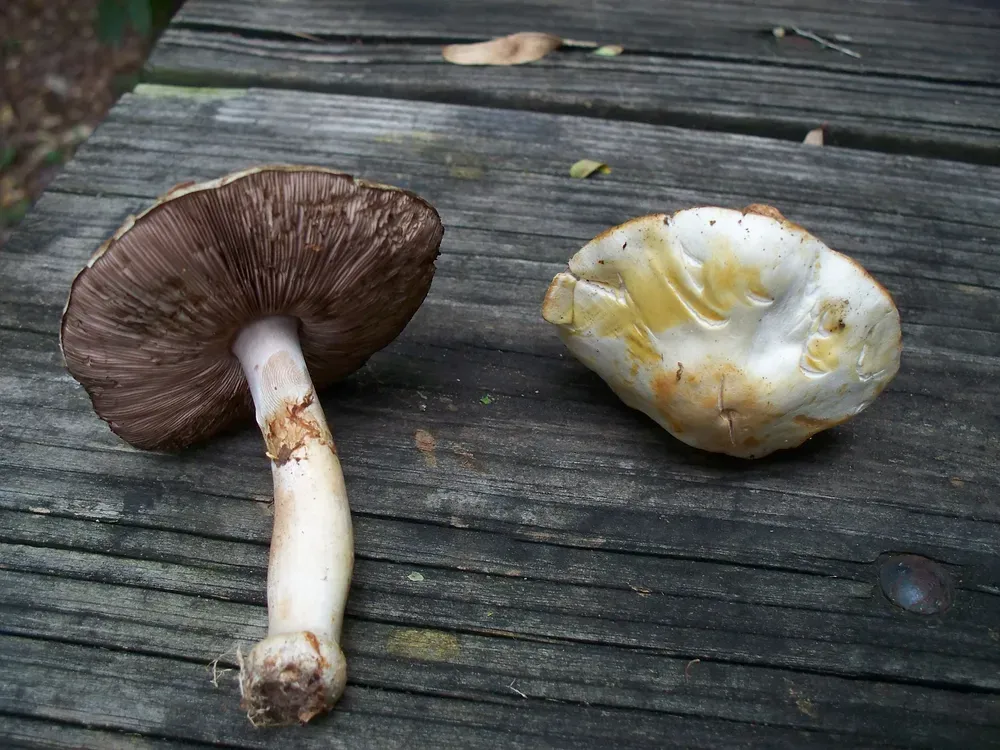
Agaricus abruptibulbus
Agaricus haemorrhoidarius
Agaricus haemorroidarius
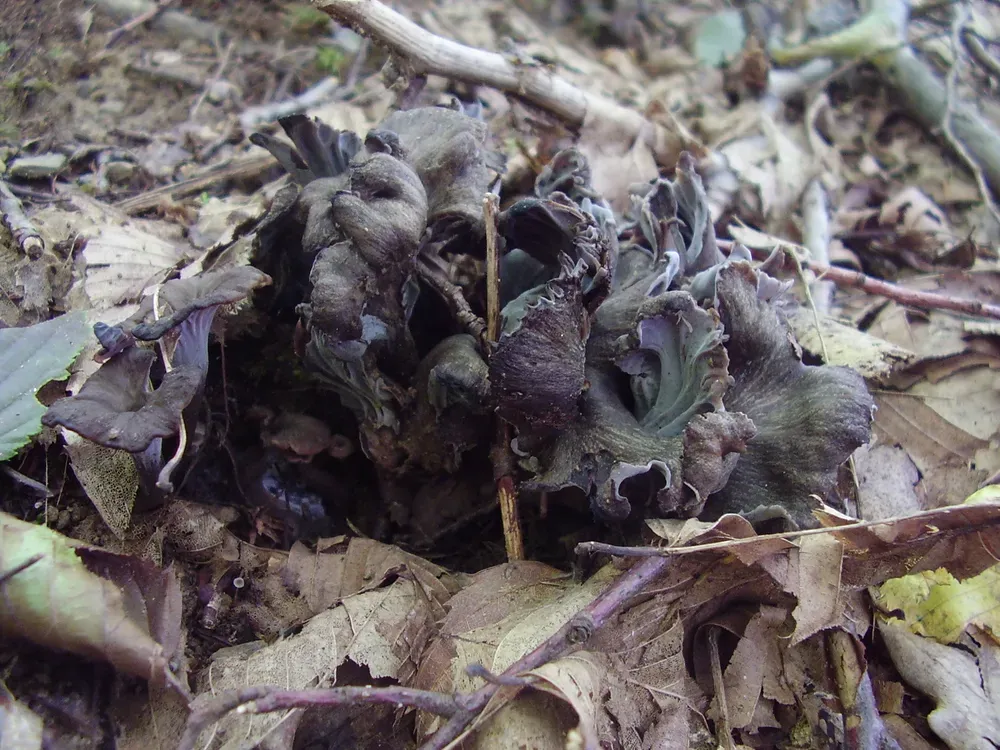
Ashen chanterelle
Cantharellus cinereus
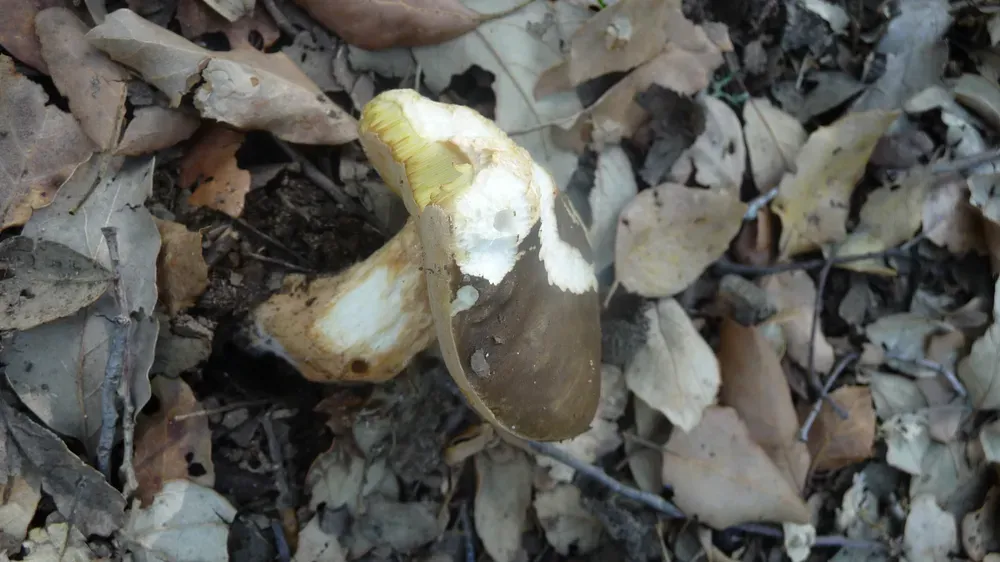
Blushing bolete
Leccinum roseofractum
Frequently asked questions
Can you eat it?
Technically yes — after boiling for 15-20 minutes with the water poured away. But its culinary value is close to zero, and the risk of poisoning with insufficient treatment is real. We don't recommend it: it's not worth the time or the effort in the kitchen.
Why does it need to be boiled?
Like all Helvella, its flesh contains gyromitrin-type compounds. They destroy red blood cells and pass into the water during boiling. Without treatment — acute gastroenteritis with possible hemolytic effects after 6-12 hours.
Where should you look for it?
On soil in deciduous and mixed forests, at forest edges, in open plantations. It likes bright spots with leaf litter, the edges of forest roads, small clearings. Singly, less often in pairs.
Which regions of Ukraine does it grow in?
Sporadically across the forest zone. Clearly documented in the Carpathians, with finds in Polissia and the Forest-Steppe. Rare in the steppe and Crimea. Not a mass-fruiting species.
When does it appear?
August–October. It's a late-summer to autumn species. Unlike the spring Helvella (acetabulum, costifera), the Elastic saddle fruits in the second half of the season.
Can it fruit in spring?
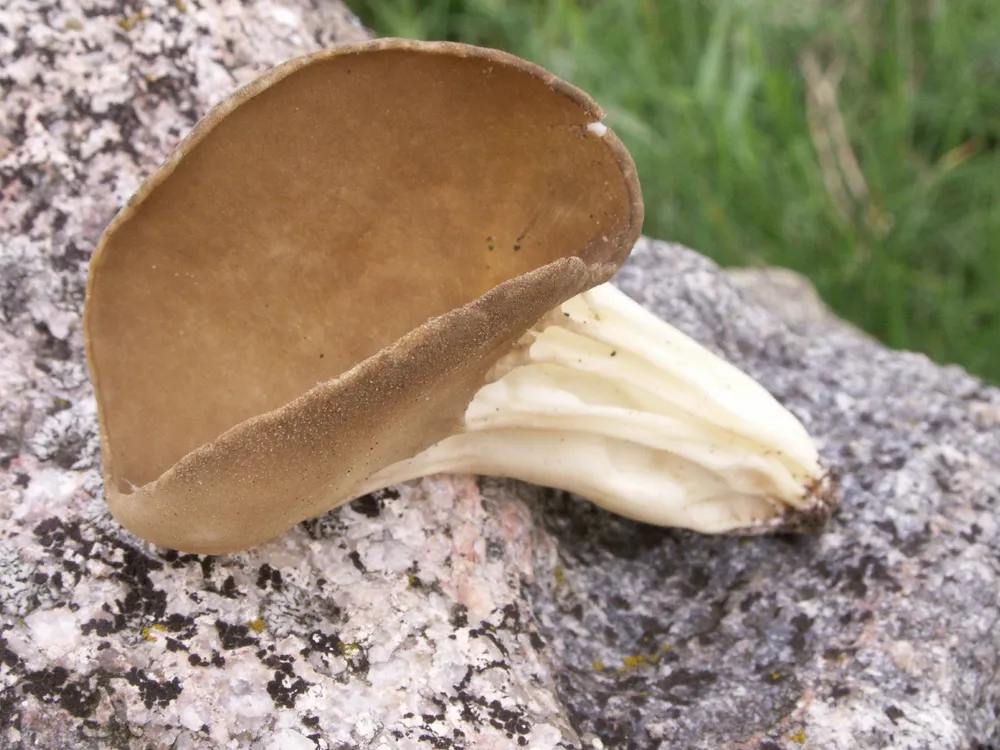
No. Its season is clearly autumn. If in May–June you see something similar with a saddle-shaped cap, it's more likely Helvella acetabulum (cup-shaped, with a ribbed stem) or another spring species.
What is it confused with?
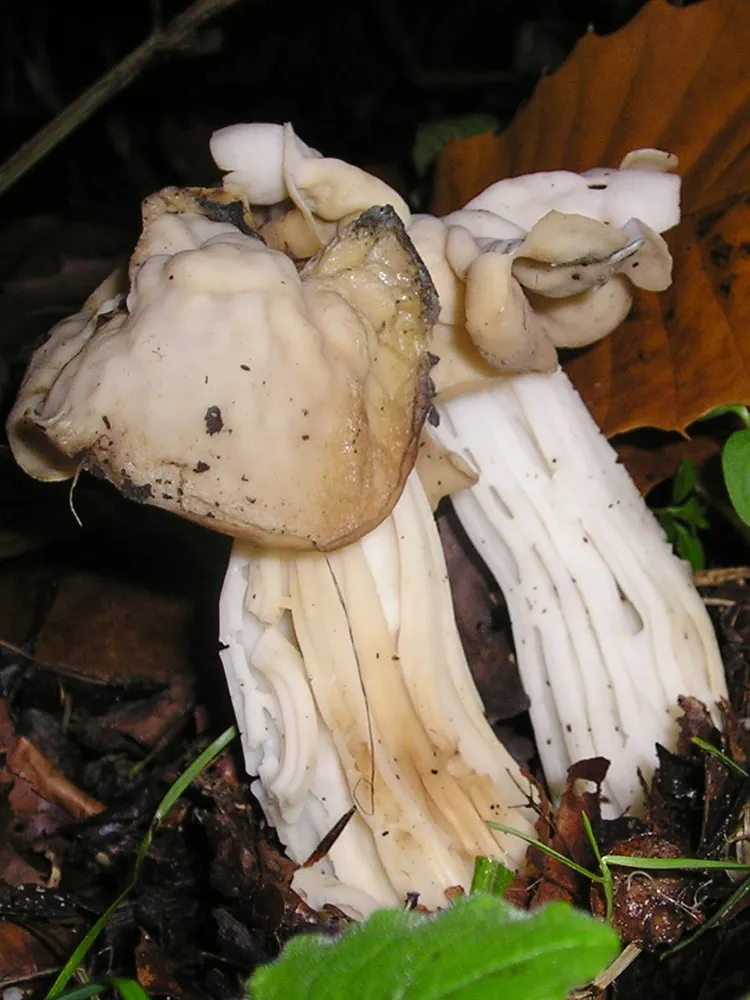
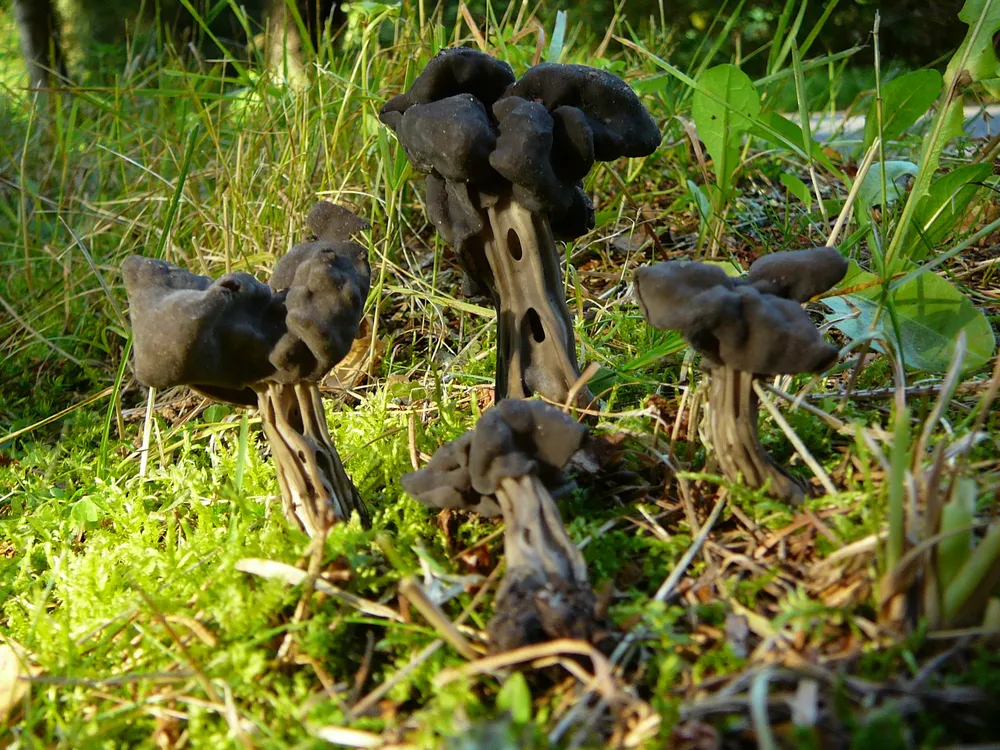
With other small Helvella — especially young Helvella crispa (which has a curly, lobed cap and a ribbed stem). The key feature of the Elastic saddle: a smooth stem WITHOUT ribs. If the stem has lengthwise grooves, it's a different species.
How do you tell it apart from other Helvella species?
The four main members of the genus in Ukraine: acetabulum (cup-shaped, ribbed stem, spring), elastica (saddle, smooth stem, autumn), crispa (curly saddle, ribbed stem, white), lacunosa (dark gray saddle, ribbed stem, autumn, on burned ground). Remember them by the combination “cap shape + stem texture + season.”
Is Elastic saddle edible or poisonous?
What kind of spore-bearing surface does Elastic saddle have?
What does the cap of Elastic saddle look like?
What does the stem of Elastic saddle look like?
Sources
- [1]Вікіпедія (українська)
- [2]Атлас грибів України, Зеров Д.К. (1979)
- [3]MycoBank Database
- [4]Index Fungorum
- [5]GBIF
- [6]iNaturalist Ukraine