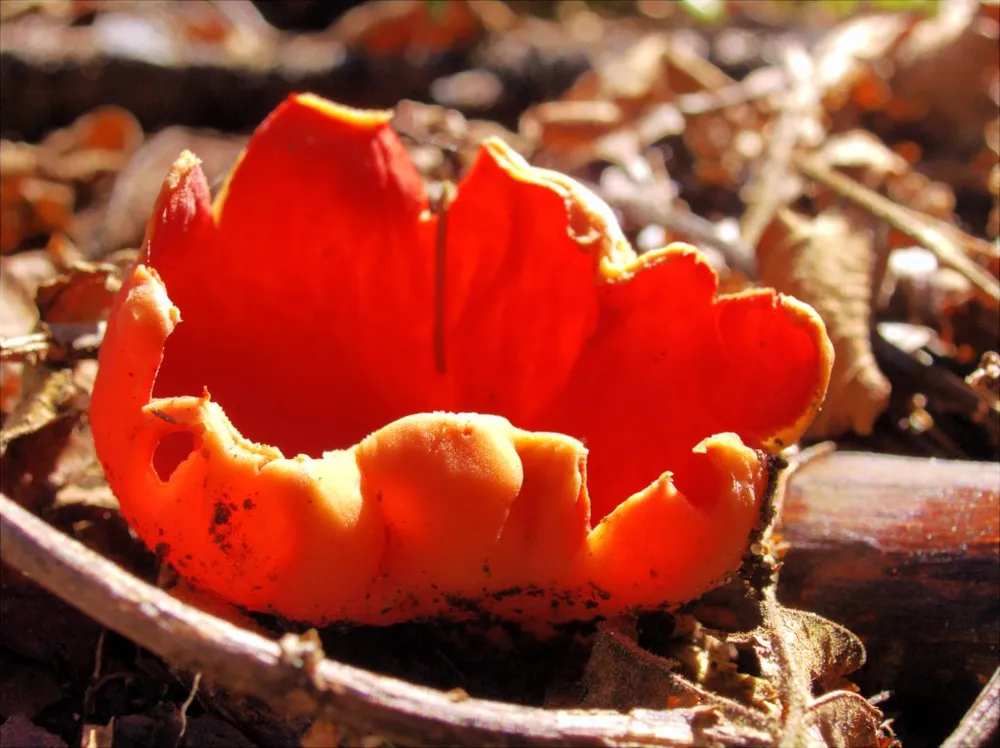
Scarlet elf cupSarcoscypha coccinea
Expert-verifiedUpdated October 3, 2026
Passport
- Edibility
- Inedible
- Season
- Feb — May
- Hymenophore
- Smooth
- Cap color
- Red
- Size
- Small (up to 5 cm)
- Smell
- Odorless
- Reviewed
- Yes ✓
Quick answers
Where to look?
Deciduous forest, Mixed forest
When does it appear?
Feb — May
Active months: February, March, April, May.
How to recognize it? Three signs
- Cap color: Red, Orange, Pink
- Cap shape: Depressed
- Smell: Odorless
Fruiting season
February – May
Description
The scarlet elf cup (Sarcoscypha coccinea, known in Ukrainian folk speech as the "forest goblet", "elf cup" or "spring cup") is one of the most photogenic spring mushrooms in Ukraine. It's a discomycete of the Sarcoscyphaceae family that forms small bright red "cups" 2-6 cm across on rotting twigs in the forest. In the gray spring woods these red "cups" look like wild strawberries fallen from a ripe plant — they're very easy to spot even from a distance.
The mushroom isn't considered edible: the flesh is very thin, gelatinous, with no distinct taste, and when raw some sources mention possible mild stomach upset. In Carpathian folk tradition it was occasionally added to soups as a decoration for color, and in Europe it was historically used as a decorative element in autumn arrangements. But as a practical mushroom it's more for photos than for your basket.
In Ukraine it's widespread in the Carpathians, the Carpathian foothills and Polissia, and less common in the Forest-Steppe — in damp broadleaf and mixed forests. It likes shady spots with slowly rotting wood: fallen branches of beech, hornbeam and willow, especially in river floodplains. The season is very early — February–May, peaking in March–April, when most other mushrooms haven't appeared yet. The first fruiting bodies come up right after the snow melts.
Cap
The fruiting body is shaped like a cup or a deep bowl 1.5-6 cm across and 1-3 cm tall. The inner (upper) surface is bright cinnabar red, smooth and glossy. The outer (lower) surface is lighter, pinkish-cream to whitish, with a fine white velvety down. The cup's rim is even, slightly wavy in mature specimens.
Hymenophore
The spore-bearing layer sits on the inner surface of the cup, red and smooth. Unlike gilled mushrooms, there are no gills or tubes here — it's a typical discomycete with an open, disc-like hymenium. When ripe, the spores are released in a "puff" at a sudden jolt — a striking sight you can see by blowing on the cup on a sunny day.
Stem
The stem is short, 1-3 cm tall, 0.3-0.5 cm thick, lateral or central, often barely visible under the leaf litter. Its color is whitish to pink. The mushroom often looks like a "cup sitting right on the twig".
Flesh
Flesh thin, gelatinous, springy and crisp, reddish (like the cup), doesn't change color when damaged. Fresh, it's soft, and feels like a thin sheet of rubber. When it dries it becomes brittle and dark red.
Smell
The smell is faint, mushroomy, slightly earthy, with no distinctive notes. The taste of the flesh is mild and neutral, with no acridity or bitterness.
›Scientific synonyms (10)
Helvella coccinea Scop., Peziza dichroa Holmsk., Peziza coccinea (Scop.) Pers., Macroscyphus coccineus (Scop.) Gray, Plectania coccinea (Scop.) Fuckel, Geopyxis coccinea (Scop.) Massee, Sarcoscypha coccinea (Scop.) Sacc. ex Durand, Aleuria coccinea (Scop.) Moesz (1918), Plectania coccinea (Scop.) Fuckel ex Seaver, Elvela coccinea Schaeff. (1774)
Lookalikes
Related species
Mushrooms of the same genus and habitat — to study side by side and never mix up.
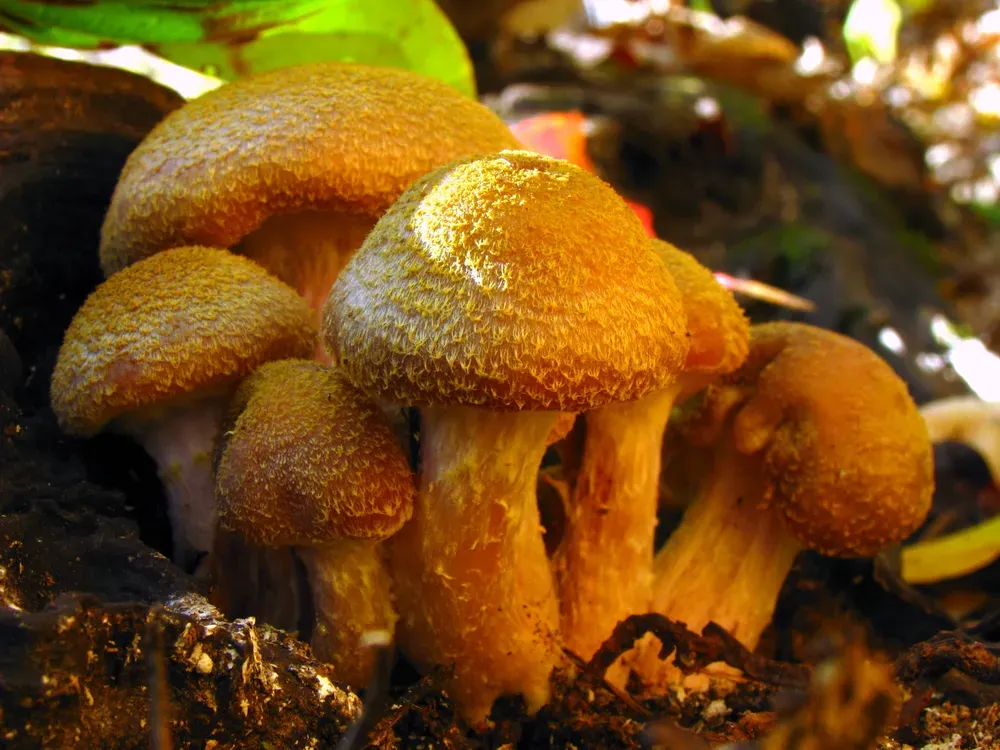
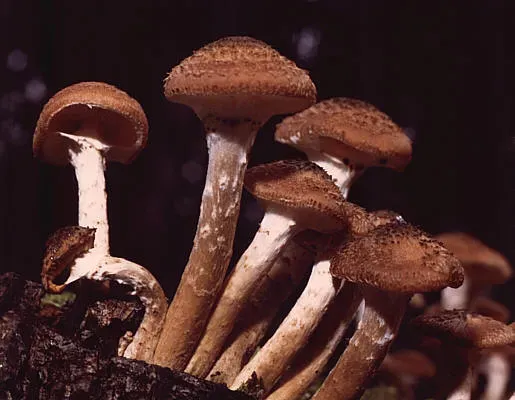
Bulbous honey fungus
Armillaria gallica
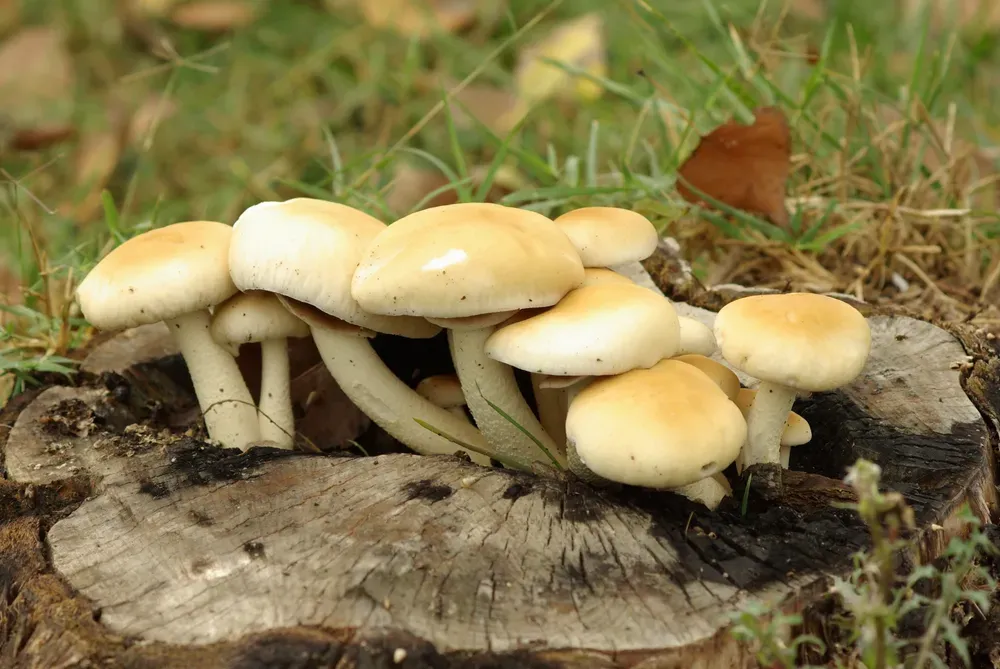
Dark honey fungus
Armillaria ostoyae
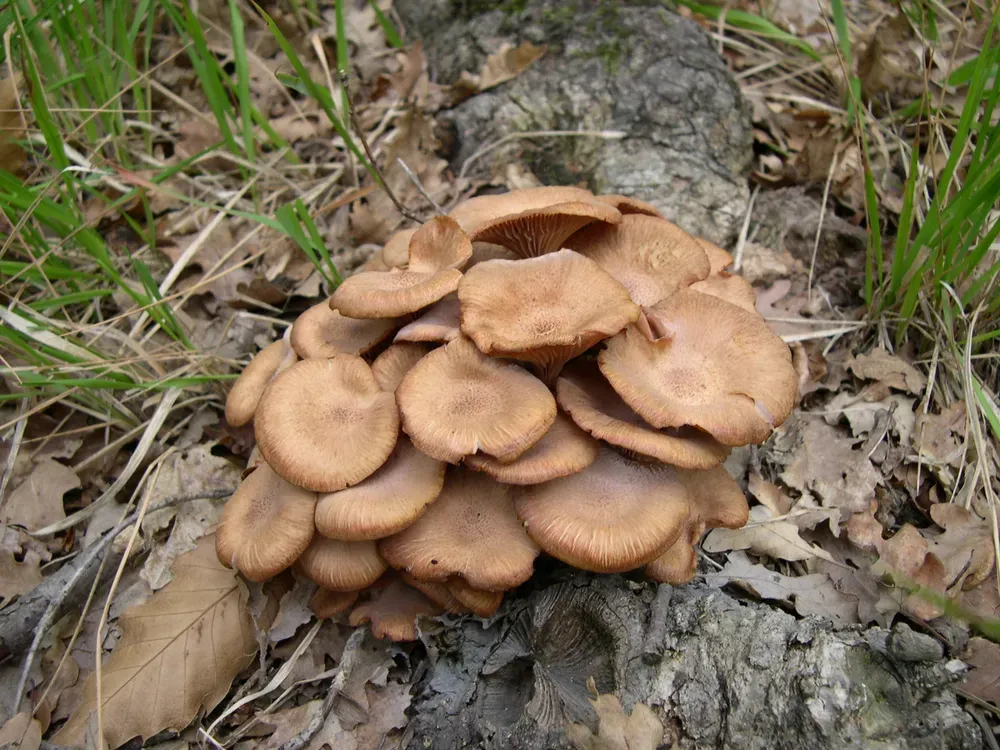
Poplar fieldcap
Cyclocybe aegerita
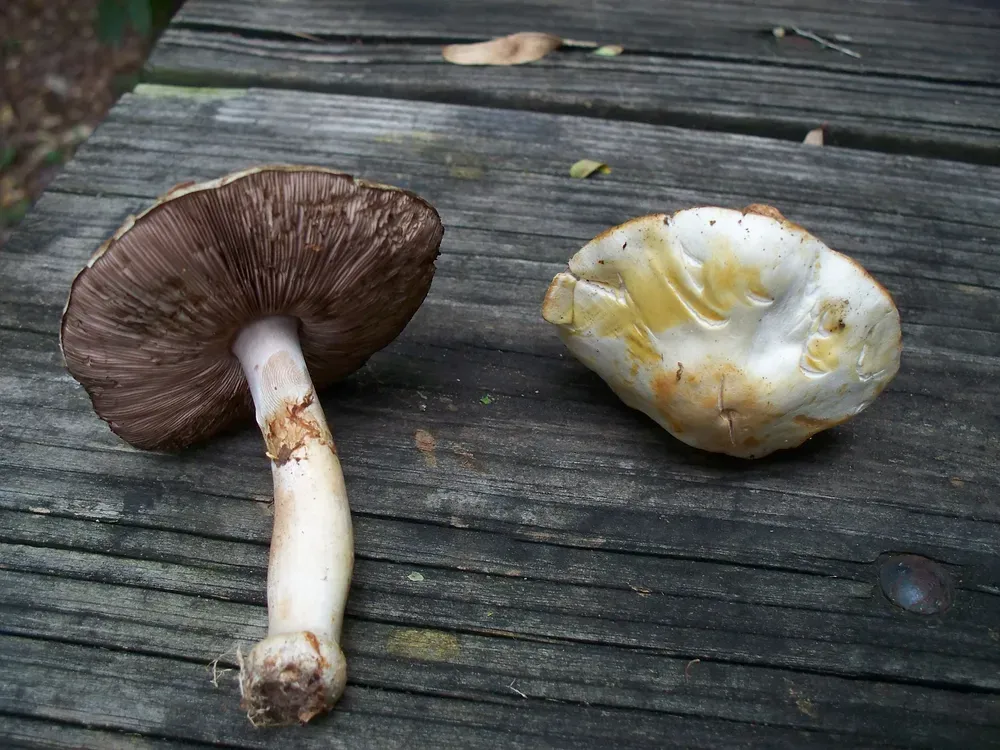
Ringless honey fungus
Desarmillaria tabescens
Agaricus abruptibulbus
Agaricus haemorrhoidarius
Agaricus haemorroidarius
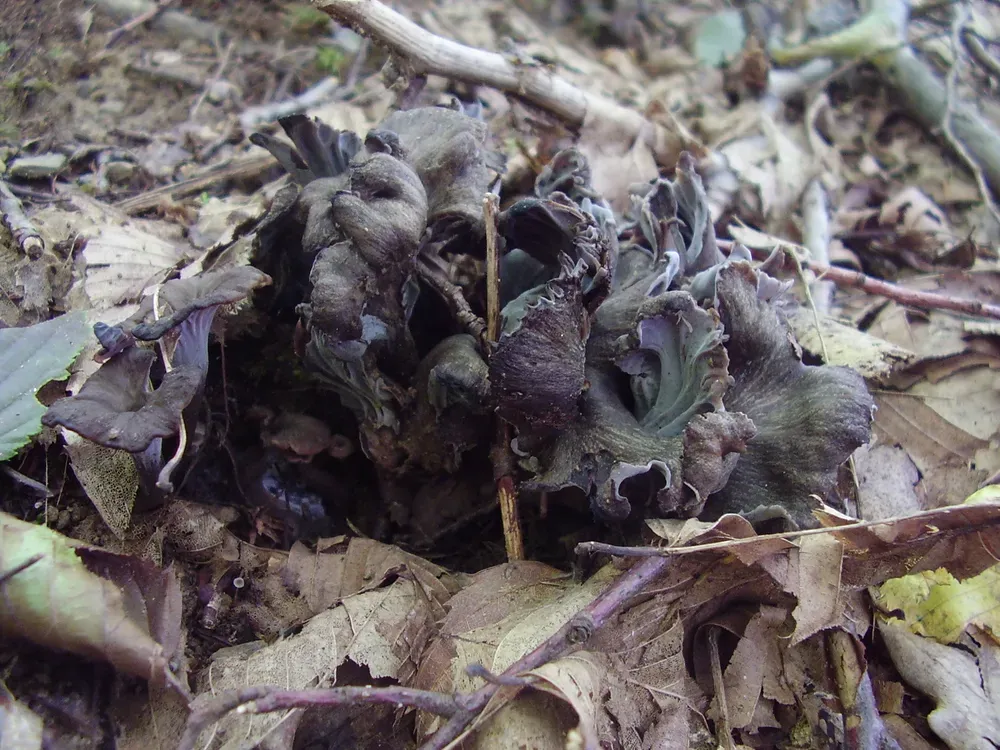
Ashen chanterelle
Cantharellus cinereus
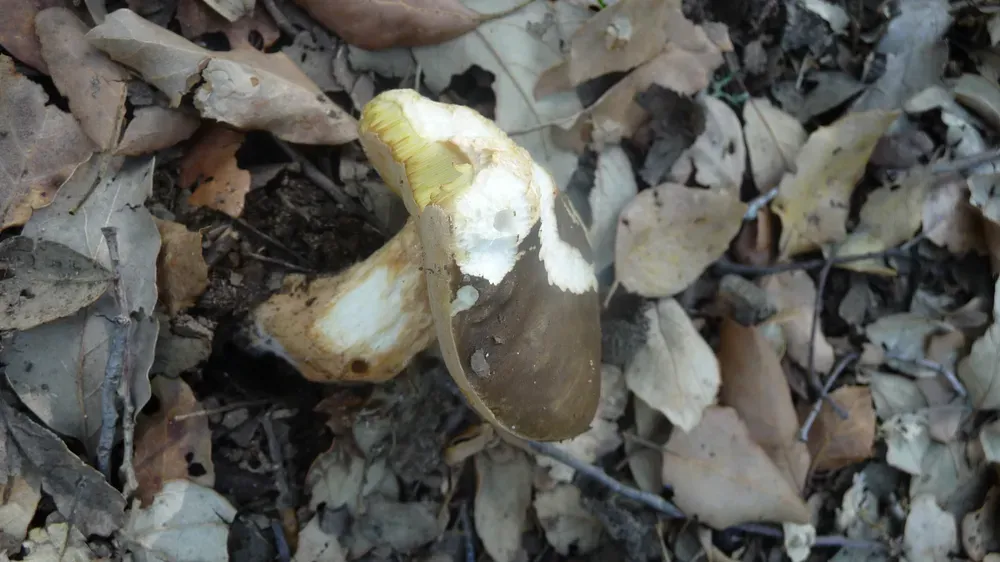
Blushing bolete
Leccinum roseofractum
Frequently asked questions
Can you eat it?
Not in any culinary sense. The flesh is very thin, gelatinous and tasteless. Some sources allow it in soups as a striking decoration for color, but there's no serious interest in it. Better not to taste it raw — some sensitive people may get mild stomach upset.
Is it poisonous?
It contains no serious toxins — it isn't among Ukraine's deadly poisonous mushrooms. But as with all wild mushrooms, don't taste it raw, and cooked it has no value.
Where should you look for it?
On fallen, rotting twigs of broadleaf trees — beech, hornbeam, willow, hazel, less often oak. Especially in shady damp spots, river floodplains and along streams. Look not on bare soil but on the leaf litter among moss and fallen twigs.
In which regions of Ukraine?
The Carpathians (Zakarpattia, Lviv, Ivano-Frankivsk and Chernivtsi regions), the Carpathian foothills, Polissia and the northern Forest-Steppe. It isn't found in the dry steppe — it needs constant moisture and organic leaf litter.
When should you look for it?
February–May, peaking in March–April. It's a true spring mushroom — one of the very first, appearing right after the snow melts. In warm winters in Zakarpattia it can turn up as early as late January. By summer it's gone completely.
What is it confused with?
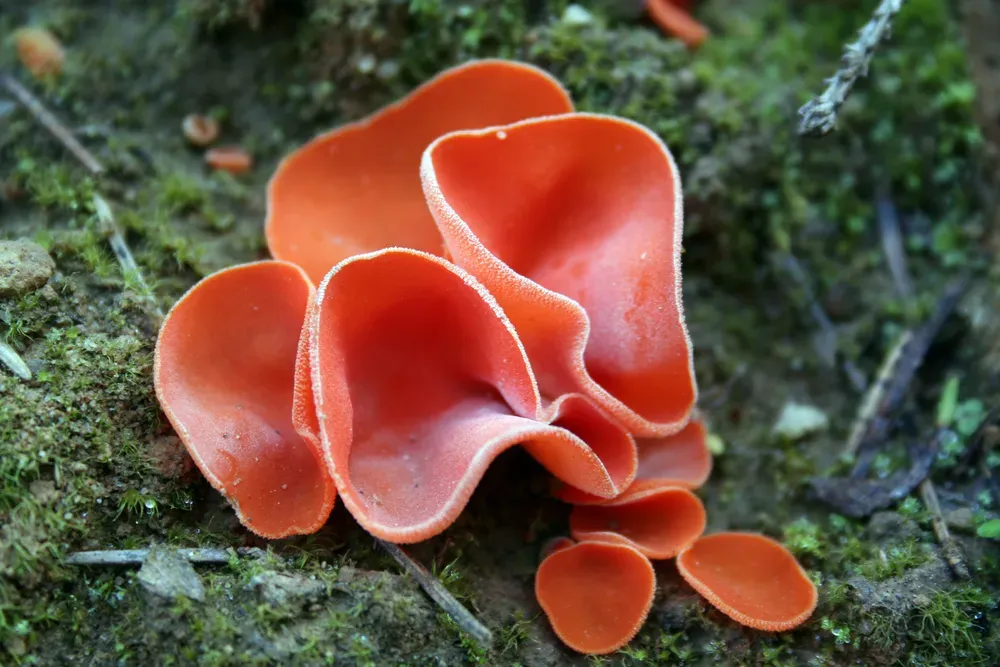
With Sarcoscypha austriaca — practically identical on the outside, but it grows a little later and on alder and willow twigs. You can only tell them apart under a microscope, by spore shape. In the kitchen and in ecology they're almost the same.
Are there dangerous lookalikes?
There are no serious poisonous lookalikes in Ukraine. A bright red cup on the forest floor in March–April is almost always Sarcoscypha. There are no other bright red cup fungi this season.
Why is it called an "elf cup"?
For its shape — a perfect tiny red bowl, like something out of a fairy tale about elves. It's a folk name in many European languages: the English say "scarlet elf cup" or "fairy cup", the Germans "Zinnoberroter Kelchbecherling" (cinnabar-red cup). The Ukrainian "лісова чарка" ("forest goblet") means the same thing.
Is Scarlet elf cup edible or poisonous?
What kind of spore-bearing surface does Scarlet elf cup have?
What does the cap of Scarlet elf cup look like?
What does the stem of Scarlet elf cup look like?
Sources
- [1]Вікіпедія (українська)
- [2]Атлас грибів України, Зеров Д.К. (1979)
- [3]MycoBank Database
- [4]Index Fungorum
- [5]GBIF
- [6]iNaturalist Ukraine