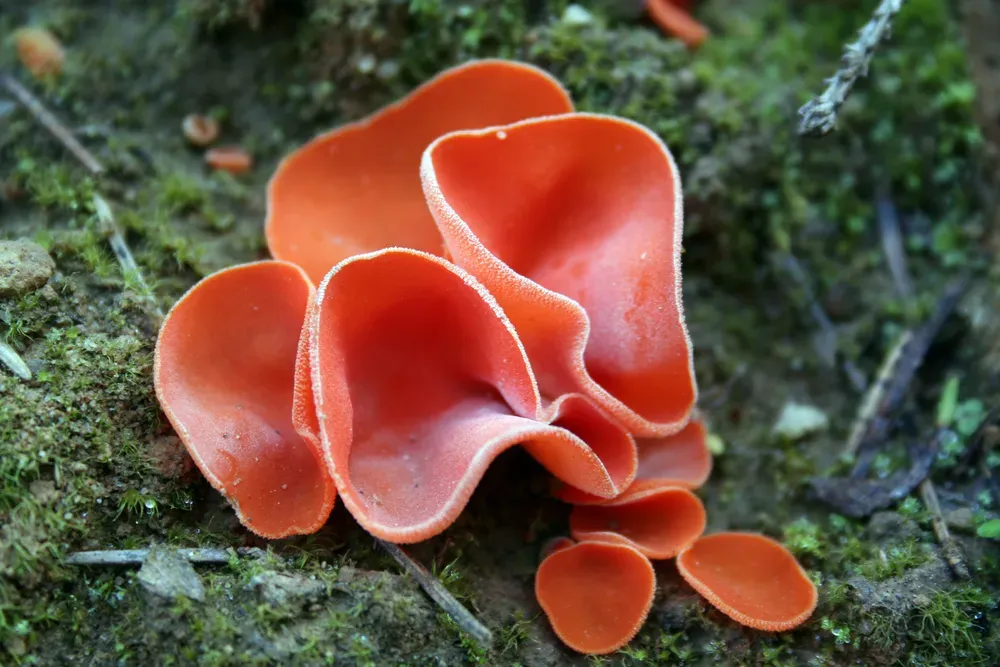
Orange peel fungusAleuria aurantia
Expert-verifiedUpdated October 3, 2026
Passport
- Edibility
- Conditionally edible
- Season
- Aug — Dec
- Hymenophore
- Smooth
- Cap color
- Orange
- Size
- Small (up to 5 cm)
- Smell
- Odorless
- Reviewed
- Yes ✓
Quick answers
Where to look?
Deciduous forest, Mixed forest, Conifer forest
When does it appear?
Aug — Dec
Active months: August, September, October, November, December.
How to recognize it? Three signs
- Cap color: Orange
- Cap shape: Depressed
- Smell: Odorless
Fruiting season
August – December
Description
Orange peel fungus (Aleuria aurantia) is one of the most recognizable and photogenic mushrooms of the Ukrainian fall. Its bright orange cup-shaped fruiting bodies, which look like bits of orange peel, are hard to miss against the brown forest litter. It grows in groups along paths, the edges of forest roads, and on bare soil after rain — wherever the ground is poor and exposed.
It is a saprotrophic species, not tied to any particular tree. It occurs throughout Ukraine, from Polissia to the Carpathians, mostly from September until the first hard frosts. The English name, "orange peel fungus," neatly describes both its color and its shape.
Orange peel fungus is rarely used in cooking. Technically it is edible, but the flesh is very thin, brittle and tasteless — in a frying pan it turns into a shapeless mass. Some sources recommend eating it only thoroughly boiled, since raw it can cause mild stomach upset in sensitive people. As a decorative touch in a salad it looks striking; as a main ingredient it is dull. The mushroom's real value is aesthetic and ecological.
Cap
The fruiting body is cup-shaped, irregular, 2–10 cm across (sometimes up to 12). When young it is closed and globular; as it grows it opens, first into a deep cup, then becomes saucer-shaped, and in old age it crumples and curls at the edges. The inner surface is bright orange, smooth and shiny. The outer surface is paler, pale yellowish-orange, finely granular.
Hymenophore
The spore-bearing layer lines the inner, concave surface of the cup. Cup fungi have no gills or tubes — spores form in asci directly on the surface. Spore print white.
Stem
There is no stem, or it is very short, a small bump at the base of the cup. The fruiting body sits directly or almost directly on the soil.
Flesh
The flesh is thin, waxy-brittle, orange or paler than the outer surface. Very fragile — it falls apart at the slightest pressure.
Smell
The smell is faint, neutral or slightly sweetish, with no distinct notes. The taste is mild, bland, not bitter.
›Scientific synonyms (4)
Helvella coccinea Bolton, Peziza aurantia Pers., Scodellina aurantiaca Gray, Otidea aurantia (Pers.) Rehm
Lookalikes
Related species
Mushrooms of the same genus and habitat — to study side by side and never mix up.
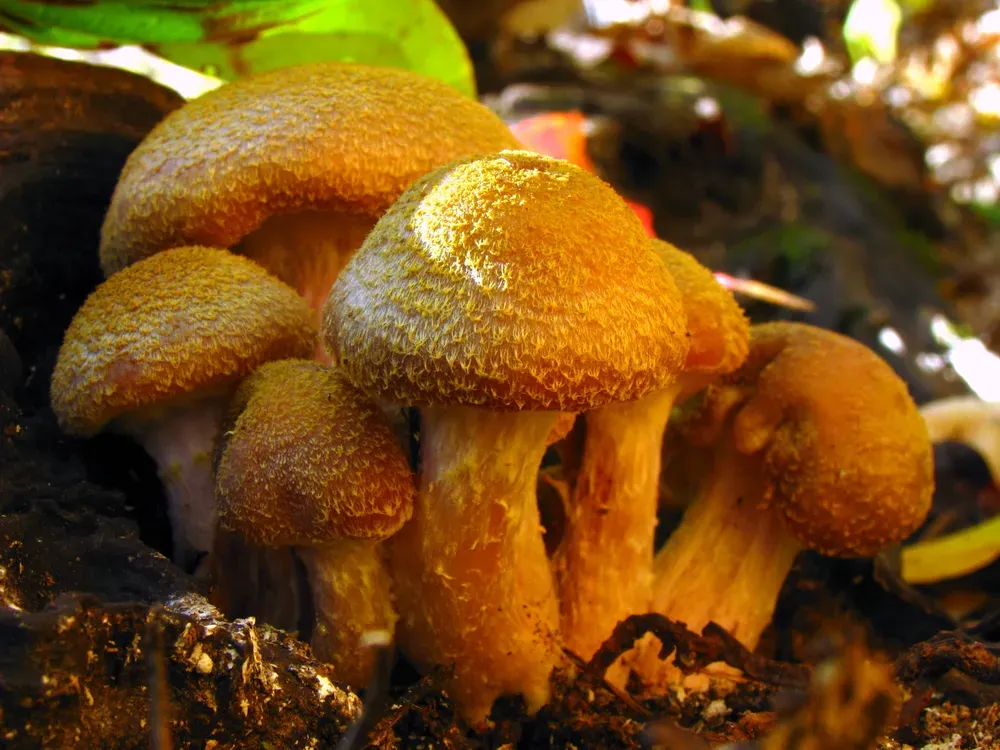
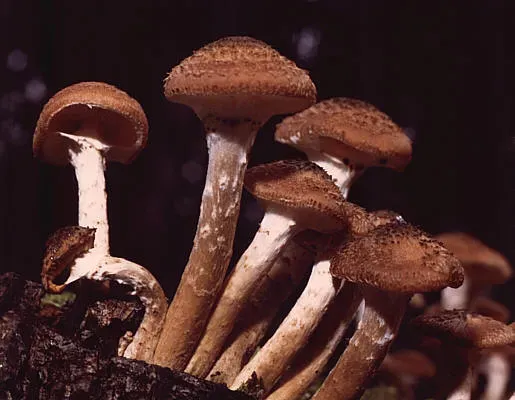
Bulbous honey fungus
Armillaria gallica
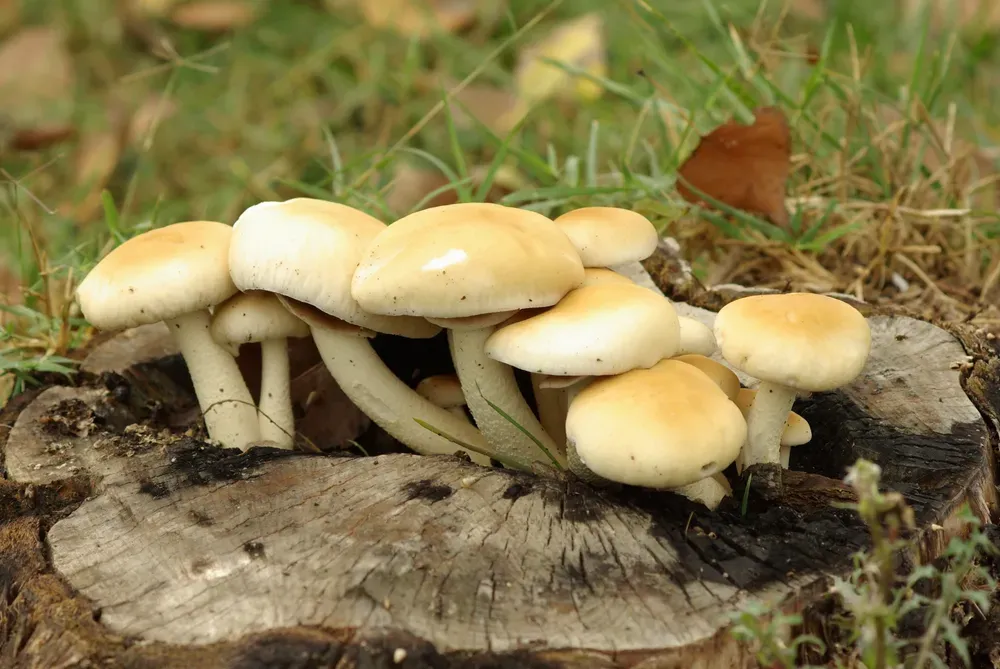
Dark honey fungus
Armillaria ostoyae
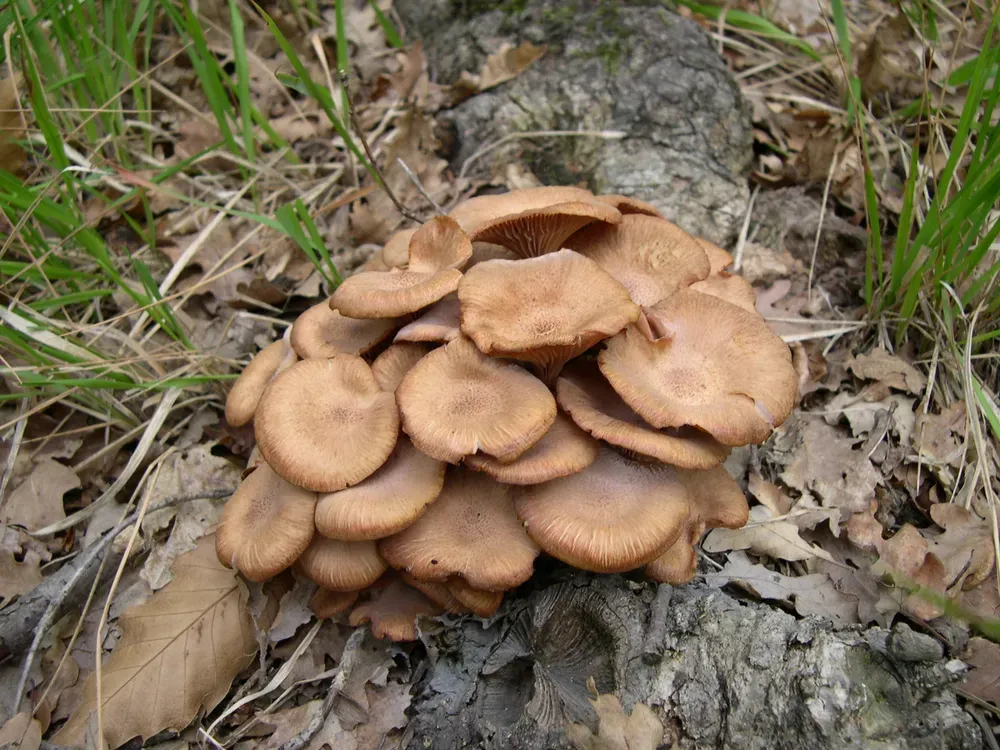
Poplar fieldcap
Cyclocybe aegerita
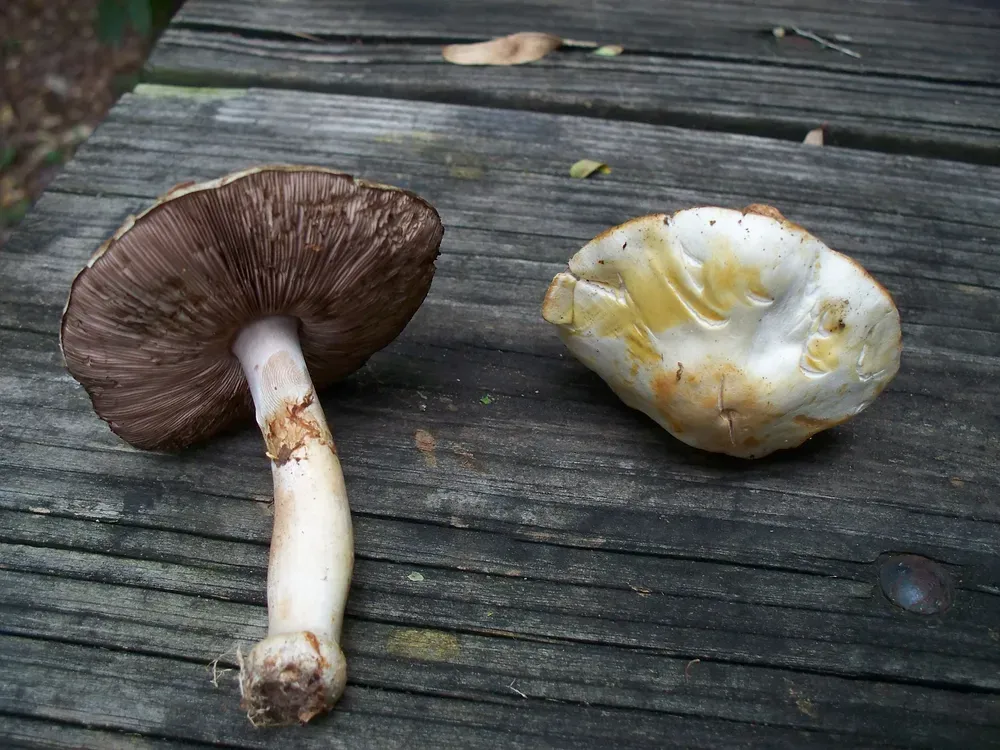
Ringless honey fungus
Desarmillaria tabescens
Agaricus abruptibulbus
Agaricus haemorrhoidarius
Agaricus haemorroidarius
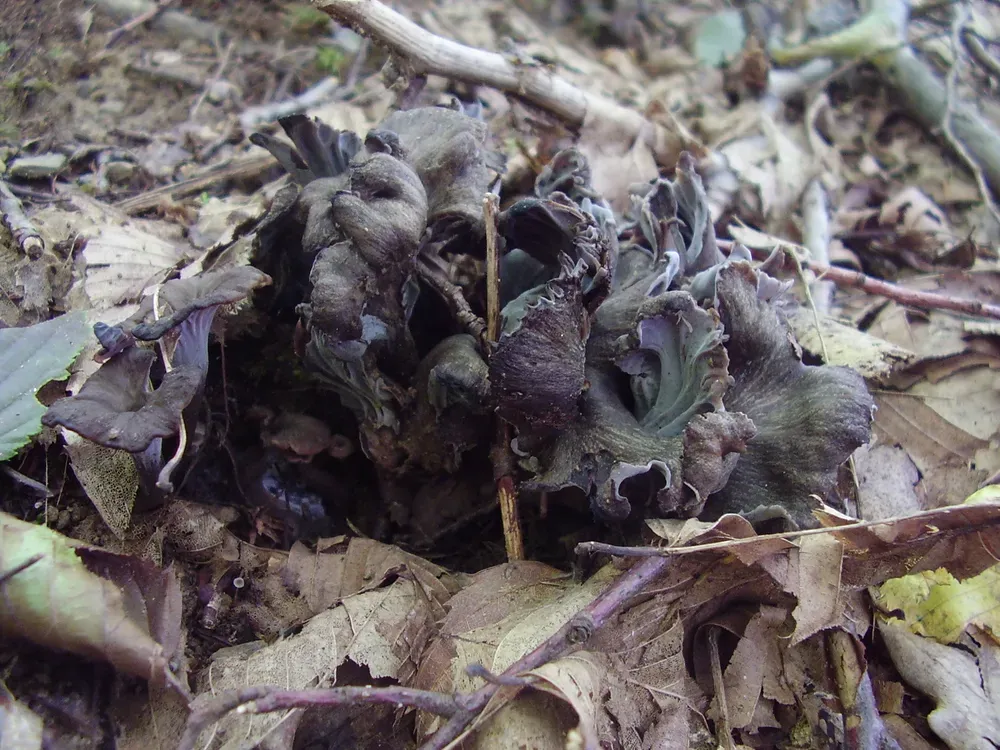
Ashen chanterelle
Cantharellus cinereus
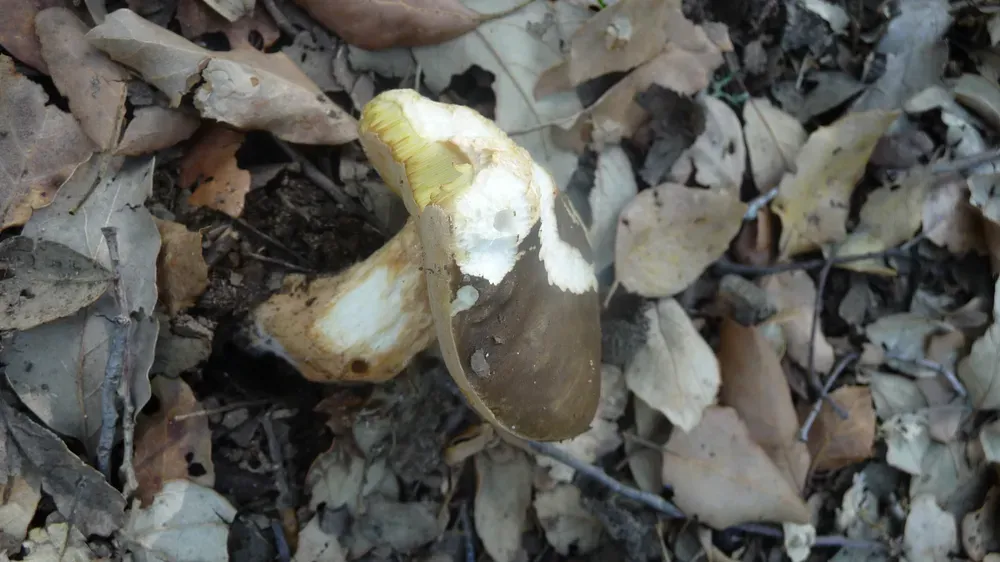
Blushing bolete
Leccinum roseofractum
Frequently asked questions
Is orange peel fungus safe to eat?
Technically yes, but with caution. Do not eat it raw or undercooked — in sensitive people it can cause mild stomach upset. Boil the mushroom for 10–15 minutes. Before that, make sure it really is orange peel fungus and not the inedible golden cup (Caloscypha fulgens): if the outside has olive tones or the mushroom develops blue-green stains, leave it. As a main ingredient it is uninteresting because it has no flavor.
Are there dangerous lookalikes?
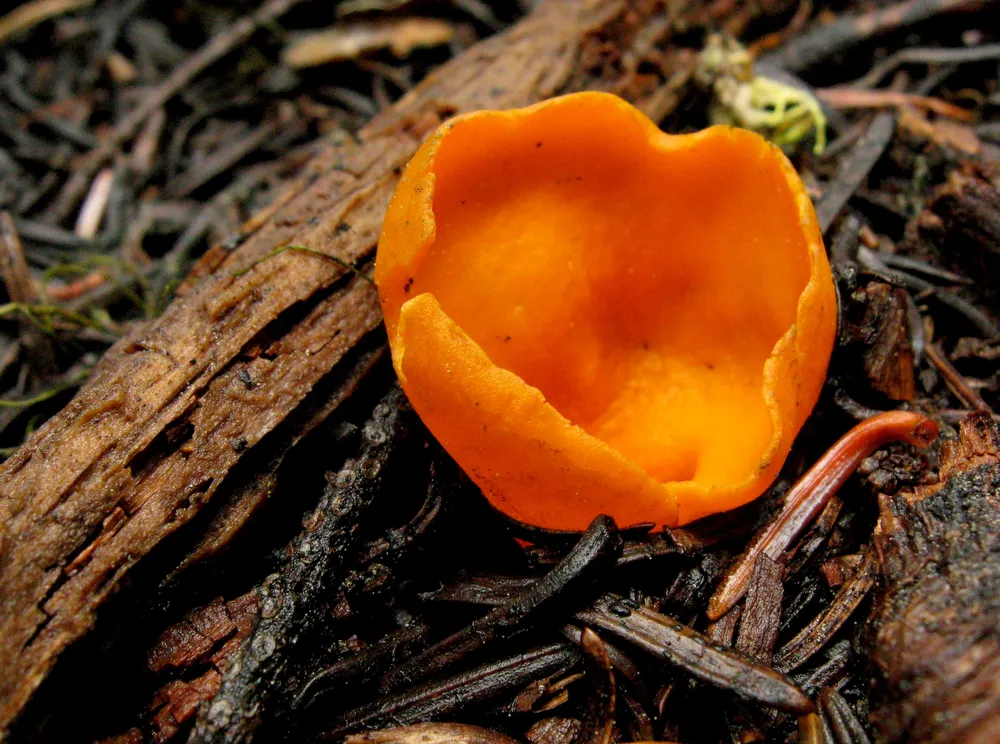
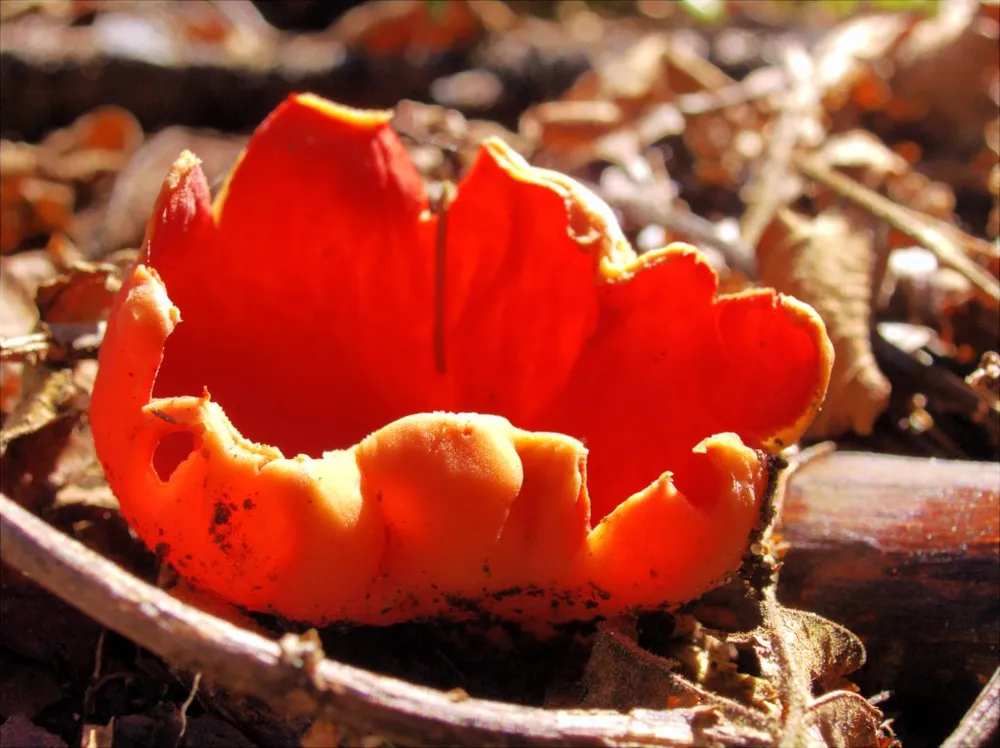
Yes. Golden cup (Caloscypha fulgens) is very similar in color and shape; it's considered nonpoisonous but inedible. It differs in turning greenish-blue as it dries, and its outer surface has olive tones. Some Otidea species are also similar — likewise conditionally edible or inedible. If in doubt, leave it.
Where does it grow?
On bare soil, forest paths, roadsides, burned forest sites, and near the roots of fallen trees. It does not occur in grassy places — it needs bare ground. It loves damp, shady parts of the forest.
When does it appear?
Late summer and all through fall — from August to November; in mild winters it can persist until January. The heaviest fruiting is in September–October after heavy fall rains.
How does it differ from other orange cup fungi?
Orange peel fungus is the largest and brightest of Ukraine's orange cup fungi. Its "orange peel" color is unique. The small orange Scutellinia have eyelash-like hairs along the rim of the cup — orange peel fungus has a bare rim.
Does it grow on trees or only on soil?
Only on soil — it is a saprotroph that feeds on organic matter in the forest litter. It does not grow on trees or logs. It often appears on trampled paths where the soil is compacted and bare.
Can you cultivate it?
Yes, in mycological circles orange peel fungus mycelium is sold for home growing on fresh woody soil. But this is more of a decorative experiment than practical cultivation — the mushroom's culinary value is low.
Why do foragers hardly ever pick it?
For two reasons: the flavor is bland, and the brittle flesh does not hold its shape in cooking. Most experienced foragers leave orange peel fungus in the forest — as a photo subject and part of the ecosystem. In European food cultures its market value is zero.
Is Orange peel fungus edible or poisonous?
What kind of spore-bearing surface does Orange peel fungus have?
What does the cap of Orange peel fungus look like?
What does the stem of Orange peel fungus look like?
Sources
- [1]Вікіпедія (українська)
- [2]Атлас грибів України, Зеров Д.К. (1979)
- [3]MycoBank Database
- [4]Index Fungorum
- [5]GBIF
- [6]iNaturalist Ukraine