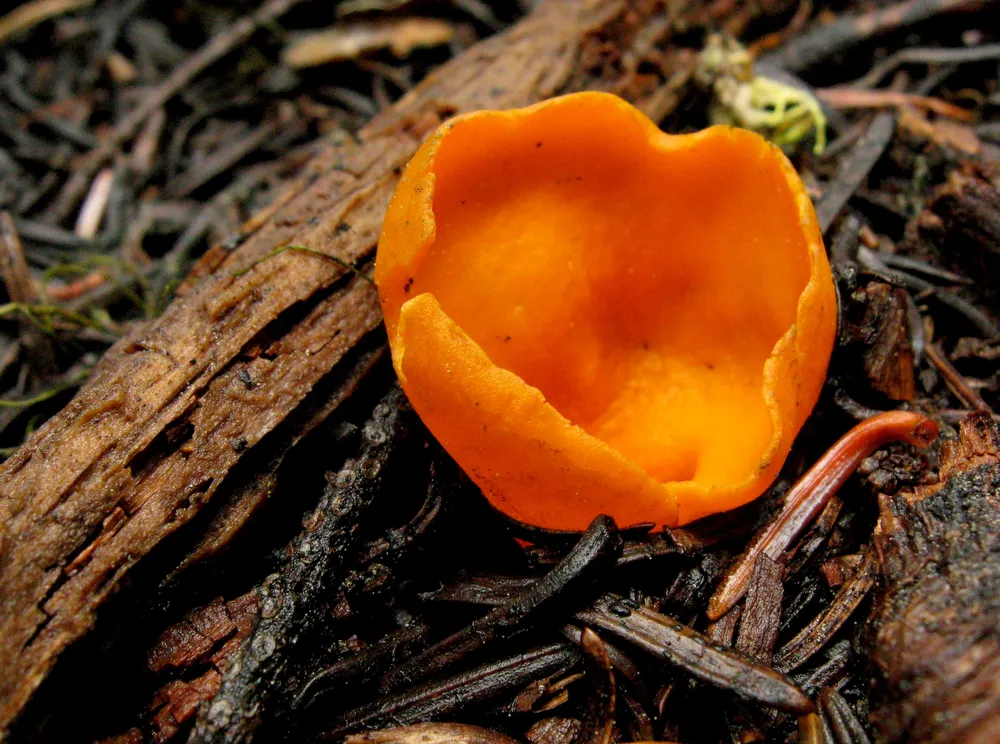
Golden cupCaloscypha fulgens
Expert-verifiedUpdated October 3, 2026
Passport
- Edibility
- Inedible
- Season
- Apr — Jun
- Hymenophore
- Smooth
- Cap color
- Orange
- Size
- Very small (<3 cm)
- Smell
- Odorless
- Reviewed
- Yes ✓
Quick answers
Where to look?
Conifer forest, Mixed forest
When does it appear?
Apr — Jun
Active months: April, May, June.
How to recognize it? Three signs
- Cap color: Orange, Yellow
- Cap shape: Depressed
- Smell: Odorless
Fruiting season
April – June
Description
The golden cup is one of the brightest and most eye-catching spring finds in our conifer forests. It's a cup-shaped mushroom 1-3 cm across, like a miniature bowl or goblet, with a smooth inner surface of vivid orange or flame-yellow and a slightly paler outside. It looks as if someone had scattered gold coins across the moss. It belongs to the sac fungi (ascomycetes), so its fruiting bodies are built in a fundamentally different way from gilled or pored mushrooms — the spores ripen in microscopic sacs (asci) on the inner surface of the cup.
This is an inedible mushroom — not toxic, but no good for cooking. The fruiting bodies are too thin and brittle, with no noticeable taste or smell; the flesh is waxy and fragile. It has no place in folk tradition. Its value to mycology, on the other hand, is high — it's an indicator of well-preserved conifer forests and clean soil, and its vivid color makes it one of the most popular spring finds among photographers and naturalists.
In Ukraine it is widespread in coniferous and mixed forests, mostly with spruce, fir and pine. It's a saprotroph with traces of weak parasitism on the roots of young conifers. Season: April–June, peaking in mid-May. It often grows in groups of 5-30 fruiting bodies among moss, on compacted conifer litter and on rotting twigs. Your best chances of finding it are in the fir forests of the Carpathians and the spruce stands of Polissia.
Cap
The fruiting body is cup- or goblet-shaped, 1-3 cm across and 0.5-1.5 cm tall, with no clear division into cap and stem. The inner surface (hymenium) is smooth, silky-shiny, bright orange to flame-yellow. The outer surface is paler, creamy orange, with fine whitish down. The rim of the cup is thin, curled downward in young specimens and flattening out or slightly wavy in mature ones.
Hymenophore
A smooth hymenium covers the inner surface of the cup. The spores ripen in microscopic sacs (asci). The spore print is colorless to pale yellow. The spores are shot out at the slightest change in air pressure or moisture — a trait shared by all Pezizales.
Stem
The stem is almost absent — the fruiting body is sessile or has a short, narrowed base 2-5 mm tall, barely sunk into the soil.
Flesh
The flesh is thin (1-2 mm), waxy, brittle and orange-yellowish. It doesn't change color when cut. No distinct smell or taste.
Smell
Faint, neutral, indistinct. Not tasted — the mushroom is inedible.
›Scientific synonyms (6)
Peziza fulgens Pers. (1822), Otidella fulgens (Pers.) Sacc. (1889), Barlaea fulgens (Pers.) Rehm (1908), Lamprospora fulgens (Pers.) Snyder (1936), Geniculodendron pyriforme G.A.Salt (1974), Pseudoplectania fulgens (Pers.) Fuckel
Lookalikes
Related species
Mushrooms of the same genus and habitat — to study side by side and never mix up.
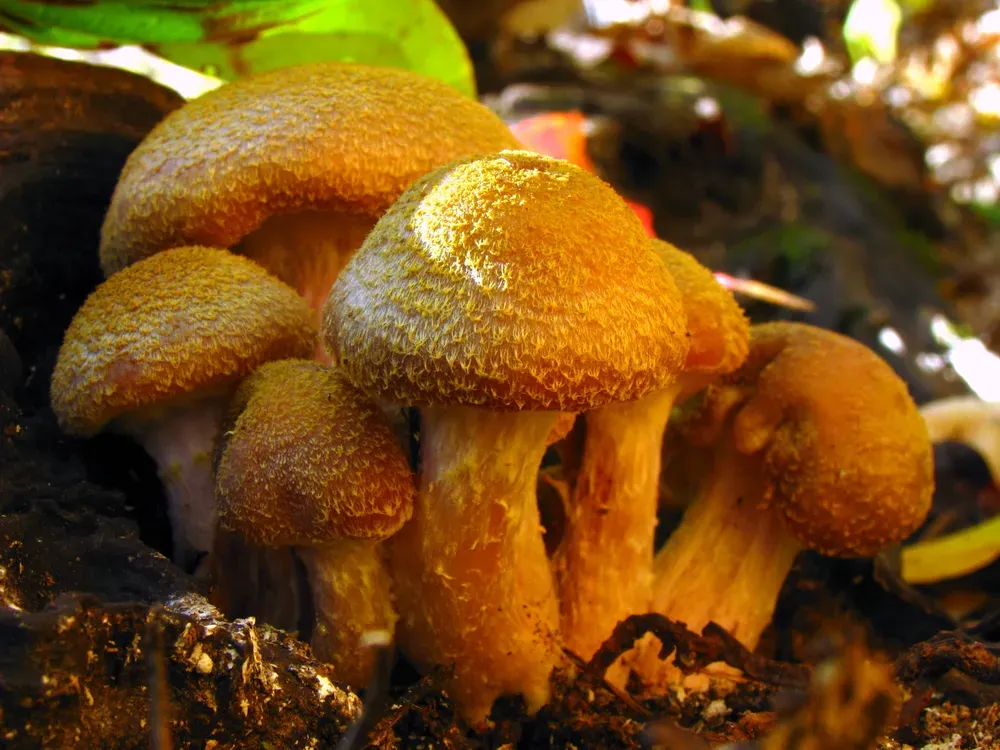
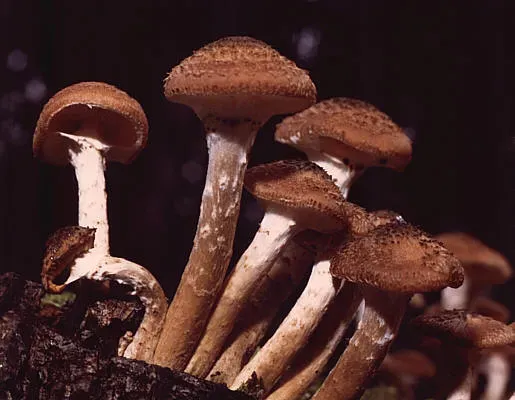
Bulbous honey fungus
Armillaria gallica
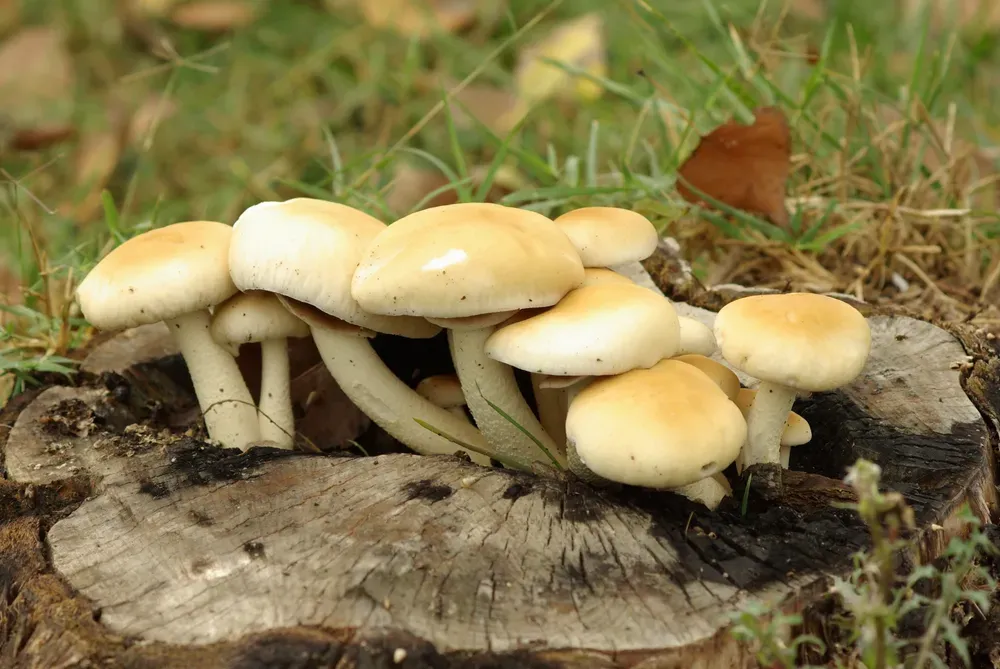
Dark honey fungus
Armillaria ostoyae
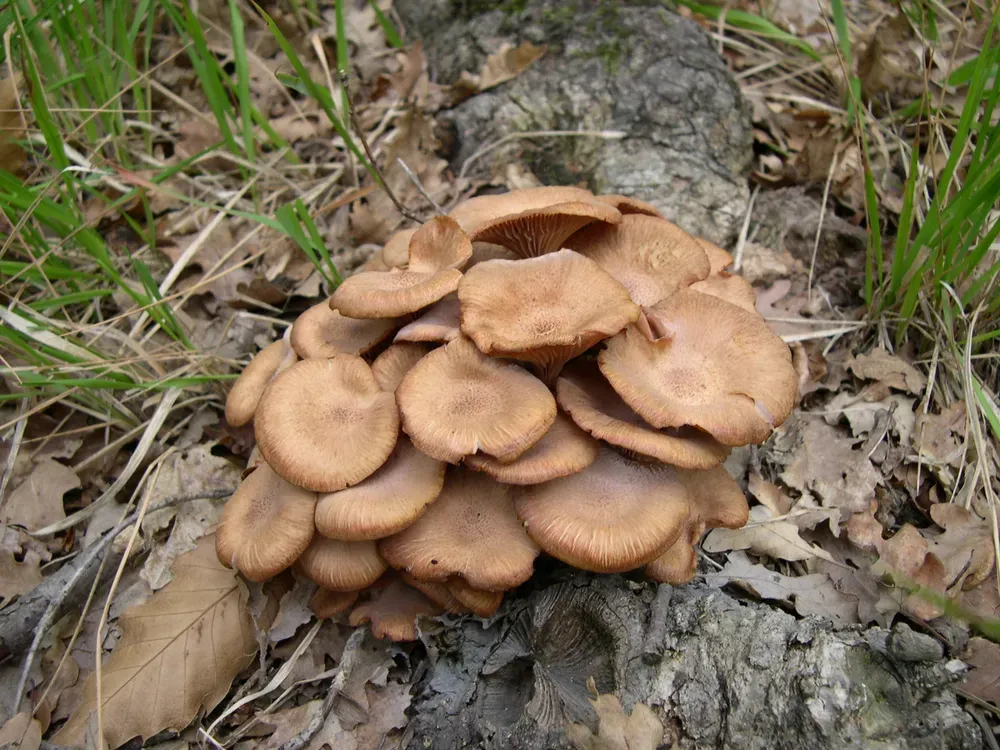
Poplar fieldcap
Cyclocybe aegerita
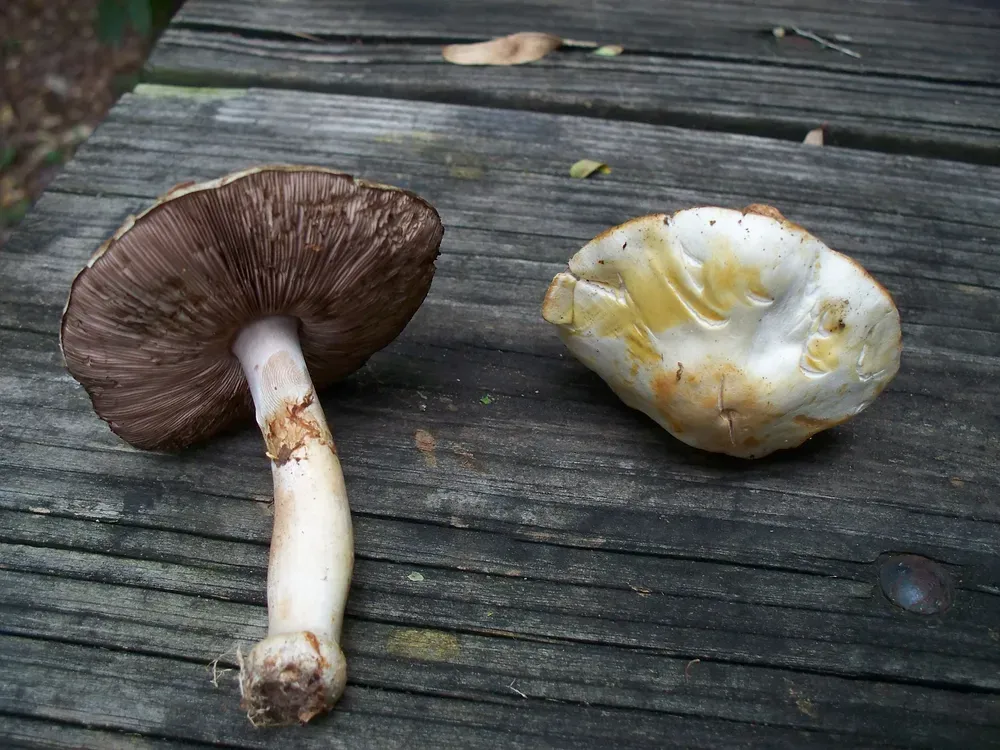
Ringless honey fungus
Desarmillaria tabescens
Agaricus abruptibulbus
Agaricus haemorrhoidarius
Agaricus haemorroidarius
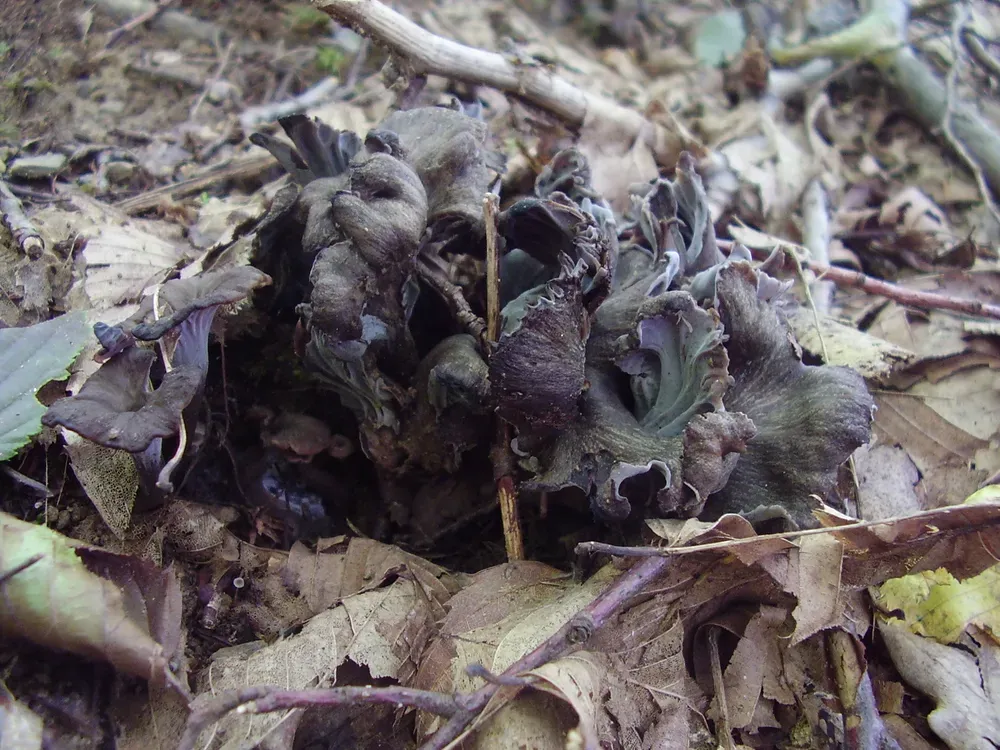
Ashen chanterelle
Cantharellus cinereus
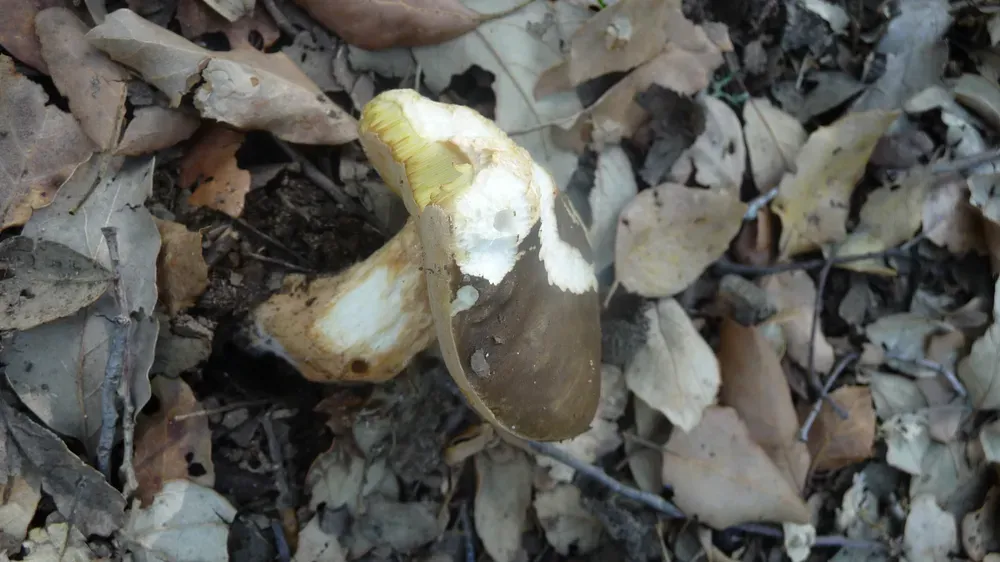
Blushing bolete
Leccinum roseofractum
Frequently asked questions
Can you eat it?
It isn't eaten — not poisonous, but not edible either: too thin, brittle and tasteless. There's no culinary tradition of using it. If one happens to crumble into your basket with other mushrooms, you don't need to throw them out, but there's no point in picking it on purpose for cooking.
Is it OK to touch it or let children look at it?
Yes, it's completely safe — this is not a toxic mushroom. You can show it to a child as an example of "sac fungi", photograph it, even take one specimen home to observe. Just don't eat it or taste it — neither this one nor any other unknown mushroom.
Where should you look for it?
In coniferous and mixed forests — mostly with spruce, fir and pine. It loves damp mossy patches, compacted conifer litter, and rotting twigs and trunks. The best finds are at the edges of fir groves, on north-facing slopes and in shady hollows. It doesn't grow in broadleaf forests or young plantations.
Which regions of Ukraine is it found in?
The Carpathians (especially Zakarpattia and Ivano-Frankivsk region), the Carpathian foothills, and northern Polissia with its spruce plantings. It isn't found in the steppe or the southern forest-steppe. This is a mushroom of hilly and Polissian conifer forests.
When should you look for it?
April — June, peaking in mid-May. It's one of the first spring mushrooms — it appears together with false morels and early morels, when the grass is only just coming up. By July–September it no longer fruits.
What is it confused with?
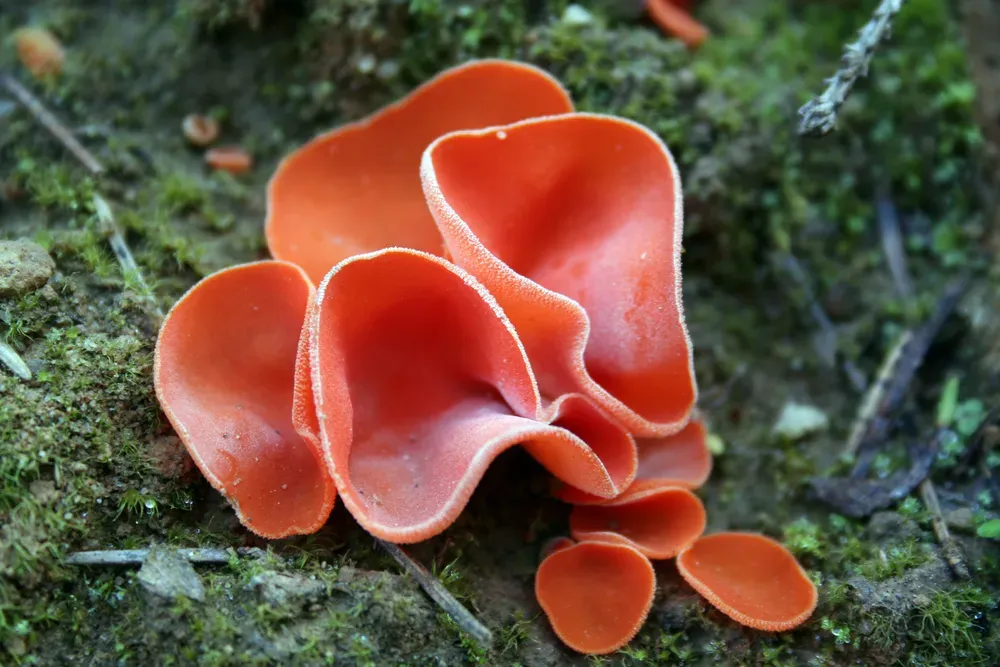
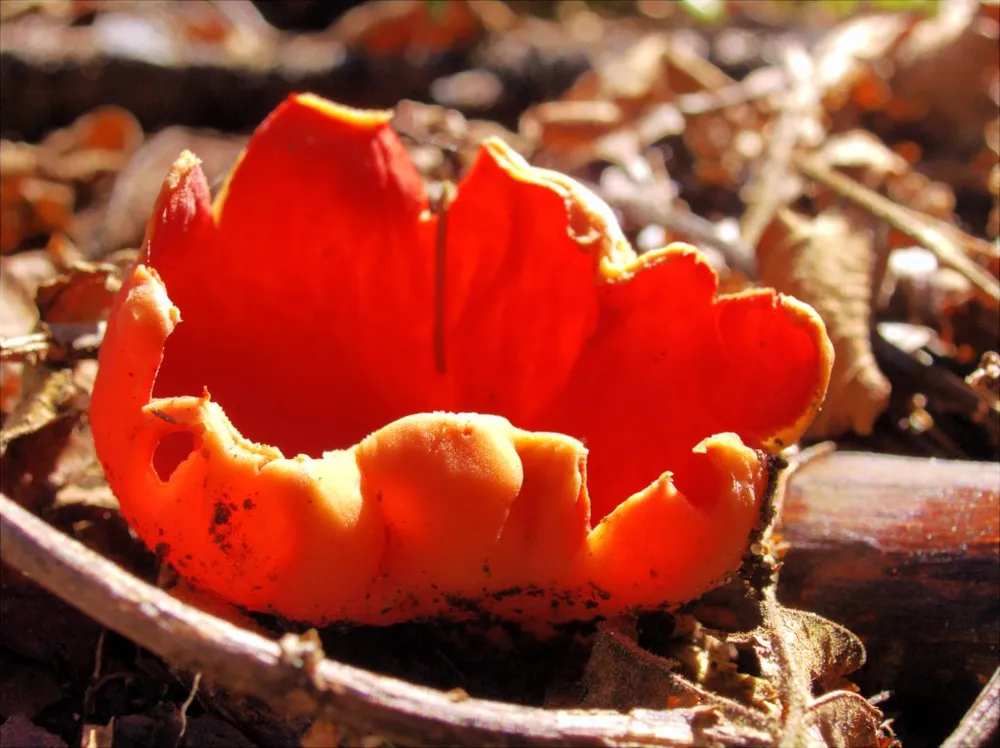
With other orange cup-shaped sac fungi: Orange peel fungus (Aleuria aurantia) — also a bright orange cup, but it grows on compacted soil in broadleaf forests and on forest tracks, not on conifer litter; also inedible. Scarlet elf cup (Sarcoscypha austriaca) — a brighter red, with a distinct stem. All these small cup fungi are either inedible or edible but of no culinary value.
Could it be a young amanita?
No. Amanitas are gilled mushrooms with a cap and a stem; they never look like a smooth cup. The golden cup is a sac fungus (ascomycete), an entirely different evolutionary branch. You can't mix them up: a young amanita is egg-shaped, with white scales, and hidden inside a volva, while the golden cup is an open cup with no scales at all.
How do you identify it for sure?
Three features together: a cup shape (like a little bowl), a bright orange, shiny inner side, and growth in moss under spruce/fir in spring. If all three match, it's Caloscypha fulgens. It's small (1-3 cm) — you won't see the details without a hand lens.
Is Golden cup edible or poisonous?
What kind of spore-bearing surface does Golden cup have?
What does the cap of Golden cup look like?
What does the stem of Golden cup look like?
Sources
- [1]Вікіпедія (українська)
- [2]Атлас грибів України, Зеров Д.К. (1979)
- [3]MycoBank Database
- [4]Index Fungorum
- [5]GBIF
- [6]iNaturalist Ukraine