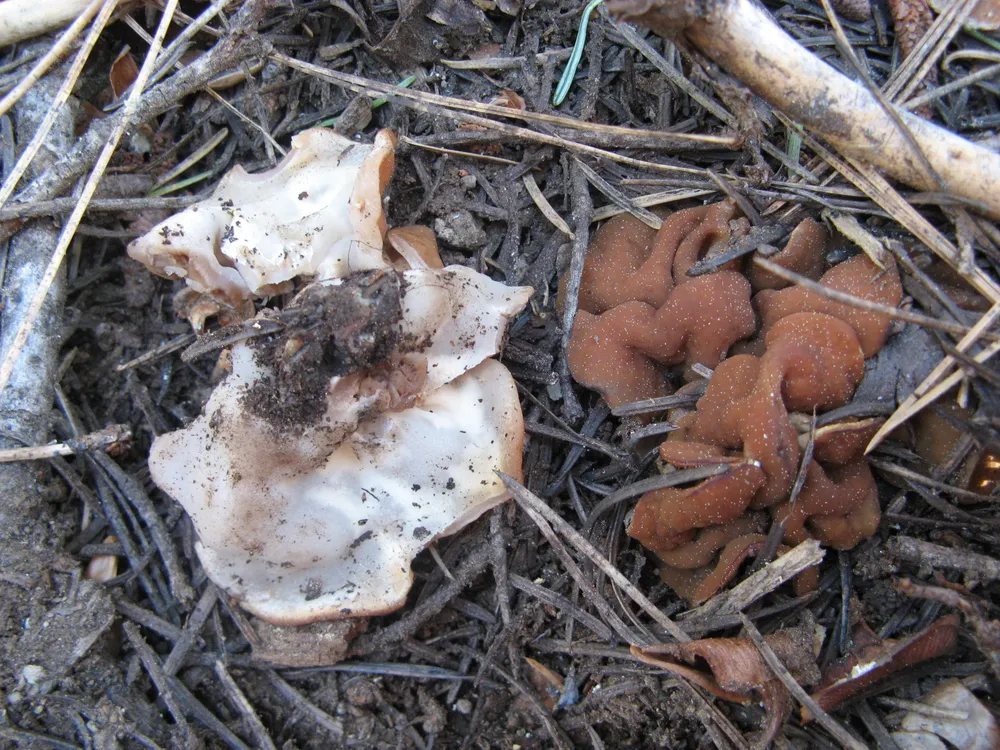
Discina ancilis
Expert-verifiedUpdated October 3, 2026
Passport
- Edibility
- Conditionally edible
- Season
- Apr — May
- Hymenophore
- Smooth
- Cap color
- Brown
- Size
- Medium (5–15 cm)
- Smell
- Pleasant
- Reviewed
- Yes ✓
Quick answers
Where to look?
Conifer forest, Mixed forest
When does it appear?
Apr — May
Active months: April, May.
How to recognize it? Three signs
- Cap color: Brown, Dark brown
- Cap shape: Depressed
- Smell: Pleasant
Fruiting season
April – May
Description
Discina ancilis is a large spring cup fungus, a relative of morels and false morels. The fruit body is cup-shaped or shield-shaped, with a broad, uneven margin and a concave upper surface. Color on top: reddish-brown, chocolate-brown, sometimes with an olive tinge; underneath it's paler, cream-gray. Size: 5-15 cm across. It is one of the very first spring cup fungi — it appears in the same spots where, a week or two later, common morels will be growing.
The mushroom is conditionally edible. Like all cup fungi related to the false morel (Gyromitra), it potentially contains hydrazines — toxic compounds that can cause poisoning if the mushroom is not processed properly. That's why the mandatory rule is: boil the mushroom twice for 15-20 minutes draining the water each time, air out the kitchen well (the steam may contain toxins), and only then cook it. Raw or undercooked, it is toxic. More cautious European countries (the UK) advise not eating mushrooms of this group at all because of the small but consistent risk. If you have no experience with hydrazine-containing mushrooms, walk on by.
In Ukraine it occurs in conifer and mixed forests on sandy soils, in damp spots. It is found in the Carpathians, Prykarpattia, Polissia, in pine and spruce-pine forests. Season: April-May.
Cap
Fruit body cup-shaped or shield-shaped, 5-15 cm across, with a concave upper surface and an uneven, wavy margin. In old specimens it flattens out. Color of the top: reddish-brown, chocolate-brown to olive-brown, surface smooth, sometimes with fine radial veins. The underside (outer surface) is paler, cream-gray, with a fine down.
Hymenophore
The hymenophore is the upper concave surface of the fruit body (as in all cup fungi — the Pezizales). Smooth, without gills or tubes. Color reddish-brown to brown. Spore print white to pale yellowish.
Stem
There is no obvious stem — the fruit body is attached to the substrate at the center by a short (1-2 cm), thick, whitish “holdfast,” often furrowed. It may also be unattached altogether.
Flesh
flesh is thin, brittle, waxy, whitish to yellowish. Does not change color when cut. Fresh, it is toxic — boiling is mandatory.
Smell
Faint mushroomy smell, nothing distinctive. When fresh, do not taste it.
›Scientific synonyms (3)
Gyromitra ancilis (Pers.) Kreisel 1984Kreisel (1984), Gyromitra perlata (Fr.) Harmaja 1969Harmaja (1969), Acetabula ancilis (Pers.) Lambotte 1880
Lookalikes
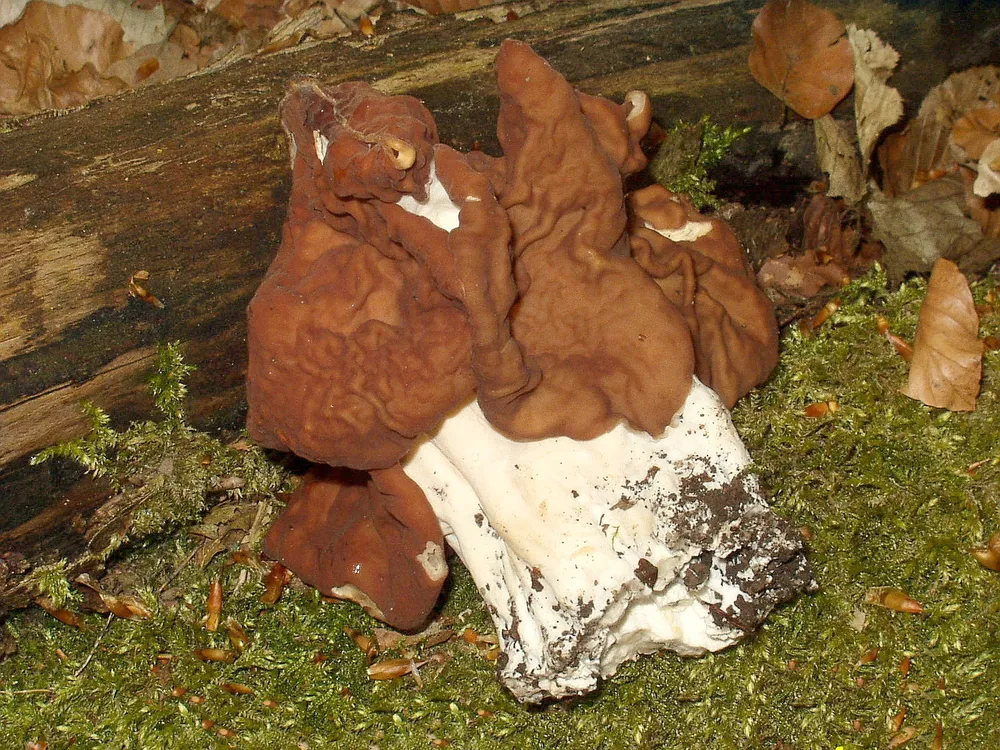
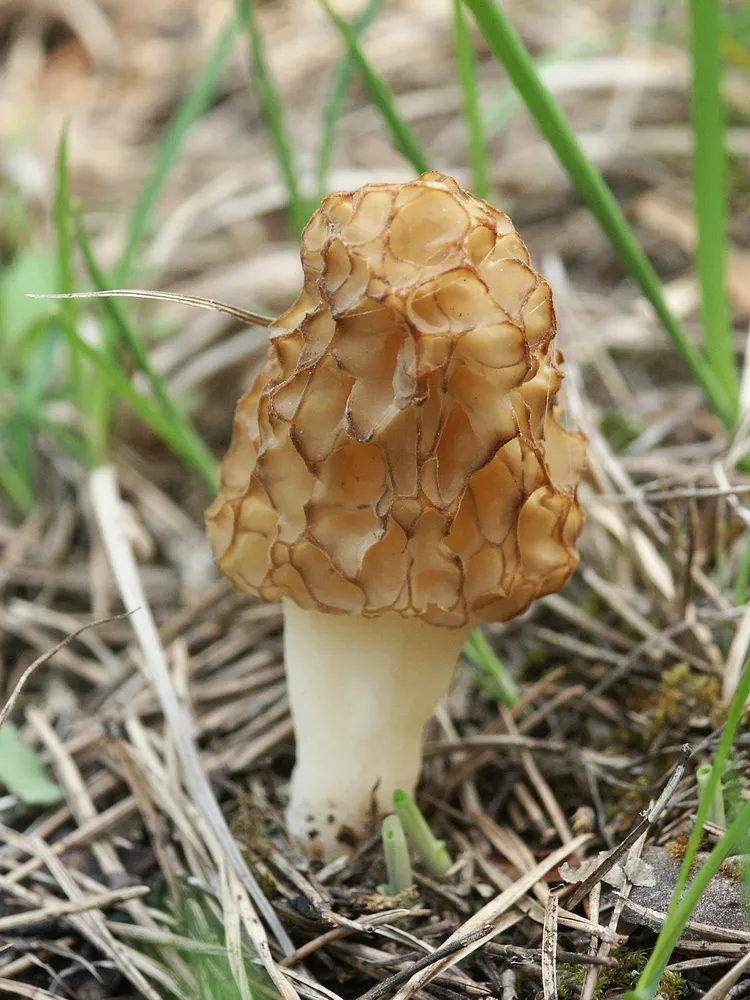
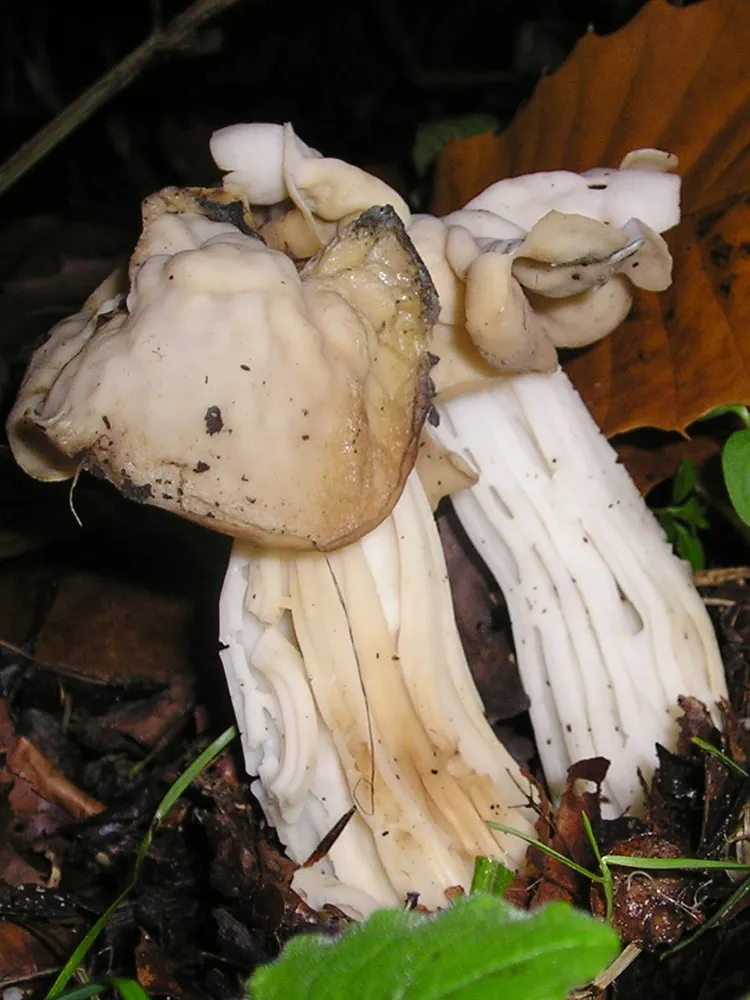
Related species
Mushrooms of the same genus and habitat — to study side by side and never mix up.
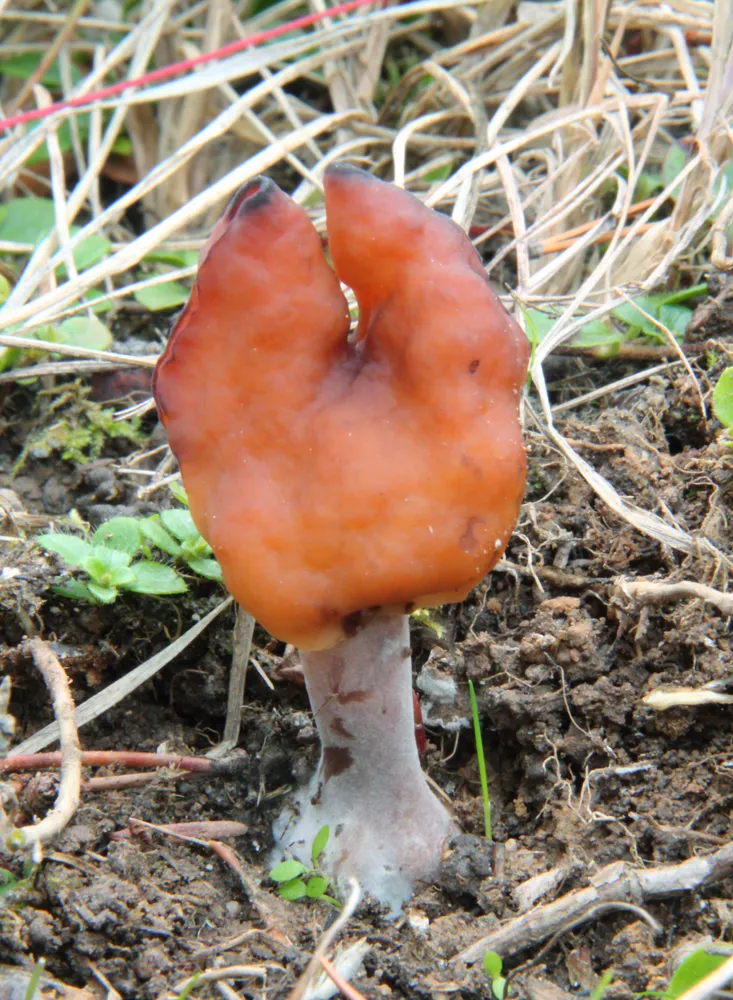
Pouched false morel
Gyromitra infula
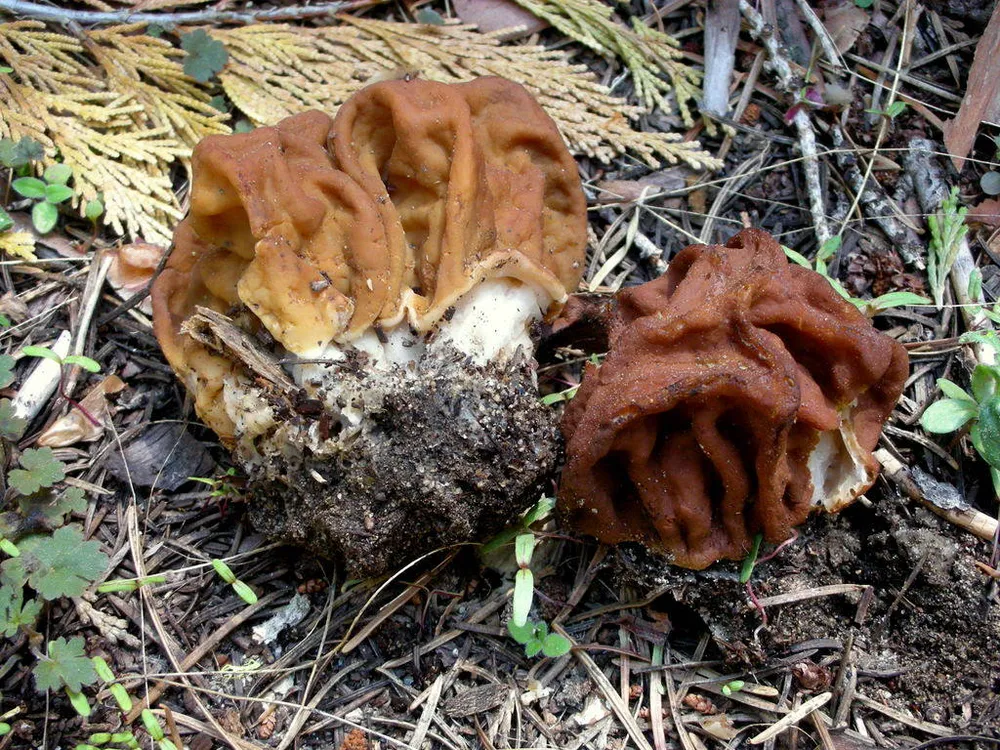
Snow false morel
Gyromitra gigas
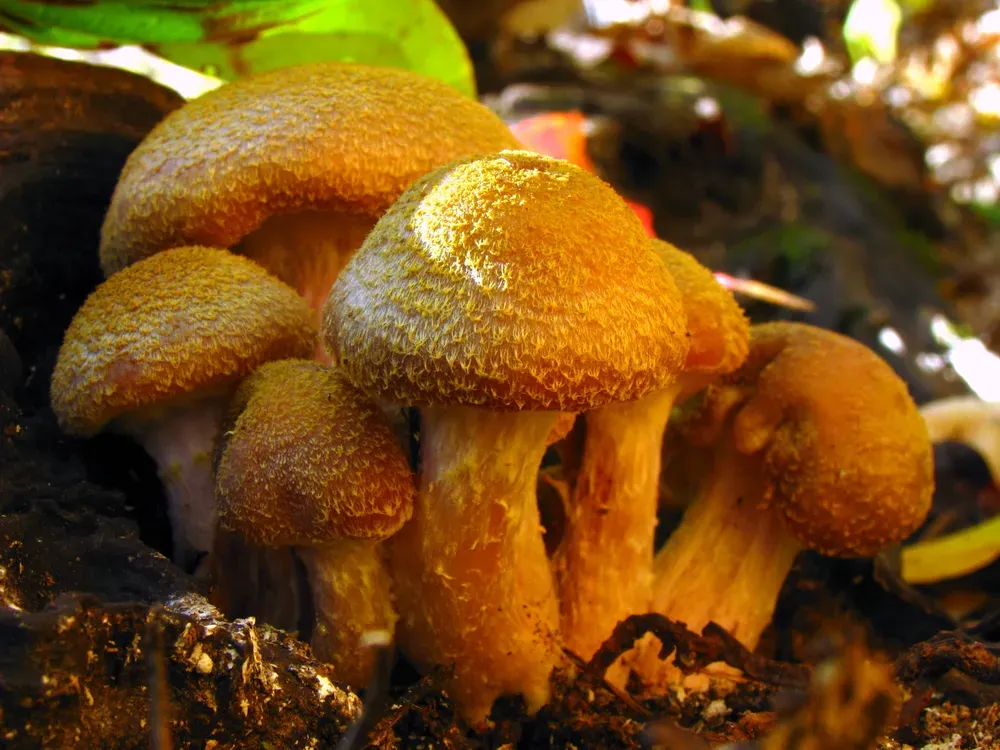
Bulbous honey fungus
Armillaria gallica
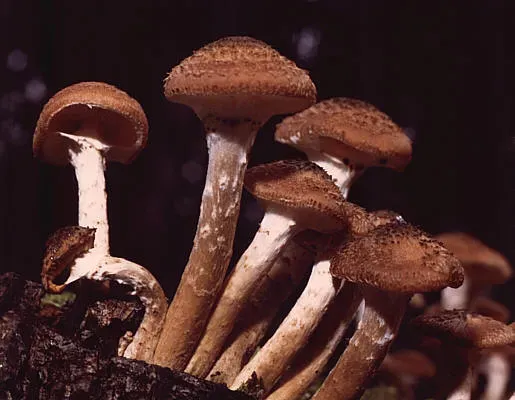
Dark honey fungus
Armillaria ostoyae
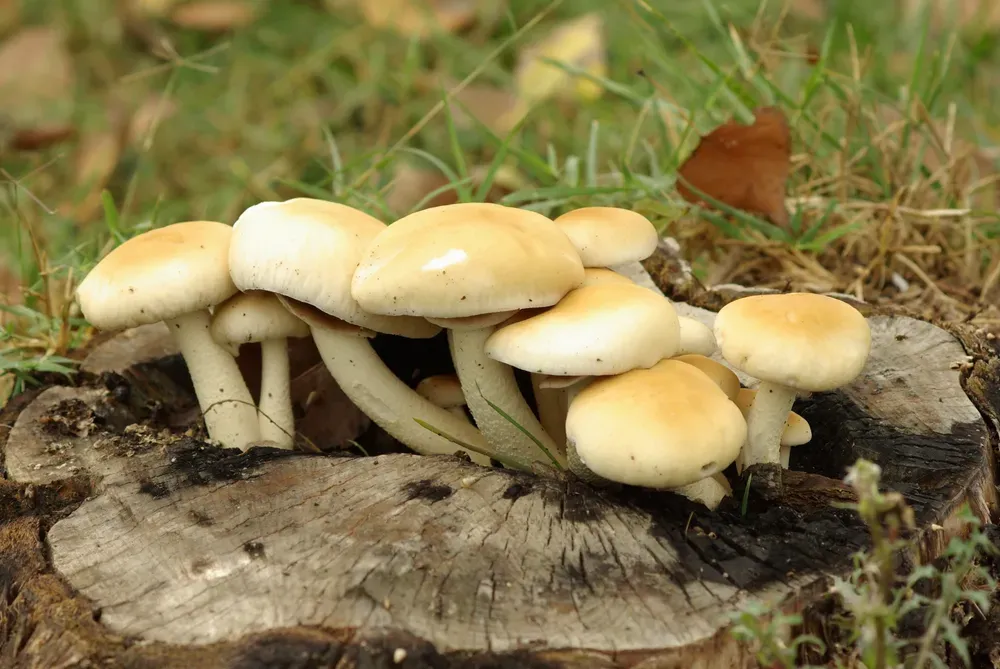
Poplar fieldcap
Cyclocybe aegerita
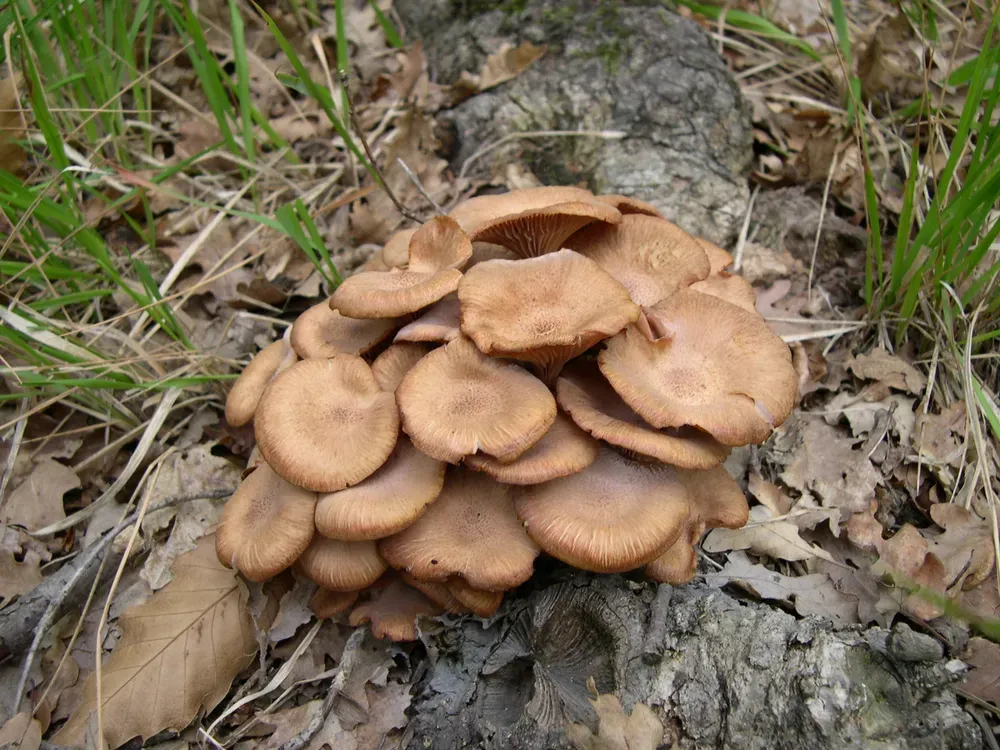
Ringless honey fungus
Desarmillaria tabescens
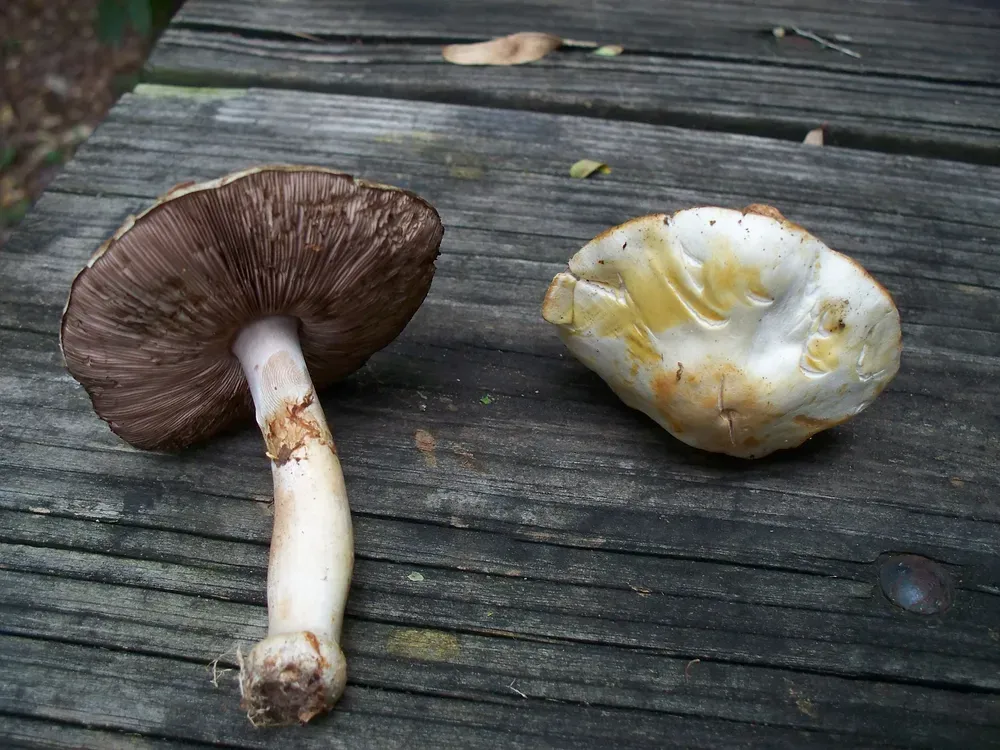
Agaricus abruptibulbus
Agaricus haemorrhoidarius
Agaricus haemorroidarius
Frequently asked questions
Is it safe to eat?
Only after mandatory double boiling, 15-20 min each time, draining the water. Raw or undercooked it is toxic: it contains hydrazines (relatives of the gyromitrin in the false morel). Symptoms of poisoning appear after 6-12 hours — nausea, vomiting, pain. If you have no experience with hydrazine-containing mushrooms, walk on by. There are plenty of alternatives.
How do you prepare it properly?
(1) Rinse and slice. (2) First boil — 15-20 min in a large volume of water. drain the water completely, rinse the mushrooms. Air out the kitchen (the steam is toxic). (3) Second boil — another 15-20 min in fresh water. drain. (4) Only now can you fry or stew them. Do not eat often. Do not give to children, pregnant women or people with liver disease.
What should you do in case of poisoning?
immediately go to a hospital or call an ambulance. Keep any leftover mushrooms. Symptoms begin after 6-12 hours: nausea, vomiting, abdominal pain, headache. In severe cases — jaundice, coma. The antidote is pyridoxine (vitamin B6) in medical doses. The sooner you see a doctor, the better the outlook. Don't wait for it to “pass on its own.”
Where should you look for it?
In conifer and mixed forests on sandy, damp soils. It likes forest edges, clearings and mossy patches. Often grows in groups of 5-15 fruit bodies. It likes the same spots where common morels and false morels come up 1-2 weeks later.
In which regions of Ukraine does it grow?
Mainly in the Carpathians, Prykarpattia and Polissia (Volyn, Rivne, Zhytomyr and Kyiv oblasts), in pine and spruce-pine forests. Less often in the Forest-Steppe. Isolated finds have been documented in oak and beech forests.
When should you look for it?
April-May. One of the very first spring cup fungi — it appears together with false morels. Peak fruiting is in the second half of April. Fruiting usually ends by June.
What is it confused with?
With the false morel (Gyromitra esculenta) — both appear in spring, both contain hydrazines, both need double boiling. The difference: the false morel has a brain-like, wrinkled cap on a stem; Discina ancilis is a flat cup, without the folds. Both are equally risky.
How do you tell it apart from morels?
Morels (Morchella) have a distinct cap with a honeycomb, net-like structure on a well-defined stem. Discina ancilis is a flat or concave cup-shaped fruit body WITHOUT a distinct cap and without a net-like pattern. Morels are safer, with practically no hydrazine risk. If you're unsure, pick only obvious morels with their characteristic honeycomb.
Is Discina ancilis edible or poisonous?
What kind of spore-bearing surface does Discina ancilis have?
What does the cap of Discina ancilis look like?
What does the stem of Discina ancilis look like?
Sources
- [1]Вікіпедія (українська)
- [2]Атлас грибів України, Зеров Д.К. (1979)
- [3]MycoBank Database
- [4]Index Fungorum
- [5]GBIF
- [6]iNaturalist Ukraine