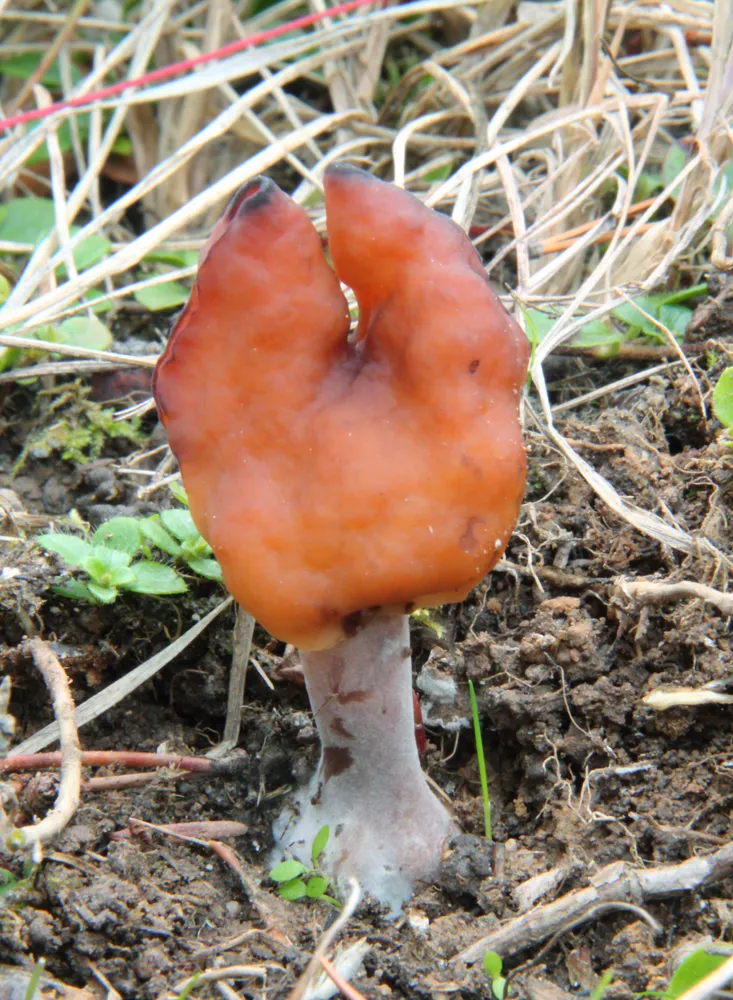
Pouched false morelGyromitra infula
Expert-verifiedUpdated October 3, 2026
Passport
- Edibility
- Poisonous
- Season
- Aug — Oct
- Hymenophore
- Smooth
- Cap color
- Brown
- Size
- Small (up to 5 cm)
- Smell
- Odorless
- Reviewed
- Yes ✓
POISONOUS
Eating it causes poisoning. Do not pick it unless you have identified it with certainty.
Gyromitrin poisoning — similar to G. esculenta. The gyromitrin concentration in G. infula fruit bodies is usually lower than in G. esculenta, but variable and potentially lethal.
Active toxin: GYROMITRIN — the same as in the spring false morels. It is metabolized into monomethylhydrazine (MMH) — a liver toxin, hemolytic agent, neurotoxin and carcinogen (IARC 2B).
Latency period: 6-12 hours (as with the spring false morels).
Symptoms and clinical picture — identical to G. esculenta poisoning. See the full details on the false morel page.
First aid: CALL 112 or your local emergency number, activated charcoal; in hospital — IV pyridoxine (vitamin B6) as a specific antidote, rehydration, liver monitoring.
PREVENTION: do not eat any species of the genus Gyromitra (Gyromitra esculenta, G. gigas, G. infula and others) in any form. No processing method guarantees safety.
If you suspect poisoning, call an ambulance immediately: 112 (the European emergency number) or your local emergency number
Quick answers
Where to look?
Deciduous forest, Conifer forest, Mixed forest
When does it appear?
Aug — Oct
Active months: August, September, October.
How to recognize it? Three signs
- Cap color: Brown, Dark brown
- Cap shape: Conical
- Smell: Odorless
Fruiting season
August – October
Description
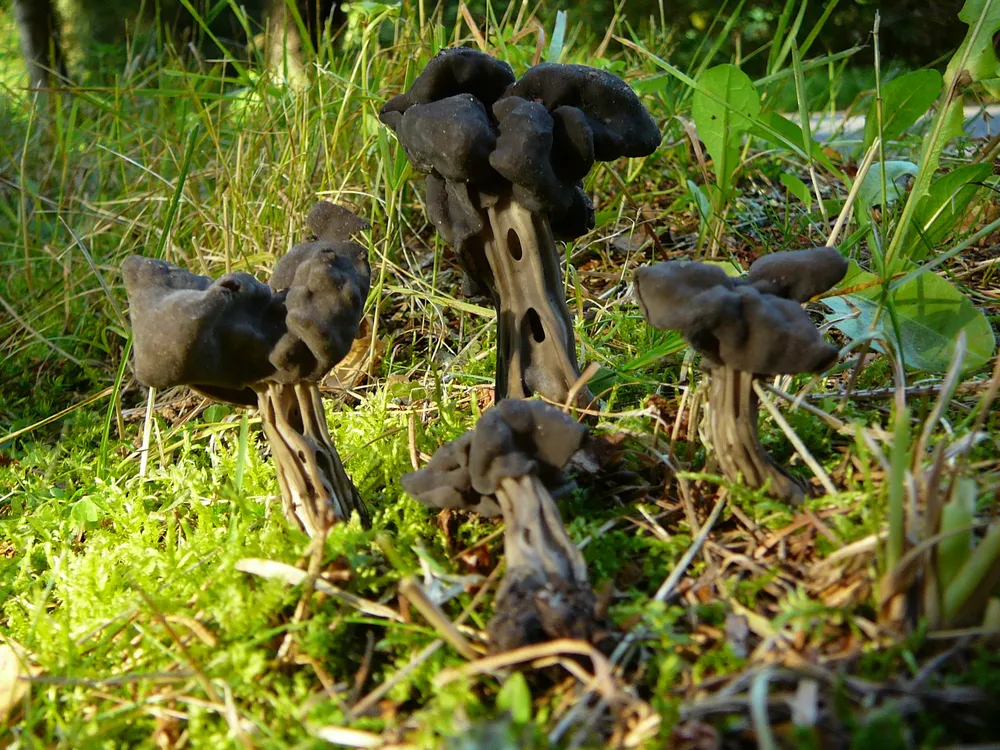
The pouched false morel, also called the miter false morel (Gyromitra infula, synonym — Helvella infula), is the autumn relative of the spring false morels, and it is also POISONOUS because it contains gyromitrin. The Latin epithet infula means "miter" or "the ribbon headdress of an ancient priest" — a spot-on description of the cap's distinctive shape: clearly lobed, with 2-3 pointed lobes that form a miter-like "hood". Unlike the convoluted, brain-like spring false morels, the cap of G. infula is squarish and lobed, with a distinct inner notch.
Poisonous due to gyromitrin (the same toxin as in the spring G. esculenta and G. gigas) — a liver toxin, hemolytic agent, neurotoxin and carcinogen (IARC Group 2B). The literature sometimes wrongly labels it "conditionally edible after boiling", but the modern rule is DO NOT EAT IT AT ALL, just like the spring false morels. All species of the genus Gyromitra are potentially dangerous.
Cap 3-8 cm tall, clearly lobed and miter-shaped, with 2-3 pointed lobes that look like a bishop's miter or a pointy gnome hat. Color chestnut-brown to dark brown, deeper in the center. Surface smooth or slightly wrinkled, not pitted.
Key features of Gyromitra infula: Miter-shaped cap with 2-3 pointed lobes Chestnut-brown to dark brown color The inside of the cap is hollow (as in some species) Pale white stem (3-7 cm tall, 1-2 cm thick) Flesh brittle and thin Faint, neutral smell Grows in deciduous and mixed forests in AUTUMN (August-October) — this is the key difference from the spring false morels
This autumn season is the species' defining trait. Other Gyromitra grow in spring; G. infula fruits mostly in autumn, which makes it easier to confuse with autumn morel-like mushrooms and with young Sarcosphaera.
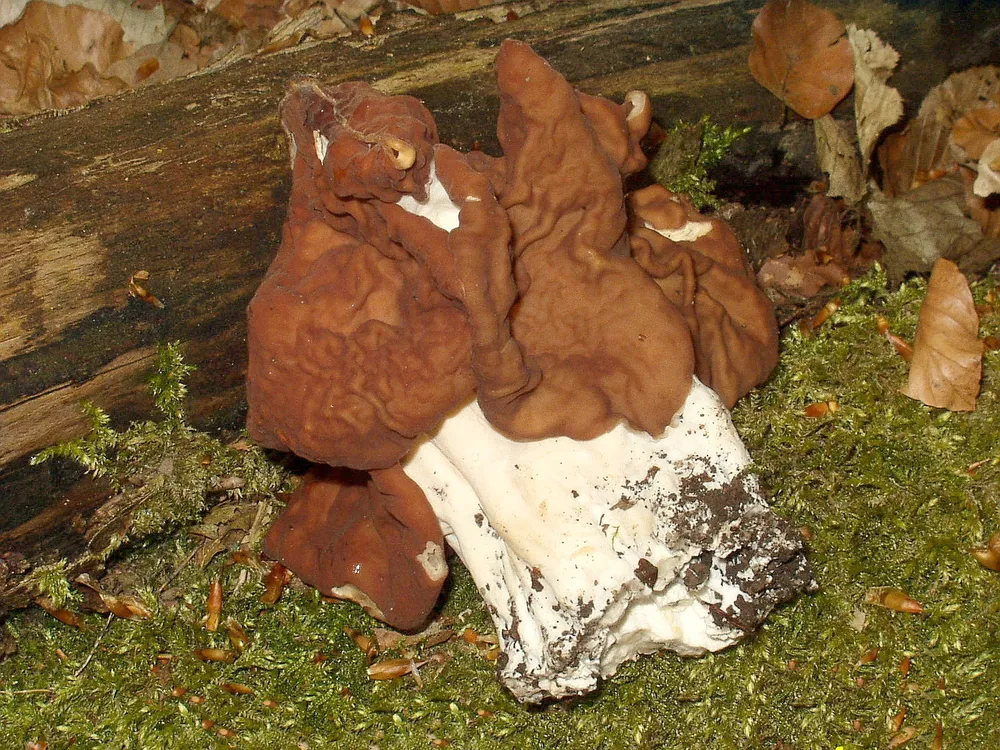
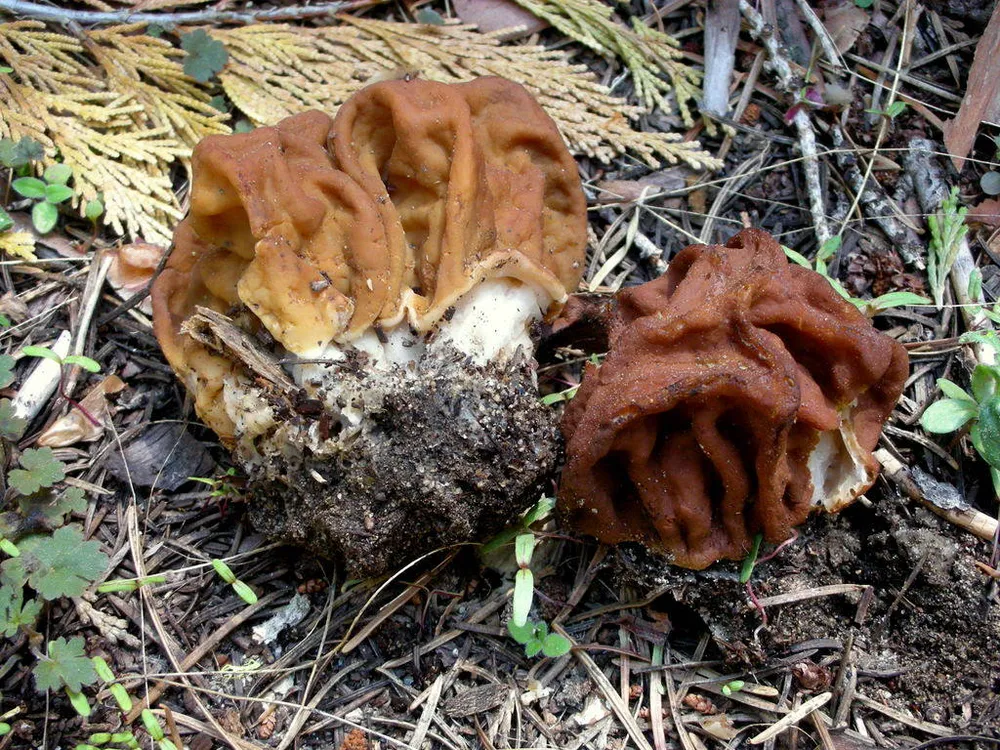
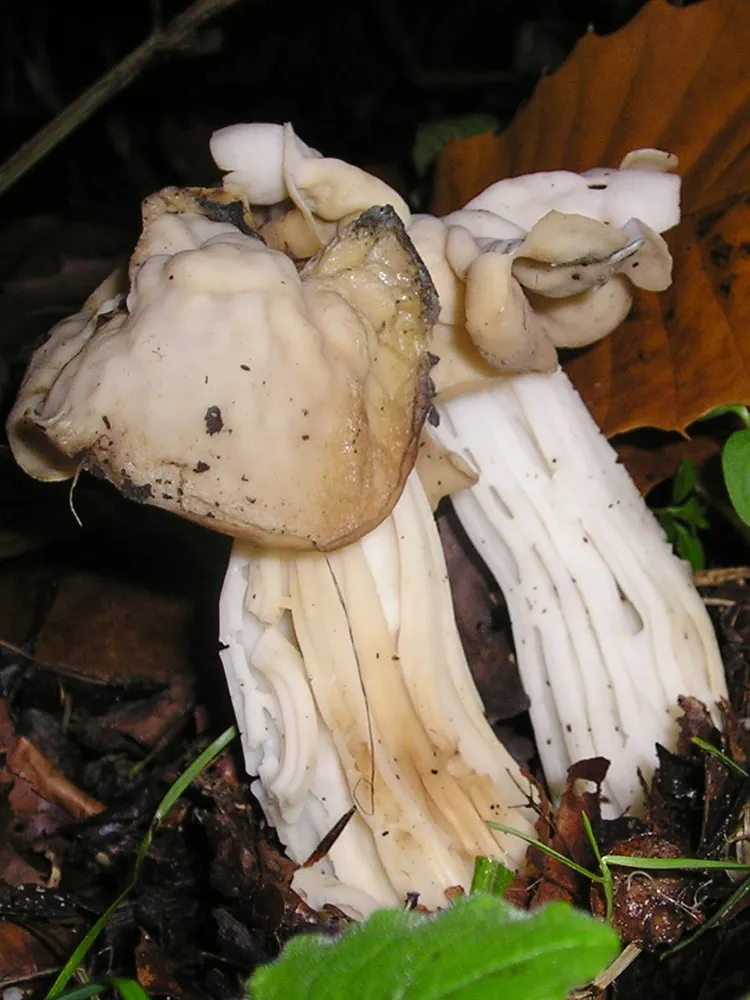
The main risk is confusing it with the autumn Helvella crispa and Helvella lacunosa (also lobed ascomycetes with formally variable edibility — young ones are edible after boiling, mature ones may be dangerous: they are suspected, though not proven, to contain the same group of hydrazine toxins). Our firm rule: in our tradition, it's best not to eat any lobed, miter-shaped ascomycetes.
In Ukraine, Gyromitra infula is uncommon, mostly in deciduous and mixed forests: the Carpathians, Prykarpattia, Polissia. A saprotroph on forest litter and rotting wood. Season: August — October.
Cap
Cap 3-8 cm tall, clearly lobed, miter-shaped, with 2-3 pointed lobes that form a "hood". Overall shape: a bishop's miter or a pointy gnome hat. Surface smooth or slightly wrinkled (not pitted!). Color chestnut-brown to dark brown, deepening to blackish brown in the center. The inner surface of the cap is pale cream and partly hidden.
Hymenophore
Ascomycete — the spore-bearing surface covers the outer surface of the cap lobes. Spores form in sacs. Spore print yellowish white to pale ocher.
Stem
Stem 3-7 cm tall, 1-2 cm thick, cylindrical, firm when young, hollow when old. Color whitish to cream-gray. Surface smooth with fine lengthwise wrinkles.
Flesh
Flesh thin, brittle, dirty white to cream, does not change color when cut. The cap is partly hollow inside; the stem may be hollow in old specimens.
Smell
Faint and neutral, with no warning signs.
Lookalikes
Related species
Mushrooms of the same genus and habitat — to study side by side and never mix up.
Discina ancilis
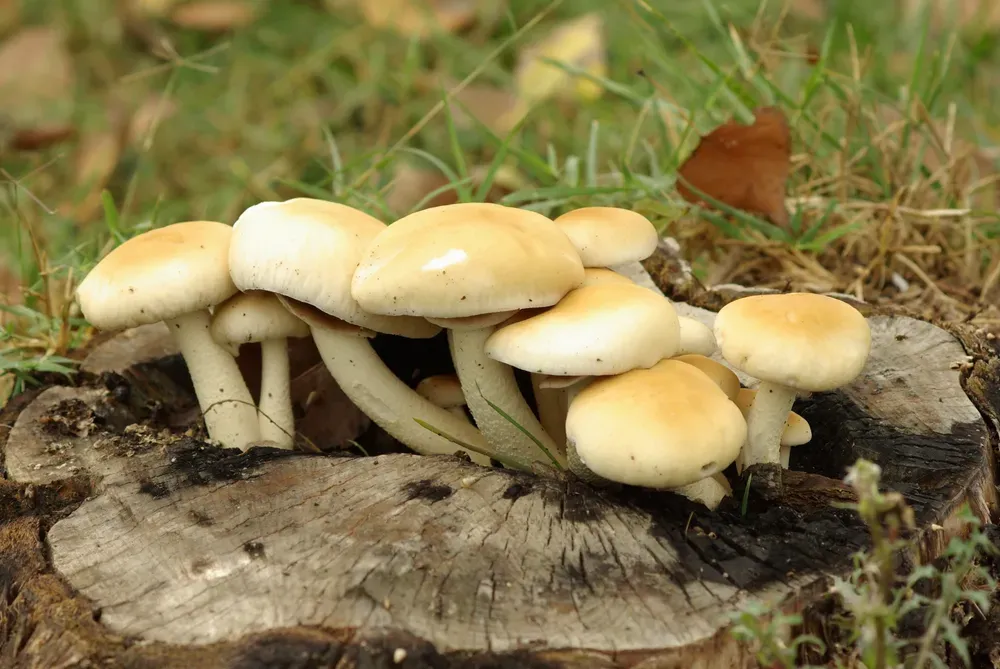
Bulbous honey fungus
Armillaria gallica
Dark honey fungus
Armillaria ostoyae
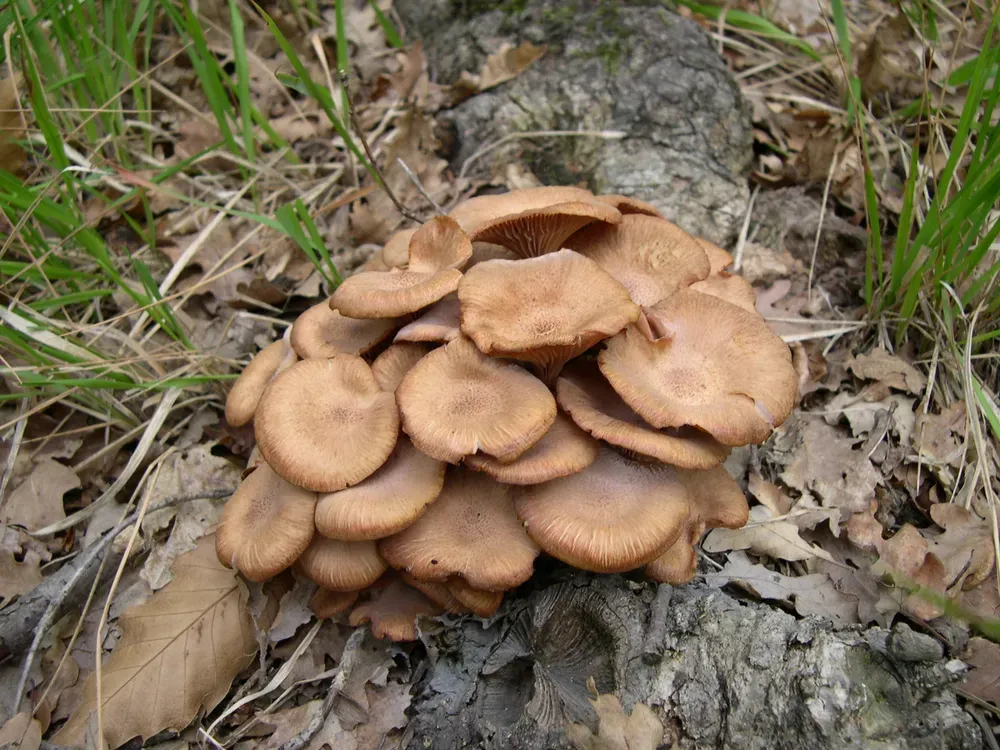
Poplar fieldcap
Cyclocybe aegerita
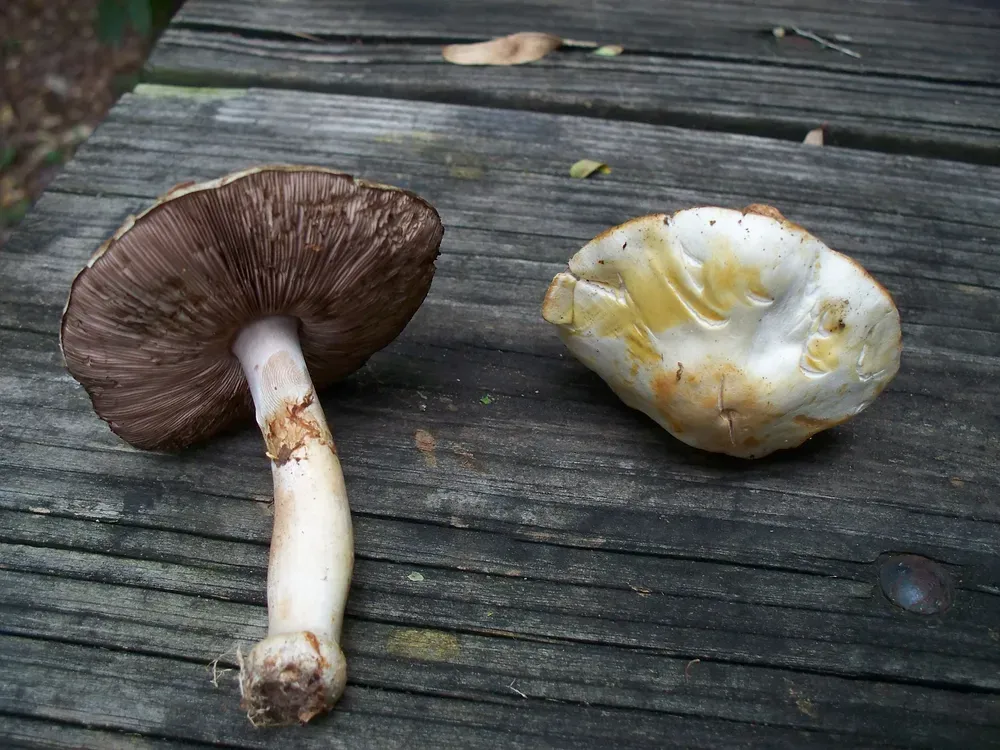
Ringless honey fungus
Desarmillaria tabescens
Agaricus abruptibulbus
Agaricus haemorrhoidarius
Agaricus haemorroidarius
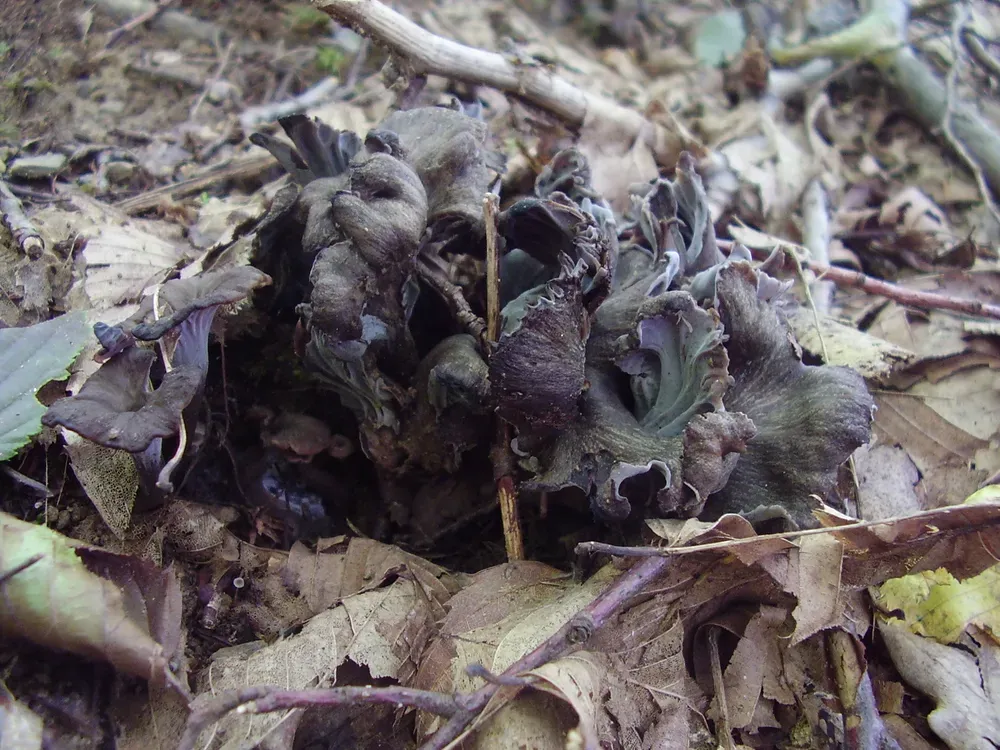
Ashen chanterelle
Cantharellus cinereus
Frequently asked questions
Can you eat it?
Better not. It contains gyromitrin (like the spring false morels) — a liver toxin, hemolytic agent and carcinogen. Although the concentration may be lower than in G. esculenta, no safe dose has been established, and individual sensitivity varies widely. The modern rule: DO NOT EAT ANY Gyromitra.
How can you identify it for sure?
Three features. (1) A distinct miter-shaped cap with 2-3 pointed lobes (like a bishop's miter or a gnome hat). (2) Chestnut-brown to dark brown color. (3) Grows in AUTUMN (August-October) — this is the key difference from the spring false morels.
How is it different from the spring false morels?
By season and cap shape. The spring false morels (G. esculenta, G. gigas) appear in April-May, with a cap that is convoluted and brain-like, folded and wrinkled, without distinct lobes. G. infula appears in autumn (August-October), with a cap that is clearly lobed and miter-shaped, with pointed lobes. All of them are poisonous because of gyromitrin.
What should you do in case of poisoning?
Call 112 or your local emergency number immediately (even before symptoms appear — the latency period is 6-12 h). Keep a sample of the mushroom. In hospital — IV pyridoxine (vitamin B6) as an antidote, activated charcoal, rehydration, monitoring of the liver and blood. DO NOT WAIT for symptoms — liver damage is already under way.
Where can you find it?
In deciduous and mixed forests on forest litter, rotting wood and humus-rich soil. It often grows singly or in groups of 2-5 fruit bodies.
Where in Ukraine is it found?
Uncommon: mostly in the Carpathians, Prykarpattia and Polissia, and in places in the forest-steppe.
When can you find it?
August — October — an autumn false morel. This is the key difference from its spring relatives. Its season overlaps with the main mushroom season, which raises the risk of picking it by accident.
Which mushrooms is it confused with?
With Helvella crispa, H. lacunosa (white and elfin saddles) — lobed ascomycetes, also autumnal, formally edible with restrictions, but since they may contain the same group of hydrazine toxins, it's better not to eat them. With Gyromitra esculenta, G. gigas (spring false morels) — a different cap shape and a different season. Our firm advice: do not eat any lobed, miter-shaped ascomycetes.
Is Pouched false morel edible or poisonous?
What kind of spore-bearing surface does Pouched false morel have?
What does the cap of Pouched false morel look like?
What does the stem of Pouched false morel look like?
Sources
- [1]Вікіпедія (українська)
- [2]Атлас грибів України, Зеров Д.К. (1979)
- [3]MycoBank Database
- [4]Index Fungorum
- [5]GBIF
- [6]iNaturalist Ukraine