Elfin saddleHelvella lacunosa
Expert-verifiedUpdated October 3, 2026
Passport
- Edibility
- Inedible
- Season
- Sep — Nov
- Hymenophore
- Smooth
- Cap color
- Grey
- Size
- Medium (5–15 cm)
- Smell
- Odorless
- Reviewed
- Yes ✓
Quick answers
Where to look?
Conifer forest, Deciduous forest, Mixed forest
When does it appear?
Sep — Nov
Active months: September, October, November.
How to recognize it? Three signs
- Cap color: Grey, Black, Dark brown
- Cap shape: Irregular
- Smell: Odorless
Fruiting season
September – November
Description
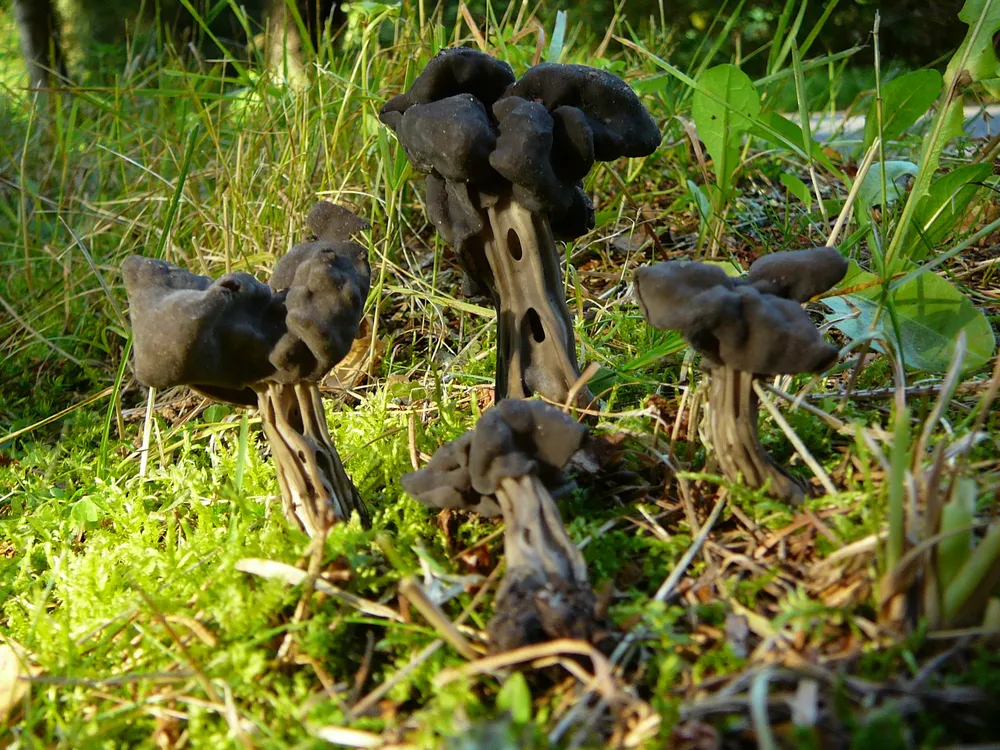
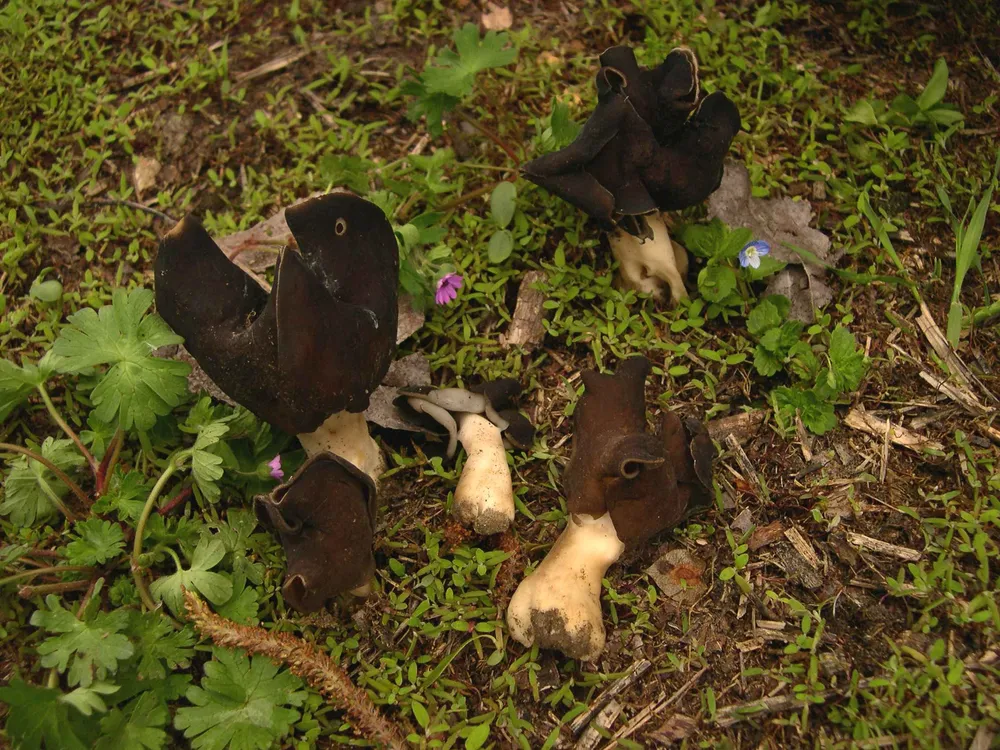
The Elfin saddle is the dark sister of the White saddle. It has the same saddle-shaped (often almost two-lobed) cap on a ribbed stem, but its color runs from dark gray to almost black, with a graphite tinge. The name “lacunosa” comes from the Latin lacuna — pits, hollows, which you can clearly see on the stem.
This is an inedible mushroom (according to most modern sources). Old Soviet field guides sometimes listed it as conditionally edible, but newer research has found toxins that cause stomach upsets in closely related species. On top of that, the gyromitrin-like compounds typical of Helvella don't go anywhere. It's safer to walk past — its culinary value is low, and the risk of gastroenteritis is real.
In Ukraine it grows in deciduous and coniferous forests, and especially likes burned and trampled patches where the soil is bare. It doesn't turn up often, but when it does, it comes in masses — whole “fields” of it on an old burn site. The season is autumn: September–October. It loves cool weather and the moisture after the first autumn rains.
Cap
Cap 3-5 cm, irregularly saddle-shaped, with 2-4 lobes. Color dark gray, graphite, almost black in old specimens. Surface smooth, with a silky sheen in wet weather. Margins wavy and contorted. Partly fused to the stem at the top.
Hymenophore
Smooth hymenium on the upper (outer) surface of the cap lobes. Ascomycete structure — spores form in asci. Spore print white. Spores ellipsoid, smooth, 17-20 × 10-13 µm.
Stem
Stem up to 6 cm tall, 1-2 cm thick, cylindrical, hollow inside. Color pale gray, darkening toward the base. Surface with prominent lengthwise ribs and distinctive pits (lacunae) — hence the name. The ribbed structure is like that of crispa, but the color is completely different.
Flesh
The flesh is thin, waxy and brittle, grayish white. Doesn't change color when cut. Fragile texture.
Smell
Faint mushroomy smell, no sharp notes. We don't taste it — potentially toxic.
›Scientific synonyms (1)
Costapeda lacunosa (Afzel.) Falek?
Lookalikes
Related species
Mushrooms of the same genus and habitat — to study side by side and never mix up.
Bulbous honey fungus
Armillaria gallica
Dark honey fungus
Armillaria ostoyae
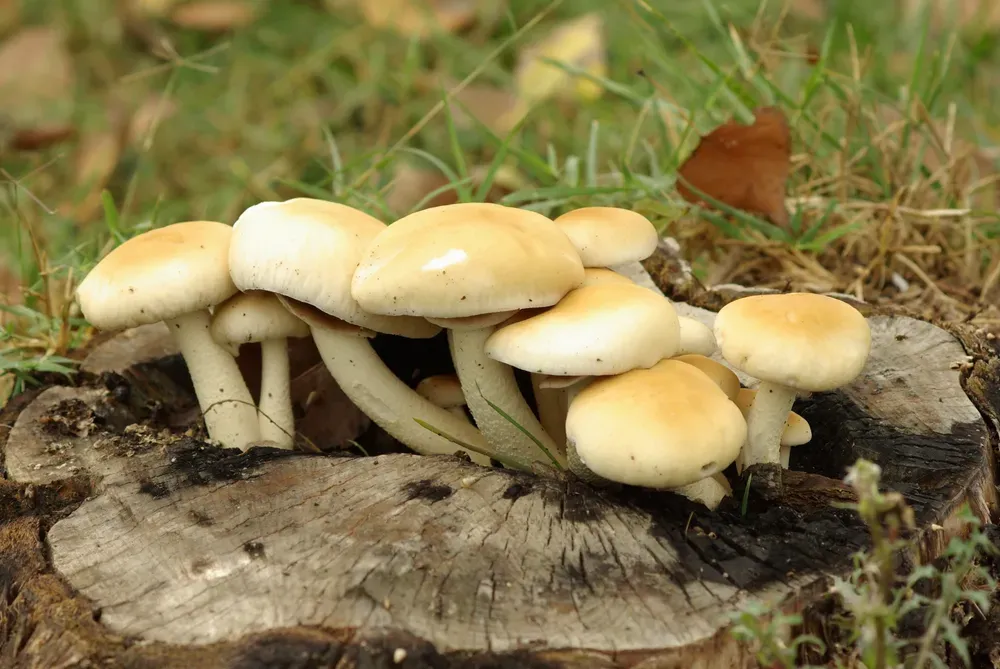
Poplar fieldcap
Cyclocybe aegerita
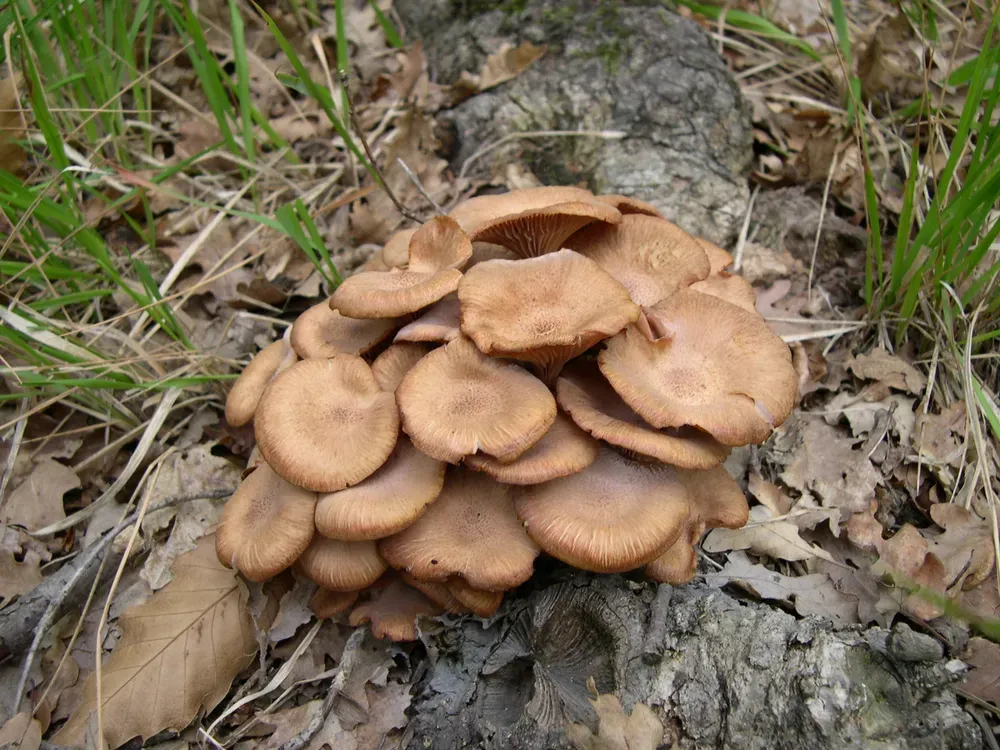
Ringless honey fungus
Desarmillaria tabescens
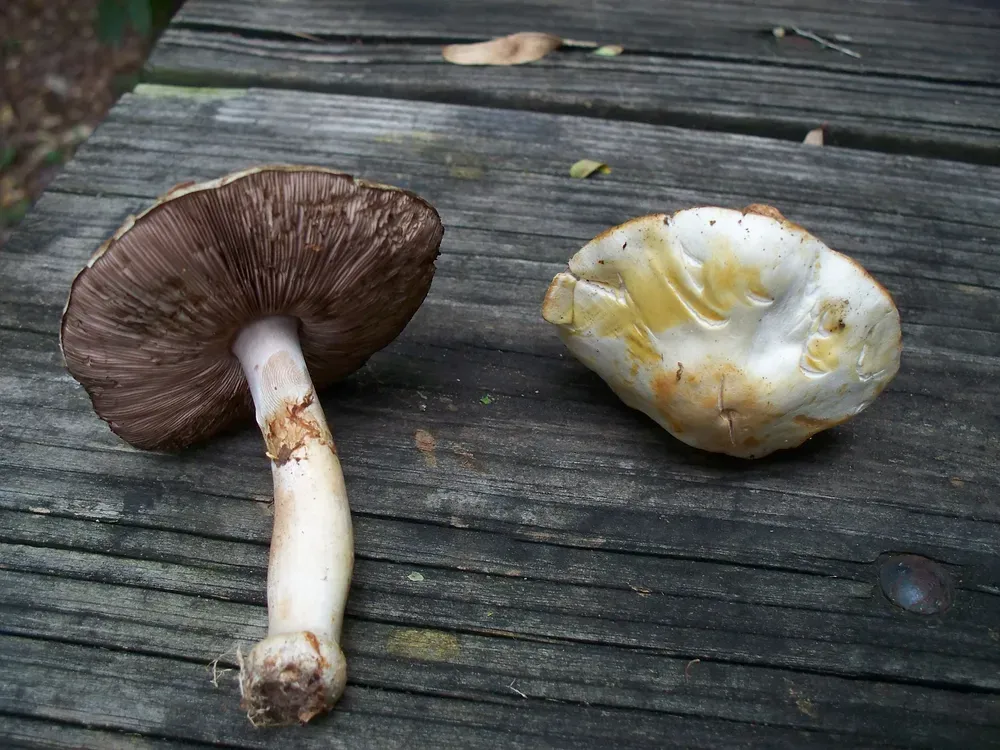
Agaricus abruptibulbus
Agaricus haemorrhoidarius
Agaricus haemorroidarius
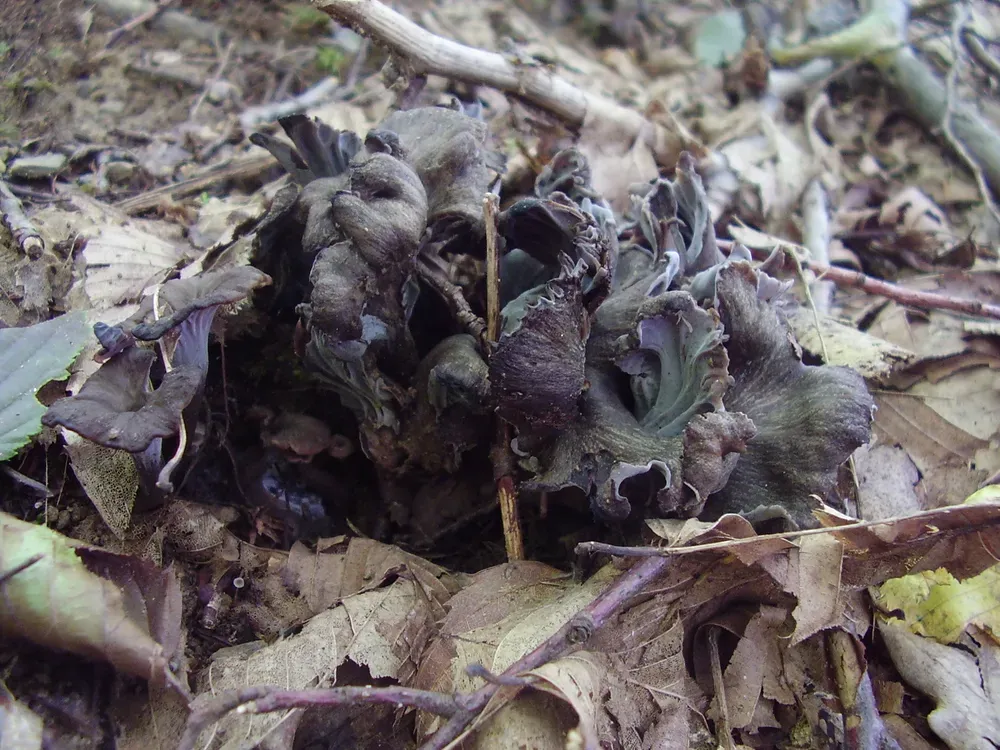
Ashen chanterelle
Cantharellus cinereus
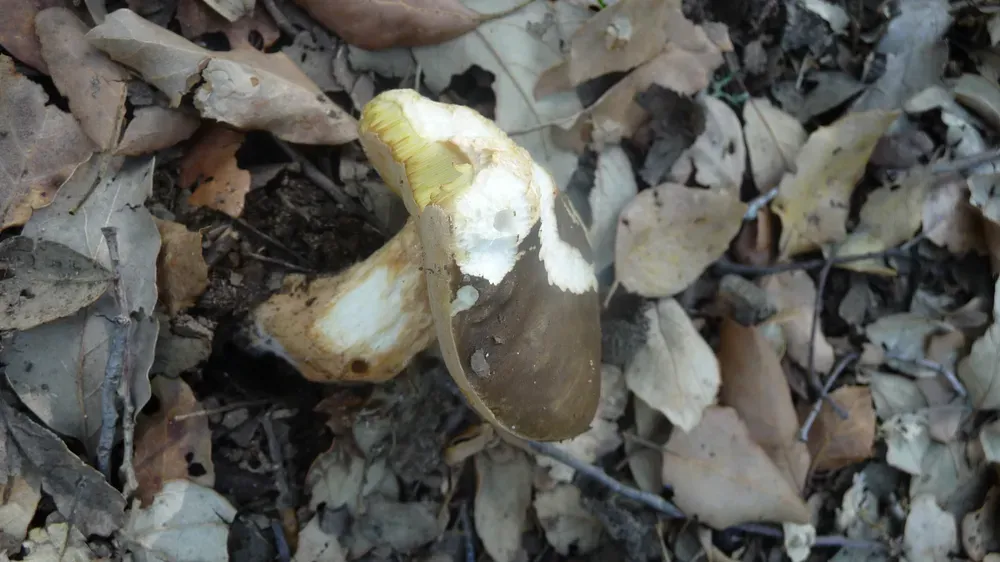
Blushing bolete
Leccinum roseofractum
Frequently asked questions
Can you eat it?
No. According to modern sources it's an inedible mushroom. Toxins that cause gastroenteritis have been found in closely related species, plus the gyromitrin compounds typical of Helvella. Old field guides listed it as conditionally edible — don't trust them.
What if you boil it and then fry it anyway?
Not worth it. Even after boiling, the risk of an upset stomach remains, and the culinary value is zero — thin, waxy, tasteless flesh. This is a mushroom to admire, not to put on your plate.
Where should you look for it?
In deciduous and coniferous forests, especially on burned ground, trampled patches and the edges of forest roads — wherever the soil is bare. Strangely enough, these “damaged” places attract it most of all. On fresh, recently burned soil it can form whole clusters.
Which regions of Ukraine does it grow in?
Throughout the forest and forest-steppe zones. Finds are recorded in the Carpathians, Polissia, the Forest-Steppe, and in old parks on the outskirts of cities. In the steppe it's rarer, only in plantations. It turns up especially often in years with forest fires.
When does it appear?
September–October, possibly into the first half of November in warm years. It's a distinctly autumn species that loves cool temperatures of 8-15°C and the moisture after the first autumn rains.
Why does it appear on burned ground?
On burned patches the soil chemistry changes — pH, minerals, microflora. A number of fungi (Pholiota carbonaria, Peziza praetervisa, Helvella lacunosa) have evolved to make use of this niche. They're collectively called “carbophilous fungi.”
What is it confused with?
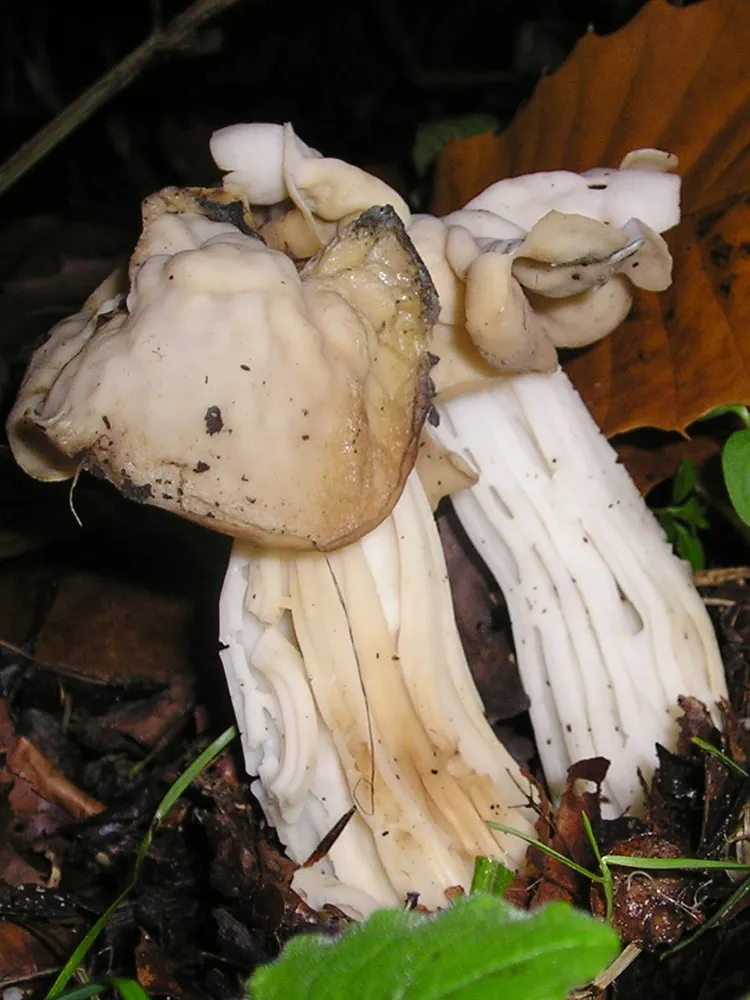
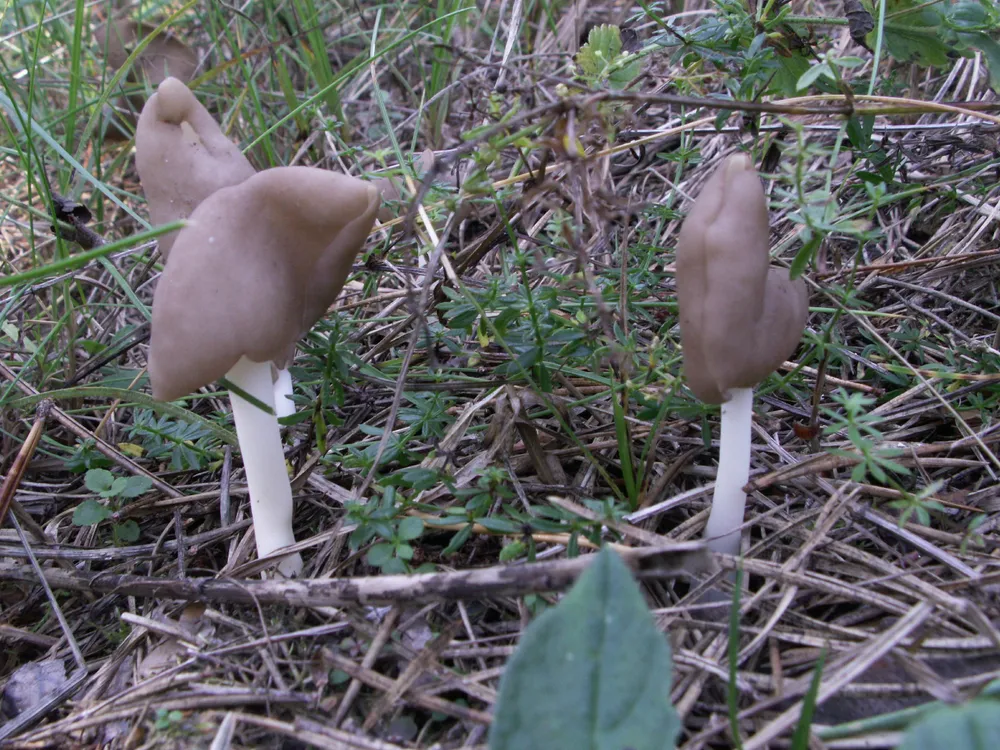
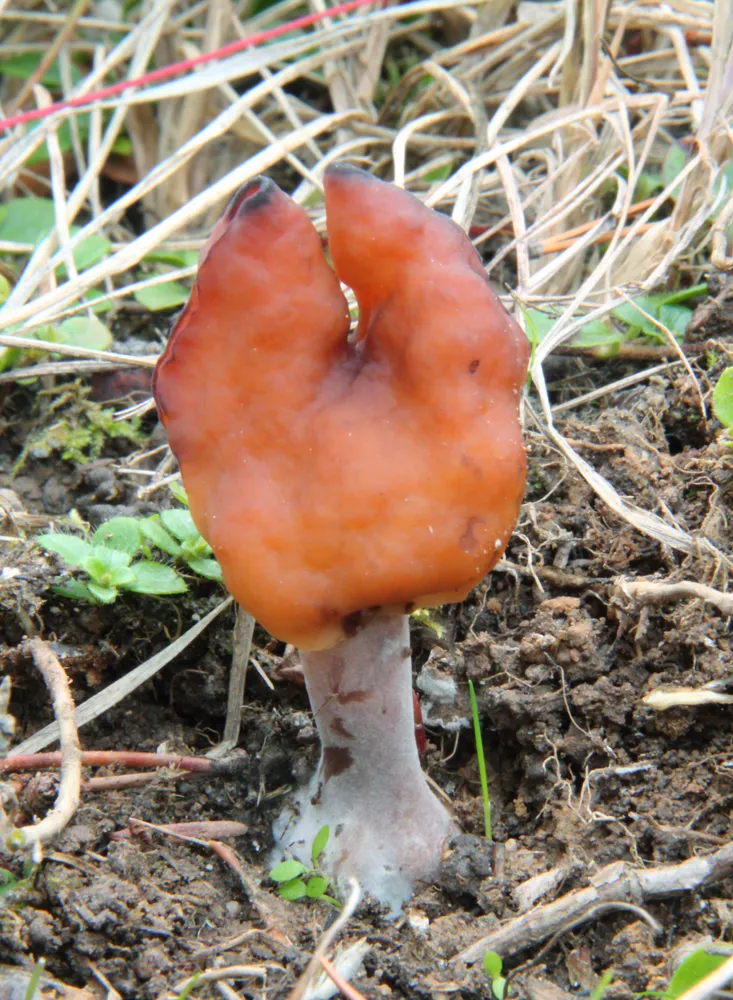
With Helvella crispa — it has the same saddle-shaped cap and ribbed stem, BUT it's white. Color is the main, unmistakable difference: lacunosa is always dark gray or black, never white. It can also be confused with Helvella ephippium (gray too, but without pronounced lacunae).
Isn't it just an old, darkened Helvella crispa?
No. Crispa turns yellowish with age, but never darkens to a graphite shade. Lacunosa is already dark gray the moment it breaks through the soil. If you've found a whole group of identical gray saddles, it's lacunosa; if there are both pale and dark ones, it's most likely two different species growing side by side.
Is Elfin saddle edible or poisonous?
What kind of spore-bearing surface does Elfin saddle have?
What does the cap of Elfin saddle look like?
What does the stem of Elfin saddle look like?
Sources
- [1]Вікіпедія (українська)
- [2]Атлас грибів України, Зеров Д.К. (1979)
- [3]MycoBank Database
- [4]Index Fungorum
- [5]GBIF
- [6]iNaturalist Ukraine