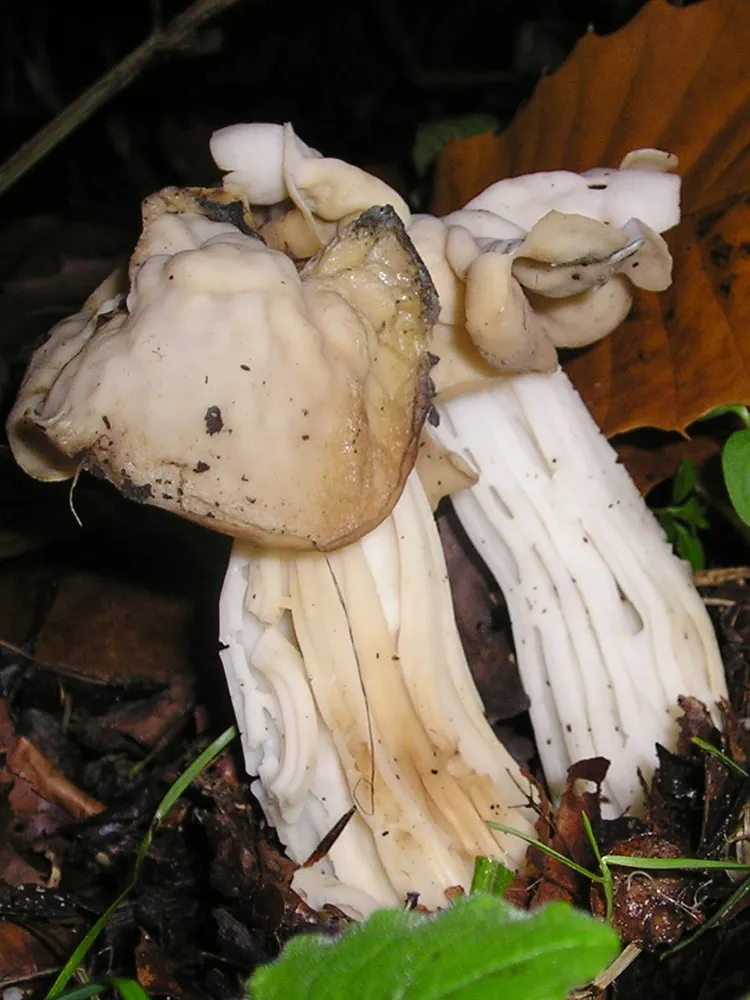
White saddleHelvella crispa
Expert-verifiedUpdated August 15, 2026
Passport
- Edibility
- Conditionally edible
- Season
- Jul — Nov
- Hymenophore
- Smooth
- Cap color
- White
- Size
- Medium (5–15 cm)
- Smell
- Odorless
- Reviewed
- Yes ✓
Quick answers
Where to look?
Deciduous forest, Mixed forest
When does it appear?
Jul — Nov
Active months: July, August, September, October, November.
How to recognize it? Three signs
- Cap color: White, Cream
- Cap shape: Irregular
- Smell: Odorless
Fruiting season
July – November
Description
The White saddle is the most beautiful of Ukraine's Helvella species. Its white or cream, curly, lobed cap looks like crumpled lace or a folded egg perched on a ribbed white stem with prominent lengthwise grooves. It looks ornamental, as if straight out of a 19th-century botanical atlas.
This is a conditionally edible mushroom of low culinary quality. Like all Helvella, it must be boiled for 15-20 minutes and the water poured away — the flesh contains gyromitrin-type compounds. It must not be eaten without this treatment. Its culinary value is modest: the flesh is waxy and brittle, the flavor bland. If you forage to fill your basket, walk past — there are far more valuable autumn species. If you're in it for the beauty and the photos, this mushroom is worth a closer look.
In Ukraine it grows on soil in deciduous and mixed forests, at forest edges and among shrubs. It's found regularly, but not in masses. Finds are recorded from the Carpathians to the Left Bank — it's a widespread species. The season is long: July–November, peaking in September–October.
Cap
Cap 2-4 cm, irregularly saddle-shaped, with 2-4 lobes that look like crumpled fabric. Color white or creamy white, with a yellowish tinge in wet weather. Surface smooth on the outside (where the hymenium is), finely warty underneath. Partly fused to the stem at the top. Margins contorted, uneven.
Hymenophore
Smooth hymenium on the upper (outer) surface of the cap lobes. Ascomycete structure — spores form in asci. Spore print white. Spores ellipsoid, smooth, with one large oil droplet.
Stem
Stem up to 10 cm tall, 1-2.5 cm thick, cylindrical, hollow inside. Color white, smooth to the touch, BUT with prominent lengthwise ribs (grooves) running its whole length. This is the key feature — a ribbed white stem.
Flesh
The flesh is thin, waxy and brittle, white. Doesn't change color when cut. Fragile texture — the mushroom easily falls apart if handled carelessly.
Smell
Faint, nondescript mushroomy smell. Don't taste it raw — potentially toxic.
Lookalikes
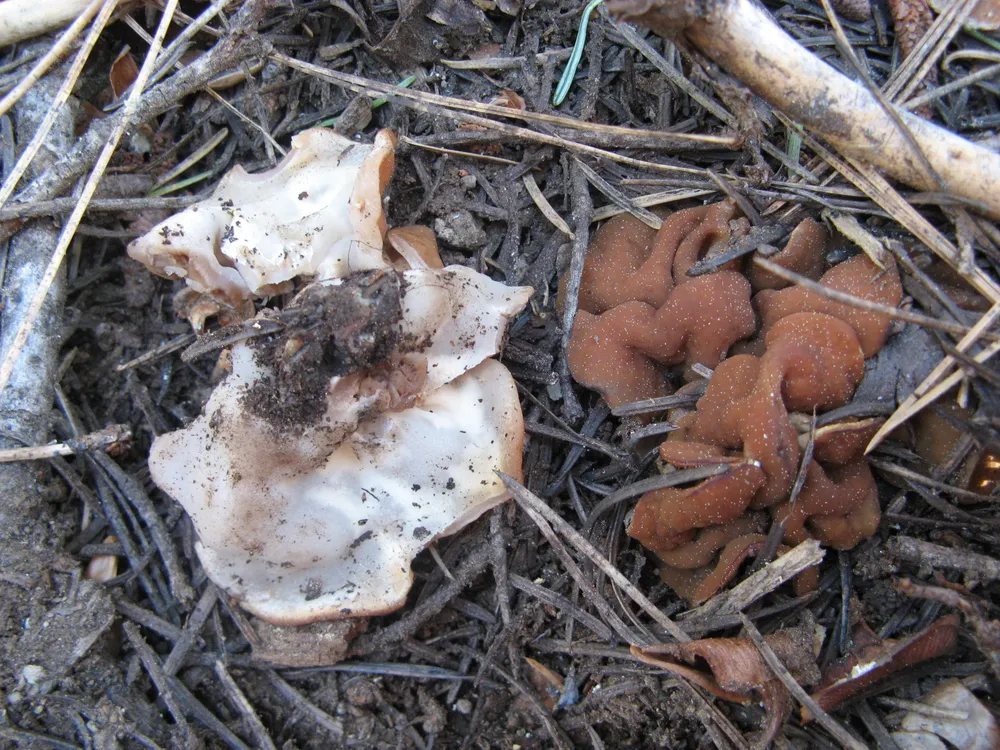
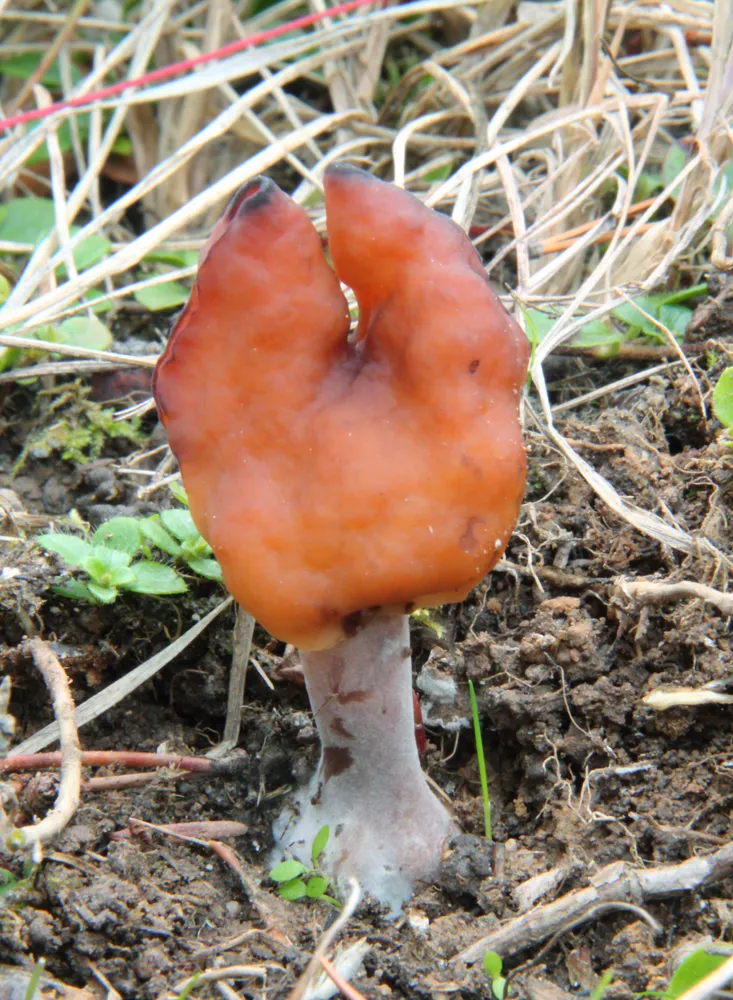
Related species
Mushrooms of the same genus and habitat — to study side by side and never mix up.
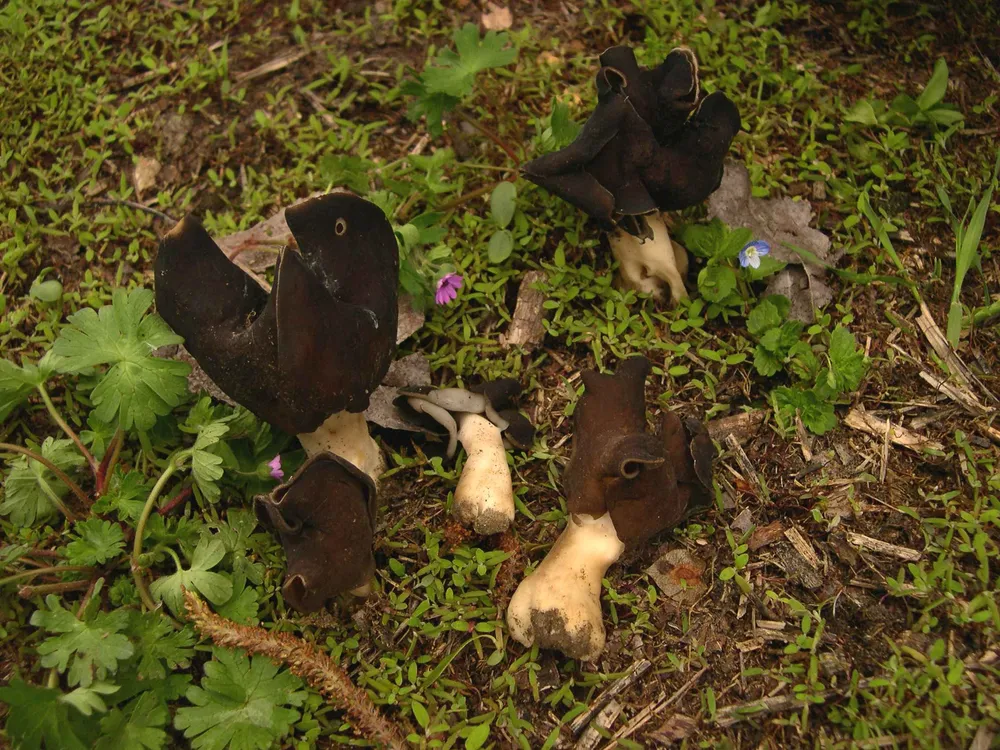
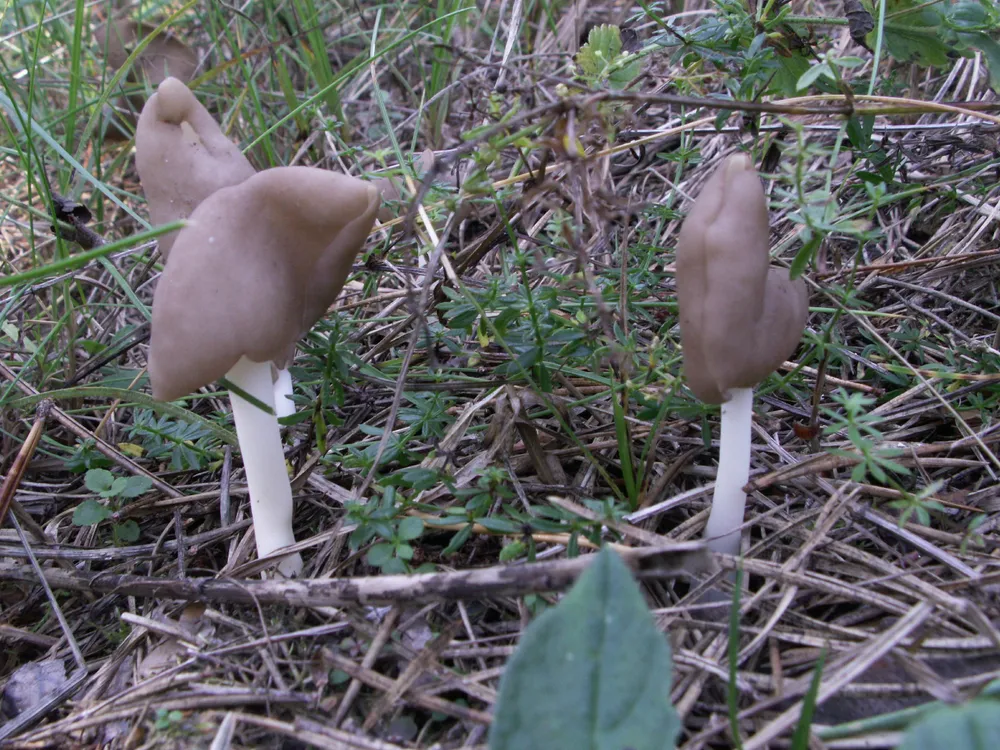
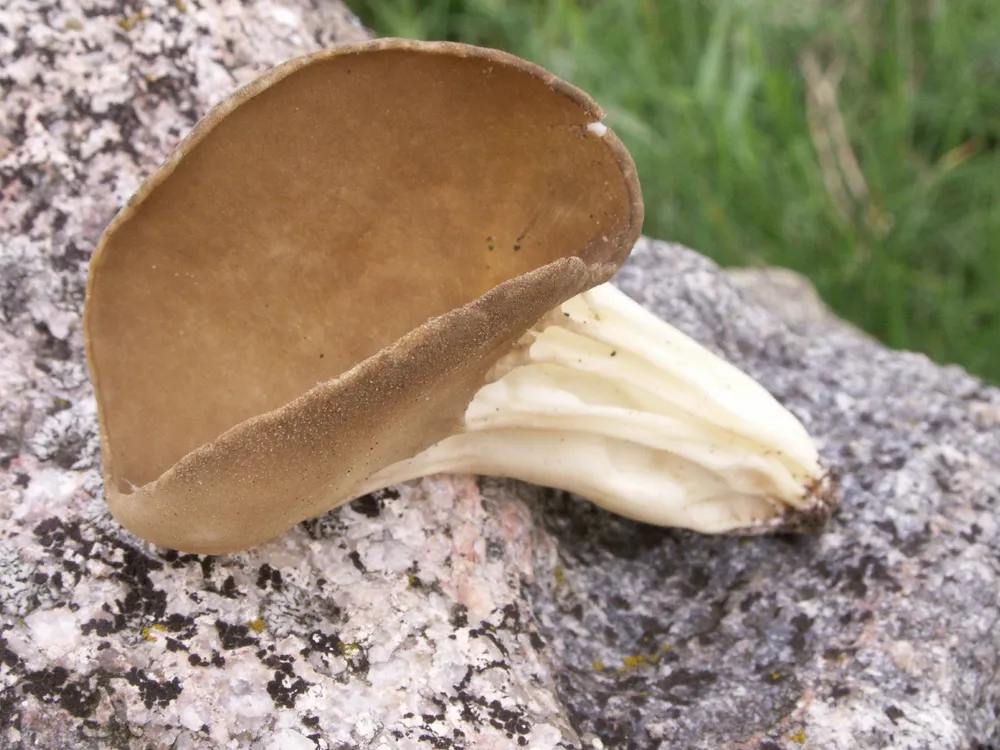
Helvella monachella
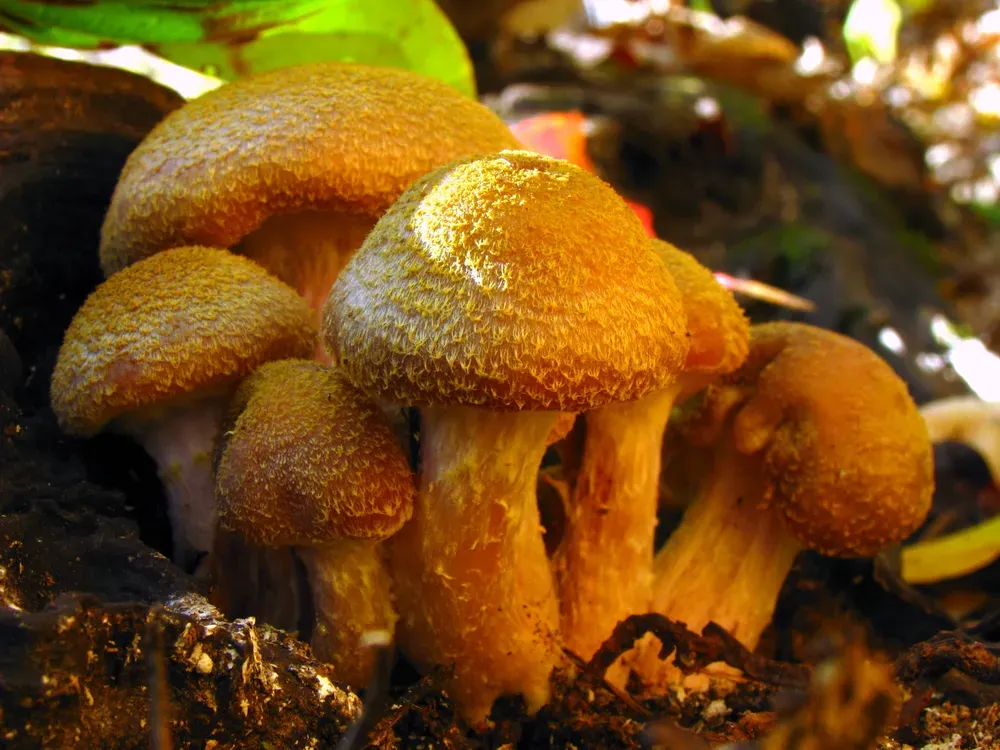
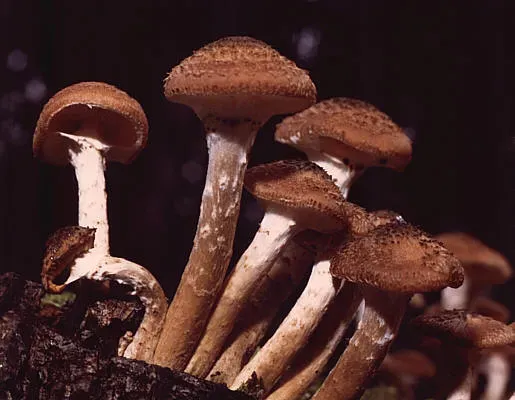
Bulbous honey fungus
Armillaria gallica
Dark honey fungus
Armillaria ostoyae
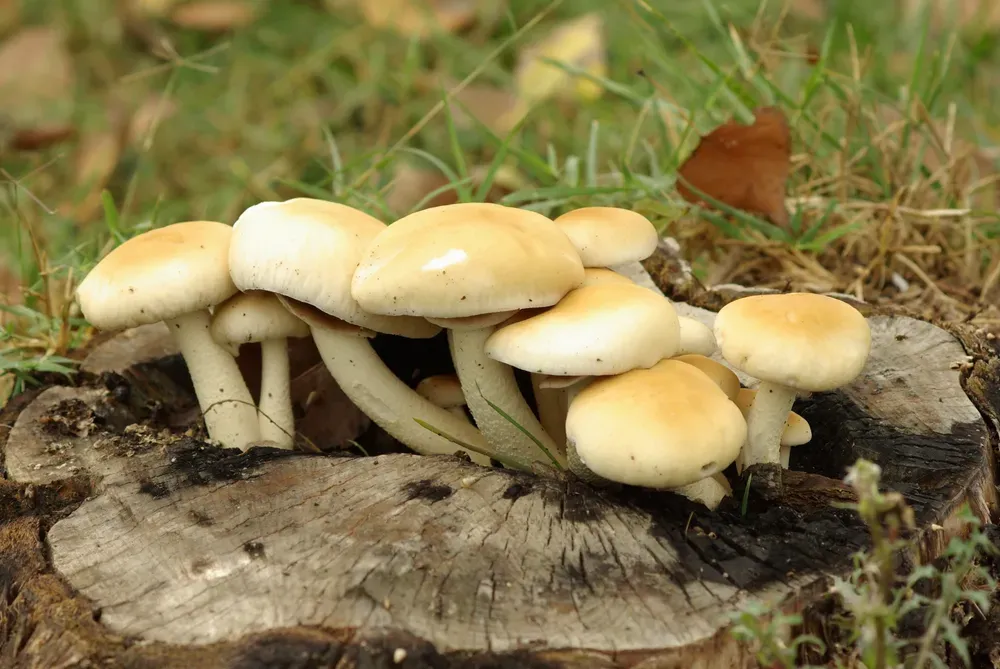
Poplar fieldcap
Cyclocybe aegerita
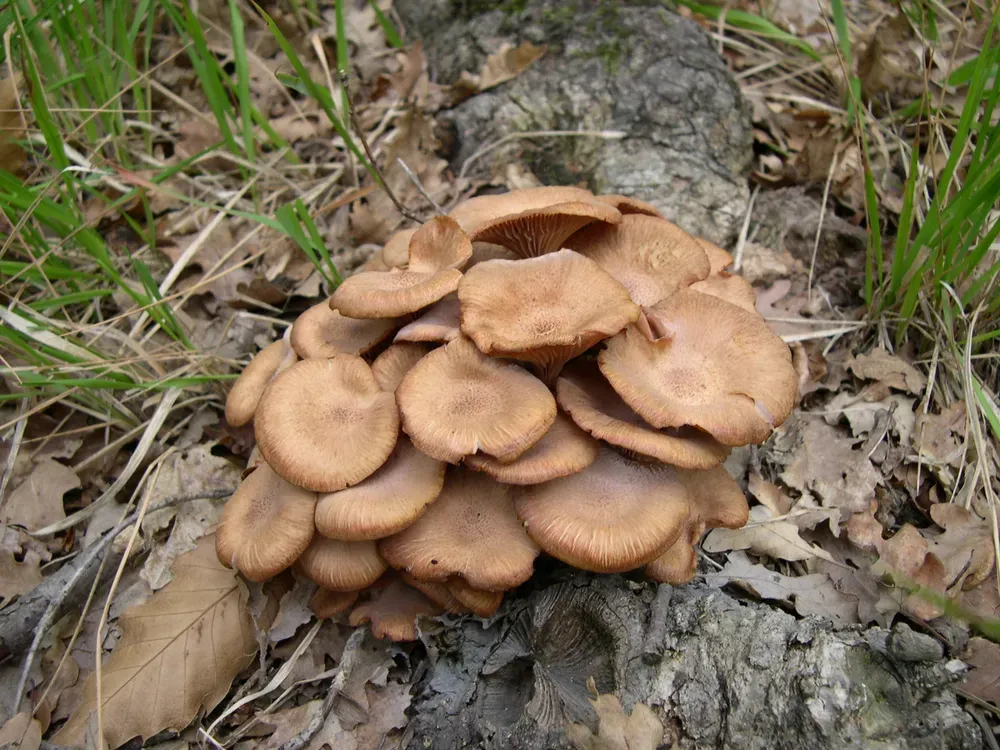
Ringless honey fungus
Desarmillaria tabescens
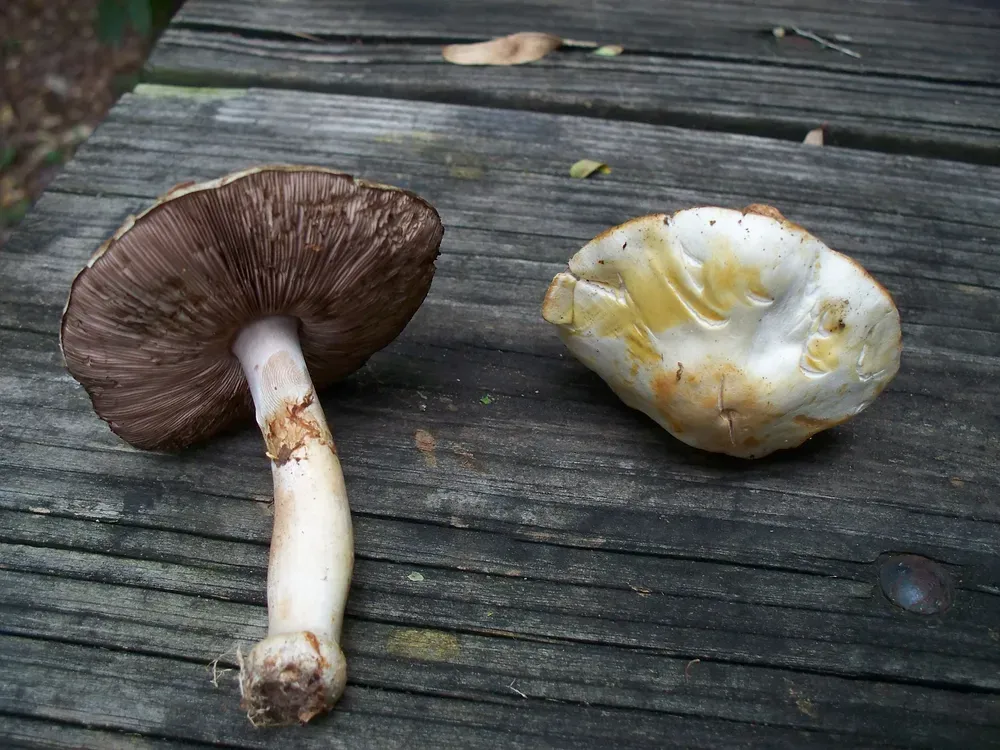
Agaricus abruptibulbus
Agaricus haemorrhoidarius
Agaricus haemorroidarius
Ashen chanterelle
Cantharellus cinereus
Frequently asked questions
Can you eat it?
Yes, after mandatory boiling for 15-20 minutes with the water poured away. BUT its culinary value is low, and the risk of poisoning with insufficient treatment is real. Our advice: admire it, photograph it, but don't put it in your basket — there are much better autumn mushrooms.
Why does it have to be boiled?
Like all Helvella, it contains gyromitrin-type compounds. They destroy red blood cells and pass into the water during boiling. The raw mushroom can cause acute gastroenteritis with hemolytic effects after 6-12 hours.
Where should you look for it?
On soil in deciduous and mixed forests, at forest edges, among shrubs, in parks. It likes damp leaf litter and shady spots. It can grow within cities — in old parks with broadleaf trees.
Which regions of Ukraine does it grow in?
A widespread species throughout the forest and forest-steppe zones. Finds are recorded from the Carpathians and Prykarpattia to the Left Bank and Polissia. In the steppe and Crimea it's rarer, only in plantations and parks.
When does it appear?
July–November. That's a long season — the mushroom tolerates cool, damp weather. Peak fruiting is September–October. In a long, warm autumn it can fruit into the first days of November.
Does it ever appear in spring?
Very rarely. It's a summer–autumn species. If in May–June you see something similar with a saddle-shaped cap, it's more likely Helvella acetabulum (a cup with ribs) or another spring species.
What is it confused with?
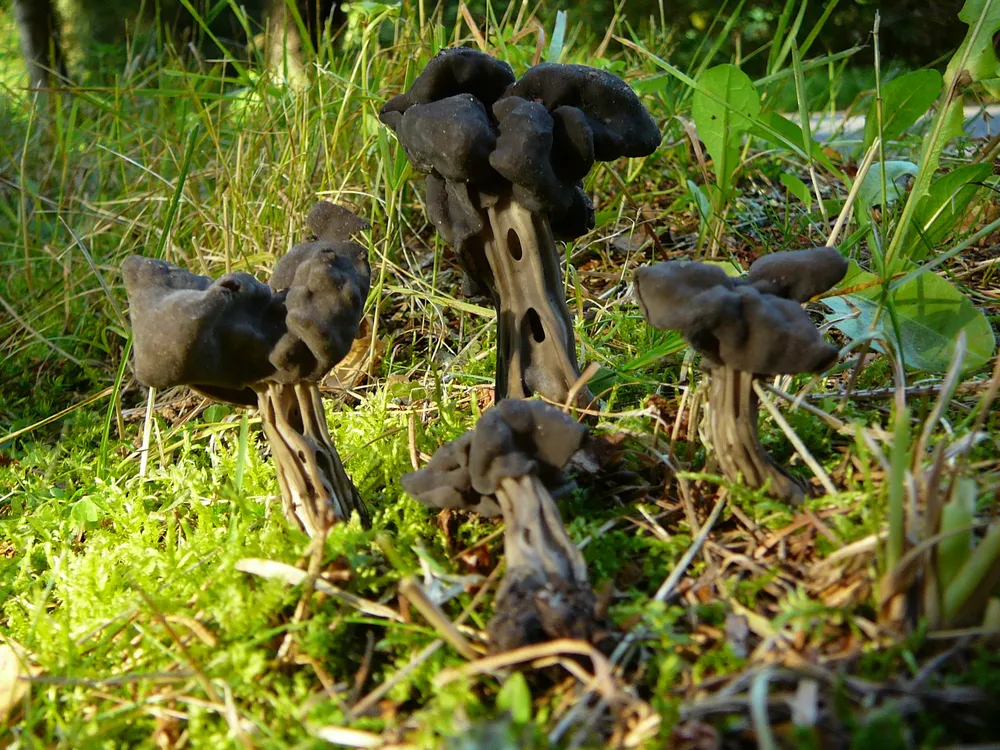
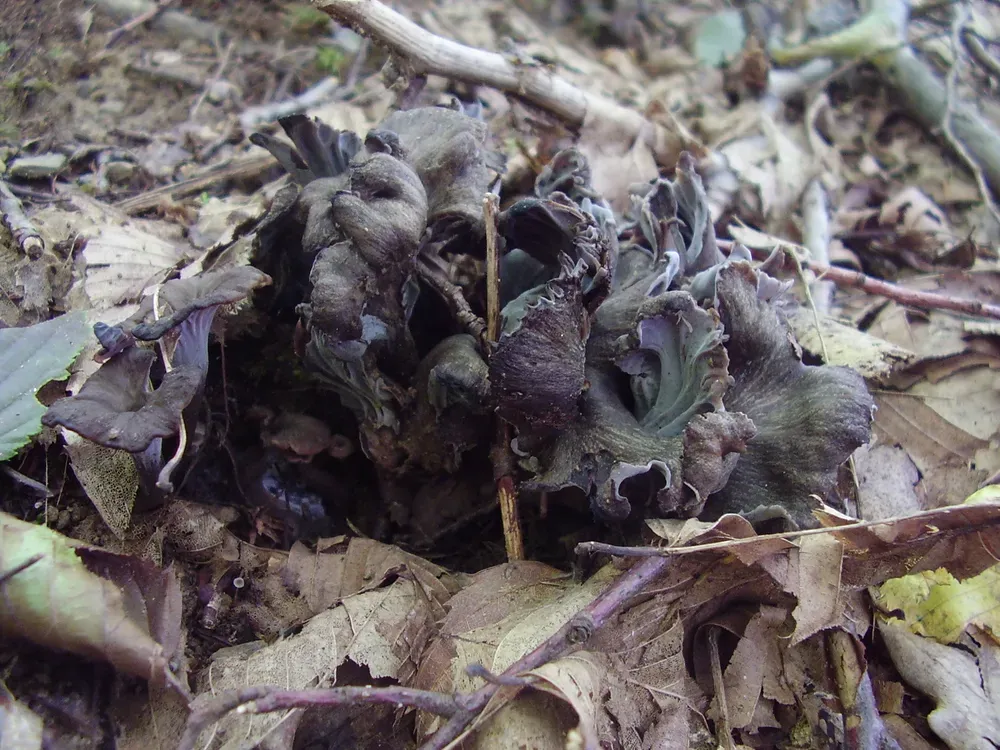
With Helvella lacunosa — it has the same saddle-shaped cap and ribbed stem, but it is dark gray (sometimes almost black), while the White saddle is white. Color is the main difference. Crispa sometimes has a yellowish tinge, but it's never gray, let alone black.
Can it be confused with a morel?
Only superficially — both are ascomycetes, both have a hollow stem. But a morel's cap is clearly honeycombed (with pits and ridges), while Helvella's is lobed and smooth on the outside. The seasons differ too: morels in spring, Helvella in autumn.
Is White saddle edible or poisonous?
What kind of spore-bearing surface does White saddle have?
What does the cap of White saddle look like?
What does the stem of White saddle look like?
Sources
- [1]Вікіпедія (українська)
- [2]Атлас грибів України, Зеров Д.К. (1979)
- [3]MycoBank Database
- [4]Index Fungorum
- [5]GBIF
- [6]iNaturalist Ukraine