Black morelMorchella conica
Expert-verifiedUpdated October 3, 2026
Passport
- Edibility
- Conditionally edible
- Season
- Apr — May
- Hymenophore
- Chambered
- Cap color
- Brown
- Size
- Medium (5–15 cm)
- Smell
- Pleasant, mushroomy
- Reviewed
- Yes ✓
Quick answers
Where to look?
Deciduous forest, Mixed forest, Conifer forest
When does it appear?
Apr — May
Active months: April, May.
How to recognize it? Three signs
- Cap color: Brown, Dark brown
- Cap shape: Conical
- Smell: Pleasant, mushroomy
Fruiting season
April – May
Description
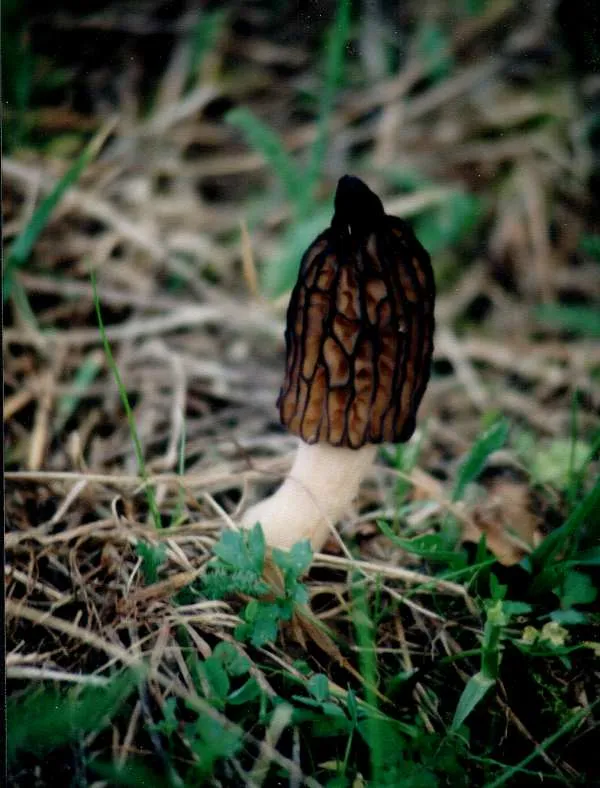
The black morel (Morchella conica) is a spring ascomycete mushroom, a close relative of the common morel. It grows in conifer and mixed woods, especially often after fires or logging. Fruits in April–May.
Its characteristic conical cap sets it apart from the common morel (whose cap is wider and egg-shaped). Both species share similar traits: edible after cooking, an early spring season, delicacy status.
Conditionally edible: boil and discard the water before eating.
Cap
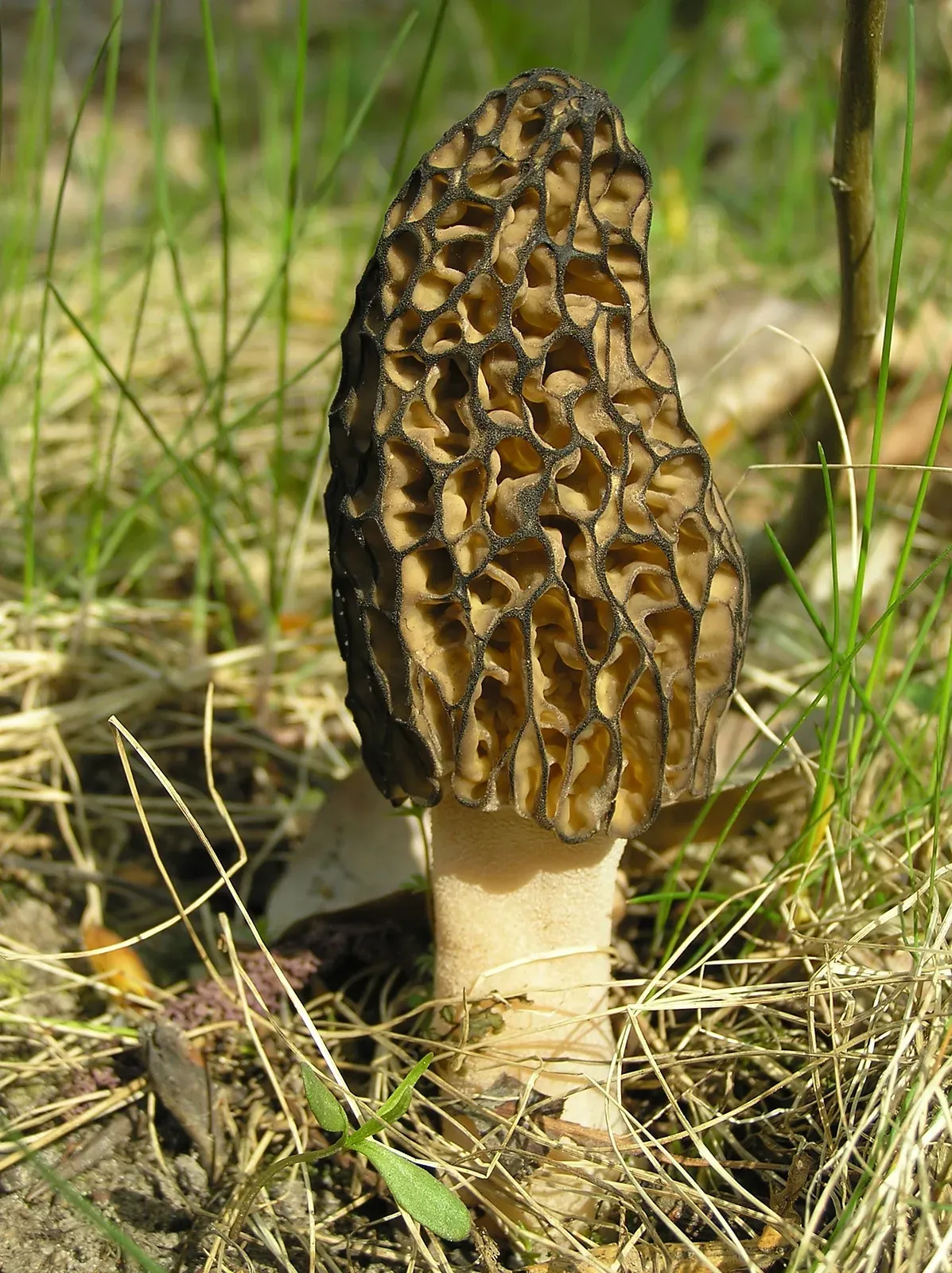
Cap conical or narrowly egg-shaped, 4–8 cm tall and 2–4 cm wide. The surface is covered with elongated lengthwise ridges and cross-ribs that form deep vertical pits. Color from dark brown to blackish on the ridges and gray in the pits.
Hymenophore
The hymenophore is the same as in the common morel: the spore-bearing layer lines the pits of the cap. The mostly elongated pits run vertically, which distinguishes the black morel from the common morel with its more irregular pits.
Stem
Stem 3–8 cm tall, 1.5–3 cm thick, hollow, cylindrical or slightly ribbed. White or cream. Surface uneven, slightly granular. Cap and stem are hollow and fused together.
Flesh
Flesh brittle, waxy, hollow inside. Pale cream. Taste delicate and pleasant after cooking. The raw mushroom is potentially toxic.
Smell
Smell pleasant, subtle, earthy, somewhat like the forest floor in spring. It holds and deepens when stewed. A classic spring woodland aroma.
Lookalikes
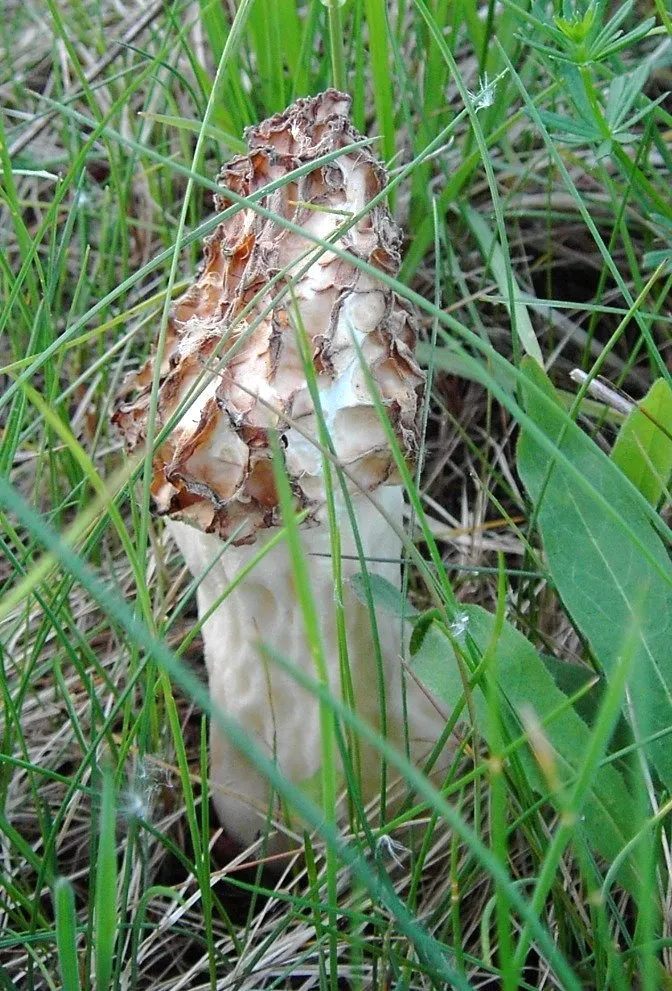
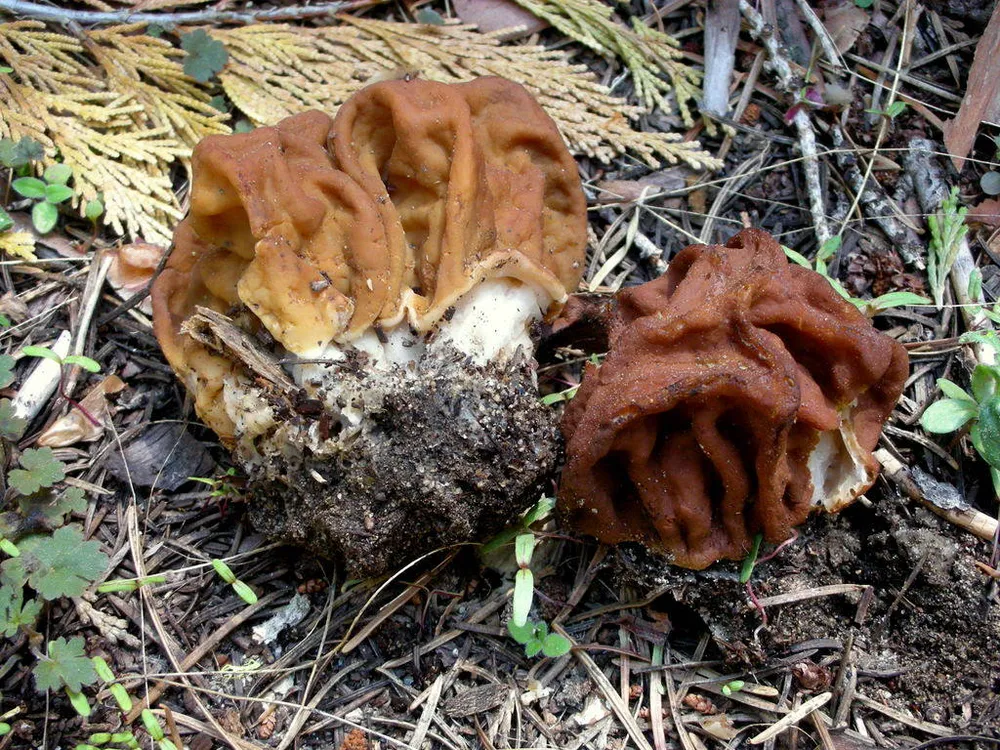
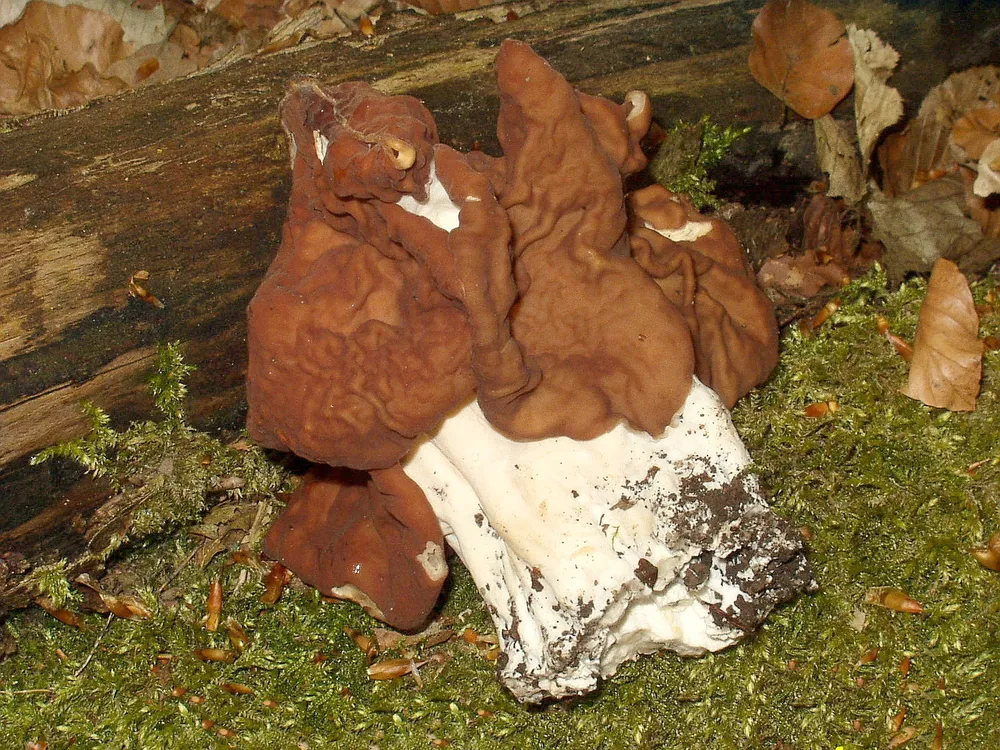
Related species
Mushrooms of the same genus and habitat — to study side by side and never mix up.
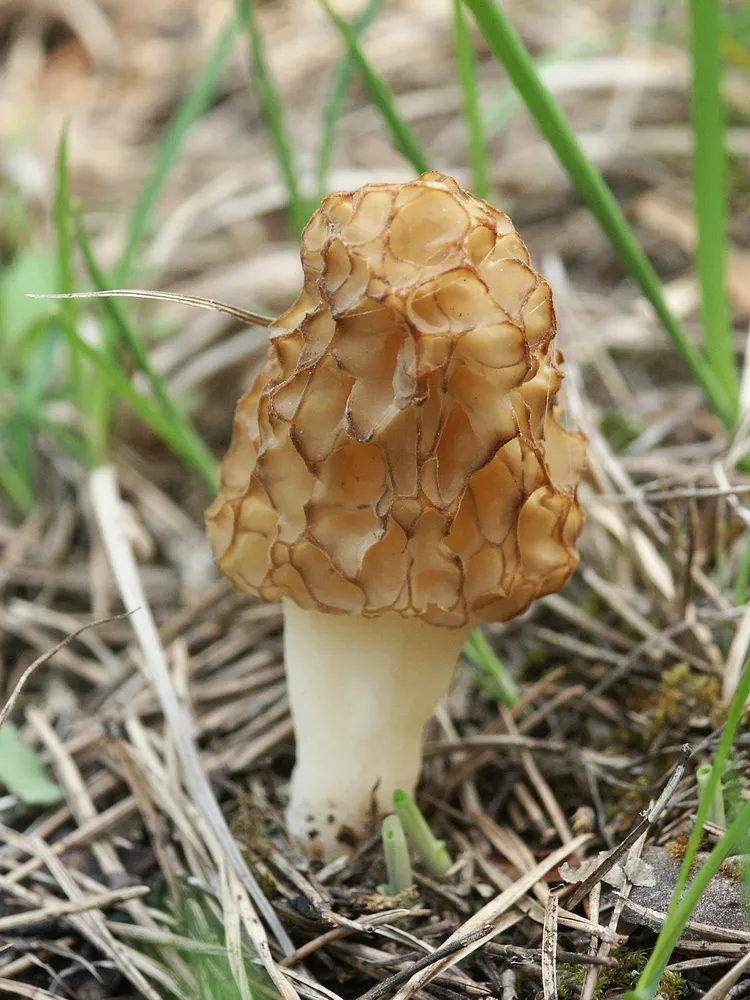
Common morel
Morchella esculenta
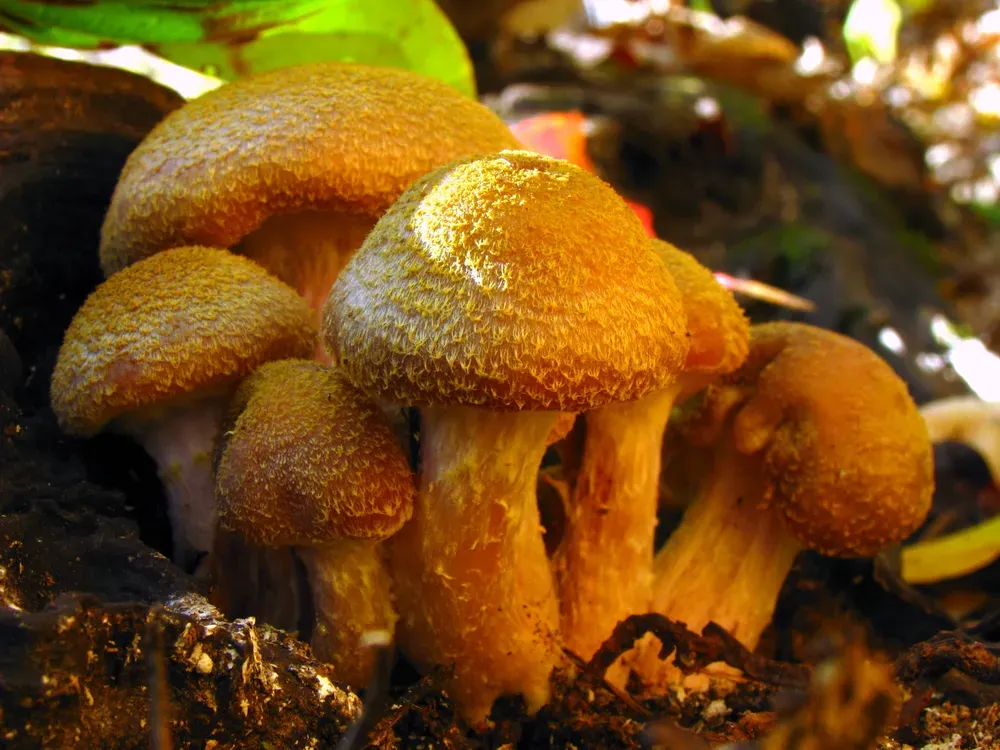
Bulbous honey fungus
Armillaria gallica
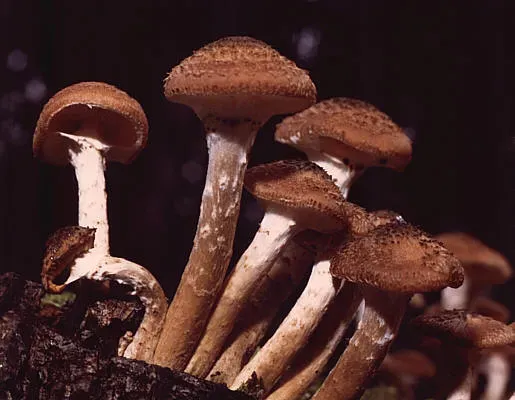
Dark honey fungus
Armillaria ostoyae
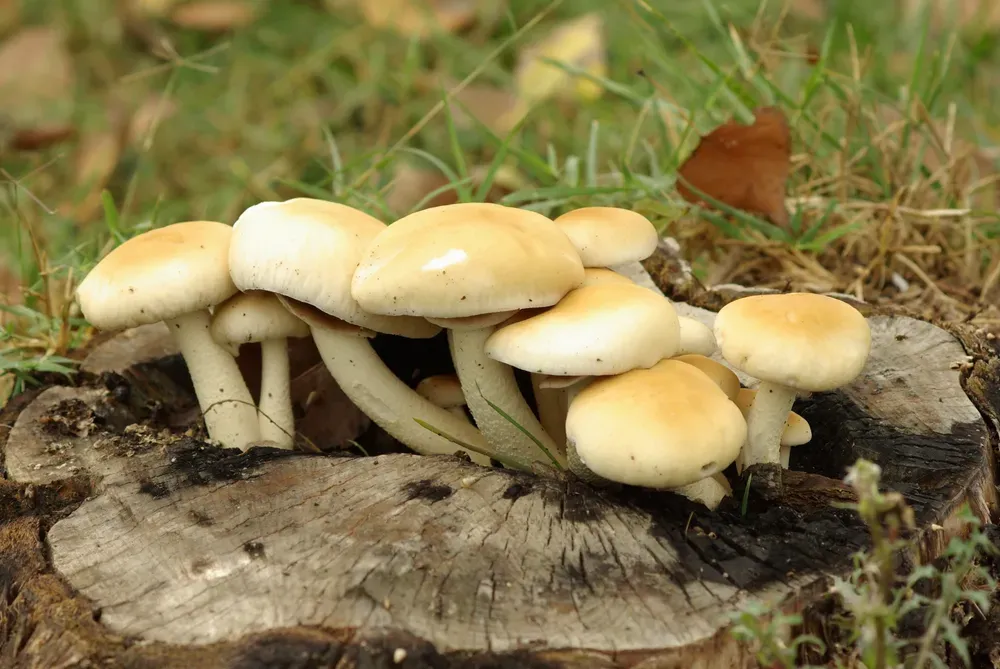
Poplar fieldcap
Cyclocybe aegerita
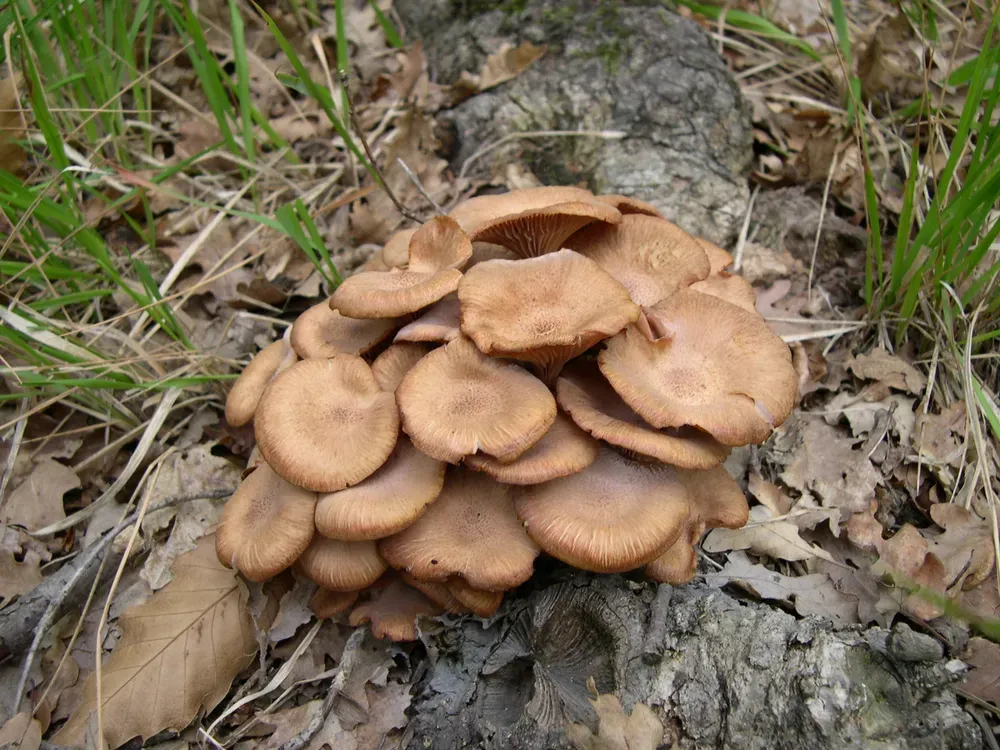
Ringless honey fungus
Desarmillaria tabescens
Agaricus abruptibulbus
Agaricus haemorrhoidarius
Agaricus haemorroidarius
Ashen chanterelle
Cantharellus cinereus
Related reading
Frequently asked questions
Is Black morel edible or poisonous?
What kind of spore-bearing surface does Black morel have?
What does the cap of Black morel look like?
What does the stem of Black morel look like?
What do Black morel smell and taste like?
Where does Black morel grow?
Which trees does Black morel grow under?
When should you pick Black morel?
What can Black morel be confused with?
How do you cook Black morel?
Can you dry Black morel?
What is the scientific name of Black morel?
Sources
- [1]Атлас грибів України, Зеров Д.К. (1979)
- [2]GBIF