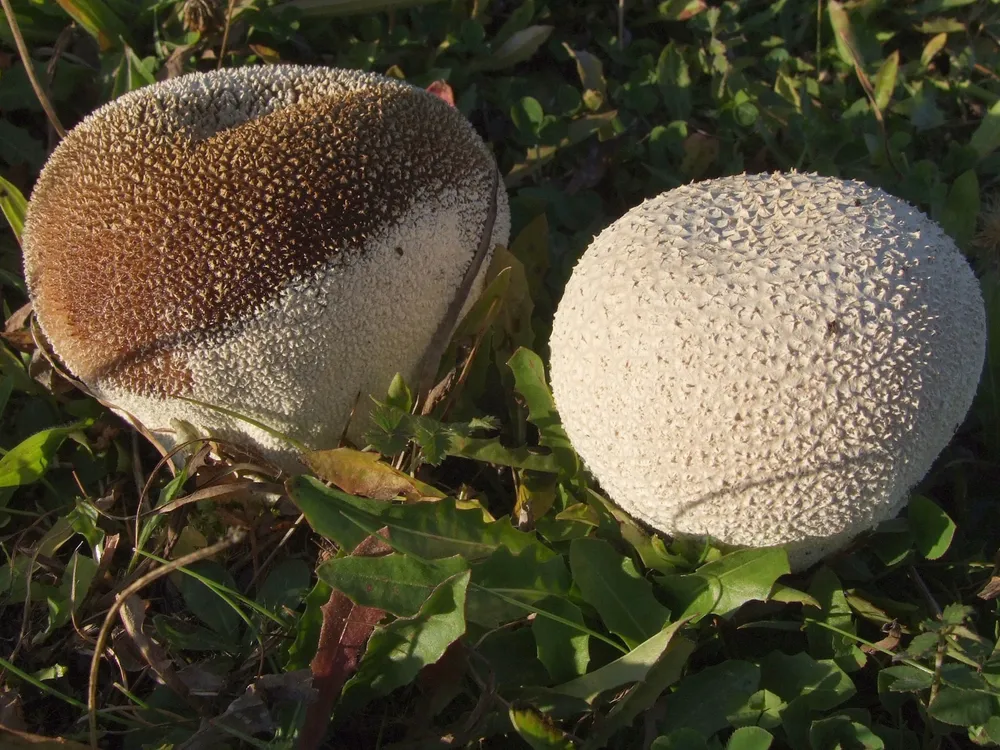
Mosaic puffballCalvatia utriformis
Expert-verifiedUpdated October 3, 2026
Passport
- Edibility
- Edible
- Season
- Jul — Oct
- Hymenophore
- Chambered
- Cap color
- White
- Size
- Large (over 15 cm)
- Smell
- Pleasant
- Reviewed
- Yes ✓
Quick answers
Where to look?
Deciduous forest, Mixed forest
When does it appear?
Jul — Oct
Active months: July, August, September, October.
How to recognize it? Three signs
- Cap color: White, Cream, Brown
- Cap shape: Irregular
- Smell: Pleasant
Fruiting season
July – October
Description
The mosaic puffball is a large, striking member of the puffball family. It looks like a round or upside-down pear-shaped club on a short, thick “stalk”. The young fruiting body is pure white, with a smooth or finely scaly surface. It is 5-15 cm tall and 4-12 cm wide. Unlike the pestle puffball, it isn't so elongated — its proportions are closer to a ball or globe on a short stand. With age the top of the mushroom dies, the skin flakes away, and the ripe spore mass puffs out as dark brown dust.
A good edible when young, as long as the flesh is pure white and firm. At this stage the taste is delicate and neutral — reminiscent of chicken or tofu. It's good breaded and fried, stewed, pickled, or added to soups. As soon as the flesh starts turning yellow or green inside, the mushroom is moving into the spore-ripening stage and is no longer fit to eat. The key rule for all puffballs: cut every fruiting body you collect in half before cooking — uniform white flesh is safe; any other color, throw it out.
In Ukraine it is widespread in the forest and forest-steppe zones. You'll find it in meadows, on forest edges, in floodplain forests, among mixed grasses and on pastures. It likes fertile, moist soil. Season: July–October, peaking in August–September.
Cap
The fruiting body is round, sac-shaped or upside-down pear-shaped, 5-15 cm tall and 4-12 cm wide. Young ones are smooth or finely downy; with age coarser scales appear and the skin peels off in patches. Color: young ones are white, later cream, then grayish brown. In mature ones the top dies, exposing a brownish-gray spore mass.
Hymenophore
The hymenophore is internal (gleba). The young gleba is white, dense and uniform, with no visible chambers or structures. With age it turns yellow, then green, then becomes a dark olive-gray powdery mass of spores. Spore print dark olive-gray to brown.
Stem
There is no separate stem — the fruiting body is one piece. At the bottom there is a short sterile “stalk-base” 2-4 cm high, noticeably narrower than the top, white, scaly in old ones. There is no ring.
Flesh
The flesh in young ones is white, uniform and firm, with a delicate mild taste. With age it turns yellow, then green, and becomes a spore mass. Check before cooking: if the cut shows uniform white — it's good; any yellowish or greenish tint — throw it out.
Smell
A faint, pleasant mushroomy smell. The taste is mild and delicate, nothing distinctive.
›Scientific synonyms (12)
Lycoperdon uteriforme Bull., Lycoperdon utriforme Bull., Bovista utriformis (Bull.) Fr., Bovista uteriformis, Utraria utriformis (Bull.) Quél., Handkea utriformis (Bull.) Kreisel, Lycoperdon caelatum Bull., Lycoperdon quadricorne Sw., Bovista favosa Rostk., Bovista officinarum Rostk., Lycoperdon sinclairii Berk., Calvatia hungarica Hollós
Lookalikes
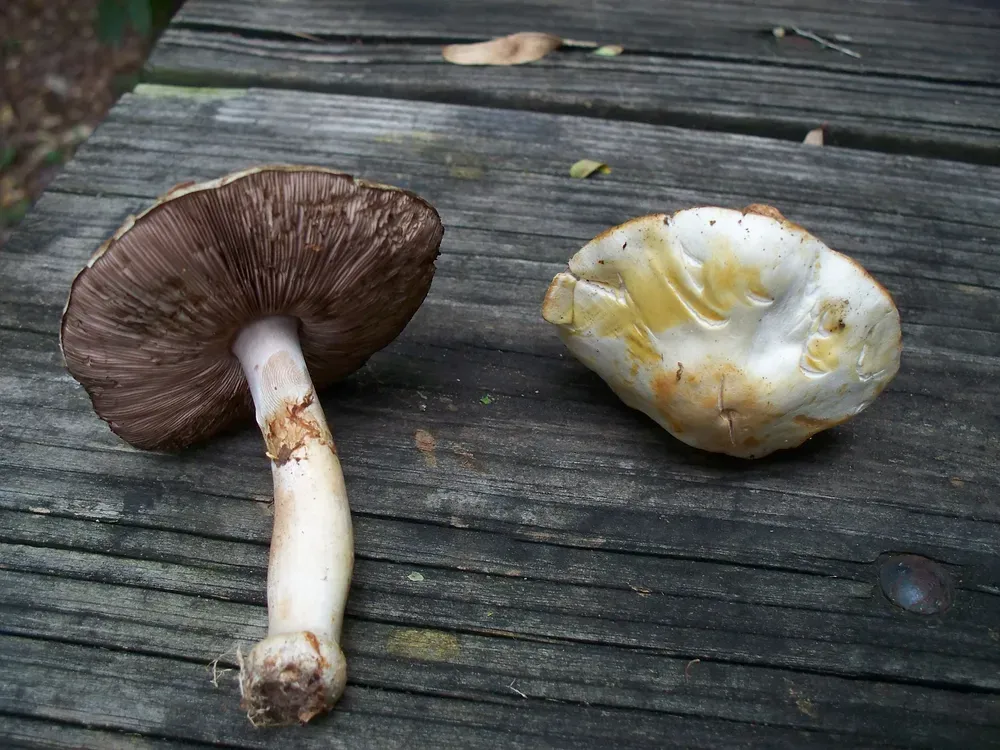
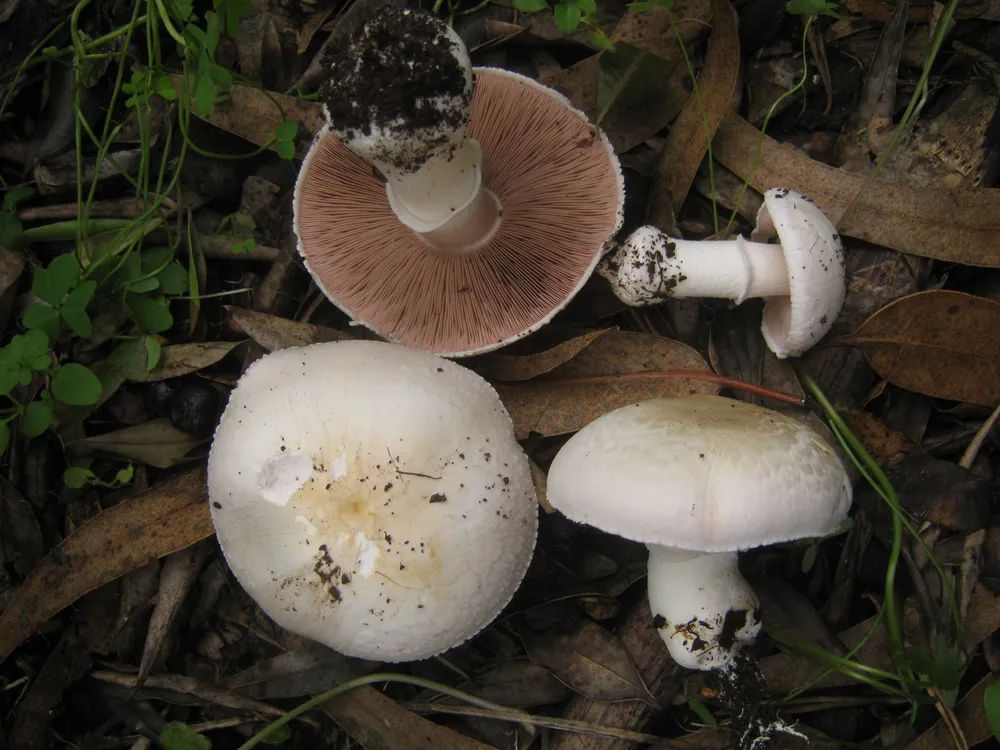
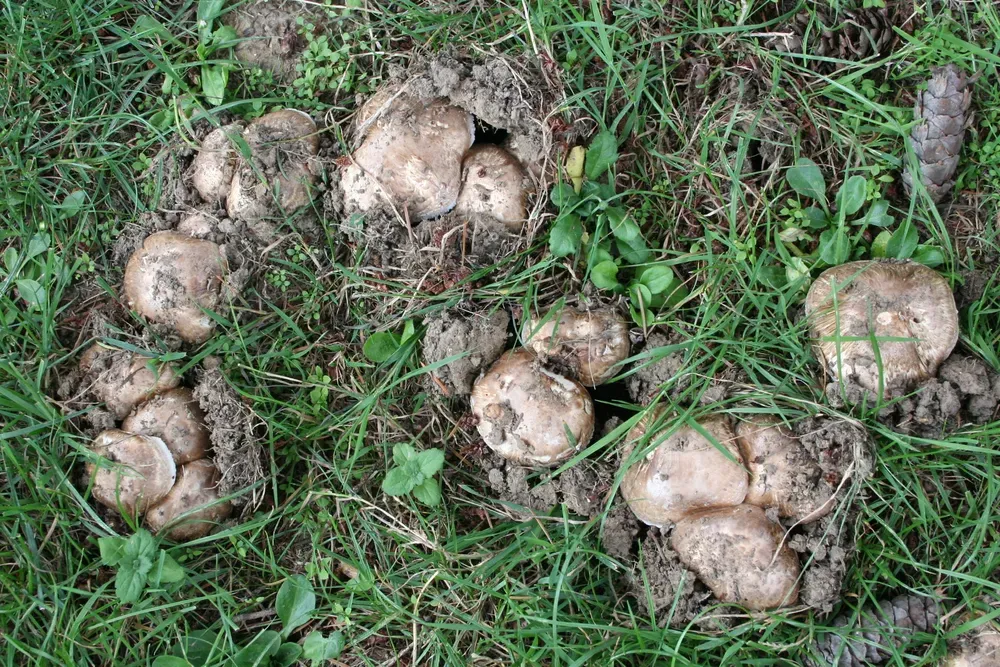
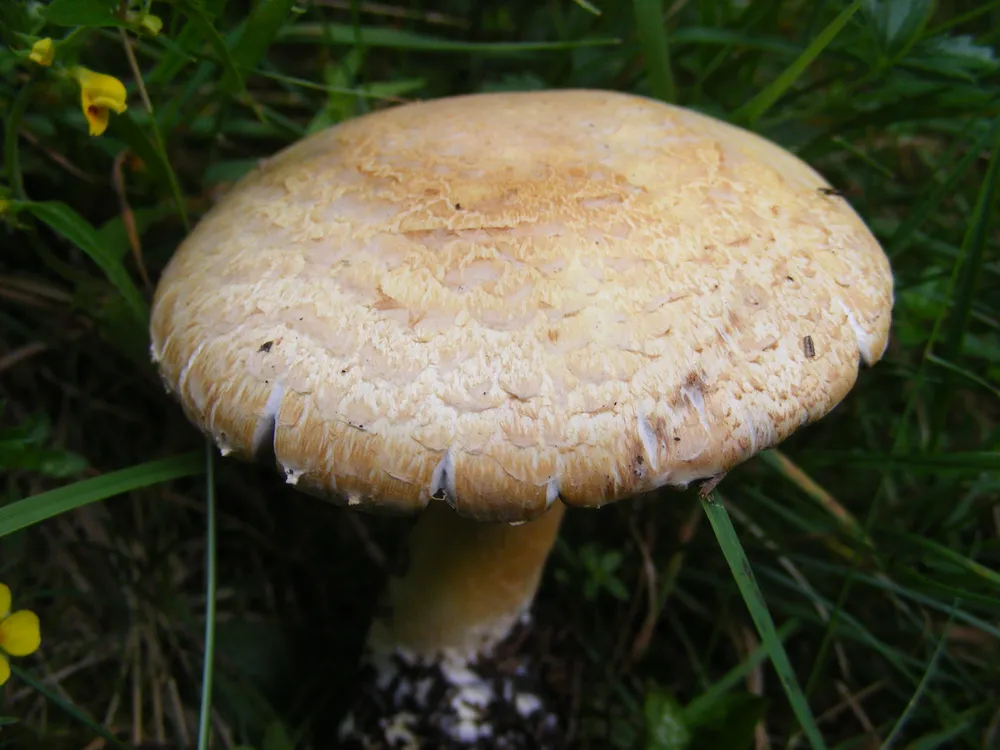
Related species
Mushrooms of the same genus and habitat — to study side by side and never mix up.
.webp)
_Fr._4948278370-2.webp)
Frequently asked questions
Is it safe to eat?
Yes, when young it's a good edible mushroom. It's safe to collect if you follow the rule: cut every fruiting body before cooking and check that the flesh is uniformly white. If it's yellowish or greenish inside, the mushroom has already matured and is no good.
How should you cook it?
Clean it, peel off the skin (it can be tough on older ones), and cut into slices 1-1.5 cm thick. You can fry them breaded straight away (like a schnitzel), add them to soups, stew or pickle them. No pre-boiling needed. The flesh is firm and holds its shape.
Where should you look for it?
In meadows, on forest edges, in floodplain forests, among mixed grasses and on pastures. It likes fertile, moist soil. It's a soil saprotroph — it grows in the open, not tied to any particular trees. Often single or in small groups of 2-3 fruiting bodies. Well-manured meadows and pastures give the best finds.
Which regions of Ukraine does it grow in?
Throughout the forest and forest-steppe zones: the Carpathians, Prykarpattia, Polissia, the Western/Right-Bank/Left-Bank Forest-Steppe. In the steppe — in floodplains and damp lowlands. One of the most common large puffballs.
When should you look for it?
July–October. Fruiting peaks in August–September, after heavy rains. In a warm autumn there are occasional finds until mid-October. Young fruiting bodies (white and firm) last only 5-7 days — then they start turning yellow inside.
How can you tell it's still edible?
From the outside: pure white color, a smooth or finely downy surface, a firm fruiting body. If the surface is cream-colored or scaly and feels soft, the mushroom is mature. The sure test is cutting it: a young one has uniform white flesh like cottage cheese; a mature one is yellowish or greenish inside (spore dust is forming).
What is it confused with?
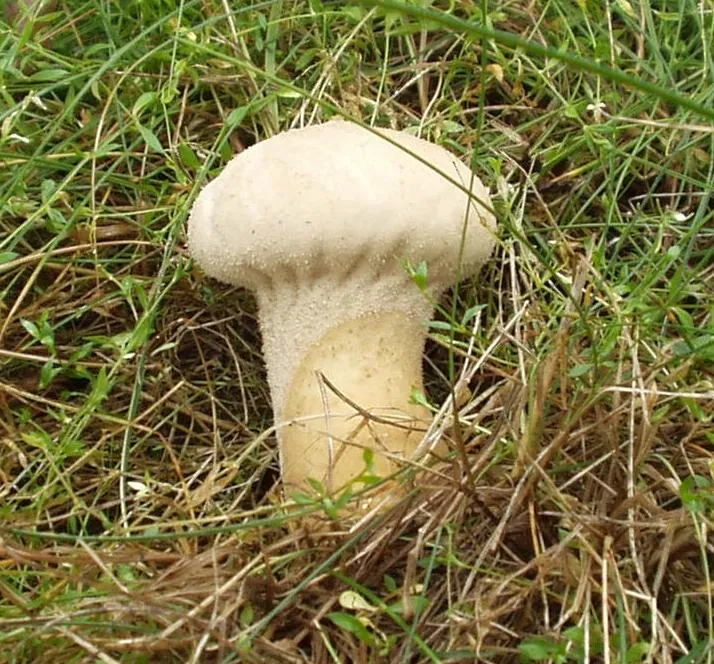
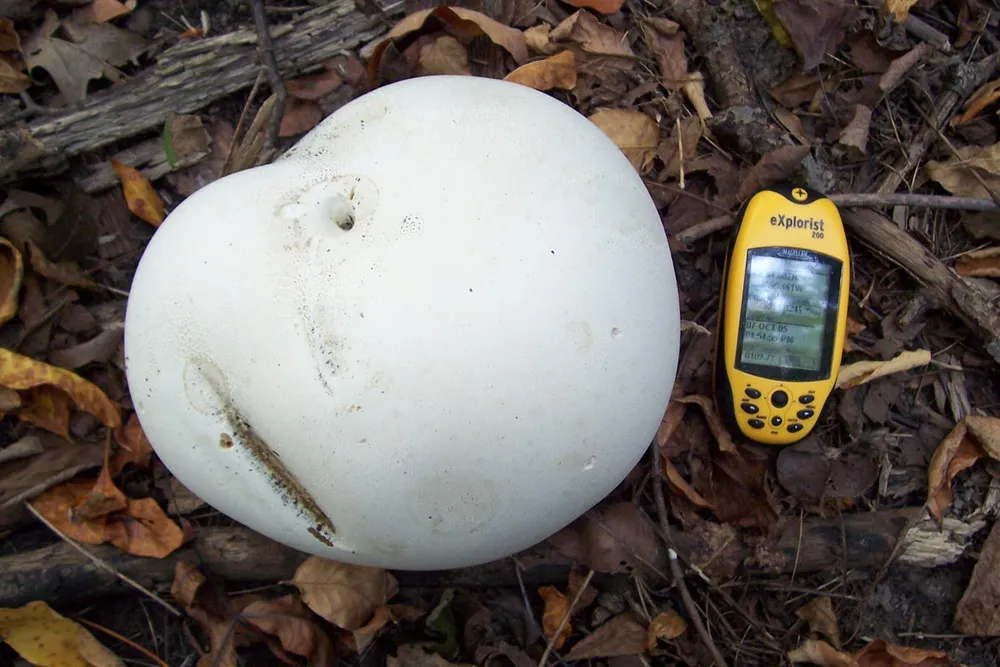
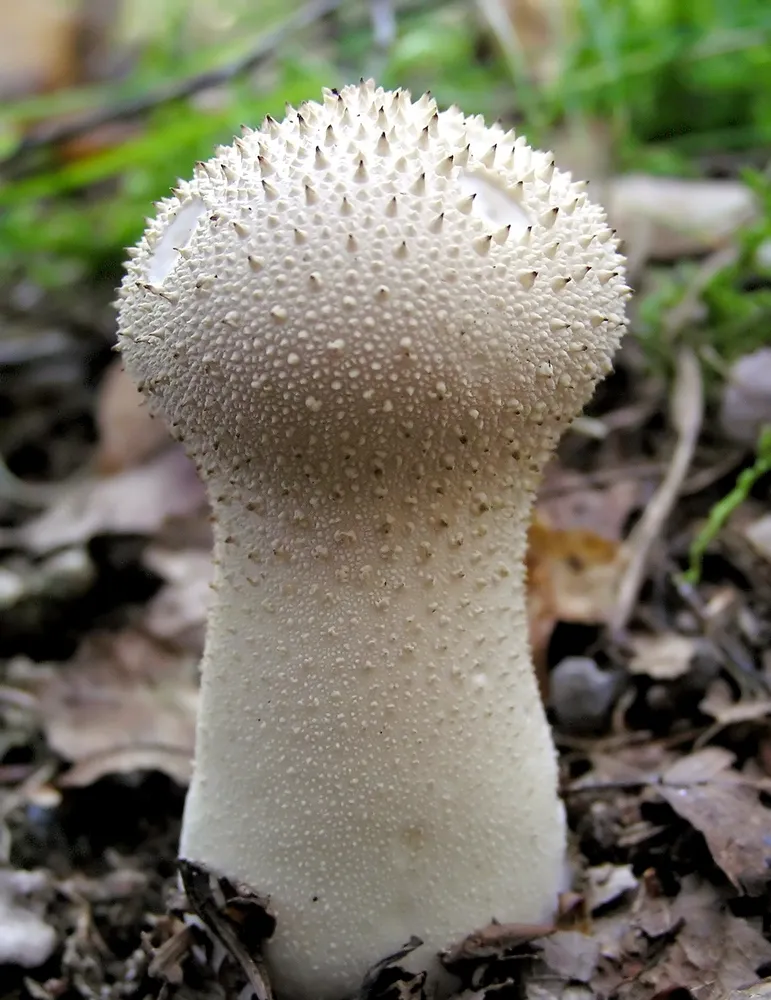
With the pestle puffball (Calvatia excipuliformis) — the mosaic puffball is rounder, without an elongated “club”; the pestle puffball is skittle-shaped, with a pronounced sterile stalk. Both are edible when young. It is also confused with the giant puffball (Calvatia gigantea), which is much bigger (up to 30-50 cm) but also edible.
Can it be confused with a young amanita?
Not if you cut open it. Inside a young amanita you can see the outline of the future mushroom (cap, gills, stem). The mosaic puffball has uniform white flesh with no structure. Always cut puffballs open before cooking — it's the simplest and most reliable protection.
Is Mosaic puffball edible or poisonous?
What kind of spore-bearing surface does Mosaic puffball have?
What does the cap of Mosaic puffball look like?
What does the stem of Mosaic puffball look like?
Sources
- [1]Вікіпедія (українська)
- [2]Атлас грибів України, Зеров Д.К. (1979)
- [3]MycoBank Database
- [4]Index Fungorum
- [5]GBIF
- [6]iNaturalist Ukraine