THIS DATA HAS NOT BEEN VERIFIED BY AN EXPERT. Use at your own risk.
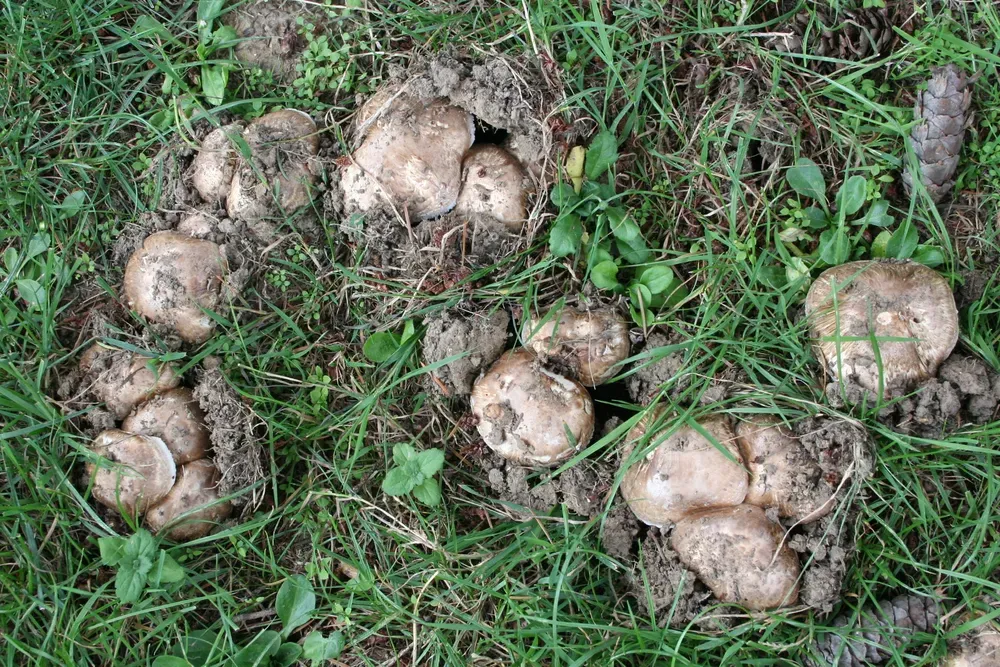
Agaricus subperonatus
Under reviewUpdated October 3, 2026
Passport
- Edibility
- Edible
- Season
- May — Oct
- Hymenophore
- Gilled
- Cap color
- Brown
- Size
- Medium (5–15 cm)
- Smell
- Pleasant
- Reviewed
- Under review
Quick answers
Where to look?
Meadow, Field
When does it appear?
May — Oct
Active months: May, June, July, August, September, October.
How to recognize it? Three signs
- Cap color: Brown, Cream, Dark brown
- Cap shape: Convex, Flat
- Smell: Pleasant
Fruiting season
May – October
Description
Agaricus subperonatus is a sturdy brown-scaled field mushroom whose stem below the ring looks as if clad in a scaly "stocking", which is what its folk name refers to. It is a saprotroph that feeds on soil rich in organic matter and is found not so much deep in the forest as on roadsides, in gardens, parks, on compost plots and along paths, often on fertilized soil.
In Ukraine, Agaricus subperonatus grows on roadsides, in gardens, parks and shelterbelts across the country, preferring humus-rich spots. Its fruiting season covers the warm half of the year — from late spring to autumn, especially after rain. The mushroom appears singly or in groups.
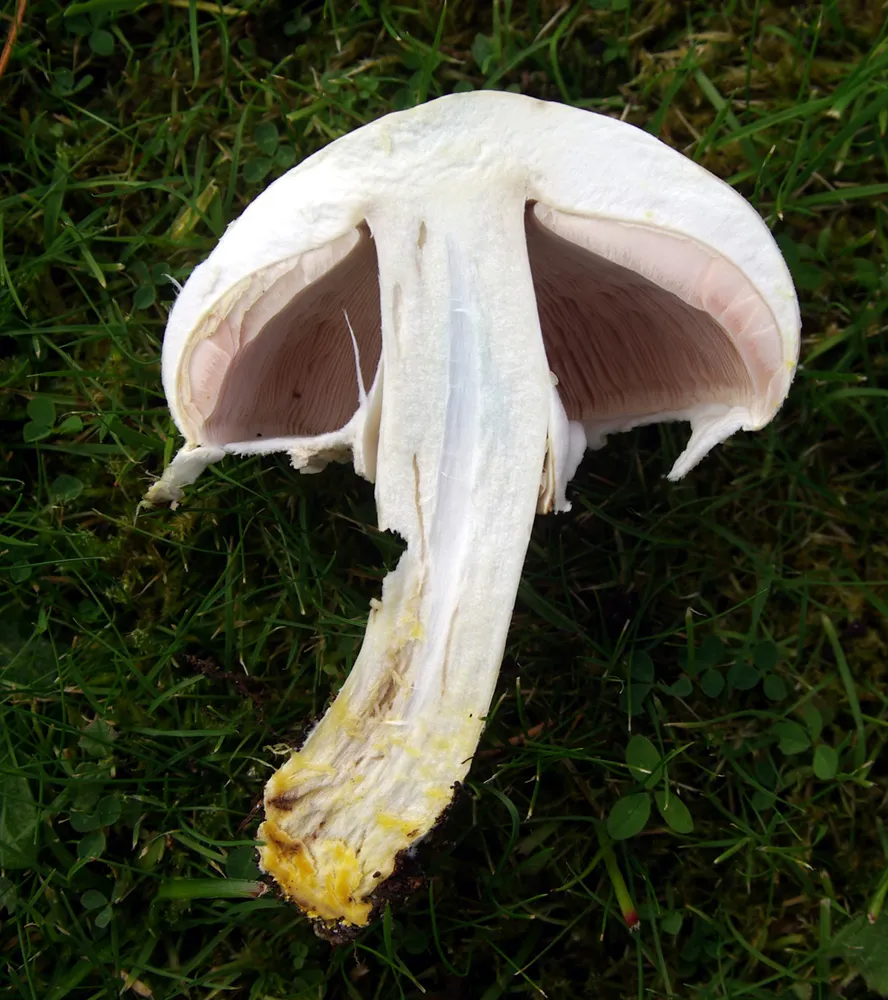
In terms of edibility, Agaricus subperonatus is an edible mushroom with a pleasant taste typical of cultivated button mushrooms. It is fried, stewed and pickled. As with all Agaricus mushrooms, be careful when picking: make sure the gills turn pinkish and then darken, there is no volva at the base of the stem, and the flesh, when cut, turns faintly red or brown rather than bright yellow with an inky smell, as in the poisonous yellow stainer.
Cap
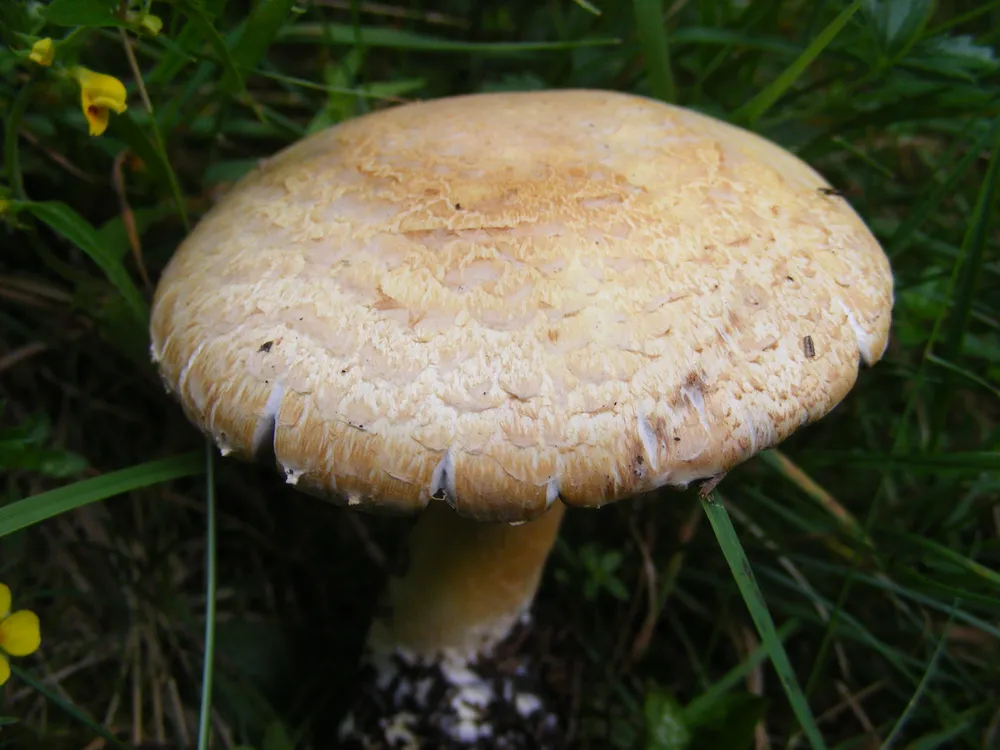
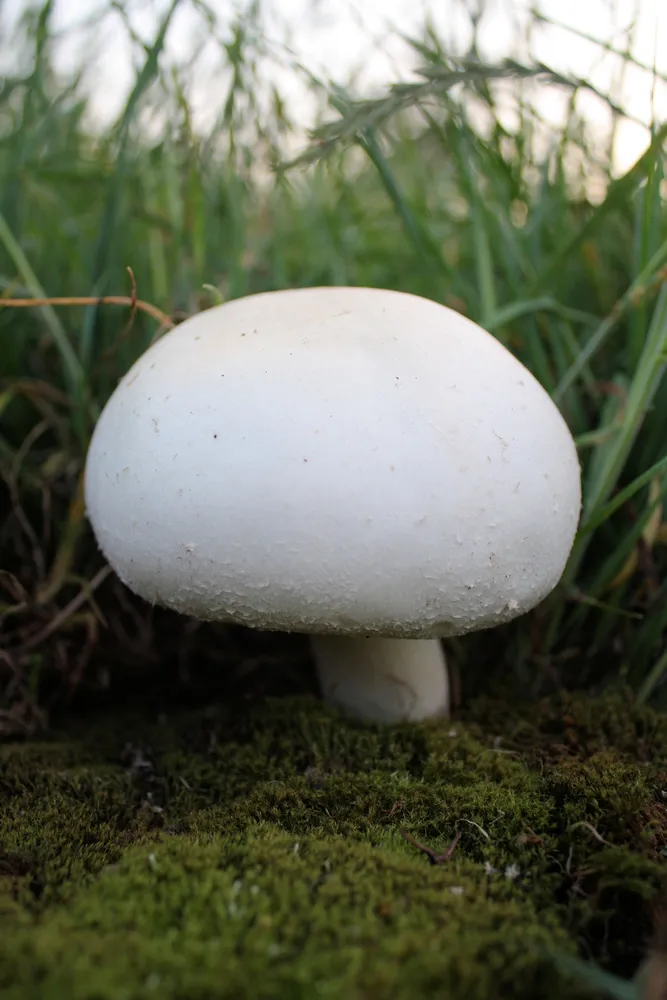
The cap of Agaricus subperonatus is 5 to 12 centimeters across. When young it is hemispherical, opening with age to convex and flat. The surface is covered with numerous pressed-down fibrous scales of brown to reddish-brown on a paler background, especially dense in the center. The scaly brown cap gives the mushroom a stout look.
Hymenophore
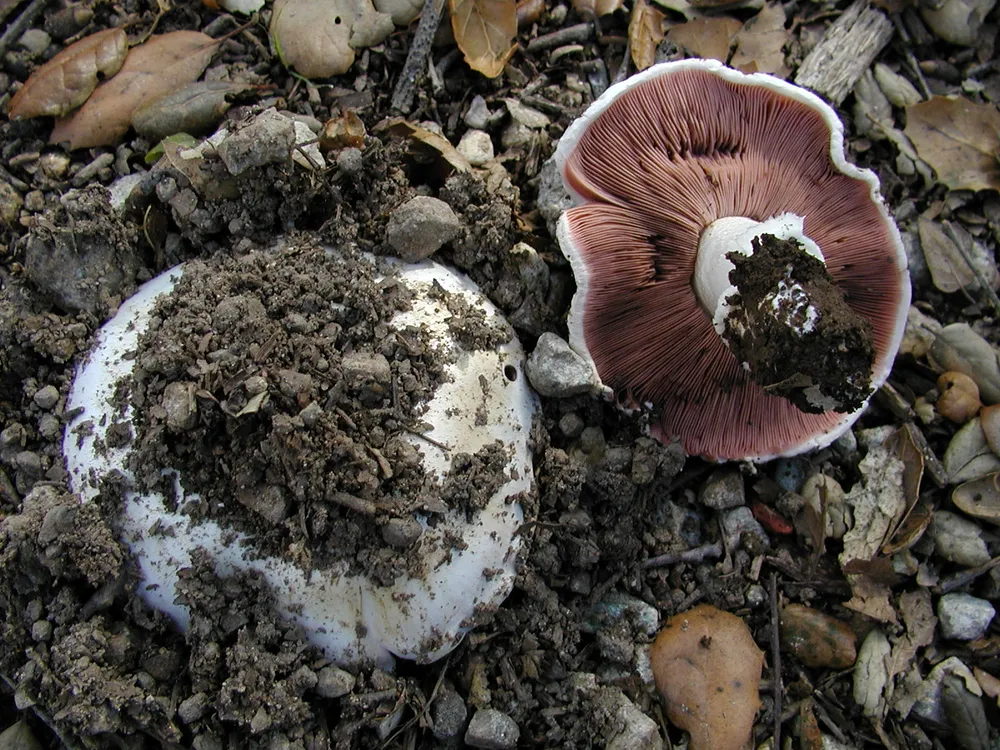
The hymenophore is gilled. The gills are free, not attached to the stem, and very crowded. Their color changes with age: in young mushrooms they are pale pink or grayish-pink, then darken to chocolate-brown and almost black. The spore print is dark brown. Pinkish young gills distinguish this mushroom from the white-gilled poisonous amanitas.
Stem
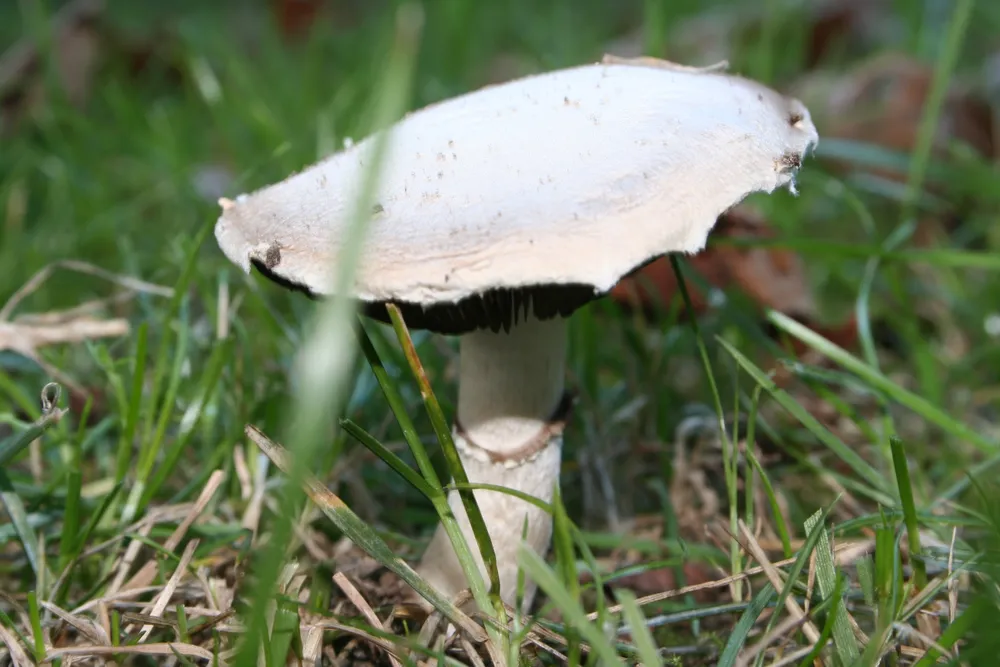
The stem is cylindrical, fairly thick, white, 4 to 9 centimeters tall. Its defining feature is a dense ring, below which the stem is covered with bands of small brown scales that look like a pulled-on "stocking" or shoe — hence the name. When cut, the flesh may turn faintly red. There is no volva at the base.
Flesh
The flesh is white, fairly dense, and when cut slowly turns red or brown, especially at the base of the stem. The taste is mild, pleasant and mushroomy, typical of cultivated button mushrooms. Reddening (rather than bright yellowing) is a useful feature that distinguishes this species from the poisonous yellow stainer.
Smell
The smell is pleasant and mushroomy, with no sharp notes. If, however, the mushroom smells of ink or carbolic, and the flesh turns bright yellow when cut, it is the poisonous yellow stainer, and you must not take it.
›Scientific synonyms (2)
Psalliota subperonata J.E. Lange (1926), Agaricus vaporarius sensu auct.
Lookalikes
Related species
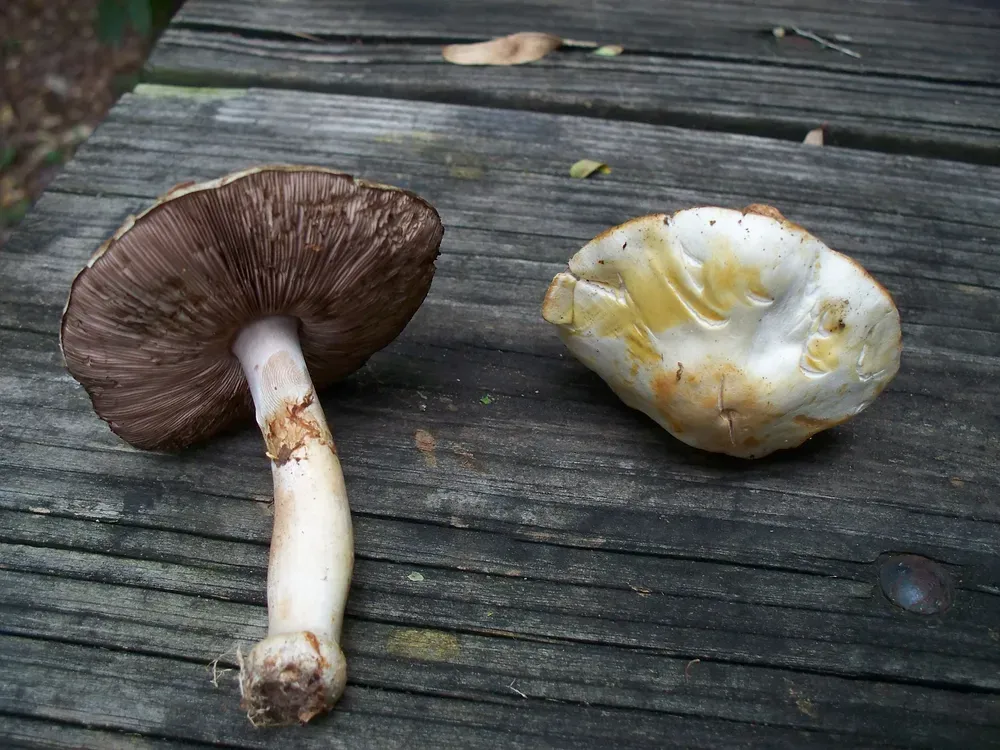
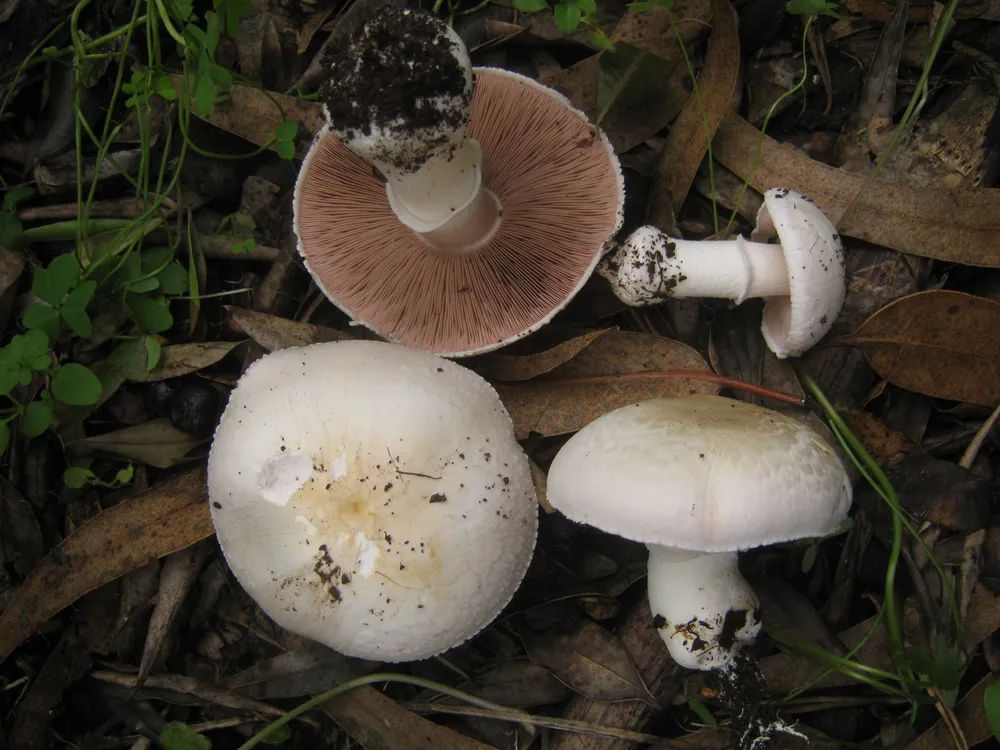
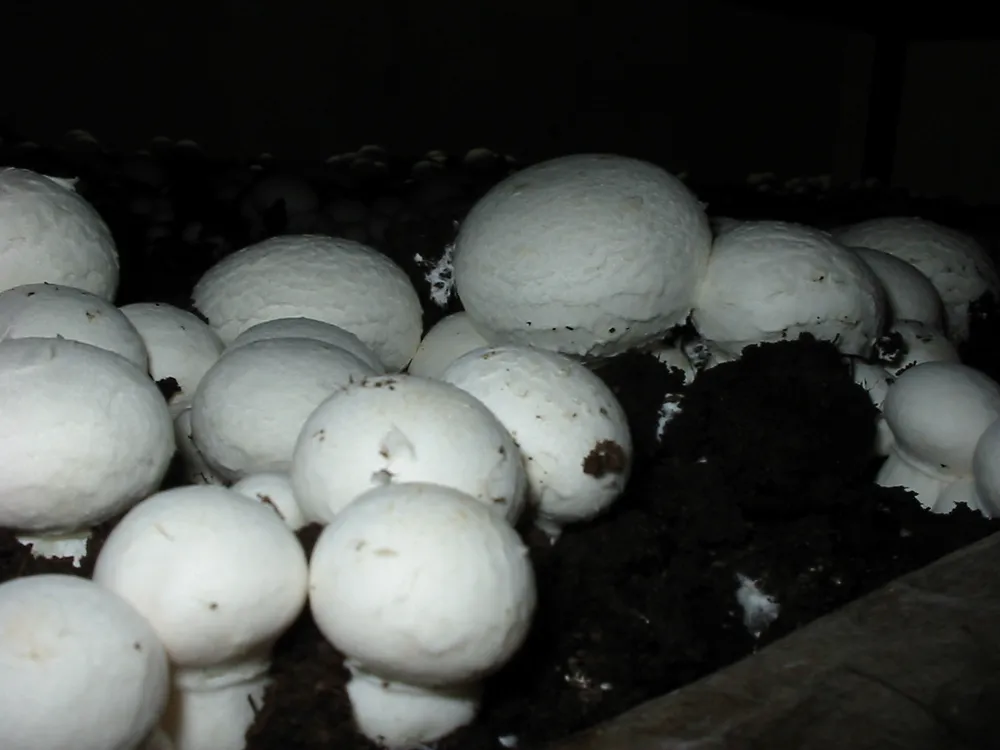
Mushrooms of the same genus and habitat — to study side by side and never mix up.
.webp)
_Fr._4948278370-2.webp)
Frequently asked questions
Is Agaricus subperonatus edible or poisonous?
Does Agaricus subperonatus have gills or pores?
What does the cap of Agaricus subperonatus look like?
What does the stem of Agaricus subperonatus look like?
What do Agaricus subperonatus smell and taste like?
Where does Agaricus subperonatus grow?
When should you pick Agaricus subperonatus?
What can Agaricus subperonatus be confused with?
How do you cook Agaricus subperonatus?
Can you dry Agaricus subperonatus?
What is the scientific name of Agaricus subperonatus?
Sources
- [1]Вікіпедія (українська)
- [2]Атлас грибів України, Зеров Д.К. (1979)
- [3]MycoBank Database
- [4]Index Fungorum
- [5]GBIF
- [6]iNaturalist Ukraine