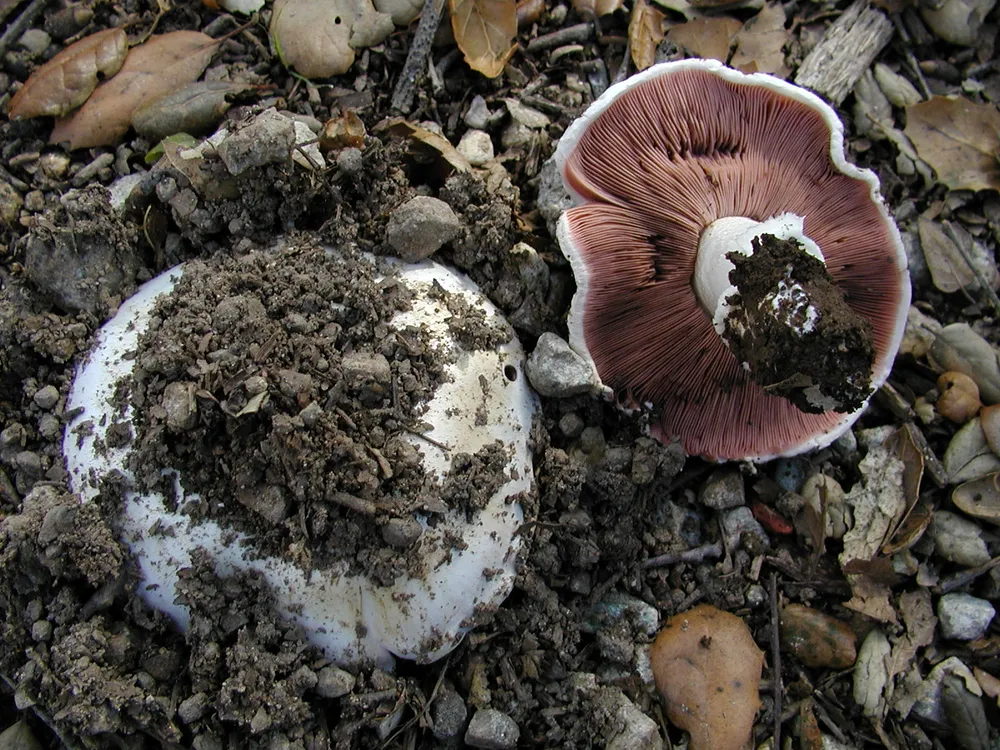
Pavement mushroomAgaricus bitorquis
Expert-verifiedUpdated October 3, 2026
Passport
- Edibility
- Edible
- Season
- May — Nov
- Hymenophore
- Gilled
- Cap color
- White
- Size
- Medium (5–15 cm)
- Smell
- Pleasant
- Reviewed
- Yes ✓
Quick answers
Where to look?
Deciduous forest
When does it appear?
May — Nov
Active months: May, June, July, August, September, October, November.
How to recognize it? Three signs
- Cap color: White, Cream
- Cap shape: Convex
- Smell: Pleasant
Fruiting season
May – November
Description
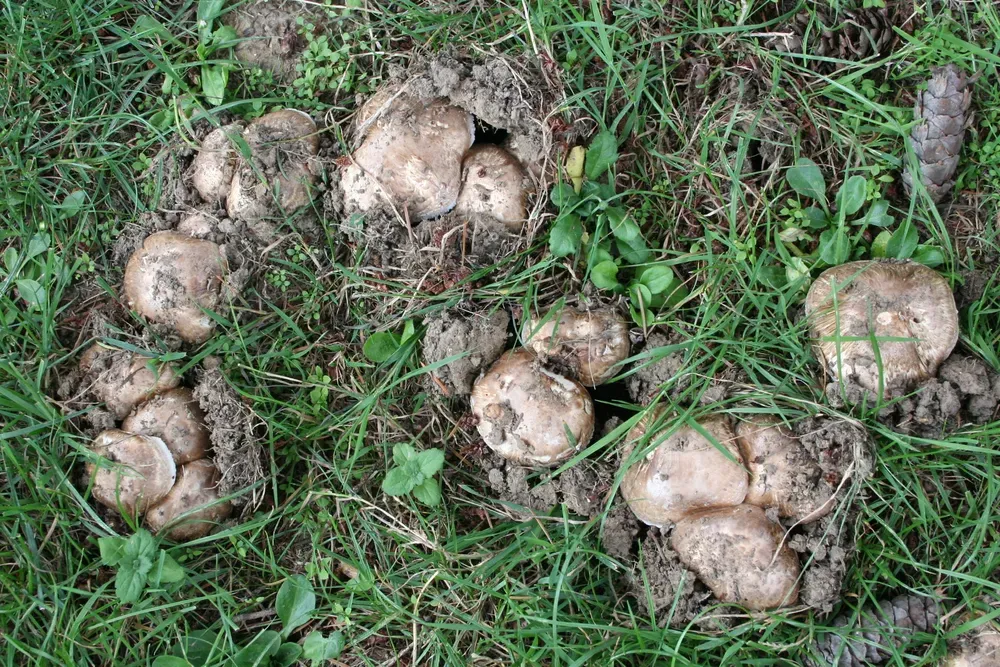
The pavement mushroom (Agaricus bitorquis), popularly known as the "sidewalk", "asphalt" or "city" mushroom, is the most astonishing relative of the store-bought button mushroom: it grows right out of cracks in asphalt, paving stones and packed paths in cities. The Latin epithet bitorquis, "with two collars", refers to the distinctive double membranous ring on the stem, rare among Agaricus species. You can see it literally lifting paving stones with its cap on a park path.
Edible, tasty, similar to the store-bought mushroom (it is a close relative of A. bisporus). The flesh is meaty, firm, with a pronounced mushroomy flavor. It suits everything: frying, pickling, stewing. But pick it only outside busy cities! On city sidewalks it accumulates heavy metals, exhaust pollution and herbicides, so you really should not pick it in Kyiv, Lviv, Kharkiv or other large cities. In village yards, on the outskirts, in quiet villages it is fine.
In Ukraine it is found throughout the country: in village yards, on the verges of dirt roads, on homesteads. A saprotroph, it grows on humus-rich soil with a compacted structure (sidewalks, lawns, trampled ground). Season May to November, with peaks after every warm rain. One of the longest mushroom seasons.
Cap
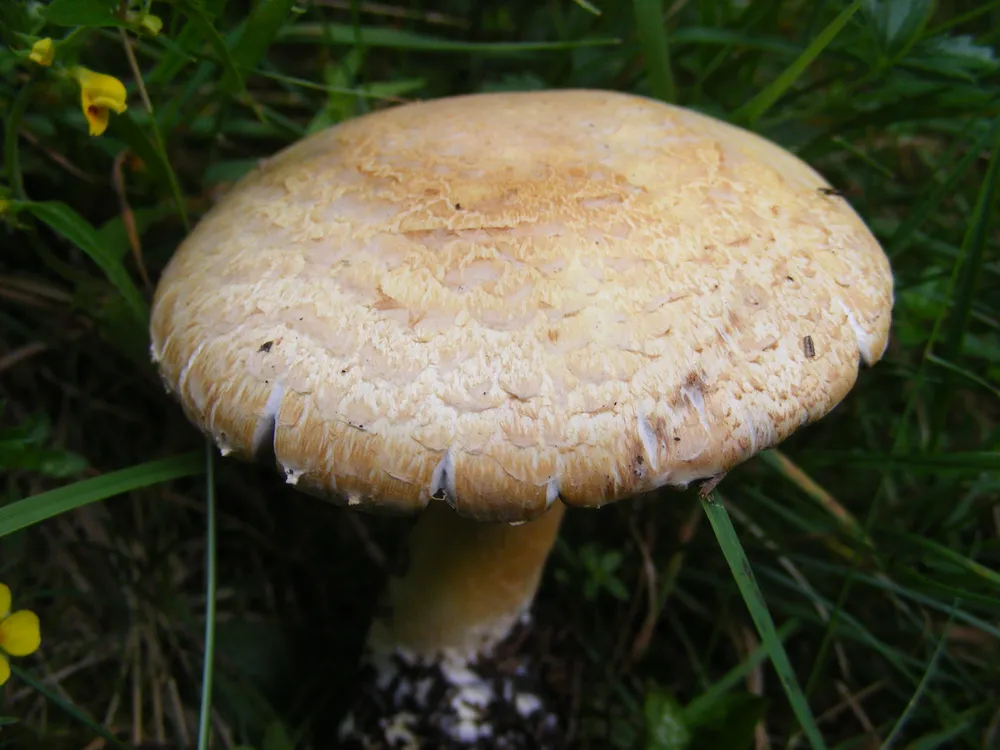
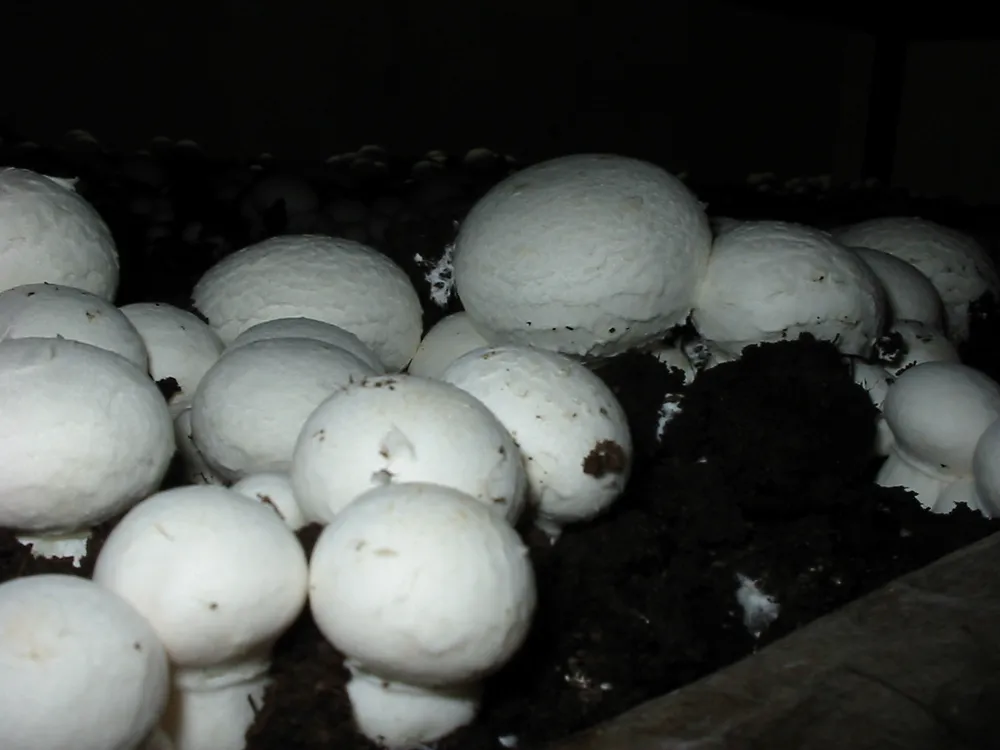
Cap 5-15 cm across, in young mushrooms compactly hemispherical to flat-convex, the edge often inrolled. Color white to cream, sometimes with a pale brownish tint in the center. Surface smooth, slightly sticky in wet weather. Often with a partial veil at the edge when young: a thin membranous fringe.
Hymenophore
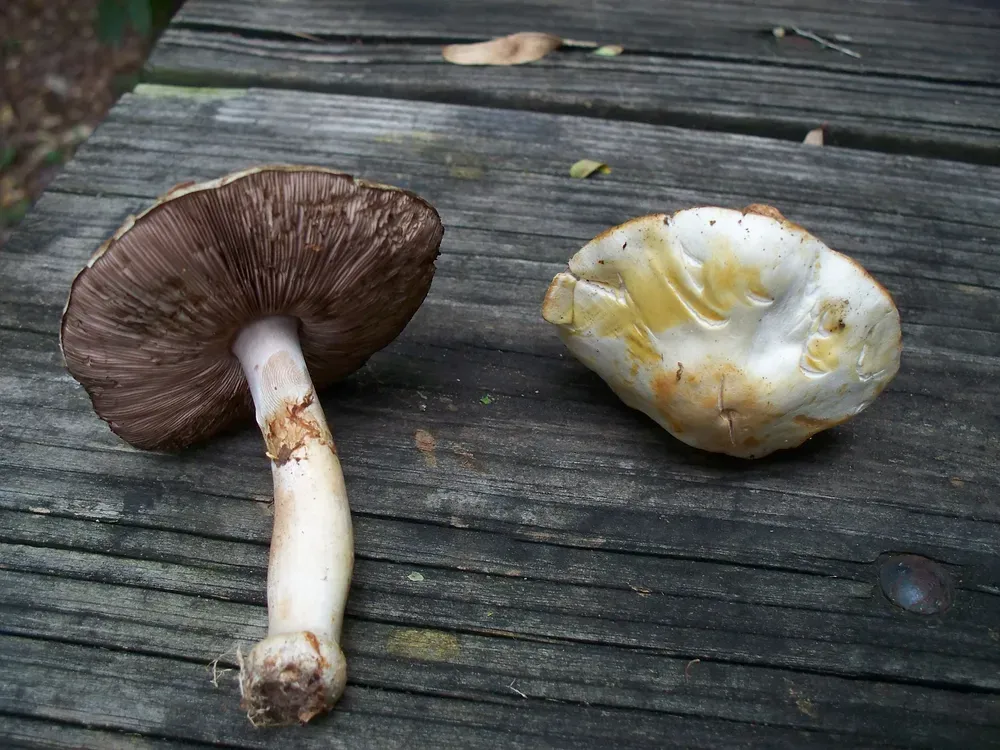
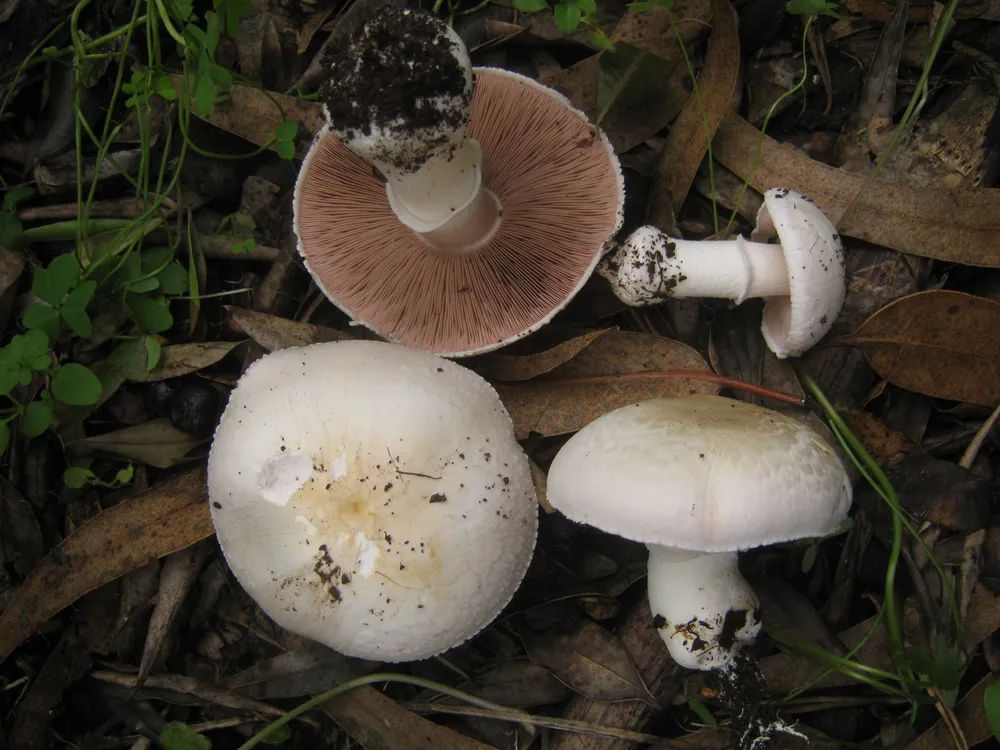
Gilled hymenophore: gills free, crowded. When young they are pale pink to bright pink, and with age they become dark brown to chocolate-blackish. Spore print dark brown.
Stem
Stem 3-8 cm tall, 1.5-3 cm thick, thick, meaty, cylindrical, narrowing toward the base. Color white. A distinctive double ring structure: in the upper part of the stem there are two membranous rings close together (hence the name bitorquis). This is the diagnostic feature of the species.
Flesh
Flesh firm, meaty, white; when cut it slowly turns pinkish to brownish. Pleasant mushroomy smell with a fresh note. Mild taste, similar to the store-bought mushroom.
Smell
Pleasant and mushroomy, like fresh store-bought button mushrooms. It does not smell of ink or medicine (that would point to the yellow stainer).
›Scientific synonyms (2)
Agaricus edulis, Psalliota bitorquis
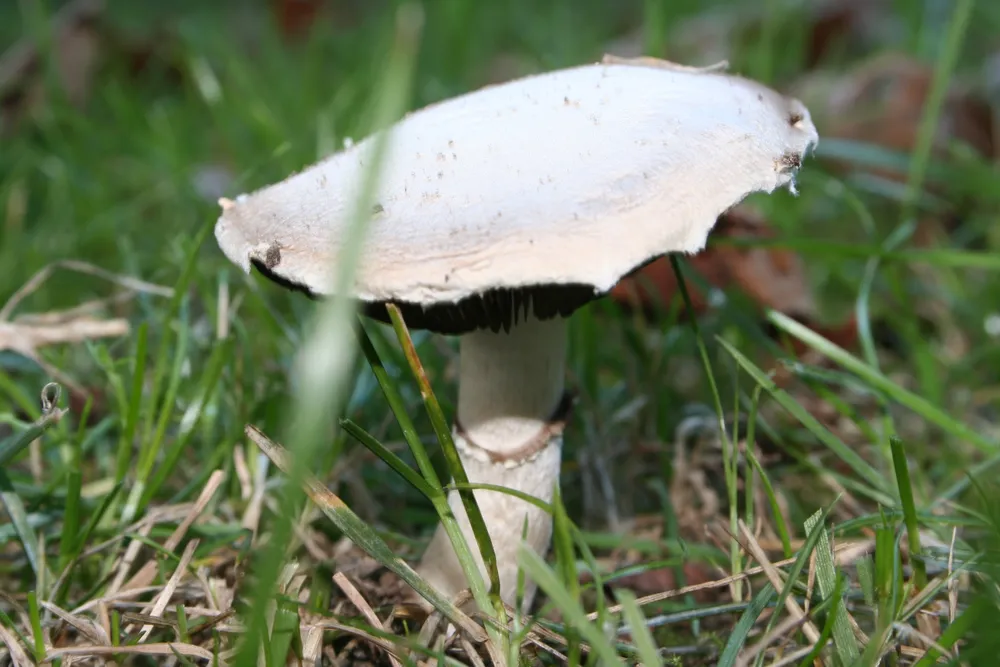
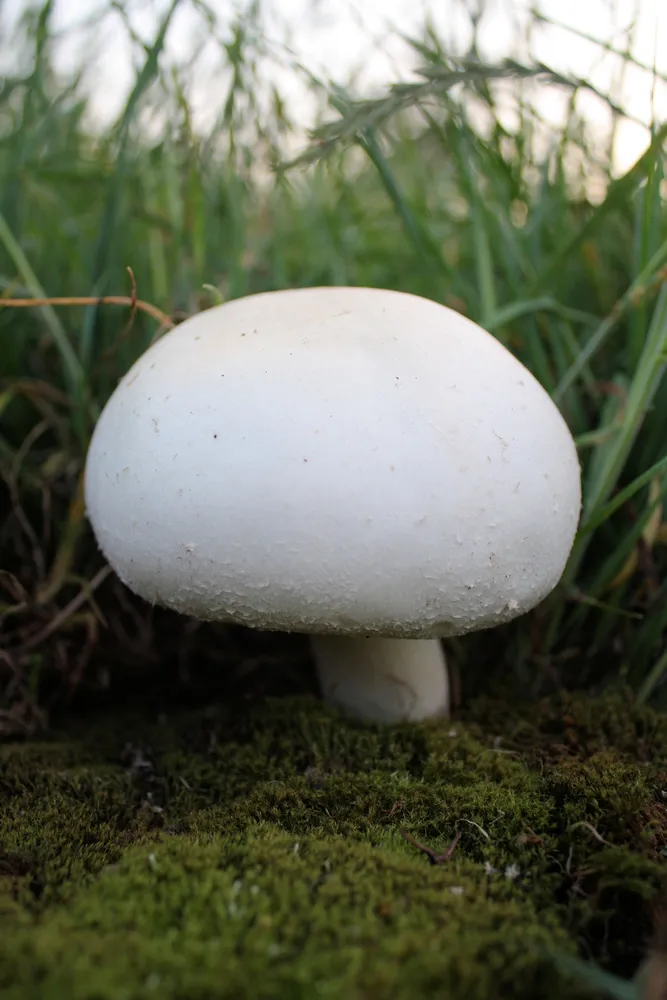
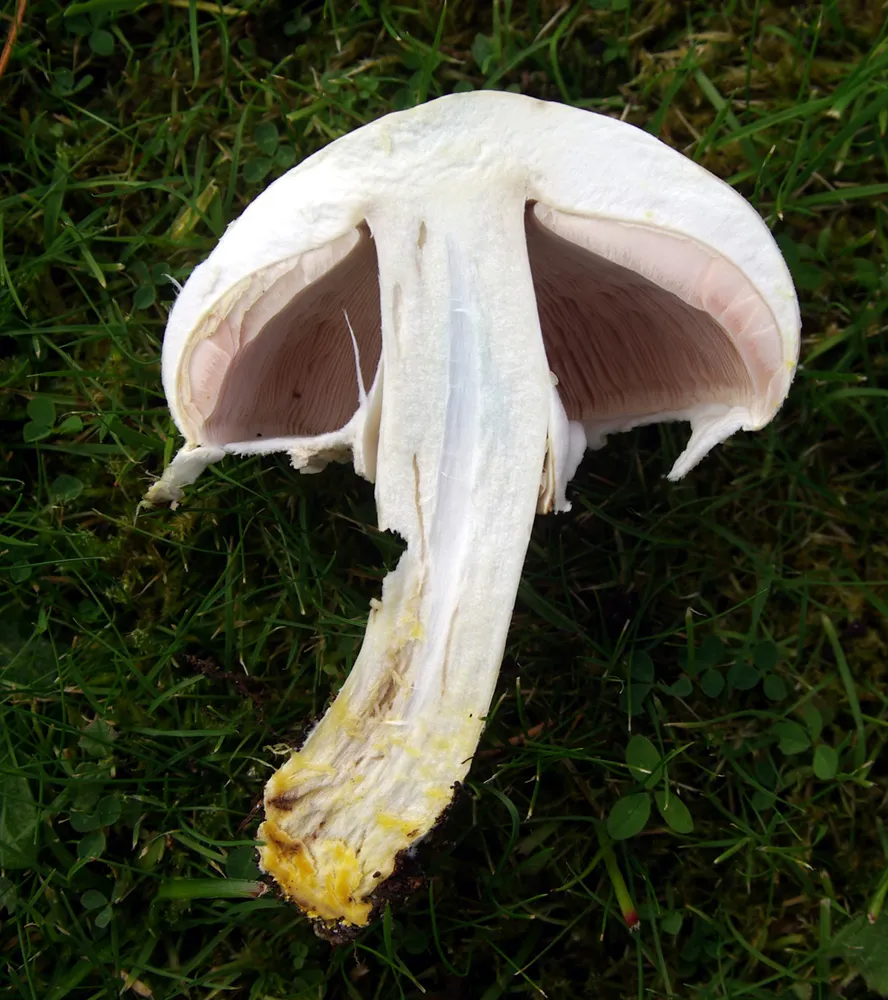
Lookalikes
Related species
Mushrooms of the same genus and habitat — to study side by side and never mix up.
.webp)
_Fr._4948278370-2.webp)
Frequently asked questions
Is it safe to eat?
Yes, provided it is picked in a clean area. The mushroom itself is tasty and safe. The problem is where it grows: on city sidewalks it accumulates heavy metals (lead, cadmium), exhaust pollution and lawn herbicides. Never pick it in cities or near highways. In village yards, on the outskirts of villages, in rural yards it is safe.
How is it different from the store-bought mushroom?
The store-bought button mushroom is Agaricus bisporus (two-spored), cultivated on special compost under sterile conditions. The pavement mushroom is A. bitorquis, a wild species and a relative. They look alike (white meaty caps, gills pink when young) and taste similar. The key difference: A. bitorquis has a double ring on the stem, A. bisporus has a single one.
How do I tell it apart from the yellow stainer?
Smell and flesh reaction. The yellow stainer (A. xanthodermus) smells of ink, phenol, medicinal ointment, and the flesh at the base of the stem turns bright yellow when damaged (often within seconds). The pavement mushroom smells pleasant, like the store-bought kind, and when cut its flesh slowly turns pinkish to brownish, never yellow. If it smells of medicine or turns yellow, leave it.
Why is it dangerous to pick in the city?
Mushrooms are bioaccumulators. They actively take up heavy metals (lead, cadmium, mercury) from the soil, polycyclic aromatic hydrocarbons from car exhaust, and herbicides from lawn treatment. In cities, concentrations of these compounds are 10-100 times higher than background levels. With regular consumption they build up in the liver, kidneys and brain, a risk of chronic poisoning. The safe rule: pick only more than 100 m from a paved road and outside cities.
Where should I look for it?
On compacted soil: village yards, trampled paths, verges of dirt roads, homestead yards with packed earth. Paradoxically tough, it can lift asphalt and paving stones as it grows. In "clean" conditions it is an ordinary culinary mushroom; in the city it is a bioaccumulator of pollution.
Which regions of Ukraine is it found in?
Throughout the country: the Carpathians, Prykarpattia, Polissia, the forest-steppe, the steppe. In rural areas of every region. It grows in cities too, but you should not pick it there.
When should I look for it?
May to November, with peaks after every warm rain. One of the longest mushroom seasons: it fruits almost year-round when there is enough moisture.
Which mushrooms is it confused with?
With the field mushroom (A. campestris): also edible, grows in meadows, no double ring. With the yellow stainer (A. xanthodermus): poisonous, smells of medicine. The most dangerous mistake is confusing it with young destroying angels (Amanita virosa), which are deadly! But amanitas grow in forests, not on sidewalks, so the chance of confusion on compacted ground is minimal.
Is Pavement mushroom edible or poisonous?
Does Pavement mushroom have gills or pores?
What does the cap of Pavement mushroom look like?
What does the stem of Pavement mushroom look like?
Sources
- [1]Вікіпедія (українська)
- [2]Атлас грибів України, Зеров Д.К. (1979)
- [3]MycoBank Database
- [4]Index Fungorum
- [5]GBIF
- [6]iNaturalist Ukraine