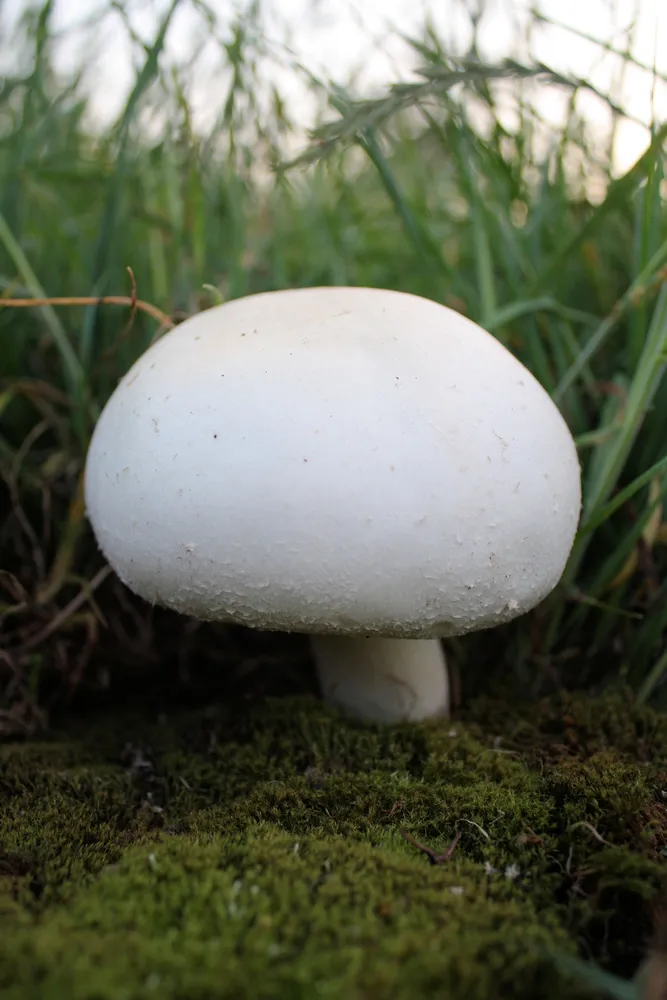
Horse mushroomAgaricus arvensis
Expert-verifiedUpdated October 3, 2026
Passport
- Edibility
- Edible
- Season
- Jun — Nov
- Hymenophore
- Gilled
- Cap color
- White
- Size
- Large (over 15 cm)
- Smell
- Pleasant
- Reviewed
- Yes ✓
Quick answers
Where to look?
Deciduous forest
When does it appear?
Jun — Nov
Active months: June, July, August, September, October, November.
How to recognize it? Three signs
- Cap color: White, Cream
- Cap shape: Convex
- Smell: Pleasant, Anise, Almond
Fruiting season
June – November
Description
The horse mushroom (Agaricus arvensis), known in folk speech as "the fragrant mushroom", is the largest and by far the most fragrant of Ukraine's wild Agaricus mushrooms. The cap reaches 20 cm across, fleshy, white with subtle yellowish tints, with a distinct smell of anise or almond. The Latin epithet arvensis means "of the fields." It's a beloved mushroom of "grandma's meadows" — it grows in pastures, meadows, neglected vegetable gardens, next to manure heaps.
Edible, very tasty. The flesh is meaty and tender, with a characteristic fruity-anise aroma that survives cooking. It's good for everything: frying with onions (the classic "Polish-style" mushrooms), pickling, stewing with potatoes, drying (dried horse mushroom powder is the most fragrant mushroom seasoning there is). Young caps can go into salads after a quick sauté.
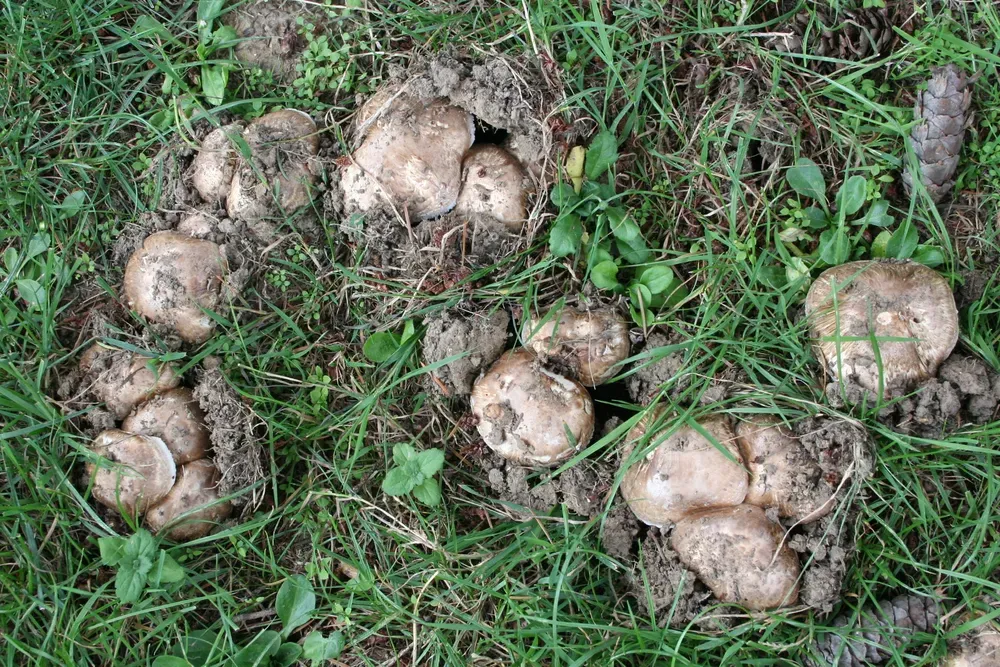
In Ukraine it occurs throughout the country: meadows, pastures, abandoned pastures, forest edges, floodplain meadows, near livestock farms. A saprotroph — it grows on nitrogen-rich humus soil, especially abundantly near places where cattle graze (the mycelium feeds on nitrogen compounds). Season June — November, peaking in August-September. It often grows in fairy rings 3-15 m across, like the fairy ring champignon, only bigger and more fragrant.
Cap
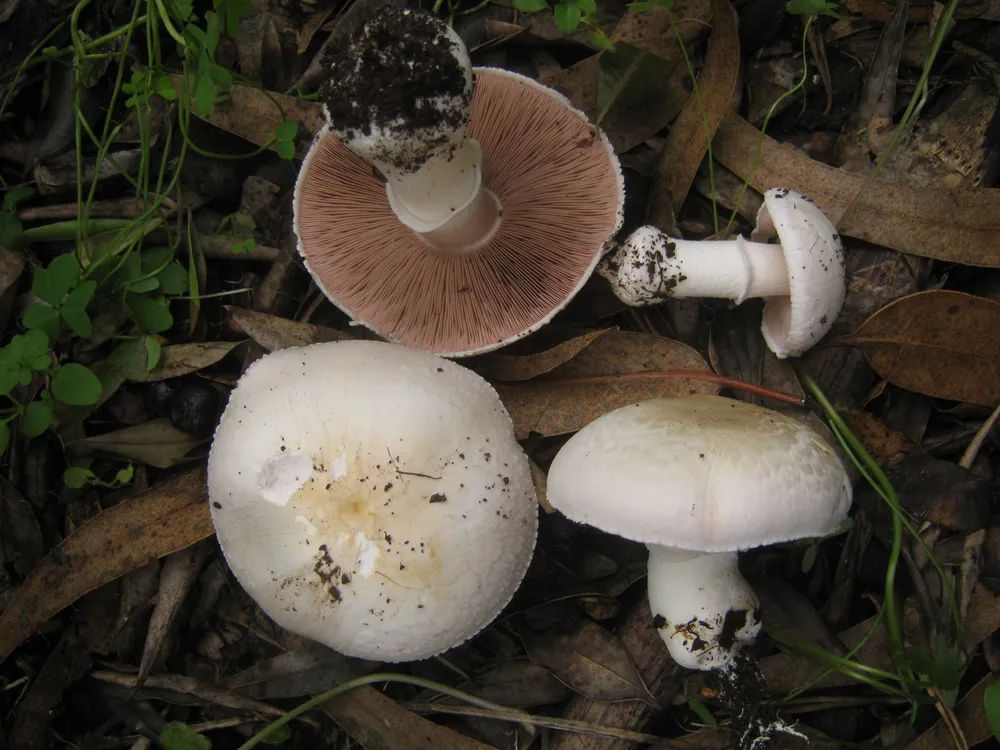
Cap 6-20 cm across; in young mushrooms firmly hemispherical to egg-shaped, the margin often rolled under. Later it becomes convex to flat. Color pure white to cream, with subtle yellowish tints in old mushrooms; spots yellow to ocher when touched. Surface smooth, slightly sticky in wet weather, dry and matte in dry weather. Sometimes with fine fibrous scales in the center.
Hymenophore
Gilled hymenophore — gills free, crowded. When young — grayish-white, with a pinkish tinge, becoming with age dark brown, chocolate-blackish. Spore print dark brown.
Stem
Stem 6-12 cm tall, 1.5-3 cm thick, thick, fleshy, cylindrical, slightly thickened at the base. Color white to cream. On the upper part — a large membranous double ring with a characteristic "toothed" lower edge (like a cogwheel) — a diagnostic feature of the species.
Flesh
Flesh firm, meaty, white; when cut it slowly yellows in the flesh of the cap and upper stem. Does not redden (unlike A. silvaticus). The smell is a distinct anise-almond — a characteristic feature of the species.
Smell
Distinctly anise-almond, fruity — the most characteristic diagnostic sign. It comes out when you rub the flesh between your fingers. This smell is one of the most pleasant mushroom experiences in field foraging.
›Scientific synonyms (1)
Psalliota arvensis (Schaeff.) P.Kumm.
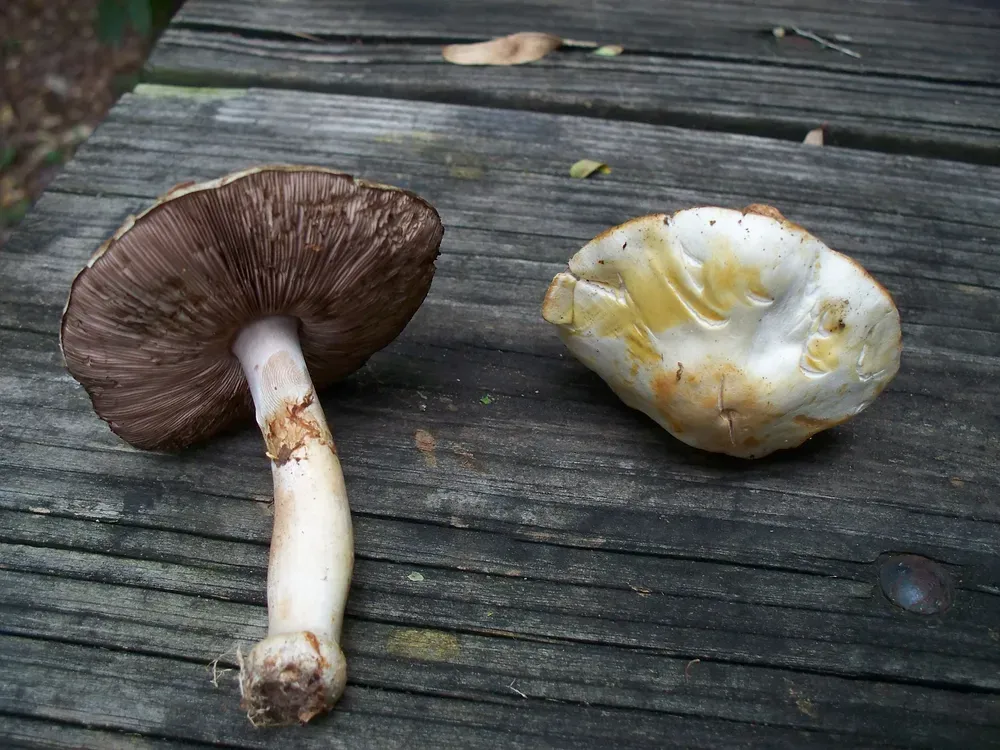
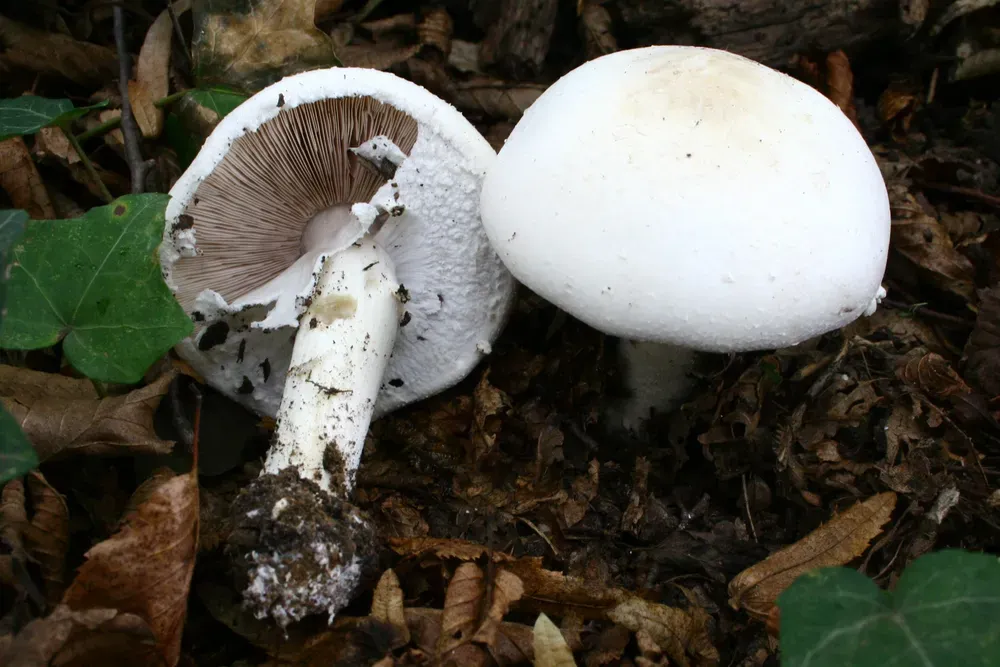
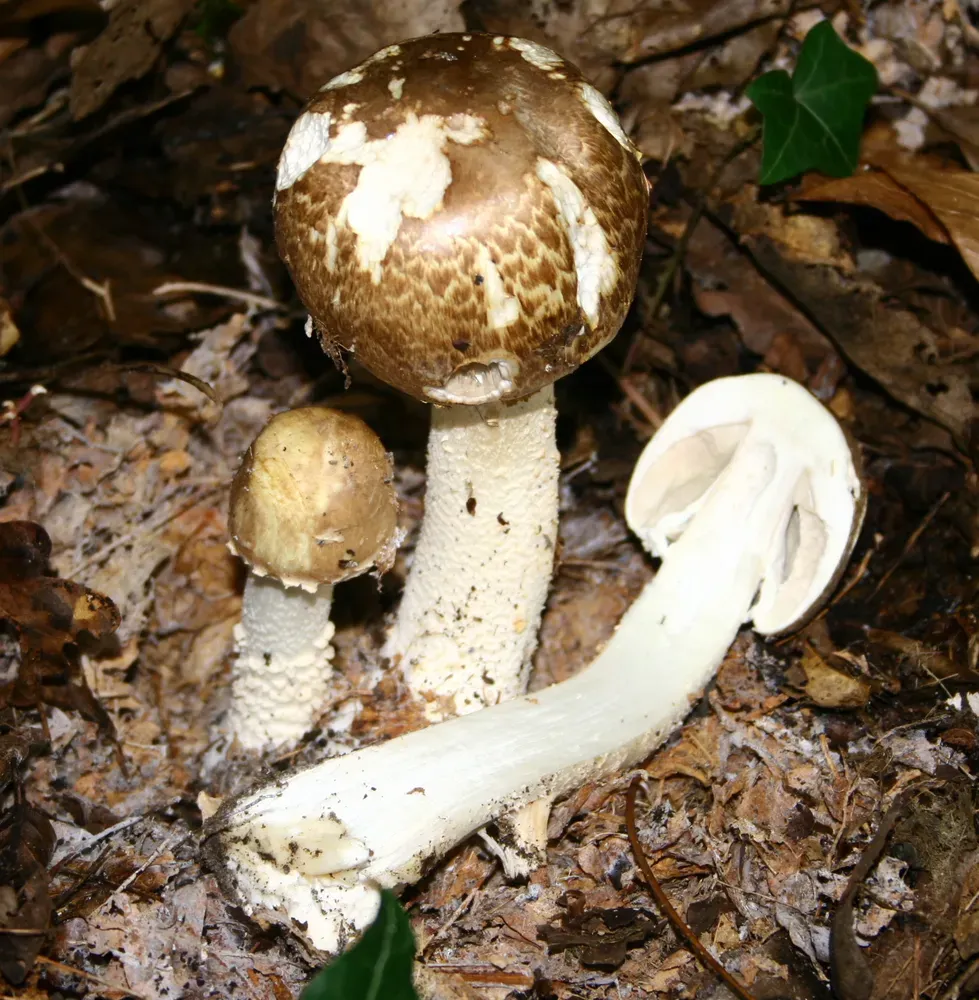
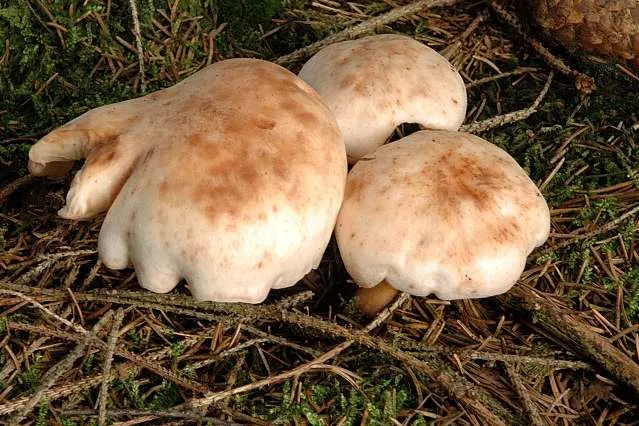
Lookalikes
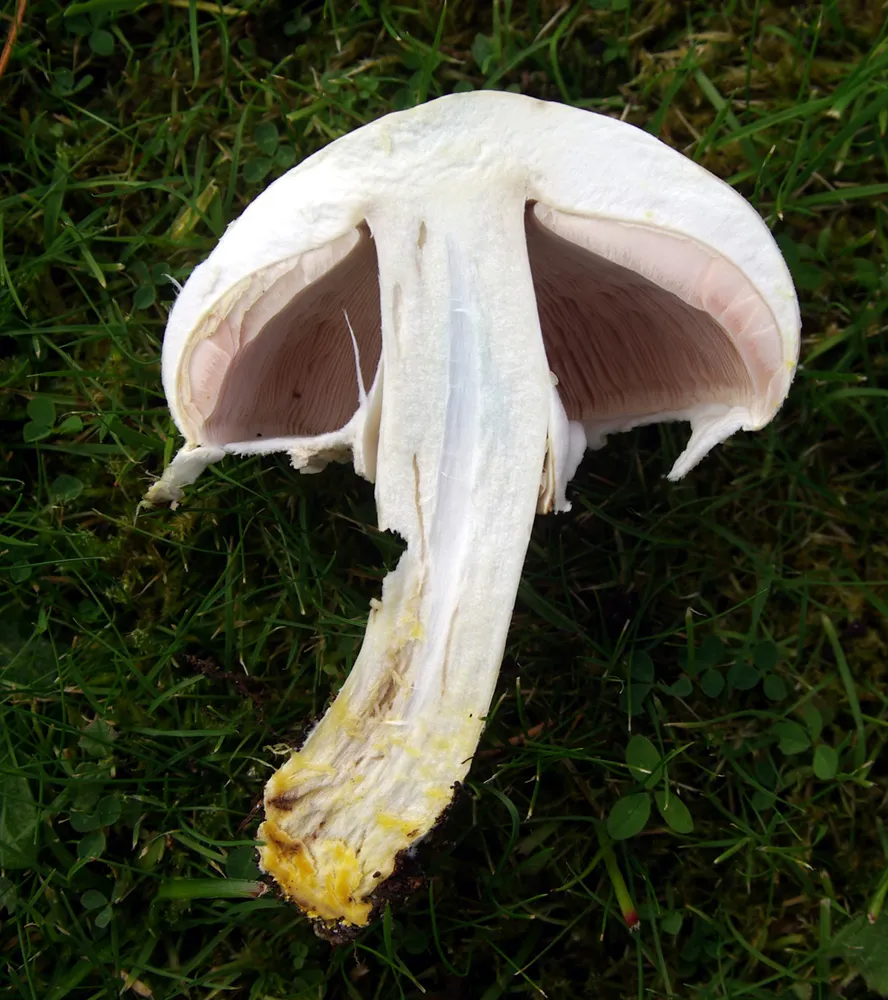
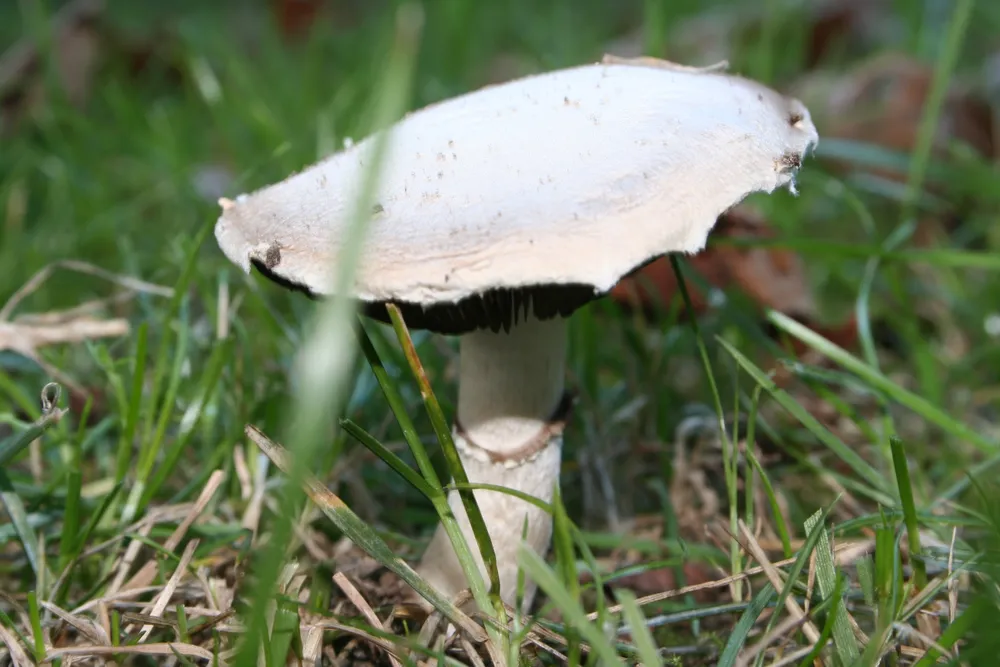
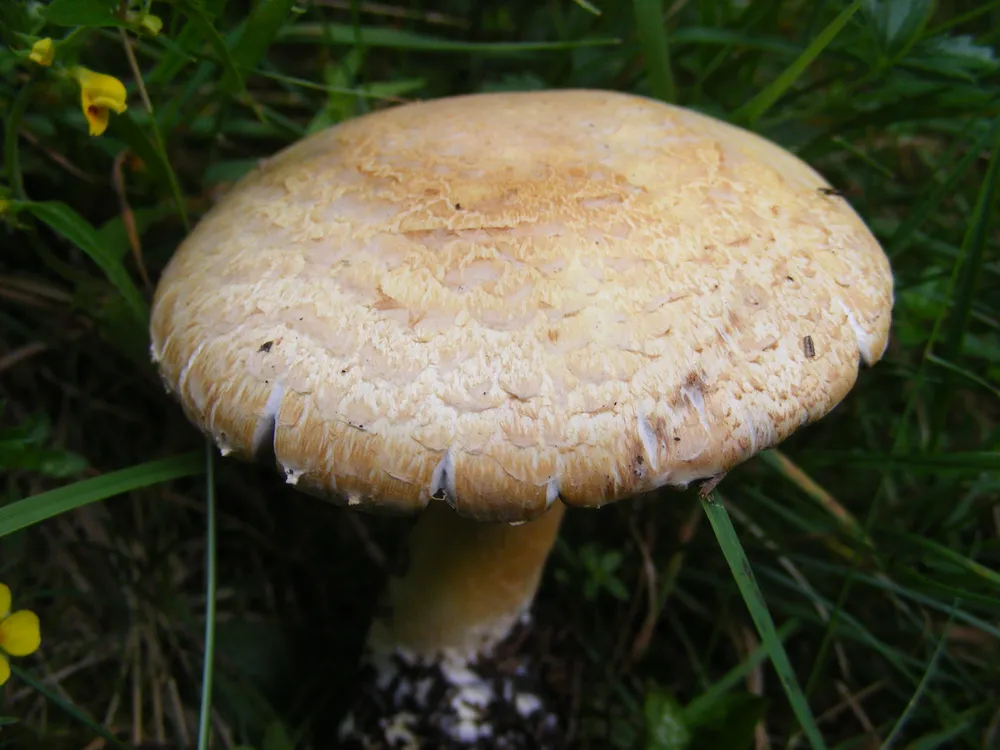
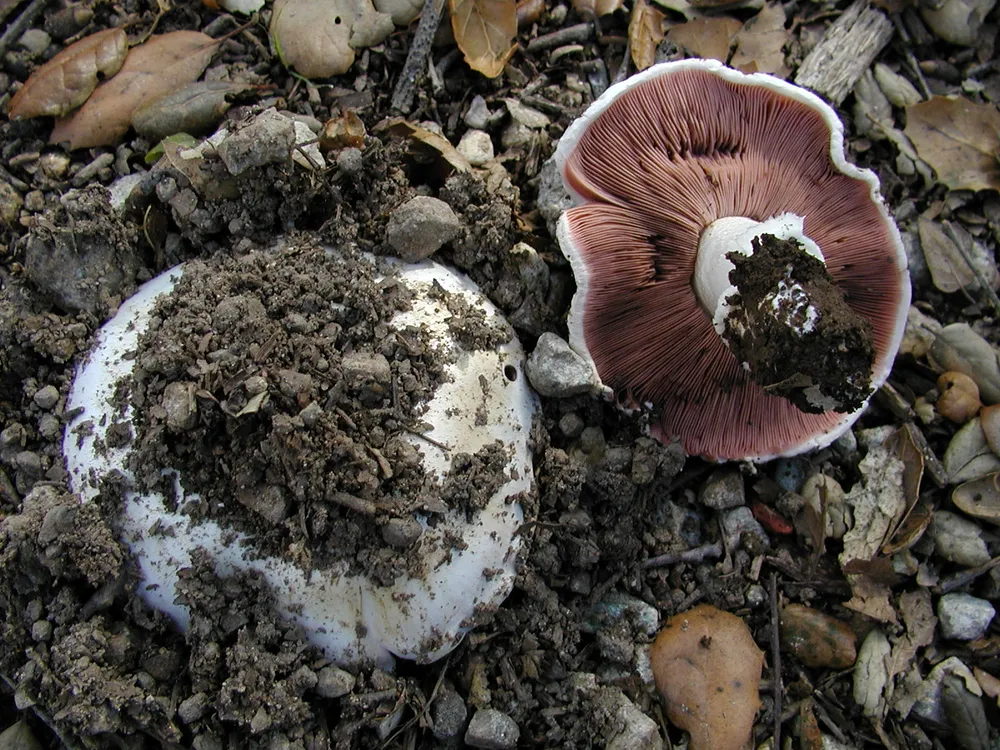
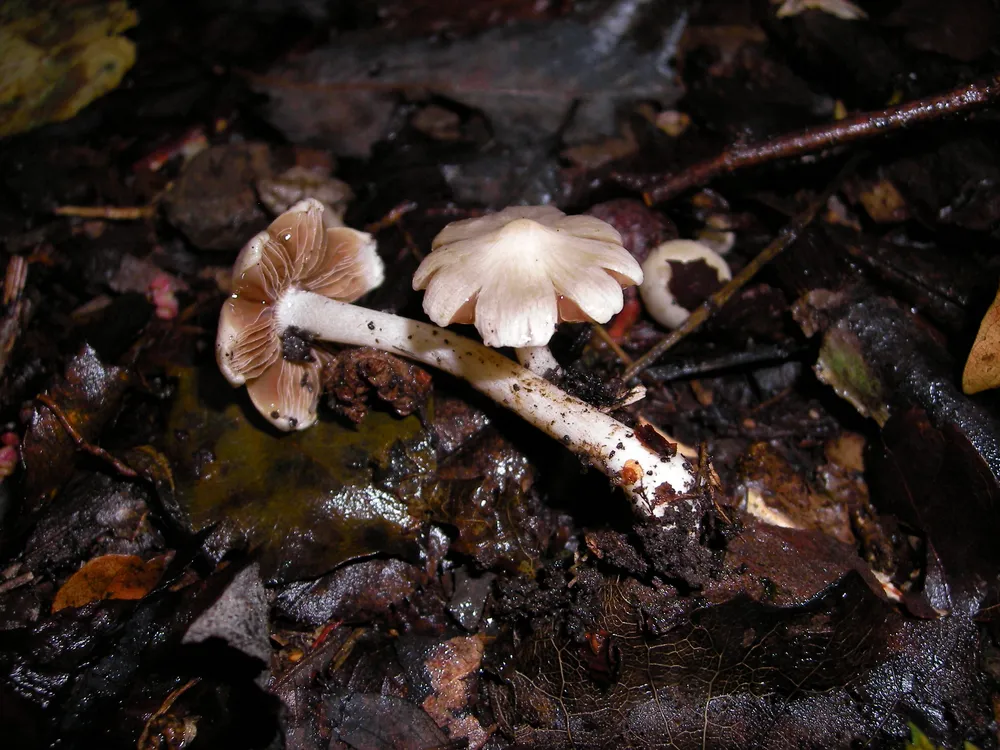
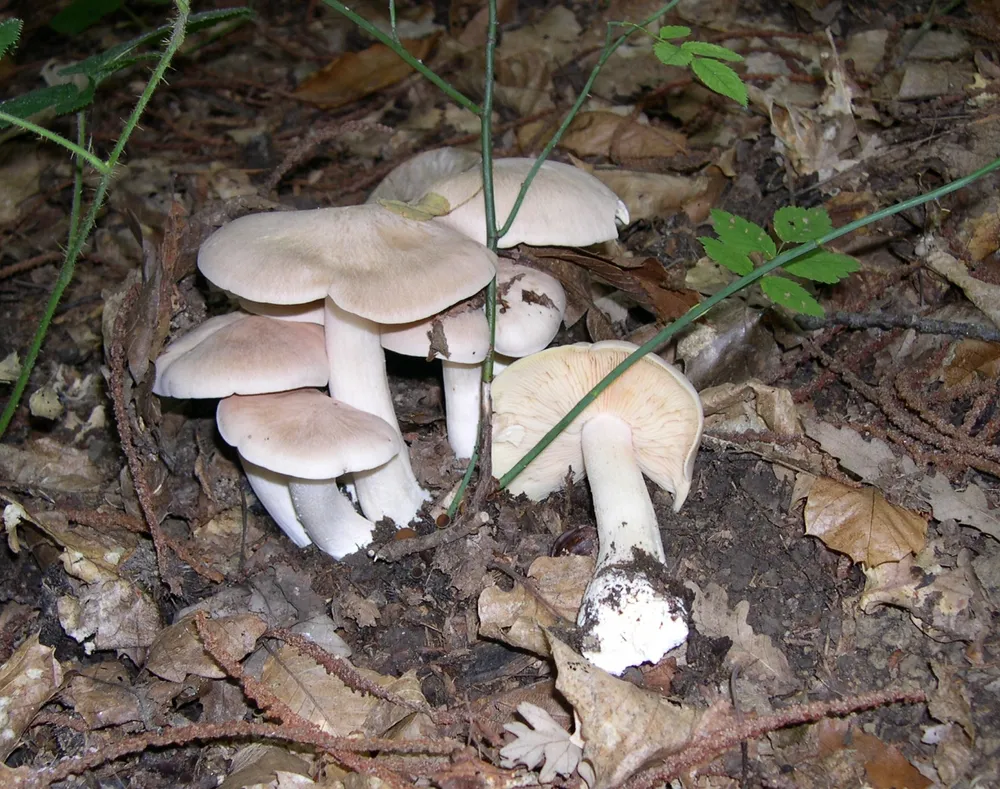
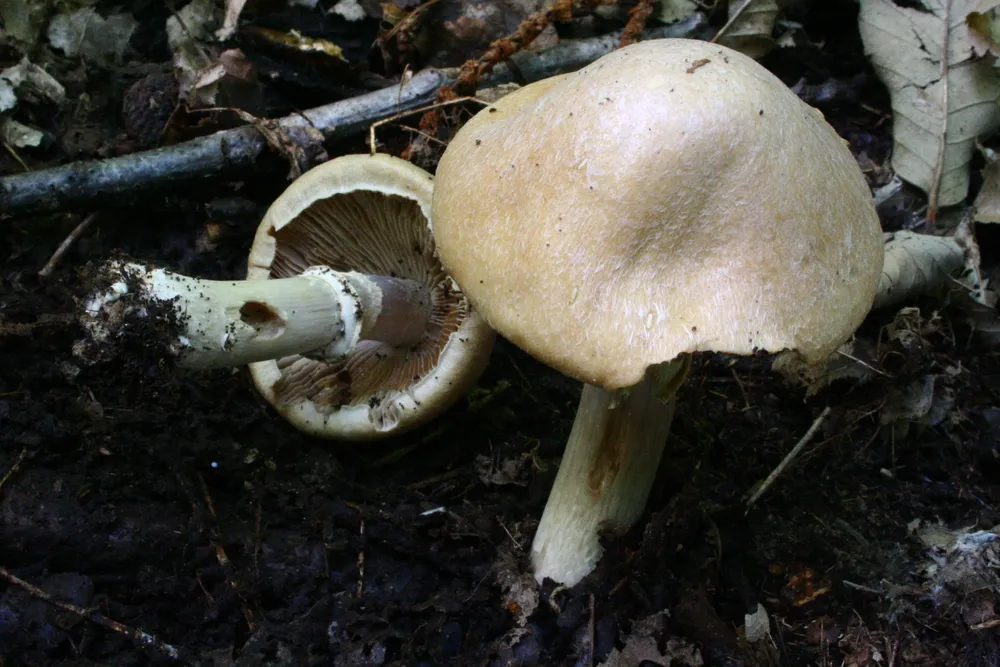
.webp)
.webp)
_Fr._4948278370-2.webp)
Related species
Mushrooms of the same genus and habitat — to study side by side and never mix up.
Related reading

Frequently asked questions
Is it safe to eat?
Yes, without restrictions. Very tasty and fragrant. Young mushrooms are best. Old specimens with wormy flesh are better left behind. The most important caveat — don't confuse it with the yellow stainer or the destroying angel (see the next questions).
How do you tell it from the yellow stainer?
By the smell and where it yellows. The yellow stainer (A. xanthodermus) smells of ink, phenol, medicinal ointment — UNPLEASANT. The horse mushroom smells distinctly of anise and almond — PLEASANT. Yellowing: the yellow stainer shows a bright chrome-yellow color at the base of the stem when damaged, within seconds. The horse mushroom shows slow, slight yellowing in the cap, not at the base of the stem. If the smell is off, or the stem yellows quickly and brightly — don't take it.
How do you tell it from the destroying angel?
Three signs. (1) Gills: in the amanita they're WHITE at every stage. In the Agaricus they're pink when young, dark brown when mature. (2) Volva: the amanita has, at the base of the stem, a sac-like volva, like an eggshell; the Agaricus — has none. Dig up the stem, don't cut it. (3) Habitat: amanitas grow in the forest near trees. The horse mushroom grows in meadows and pastures, away from the forest. Serious confusion is unlikely, but theoretically possible at forest edges.
Why does it smell so pleasantly of anise?
It's natural phenylethanol and related aromatic compounds the mushroom produces as it matures. Young, fresh fruiting bodies contain especially large amounts. It fully comes out when dried — dried horse mushroom powder is one of the most fragrant of all mushroom spices. Store it in a tightly sealed jar.
Where should you look for it?
In meadows, pastures, neglected vegetable gardens, forest edges, floodplain meadows, along dirt roads. Especially abundant near livestock farms and cattle-grazing areas — the mycelium feeds on nitrogen-enriched soil. It often grows in fairy rings 3-15 m across.
Which regions of Ukraine is it found in?
All over the country: the Carpathians (polonyna mountain meadows), Prykarpattia, Polissia (floodplain meadows), the forest-steppe, the steppe. In the steppe zone it's especially abundant in the pastures of the Kherson, Zaporizhzhia and Odesa regions. One of the most common meadow mushrooms.
When should you look for it?
June — November, peaking in August-September. It loves warm, humid weather after summer rains. Fruiting stops after the first light frosts.
What mushrooms is it confused with?
With the field mushroom (A. campestris) — also a meadow species, also edible, only smaller and without the anise smell. With the yellow stainer (A. xanthodermus) — poisonous, smells of medicine. The most dangerous mistake — with young white amanitas at forest edges; but amanitas grow near trees, not in open meadows.
How do you cook it?
Fry it Polish-style with onions and sour cream — a classic dish in which the anise aroma fully opens up. Pickle it with bay leaves and black pepper. Stew it with potatoes and meat. Dry the young caps — you get the most fragrant mushroom seasoning, a spoonful of which turns an ordinary broth into a restaurant dish. Freeze it — always boil it first.
Is Horse mushroom edible or poisonous?
Does Horse mushroom have gills or pores?
What does the cap of Horse mushroom look like?
Sources
- [1]Вікіпедія (українська)
- [2]Атлас грибів України, Зеров Д.К. (1979)
- [3]MycoBank Database
- [4]Index Fungorum
- [5]GBIF
- [6]iNaturalist Ukraine