Gypsy mushroomCortinarius caperatus
Expert-verifiedUpdated October 3, 2026
Passport
- Edibility
- Edible
- Season
- Aug — Oct
- Hymenophore
- Gilled
- Cap color
- Yellow
- Size
- Medium (5–15 cm)
- Smell
- Pleasant
- Reviewed
- Yes ✓
Quick answers
Where to look?
Conifer forest, Mixed forest, Deciduous forest
When does it appear?
Aug — Oct
Active months: August, September, October.
How to recognize it? Three signs
- Cap color: Yellow, Orange, Brown
- Cap shape: Convex
- Smell: Pleasant
Fruiting season
August – October
Description
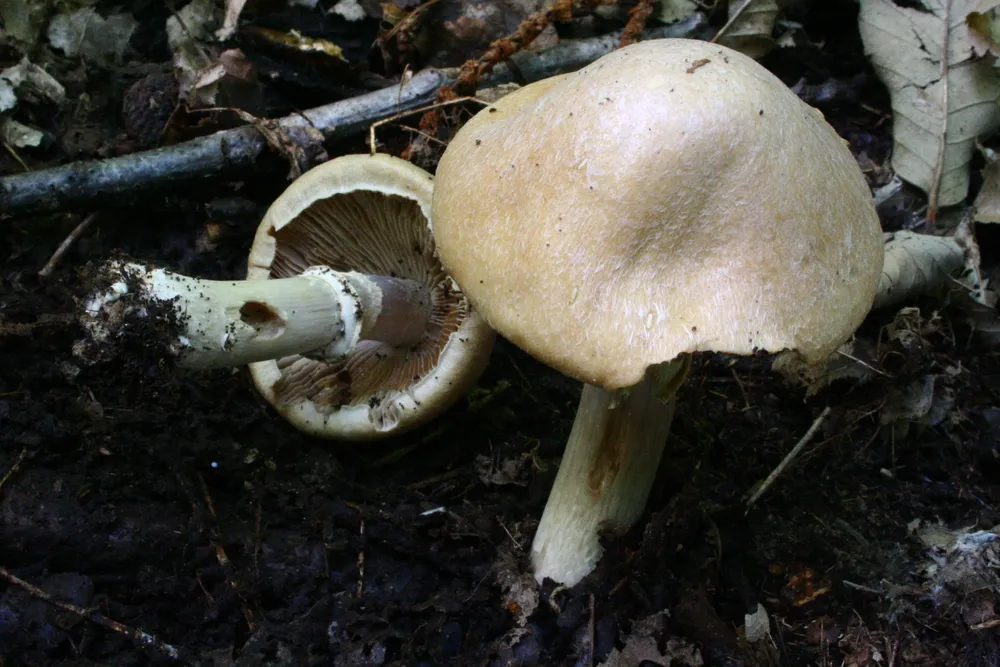
The gypsy mushroom (Cortinarius caperatus, in older sources Rozites caperata) is one of the most popular and recognizable autumn mushrooms in the Carpathians and Polissia. It was once placed in a separate genus, Rozites, and is now classified in Cortinarius, but in the kitchen and in the field it remains a classic. The cap is the color of fine parchment or egg yolk, with a delicate violet bloom in young mushrooms, noticeably wrinkled and seemingly dusted with silvery flour. Its Ukrainian name "kovpak" ("cap") reflects the shape — as if the mushroom has put on a rounded Tyrolean hat.
This is a good edible mushroom with a delicate taste. The flesh is firm and white, with a pleasant mushroomy aroma and a subtle nutty note. Foragers mostly pick young ones with a domed cap — they have the best texture. Good for frying, stewing, pickling and adding to soups. It dries well — a dried gypsy mushroom keeps its aroma for months. In the folk cooking of the Carpathians and the villages of Polissia it is one of the staples of the autumn mushroom stores.
In Ukraine it is common in the Carpathians, the Carpathian foothills and Polissia — in deciduous, mixed and coniferous forests. It forms mycorrhiza with fir, spruce, birch and beech. It loves mossy patches in pine and spruce forests, bilberry thickets and forest edges. Season: August–October, peaking in September. It often grows in groups of 5-20 fruiting bodies. In the forest-steppe and steppe it is rarer; in the southern regions it is almost never found.
Cap
The cap is 4-10 cm across, egg-shaped or hemispherical in young mushrooms, becoming convex and spread out with a broad umbo in the center. The color is ochre-yellow, egg-yolk colored, parchment-yellow, with a characteristic violet-grayish floury bloom in young mushrooms (especially in the center of the cap) — this silvery-violet crust often rubs off with age. The surface is radially wrinkled, as if crumpled. The skin is thin.
Hymenophore
Gilled hymenophore. The gills are fairly crowded, notched where they meet the stem. In young mushrooms they are cream, clay-ochre in mature ones, turning rusty brown with age (because of the spore color). The spore print is rusty brown — typical of the genus Cortinarius. In young mushrooms the gills are covered by a thin cobweb-like veil (the cortina) — the main feature of the genus Cortinarius.
Stem
The stem is 6-12 cm tall, 1-2 cm thick, cylindrical or slightly thickened toward the base. White to cream, with white mycelial fuzz at the base. It has a simple membranous ring in the upper part — a remnant of the partial veil. This ring is a diagnostic feature of the species that sets it apart from other Cortinarius.
Flesh
The flesh is firm, white, meaty. It does not change color when cut. It has a pleasant mushroomy aroma and a delicate nutty taste.
Smell
Pleasantly mushroomy, with a note of fresh nuts. The taste is mild and delicate. One of the finest aromas among forest mushrooms of the genus Cortinarius.
›Scientific synonyms (1)
Rozites caperata (Pers.) P.Karst.
Lookalikes
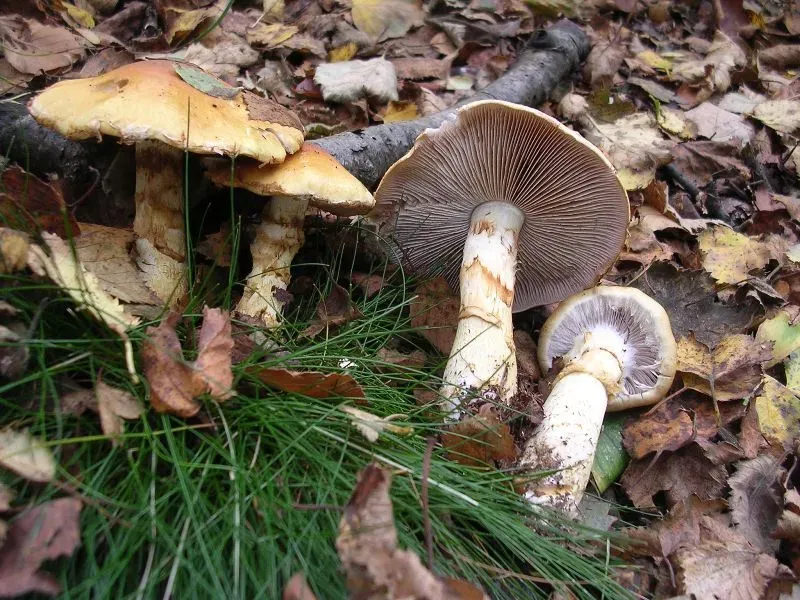
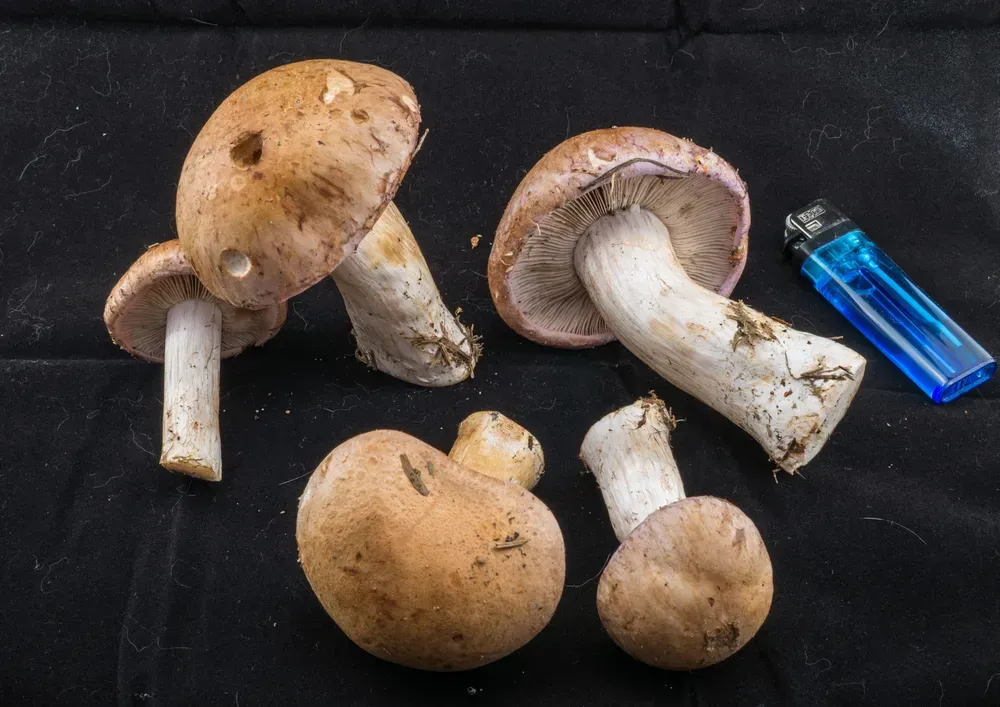
Related species
Mushrooms of the same genus and habitat — to study side by side and never mix up.
_Fr_387091.webp)
Cortinarius multiformis
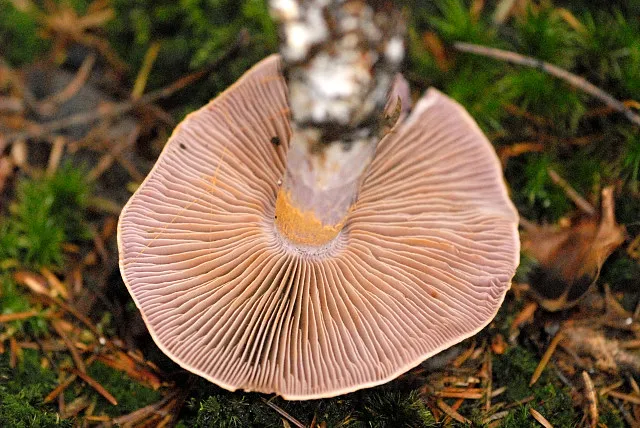
Goatcheese webcap
Cortinarius camphoratus
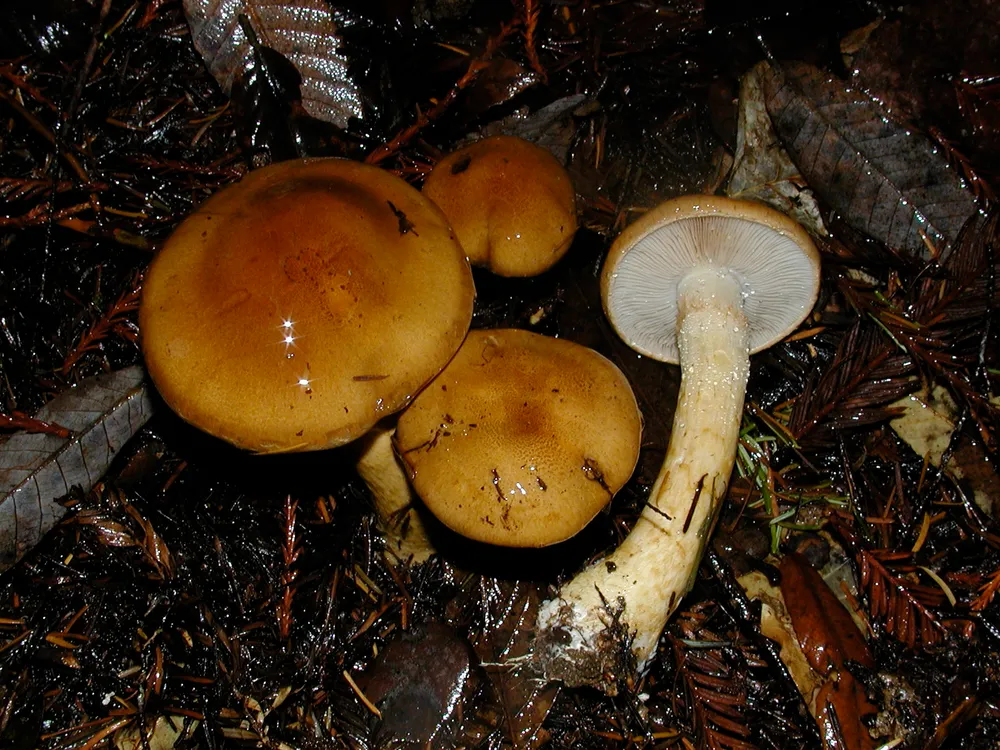
Orange webcap
Cortinarius mucosus
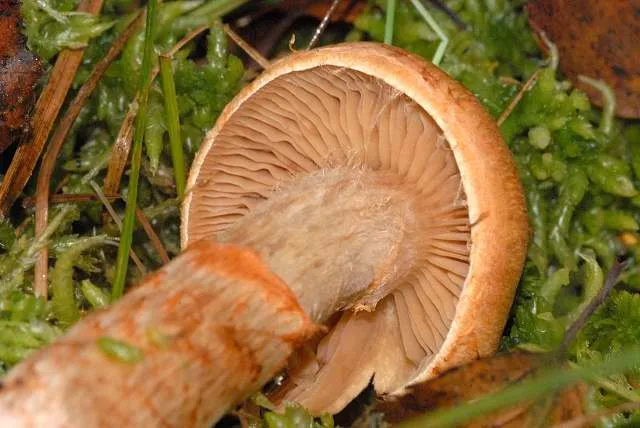
Red banded webcap
Cortinarius armillatus
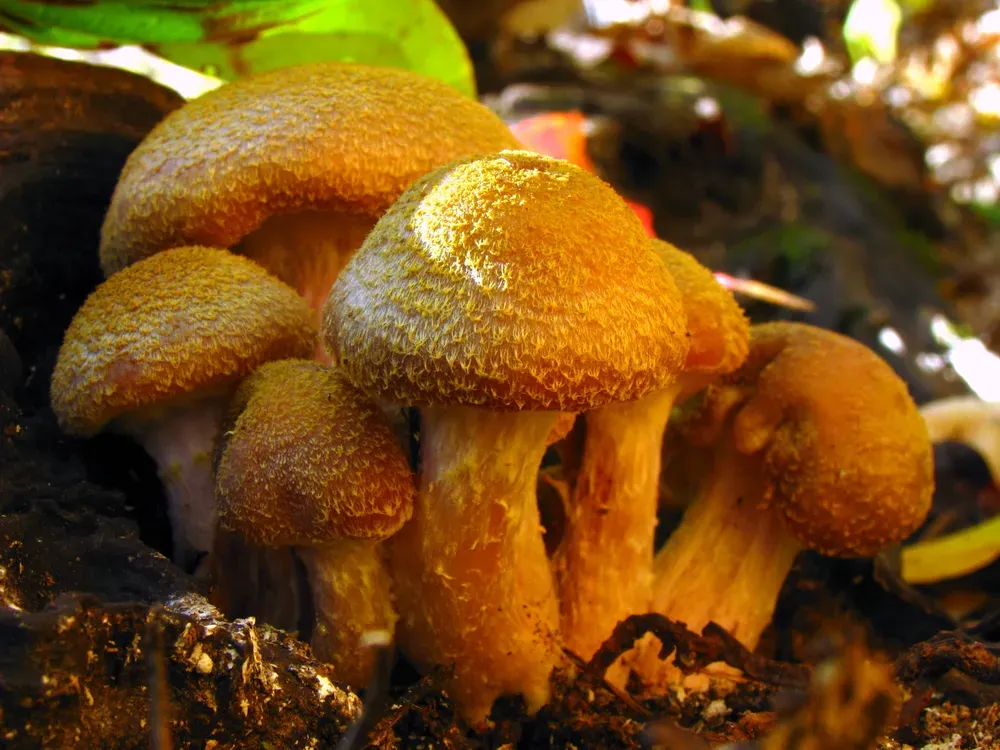
Bulbous honey fungus
Armillaria gallica
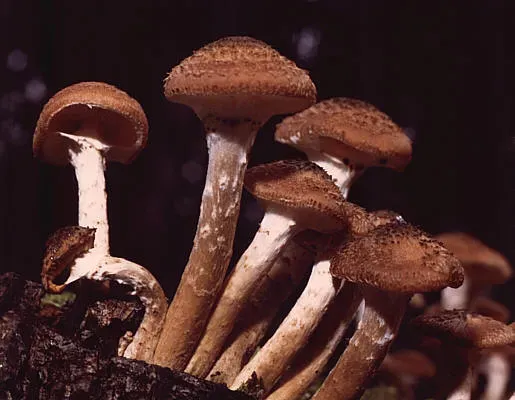
Dark honey fungus
Armillaria ostoyae
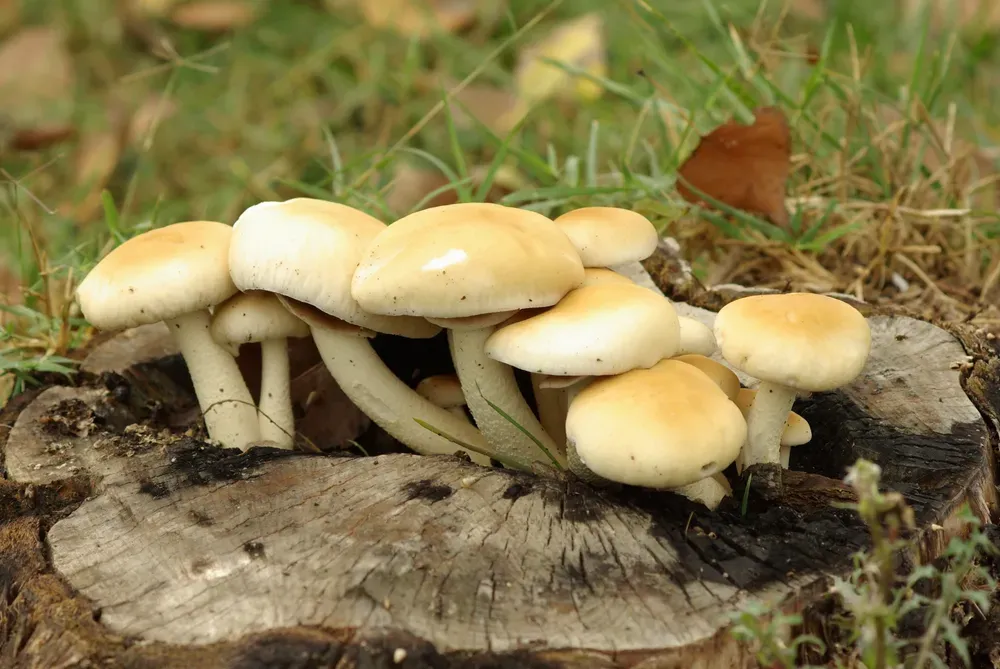
Poplar fieldcap
Cyclocybe aegerita
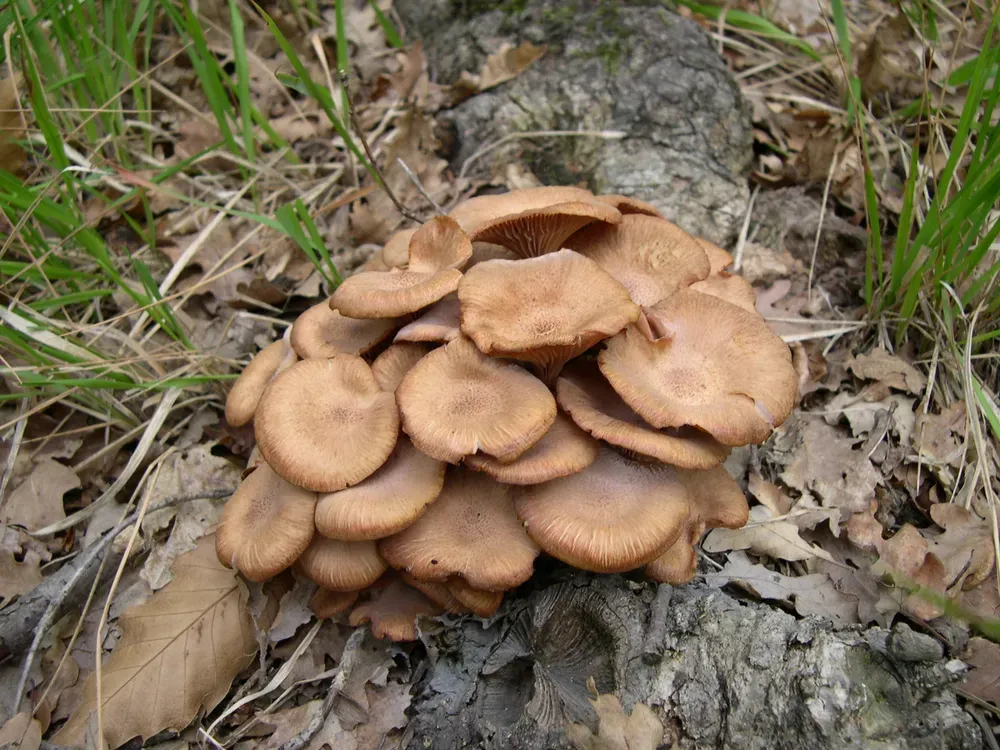
Ringless honey fungus
Desarmillaria tabescens
Frequently asked questions
Is it safe to eat?
Yes, it is an edible mushroom. But this is not a mushroom for beginners, despite its popularity. Many other Cortinarius are dangerously poisonous (especially C. orellanus and C. rubellus with orellanine — a slow-acting kidney toxin whose effects are delayed by 3-14 days). The key features of the gypsy mushroom specifically: a violet-silvery floury bloom on an ochre-yellow wrinkled cap + a membranous ring on the stem. Without confident identification, do NOT pick ANY Cortinarius.
How should you cook it?
Clean it and cut it up. You can fry it right away for 15-20 min with onion and cream — the classic way. Or stew it with potatoes. Young (closed) ones are best for pickling and salting. In soups — add toward the end of cooking. Dried gypsy mushroom is a favorite of Carpathian cooking: cut young ones into thick slices, dry at 40-50°C and store in jars. Soak for 30 min before use.
Why is Cortinarius "not a mushroom for beginners"?
The genus Cortinarius has roughly 2000 species, dozens of which contain orellanine — a slow-acting (3-14 days) toxin that destroys the kidneys. By the time symptoms appear, there is no longer any effective treatment — a kidney transplant is needed. Cortinarius caperatus is considered safe, but confusing it with its dangerous relatives (Cortinarius orellanus, C. rubellus) is a real risk. Hence the rule: pick only mushrooms that have ALL the features of the gypsy mushroom (wrinkled ochre cap with a violet floury bloom + membranous ring on the stem + growing in coniferous/mixed forests of the Carpathians and Polissia).
Where should you look for it?
In coniferous, mixed and deciduous forests — most often with fir, spruce, pine, birch and beech. It loves mossy patches in pine woods, bilberry thickets and forest edges. It forms mycorrhiza. The best finds are on the edges of Carpathian fir forests and in the pine-birch stands of Polissia among the moss. Especially common in pine forests with bilberry.
Which regions of Ukraine is it found in?
Mostly the Carpathians (Zakarpattia, Ivano-Frankivsk, Lviv and Chernivtsi regions), the Carpathian foothills, Polissia (Volyn, Rivne and Zhytomyr regions). In the Forest-Steppe and steppe it is rarer or absent. This is a mushroom of the mountain and Polissia coniferous forests.
When should you look for it?
August — October, peaking in September. It loves a damp, cool autumn with moderate temperatures of +10..+15°C. It does not fruit in the summer heat. It tolerates the first light frosts.
What is it most often confused with?
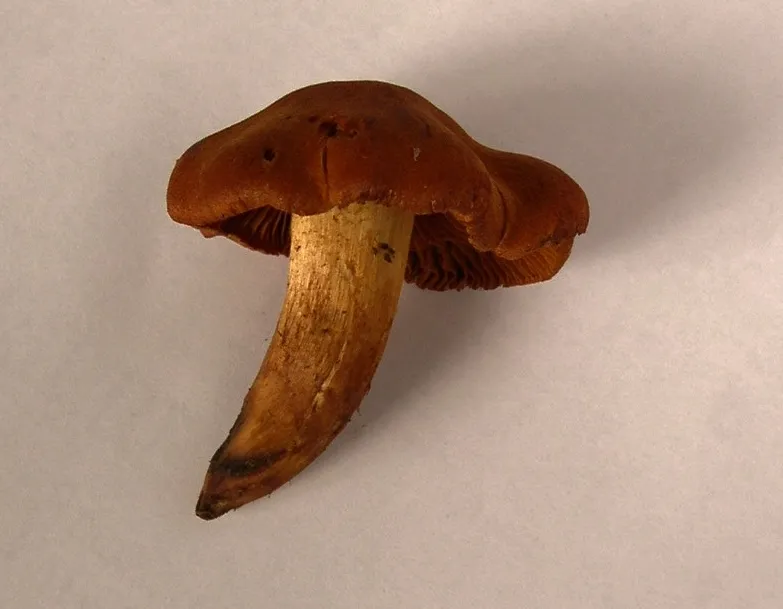
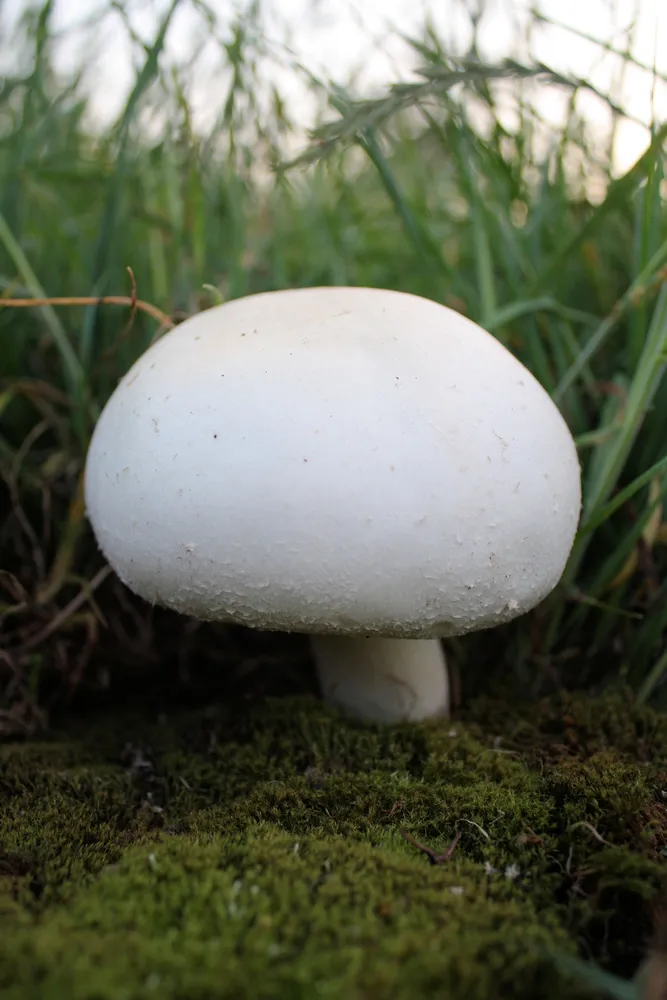
With dangerous Cortinarius — especially C. orellanus and C. rubellus (both containing the slow-acting kidney toxin orellanine): these have an intense orange-brick cap with no wrinkles and no violet bloom. With young Agaricus mushrooms — these have pink/brown gills, while the gypsy mushroom's are clay-ochre. With webcaps of other species — there are dozens of them; don't pick any without confident identification.
How can you identify it for sure?
Four features together: (1) the cap is ochre-yellow and wrinkled, with a violet-silvery floury bloom in young mushrooms; (2) the gills are clay-ochre in mature mushrooms; (3) the stem has a membranous ring; (4) it grows in coniferous or mixed forests of the Carpathians/Polissia, among moss. If all four match, it is Cortinarius caperatus. If even one doesn't match, don't pick it.
Is Gypsy mushroom edible or poisonous?
Does Gypsy mushroom have gills or pores?
What does the cap of Gypsy mushroom look like?
What does the stem of Gypsy mushroom look like?
Sources
- [1]Вікіпедія (українська)
- [2]Атлас грибів України, Зеров Д.К. (1979)
- [3]MycoBank Database
- [4]Index Fungorum
- [5]GBIF
- [6]iNaturalist Ukraine