THIS DATA HAS NOT BEEN VERIFIED BY AN EXPERT. Use at your own risk.
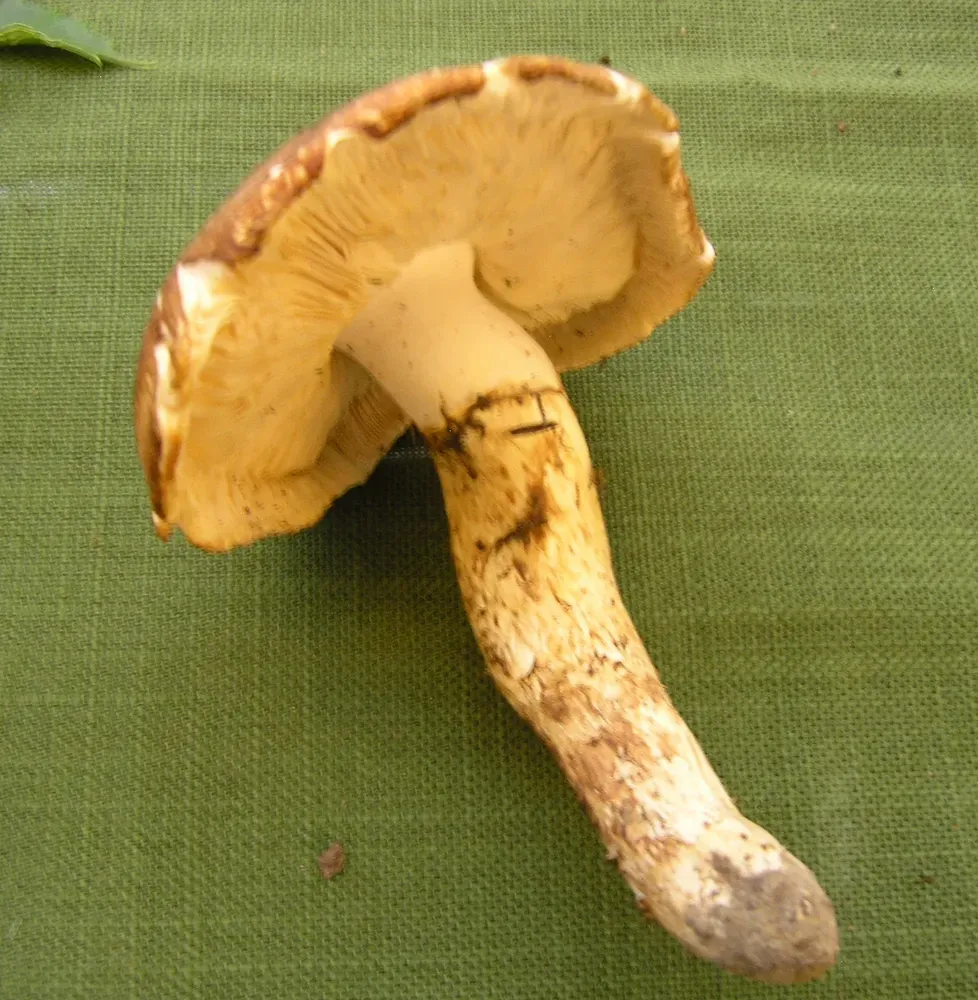
Tricholoma caligatum
Under reviewUpdated October 3, 2026
Passport
- Edibility
- Conditionally edible
- Season
- Sep — Nov
- Hymenophore
- Gilled
- Cap color
- Brown
- Size
- Medium (5–15 cm)
- Smell
- Pleasant
- Reviewed
- Under review
Quick answers
Where to look?
Conifer forest, Deciduous forest, Mixed forest
When does it appear?
Sep — Nov
Active months: September, October, November.
How to recognize it? Three signs
- Cap color: Brown, Dark brown
- Cap shape: Convex, Flat
- Smell: Pleasant
Fruiting season
September – November
Description
Tricholoma caligatum is a handsome brown-scaled knight, a close relative of the famous Japanese matsutake. Below the ring its stem is clad in dark scaly bands, like a boot, which is what its folk name refers to. The mushroom has a strong spicy aroma reminiscent of nutmeg or cinnamon. It is a mycorrhizal mushroom that partners with conifers and broadleaf trees, most often pine and oak, and prefers warmer southern and mountain areas.
In Ukraine, Tricholoma caligatum occurs in pine, oak and mixed forests, mainly in Crimea, the Carpathians and the southern regions, on sandy and limestone soils. Its fruiting season falls in autumn, and in mild climates also in early winter. The mushroom appears singly or in small groups.
In terms of edibility, Tricholoma caligatum is a conditionally edible mushroom. Its dense, aromatic flesh is prized, but it is often bitter, especially in specimens that grew under broadleaf trees; the bitterness is removed by boiling. Non-bitter specimens come close to matsutake in taste and are considered a delicacy. Because of the bitterness and the need for pre-treatment, the mushroom is picked only when young and must always be boiled before cooking.
Cap
The cap of Tricholoma caligatum is 6 to 15 centimeters across. When young it is hemispherical with an inrolled margin, opening with age to convex and flat. The surface is dry, covered with large pressed-down fibrous scales of chestnut-brown to dark brown on a paler background. The scaly brown cap gives the mushroom a stout, eye-catching look.
Hymenophore
The hymenophore is gilled. The gills are attached to the stem or notched, crowded, whitish or cream, developing rusty-brown spots with age. The spore print is white. Pale gills with reddish spots, together with the ring on the stem, help you recognize this species.
Stem
The stem is cylindrical, dense, 4 to 12 centimeters tall. Its defining feature is a felty ring, below which the stem is covered with dark bands of scales that look like a pulled-on boot — hence the name. Above the ring the stem is pale, below it brown and scaly. There is no volva. The combination of a scaly cap, a ring and a scaly "boot" sets this species apart.
Flesh
The flesh is white, thick, dense and fibrous, and barely changes color when cut. The taste is often bitterish, especially in mushrooms from under broadleaf trees; non-bitter specimens have a pleasant taste close to matsutake. Because of possible bitterness, the flesh is boiled before cooking. Its most characteristic feature is a strong spicy aroma.
Smell
The smell is strong, spicy and penetrating, reminiscent of nutmeg, cinnamon or pepper — one of the defining features of the species. It is by this characteristic spicy aroma, together with the scaly cap and the boot on the stem, that Tricholoma caligatum is easiest to recognize.
›Scientific synonyms (2)
Armillaria caligata (Viv.) Gillet (1874), Agaricus caligatus Viv. (1834)
Lookalikes
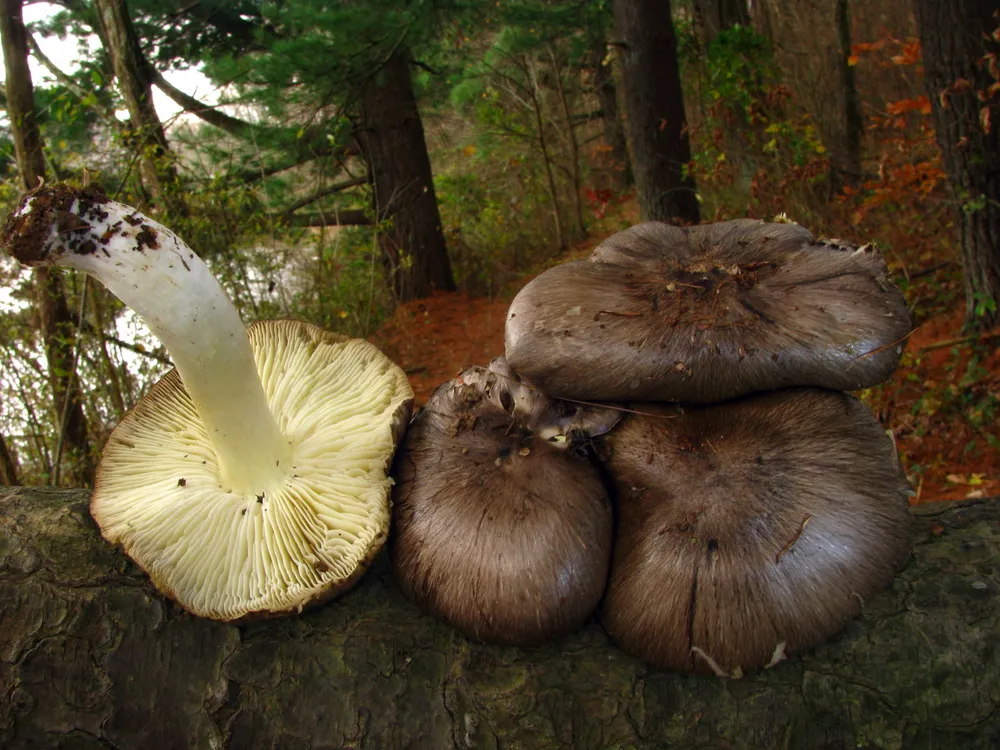
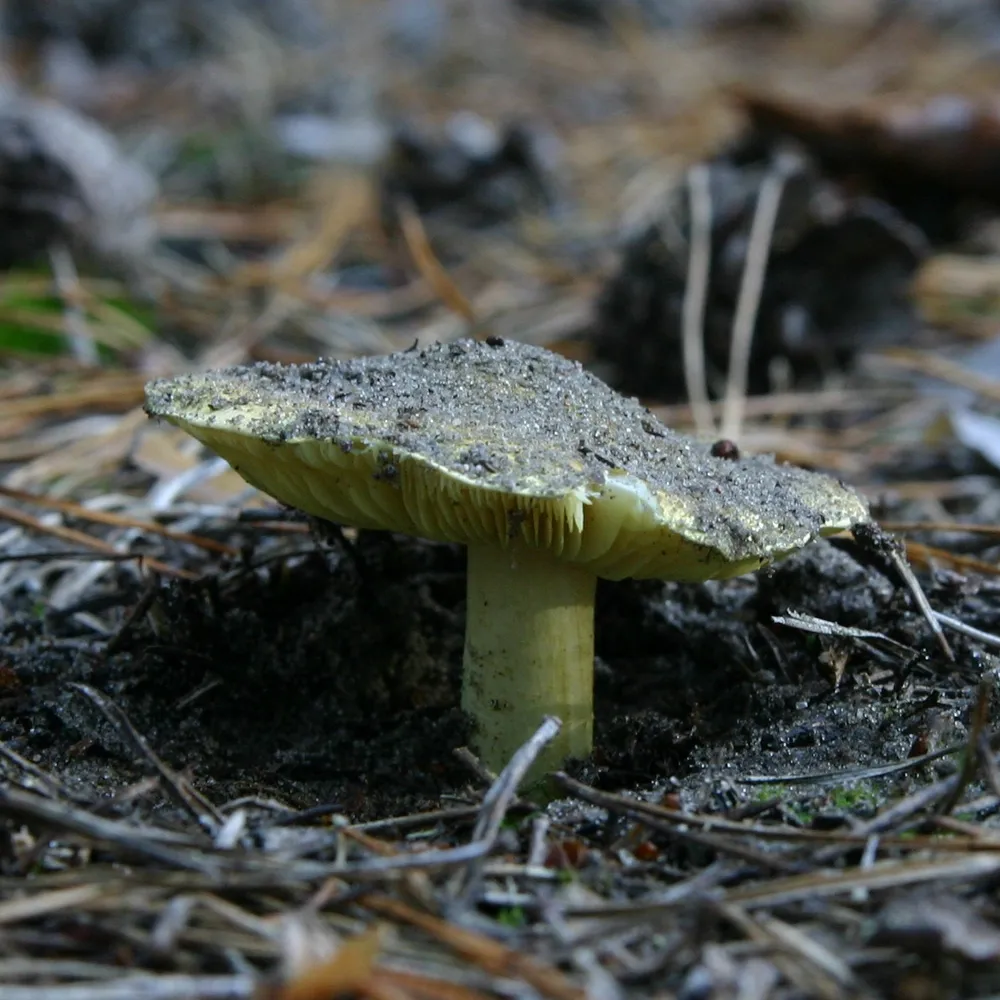
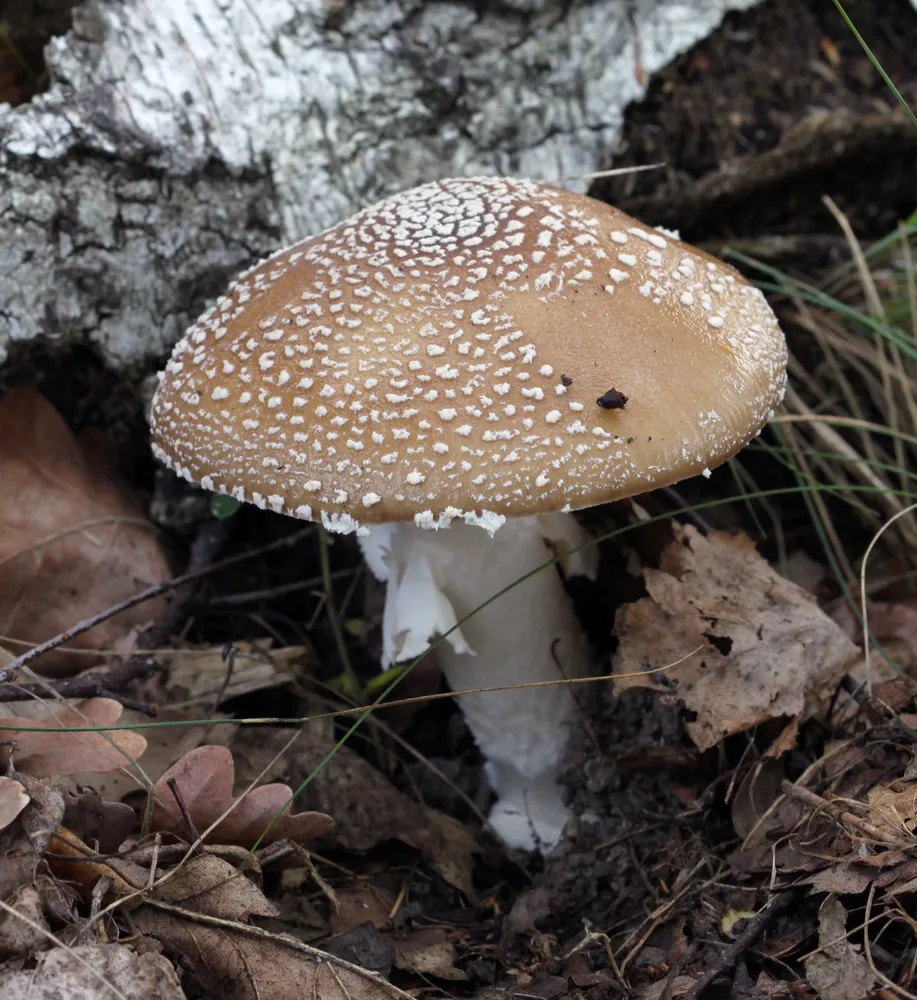
Related species
Mushrooms of the same genus and habitat — to study side by side and never mix up.
_Ricken_185798.webp)
Booted knight
Tricholoma focale
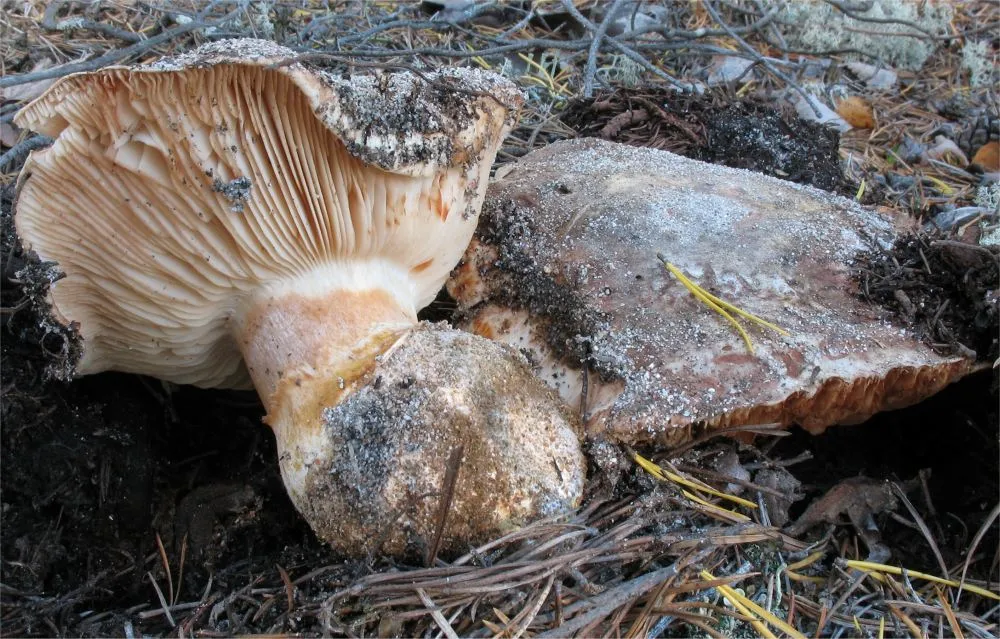
Giant knight
Tricholoma colossus
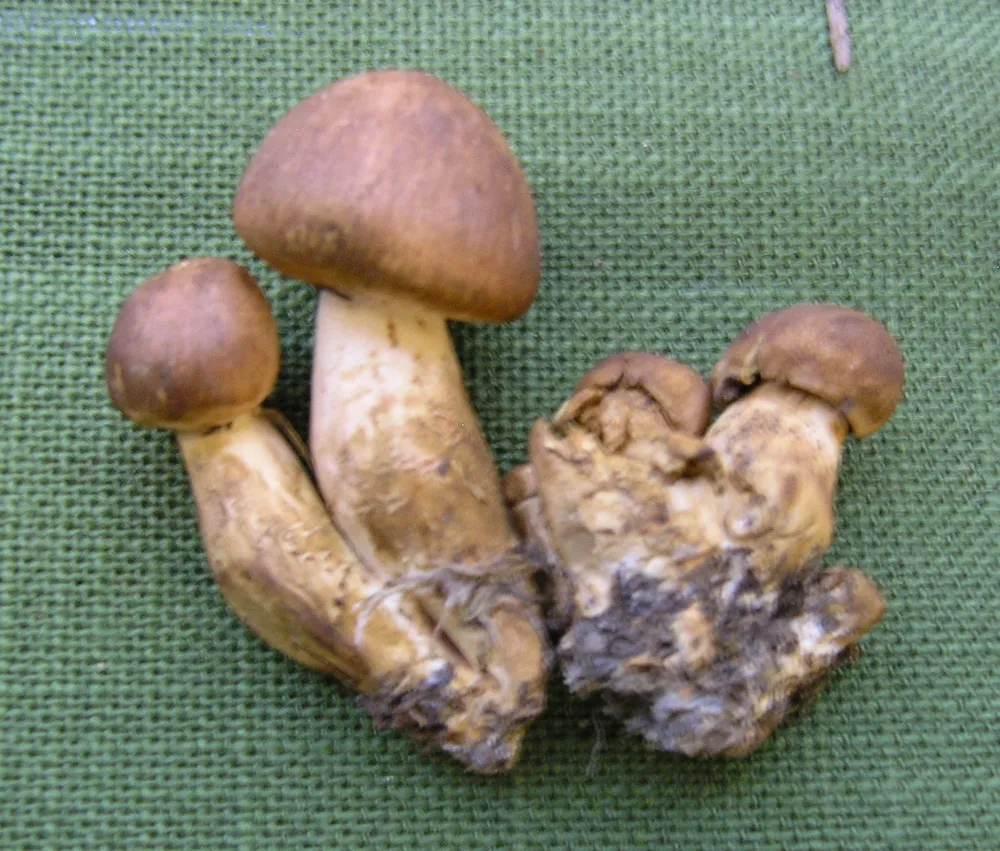
Matt knight
Tricholoma imbricatum
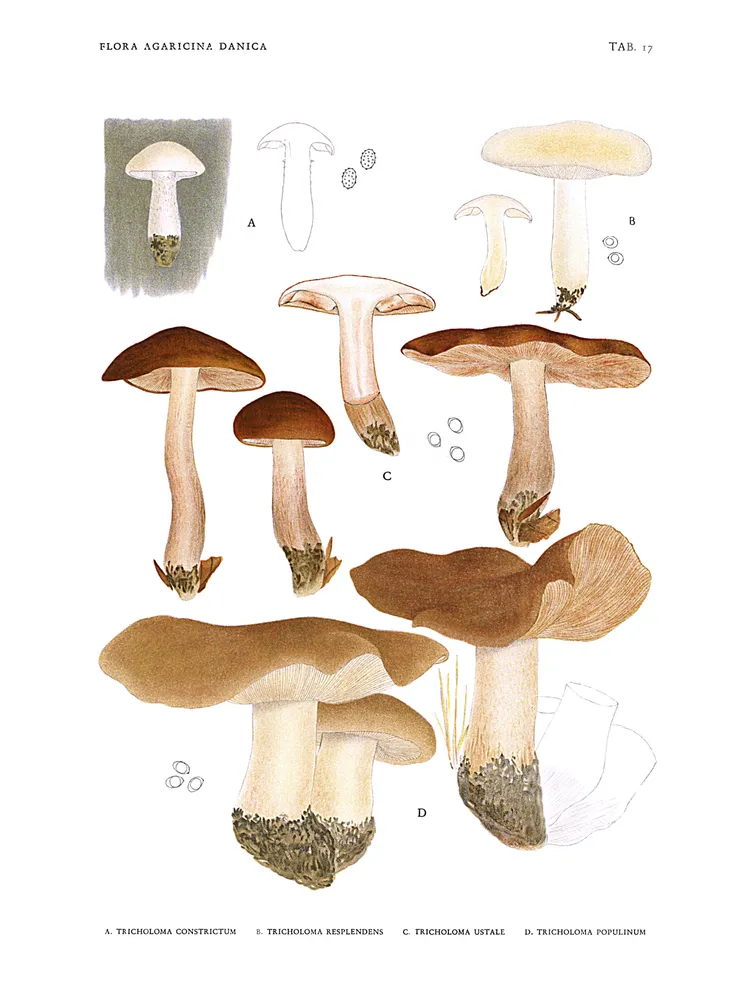
Poplar knight
Рядовка тополева
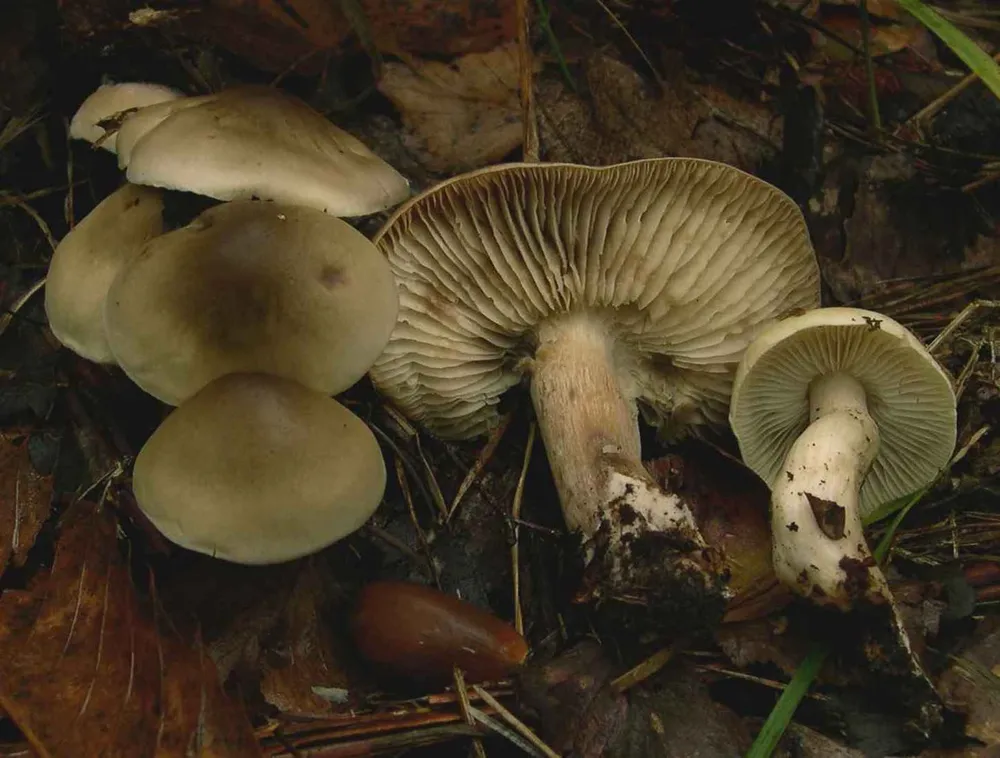
Soapy knight
Tricholoma saponaceum
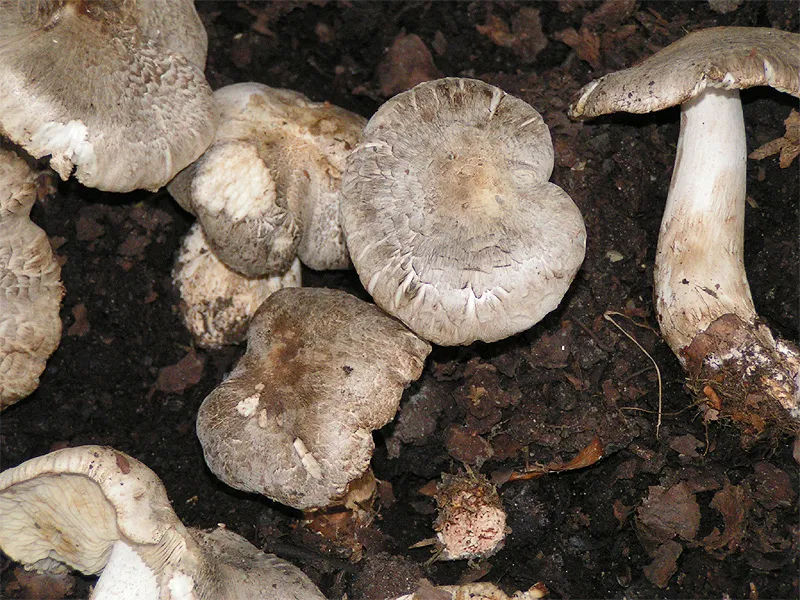
Tiger tricholoma
Tricholoma pardinum
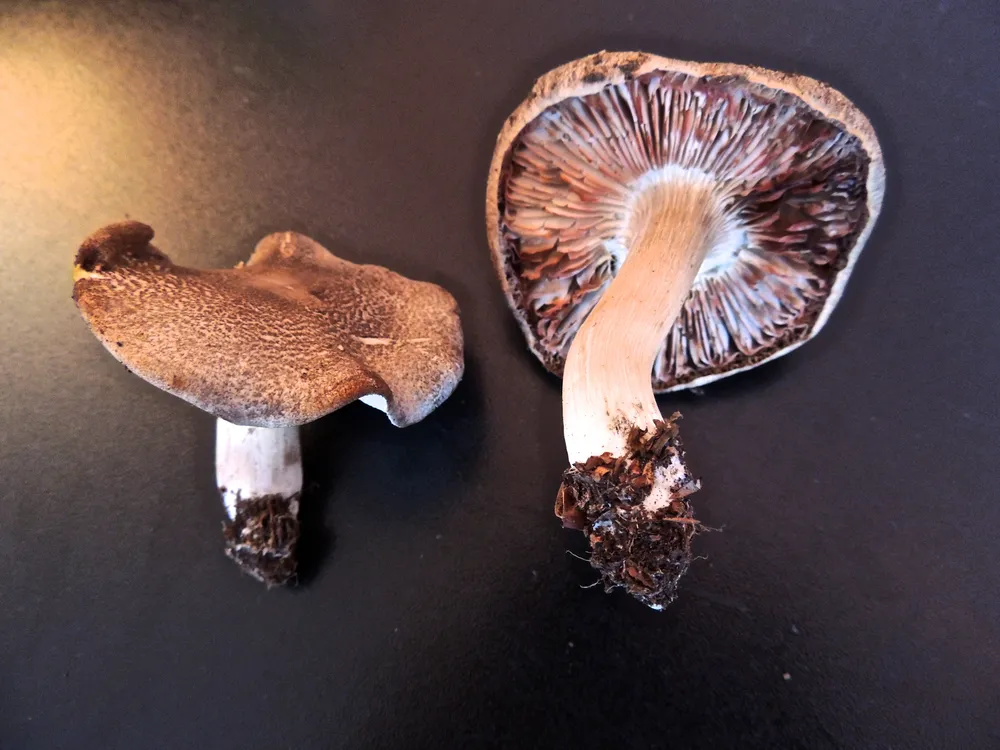
Tricholoma orirubens
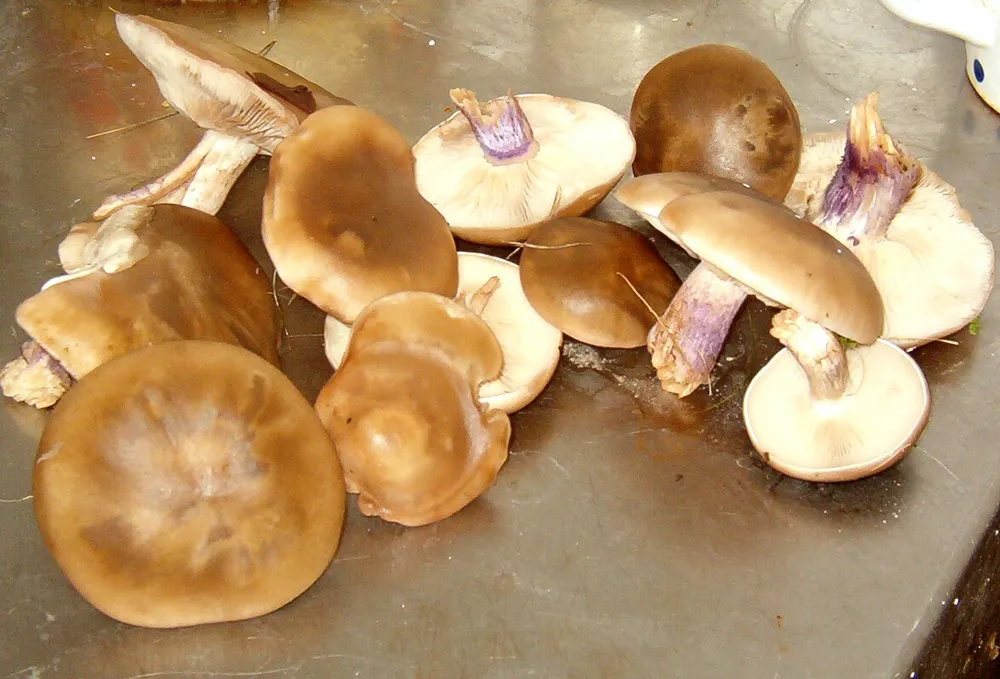
Field blewit
Collybia personata
Frequently asked questions
Is Tricholoma caligatum edible or poisonous?
Does Tricholoma caligatum have gills or pores?
What does the cap of Tricholoma caligatum look like?
What does the stem of Tricholoma caligatum look like?
What do Tricholoma caligatum smell and taste like?
Where does Tricholoma caligatum grow?
Which trees does Tricholoma caligatum grow under?
When should you pick Tricholoma caligatum?
What can Tricholoma caligatum be confused with?
How do you cook Tricholoma caligatum?
Can you dry Tricholoma caligatum?
What is the scientific name of Tricholoma caligatum?
Sources
- [1]Вікіпедія (українська)
- [2]Атлас грибів України, Зеров Д.К. (1979)
- [3]MycoBank Database
- [4]Index Fungorum
- [5]GBIF
- [6]iNaturalist Ukraine