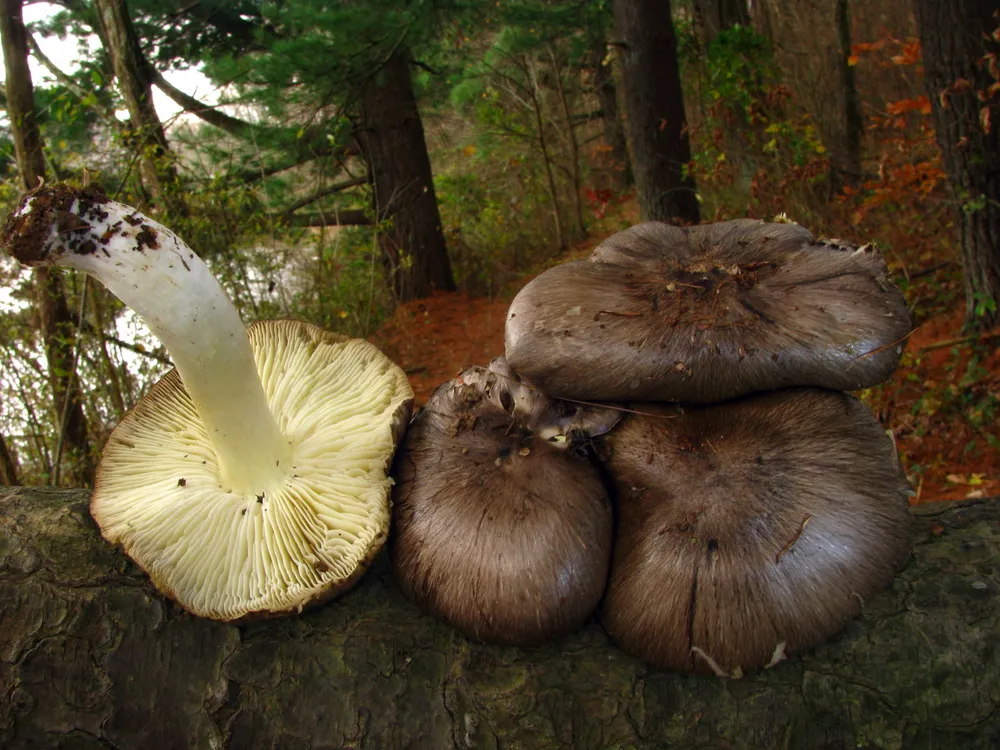
CharbonnierTricholoma portentosum
Expert-verifiedUpdated October 3, 2026
Passport
- Edibility
- Edible
- Season
- Oct — Nov
- Hymenophore
- Gilled
- Cap color
- Grey
- Size
- Medium (5–15 cm)
- Smell
- Floury
- Reviewed
- Yes ✓
Quick answers
Where to look?
Conifer forest, Mixed forest
When does it appear?
Oct — Nov
Active months: October, November.
How to recognize it? Three signs
- Cap color: Grey, Violet, Olive
- Cap shape: Umbonate
- Smell: Floury, Pleasant
Fruiting season
October – November
Description
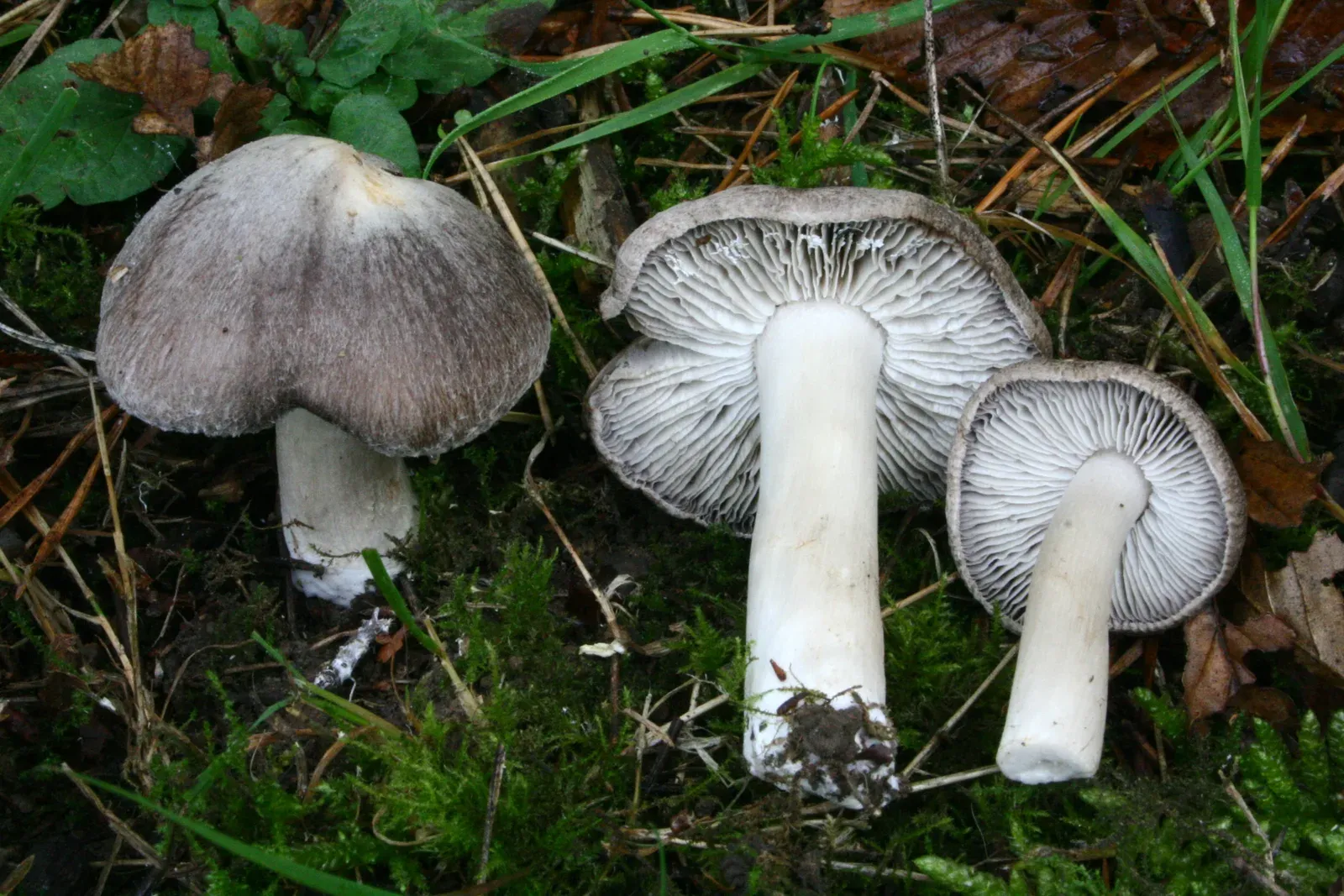
The charbonnier, or streaked knight (Tricholoma portentosum), is a tasty late-autumn mushroom with a distinctive gray-violet cap decorated with dark radial streaks of fibers (hence its second folk name, "streaked knight"). The Latin epithet portentosum means "marvelous, remarkable" — a nod to its striking looks. The cap is 5-12 cm across, fleshy, convex to flattened-expanded with a low bump in the center, gray with a distinct violet or greenish tinge, with dark radial fibrous streaks.
Edible, with excellent culinary quality — the flesh is firm, white with a slight yellowish tinge, with a pleasant mealy-cucumber smell and taste. No bitterness, no soapy smell, no toxic compounds. One of the few gray knights worth picking. Older literature lists it as "edible, 2nd category"; today it is valued even more highly, because it fruits late, when most other mushrooms are already gone.
The main diagnostic feature is the combination of: (1) a gray-violet or gray-greenish cap with distinct dark radial streaks, (2) a yellowish tone in the gills and flesh, (3) a pleasant mealy-cucumber smell, (4) it grows in pine and mixed forests in late autumn (often after the first light frosts), (5) the flesh does not turn pink or change color when cut.
The main risk is confusing it with the poisonous Tricholoma pardinum (tiger tricholoma): it is much larger (8-15 cm), with a distinctly scaly cap (not streaked but scaly), fleshier, with no yellowish tone in the gills. T. portentosum is slimmer and smaller, with fine radial streaks. It can also be confused with T. saponaceum (the soapy knight) — that one has a distinct soapy smell and a pinkening reaction.
In Ukraine, Tricholoma portentosum is common in pine and spruce-pine forests: the Carpathians, Prykarpattia, Polissia, and parts of the forest-steppe. A mycorrhizal partner of pine and spruce. Season: October — November, right up to the first frosts — one of the latest mushrooms of the season.
Cap
Cap 5-12 cm across, when young bell-shaped or convex-conical, becoming with age flat-convex with a low, broad bump in the center. The skin is smooth, slightly slimy in wet weather, dry and matte in dry weather. Color: gray-violet, gray-greenish, olive-gray, darker in the center, with distinct fine dark radial fibrous streaks — a diagnostic feature. The margin is even, slightly wavy in old caps, inrolled in young ones.
Hymenophore
Gilled hymenophore — the gills are notched (sinuate) where they attach to the stem, moderately crowded, fleshy. When young they are whitish with a faint yellowish tinge, becoming with age creamy-yellowish, especially toward the edge. The yellowish tone of the gills is a diagnostic feature. Spore print white.
Stem
Stem 5-10 cm tall, 1.5-2.5 cm thick, firm, fleshy, cylindrical. Color: whitish with a characteristic yellowish tinge, especially toward the base. Surface smooth with fine lengthwise fibers. No ring.
Flesh
Flesh firm, white in the cap, white with a yellowish tinge in the stem. Does not change color when cut — it does not turn pink (unlike T. saponaceum) and does not darken. Smell distinctly mealy-cucumber, taste mild, pleasantly mushroomy with a hint of flour, no bitterness.
Smell
A distinct, pleasant mealy-cucumber smell — like freshly ground flour with a note of fresh cucumbers. A diagnostic feature, clear when you cut it.
›Scientific synonyms (4)
Agaricus portentosus Fr. (1821), Gyrophila portentosa (Fr.) Quél. (1886), Gyrophila sejuncta var. portentosa (Fr.) Quél. (1896), Melanoleuca portentosa (Fr.) Murrill (1914)
Lookalikes
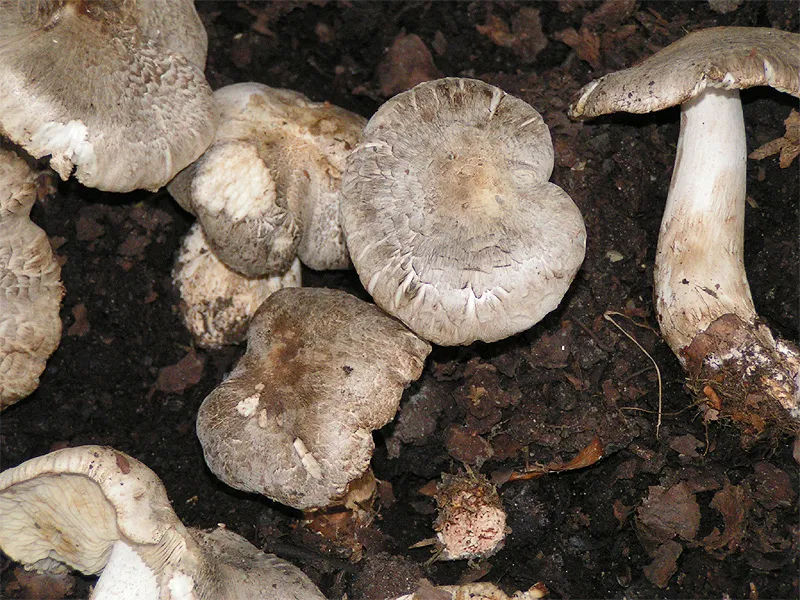
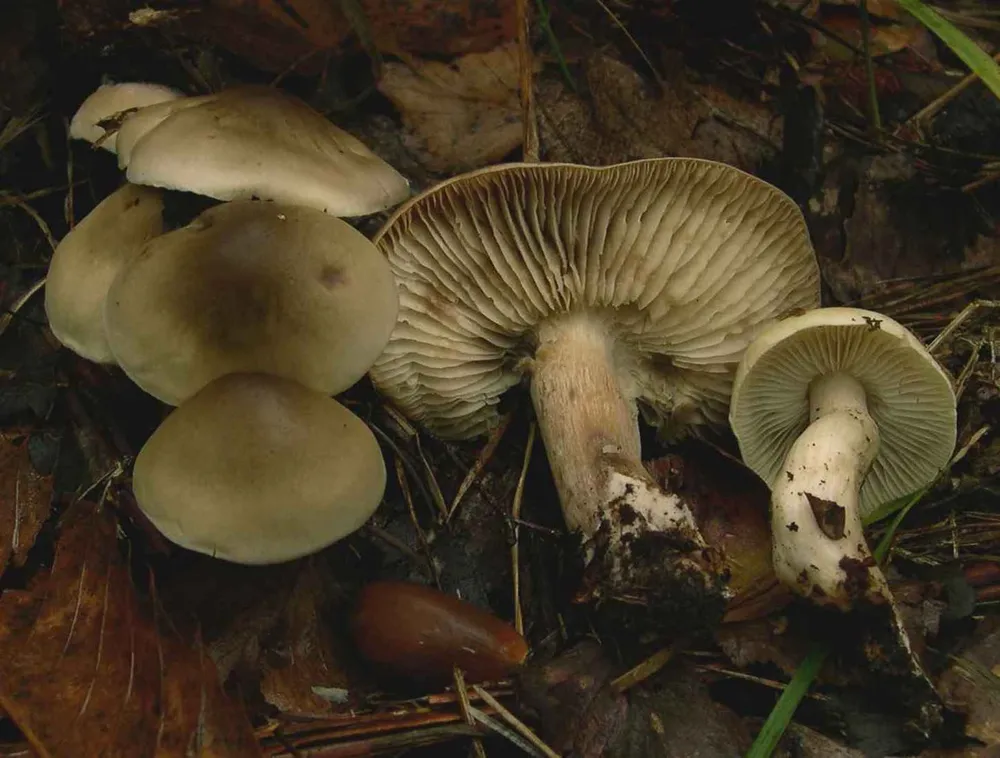
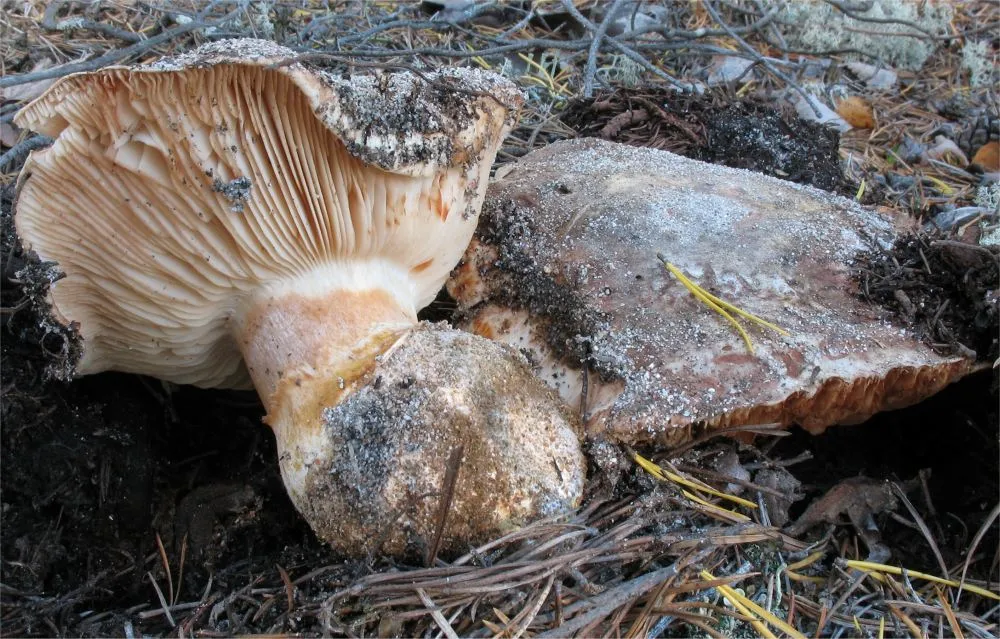
Related species
Mushrooms of the same genus and habitat — to study side by side and never mix up.
_Ricken_185798.webp)
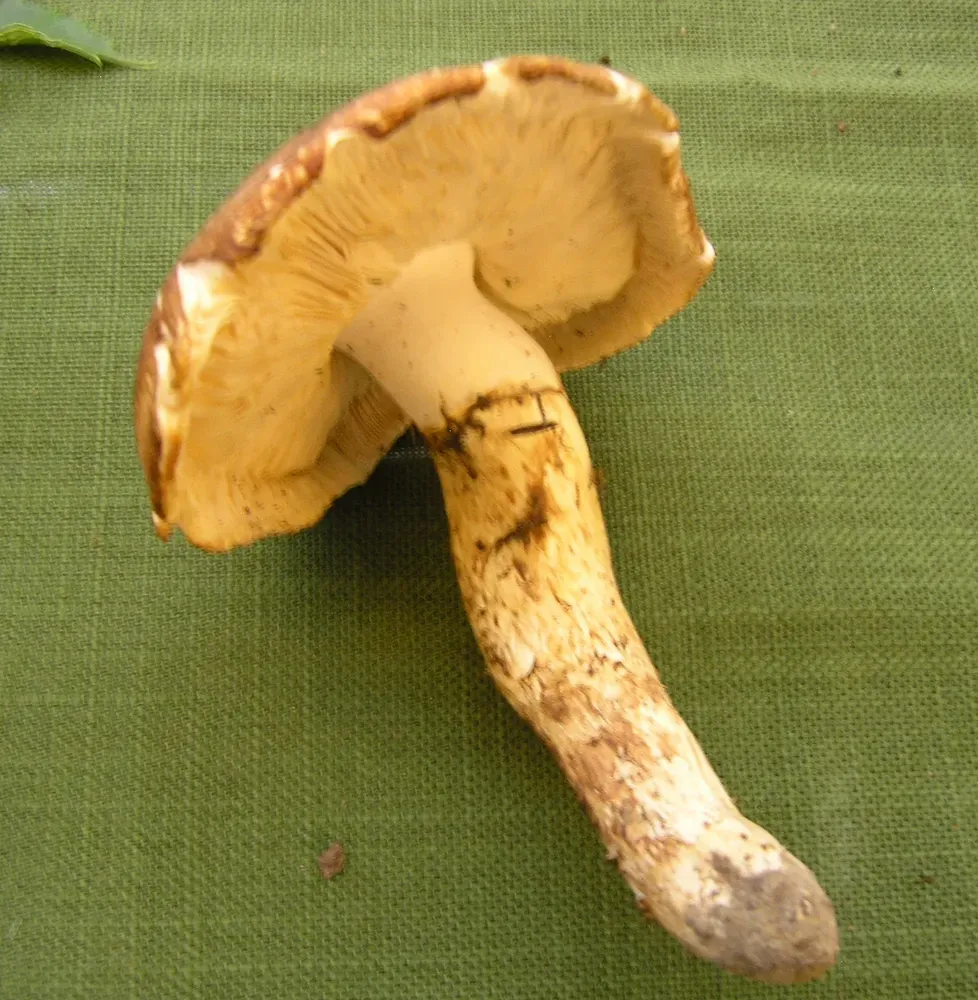
Booted knight
Tricholoma focale
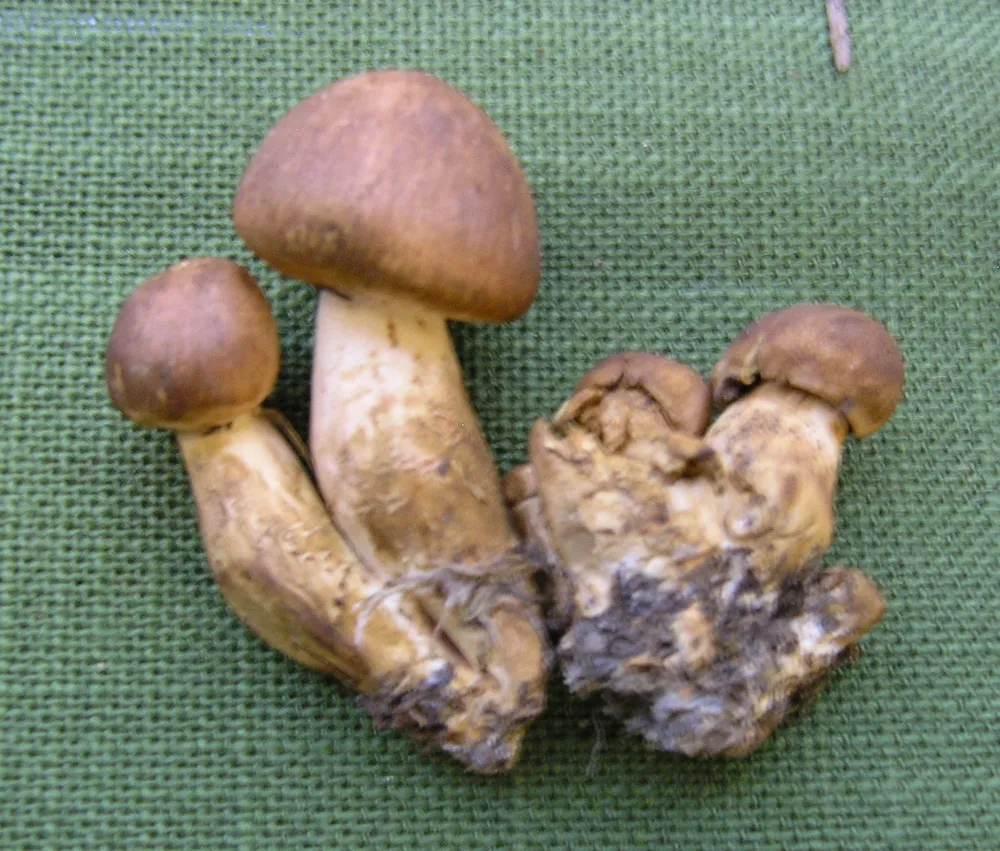
Matt knight
Tricholoma imbricatum
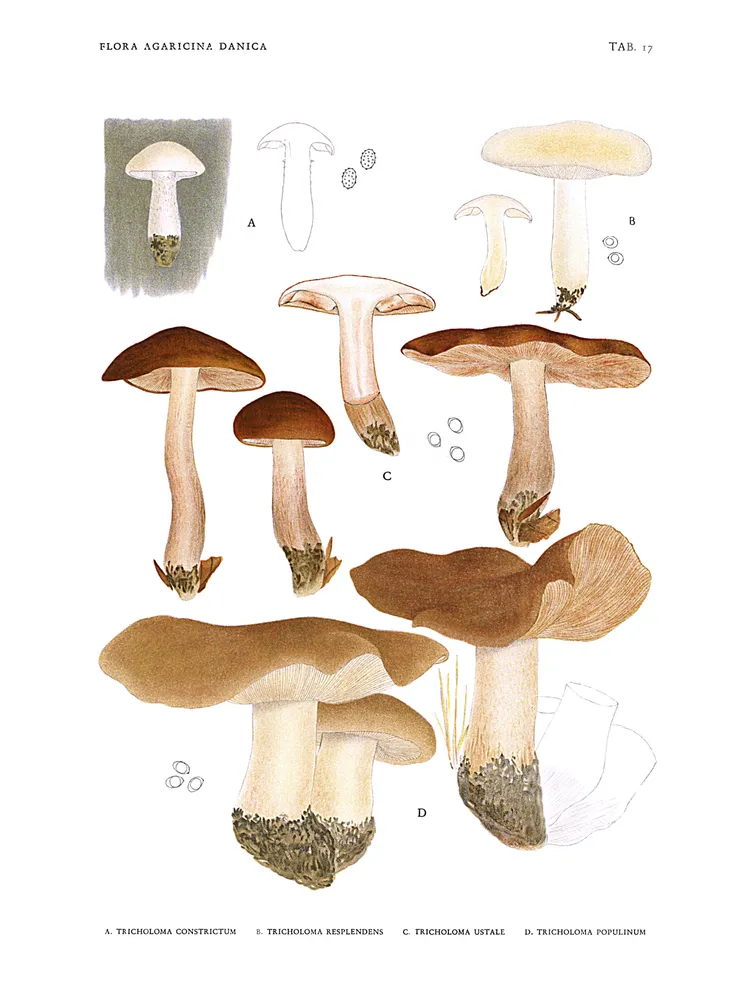
Poplar knight
Рядовка тополева
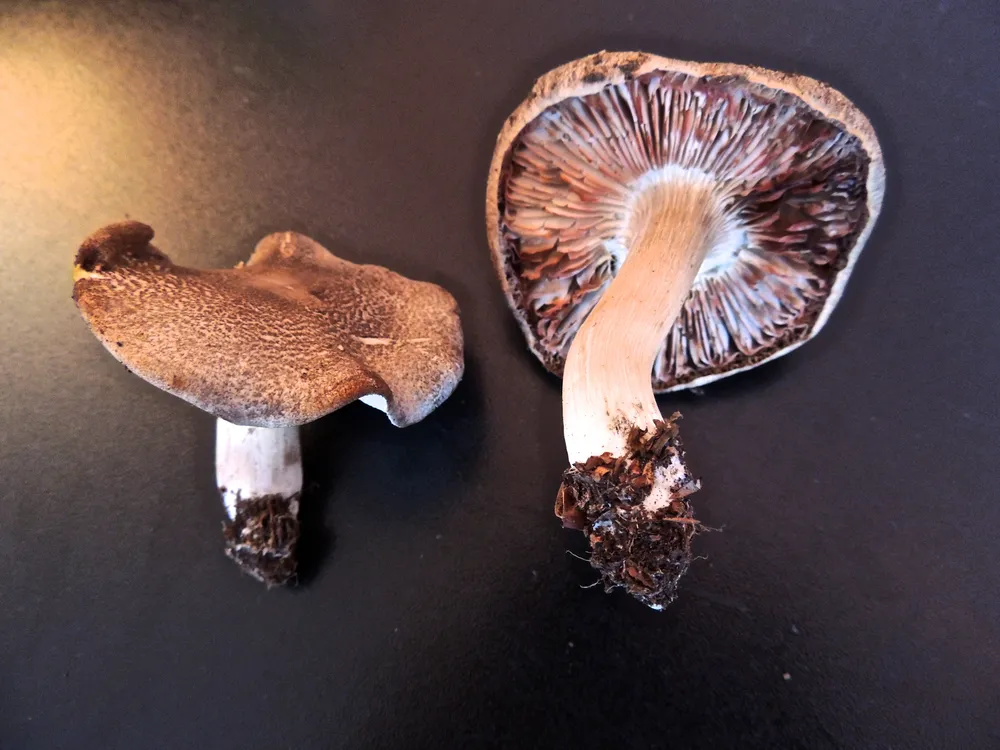
Tricholoma orirubens
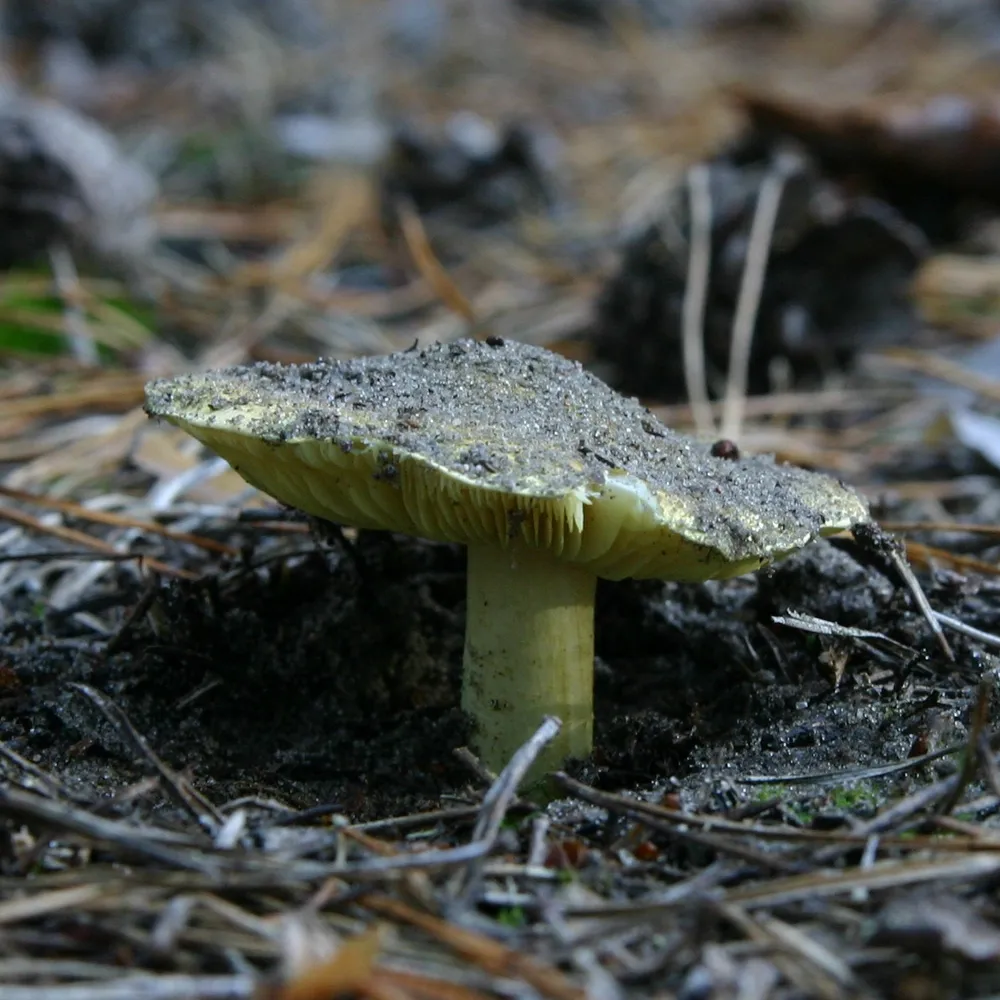
Yellow knight
Tricholoma equestre
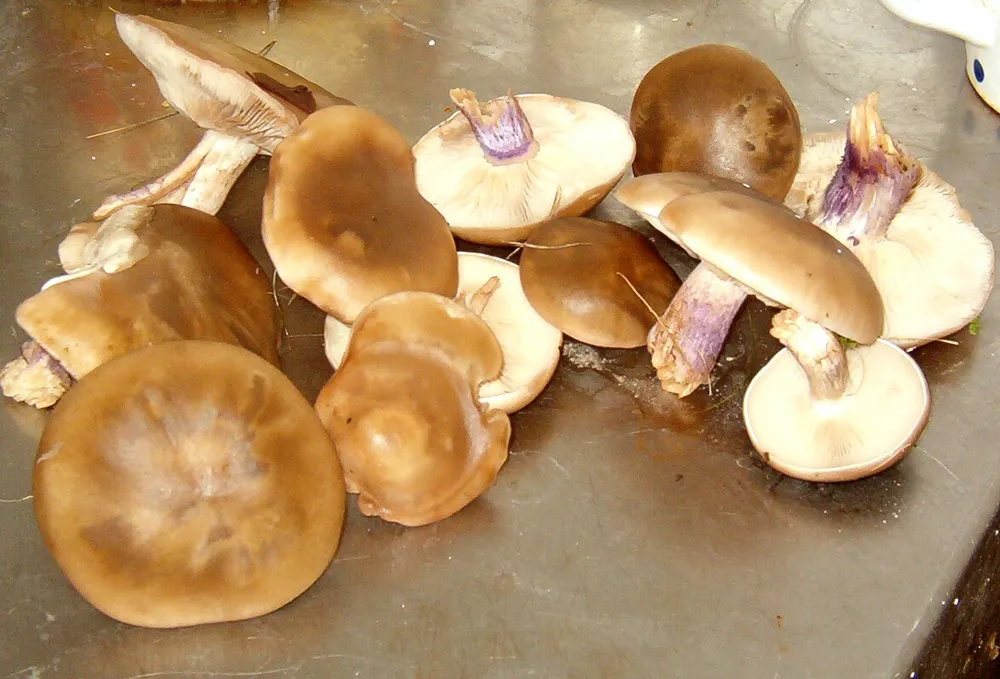
Field blewit
Collybia personata
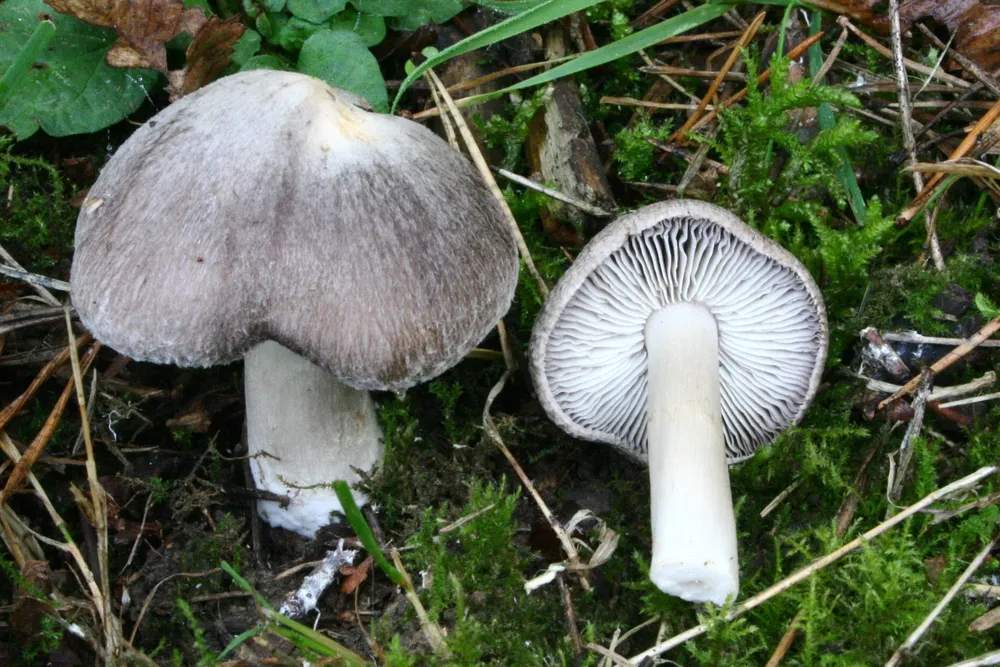
Grey knight
Рядовка наземна
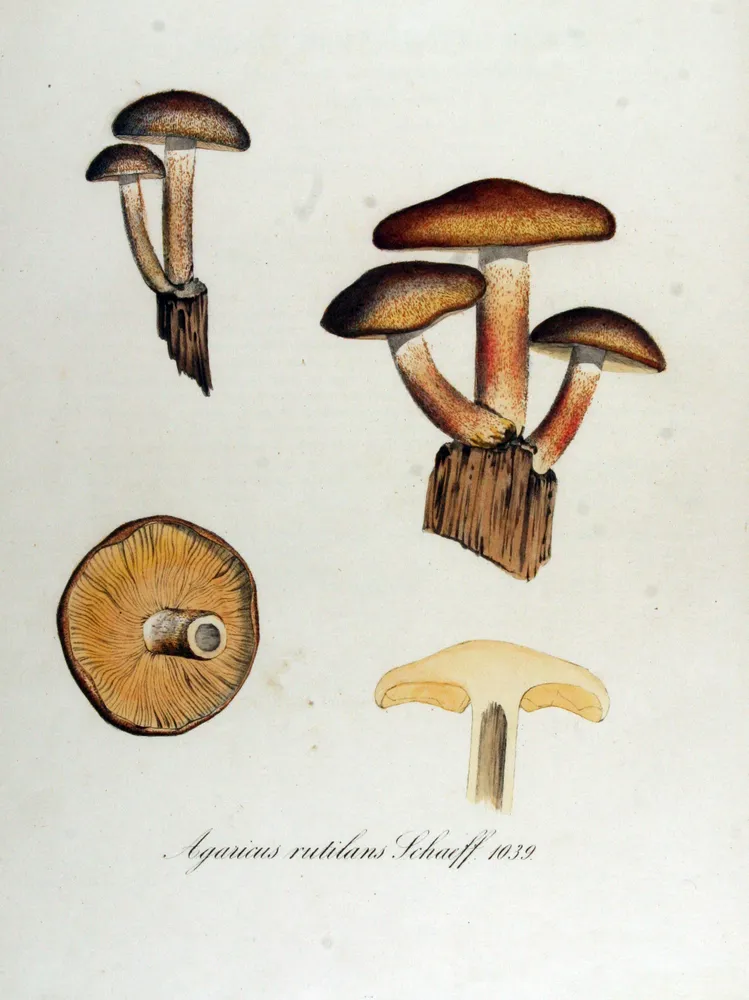
Plums and custard
Рядовка червона
Related reading
Frequently asked questions
How do you tell it from the poisonous tiger tricholoma (T. pardinum)?
Key differences. T. portentosum: slimmer (5-12 cm), cap with fine radial streaks (not scales), yellowish gills and flesh in the stem, mealy-cucumber smell. T. pardinum: much larger (8-15 cm), with distinct grayish-white scales on a gray cap, fleshier, gills and flesh white, with no yellowish tinge, mealy smell. If the cap has distinct scales (not streaks) and the flesh is pure white — DO NOT pick it, it may be the poisonous tiger tricholoma.
How do you tell it from the soapy knight (T. saponaceum)?
By smell and flesh. T. portentosum — mealy-cucumber smell, flesh does not turn pink when cut. T. saponaceum — distinct soapy smell (soap), flesh turns pink when the stem is cut. Two fundamentally different diagnostics — you won't mix them up if you look carefully.
How do you cook it?
No mandatory boiling (fresh caps are not bitter). Young ones — fry with onion and cream, stew with potatoes, add to soups, pickle. Good in a mix with saffron milk caps and slippery jacks. Drying — excellent, the aroma is kept and even intensifies. Young ones are especially tasty.
Where do you look for it?
On the forest floor in pine and spruce-pine forests, among moss and grass. On sandy and acidic soils. It loves dry, sunny pine woods. Often grows in groups of 5-15 or in rings.
In which regions of Ukraine does it occur?
Common in the forest zone with conifers: the Carpathians, Prykarpattia, Polissia, and parts of the forest-steppe in pine stands.
When do you look for it?
October — November, peaking in late October–November — one of the latest mushrooms of the season. It often fruits after the first light frosts, when other mushrooms are already gone. Valuable because it appears in the "empty" mushroom season.
What mushrooms is it confused with?
With T. pardinum (tiger tricholoma, poisonous) — larger, with scales. With T. saponaceum (soapy knight) — soapy smell, pinkening reaction. With T. terreum (grey knight) — a downy, unstreaked cap, smaller. With T. virgatum — also streaked and gray, but distinctly acrid-bitter (inedible), with no yellowish tone. Look closely at the streaks (not scales) and the yellowish gills.
Is Charbonnier edible or poisonous?
Does Charbonnier have gills or pores?
What does the cap of Charbonnier look like?
What does the stem of Charbonnier look like?
What do Charbonnier smell and taste like?
Sources
- [1]Вікіпедія (українська)
- [2]Атлас грибів України, Зеров Д.К. (1979)
- [3]MycoBank Database
- [4]Index Fungorum
- [5]GBIF
- [6]iNaturalist Ukraine