Giant knightTricholoma colossus
Expert-verifiedUpdated October 3, 2026
Passport
- Edibility
- Edible
- Season
- Aug — Oct
- Hymenophore
- Gilled
- Cap color
- Pink
- Size
- Large (over 15 cm)
- Smell
- Floury
- Reviewed
- Yes ✓
Quick answers
Where to look?
Conifer forest
When does it appear?
Aug — Oct
Active months: August, September, October.
How to recognize it? Three signs
- Cap color: Pink, Brown
- Cap shape: Convex
- Smell: Floury, Pleasant
Fruiting season
August – October
Description
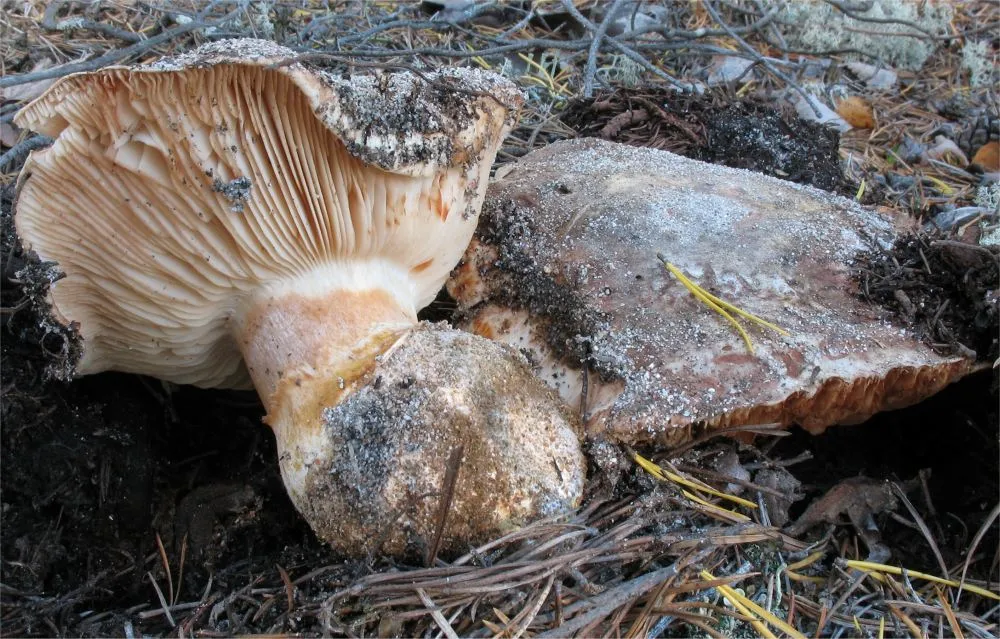
The giant knight (Tricholoma colossus) is one of the largest and rarest members of the genus Tricholoma. The Latin epithet colossus, "colossus, giant," fits perfectly: the cap can reach 15-25 cm across, the stem 8-15 cm tall and 3-5 cm thick, meaty and sturdy. The whole fruit body is dense and heavy (up to 1 kg in a large specimen), with a distinctive flesh-pink to brownish-pink cap color and a pronounced mushroomy smell.
Edible — the flesh is firm, white, with a pleasant taste and smell. Its culinary value is high: it fries, stews and pickles well. Unlike many bitterish knights, T. colossus has no bitterness. Young fruit bodies are especially prized.
The main limitation is its rarity. The species is on regional red lists in several European countries (Sweden, Norway, Poland) because its habitat — old, dry pine forests on sandy soils — is shrinking. In Ukraine it's uncommon too, found mostly in old pine forests of Polissia and sandy pine forests of the Carpathians and Prykarpattia. If you find it, photograph it for iNaturalist UA; if the group is large, you can take a few to taste, but don't pull up the whole group.
The main risk is confusing it with young Tricholoma pessundatum and T. populinum (similar brown knights, also edible but smaller) and with T. portentosum (the charbonnier, also edible but a different mushroom). There are no seriously poisonous lookalikes within this group, but knights in general are a group with potentially dangerous relatives (T. equestre is nephropathogenic; some rare species have unknown edibility), so pick only species you identify with confidence.
In Ukraine Tricholoma colossus is rare in the pine forests of Polissia (Rivne, Volyn and Zhytomyr regions), and in places in Prykarpattia. It's a mycorrhizal partner of Scots pine. The season runs August to October. It fruits in groups of 3-10 in old, dry pine forests.
Cap
Cap 15-25 cm across (in exceptional cases up to 30 cm), very meaty, firm. In young specimens convex-globular with an inrolled margin, becoming with age cushion-convex, with a slightly wavy margin. The cap skin is smooth, matte and dry when young, slightly shiny when mature. Color: flesh-pink to brownish-pink, brown-pink, darker ochre-chestnut in the center, paler toward the margin. In old fruit bodies it becomes brown-chestnut.
Hymenophore
Gilled hymenophore — the gills are notched-attached to the stem, crowded, fleshy. When young they are whitish, becoming with age cream-pink to flesh-pink. Spore print white.
Stem
Stem 8-15 cm tall, 3-5 cm thick, very sturdy, meaty, cylindrical, thickening toward the base, in older specimens with a small bulbous swelling at the base. Color: whitish in the upper part, brownish-pink below, matching the cap color. Surface smooth, with lengthwise fibers. No ring.
Flesh
Flesh firm, meaty, white, where cut it slowly turns pinkish (in some fruit bodies) — a weak reaction. Smell pronounced, pleasant and mushroomy with a note of flour, taste mild, pleasant, with no bitterness.
Smell
A pronounced, pleasant mushroomy-mealy smell, like many good-quality knights.
›Scientific synonyms (5)
Agaricus colossus Fr., Tricholoma colossus (Fr.) Quél., Gyrophila colossus (Fr.) Quél., Armillaria colossus (Fr.) Boud., Megatricholoma colossum (Fr.) G. Kost (1984)
Lookalikes
Related species
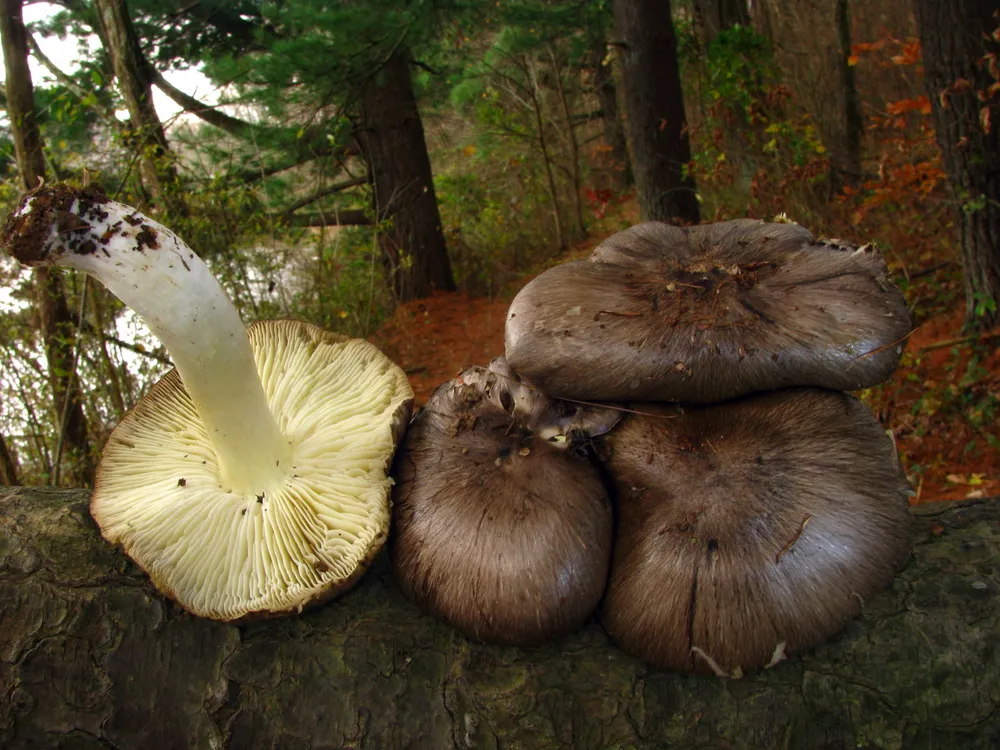
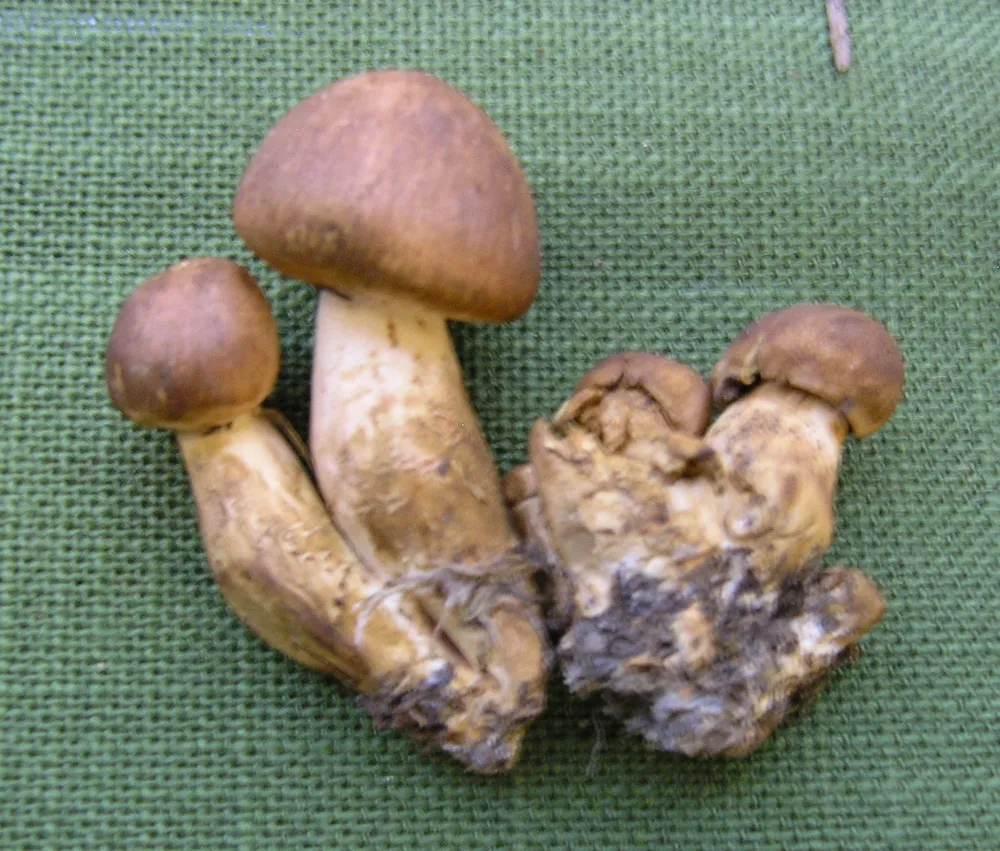
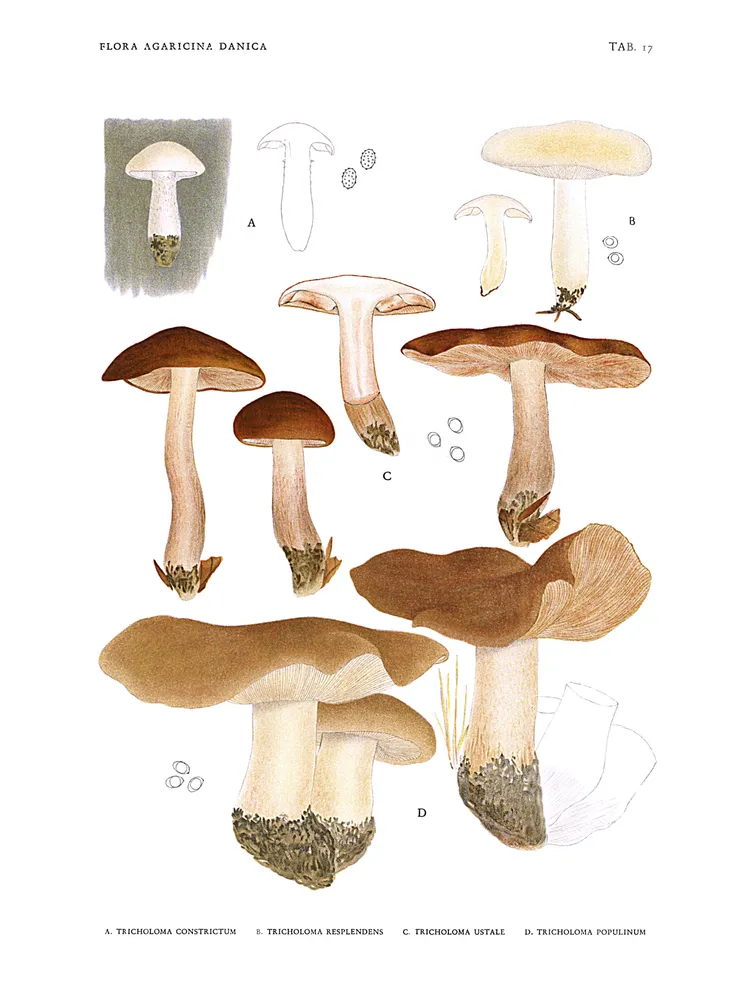
Mushrooms of the same genus and habitat — to study side by side and never mix up.
_Ricken_185798.webp)
Booted knight
Tricholoma focale
Matt knight
Tricholoma imbricatum
Poplar knight
Рядовка тополева
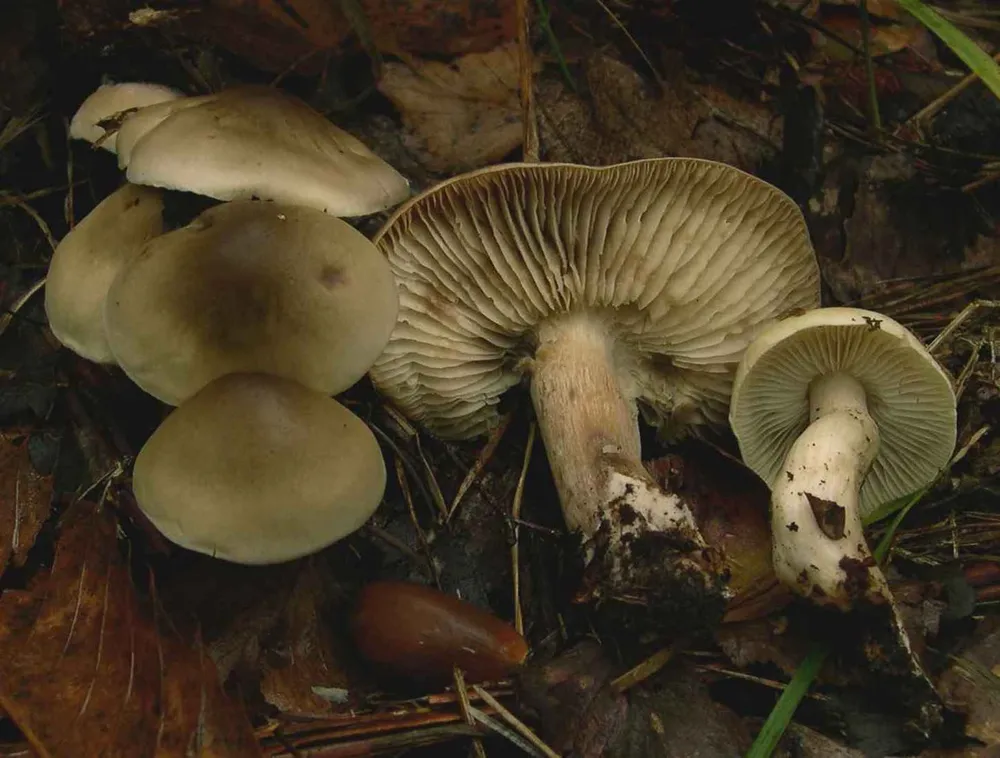
Soapy knight
Tricholoma saponaceum
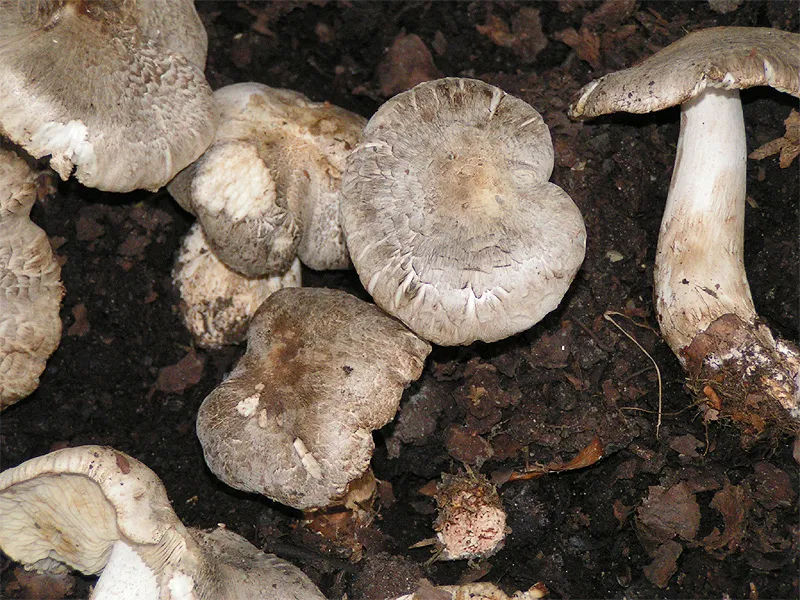
Tiger tricholoma
Tricholoma pardinum
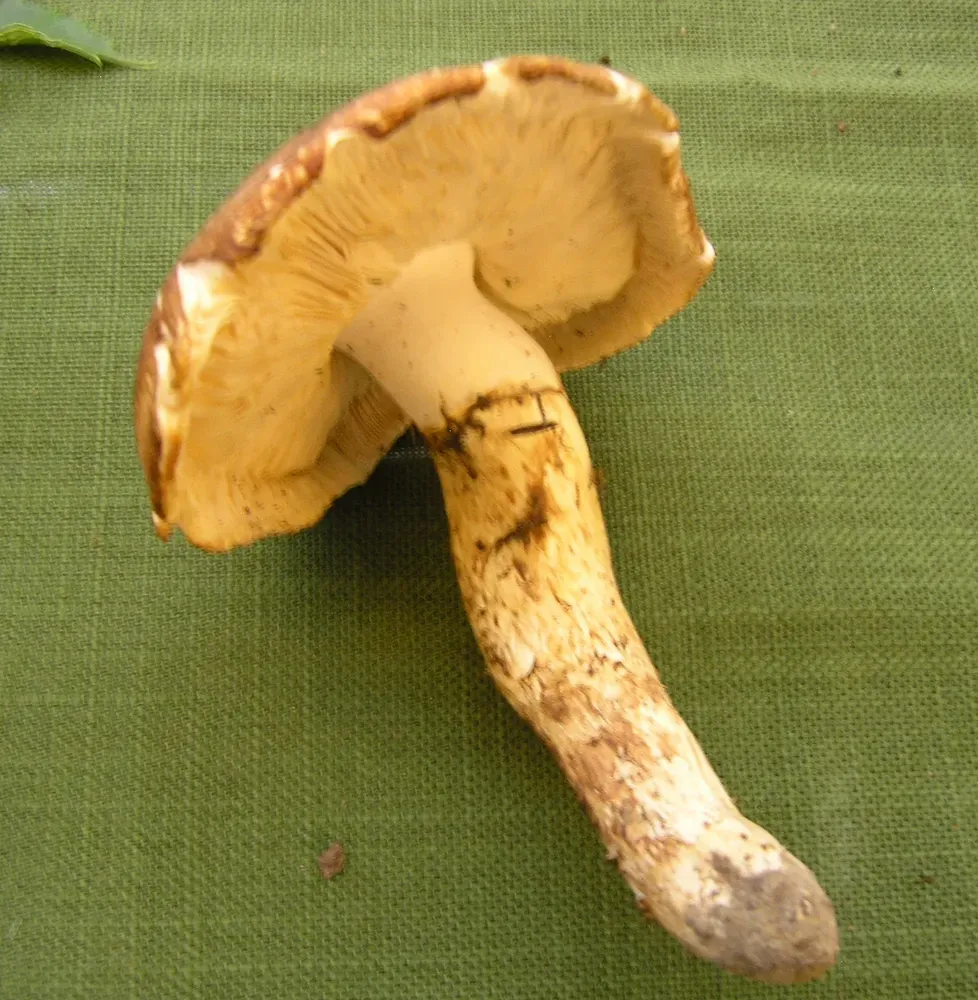
Tricholoma caligatum
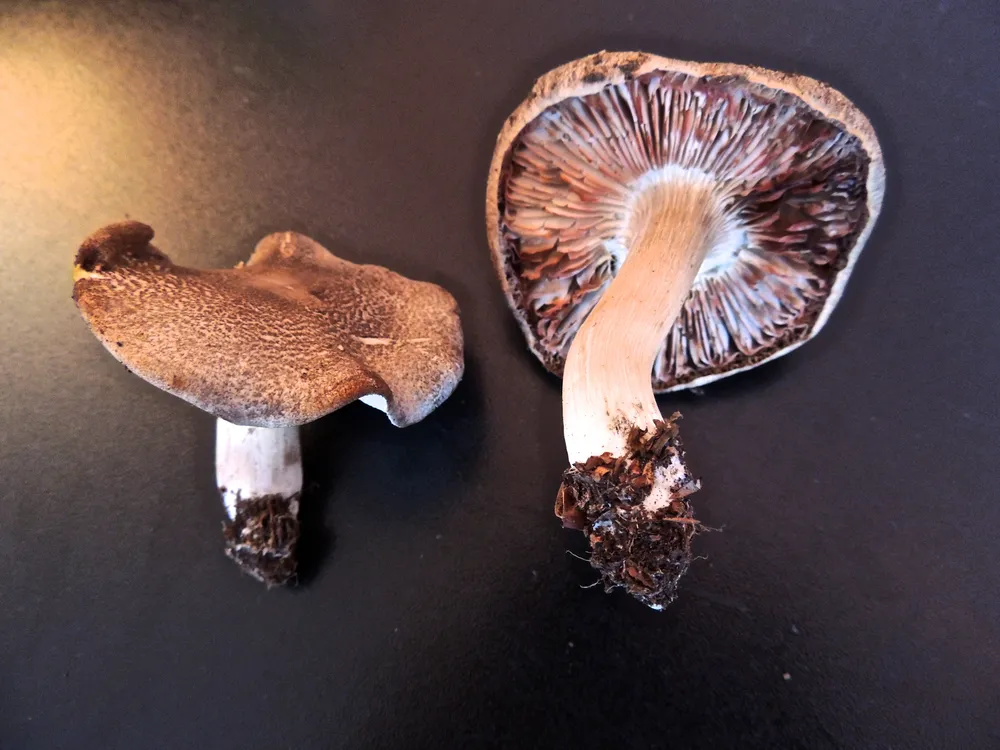
Tricholoma orirubens
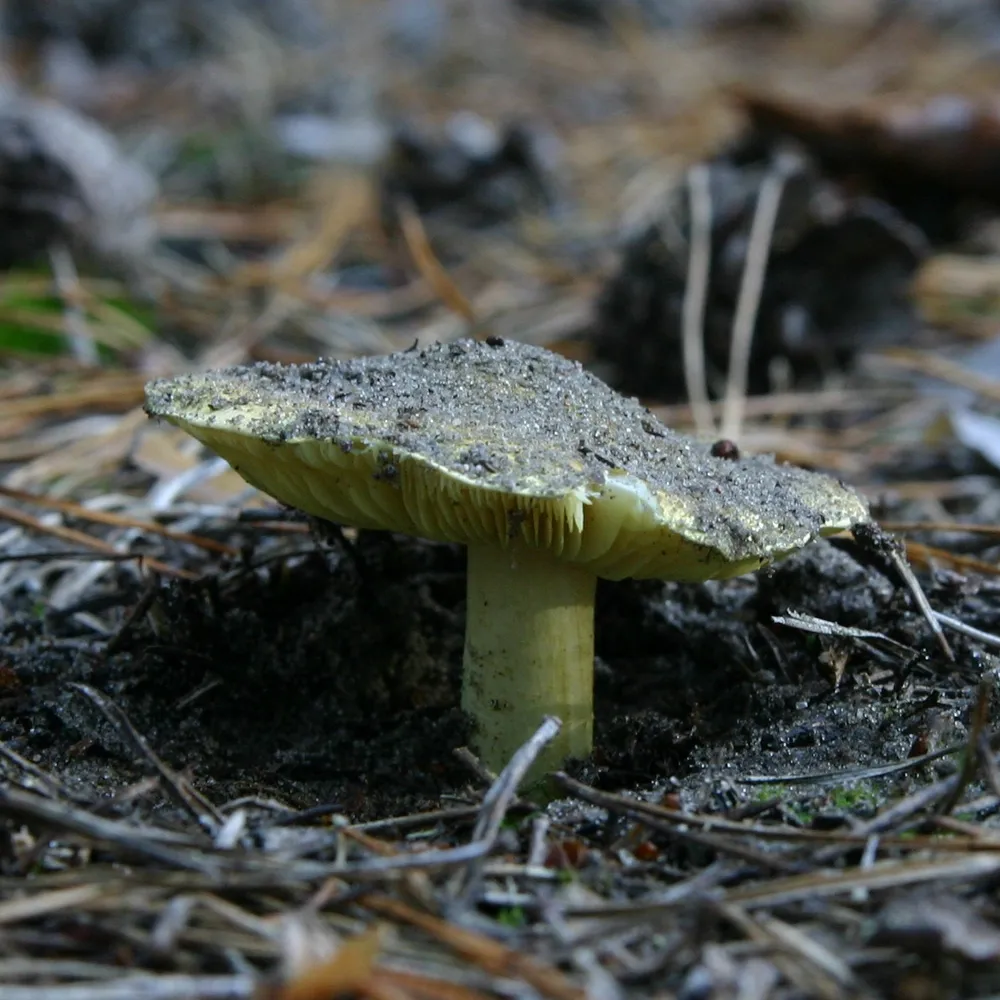
Yellow knight
Tricholoma equestre
Frequently asked questions
Is it worth picking?
Yes — if you find it, but go easy on the quantity: the species is rare and red-listed in some European countries. If there's a group of 5+ in the pine forest, take 1-2 to taste and leave the rest to spread their spores. If there are just one or two, it's better to photograph them for iNaturalist UA and leave them to grow. You're unlikely to come across it in an ordinary basket.
How do you tell it apart from other knights?
Key features of T. colossus: (1) very large size (cap 15-25 cm); (2) flesh-pink coloring of the cap and stem; (3) meaty structure (the fruit body is heavy and full of moisture); (4) a pronounced mushroomy-mealy smell; (5) it grows in old, dry pine forests on sandy soils. Other pink knights are smaller.
Does it have dangerous lookalikes?
Truly poisonous ones — none. But knights as a whole are a group with several species of unknown or doubtful edibility (Tricholoma equestre is nephropathogenic with repeated consumption; T. pardinum is poisonous, but it's gray, not pink). The general strategy: pick knights only when you identify them with confidence, not when they "look like something." When in doubt: photos, research, and only then the basket.
How do you cook it?
The classics: fry with onions, stew with potatoes, add to soups. Pickling works well: the meaty stems hold their shape nicely. Young ones are especially tasty. No mandatory boiling, but for beginners we recommend a short 5-minute boil as insurance. Drying works fine, and the aroma is preserved.
Where do you look for it?
In old, dry pine forests on sandy soils — that's typical. On mossy or grassy ground among the pines. Not in damp forests and not in young plantations. It often grows in groups of 3-10 fruit bodies.
Which regions of Ukraine is it found in?
Mostly in Polissia (Rivne, Volyn and Zhytomyr regions) — in old pine woodlands on sandy soils. In places in Prykarpattia and the forest-steppe with sandy pine forests. In the Carpathians above 800 m it doesn't occur.
When do you look for it?
August to October, peaking in September. It loves a warm autumn with moderate rain and warmed-up soils.
What mushrooms is it confused with?
Vs. T. pessundatum (a slimy-capped brown knight) — brown-chestnut, with a distinctly slimy cap in wet weather, smaller (5-10 cm). Vs. T. populinum (poplar knight) — grows under poplars, not pines, reddish-brown. Vs. T. portentosum (charbonnier) — gray with a violet tint, not pink. Vs. a young porcini in rare cases — that one has a tubed hymenophore, not gills.
Is Giant knight edible or poisonous?
Does Giant knight have gills or pores?
What does the cap of Giant knight look like?
What does the stem of Giant knight look like?
Sources
- [1]Вікіпедія (українська)
- [2]Атлас грибів України, Зеров Д.К. (1979)
- [3]MycoBank Database
- [4]Index Fungorum
- [5]GBIF
- [6]iNaturalist Ukraine