Grey knightРядовка наземна
Expert-verifiedUpdated October 3, 2026
Passport
- Edibility
- Conditionally edible
- Season
- Aug — Nov
- Hymenophore
- Gilled
- Cap color
- Grey
- Size
- Small (up to 5 cm)
- Smell
- Floury
- Reviewed
- Yes ✓
Quick answers
Where to look?
Conifer forest, Mixed forest
When does it appear?
Aug — Nov
Active months: August, September, October, November.
How to recognize it? Three signs
- Cap color: Grey
- Cap shape: Umbonate
- Smell: Floury
Fruiting season
August – November
Description
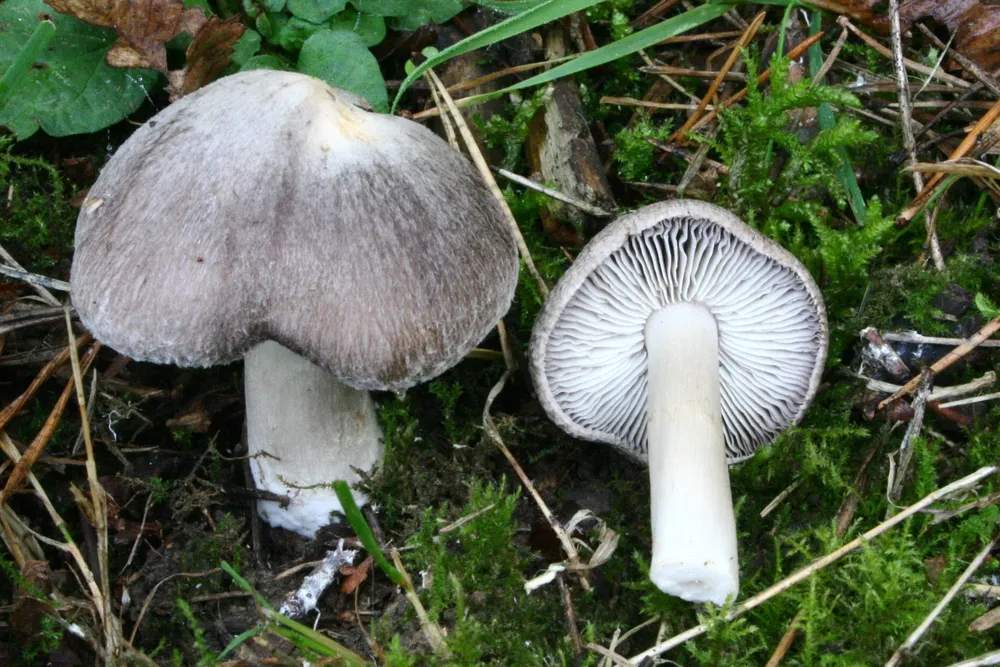
The grey knight (Tricholoma terreum) is a common autumn knight of pine forests with a characteristic mouse-gray downy cap. The Latin epithet terreum means "earthy, gray as the earth" — an apt name: the cap is 3-8 cm across, conical to flat-conical with a distinct central bump, gray to dark gray, mouse-colored, with fine felty-fibrous down that resembles a mouse's fur.
Conditionally edible, with a caveat. In the old Soviet and European tradition it was an edible mushroom of the 4th category after brief boiling. However, a 2014 study in mice found compounds in it that cause rhabdomyolysis (breakdown of muscle tissue) — an effect similar to the one proven in humans for Tricholoma equestre (yellow knight). No confirmed human poisonings from the grey knight have been described, but caution with heavy, prolonged consumption is still wise; single portions of young fruiting bodies after boiling — no recorded complications.
Current recommendation: pick it in moderate amounts, don't eat it several days in a row, especially if you have kidney or cardiovascular conditions. As a "filler" in a mix with saffron milk caps and slippery jacks — fine. Avoid dishes made solely of grey knights in large portions.
The main thing is to recognize it among the other gray knights, because the same group includes the severely poisonous Tricholoma pardinum (tiger tricholoma): large, with a distinctly scaly gray cap, fleshy, it causes severe gastroenteritis with dehydration. The fundamental difference: T. terreum is small (3-8 cm), with a downy, not scaly, cap.
In Ukraine, the grey knight is common in pine and spruce-pine forests: the Carpathians, Prykarpattia, Polissia, and parts of the forest-steppe. Season: August — November; it fruits in groups of 5-15 on the forest floor.
Cap
Cap 3-8 cm across, when young distinctly conical or bell-shaped, becoming with age flat-conical with a low, broad central bump. The skin is finely fibrous-felty — like a mouse's fur, gray to dark gray, mouse-colored, with a darker center and paler margins. Old fruiting bodies have fine radial cracks. The margin is even and thin, and may be slightly wavy in damp conditions.
Hymenophore
Gilled hymenophore — the gills are notched (sinuate) where they attach to the stem, moderately crowded, thin, the gill flesh brittle. Color: whitish to grayish-white, turning gray with a faint yellowish tinge with age. Spore print white.
Stem
Stem 3-7 cm tall, 0.7-1.5 cm thick, cylindrical, firm when young, hollow when old. Color: white to grayish-white, with no noticeable spots. Surface smooth with fine lengthwise fibers. No ring.
Flesh
Flesh thin, brittle, white in the cap, grayish-white in the stem. Does not change color when cut. Smell faintly mealy or with a fresh cucumber note, taste mild, no bitterness.
Smell
Faintly mealy-cucumber, neutral, with no sharp notes.
Lookalikes
Related species
Mushrooms of the same genus and habitat — to study side by side and never mix up.
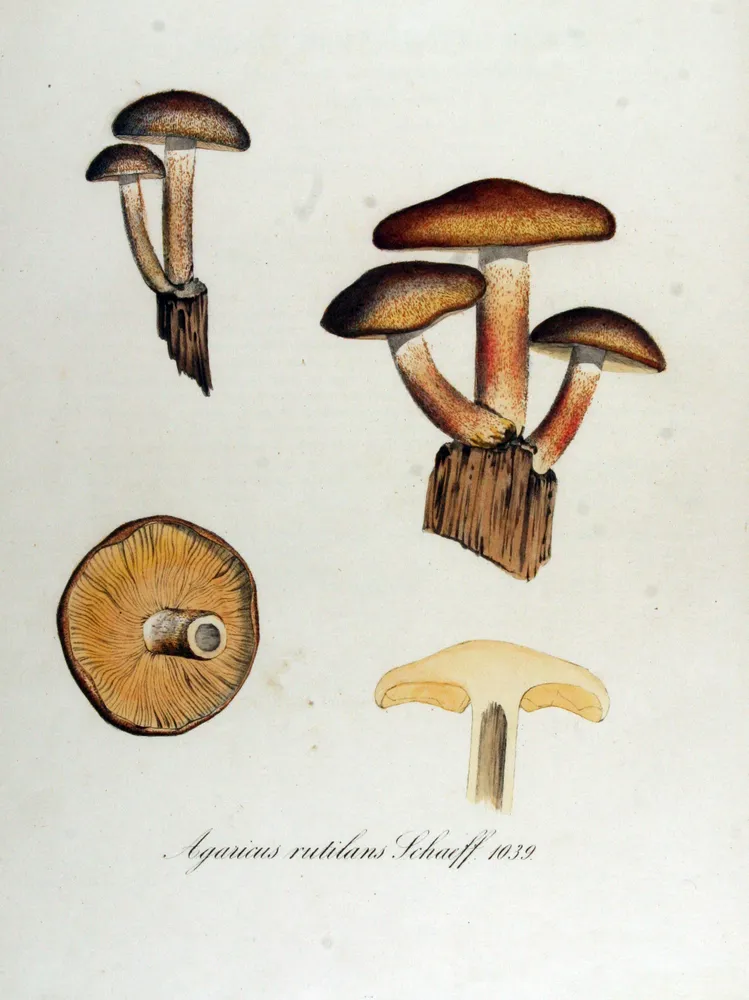
Plums and custard
Рядовка червона
_Ricken_185798.webp)
Booted knight
Tricholoma focale
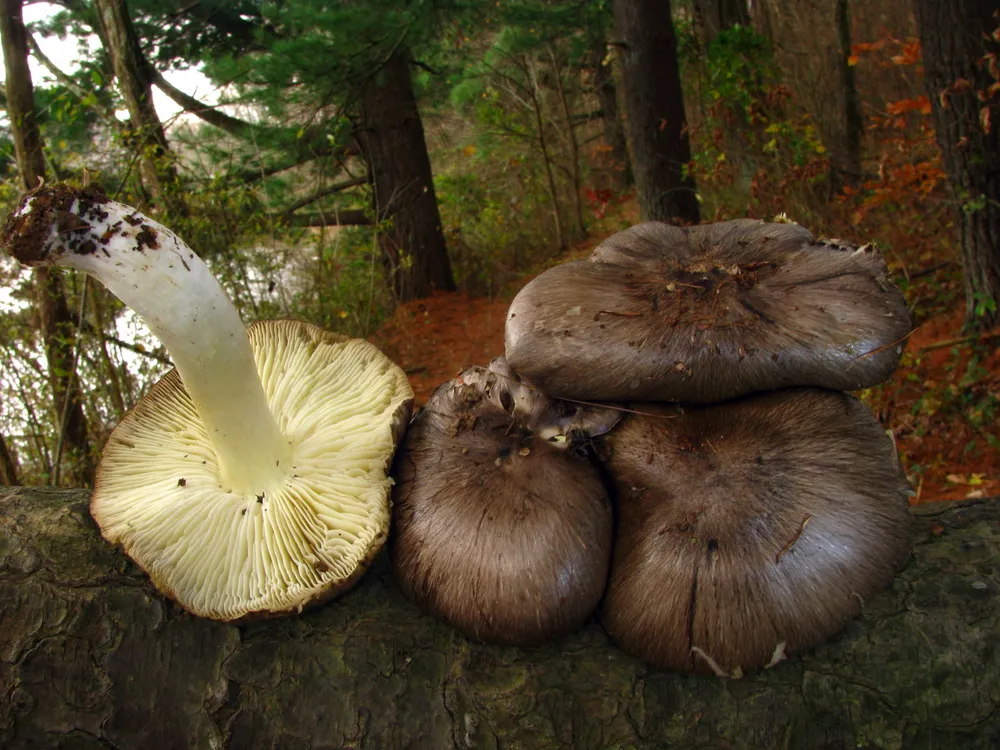
Charbonnier
Tricholoma portentosum
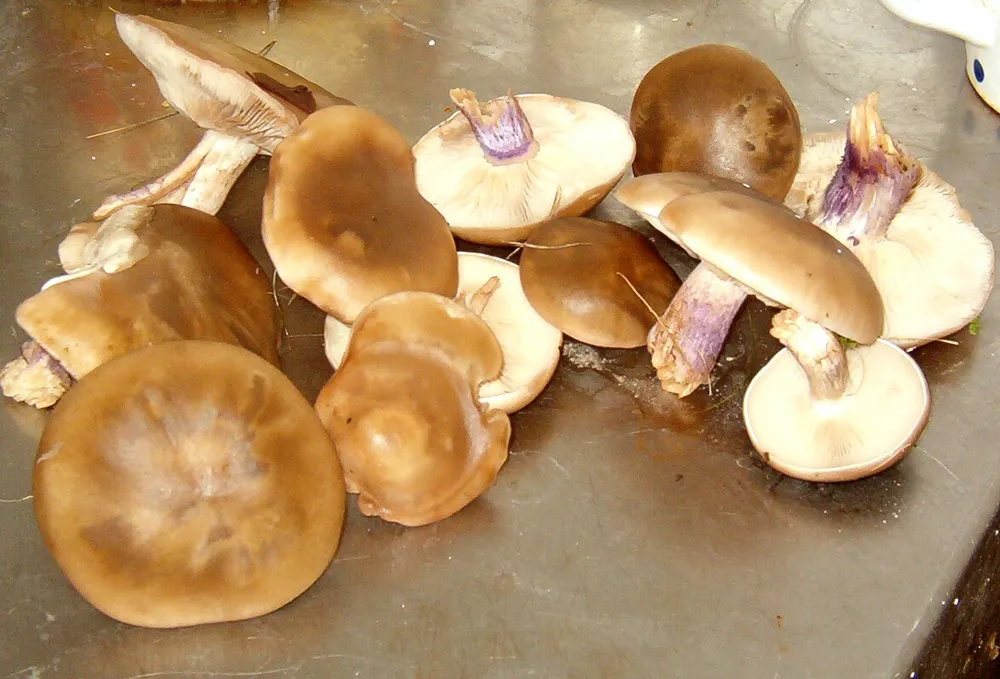
Field blewit
Collybia personata
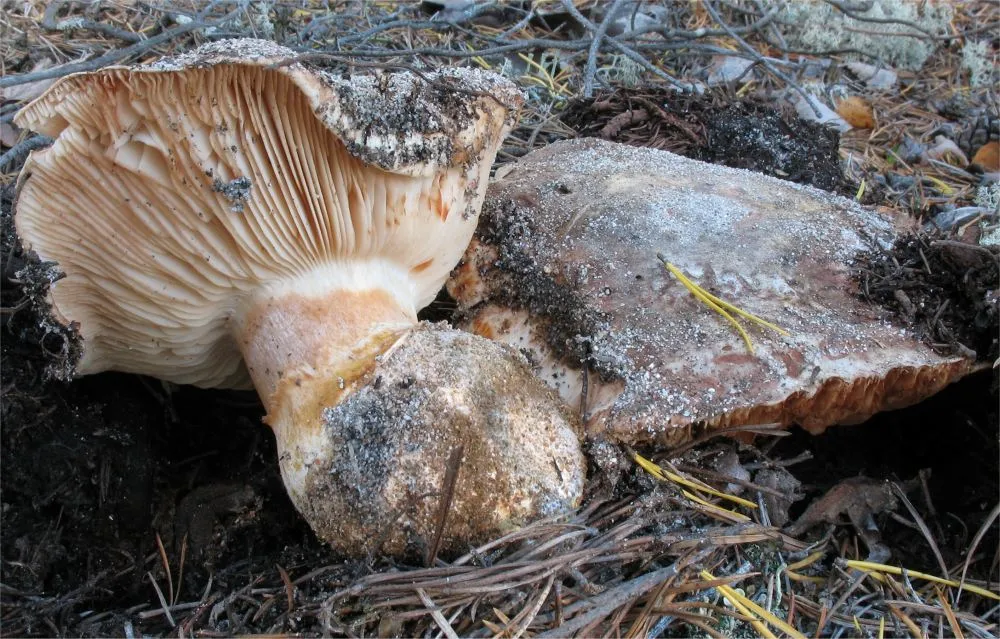
Giant knight
Tricholoma colossus
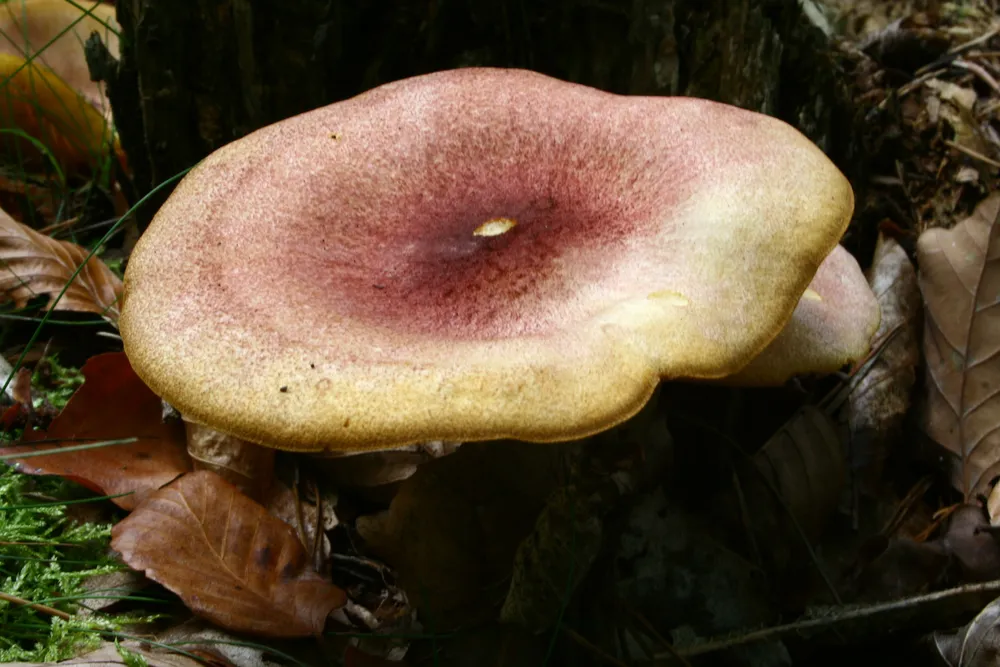
Plums and custard
Tricholomopsis rutilans
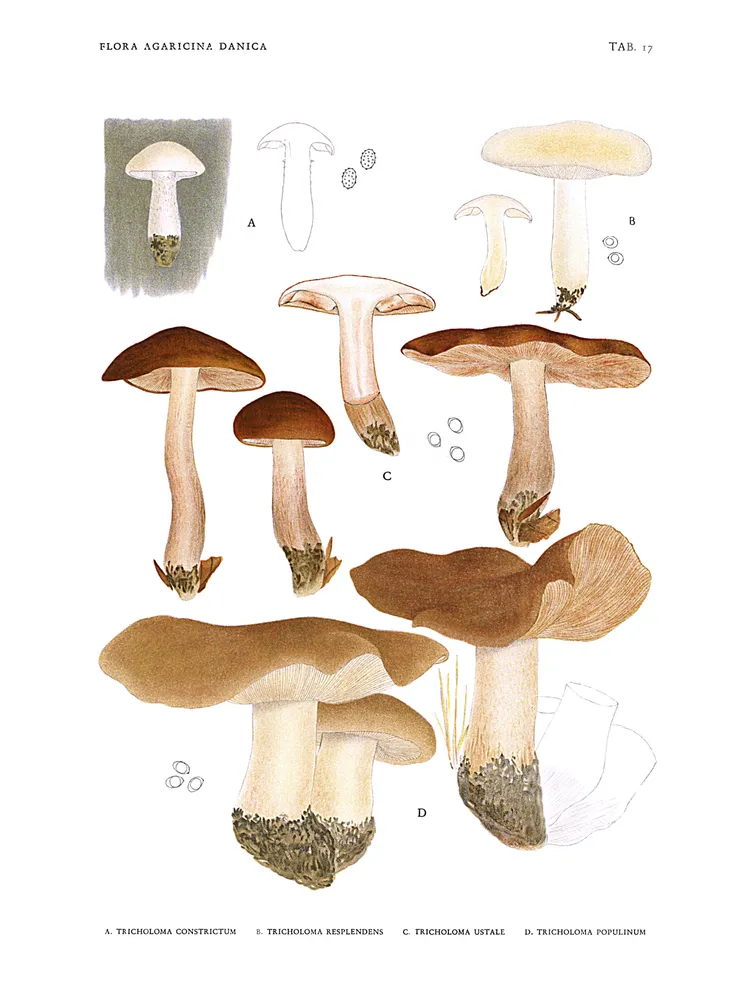
Poplar knight
Рядовка тополева
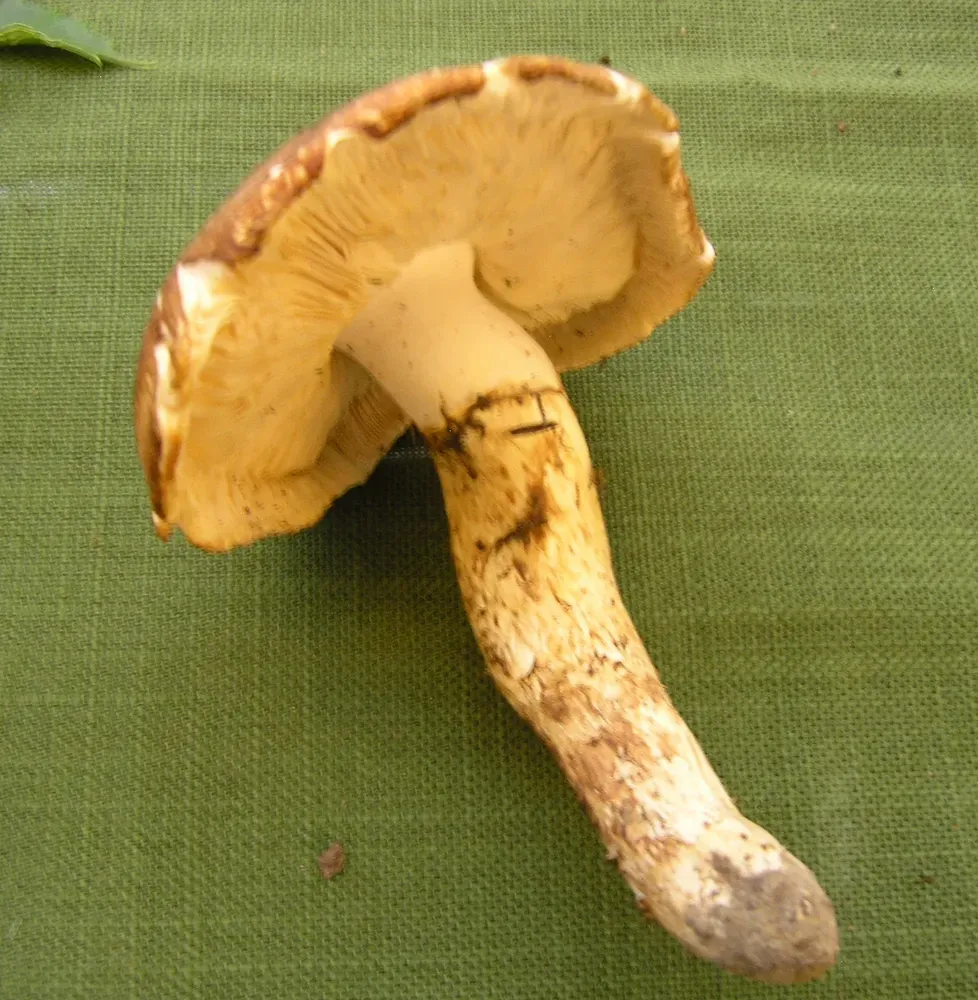
Tricholoma caligatum
Frequently asked questions
Is it safe to eat?
In moderate amounts — yes, after brief boiling (5-10 min). In large amounts every day for several weeks — be careful: in mouse studies it caused rhabdomyolysis, like T. equestre (no such human cases have been described). For healthy people eating it once or occasionally no risks have been recorded. Beginners should start with small portions (50 g) in a mix with safer species.
How do you tell it from the poisonous tiger tricholoma (T. pardinum)?
T. terreum is small (3-8 cm), with a downy-felty (not scaly) gray cap and a small stem. T. pardinum is large (8-15 cm), with a distinctly scaly gray-white cap, a fleshy stem, a mealy smell and thick flesh. If the cap is large, scaly and fleshy — DO NOT pick it, it may be the poisonous tiger tricholoma.
How do you cook it?
Young fruiting bodies: first boil for 5-10 min and drain the water. Then fry with onion, stew, add to soups, pickle. A good filler in a mix with saffron milk caps and slippery jacks. Drying — fine, but the aroma is average.
Where do you look for it?
On the forest floor in pine and spruce-pine forests, among moss, in the grass near old pines. On sandy and acidic soils. Often grows in groups of 5-15.
In which regions of Ukraine does it occur?
Common in the forest zone with conifers: the Carpathians, Prykarpattia, Polissia, and parts of the forest-steppe in pine stands.
When do you look for it?
August — November, peaking in October. Loves a warm autumn and fruits right up to the first light frosts — one of the late autumn mushrooms.
What mushrooms is it confused with?
With T. pardinum (tiger tricholoma, poisonous) — large, with a scaly cap. With T. saponaceum (the soapy knight) — larger, with a characteristic soapy smell. With T. virgatum — also gray, but smaller, very acrid-bitter (inedible). With T. argyraceum — a close relative, also small with a downy cap, also conditionally edible. Safety rule: among gray knights, pick only those you identify with confidence; when in doubt, leave it.
Is Grey knight edible or poisonous?
Does Grey knight have gills or pores?
What does the cap of Grey knight look like?
What does the stem of Grey knight look like?
What do Grey knight smell and taste like?
Sources
- [1]Вікіпедія (українська)
- [2]Атлас грибів України, Зеров Д.К. (1979)
- [3]MycoBank Database
- [4]Index Fungorum
- [5]GBIF
- [6]iNaturalist Ukraine