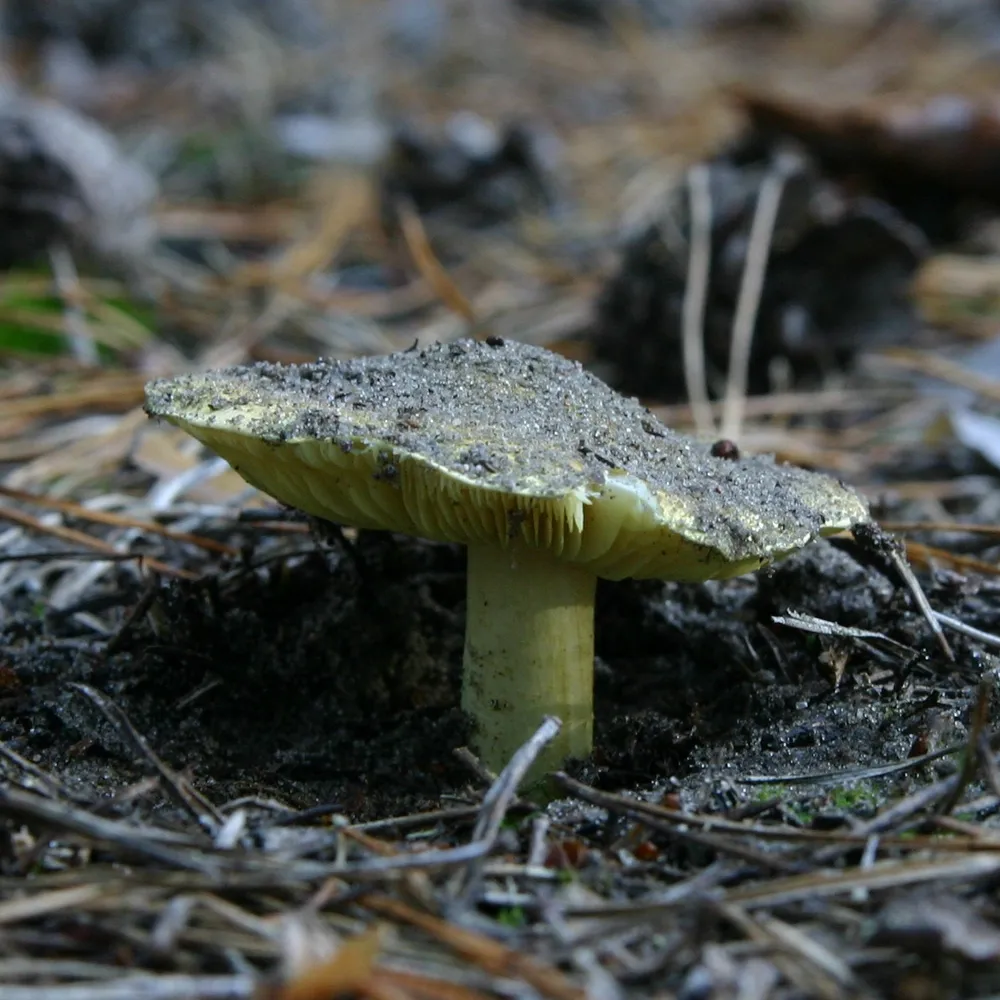
Yellow knightTricholoma equestre
Expert-verifiedUpdated August 15, 2026
Passport
- Edibility
- Conditionally edible
- Season
- Sep — Nov
- Hymenophore
- Gilled
- Cap color
- Yellow
- Size
- Medium (5–15 cm)
- Smell
- Floury
- Reviewed
- Yes ✓
Quick answers
Where to look?
Conifer forest
When does it appear?
Sep — Nov
Active months: September, October, November.
How to recognize it? Three signs
- Cap color: Yellow, Olive, Green
- Cap shape: Convex, Flat
- Smell: Floury
Fruiting season
September – November
Description
The yellow knight (Tricholoma equestre) is a conditionally edible mushroom that grows in pine forests on sandy soils. Easy to recognize thanks to the yellow-green color of its cap and gills. In the past it was considered edible without reservation, but data from the 2000s showed that eating large amounts can cause rhabdomyolysis.
Fruits in October–November, often after the first frosts. Grows in groups and rings in dry pine forests. Its relatively late season and characteristic color make the yellow knight a noticeable late-autumn species.
Conditionally edible in small amounts after boiling. Do not eat regularly in large portions.
Cap
Cap 4–12 cm across, flat-convex or with a low hump in the center. Surface yellowish green or olive yellow, dry or slightly moist, often darker in the center with characteristic small fibrous scales. Margin uneven, wavy.
Hymenophore
Gills crowded, yellow or yellow-green (the same color as the cap or brighter) — the yellow gills are one of the key identification features. Attached to the stem. Spore print white.
Stem
Stem 4–8 cm tall, 1–2 cm thick, firm, solid, cylindrical, yellowish or yellow-green, partly buried in sand. No ring and no volva.
Flesh
Flesh firm, white or slightly yellowish. Does not change color when cut. Taste mild, mealy or slightly radish-like. No bitterness.
Smell
Smell mealy, slightly cucumber- or radish-like — typical of many Clitocybe and Tricholoma species. No repulsive notes. In some specimens the aroma is stronger and reminiscent of fresh flour.
Lookalikes
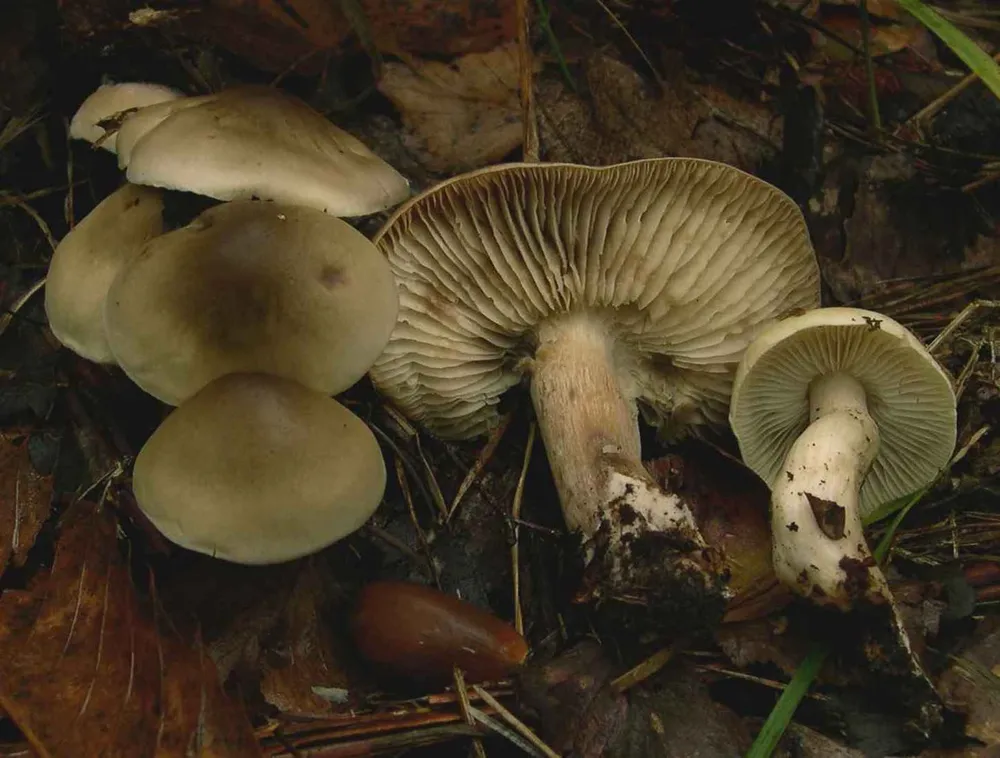
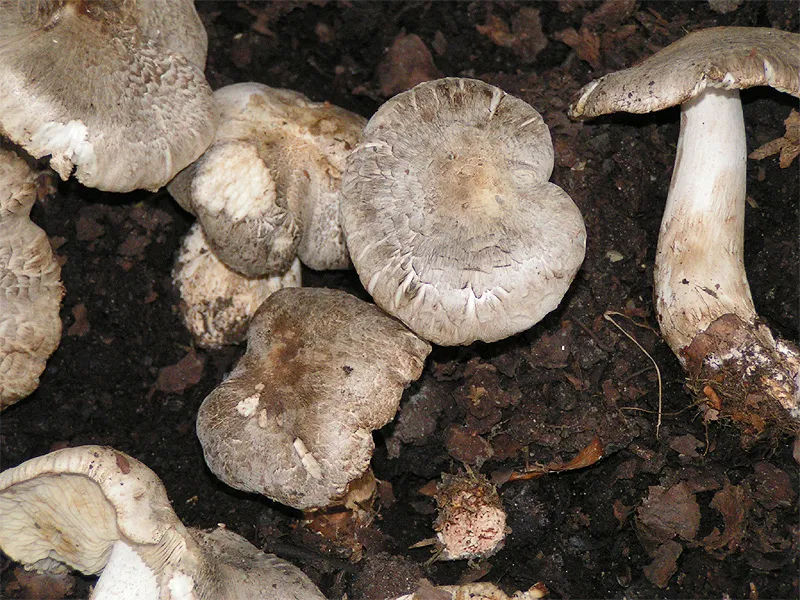
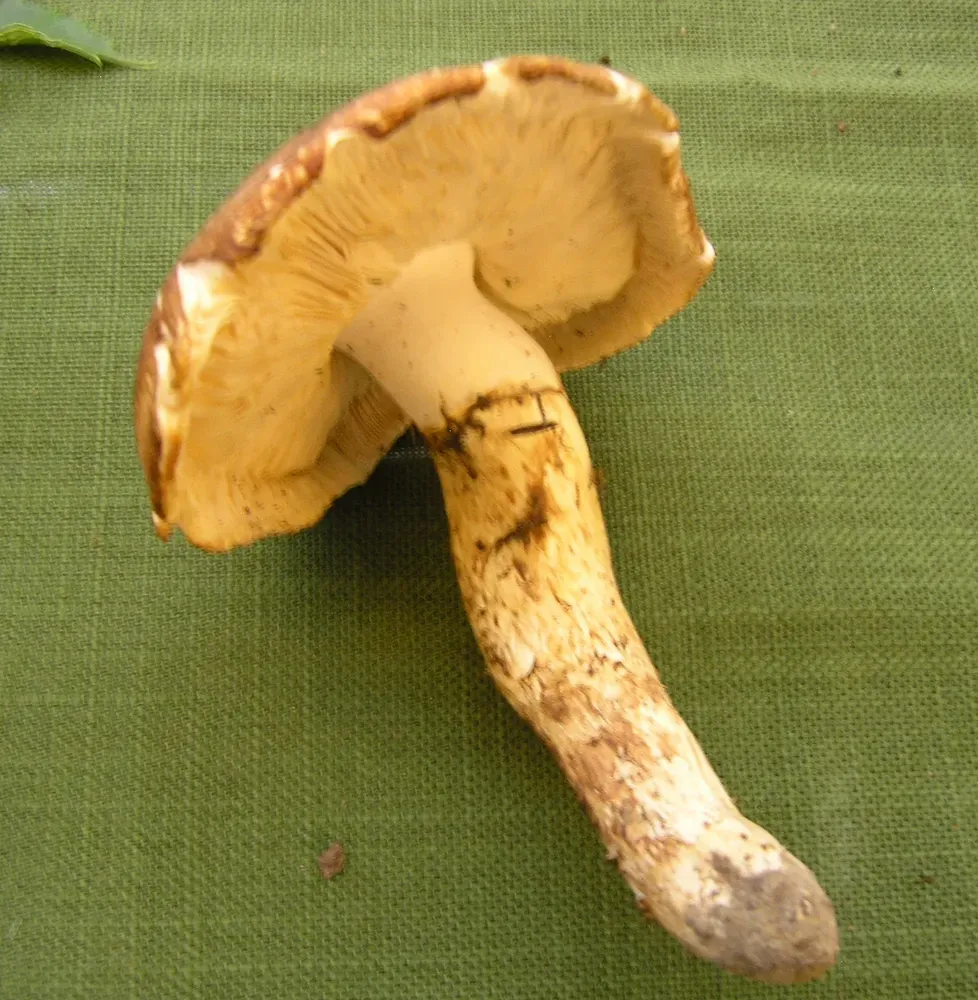
Related species
Mushrooms of the same genus and habitat — to study side by side and never mix up.
_Ricken_185798.webp)
Booted knight
Tricholoma focale
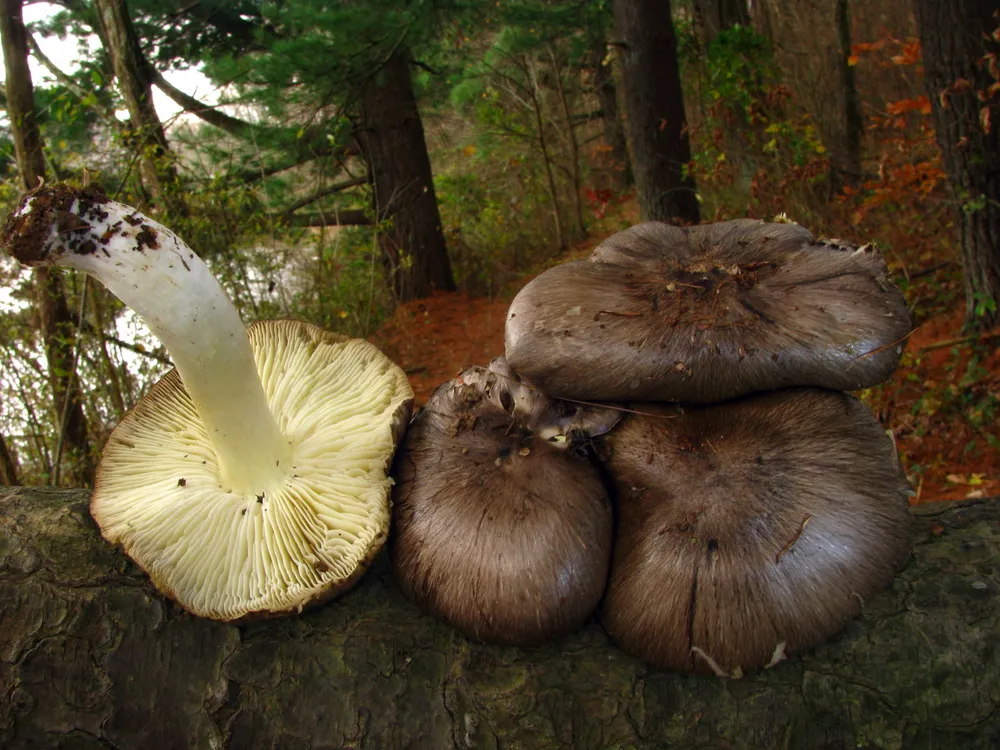
Charbonnier
Tricholoma portentosum
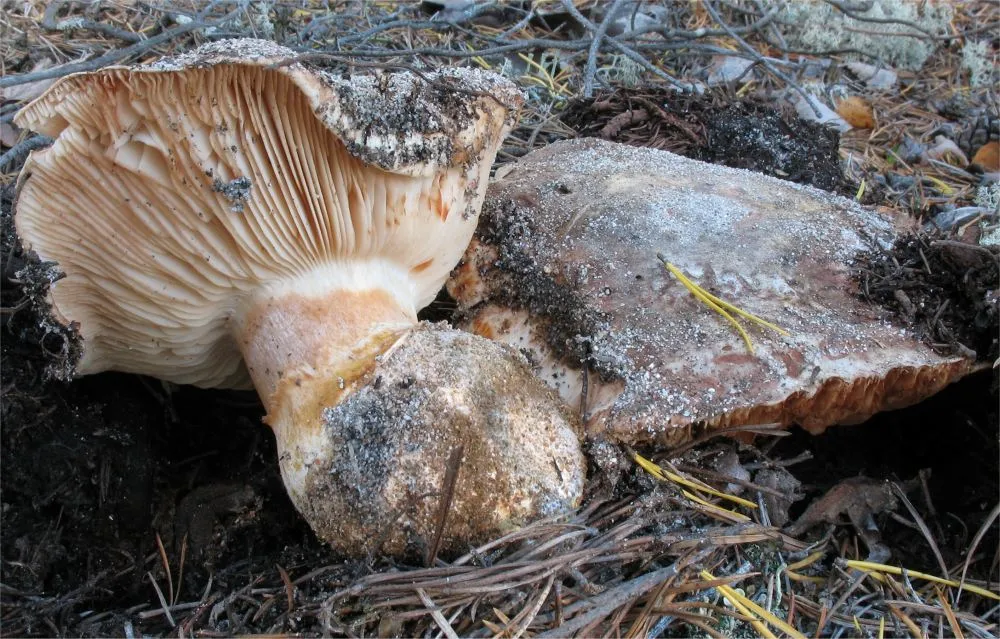
Giant knight
Tricholoma colossus
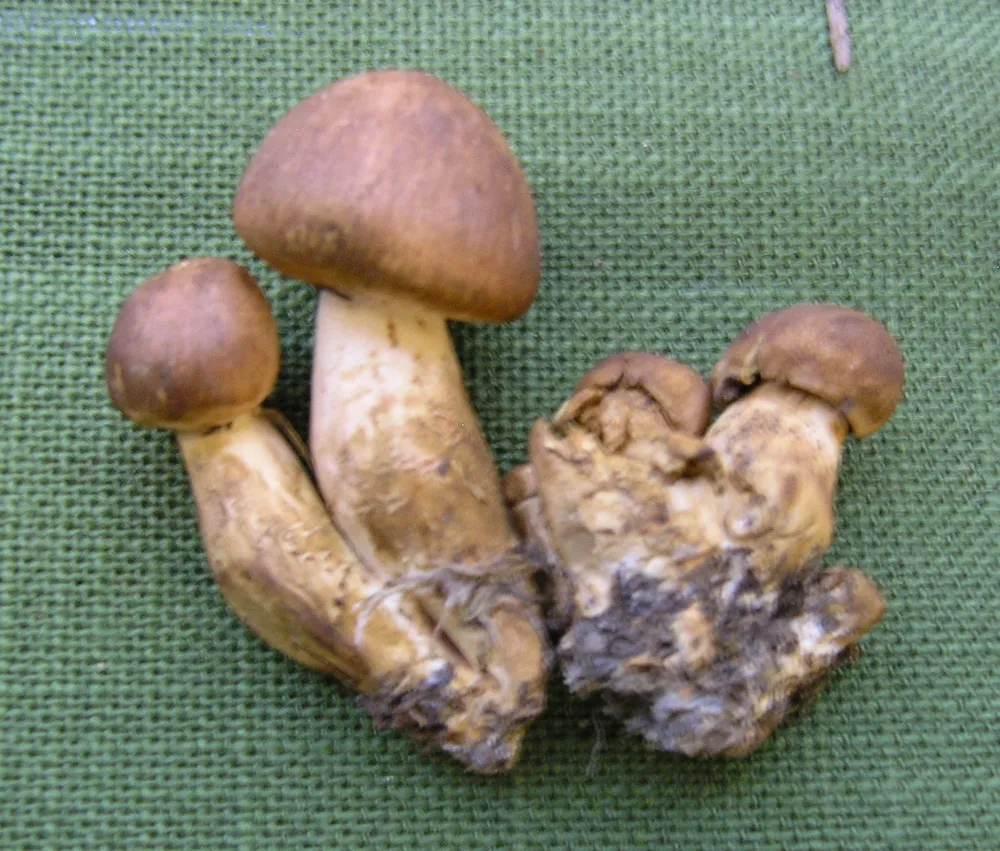
Matt knight
Tricholoma imbricatum
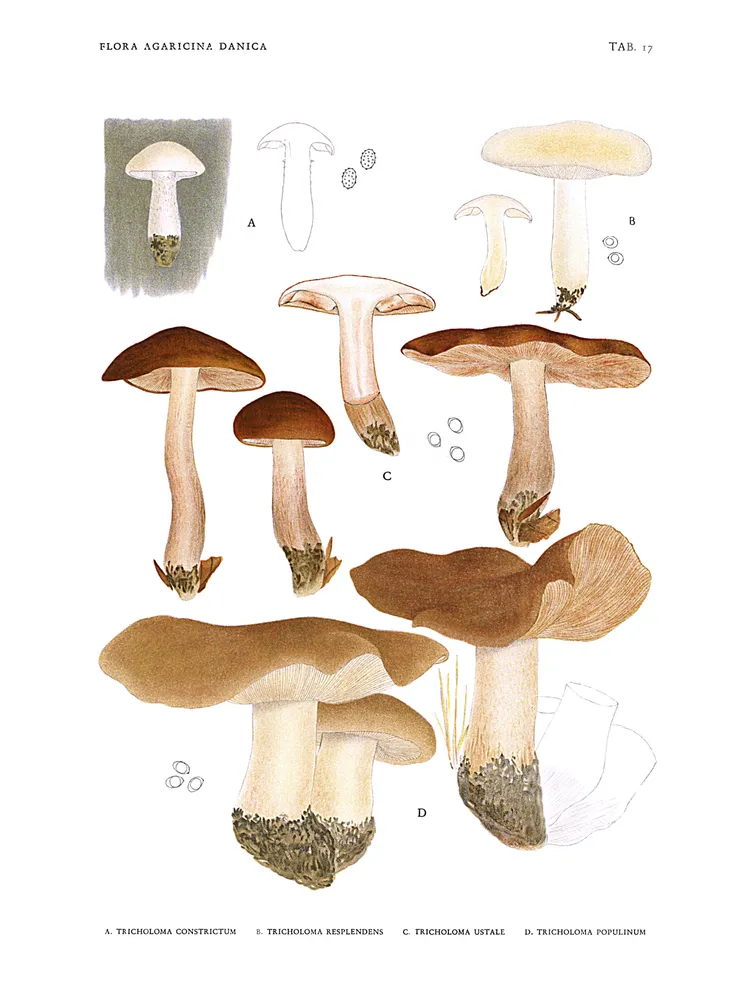
Poplar knight
Рядовка тополева
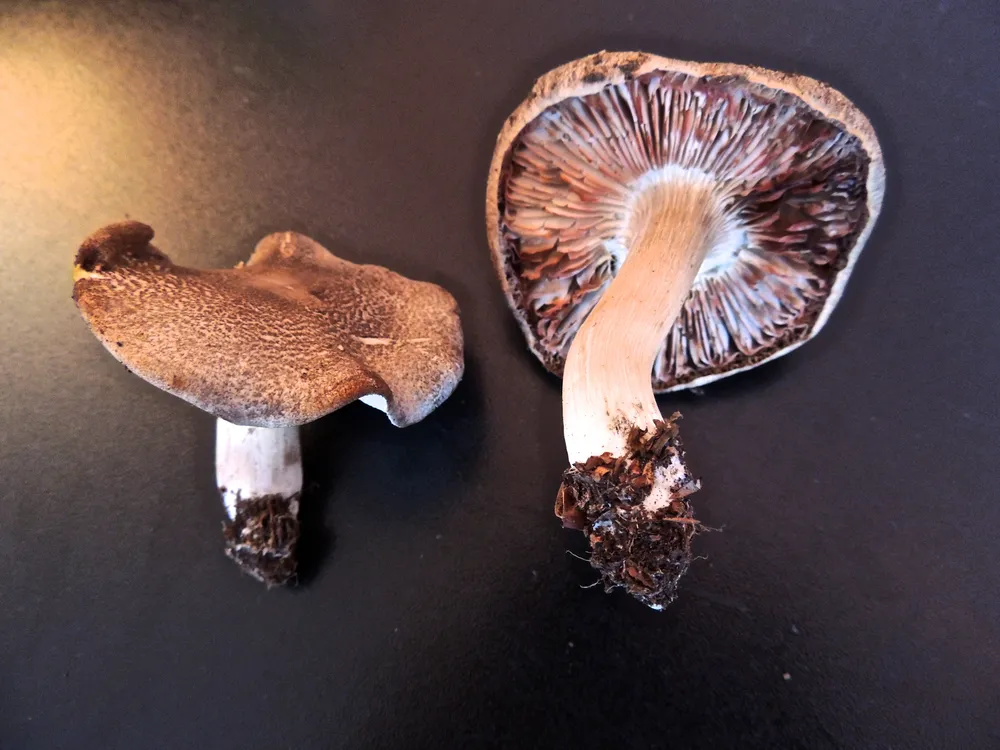
Tricholoma orirubens
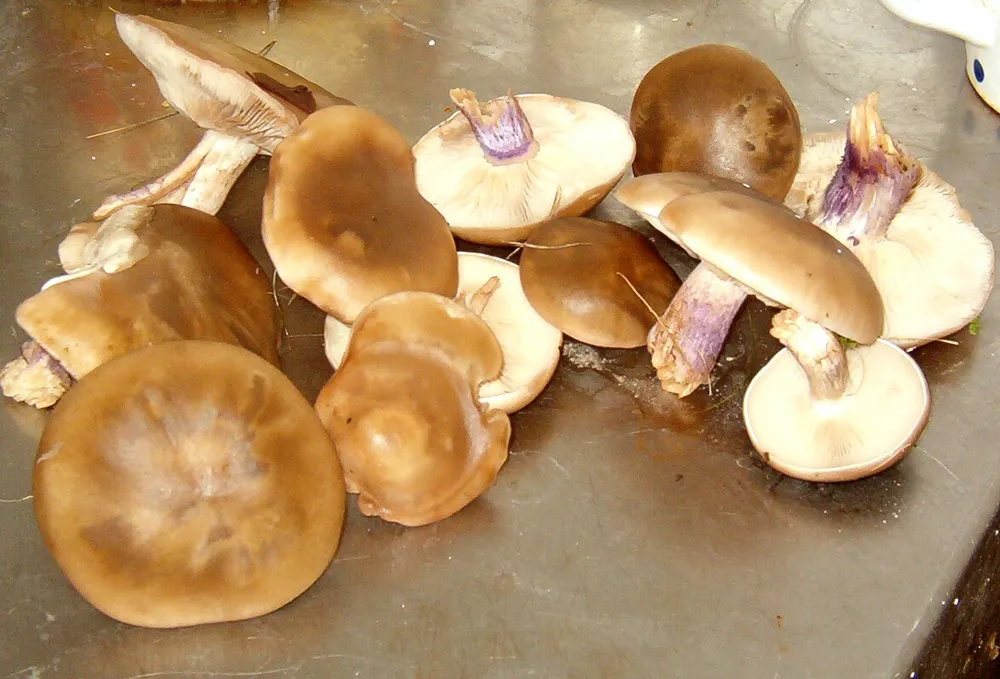
Field blewit
Collybia personata
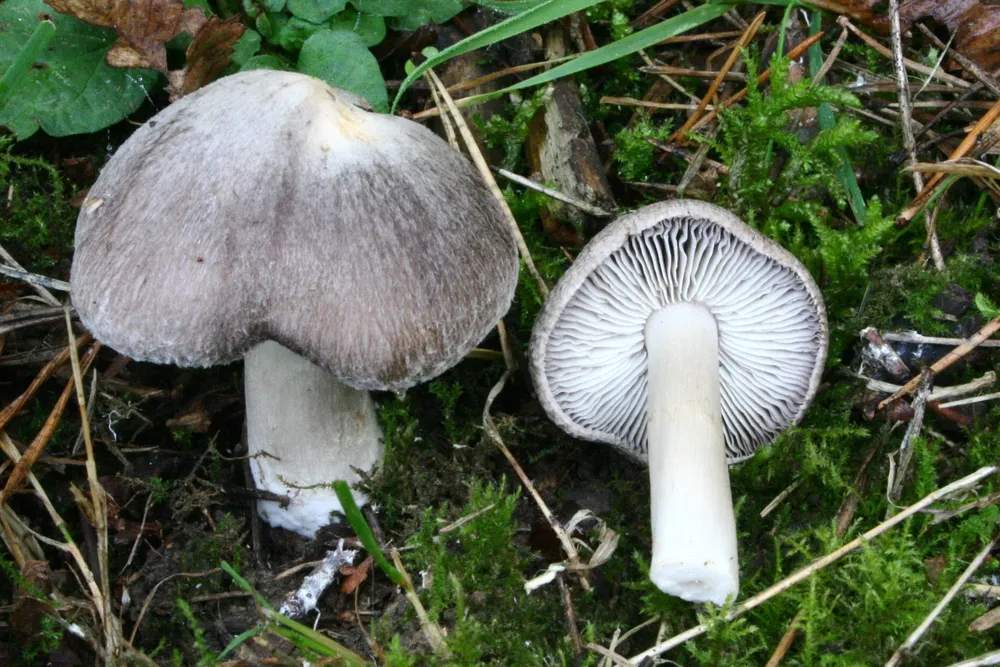
Grey knight
Рядовка наземна
Related reading
 Safety
Yellow knight and green brittlegill: edible or dangerous?
Greenish mushrooms make people wary, and for good reason: the deadly death cap is among them. We look at the y…
August 8, 2026·3 min.webp) How to identify
How to identifyTypes of Tricholoma in Ukraine: a complete guide
Knights are a large family of fall mushrooms: the grey knight, poplar knight, wood blewit, yellow knight and o…
July 14, 2026·2 min.webp) Where & when to forage
Where & when to forageWhat mushrooms to pick in November in Ukraine
November closes the season, but the woods aren't empty: late knights and bay boletes hang on, while velvet sha…
July 13, 2026·3 min
Frequently asked questions
Is Yellow knight edible or poisonous?
Does Yellow knight have gills or pores?
What does the cap of Yellow knight look like?
What does the stem of Yellow knight look like?
What do Yellow knight smell and taste like?
Where does Yellow knight grow?
Which trees does Yellow knight grow under?
When should you pick Yellow knight?
What can Yellow knight be confused with?
How do you cook Yellow knight?
Can you dry Yellow knight?
What is the scientific name of Yellow knight?
Sources
- [1]Атлас грибів України, Зеров Д.К. (1979)
- [2]GBIF