Soapy knightTricholoma saponaceum
Expert-verifiedUpdated October 3, 2026
Passport
- Edibility
- Inedible
- Season
- Aug — Nov
- Hymenophore
- Gilled
- Cap color
- Grey
- Size
- Medium (5–15 cm)
- Smell
- Chemical
- Reviewed
- Yes ✓
Quick answers
Where to look?
Deciduous forest, Mixed forest
When does it appear?
Aug — Nov
Active months: August, September, October, November.
How to recognize it? Three signs
- Cap color: Grey, Olive, Brown
- Cap shape: Convex
- Smell: Chemical
Fruiting season
August – November
Description
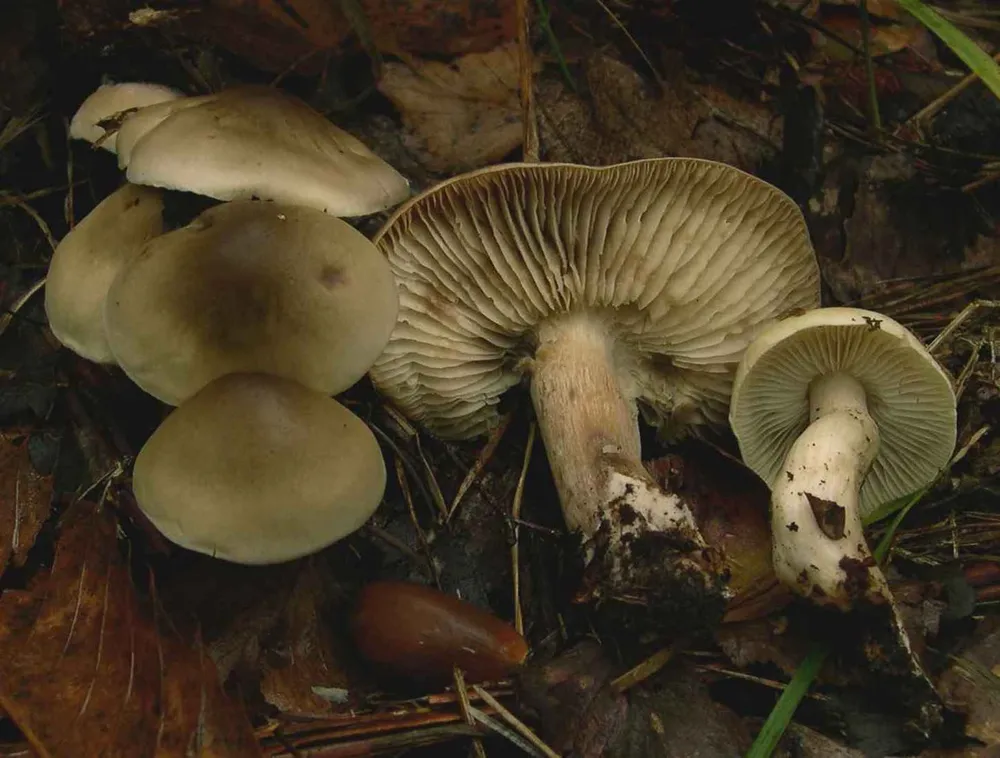
The soapy knight (Tricholoma saponaceum) is a common knight of broadleaf and mixed forests with a distinctive smell of cheap laundry soap — hence the Latin epithet saponaceum ("soapy") and its folk name "soapy". The smell is so distinct that you recognize it from the very first encounter — it is reminiscent of "a bar of tar soap" or Soviet-era toilet soap. The cap is 5-12 cm across, fleshy, convex to flattened-expanded, gray, olive-gray, greenish-gray, ranging to brown.
Inedible — even if someone can stand the soapy smell of the raw mushroom, the cooked flesh tastes soapy too, with a bitterish aftertaste, and the smell does not go away when cooked; sometimes it even gets stronger. People don't pick it, and the literature marks it as "inedible because of its smell and taste". It usually causes no serious gastrointestinal reactions, but it has absolutely no culinary value whatsoever.
An interesting variability in coloration: about 10 morphological forms of Tricholoma saponaceum have been described in Europe, differing in color (from gray-white to olive-black), size and smell. They all share one key feature — a soapy smell. In young fruiting bodies the smell is weaker; in mature ones it is distinct.
The main thing is to recognize it so you don't confuse it with the edible gray knights (T. portentosum, T. terreum). The combination of gray cap + soapy smell + reddish-pinkish spots on the stem flesh when cut is diagnostic. Reddish coloring of the flesh when broken is a second characteristic feature (unlike T. portentosum, whose flesh stays white).
In Ukraine, Tricholoma saponaceum is common in broadleaf and mixed forests: the Carpathians, Prykarpattia, Polissia, the forest-steppe. A mycorrhizal partner of beech, oak, hornbeam and spruce. Season: August — November. Often grows in groups of 5-15 on the forest floor.
Cap
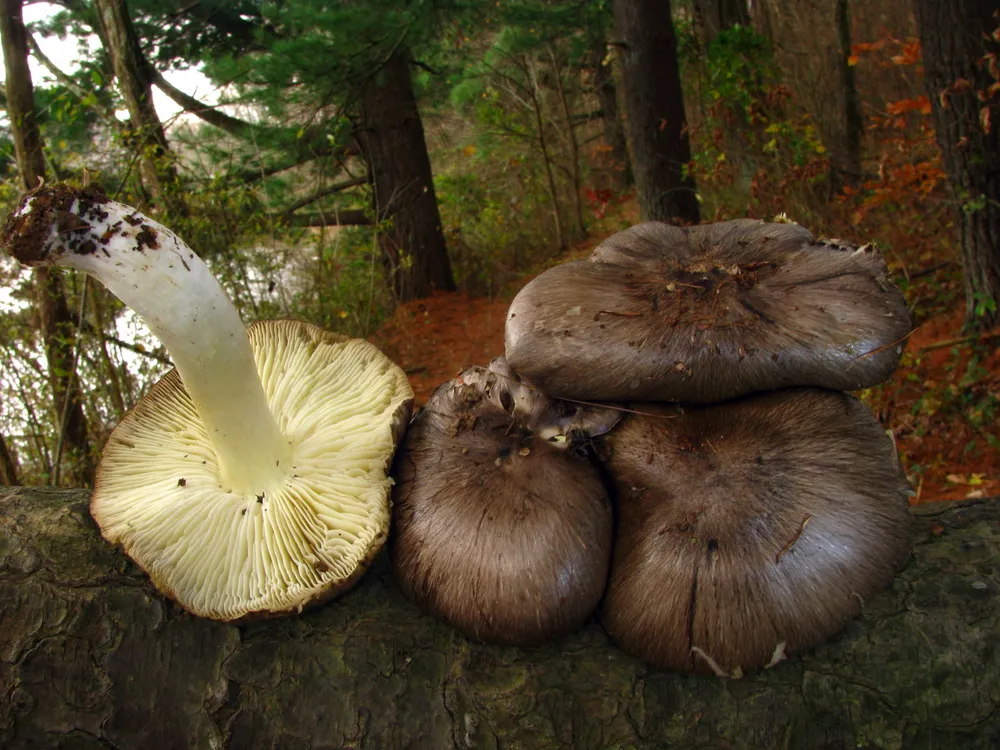
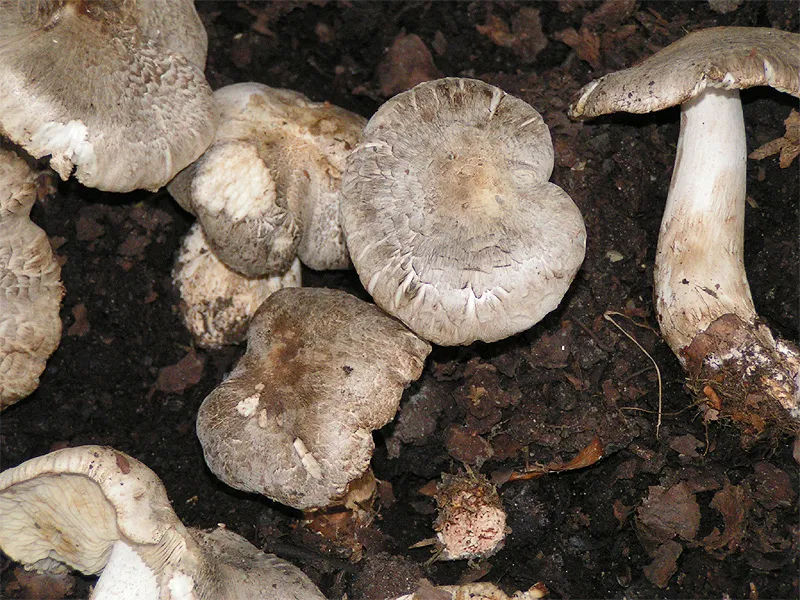
Cap 5-12 cm across, when young convex with an inrolled margin, becoming with age flattened-expanded with a small bump. The skin is smooth, slightly slimy in wet weather, dry and matte in dry weather. Color: very variable — gray-white, olive-gray, greenish-gray, brownish-gray, in some forms almost black in the center. Old fruiting bodies have small cracks.
Hymenophore
Gilled hymenophore — the gills are notched (sinuate) where they attach to the stem, moderately crowded, fleshy. When young they are whitish, becoming with age creamy-grayish, often turning pink when damaged. Spore print white.
Stem
Stem 5-10 cm tall, 1-2.5 cm thick, firm, cylindrical, thickening toward the base when young. Color: whitish to grayish; pinkish-red spots often appear when damaged — a diagnostic feature. Surface smooth with lengthwise fibers. No ring.
Flesh
Flesh firm, white, develops pinkish-red spots when cut or pressed, especially in the lower part of the stem — a characteristic reaction and an important diagnostic. Smell distinctly soapy (laundry soap), taste soapy-bitterish, unpleasant.
Smell
Distinctly soapy — reminiscent of laundry or toilet soap. A diagnostic feature, especially clear when cut and in mature fruiting bodies.
›Scientific synonyms (2)
Agaricus saponaceus Fr. (1818), Tricholoma atrovirens (Pers.) Sacc. (1887)
Lookalikes
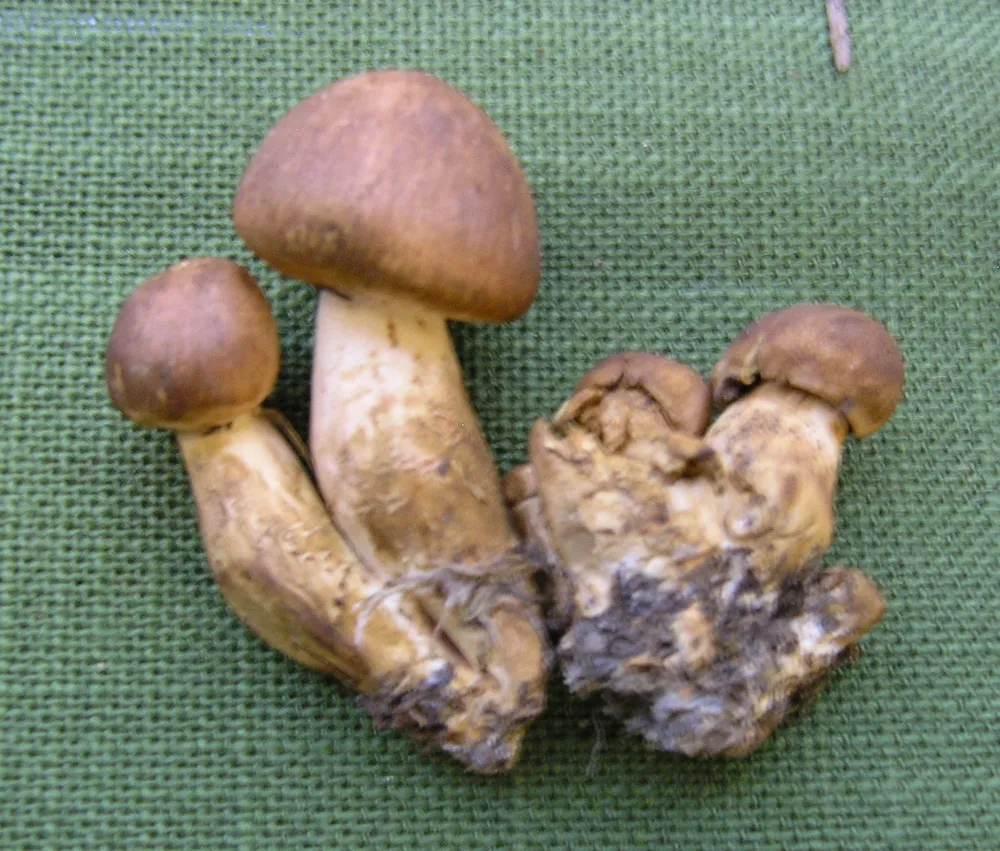
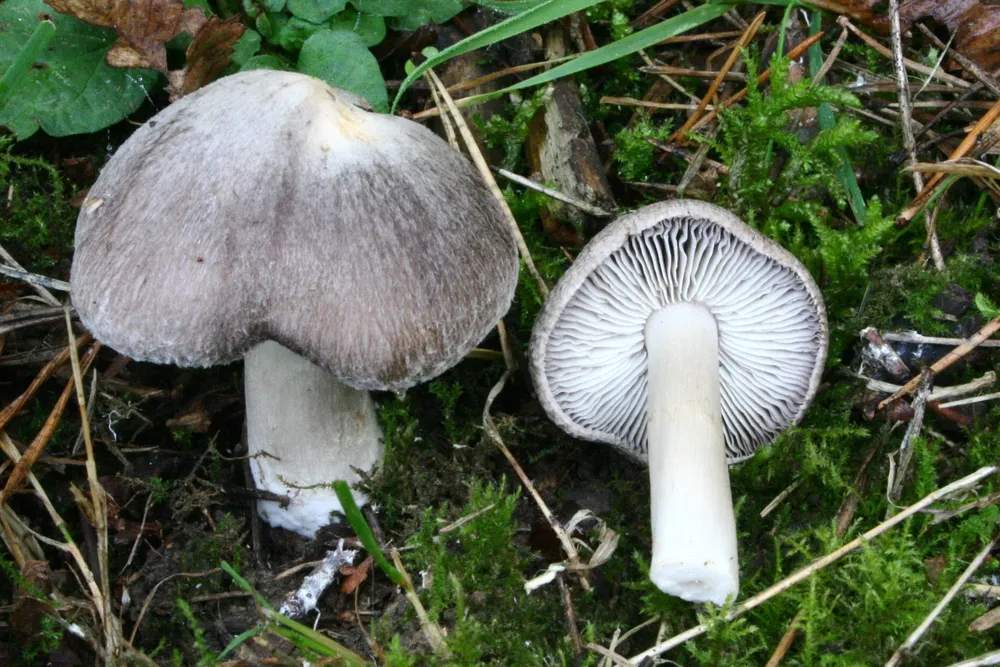
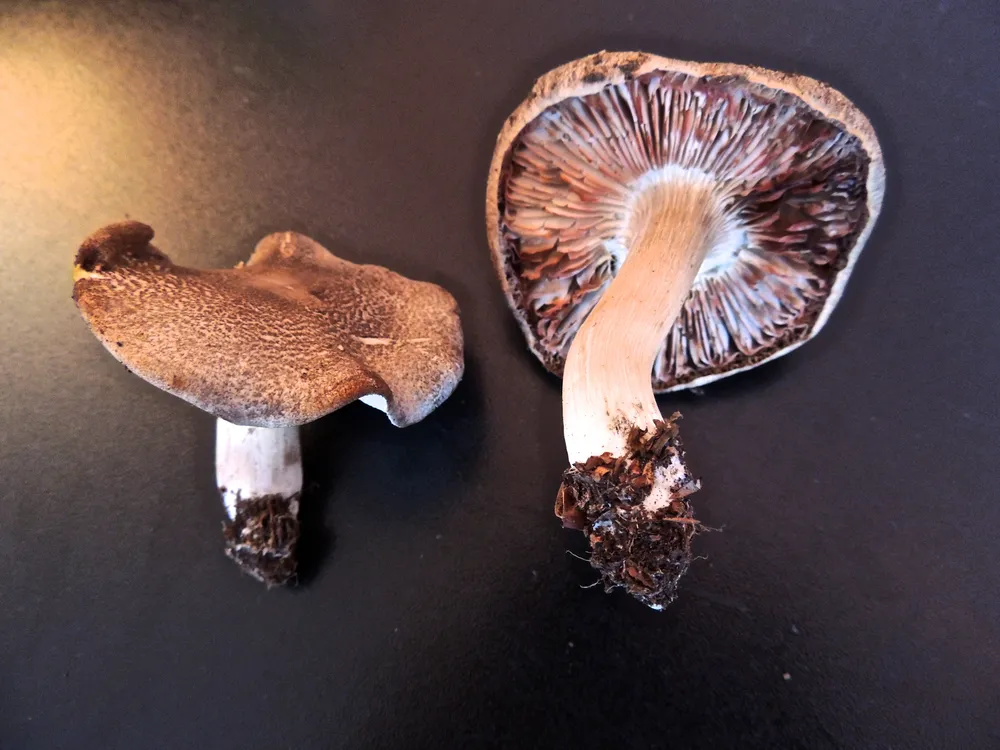
Related species
Mushrooms of the same genus and habitat — to study side by side and never mix up.
_Ricken_185798.webp)
Booted knight
Tricholoma focale
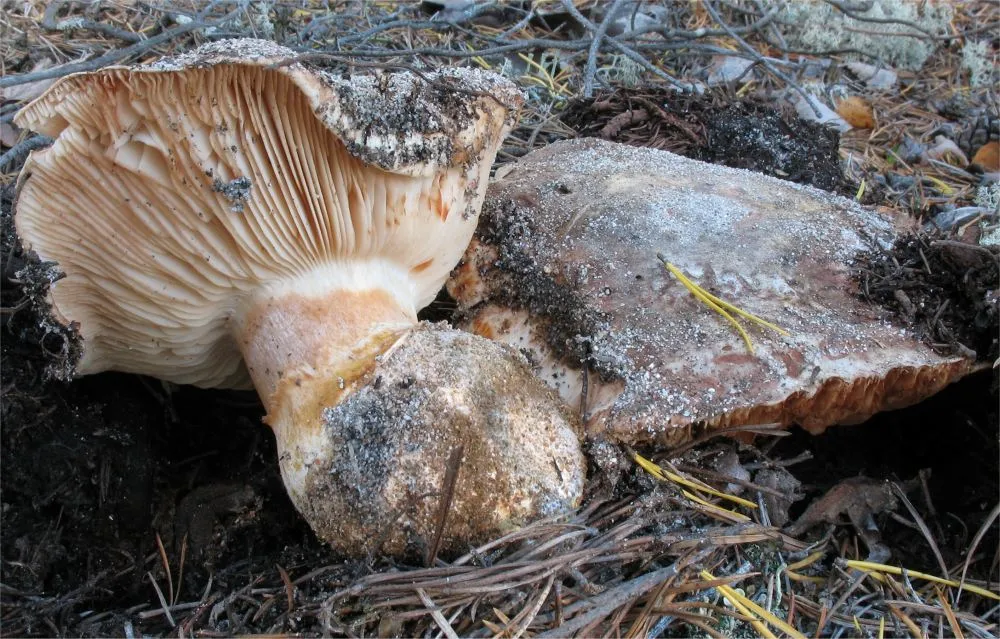
Giant knight
Tricholoma colossus
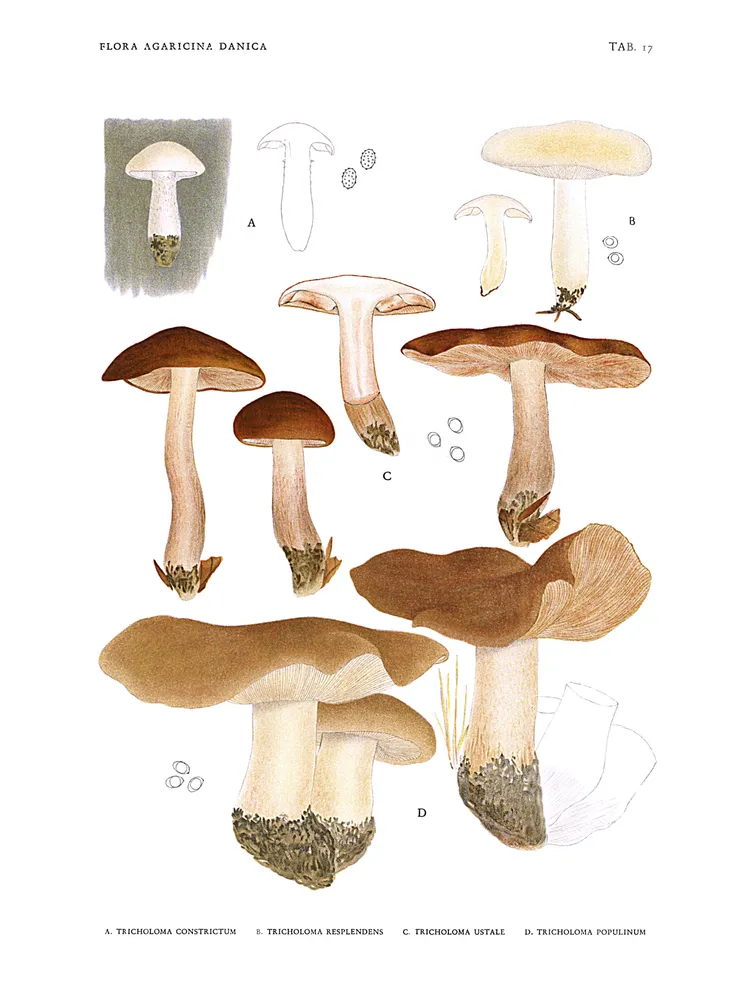
Poplar knight
Рядовка тополева
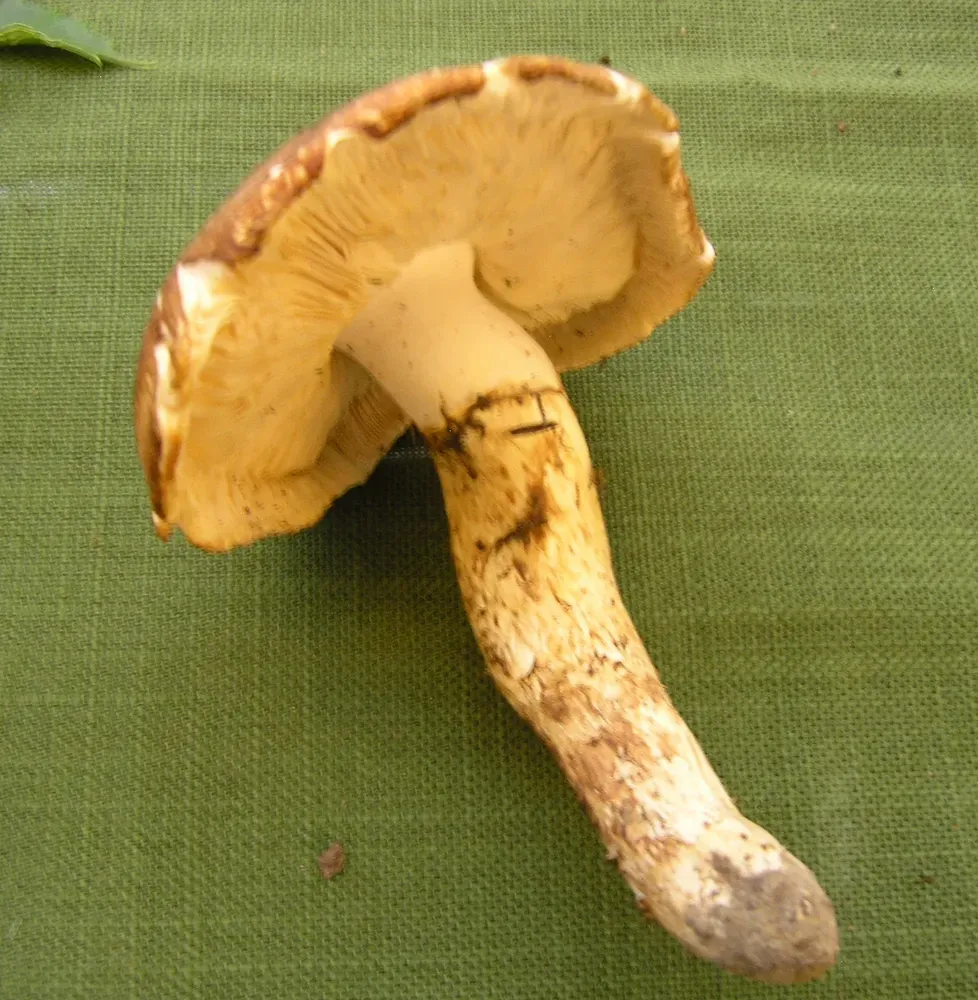
Tricholoma caligatum
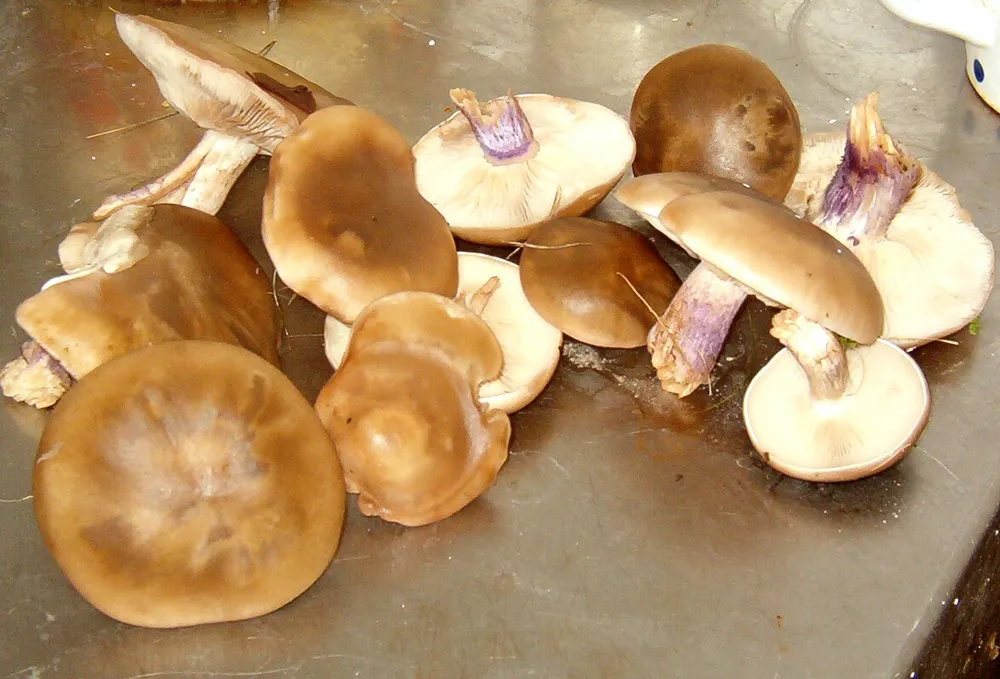
Field blewit
Collybia personata
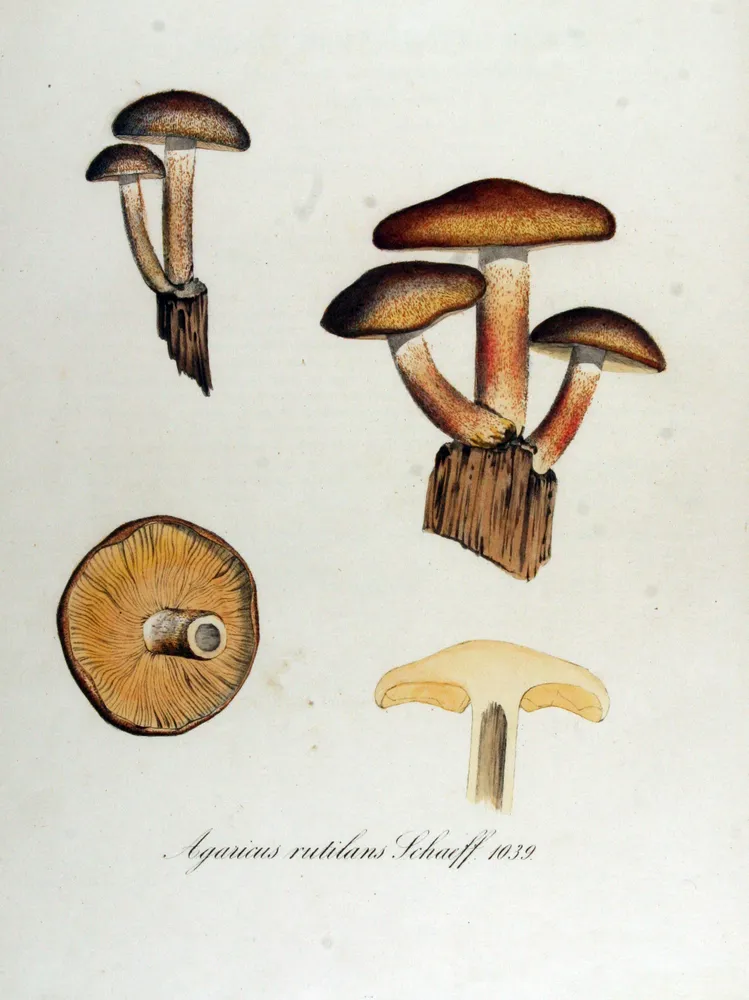
Plums and custard
Рядовка червона
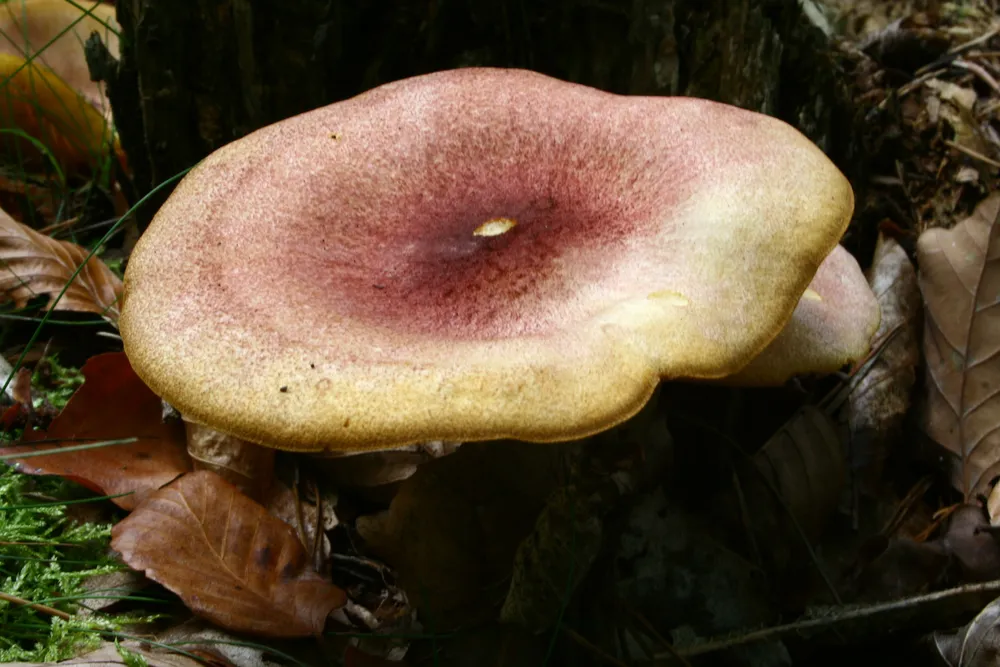
Plums and custard
Tricholomopsis rutilans
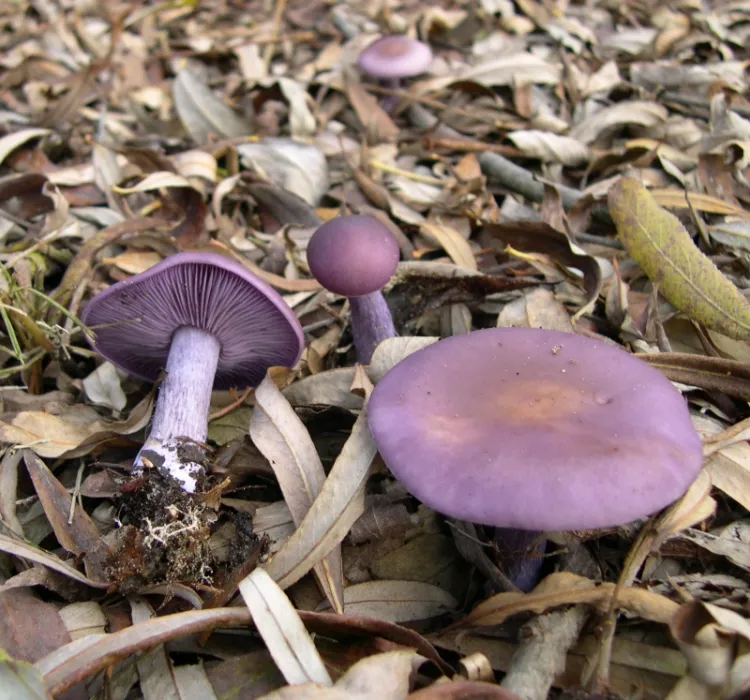
Wood blewit
Lepista nuda
Related reading
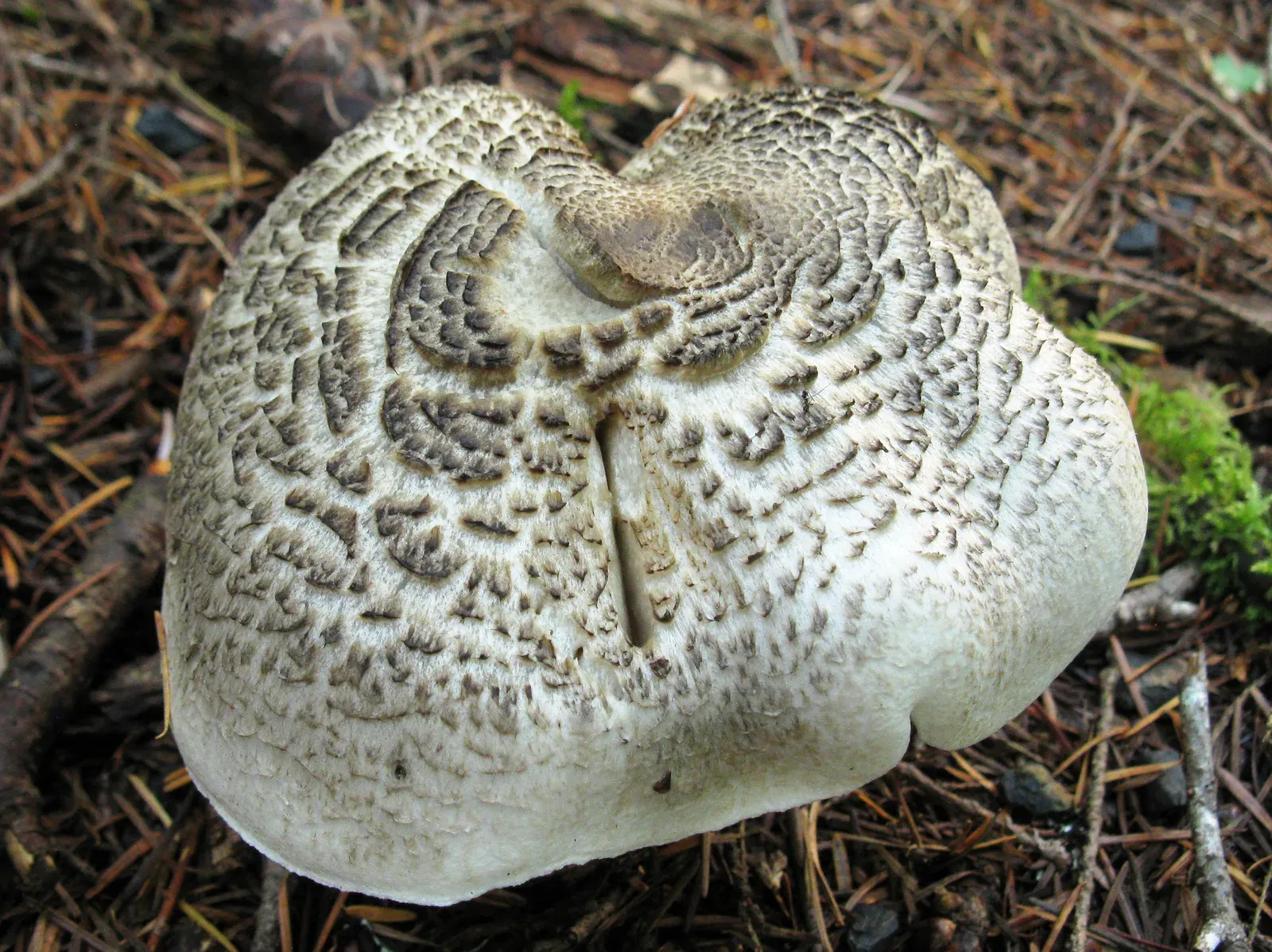 Safety
Tricholoma lookalikes: false and poisonous species
Knights (Tricholoma) are a rewarding autumn family, but it includes poisonous lookalikes, above all the tiger…
July 20, 2026·2 min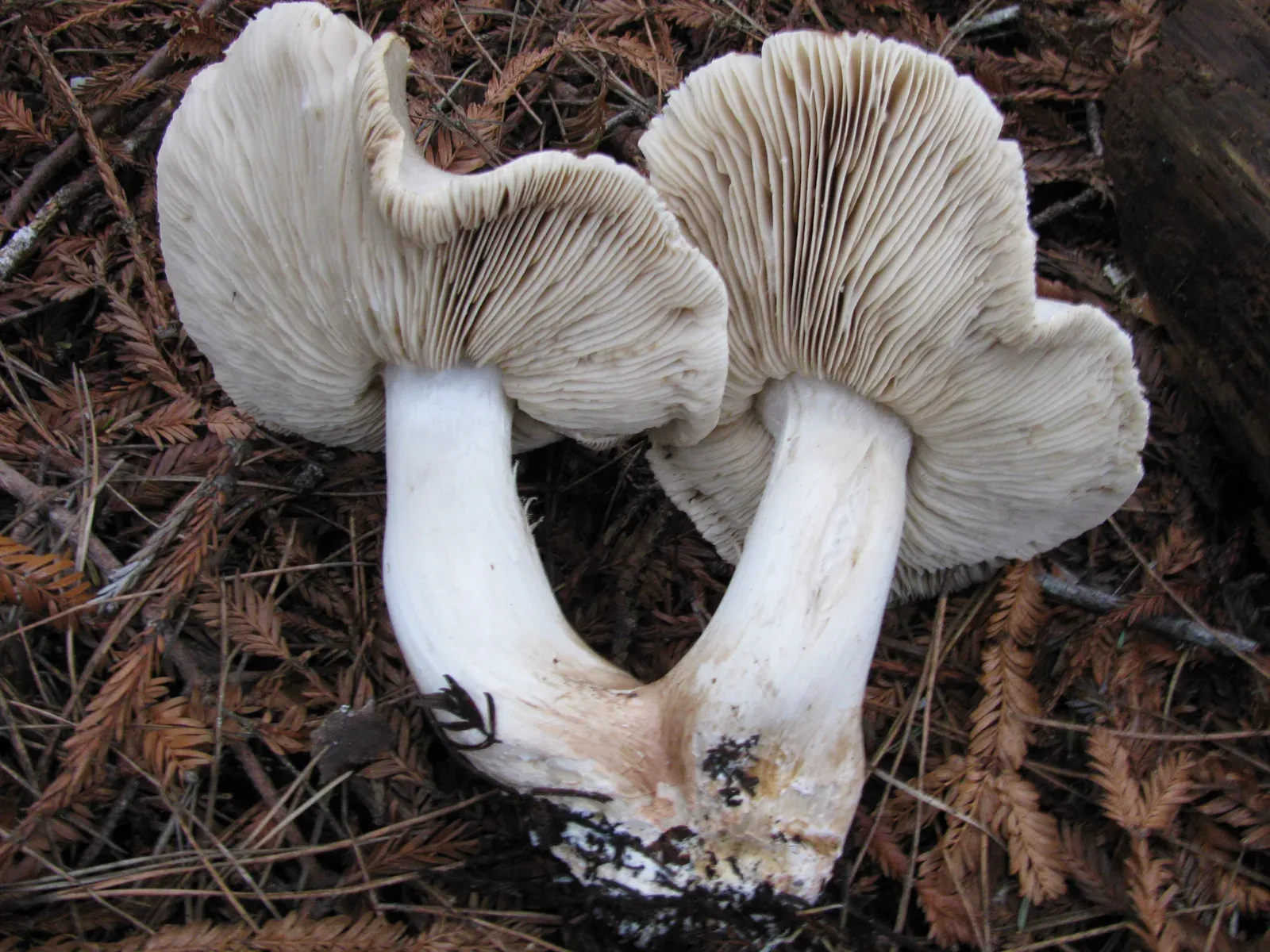 Safety
Poisonous Tricholomas: the tiger tricholoma and other dangerous species
Most knights are edible, but a few species are poisonous — and the most dangerous of them is the tiger (leopar…
July 14, 2026·2 min.webp) How to identify
How to identifyPoplar knight: how to spot this autumn mushroom of poplars
The poplar knight grows only under poplars, often in huge clusters in late fall. It's little known but valuabl…
July 14, 2026·2 min
Frequently asked questions
Is it poisonous?
Not poisonous in the usual sense — it causes no serious gastrointestinal reactions. But it is inedible because of its distinctly soapy smell and taste, which don't go away with cooking. It ruins any dish.
How do you identify it for sure, so you don't confuse it with the edible gray knights?
Key features of T. saponaceum: (1) distinct soapy smell (laundry soap) — the most important; (2) pinkish-red spots on the flesh when the stem is cut; (3) variable gray-olive cap coloring. T. portentosum (edible) — no soapy smell, a distinct mealy-cucumber one instead, flesh does not turn pink. T. terreum (conditionally edible) — downy cap, no soapy smell.
Why is it called "soapy"?
Because of its very distinctive smell, which really does resemble laundry soap. This smell is usually attributed to the group of medium-chain fatty acids (C8-C10) — the same ones found in natural soaps. In young fruiting bodies the smell is weaker; in mature ones it is distinct even without cutting.
And if you ate it anyway — what happens?
Under normal circumstances, nothing serious. The bitter-soapy taste will linger in your mouth for hours, maybe with slight nausea from the taste, but it won't cause acute poisoning. The dish is simply ruined. Spit it out if you can, rinse your mouth, have some tea.
Where do you find it, so you learn to recognize it?
In broadleaf and mixed forests (beech, oak, hornbeam, spruce) — on the forest floor among moss and grass. On neutral and slightly acidic soils. Often grows in groups or clusters of 5-15 fruiting bodies.
In which regions of Ukraine does it occur?
Common throughout the forest zone: the Carpathians, Prykarpattia, Polissia, the forest-steppe.
When do you look for it?
August — November, peaking in September–October. Loves a damp autumn.
What mushrooms is it confused with?
With T. portentosum (charbonnier, edible) — no soapy smell, flesh does not turn pink. With T. terreum (grey knight, conditionally edible) — downy cap, no soapy smell. With T. virgatum — also gray, but distinctly bitter-acrid (inedible). If you smell soap — it's Tricholoma saponaceum, for sure.
Is Soapy knight edible or poisonous?
Does Soapy knight have gills or pores?
What does the cap of Soapy knight look like?
What does the stem of Soapy knight look like?
Sources
- [1]Вікіпедія (українська)
- [2]Атлас грибів України, Зеров Д.К. (1979)
- [3]MycoBank Database
- [4]Index Fungorum
- [5]GBIF
- [6]iNaturalist Ukraine