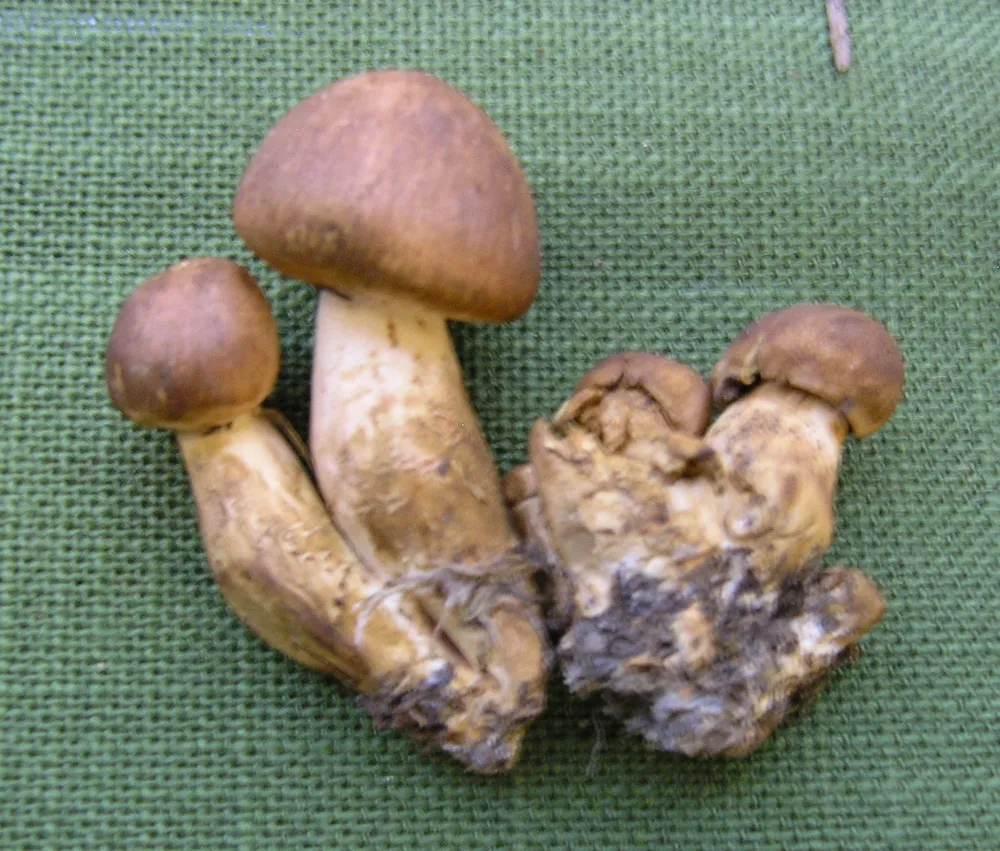
Matt knightTricholoma imbricatum
Expert-verifiedUpdated October 3, 2026
Passport
- Edibility
- Conditionally edible
- Season
- Aug — Nov
- Hymenophore
- Gilled
- Cap color
- Brown
- Size
- Medium (5–15 cm)
- Smell
- Floury
- Reviewed
- Yes ✓
Quick answers
Where to look?
Conifer forest, Mixed forest
When does it appear?
Aug — Nov
Active months: August, September, October, November.
How to recognize it? Three signs
- Cap color: Brown, Dark brown
- Cap shape: Umbonate
- Smell: Floury
Fruiting season
August – November
Description
The matt knight (Tricholoma imbricatum) is a common autumn knight of pine forests with a matte chestnut-brown cap with a faint scaly-fibrous pattern. The Latin epithet imbricatum, "overlapping like roof tiles," hints at the fine fibrous pattern on the cap that resembles tiling. The cap is 5-12 cm across, fleshy, convex to flat with a low bump in the center, dark chestnut-brown, shiny in wet weather, matte with a fine scaly pattern in dry weather.
Conditionally edible — young fruit bodies can be cooked after boiling for 10-15 min and discarding the water. The bitterish, mealy taste of the raw flesh disappears after boiling, but its culinary value is average — it can't compete with saffron milk caps or slippery jacks, but it's ideal as a "filler" in a mix. Folk foragers pick it in moderation — where there's nothing tastier around. Old Soviet literature lists it as "edible, category 4".
The key is to recognize it among the other brown knights (T. pessundatum, T. ustaloides, T. albobrunneum, T. fulvum, T. populinum), some of which are also conditionally edible, while others are of uncertain safety. The general rule for brown knights: pick only the ones you identify with confidence; when in doubt, leave it.
This mushroom is a mycorrhizal partner of pine (less often spruce) and grows on the forest floor in pine and mixed forests. The season runs August to November, peaking in September–October. It often grows in groups or "rows" — hence the Ukrainian genus name "riadovka" (from "riad", a row).
In Ukraine the matt knight is common in pine and spruce-pine forests: the Carpathians, Prykarpattia, Polissia, and in places the forest-steppe. In the steppe it appears in planted pine stands.
Cap
Cap 5-12 cm across, in young specimens convex-globular with an inrolled margin, becoming with age flat-convex with a low, broad bump in the center. The cap skin is matte, slightly slimy in wet weather. Color: dark chestnut-brown, richer in the center, paler toward the margin. The surface is finely fibrous or faintly scaly-fibrous — a "tiled" pattern, especially visible on the sunlit sides of the cap. The margin is even, inrolled when young, wavy when old.
Hymenophore
Gilled hymenophore — the gills are notched-attached to the stem, moderately crowded, fleshy. When young they are whitish, becoming with age cream with ochre-brown spots on the edges. Spore print white.
Stem
Stem 5-10 cm tall, 1-2.5 cm thick, firm, cylindrical, thickening toward the base in older specimens. Color: whitish in the upper part, brownish below, often with ochre-chestnut spots in the lower third. Surface finely fibrous. No ring.
Flesh
Flesh firm, white, where cut it doesn't change color or slowly takes on a pale yellowish tint in the air. Smell faintly mealy, taste mild at first, then bitterish and mealy — with the aftertaste typical of knights.
Smell
A faint mealy smell, typical of many knights (with a note of freshly ground flour).
›Scientific synonyms (5)
Agaricus imbricatus Fr. (1815), Agaricus vaccinus subsp. imbricatus (Fr.) Pers. (1828), Gyrophila imbricata (Fr.) Quél. (1886), Tricholoma subimbricatum Velen. (1920), Cortinellus imbricatus (Fr.) Raithelh. (1970)
Lookalikes
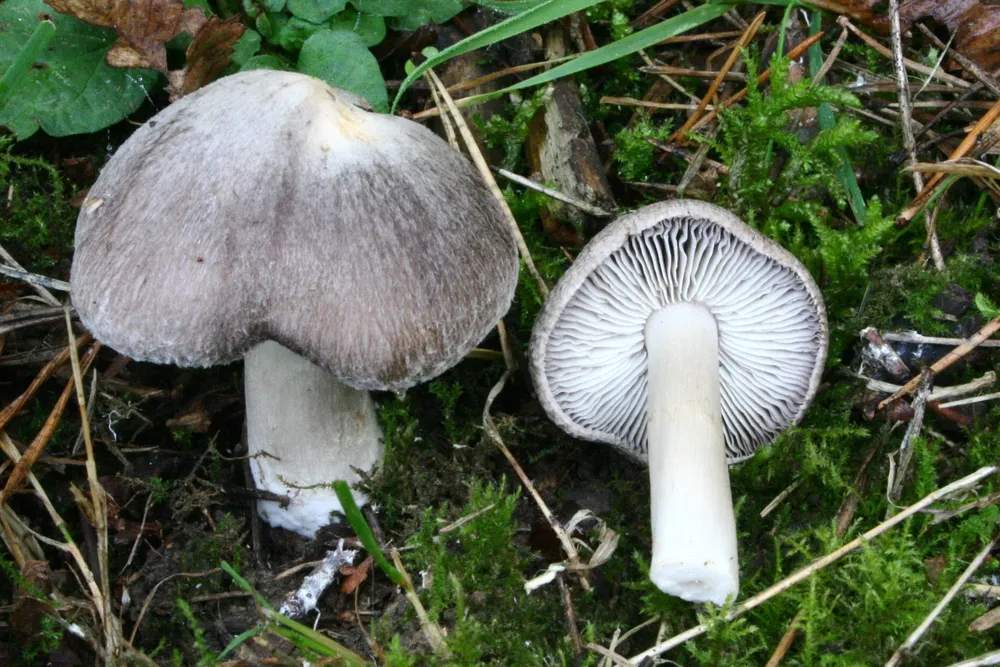
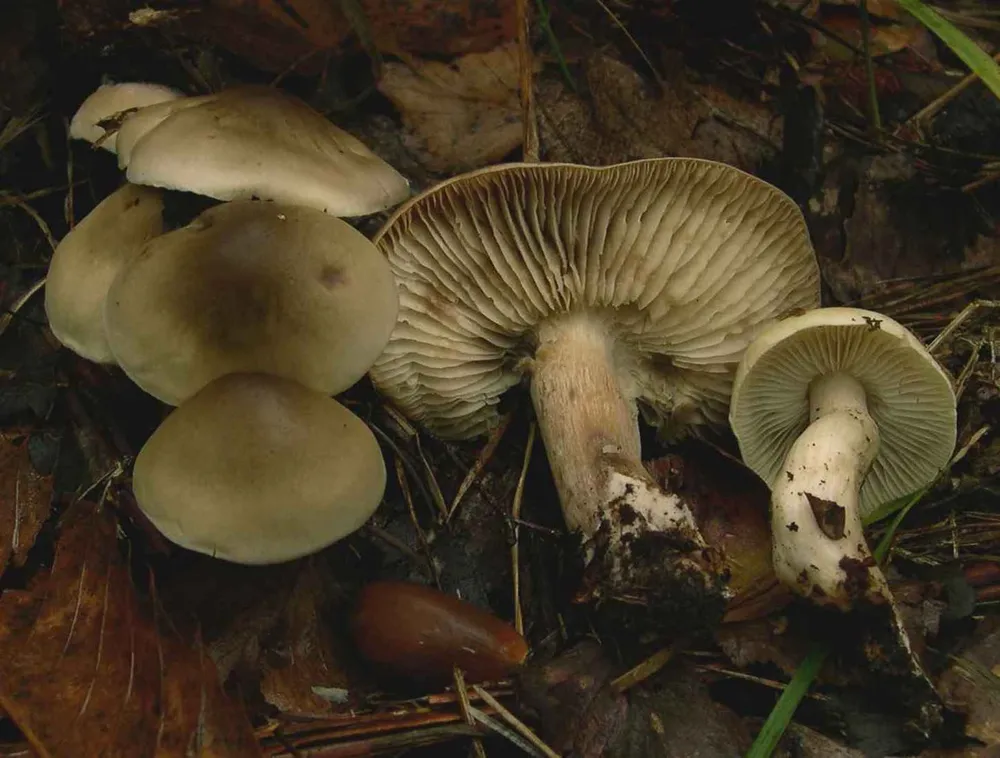
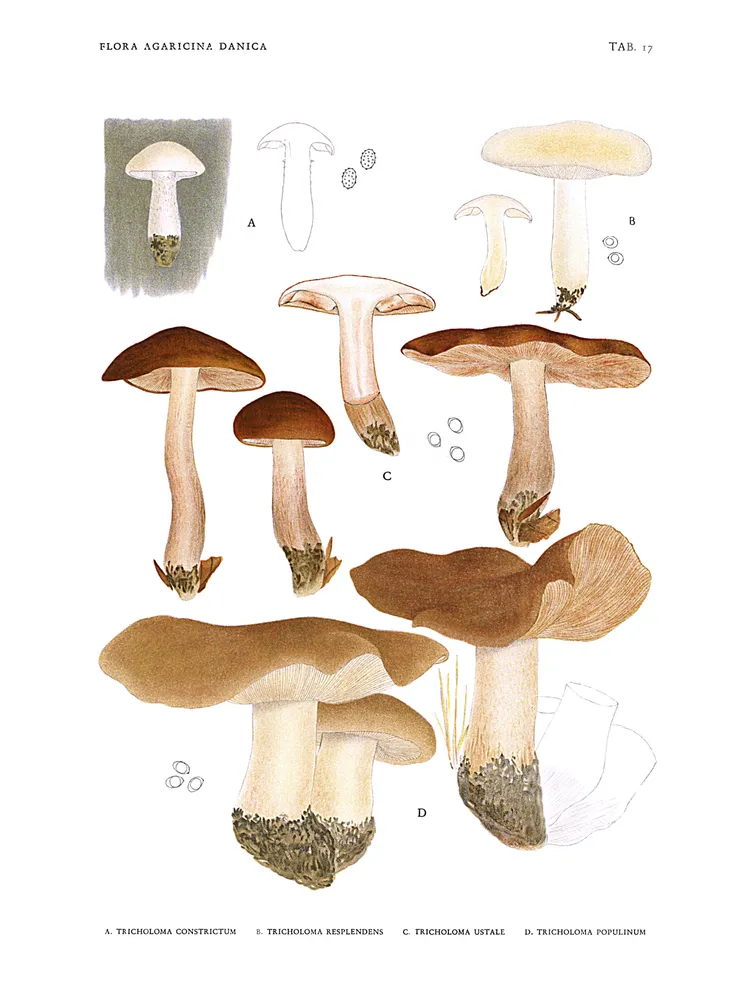
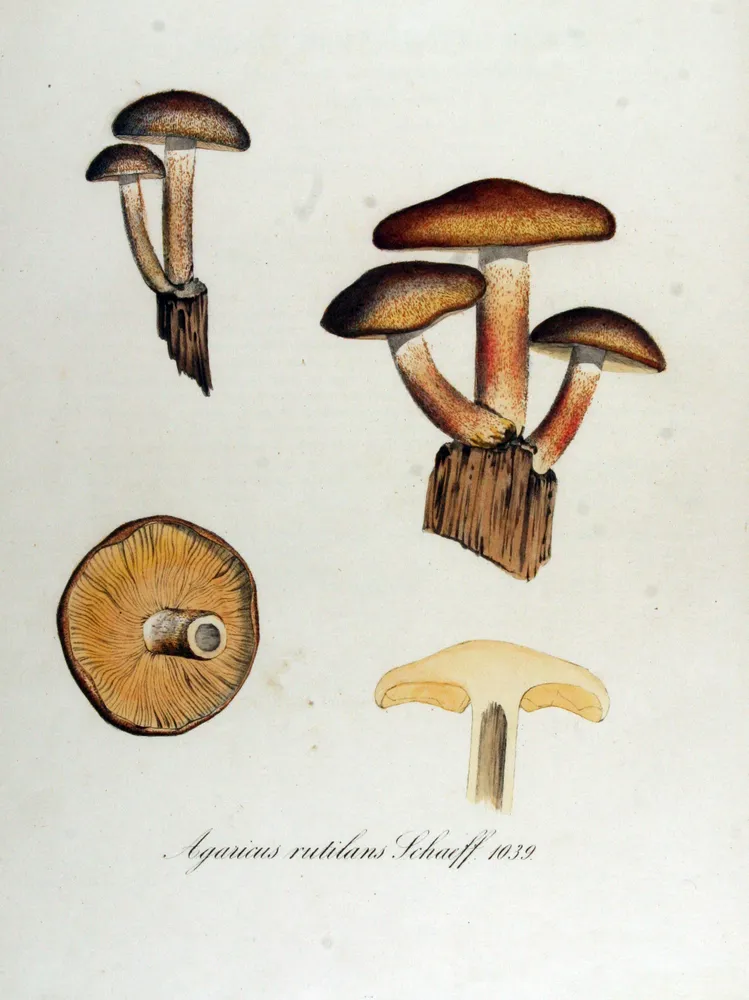
Related species
Mushrooms of the same genus and habitat — to study side by side and never mix up.
_Ricken_185798.webp)
Booted knight
Tricholoma focale
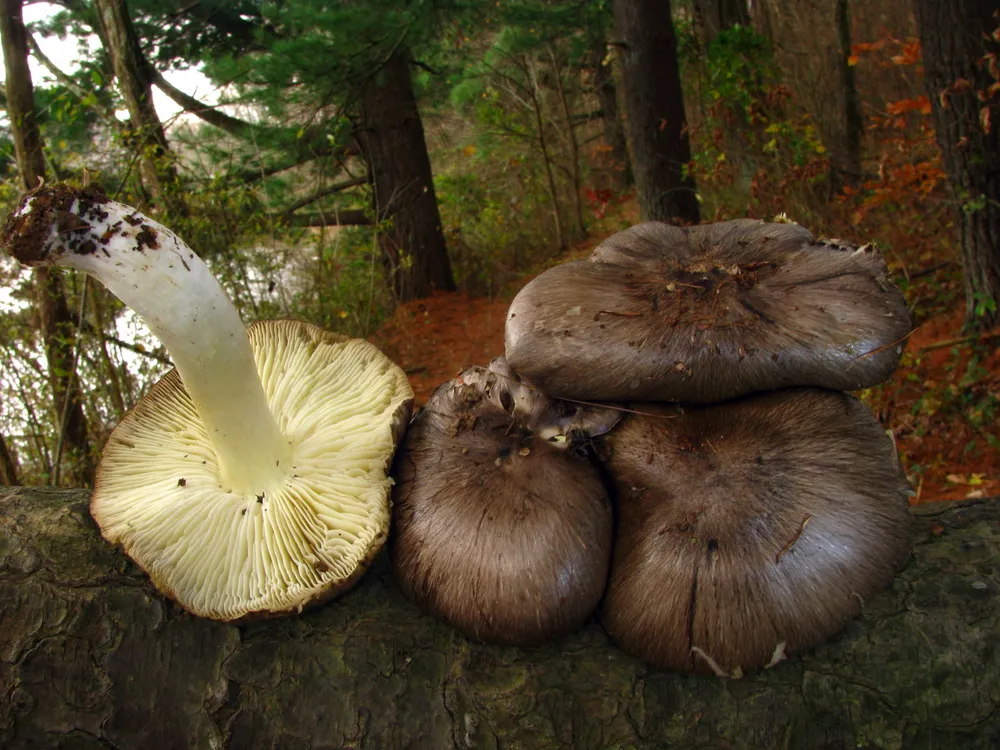
Charbonnier
Tricholoma portentosum
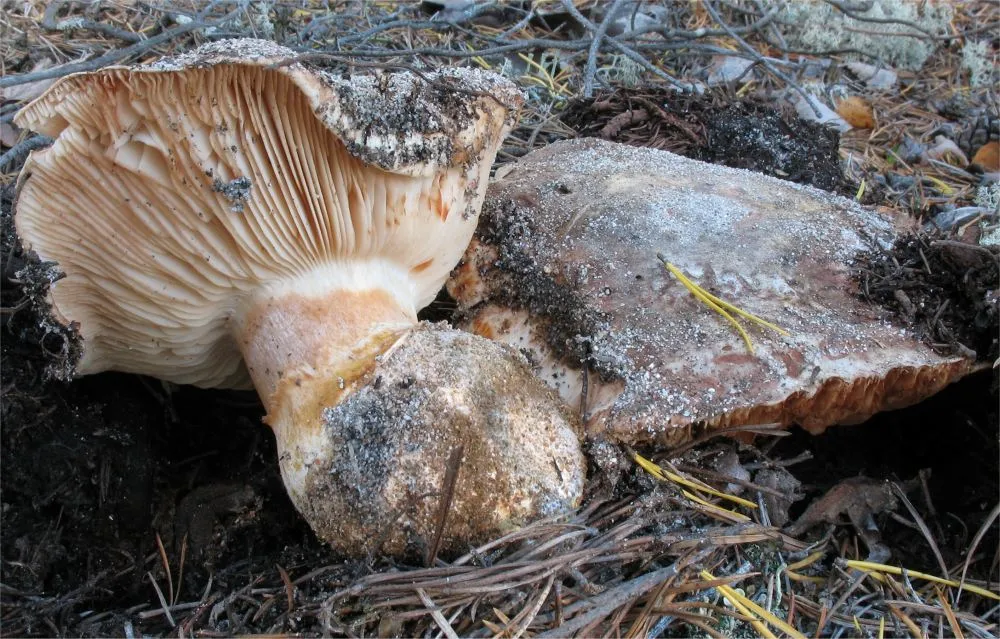
Giant knight
Tricholoma colossus
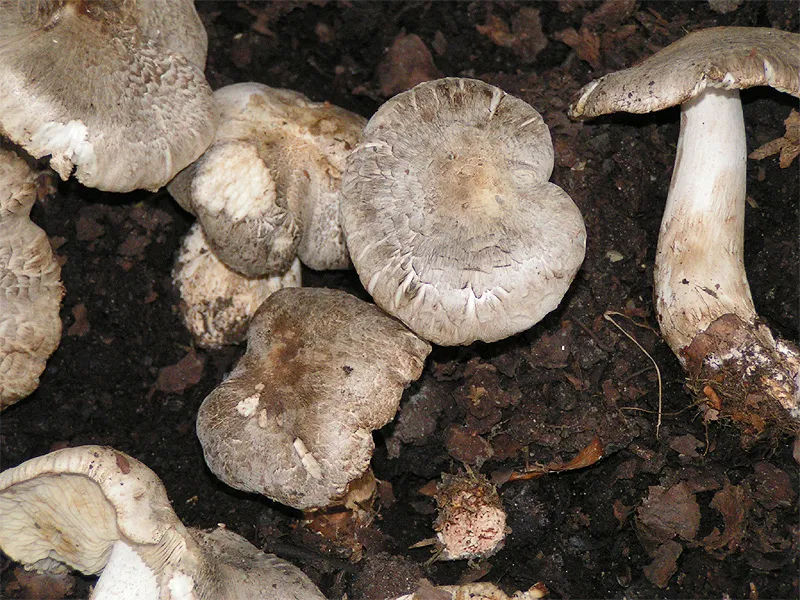
Tiger tricholoma
Tricholoma pardinum
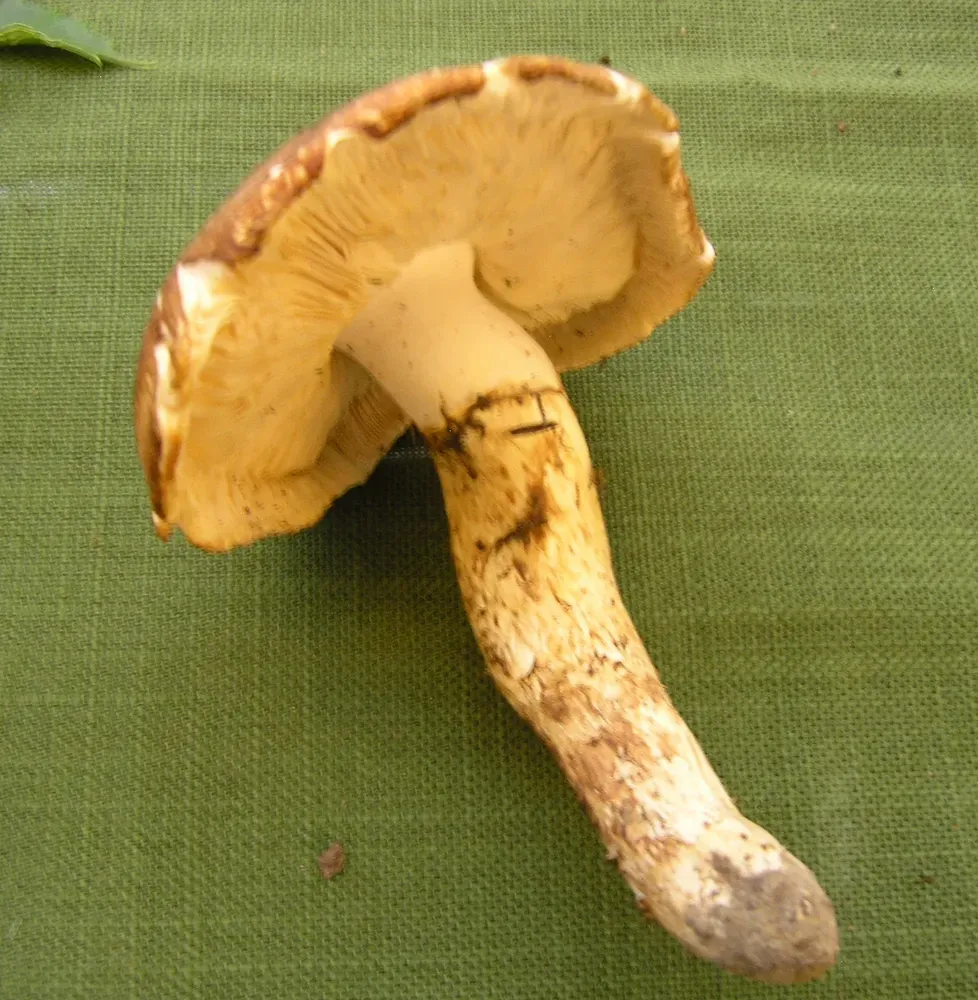
Tricholoma caligatum
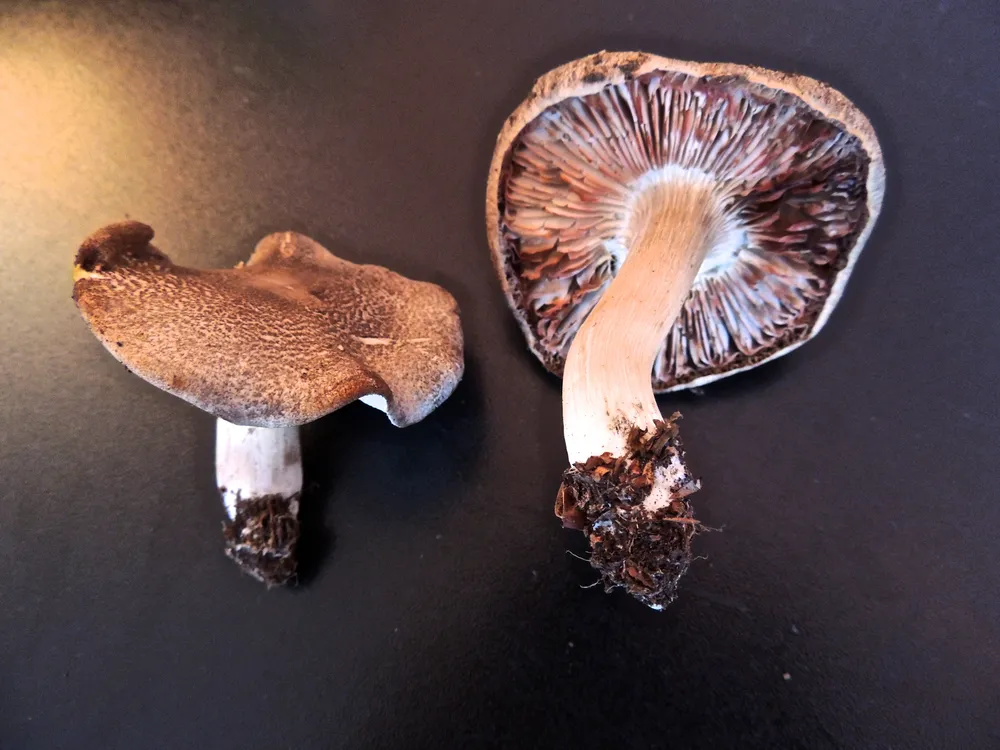
Tricholoma orirubens
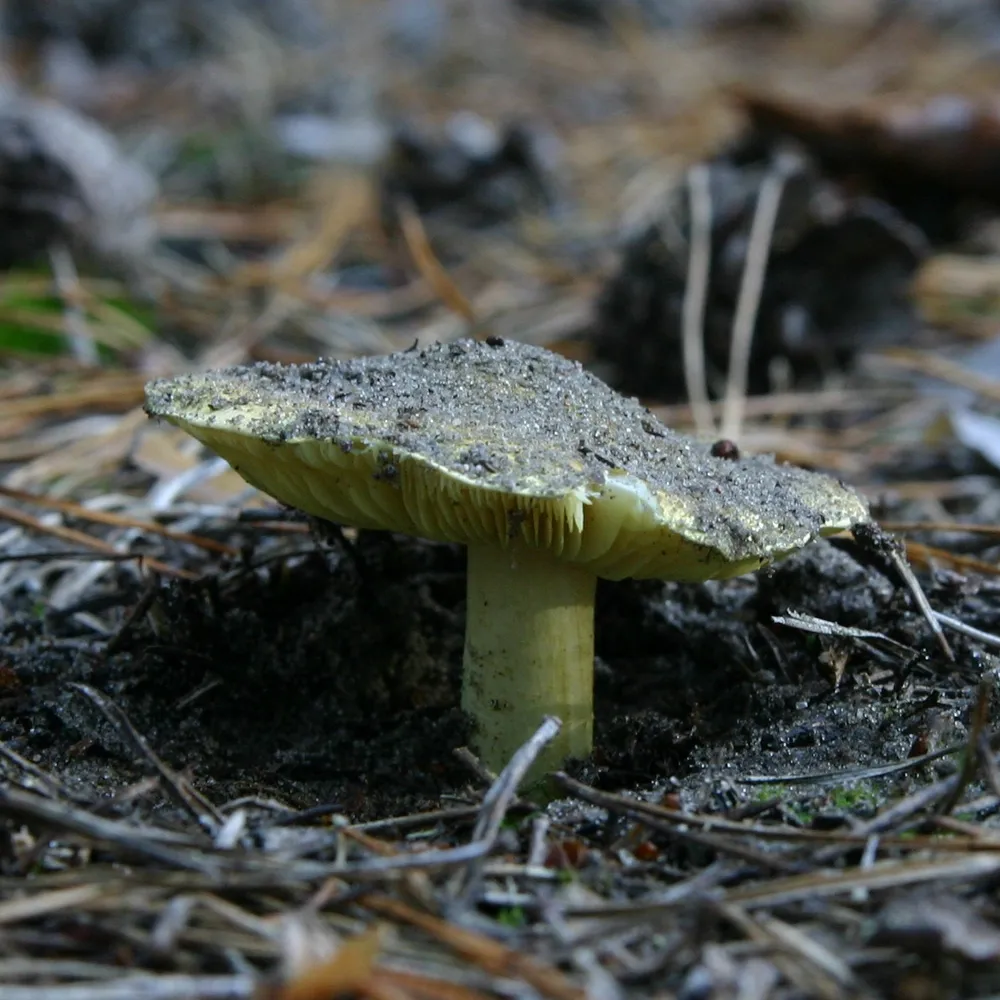
Yellow knight
Tricholoma equestre
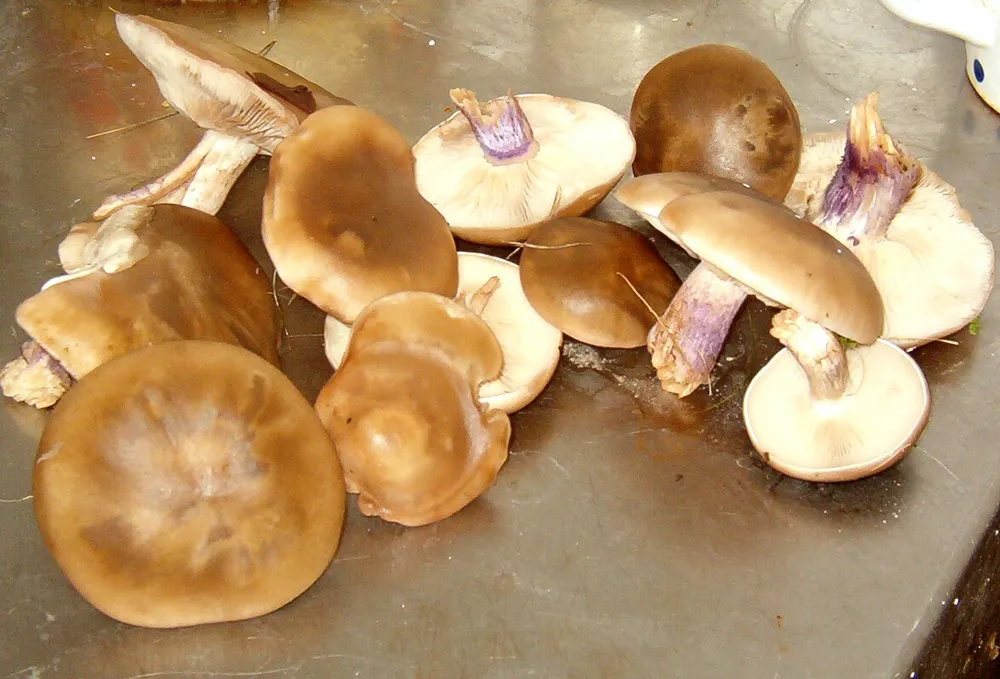
Field blewit
Collybia personata
Frequently asked questions
Is it worth picking?
You can, but without much enthusiasm. Its culinary value is average — the flesh is bitterish and mealy and needs boiling. It goes into a mix with tastier mushrooms. Making a dish from it alone isn't much fun. If the pine forest is full of saffron milk caps and slippery jacks, just walk past the matt knight.
How do you tell it apart from other brown knights?
Key features of T. imbricatum: (1) the cap is dark chestnut, MATTE (not slimy) in normal weather; (2) a finely fibrous "tiled" pattern on the cap skin; (3) it grows under pines; (4) a mealy smell; (5) a bitterish, mealy taste that disappears after boiling. Close relatives: T. pessundatum (slimy cap), T. ustaloides (more bitter taste), T. albobrunneum (white cap margin).
Does it have dangerous lookalikes?
There are no deadly species among the brown knights, but some (such as T. ustale) cause gastroenteritis, and several more are of uncertain safety (T. ustaloides, some rare ones). The general rule: pick only the ones you identify with confidence. Pholiota lenta (a slimy scalycap) is also brown, but grows on stumps and has a membranous ring on the stem. Cortinarius spp. (webcaps) are brown with a rusty spore print and cobwebby remnants on the stem — and some of them are deadly poisonous (orellanine-containing species). The decisive check: a knight's spore print is WHITE, a webcap's is RUSTY ORANGE-BROWN.
How do you cook it?
Always boil it for 10-15 min in salted water and discard the water. Then fry it with onions, stew it with potatoes, add it to soups, or pickle it. In a mix with saffron milk caps and slippery jacks it fills things out nicely and adds volume. Drying works fine, but the aroma is only average.
Where do you look for it?
On the forest floor in pine and spruce-pine forests, among moss, in the grass near old pines. On sandy, acidic soils. It often grows in rows or groups — hence the name.
Which regions of Ukraine is it found in?
Common in the forest zone with conifers: the Carpathians, Prykarpattia, Polissia, and in places the forest-steppe within pine woodlands. In the steppe it appears in planted pine stands.
When do you look for it?
August to November, peaking in September–October. It loves a warm autumn and keeps fruiting right up to the first light frosts.
What mushrooms is it confused with?
Vs. T. pessundatum (a slimy-capped brown knight) — slimy cap, no "tiled" pattern. Vs. T. ustaloides — distinctly more bitter, with a burning taste. Vs. T. albobrunneum — white cap margin. Vs. Cortinarius brunneus and other brown webcaps — rusty orange-brown spore print, a cobwebby veil on the stem in young specimens, and some of them are poisonous. Do the decisive spore print check whenever you have any doubt.
Is Matt knight edible or poisonous?
Does Matt knight have gills or pores?
What does the cap of Matt knight look like?
What does the stem of Matt knight look like?
Sources
- [1]Вікіпедія (українська)
- [2]Атлас грибів України, Зеров Д.К. (1979)
- [3]MycoBank Database
- [4]Index Fungorum
- [5]GBIF
- [6]iNaturalist Ukraine