_Ricken_185798.webp)
Booted knightTricholoma focale
Expert-verifiedUpdated October 3, 2026
Passport
- Edibility
- Conditionally edible
- Season
- Aug — Oct
- Hymenophore
- Gilled
- Cap color
- Orange
- Size
- Medium (5–15 cm)
- Smell
- Floury
- Reviewed
- Yes ✓
Quick answers
Where to look?
Conifer forest
When does it appear?
Aug — Oct
Active months: August, September, October.
How to recognize it? Three signs
- Cap color: Orange, Brown
- Cap shape: Convex
- Smell: Floury
Fruiting season
August – October
Description
The booted knight (Tricholoma focale, synonyms T. zelleri, Armillaria focalis) is a distinctive large gray-orange knight with a ring on its stem, which is why some foragers take it for "honey fungus". The Latin epithet focale means "scarf-like" — a nod to the prominent membranous ring on the stem, shaped like a scarf. The cap is 6-15 cm across, fleshy, convex to flattened-expanded with a characteristic "patina-like" surface: gray-orange to brownish-orange, with fine radial fibers.
Conditionally edible after boiling. The flesh has a distinct mealy smell and a faint bitterish aftertaste that disappears after brief boiling. People rarely pick it because it resembles true honey fungus (Armillaria), although it grows singly rather than in "clusters". Its culinary value is moderate — it works well in a mix with more aromatic mushrooms.
The main diagnostic feature is the combination of: (1) a gray-orange cap with fine radial fibers, (2) a membranous ring on the stem (the only one in the genus Tricholoma!), (3) a distinct mealy smell, (4) it grows under pines on sandy soils, often in "fairy rings". A ring-shaped growth pattern with an orange cap is a practically unique combination.
The main risk is confusing it with young poisonous webcaps (Cortinarius spp.) — several species of the family Cortinariaceae also have orange-brown caps, but their spore print is rusty-brown, not white, and they have a cobwebby veil (cortina) on the stem, not a true ring. Among them are deadly poisonous ones (C. orellanus, C. rubellus). Checking with a spore print is essential and mandatory.
In Ukraine, Tricholoma focale is widespread but not frequent in pine and spruce-pine forests: the Carpathians, Prykarpattia, Polissia. A mycorrhizal partner of Scots pine. Season: August — October. Sometimes it forms "fairy rings" 2-5 m across.
Cap
Cap 6-15 cm across, when young convex with an inrolled margin, becoming with age flattened-expanded. The skin is matte, with fine radial fibers. Color: orange-chestnut, ochre-orange, richer in the center, paler toward the margin; in old fruiting bodies, brownish-ochre with rusty spots. The margin is even, with remnants of the ring membrane when young.
Hymenophore
Gilled hymenophore — the gills are notched (sinuate) where they attach to the stem, crowded, fleshy. When young they are whitish, becoming with age creamy with rusty spots at the edges. Spore print white — diagnostic (it sets it apart from webcaps, which have a rusty-brown spore print).
Stem
Stem 5-10 cm tall, 1.5-3 cm thick, firm, fleshy, with a distinct membranous ring in the upper third — the main peculiarity for the genus Tricholoma. Color white above the ring, orange-ochre below, matching the cap color. Surface fibrous, scaly-fibrous below the ring.
Flesh
Flesh firm, fleshy, whitish, unchanging where cut. Smell distinctly mealy, taste mild at first, then bitterish-mealy, which disappears after boiling.
Smell
A distinct mealy smell — a diagnostic feature of the genus, especially clear when cut and in young specimens.
›Scientific synonyms (6)
Agaricus focalis Fr., Armillaria focalis (Fr.) P. Karst., Tricholoma robustum f. focale (Fr.) Pilát, Cortinarius focalis (Fr.) M.M. Moser, Armillaria rufa Quél., Armillaria caussetta Barla
Lookalikes
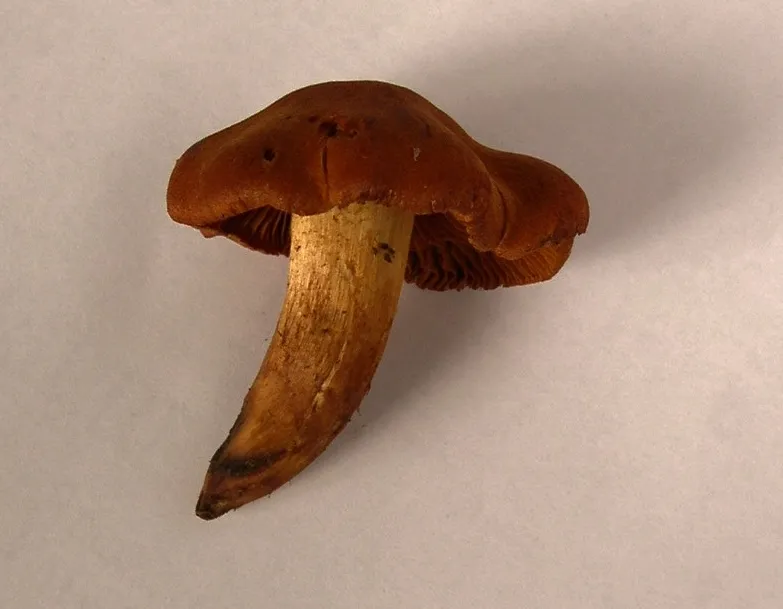
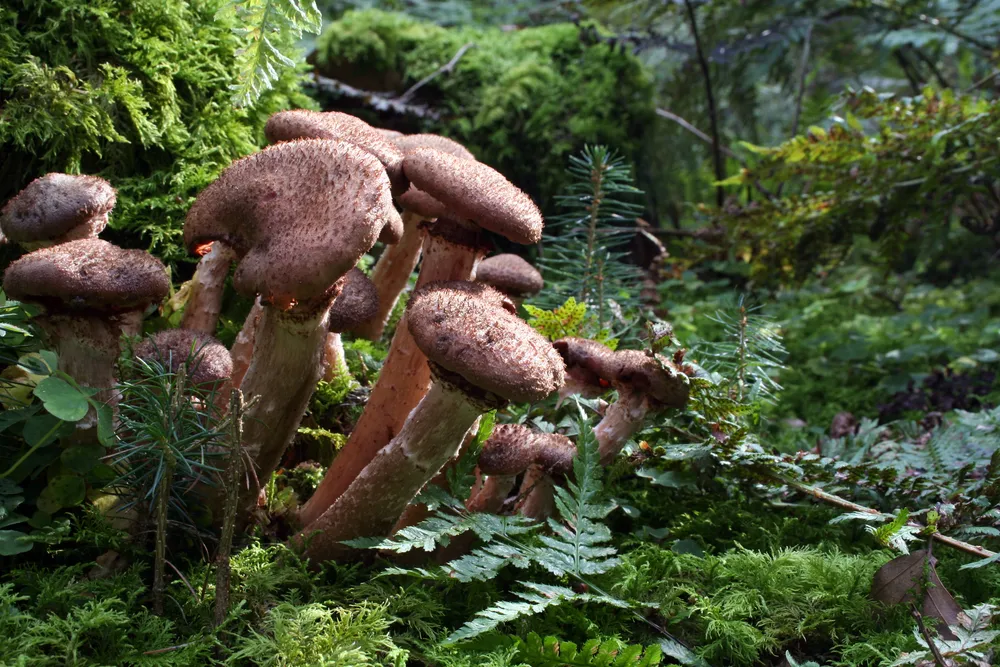
Related species
Mushrooms of the same genus and habitat — to study side by side and never mix up.
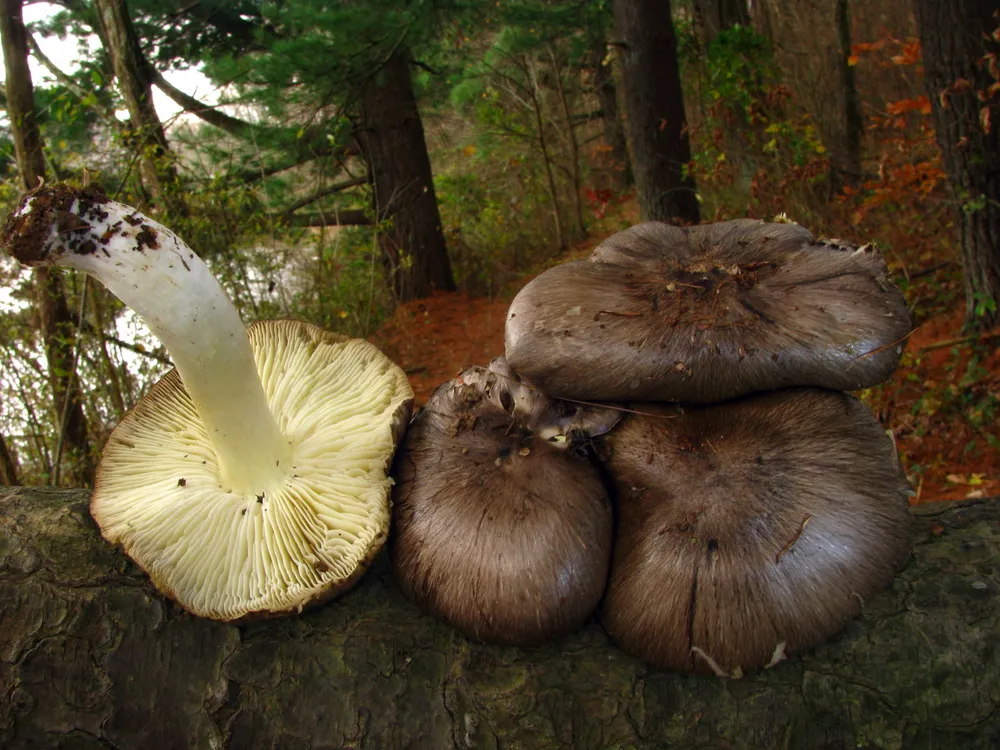
Charbonnier
Tricholoma portentosum
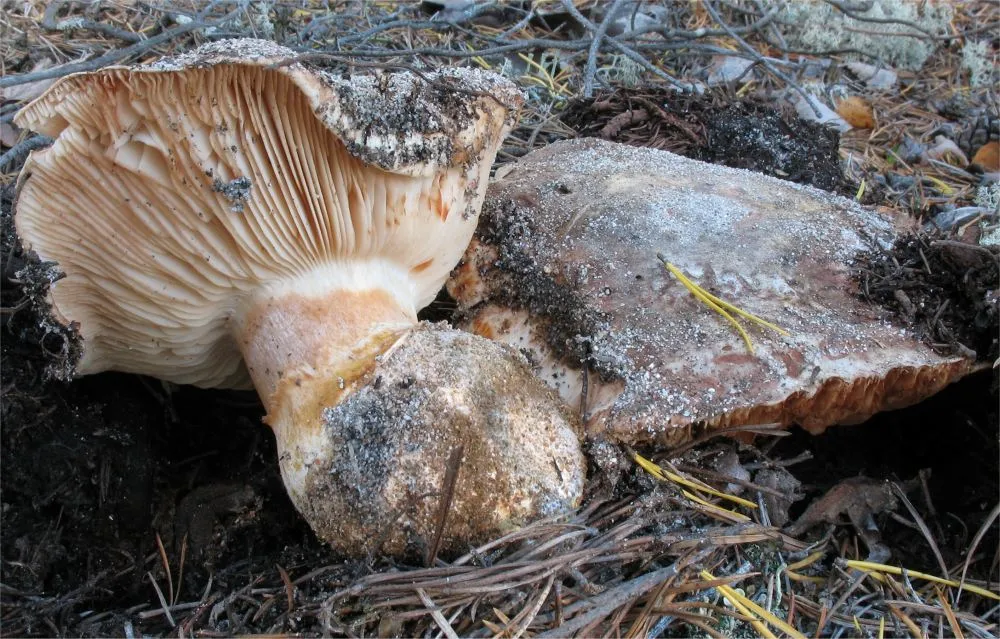
Giant knight
Tricholoma colossus
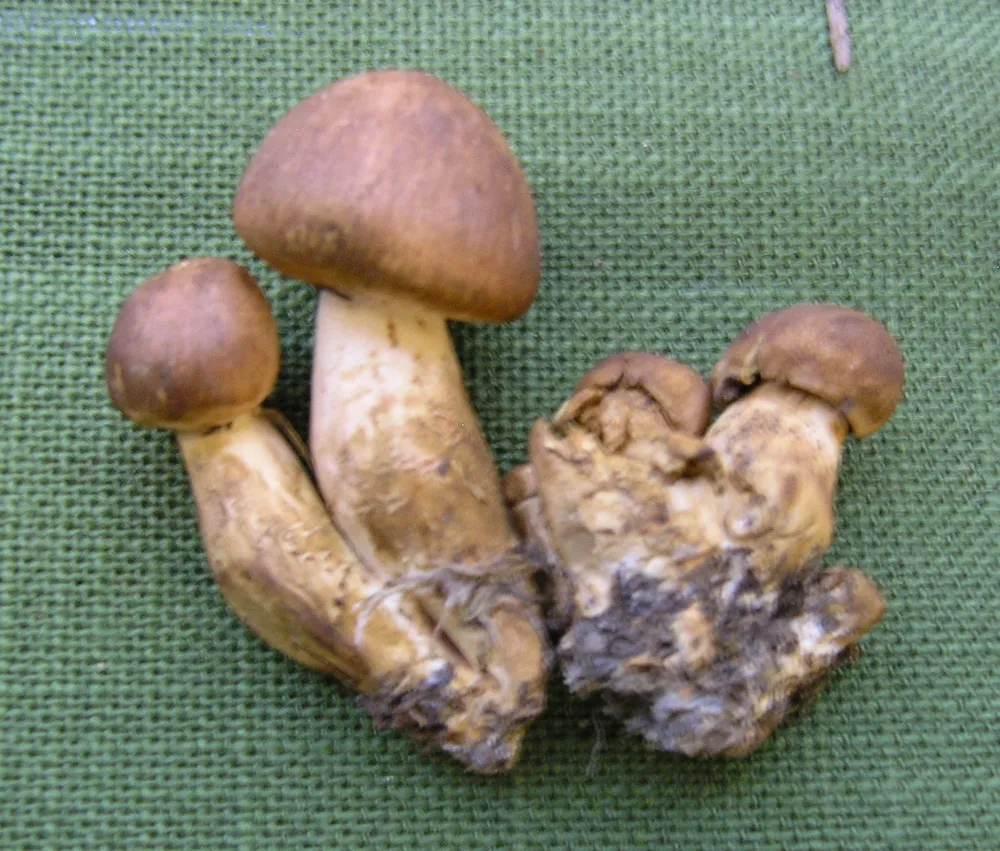
Matt knight
Tricholoma imbricatum
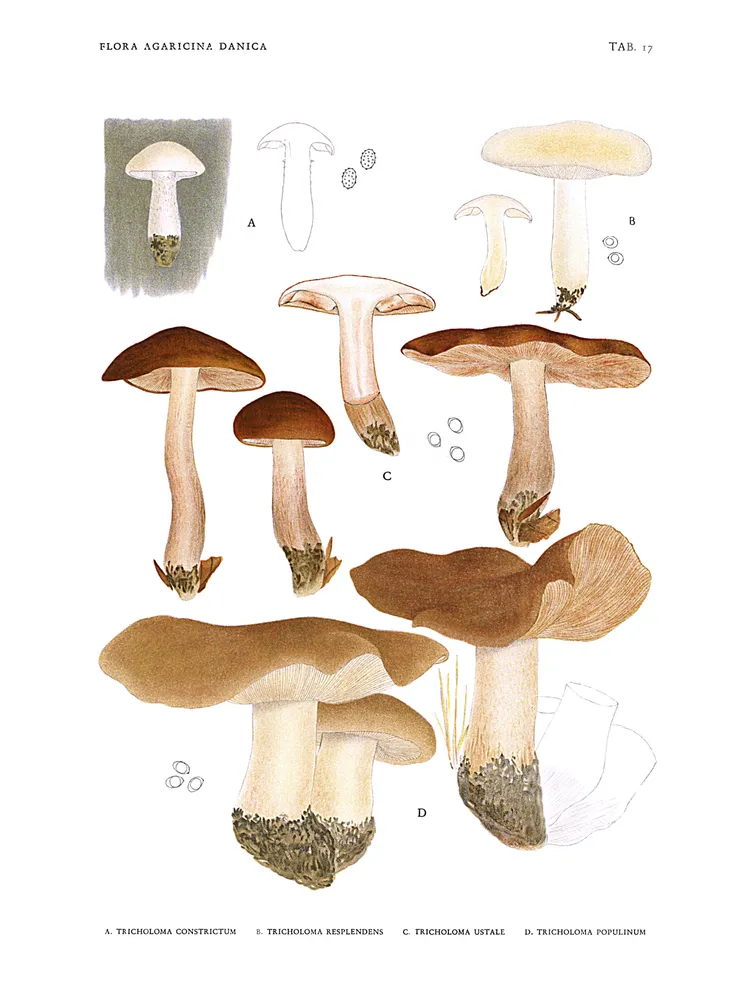
Poplar knight
Рядовка тополева
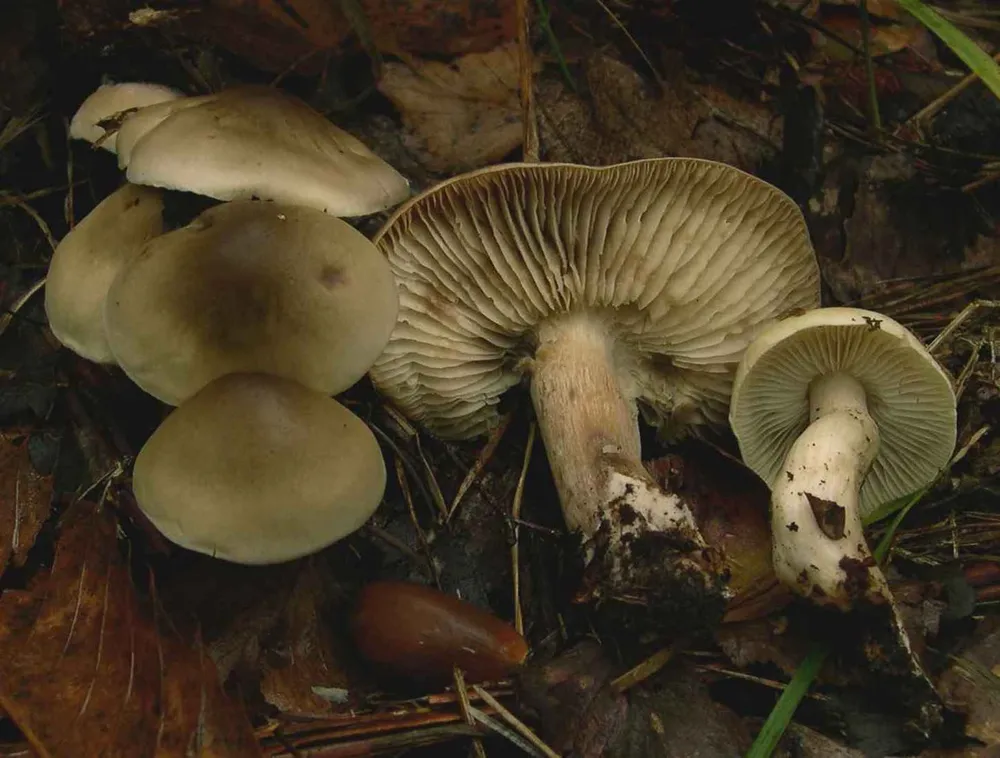
Soapy knight
Tricholoma saponaceum
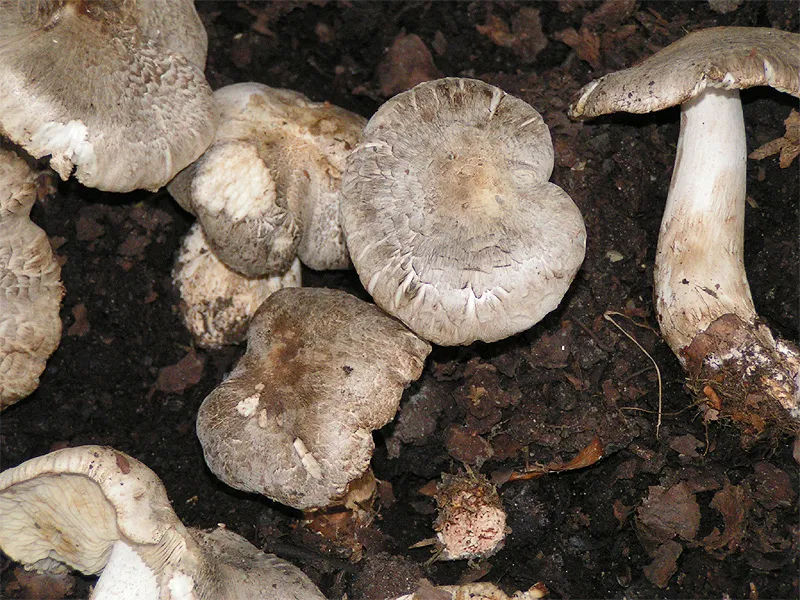
Tiger tricholoma
Tricholoma pardinum
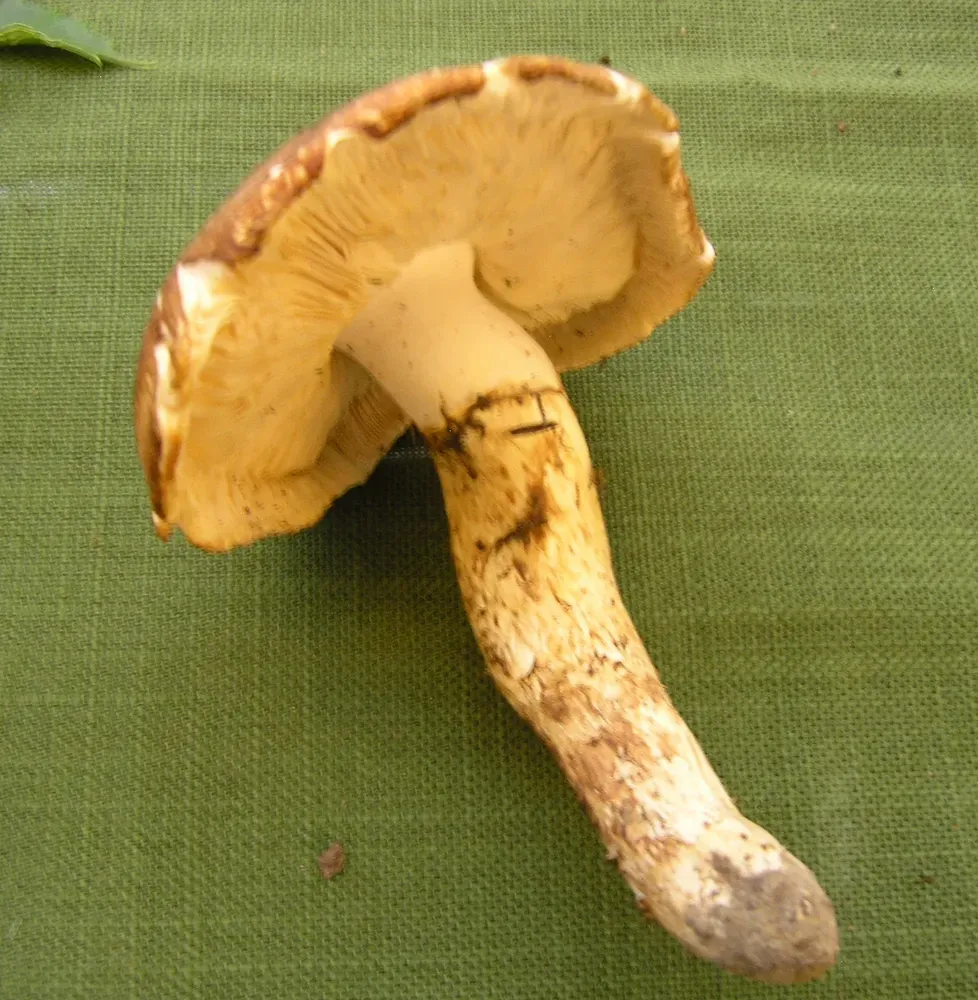
Tricholoma caligatum
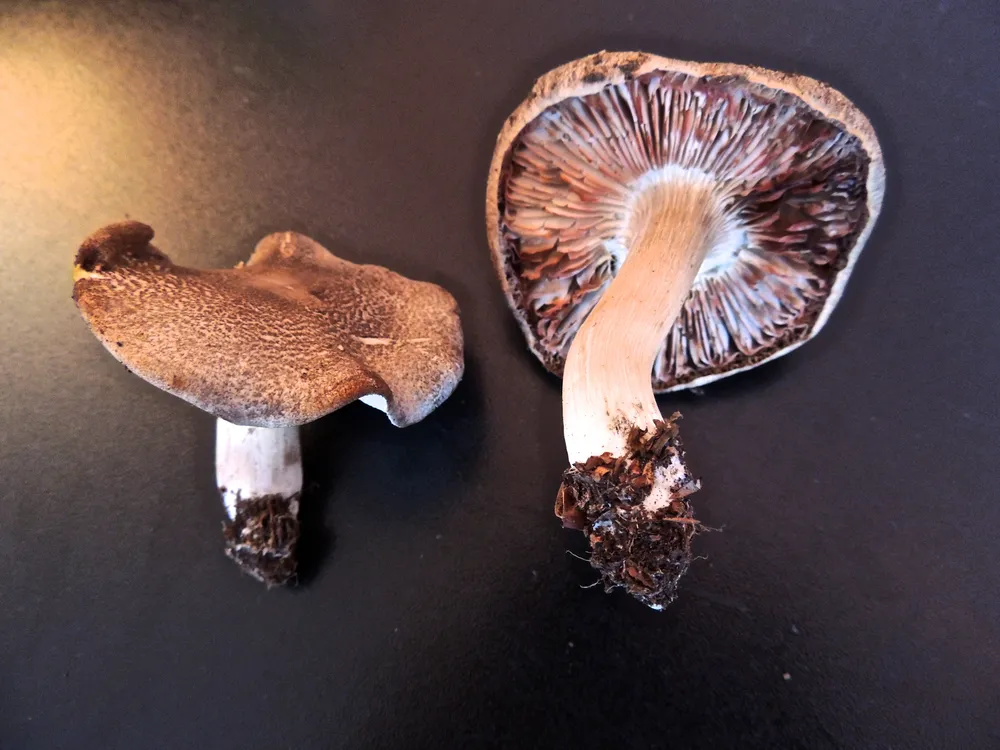
Tricholoma orirubens
Frequently asked questions
How do you tell it from poisonous webcaps?
The essential check is a spore print. Leave a cap on white paper for 12-24 hours: T. focale gives a white spore print, webcaps give a rusty-brown one. Second check: T. focale has a true membranous ring on the stem, while webcaps have a cobwebby cortina made of fine threads, which breaks down into small remnants with age. Third: the smell of T. focale is mealy, webcaps' is neutral or radish-like.
Does it have dangerous lookalikes?
Young poisonous Cortinarius (webcaps) — several species in the family have orange-brown caps and ring-like cortina remnants. Among them are the deadly poisonous C. orellanus and C. rubellus with the toxin orellanine, which damages the kidneys with a delay of 2-21 days. A spore print is mandatory whenever you have any doubt about orange-brown mushrooms under pines!
How do you cook it?
First boil for 10-15 min in salted water and drain the water. Then fry with onion, stew, add to soups, pickle. Good in a mix with saffron milk caps and slippery jacks. Drying — fine, the aroma is average.
Is it a honey fungus?
No, it's not a honey fungus (Armillaria), even though it has a ring on the stem. Honey fungus grows in clusters on stumps and roots, has a dark reddish-brown scaly cap, a white spore print, and more aromatic flesh. Tricholoma focale grows on soil under pines, singly or in rings, is fleshier, distinctly orange and mealy.
Where do you look for it?
In pine and spruce-pine forests on sandy or clay soils, in moss or grass cover. Sometimes it forms "fairy rings" of 5-20 fruiting bodies in a circle 2-5 m across.
In which regions of Ukraine does it occur?
In the forest zone with pine and spruce forests: the Carpathians, Prykarpattia, Polissia. Less often in the forest-steppe, in pine plantations.
When do you look for it?
August — October, peaking in September. Loves a warm autumn with moderate rain.
What else does it look like?
On Armillaria mellea (honey fungus) — that one grows in clusters on wood, not in a "ring" on soil. It also resembles Cortinarius spp. — rusty-brown spore print. And it resembles Lepiota (dapperlings) — less fleshy, with scales on the cap and a movable (free) ring; here it is fixed.
Is Booted knight edible or poisonous?
Does Booted knight have gills or pores?
What does the cap of Booted knight look like?
What does the stem of Booted knight look like?
Sources
- [1]Вікіпедія (українська)
- [2]Атлас грибів України, Зеров Д.К. (1979)
- [3]MycoBank Database
- [4]Index Fungorum
- [5]GBIF
- [6]iNaturalist Ukraine